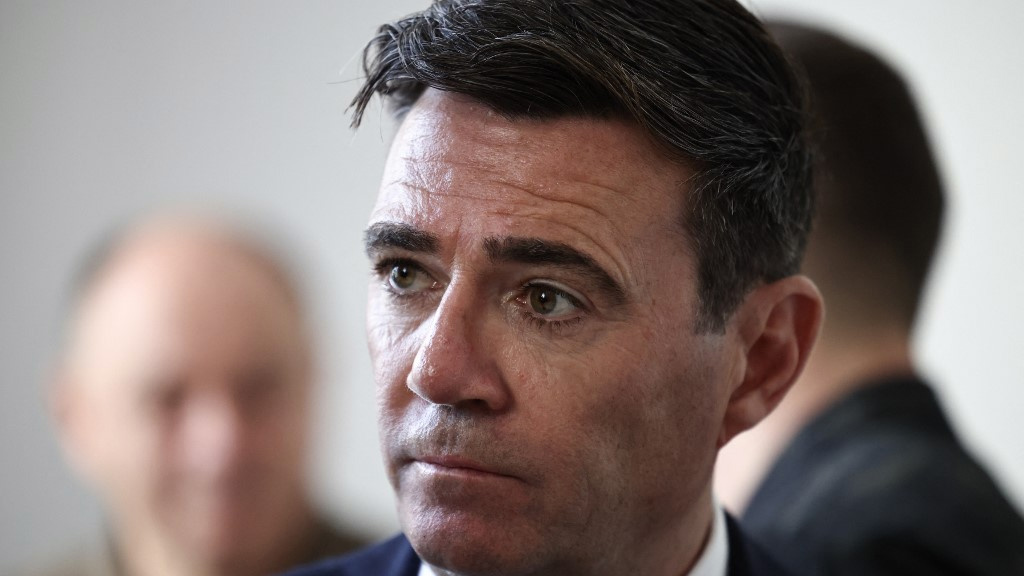
A high-profile British-Iraqi interfaith activist was turned away from Canadian soil and detained for 11 hours at Montreal-Pierre Elliott Trudeau International Airport earlier this week, in a move that has sparked intense debate over freedom of speech and political pressure shaping Canadian border policy. Anas al-Tikriti, founder of the London-based Cordoba Foundation, an organization dedicated to fostering cross-cultural dialogue between Western nations and Muslim communities, had been scheduled to address a national convention hosted by the Muslim Association of Canada in Toronto between May 16 and 18 before his entry was blocked. He was ultimately deported back to London following hours of questioning by Canadian border officials. In a formal statement released after his deportation, al-Tikriti described his detention as a prolonged, unfocused process marked by repetitive questioning that mirrored queries he had already completed on his Electronic Travel Authorisation (ETA) application form. Among the repeated questions, he said, was what he called the absurd and demeaning inquiry asking if he had ever been linked to narcotics networks, terrorist organizations or criminal groups. Al-Tikriti added that at no point did officials ask to discuss his planned remarks at the convention, his academic or political views, or the purpose of his visit. When he volunteered to provide additional context or clarification for his travel, the overseeing officer explicitly declined to hear any further information. “It was clear to me within the first three hours that they had no intention of allowing me into Canada, and that the hours that followed were a search for a pretext,” al-Tikriti said in his statement. By the afternoon of his arrival, officials had settled on a justification for the denial: they claimed al-Tikriti had provided false information on his ETA application when he stated he had never been refused a visa by another country, pointing to a 2023 U.S. visa refusal as evidence of the inaccuracy. Al-Tikriti has strongly pushed back on this claim, stating unequivocally that he did not intentionally misstate his travel history on the form. The activist founded the Cordoba Foundation in 2005, and the organization works to build intercultural dialogue and provides strategic and security policy advice to political stakeholders working on Middle East issues. The designation has long been a point of controversy: in 2014, the United Arab Emirates, where al-Tikriti spent his adolescence and early adulthood, labeled the Cordoba Foundation as a terrorist organization – a classification that rights advocates argue is politically motivated. Al-Tikriti has also been targeted by state surveillance in the past: in 2021, forensic analysts confirmed his personal iPhone had been compromised by Pegasus, the powerful military-grade spyware developed by Israeli cybersecurity firm NSO Group, with evidence pointing to the UAE as the actor behind the hack. The Muslim Association of Britain has publicly linked the Canadian decision to ongoing political pressure around the Israel-Palestine conflict, arguing the entry ban was pushed by bad-faith actors seeking to silence public criticism of Israel’s military campaign in Gaza, which critics have labeled a genocide. The organization added that the incident raises serious, troubling questions about the state of free speech in Canada, and the growing trend of targeting activists who publicly advocate for Palestinian human rights. Al-Tikriti echoed that sentiment in his statement, saying he would have respected Canadian authorities more if they had been transparent about the real reason for his denial. “I would, frankly, have had more respect for the Canadian immigration authorities had they simply said so. That they were under pressure not to admit me,” he said. “That my views on Palestine were unacceptable to them. That my criticism of Israel’s crimes against humanity was intolerable.”
标签: Asia
亚洲
-

Getting to yes on reopening Hormuz
The ongoing indirect negotiations between Iran and the United States, mediated by Pakistan, have hit a fresh impasse following Tehran’s response to Washington’s latest peace proposal and former President Donald Trump’s outright rejection of the deal. At the heart of the deadlock is Iran’s insistence on asserting exclusive sovereignty over the Strait of Hormuz – a demand that stands in direct conflict with established international maritime law, and has thrown global energy markets into turmoil.
The dispute over Hormuz’s status is a secondary outcome of the current conflict, not its root cause, and it cannot be resolved as a bilateral issue between the two nations. Free and unimpeded transit through the strait is an internationally recognized right held by all maritime states, making it a matter of global concern rather than a bargaining chip between Tehran and Washington. Experts widely agree that separating the Hormuz question from other outstanding disagreements between the two powers is the most logical path forward. Restoring unconditional transit through the chokepoint is critical to reversing what has become the most severe disruption to global petroleum supplies in modern history, and to securing long-term navigation freedom after the bulk of U.S. military forces withdraw from the region.
Right now, the ongoing blockage has already triggered a global energy crisis, pushing up prices for crude oil, agricultural fertilizers, and a wide range of consumer and industrial goods worldwide. With every additional day of restricted shipping, supplies continue to dwindle, and price pressures are projected to intensify. That makes urgent diplomatic action to fully reopen the strait a top global priority.
To understand the legal framework governing Hormuz, it is important to place it in context alongside other critical global maritime chokepoints, including the Strait of Gibraltar, the Strait of Malacca, and the Bab-el-Mandeb. Like these waterways, the Strait of Hormuz is extremely narrow: the 12-nautical-mile territorial seas of coastal states Iran and Oman actually meet in the middle of the shipping channel. To codify navigation rights for such strategic international straits that connect two open bodies of water, the 1994 UN Convention on the Law of the Sea (UNCLOS) – ratified by 168 nations – explicitly requires that coastal states may not block or suspend transit passage through international straits. They are also prohibited from charging tolls or discriminating against shipping from any country. While the United States has never formally ratified UNCLOS, it has long abided by this provision and many others, recognizing them as codification of centuries of customary international maritime law.
This legal regime functioned smoothly in the Strait of Hormuz for years before the current conflict broke out. Restoring full compliance with UNCLOS rules must be a core non-negotiable international objective. The precedent matters: if Iran is allowed to charge transit tolls or assert exclusive control over Hormuz, coastal states controlling other chokepoints around the world will almost certainly follow suit, driving up global trade costs dramatically. Already, a former Indonesian finance minister has publicly floated the idea of charging tolls for ships passing through the Strait of Malacca, a key route for trade between Asia, Europe, and the Middle East. Major global trade routes could easily see multiple tolled chokepoints if the Hormuz precedent is broken.
In the wake of Israeli and U.S. strikes on Iran earlier this year, Tehran declared the central navigation channel, which runs through Omani territorial waters, to be dangerous due to alleged mining. This forced all commercial shipping to reroute to the Iranian side of the strait, giving Tehran greater control over traffic and opening the door to potential transit fees. The U.S. responded with its own naval blockade of Iranian shipping in mid-April, a move that followed logically from Tehran’s actions.
Today, both sides remain convinced that their respective blockades give them greater negotiating leverage, that time is on their side, and that the opposing party will eventually be forced to concede to their demands. Iran’s push for a new regulatory regime and exclusive sovereignty over the strait directly contradicts internationally accepted maritime law, while the U.S. has tied the resolution of the Hormuz dispute not just to a full reopening of the waterway, but also to the outcome of other contentious issues on the negotiation table.
Weeks into the opposing blockades, both sides have demonstrated they are capable of maintaining their restrictions against challenges from the other. The net result is that commercial transit through the strait has slowed to a tiny fraction of pre-crisis volumes. A coalition of nations led by France and the United Kingdom has indicated it is prepared to deploy a symbolic naval presence to defend freedom of navigation, but it will only act after the broader conflict is resolved. This leaves the world in a dangerous holding pattern – so what actionable path forward exists to break the deadlock?
A temporary, mutually agreed opening that allows shipping to use channels along both the Iranian and Omani coasts while mine-clearing operations proceed in the central channel would immediately address the urgent humanitarian issue of freeing dozens of commercial ships and their crews currently trapped in the Persian Gulf. This could be achieved as part of a ceasefire extension, or negotiated as a standalone humanitarian corridor similar to the 2022 Black Sea Grain Initiative that allowed Ukrainian grain exports during the war. However, such a measure would only be a temporary fix, not a permanent resolution to the underlying dispute.
The core of the problem is that two nations are clashing over a right that belongs to the entire international community. While individual major powers including China have called for the strait to be reopened, there has been no unified collective action from the global community to date.
A more effective, permanent path forward would be a coordinated, high-impact diplomatic initiative by a large coalition of UNCLOS member states demanding the immediate restoration of the UNCLOS maritime regime in the Strait of Hormuz. This coalition would need to include countries with influence over both Iran and the United States to carry weight. Logically, leadership for this initiative should come from small and middle-sized Asian economies that are most heavily dependent on unimpeded Hormuz transit, but it must also include major powers including China, India, and key European economies. Crucially, the initiative would be strictly diplomatic, and would not take sides in the broader Iran-U.S. conflict – its only demand would be compliance with existing, widely accepted international law.
Would this proposal gain traction with both parties? It is possible that both sides would embrace the initiative as a face-saving way out of their current mutual stalemate, providing a clear path to a mutually acceptable agreement. The UNCLOS-based solution fully preserves Iran’s and Oman’s sovereignty over their territorial waters and islands within the strait, just as it preserves sovereignty for the parties that control other international straits: for example, Morocco, Spain, and the United Kingdom share sovereignty over the Strait of Gibraltar in line with UNCLOS, just as Indonesia and Malaysia do for the Strait of Malacca.
It is possible that Iran’s insistence on full control is merely a bargaining tactic to gain leverage in other areas of negotiation, but ultimately Tehran must accept that no unique exception can be made for Hormuz that deviates from the rules applied to every other international strait in the world.
Neither side would surrender meaningful leverage by accepting this multilateral proposal: both have already proven their military capability to block the strait, a capability that would remain intact even if the current blockade were lifted. At the same time, both sides would see immediate economic and political gains from reopening the waterway to full commercial traffic.
Separating the Hormuz issue also allows negotiators to turn their full attention to the original core dispute between the two nations: Iran’s enriched uranium program. This is a complex, high-stakes negotiation that requires specialized technical expertise. As Trump has noted, the issue is less immediately pressing than the Hormuz blockage, since Iran’s existing enriched uranium stockpiles are deeply buried and under close international monitoring. Ultimately, the two parties should be able to agree on a clear core goal: full Iranian compliance with the Treaty on the Non-Proliferation of Nuclear Weapons within a defined timeframe.
If a resolution can be reached through this multilateral UNCLOS-based approach, the ongoing Iran-U.S. negotiations could serve as a tentative but transformative first step toward a broader restructuring of the Middle East regional order. The first major breakthrough of this kind came in the late 1970s, with the historic peace deal between Israel and Egypt, followed later by normalization with Jordan. Extending that difficult peace process to include Iran may seem even more ambitious today than the Egyptian-Israeli reconciliation seemed in the years immediately after the 1973 Yom Kippur War. But if pursued with patience and consistent commitment, this diplomatic effort would mark a truly unprecedented step forward for Middle East peace.
-

British Palestinians and Arabs call for ‘equal protection’ from Starmer
Ahead of Saturday’s 78th anniversary commemoration of the Nakba in central London, a coalition of prominent British Palestinian and Arab public figures has issued an open letter to Prime Minister Keir Starmer pushing for equal safety protections for their communities, pushing back against widespread false claims that their peaceful marches are hubs of hatred.
The scheduled Nakba 78 march for Palestinian justice is set to take place the same day as a far-right “Unite the Kingdom” rally organized by controversial far-right figure Tommy Robinson, a scheduling overlap that has stoked heightened security fears across Palestinian and Arab communities in the capital. London’s Metropolitan Police Service has already announced it has deployed over 4,000 officers to the events, confirming it is preparing for potential violent confrontations.
In their letter, signed by doctors, activists, academics, lawyers and other London-based community leaders from Palestinian and broader Arab backgrounds, the group stresses that pro-Palestine demonstrations are not spaces of extremism, but gatherings rooted in shared humanity and demands for justice. The signatories note that Jewish activists regularly join their marches in full safety, and no pro-Palestine processions have ever targeted Jewish houses of worship — directly contradicting repeated false accusations from senior officials and media figures.
Metropolitan Police Commissioner Mark Rowley claimed earlier this month that many pro-Palestine marches intentionally route near synagogues, a statement solidarity leaders have called deliberately dishonest and dangerous. “Our marches for Palestine are about showing solidarity with the Palestinian people in their struggle against apartheid and genocide, and to protest against British government complicity in Israel’s crimes against them,” explained Ryvka Barnard, deputy director of the Palestine Solidarity Campaign. “Our upcoming march on 16 May will be no different.”
The core grievance laid out in the letter is the stark inequality in how the British government and law enforcement address security fears for different communities. Signatories say that while other communities have received explicit public reassurance and visible security commitments from the government, Palestinian and Arab concerns about potential violence from the overlapping far-right rally have been met with silence and neglect. “It is painful to feel that our fears are treated as secondary, or worse, that our peaceful commemoration is viewed only as a policing problem,” the letter reads.
For British Palestinians, the 78th anniversary of the Nakba is not an abstract historical event: it is an ongoing, intergenerational trauma. The Nakba — meaning “catastrophe” in Arabic — refers to the 1948 forced expulsion of 750,000 Palestinians from their ancestral lands by Zionist militias to clear space for the creation of the state of Israel. This year’s march will include elderly 1948 Nakba survivors marching alongside their great-grandchildren, a visible reminder of the displacement that continues to shape Palestinian life today. As the former colonial power in Palestine, the British government played a foundational role in enabling the Nakba through the 1917 Balfour Declaration, colonial-era repression of Palestinian self-determination, and state support for the early Zionist movement.
The group’s formal demands to Starmer include parity of safety protection for Palestinian and Arab demonstrators, proactive measures to prevent far-right violence, and official recognition of the intergenerational trauma of the Nakba for British Palestinian communities.
The current Labour government led by Starmer has imposed a harsh crackdown on Palestinian solidarity activism since taking office in summer 2024. The direct action group Palestine Action has been officially banned, with its members prosecuted under terrorism legislation. Protesters speaking out against Israel’s military campaign in Gaza, which has killed more than 73,000 Palestinians to date, have repeatedly been labeled antisemites by politicians and mainstream media outlets — a claim that holds no evidential weight, given the consistent participation of large numbers of Jewish anti-war activists in pro-Palestine marches.
-

Palestine Action prisoner with muscular dystrophy says he is forced to ‘crawl like a wounded dog’
A remand prisoner linked to the activist group Palestine Action has laid bare damning allegations of systemic medical neglect and degrading treatment at a high-security London prison, detailing how failures to provide adequate mobility support and care have left him crawling across cell floors to access basic needs.
Muhammad Umer Khalid, 23, is currently held at HMP Wormwood Scrubs awaiting trial over charges connected to a June 2023 break-in at a Royal Air Force base. Living with incurable progressive muscular dystrophy – a rare genetic condition that causes gradual muscle wasting, requiring consistent physical activity and specialized high-protein nutrition to slow deterioration – Khalid claims the UK prison service has systematically failed to meet his documented medical needs for months.
Since being placed in 23-hour-a-day cell lockdown last October, Khalid says his mobility has declined sharply. What began as gradual weakness has progressed to a total loss of the ability to walk, forcing him to crawl through the prison to access medication, legal appointments, and family visits. In an interview with Middle East Eye (MEE) conducted through an intermediary, he described the humiliation of crawling past dozens of fellow inmates, saying staff treat him like a wounded animal rather than a human being entitled to dignity.
Multiple failures in providing even basic adaptive equipment have compounded his condition. Khalid submitted repeated requests for a custom wheelchair, and even after a prison physiotherapist formally approved his need for the device on March 14, the prison only issued an ill-fitting chair two weeks later. The first wheelchair provided was too large to fit through his cell door or narrow prison corridors, leaving Khalid to crawl between his bed and toilet – a journey that can take up to an hour to complete. For more than 20 weeks, the prison also ignored requests for a shower chair, leaving him unable to bathe for nearly five months.
Worse still, prison staff have cited internal health and safety rules to refuse any physical assistance to Khalid, and have barred fellow inmates from helping him. Staff cannot push his wheelchair, lift him, or support him with basic daily tasks, he says. During a facility-wide fire evacuation on April 23, Khalid was left locked in his cell alone while all other prisoners were moved to safety. Even after multiple requests, staff have refused to bring his daily medication to his cell, forcing him to crawl to the medication collection point regardless of his pain or mobility limits.
Khalid added that prison staff, including a member of the facility’s medical team, have repeatedly accused him of faking his condition’s rapid deterioration, despite existing medical documentation confirming his diagnosis and progression. Over three months, he has only been seen by a doctor three times, and has missed two critical neurology appointments – one scheduled for April 7, which he was unable to attend because the prison failed to provide a wheelchair that could transport him to the clinic. Existing medical evidence submitted to courts confirms his condition has worsened dramatically since entering custody, directly linking the decline to his poor detention conditions.
In April, Justice Cheema-Gubb denied Khalid’s most recent bail application, ruling that while there were legitimate concerns about the timeliness and quality of his care, his condition could still be managed in a custodial setting. The judge ordered that a copy of her ruling be sent to prison leadership, with instructions to urgently address the gaps in care identified in the medical evidence and conduct regular reviews. However, Khalid’s solicitor Laura O’Brien says little has changed in the weeks since the ruling.
O’Brien told MEE that the full set of Khalid’s medical records were shared with the prison immediately after his remand, to help staff understand the needs of his progressive condition. “Despite incontrovertible medical evidence that he has a progressive genetic condition, and that it is getting worse, there has been a continued suggestion that he’s putting it on,” she said. O’Brien explained that prison officials have claimed they do not need to provide a full-time wheelchair because they have seen Khalid walking short distances, but they fail to understand that even small amounts of walking causes permanent micro-tear damage to his muscles that his condition prevents him from recovering from.
“Those in a custodial setting have a right to be treated fairly and with dignity as much as anyone else,” O’Brien said. “With inadequate care from the prison, the damage could be significant if his medical needs, including being provided with a wheelchair, accessible spaces to shower, use of the toilet and access to physiotherapy, are not met.”
In a minor update this week, the prison replaced the oversize wheelchair with a smaller model that can navigate prison corridors, though it still does not fit inside his cell. Prison officials have also finally issued a shower chair and ordered a new custom-sized wheelchair. O’Brien said the legal team welcomed the small steps but hopes further delays will not force Khalid to continue fighting for basic care.
Khalid says that while he remains mentally resilient, he lives in constant pain and has begun experiencing breathing difficulties as the muscle wasting progresses to his arms. “My arms are beginning to waste away, which will stop me from even being able to operate my own wheelchair,” he said. The situation has also placed enormous strain on his family, who managed his condition carefully for nearly a decade after his 2014 diagnosis. His mother Shabana told MEE that during a recent visit, he showed her his legs, which had withered to the point of looking like “a skeleton with skin hanging off” – a sight she described as heartbreaking.
Khalid was one of eight Palestine Action-linked prisoners who held a hunger strike last winter to protest poor detention conditions, ending the action in January. MEE reached out to the UK Ministry of Justice for comment on the allegations but did not receive a response ahead of publication.
-

Iran turns to Pakistan land corridor as US naval pressure disrupts Gulf trade
Facing escalating US naval pressure that has crippled its maritime access to the Arabian Gulf and Persian Gulf, Iran has pivoted eastward, breathing new life into a decades-dormant overland trade corridor project with Pakistan that offers a critical alternative to blockaded sea routes. Now in its fifth week, the US blockade has thrown Iran’s regional trade into disarray: thousands of containers bound for the Islamic Republic have been stranded at Pakistan’s Karachi Port, war-risk insurance premiums for shipping passing through the Strait of Hormuz have skyrocketed, and most major carriers have suspended Iran-bound voyages entirely.
In late April, just days after a second round of US-Iran negotiations collapsed, Pakistan’s Ministry of Commerce issued a little-noticed regulatory order, SRO 691, formally designating six new transit corridors that allow third-party cargo bound for Iran to travel overland across Pakistani territory from Pakistani ports. The move revives a bilateral road transport agreement first signed by the two nations in 2005 that sat idle for nearly 20 years, connecting Pakistan’s three major deep-water ports – Karachi, Port Qasim, and the China-backed Gwadar Port – to two Iranian border crossings in Balochistan: Gabd and Taftan. The shortest route, linking Gwadar to Gabd, cuts travel time to the border to just two to three hours, down from 18 hours over the route from Karachi.
For years, Tehran refused to move forward with the project out of concern that expanding activity at Gwadar would draw trade away from Chabahar, Iran’s own Indian-funded deep-water port on the Gulf of Oman. But that strategic calculation shifted dramatically after the outbreak of regional conflict and the imposition of the US naval blockade, which left Chabahar exposed to growing instability. The urgency of the project was underscored by the timing of Iranian Foreign Minister Abbas Araghchi’s high-profile visit to Islamabad, where he met with Pakistani Prime Minister Shehbaz Sharif and Army Chief Asim Munir just as the corridor order was announced.
Beyond providing immediate relief for Iran’s import crunch, the corridors open a new long-term pathway for regional trade extending all the way to Central Asia. Trial shipments, including a refrigerated cargo of meat bound for Uzbekistan, have already traversed the route, with cargo moving north from the Iranian border through Iran’s domestic road network to Central Asian markets. Analysts note that the corridor exposes a key limitation of the US maritime blockade: goods shipped from China and other major trade partners to Pakistan can be unloaded outside Iranian jurisdiction and transported overland, bypassing blockaded Iranian waters and the Strait of Hormuz entirely. Currently, Tehran is increasingly relying on a network of alternate overland and maritime routes through Pakistan, Turkey, the Caucasus, and the Caspian Sea to keep import flows moving.
The arrangement operates in a legally ambiguous space: Pakistan does not formally enforce US sanctions on Iran, and existing US sanctions frameworks allow for limited non-US trade with Iran as long as transactions avoid explicitly sanctioned entities. To date, the White House has not issued any formal public objection to the corridor; when asked about the project, US President Donald Trump only stated he “knows everything about it” without further elaboration.
Analysts emphasize that the new corridors are an adaptive response to wartime pressure, not a fundamental fix for Iran’s deep-seated economic challenges under sanctions. “These land routes are less a major economic transformation for Iran than a form of economic breathing space under pressure,” explained Mostafa Modabber, a South Asia-based analyst. Fatemeh Aman, an independent specialist on Iran-South Asia relations, echoed that assessment, noting that “land routes cannot match the scale, speed or profitability of maritime trade. They may reduce vulnerability at the margins, but they are unlikely to fundamentally change Iran’s broader economic challenges under sanctions and conflict conditions.”
The project also faces significant practical and political obstacles. Pakistan grapples with underdeveloped transport infrastructure in Balochistan, pervasive corruption within customs agencies, persistent insecurity in border regions, and widespread influence from informal smuggling networks. Islamabad also walks a delicate diplomatic tightrope, balancing its economic interests with Iran against its ties to Washington, Riyadh, and other Gulf states, and remains hesitant to openly confront the US should Washington choose to intensify pressure on Iran-related trade. Even after the corridor’s formal launch, many stranded containers in Karachi continue to move slowly, as Pakistani banks and logistics firms remain wary of potential US secondary sanctions.
Despite these challenges, the corridor carries broader strategic significance for regional trade architecture. It links Iran directly to two major integrated trade networks: the China-Pakistan Economic Corridor (CPEC) and the International North-South Transport Corridor (INSTC) that connects Iran to Russia and India. For China, Iran’s largest remaining major trading partner, the route offers a way to sustain critical supply chains without full dependence on maritime lanes vulnerable to US naval interdiction. For Pakistan, the project advances its long-held goal of positioning itself as a key transit hub connecting South Asia to Central Asia and the Middle East, while also boosting the commercial viability of Gwadar Port, the centerpiece of CPEC.
The reactivation of the Iran-Pakistan corridors reflects a larger ongoing shift in regional trade patterns as traditional maritime lifelines through the Strait of Hormuz become increasingly contested. What began as a emergency workaround for a five-week blockade has emerged as a visible signal of how quickly regional powers are reworking trade routes to adapt to rising geopolitical tension.
-

Israel to sue New York Times for article describing its rape of Palestinians
A bitter legal clash is brewing between the state of Israel and one of the world’s most prominent newspapers, after The New York Times stood by a high-profile opinion column that documented allegations of systemic sexual assault and rape against Palestinian detainees held in Israeli custody.
The confrontation moved forward this week after the paper reaffirmed its support for the reporting of veteran columnist Nicholas Kristof, prompting Israel’s Ministry of Foreign Affairs (MFA) to announce it would move forward with a defamation lawsuit against the outlet, the agency confirmed in a post on the social platform X Thursday.
Kristof’s deeply researched investigative opinion piece opens with a unifying call for readers: regardless of where they stand on the decades-long Israeli-Palestinian conflict, all people should be able to join in condemning sexual violence as a human rights abuse. The column centers on harrowing, first-hand testimonies from Palestinian survivors of assault by Israeli security personnel, including accounts of assault using military dogs, vegetables, and batons that left serious internal injury.
One detailed account comes from 46-year-old Palestinian journalist Sami al-Sai, who told Kristof he was sexually assaulted by both male and female Israeli soldiers while they filmed the attack, describing being violently grabbed in his genitals until he begged for the assault to stop.
In a statement defending the column, a New York Times spokesperson emphasized that Kristof’s work was the product of rigorous, in-depth reporting. But Israeli officials and public figures have pushed back fiercely, dismissing the allegations as a modern iteration of the medieval ‘blood libel’ – a centuries-old antisemitic falsehood that was used to justify mass violence against Jewish communities across Europe for hundreds of years.
Following the paper’s decision to uphold the reporting, Prime Minister Benjamin Netanyahu and Foreign Minister Gideon Sa’ar have formally ordered the MFA to launch the defamation proceeding against The New York Times. In an official statement, the MFA called Kristof’s piece one of the most ‘hideous and distorted lies’ ever published against the Israeli state by a major modern media outlet.
This is not the first time such allegations have come to light: independent outlet Middle East Eye published a similar report last month, based on investigation from the West Bank Protection Consortium. The coalition of human rights groups documented a minimum of 16 separate cases of sexual violence perpetrated by Israeli soldiers and settlers in the occupied West Bank, in a report focused on how gender-based violence is used to force Palestinian displacement from the region.
Kristof’s reporting draws on corroborating evidence from multiple independent human rights organizations that have documented sexual violence by Israeli personnel, including Euro-Med Monitor, Save the Children, the Committee to Protect Journalists, and leading Israeli human rights group B’Tselem. The columnist also interviewed Israeli legal professionals who confirmed that the sexual abuse of Palestinian detainees is a widespread, underreported problem.
In his column, Kristof argued that decades of systemic dehumanization of Palestinians by Israeli institutions has created conditions that enable these abuses to continue with impunity. He added that the true scale of violence is almost certainly far higher than documented, because sexual assault is deeply stigmatized in conservative Palestinian society, leaving most survivors unwilling to come forward publicly. Very few of the survivors he interviewed agreed to be named, but Kristof noted overlapping patterns in their testimonies that point to a systemic, institutional problem rather than isolated incidents.
Kristof also drew direct connection to United States policy, noting that American taxpayer funding subsidizes the Israeli security establishment, making the U.S. complicit in the sexual violence documented in the piece.
-

Netanyahu’s boast of secret visit to UAE sparks awkward denial from Abu Dhabi
In a dramatic development that has thrown the already fragile normalization alliance between Israel and the United Arab Emirates into the global spotlight, conflicting official claims over an alleged secret summit between the two nations’ leaders emerged on May 13, 2026, deep amid Israel’s ongoing war against Iran. The stark disagreement between Jerusalem and Abu Dhabi has also drawn sharp condemnation from Tehran, which has directly accused the Gulf state of complicity in the military campaign against it.
The chain of events began when Israel’s Prime Minister’s Office made an unprecedented public announcement confirming that Prime Minister Benjamin Netanyahu had traveled secretly to the UAE for a closed-door meeting with UAE President Mohammed bin Zayed al-Nahyan, held weeks into Israel’s Operation Roaring Lion, the official codename for its military offensive against Iran. The Israeli statement framed the unpublicized meeting as a historic breakthrough in bilateral relations between the two signatories of the 2020 Abraham Accords, the first normalization deal between Israel and a Gulf Arab state.
Within hours, however, the UAE’s Ministry of Foreign Affairs issued a categorical rebuttal of the Israeli claim. In an official statement posted to social media, the Emirati foreign ministry denied all reports of a Netanyahu visit, as well as claims of any Israeli military delegation being hosted on UAE territory. The statement emphasized that all formal relations between the UAE and Israel are conducted openly under the framework of the officially declared Abraham Accords, with no place for non-transparent or off-the-books arrangements. It added that any claims of unannounced visits or undisclosed agreements are completely baseless unless confirmed via an official statement from Emirati authorities, and called on international media outlets to uphold professional standards of accuracy and avoid spreading unvetted information or misleading political narratives.
Despite the UAE’s full denial, multiple independent sources and evidence have backed the core of the Israeli claim. Unnamed Israeli and Arab sources cited by Middle East Eye place the meeting on March 26, held in the oasis city of Al-Ain, located near the UAE-Oman border. Independent open-source intelligence checks corroborate this timeline: on March 27, one day after the alleged meeting, Haaretz national security and open-source editor Avi Scharf posted to social media noting that two Israeli business jets, regularly used for very important person (VVIP) special travel, had landed in Al-Ain on March 26 and returned to Israel just four hours later that same evening. Subsequent independent flight tracking data confirmed that two jets departed Tel Aviv for Al-Ain on the afternoon of March 26 and returned to Israel overnight. Risk advisory firm Basha Report further identified the two aircraft as a Bombardier Global Express XRS registered in the Isle of Man and a Bombardier Global 6000 business jet. Additional unconfirmed reporting even claims that Mohammed bin Zayed personally drove Netanyahu from the airport to the meeting palace in his own private vehicle.
This is not the first reported high-level Israeli-Emirati contact during the war: The Wall Street Journal has previously reported that Mossad Director David Barnea has made at least two trips to the UAE since the outbreak of hostilities for war coordination purposes. Middle East Eye attempted to request additional clarification from the UAE foreign ministry on its denial but received no response by the time of publication.
The disagreement over the meeting comes against a decades-long backdrop of quiet cooperation between the UAE and Israel that predates their 2020 formal normalization. As the first Gulf state to normalize ties with Israel, the UAE has developed extensive joint military and intelligence partnerships with Israel and the United States, including a shared intelligence-sharing platform codenamed Crystal Ball designed to boost regional intelligence capabilities. Even before formal diplomatic relations were established, Israeli military and intelligence officials helped the UAE construct a network of security outposts across islands in the Red Sea and Gulf of Aden, operating under the radar for years.
Alon Pinkas, a veteran Israeli diplomat who served as an advisor to four Israeli foreign ministers, noted that the long-running quiet cooperation predating formal normalization means the current public disagreement over the meeting is unlikely to cause permanent, irreversible damage to bilateral ties — particularly given widespread expectations that Netanyahu will leave office before the end of 2026. That said, Pinkas acknowledged that the ongoing war on Iran has already strained the relationship, as the UAE and much of the region now view Israel as an aggressive force driving regional destabilization.
The economic and security costs of the war have fallen disproportionately heavily on the UAE, a reality acknowledged even by senior U.S. officials including Secretary of State Marco Rubio. Iran has targeted Gulf states it views as sympathetic to Israel and the U.S. in retaliation for the offensive, and the UAE has absorbed more missile attack damage than Israel itself since the war began in late February. While Israel deployed Iron Dome air defense batteries and operating personnel to the UAE to help defend against Iranian strikes — deepening practical security cooperation — the war has still hit the UAE’s core economic interests hard: its vital tourism sector has suffered sharp declines, and capital flight has hit the major financial hubs of Dubai and Abu Dhabi, even as the country maintains an alternative oil export route bypassing the Strait of Hormuz.
On Thursday, the diplomatic fallout expanded when Iranian Foreign Minister Abbas Araghchi used a BRICS summit meeting in New Delhi to directly accuse the UAE of being complicit in the war against Iran. Araghchi noted that he had previously avoided naming the UAE publicly to preserve regional unity, but confirmed that the UAE was directly involved in the aggression against Tehran, and failed to issue any condemnation of the offensive when it first launched.
Despite the public dispute and war-related strains, regional analysts expect the bilateral relationship between Israel and the UAE to continue deepening in the long term. Jalel Harchaoui, a leading expert on regional political economy, told Middle East Eye that the UAE remains committed to the core strategic logic of the Abraham Accords it adopted in 2020, even amid the heavy costs it has incurred since the outbreak of the war. Harchaoui argues that the damage the UAE has sustained will not shift its overall strategic course, and that the country will likely double down on its normalization partnership with Israel moving forward.
-

Emails show FBI Director Kash Patel’s Hawaii trip included ‘VIP snorkel’ at a Pearl Harbor memorial
Controversy has engulfed FBI Director Kash Patel after an undisclosed exclusive snorkeling excursion at the hallowed USS Arizona Memorial in Pearl Harbor, Hawaii, was uncovered through government emails obtained by the Associated Press, adding to a growing pattern of scrutiny over his blend of official work and personal leisure during taxpayer-funded travel.
Last August, Patel made a planned stop in Hawaii to tour the FBI’s Honolulu field office and meet with local law enforcement on his way to official engagements in Australia and New Zealand. What the FBI did not disclose in its public statements was that after concluding his business in Oceania, Patel returned to Hawaii for two additional days, during which he took part in the coordinated military VIP snorkeling trip around the sunken USS Arizona, a military cemetery that holds the remains of more than 900 U.S. sailors and Marines killed in the 1941 Japanese attack that drew the United States into World War II.
Snorkeling and recreational diving are almost universally prohibited at the site, which is managed jointly by the U.S. Navy and the National Park Service. Only a small number of authorized groups are permitted access: marine archaeologists and National Park Service crews conducting routine condition surveys, and divers facilitating the interment of USS Arizona survivors who choose to be buried alongside their former shipmates. Since at least the Obama administration, a tiny, select group of high-ranking dignitaries with direct oversight responsibility for the memorial have been quietly granted exceptions, though neither the Navy nor the Park Service has released details on how often these excursions occur or who receives approval.
Interviews with former officials and individuals familiar with the site’s protocols confirm that no FBI director dating back to at least 1990 has ever requested or received permission to snorkel at the memorial. One anonymous former government diver told the AP that granting access to a non-memorial official like Patel is highly unusual, as the activity poses unique physical risks, and creates unnecessary security, safety, and logistical burdens at one of the nation’s most sensitive historic sites.
The revelation of the undisclosed trip has reignited criticism of Patel’s leadership, which has been dogged for more than a year by questions over his inappropriate use of government resources. Most recently, in February, Patel faced backlash after video emerged of him partying in a locker room with the U.S. men’s Olympic hockey team following their gold medal win at the Milan Winter Olympics. Patel has defended that appearance, claiming it was tied to a pre-planned cybercrime investigation with Italian law enforcement.
Stacey Young, founder of Justice Connection — a coalition of former federal prosecutors and agents that advocates for the Department of Justice’s institutional independence — condemned the excursion. “It fits a pattern of Director Patel getting tangled up in unseemly distractions — this time at a site commemorating the second deadliest attack in U.S. history — instead of staying laser-focused on keeping Americans safe,” Young said.
The Navy confirmed the outing in a statement to the AP, though it was unable to identify who originally approved or arranged the trip. Navy spokesperson Captain Jodie Cornell noted that all participants were instructed not to make contact with the sunken wreckage and received a full briefing on the site’s status as a sacred cemetery. The service called Patel’s excursion “not an anomaly” but declined to share details on how frequently similar VIP trips are organized. The National Park Service, for its part, said it was not involved in coordinating the trip and declined all further comment.
Reactions to the excursion have been split among veterans and family members of the USS Arizona’s fallen crew. Hack Albertson, a Marine veteran who participates in annual authorized dives to survey the wreck on behalf of the Paralyzed Veterans of America, called the trip inappropriate. “It’s like having a bachelor party at a church. It’s hallowed ground,” Albertson said. “It needs to be treated with the solemnity it deserves.”
By contrast, some leaders of groups representing survivors’ families said they did not object to rare official excursions, though many expressed frustration that family members of fallen crew members are routinely denied the same access. Deidre Kelley, national president of the Sons and Daughters of Pearl Harbor Survivors, noted that no original survivors of the attack remain alive, writing, “I have not heard of anyone who would object to these visits as they are very rare.”
Former acting Defense Secretary Christopher Miller, for whom Patel served as chief of staff during the final months of the Trump administration, confirmed he had snorkeled at the site during an official visit years ago, describing the trip as a “somber and meaningful historical tour” rather than a recreational activity. Miller added that Patel did not join him on that earlier excursion.
Flight tracking data shows the FBI director’s official Gulfstream G550 jet remained in Hawaii for two nights after Patel’s official business concluded, before flying onward to Las Vegas, where Patel maintains his permanent residence. The FBI has defended the overall Hawaii trip as part of Patel’s official national security engagements, noting that top military commanders at Joint Base Pearl Harbor–Hickam routinely host senior U.S. officials on official travel. The bureau has declined to answer specific questions about the snorkeling excursion or what other activities Patel conducted during his two extra days on the island.
This is not the first controversy to arise from Patel’s August trip to Oceania. After opening the FBI’s first standalone office in Wellington, New Zealand, Patel faced criticism when it was revealed he had gifted local police and intelligence leaders 3D-printed replica pistols that are illegal to possess under New Zealand’s gun control laws.
The Associated Press’s investigative team obtained records of the excursion through a public records request, with additional reporting contributed from correspondents in Honolulu and New York.
-

Israel closes Al-Aqsa for Muslims amid mass settler raids and ‘Flag March’
On Thursday, ahead of the annual and highly controversial ‘Flag March’ through Jerusalem’s Old City, Israeli security forces enacted sweeping restrictions that barred the vast majority of Palestinian Muslim worshippers from accessing the Al-Aqsa Mosque compound, while providing heavy armed protection for large-scale incursions by ultranationalist Israeli groups into the holy site.
The entire Old City, located in Israel-occupied East Jerusalem, was placed under a near-complete lockdown to make way for the planned marches and incursions. Palestinian-owned commercial establishments across the area were forced to close their doors, and local Palestinian residents were ordered to remain confined to their homes.
In an anonymous interview with Middle East Eye, a staff member from the Jerusalem Islamic Waqf — the Jordanian-administered body that oversees Al-Aqsa Mosque under longstanding regional arrangements — noted that security barriers and entry restrictions were stricter than at any point in recent memory. From the moment of pre-dawn morning prayers, Israeli authorities implemented harsh control measures at every entry gate to the compound, one of the most sacred sites in Islam.
Israeli forces conducted invasive searches of all worshippers attempting to reach the mosque, confiscated identification documents from many, and enforced sweeping age-based bans: all Palestinian men under the age of 60 and all Palestinian women under the age of 50 were barred entry entirely. Local sources confirmed to Middle East Eye that worshippers were physically assaulted, shoved, and beaten by security personnel at multiple mosque gates. By the time pre-dawn prayers concluded, the vast majority of Palestinians had been cleared from the compound, leaving only a small contingent of Waqf staff on site.
Shortly after the clearance, large groups of ultranationalist Israelis entered the compound under full police protection. By mid-morning, at least 800 Israelis had carried out incursions into the site, with additional groups scheduled to enter throughout the day. During the incursions, multiple participants performed openly Jewish religious rituals and prayers, and raised Israeli flags across the mosque’s central courtyard.
The Al-Aqsa Mosque compound sits on a plateau known to Muslims as Haram al-Sharif and to Israelis as the Temple Mount. For Muslims, Al-Aqsa is the third-holiest site in Islam, while Jewish tradition holds the plateau was the location of the ancient First and Second Temples. A centuries-old status quo agreement, formally recognized by the international community, designates the entire compound as an exclusively Muslim place of worship, with full administrative authority over access, prayer, and maintenance granted to the Islamic Waqf.
In recent years, however, the Israeli government has steadily eroded this long-standing arrangement. It has permitted near-daily incursions by ultranationalist settler groups and allowed public Jewish prayer on the compound, while systematically sidelining the Waqf’s governing authority. Thursday’s incursions included several high-profile Israeli political figures: Ariel Kallner, a sitting member of parliament from the ruling Likud party, and Yitzhak Wasserlauf, Israel’s current minister for peripheral development from the far-right Otzma Yehudit party led by Itamar Ben Gvir. Speaking after his entry to the compound, Wasserlauf claimed that ‘Jews no longer walk around the Temple Mount like thieves and no longer need to hide.’
The large-scale incursions come as Israel marks ‘Jerusalem Day,’ a national holiday commemorating Israel’s 1967 occupation of East Jerusalem and its subsequent annexation of the territory. Alongside the raids on Al-Aqsa, the day’s events include the polarizing Flag March, which travels through the Old City, including through Palestinian-majority neighborhoods. The march has a well-documented history of racist, anti-Muslim chants, physical assaults on Palestinian residents, and vandalism of Palestinian property.
This year’s Jerusalem Day celebrations run from sunset Thursday through nightfall Friday, an unusually timed schedule that sees the events overlap with Nakba Day — the Palestinian commemoration of the 1948 ethnic cleansing of more than 750,000 Palestinians by Zionist militias during the establishment of the state of Israel. The overlap also falls on a Friday, the holiest day of the week for Muslim prayer, when Israeli authorities have historically suspended incursions into Al-Aqsa to allow for weekly communal prayers.
Despite this long-standing practice, a group of senior ministers and members of parliament from Israel’s ruling coalition have submitted an official appeal to the national police commissioner demanding that Israeli groups be allowed to enter the compound’s yards on Friday. In a joint letter signed by top officials including Justice Minister Yariv Levin, Defense Minister Israel Katz, and Energy Minister Eli Cohen, the politicians argued that ‘it is unacceptable that on the day marking the liberation of Jerusalem and the Temple Mount, Jews will be completely denied access to the holiest site for the Jewish people.’
A Palestinian Jerusalem resident, speaking anonymously to Middle East Eye, expressed widespread fear among local communities that the raids will proceed on Friday, further cementing Israeli control over the contested holy site. Ir Amim, an Israeli human rights organization focused on protecting equality and accessibility in Jerusalem, has issued a strong condemnation of what it describes as growing official government backing for the Temple movement, a coalition of ultranationalist groups that organizes daily incursions into Al-Aqsa and openly calls for the destruction of the existing mosque to make way for a Jewish Third Temple.
‘Against the backdrop of the sweeping government support they now enjoy, Temple activists may in the coming days attempt to forcibly enter the complex, damage Muslim holy sites, or carry out attacks against Palestinians in and around the area,’ Ir Amim warned earlier this week. ‘When the police – who are meant to uphold public order – openly declare their support for the Temple movement, there is little left to restrain those groups from acting in such a manner.’
-

Canada weighs buying Turkish drones it sanctioned in 2019
Seven years ago, Canada triggered a major shakeup in Turkey’s defense manufacturing sector when it imposed a full arms sales ban on the country, a response to Ankara’s cross-border military incursion into northern Syria. Two of Turkey’s most prominent drone developers, industry leaders Baykar and Turkish Aerospace Industries (TAI), bore the brunt of the trade restriction, as both firms relied entirely on specialized electro-optical (EO) and infrared (IR) surveillance cameras built by Canadian defense manufacturer Wescam for their unmanned aerial vehicles.
Cut off from their primary supply source, Turkish defense contractors were forced to rapidly pivot, launching aggressive campaigns to source alternative components from both global and domestic producers. Today, that forced self-sufficiency has paid off: Turkey now boasts a robust cohort of local manufacturers capable of producing the same high-end EO/IR cameras once imported exclusively from Canada.
Now, in a striking reversal of policy, the same Western nation that cut off Turkey’s drone component supply is now in preliminary discussions to purchase Turkish-made military drones, multiple insiders have confirmed to Middle East Eye. An anonymous official familiar with the negotiations noted that Canada is specifically seeking medium-altitude, long-endurance (MALE) drones to boost its national surveillance capabilities.
While the source emphasized that talks remain in their earliest stages and may never result in a finalized deal, the shift in diplomatic and policy tone under Canadian Prime Minister Mark Carney is impossible to miss. Middle East Eye has reached out to the Canadian embassy in Ankara for official comment on the negotiations, with no response issued as of publication.
The policy shift was echoed publicly by senior Canadian officials in recent weeks. During a panel discussion held in Istanbul last week, Canadian Secretary of State for Defence Procurement Stephen Fuhr announced that Ottawa was eager to expand bilateral defense collaboration with Turkey in sectors where Ankara has built globally recognized competitive advantages. In a subsequent interview with Defense News, Fuhr specifically named drone technology, counter-drone systems, and ammunition production as priority areas for new partnership.
Fuhr added that Canada is open to structured co-development projects rather than simple off-the-shelf purchases, a model that would allow Canada to accelerate its defense capability growth without investing years of time and billions of dollars in building a domestic drone program from the ground up.
Ankara has a long track record of embracing this collaborative framework: Turkish defense firms have already established similar localized co-production drone partnerships with the United Arab Emirates, Saudi Arabia, and Ukraine in recent years.
One official familiar with Canada’s strategic calculations told Middle East Eye that the shift can be traced back to shifting reliance on U.S. defense cooperation, with the change in posture indirectly tied to former U.S. President Donald Trump’s reshaping of transatlantic security arrangements. The official noted that Carney’s government no longer has full confidence in the long-term security guarantee provided by Washington, pushing Ottawa to diversify its defense supply chains. “Canadians don’t want to rely on American weapons anymore; they would like to diversify,” the source explained.
Fuhr echoed this sentiment during his Istanbul appearance, noting that the United States, Canada’s southern neighbor, has moved away from the long-standing defense trade norms that Ottawa relied on for decades. That shift has forced Canada to speed up efforts to strengthen its own independent defense capabilities, he added. Currently, Ottawa is already rolling out billions in new defense spending to meet NATO’s requirement that member states allocate 2% of annual GDP to defense. It also recently announced plans to launch a national drone innovation hub at the country’s National Research Council, backed by a $105 million investment over three years.
Diplomatic momentum for deeper bilateral defense ties is building quickly. Carney is already scheduled to travel to Turkey for the NATO summit set to take place in Ankara this July, but multiple officials confirmed that the prime minister is also planning a standalone formal bilateral visit to the country in October. During that October visit, multiple defense cooperation initiatives are expected to be officially launched, including the drone development and procurement projects currently under discussion.
“You will see our prime minister coming here a couple of times in the near future to demonstrate how interested we are and how committed we are to working more bilaterally with Turkey moving forward,” Fuhr told the Istanbul panel.
Fuhr also outlined the core urgency driving Canada’s push for rapid collaboration: the growing mismatch between shrinking defense technology cycles and the slow pace of traditional domestic procurement. “One of the military’s biggest frustrations with the defence industry was how long it takes to develop new capabilities, especially as technology cycles continue to shrink while procurement cycles grow longer,” he said. “You end up with something that is slow and irrelevant. So we are very motivated to move quickly, and I see signs that our partners are working quickly as well, and I’m seeing tangible results from that.”