标签: Asia

亚洲

  • Israel increasing use of solitary confinement for Palestinians, including for minors

    Israel increasing use of solitary confinement for Palestinians, including for minors

    Freshly released official data obtained via a freedom of information request has laid bare a dramatic and unprecedented rise in the use of solitary confinement against Palestinian detainees held in Israeli jails, with a particularly sharp uptick recorded against child prisoners following the launch of Israel’s military campaign in Gaza in October 2023.

    The data, published this week by the Israeli-based human rights and medical advocacy group Physicians for Human Rights, paints a stark picture of rapidly deteriorating conditions inside Israeli detention facilities. It tracks a surge in solitary placements that has grown exponentially over the past three years: just one minor was placed in isolation in 2022, a figure that climbed to 50 in 2023 before skyrocketing to 290 in the first months of 2024.

    The escalation is not limited to child detainees. Official counts show the number of adult Palestinians held in solitary confinement has nearly tripled year-over-year in 2024, hitting a total of 4,493 placements. For female Palestinian detainees, the increase is equally stark: only two were held in isolation in 2022, a figure that has jumped to 25 by 2024.

    Israeli prison authorities operate two distinct frameworks for solitary confinement: punitive isolation, capped at 14 days per placement, and deterrent isolation, which can last up to six months and be renewed indefinitely by official order. Rights groups confirm the vast majority of Palestinian detainees held in isolation fall under the short-term punitive category.

    Human rights organizations have for decades categorized prolonged or routine solitary confinement as a cruel and inhumane practice, meeting the international definition of cruel, inhuman or degrading treatment. Multiple peer-reviewed studies have linked the practice to severe long-term health harms, including chronic mental health conditions, permanent memory impairment, hallucinations, and a range of chronic physical illnesses.

    Conditions for all Palestinian detainees have deteriorated sharply across the board since the Gaza campaign began, with multiple detainees and advocacy reports documenting systemic food shortages, uncontrolled spread of infectious diseases inside overcrowded facilities, and frequent incidents of violence carried out by Israeli prison guards against detainees.

    “What was once reserved as an exceptional punishment for rare infractions has become a routine practice now, even applied to minors and women,” explained Oneg Ben-Dror, a representative of Physicians for Human Rights. She added that the sudden, dramatic rise in the use of solitary confinement has triggered urgent alarms about widespread violations of Palestinian detainees’ basic human rights, as well as their immediate and long-term physical and mental well-being.

    In a response to Israeli outlet Haaretz, the Israel Prison Service defended its practices, arguing that the jurisdiction has seen a “dramatic increase” in the total number of security detainees in recent years, which includes a growing population of minor detainees. The service claimed that comparisons of prison conditions before and after October 2023 “distort reality,” stating that it operates under a policy of “custodial governance” that adheres to legal protocols when responding to breaches of institutional order or discipline.

    As of the most recent count from last month, more than 9,600 Palestinians are currently being held in Israeli jails. Of that population, at least 3,532 are being held under administrative detention, a controversial Israeli policy that allows military authorities to detain individuals indefinitely without filing formal charges or conducting a public trial, with six-month detention extensions that can be renewed repeatedly. The current prison population includes 342 minor children, 84 adult women, and 119 detainees serving life sentences.

    The total number of Palestinian detainees has nearly doubled since the launch of the Gaza campaign; pre-October 2023 counts put the prison population at roughly 5,250 Palestinians held in Israeli custody. The escalating restrictions on detainees come amid a broader shift in Israeli policy toward Palestinian prisoners: in March, Israel’s legislative body, the Knesset, approved a controversial bill permitting the execution of prisoners by a 62-48 vote, despite widespread international condemnation and calls to scrap the legislation.

    The text of the new law frames the death penalty as a punishment for anyone who “intentionally causes the death of another person with the intent to harm an Israeli citizen or resident, or to threaten the existence of the State of Israel.” Legal analysts and rights groups have highlighted that the wording of the law disproportionately targets Palestinian detainees, as Jewish Israelis who commit lethal violence against Palestinians face a maximum sentence of life imprisonment without the possibility of execution under the same legislation.

  • Giant new dinosaur identified from fossils in Thailand

    Giant new dinosaur identified from fossils in Thailand

    A groundbreaking paleontological discovery from northeastern Thailand has introduced the world to an entirely new species of giant long-necked dinosaur, one that ranks as the largest prehistoric reptile ever uncovered in Southeast Asia. Dubbed *Nagatitan chaiyaphumensis*, the massive herbivore walked the Earth between 100 and 120 million years ago—roughly 40 million years before Tyrannosaurus rex, and nearly twice the size of the iconic apex predator. The new find is detailed in a recent paper published in the peer-reviewed journal Scientific Reports, led by an international collaboration of researchers from University College London (UCL) in the United Kingdom and Mahasarakham University in Thailand.

    The fossilized remains of *Nagatitan* were first unearthed a decade ago along the banks of a rural pond in Thailand’s Chaiyaphum Province. Experts calculate the dinosaur reached an extraordinary 27 meters (88 feet) in total length—surpassing the famous long-necked *Diplodocus* in size—and tipped the scales at 27 tonnes, equal to the combined weight of nine fully grown adult Asian elephants. Like other giant long-necked plant-eating dinosaurs, it belongs to the sauropod family, a group that includes the largest terrestrial animals to ever walk the planet.

    The species’ name carries deep cultural and geographic context: “Naga” references the mythical serpent figure central to Southeast Asian folklore, “Titan” draws from the giant deities of Greek mythology, and the specific epithet “chaiyaphumensis” honors the province where the fossils were recovered. Lead study author Thitiwoot Sethapanichsakul, a Thai doctoral candidate at UCL who has been fascinated by dinosaurs since childhood, calls *Nagatitan* Thailand’s “last titan.” The fossil was recovered from the youngest dinosaur-bearing rock formation in the country; after this geological period, the region was submerged by a shallow sea, making future finds of large dinosaur remains highly unlikely. As Sethapanichsakul explains, this means *Nagatitan* is very likely the most recent large sauropod that paleontologists will ever discover in Southeast Asia. For the lead author, the project also fulfilled a lifelong dream: naming a new dinosaur species, a goal he set as a child.

    Beyond its impressive size, the discovery carries major implications for understanding sauropod evolution and the impact of ancient climate change on dinosaur development. When *Nagatitan* roamed what is now Thailand, global temperatures were elevated and atmospheric carbon dioxide levels were rising. Study co-author Professor Paul Upchurch of UCL notes that the success of giant sauropods during this warm period poses an interesting evolutionary puzzle: large-bodied animals retain more body heat, making them more vulnerable to overheating in high temperatures. Upchurch suggests rising temperatures likely altered the abundance and distribution of plant life that the massive herbivores relied on, creating conditions that allowed sauropods to evolve to their extraordinary sizes.

    Thailand has emerged as a critical hub for dinosaur paleontology in Asia, with *Nagatitan* marking the 14th unique dinosaur species identified from the country’s fossil deposits. Dr. Sita Manitkoon, a paleontologist at Mahasarakham University and co-author of the study, explains that Thailand hosts an unusually high diversity of dinosaur remains, and ranks as the third most fossil-rich country for dinosaur remains in all of Asia. This new find adds to a growing body of research that is reshaping scientific understanding of Cretaceous dinosaur life in Southeast Asia, a region that has historically been understudied compared to other major fossil-bearing regions of the world.

  • Israel’s Smotrich leads settler raid into Joseph’s Tomb in the occupied West Bank

    Israel’s Smotrich leads settler raid into Joseph’s Tomb in the occupied West Bank

    In a provocative move that escalates tensions over territorial and religious claims in the occupied West Bank, hundreds of Israeli settlers, led by far-right Finance Minister Bezalel Smotrich, forced their way into the Joseph’s Tomb compound in the heart of Nablus early Wednesday, protected by heavy Israeli military deployment.

    Israeli troops launched pre-emptive raids on residential areas of the Palestinian city and closed all major entry checkpoints to clear the path for the visit, which included organized morning prayers for the settler group. Official Israeli estimates place the total number of Israelis who entered the compound overnight at approximately 5,000.

    During the visit, Smotrich — who also holds a senior role in Israel’s defense ministry overseeing the civil administration of the occupied West Bank — doubled down on his longstanding goal of cementing permanent Israeli control over the religious site, which falls under the administrative jurisdiction of the Palestinian Authority. Smotrich framed the incursion as a symbolic and political milestone, stating, “Our presence here at Joseph’s Tomb, in broad daylight, is a clear statement: the people of Israel are returning home to all parts of their land. Joseph’s Tomb is living testimony to the inseparable connection between the people of Israel and their land.”

    The far-right minister went on to pledge to formally transfer full administrative control of the compound to the Israeli government, calling the incursion “another step in a historic correction and in strengthening our hold on Samaria” — the Israeli term for the northern West Bank. “We are acting, and will continue to act, so that the Jewish presence here becomes permanent,” he said, before issuing a formal call to Prime Minister Benjamin Netanyahu and Defense Minister Israel Katz to expand Israeli sovereignty over the site, adding that the move “is the most fitting Zionist response to our enemies – deepening our roots in our land.”

    Wednesday’s incursion is the latest in a years-long pattern of accelerating de facto annexation of the West Bank led by Smotrich, who took office as part of Netanyahu’s right-wing coalition government in December 2022. Under his leadership, Israel has overseen one of the largest waves of land seizure in the occupied territory in decades, alongside a sharp rise in incursions into contested religious and heritage sites across the region. These include the Ibrahimi Mosque in Hebron and the Al-Aqsa Mosque compound in occupied East Jerusalem, both flashpoints for religious and political conflict.

    A recent investigation published by Israeli daily Haaretz this week revealed that Smotrich has prioritized settlement expansion in the West Bank over his core duties as finance minister over the past two years. Between 2024 and 2025, the report found, Smotrich held more than 65 private meetings with Yehuda Eliyahu, his close political ally who until recently led the Settlement Administration within the defense ministry. Eliyahu was appointed last week to head the Israel Land Authority, the state body responsible for managing and allocating public land in both Israel and the occupied West Bank, a move that analysts say will further enable Smotrich’s annexation agenda. By comparison, Haaretz recorded that Smotrich met with senior Finance Ministry officials only around 30 times in the same two-year period.

    The Joseph’s Tomb site itself has been a source of repeated conflict for decades. While many Jewish worshippers revere the site as the burial place of the biblical Prophet Joseph, Palestinians identify it as the tomb of Sheikh Yusuf Dweikat, a local 19th-century Islamic cleric, and it sits within a densely populated Palestinian city. Israeli military-backed settler visits to the site began in the early 1980s after Israel occupied the West Bank in 1967, and these incursions have consistently sparked widespread Palestinian resistance. Israel withdrew its permanent military garrison from the compound in 2000, but has continued to organize monthly escorted visits for settlers. Since the October 2023 Hamas attack, these incursions have grown dramatically in size and frequency, with far-right politicians and activists repeatedly calling for a full reoccupation of the site and the re-establishment of permanent Jewish presence.

    Multiple senior far-right Israeli figures joined Smotrich on Wednesday’s visit, doubling down on calls for annexation. Tzvi Sukkot, a member of parliament from Smotrich’s own Religious Zionist Party and chair of the Knesset’s Education, Culture and Sports Committee, entered the compound alongside the group. Sukkot has long pushed for full Israeli control of the site, and introduced parliamentary legislation in July 2025 to formally annex Joseph’s Tomb to Israel, a proposal that has not yet moved forward. “From here, we send one demand: restore the Jewish presence,” Sukkot said Wednesday.

    Wednesday’s authorized prayer visit followed a December 2024 order from Defense Minister Israel Katz that formally permitted Jewish worshippers to hold prayer services at the site during the early morning hours. A similar large-scale settler prayer visit was organized at the compound in January 2025, which participants described as “historic.”

    Yossi Dagan, head of the Shomron Regional Council that governs Israeli settlements in the northern West Bank, called Wednesday’s incursion “a historic morning marking another step toward the full return of the State of Israel to this sacred compound.” Dagan argued that the status quo of limited, military-escorted monthly visits could not continue, stating that the end goal is “the full and permanent return of the Od Yosef Chai yeshiva to its natural place, and for the Israeli flag to fly over Joseph’s Tomb.” The religious yeshiva was first established at the site in the 1980s, but was evacuated alongside the Israeli military post in the early 2000s. Rabbi Yitzhak Shapira, the current head of the yeshiva, echoed Dagan’s call Wednesday, saying he hoped to “return and establish a permanent presence at Joseph’s Tomb” and urging supporters not to “forsake the city of the covenant.”

    The incursion comes amid growing international concern over Israel’s accelerating settlement expansion and de facto annexation of the West Bank, which violates multiple UN Security Council resolutions and international law rulings that deem all Israeli settlements in the 1967 occupied territories illegal.

  • As Trump targets offshore wind, a look at the global industry by the numbers

    As Trump targets offshore wind, a look at the global industry by the numbers

    As the global offshore wind industry hits new milestones of rapid growth, a sudden policy shift from the Donald Trump administration has put the emerging U.S. offshore wind sector on uncertain footing. Just as the American industry was positioned for explosive expansion after years of incremental progress, Trump has moved aggressively to curtail development, prioritizing expanded fossil fuel production over clean energy transition goals that most major economies have embraced.

    Offshore wind holds enormous untapped potential for the United States, with abundant consistent wind resources along the country’s long coastlines capable of delivering massive volumes of carbon-free electricity to population centers. Currently, six projects are at varying stages of operation: three are already fully online, while three more have begun delivering partial power as they wrap up construction and final pre-operational testing. More than 40 federal offshore wind leases have already been awarded to developers, but the Trump administration has moved to buy back a number of these leases, offering financial payouts to energy companies that agree to abandon their offshore wind projects. Beyond lease buybacks, the administration has put in place a series of additional regulatory and administrative roadblocks to slow the industry’s growth, as it doubles down on supporting fossil fuel production.

    This policy direction stands in stark contrast to global trends, where dozens of nations are rapidly scaling up offshore wind to meet rising electricity demand while cutting greenhouse gas emissions that drive climate change. Notably, China — the host of the international summit Trump is attending this week — is the undisputed global leader in offshore wind development, accounting for more than half of all new capacity forecast to come online globally over the next five years.

    Unlike coal, oil, and natural gas, which release heat-trapping greenhouse gases when burned, wind turbines generate electricity without contributing to global warming. Data from the Global Wind Energy Council (GWEC) outlines the stark gap between the U.S. policy shift and global progress: as of 2025, 19 national markets across the world have operational offshore wind capacity, led by China, followed by the United Kingdom and Germany in cumulative installed capacity and project count. Beyond the top three, the Netherlands, Taiwan, Denmark, Belgium, France, Vietnam, South Korea, Japan, Sweden, the U.S., Norway, Finland, Italy, Portugal, Ireland, and Spain are all either operating or actively developing projects.

    Last year alone, China added 6.6 gigawatts of new offshore wind capacity, pushing its total installed capacity to 48.4 gigawatts by the end of 2025. Globally, 2025 saw 9.3 gigawatts of new offshore wind connected to grids — a 16% increase from 2024, enough to power 10.2 million homes. Cumulative global offshore wind capacity now stands at a level capable of powering the equivalent of 102 million homes worldwide. Looking ahead to 2026–2030, GWEC forecasts that China will account for 56% of all new global offshore wind capacity additions, while the European Union will contribute 29% and the United States is projected to add just 5% — a share that could shrink further following Trump’s recent restrictions.

    For the U.S., the current operational fleet includes three completed projects: the nation’s first offshore wind farm, Block Island Wind Farm off the coast of Rhode Island; Dominion Energy’s Coastal Virginia Offshore Wind pilot project, the first located in federal waters; and South Fork Wind, the first large-scale U.S. offshore wind farm delivering power to New York. Three additional projects are in late-stage development: Massachusetts’ Vineyard Wind, Rhode Island’s Revolution Wind, and the full-scale Coastal Virginia Offshore Wind project adjacent to the existing pilot off Virginia Beach. Of these three, Vineyard Wind is the furthest along and is expected to reach full commercial operations in the coming months, and has already become the first project completed during the Trump administration.

    In December, the Trump administration issued a stop-work order for all five under-construction East Coast offshore wind projects, pausing work on the three late-stage projects plus New York’s Empire Wind and Sunrise Wind, citing unproven national security concerns. Developers and affected states immediately filed legal challenges, and federal courts ultimately ruled in favor of the projects, allowing all five to resume construction after finding the administration had failed to demonstrate an imminent national security risk that justified halting work.

    Beyond clean climate benefits, the U.S. offshore wind industry already delivers tangible economic and consumer benefits that are at risk under the new restrictions. According to the American Clean Power Association, the sector currently supports 18,000 domestic jobs across the country. The full-scale Coastal Virginia Offshore Wind project, the largest operational wind farm in the U.S. to date, already started delivering power to the grid in March and will eventually provide enough electricity for 660,000 homes across the state, which hosts critical U.S. military infrastructure and a major global data center hub. For Massachusetts, the Vineyard Wind project is projected to save electricity customers a total of $1.4 billion over 20 years, and already undercut competing energy sources on wholesale markets to lower rates for consumers during last winter. The 800-megawatt project can power 400,000 Massachusetts homes with clean energy.

    Industry data shows that offshore wind development has already spurred $25.5 billion in domestic investment across U.S. ports, steel production, transmission infrastructure upgrades, shipbuilding, workforce training, and research and development, according to the Oceantic Network, a non-profit advancing offshore energy development. The domestic supply chain for the sector already includes more than 1,000 American companies across at least 40 states. Oceantic’s analysis finds that canceling just one 1-gigawatt offshore wind project in the Northeast would result in nearly $10 billion in lost economic activity from foregone jobs and investments, while also eliminating long-term energy savings for local ratepayers.

    Internationally, the sector continues to break records: the world’s largest currently operational offshore wind farm, the UK’s Hornsea 2 located in the North Sea 55 miles off Yorkshire’s coast, features 165 turbines and can power more than 1.4 million U.K. homes across its 178-square-mile footprint. An even larger UK project is currently under construction that will surpass Hornsea 2’s capacity.

    The Associated Press’ climate and environmental reporting receives financial support from multiple private foundations, with the AP retaining full editorial control over all content. More information on the AP’s philanthropic partnership standards, supporter list, and funded coverage areas is available at AP.org.

  • Inside the rise of the Haftar family’s Dubai-based ‘money man’

    Inside the rise of the Haftar family’s Dubai-based ‘money man’

    As international powers push to unify Libya’s fragmented political and military factions, a 46-year-old Libyan businessman has emerged at the center of explosive allegations linking him to a sprawling network of illicit finance, war profiteering, and smuggling that props up Khalifa Haftar’s eastern Libyan Arab Armed Forces (LAAF).

    Ahmed Gadalla, also known by the alias Ahmed Alushibe, has built a globe-spanning business empire spanning four countries, with a luxury lifestyle that matches his high-stakes commercial portfolio: he resides in Dubai, holds a citizenship-by-investment passport from Saint Kitts and Nevis, wears half-a-million-dollar luxury watches, travels exclusively on private jets, and stays at five-star central London hotels when visiting the UK. His assets include at least eight residential properties in the UAE, a $3.7 million luxury apartment in Toronto (where he maintains permanent Canadian residency and donates to elite private health institutions), and a web of controlled assets ranging from Libyan state-owned enterprises to commercial banks, oil refineries, shipping firms, and private holding companies registered in the UAE, Malta, and the United Kingdom.

    Gadalla’s rise to prominence began long before his current high-profile business dealings. A Benghazi native who earned an engineering master’s degree in the United States, he moved to Dubai as a resident in 2008, and worked selling automotive and household goods for an American firm during the 2011 uprising that toppled Muammar Gaddafi. After Gaddafi’s fall, he leveraged growing connections to Emirati business and political circles to expand his operations, making his first major international trade trip to Guangzhou, China, in 2012. Today, he openly leads the Alushibe Group, a loose collection of Dubai-based firms he controls, and holds prominent positions including chairman of a major Libyan state-owned steel company, owner of Dubai-based UDS Shipping Services LLC and Malta’s International Seaport Holdings, and director of a central London-based IT firm. UK corporate records even list him as a former co-owner of a retail off-licence in Birmingham between 2019 and 2021, listing his nationality as Kittitian and residence as the UAE. In 2023, he also acquired Benghazi’s notorious Libyan Cement Company, previously linked to fugitive Austrian executive and suspected Russian spy Jan Marsalek, whose ties to the collapse of Germany’s Wirecard remain under global investigation.

    But new, detailed reports from the United Nations Panel of Experts on Libya and U.S.-based investigative non-profit The Sentry pull back the curtain on Gadalla’s operations, alleging that his legitimate business portfolio is a front for a kleptocratic network that funnels billions in stolen Libyan public wealth to Haftar’s LAAF, which has controlled eastern Libya since 2014 with military backing from the UAE and Egypt.

    According to the reports, Gadalla climbed the ranks of eastern Libya’s political and economic system over the past decade with direct backing from Saddam Haftar, son of Khalifa Haftar, and sits at the core of a transnational network accused of money laundering, fraudulent letters of credit, fuel smuggling, and arms trafficking. Investigators allege that Gadalla used his control of multiple Libyan banks, including Wahda Bank and the Bank of Commerce & Development, to fraudulently secure hundreds of millions in letters of credit from Libya’s Central Bank with the backing of LAAF armed groups. One Benghazi-based bank controlled by Gadalla even actively blocked official investigations into the fraudulent credit schemes, the UN report found. The Sentry also claims that Gadalla’s banks helped circulate counterfeit Russian-printed Libyan dinars, destabilizing the country’s already fragile economy.

    The most serious allegations tie Gadalla directly to Haftar’s disastrous 2019–2020 offensive on Tripoli, the UN-backed national capital, which killed thousands of people and displaced hundreds of thousands. Investigators say that in 2018, ahead of the planned invasion, Haftar’s network tapped Gadalla to manage offshore financing for the operation, which drew the bulk of its funding from the UAE and smaller contributions from Saudi Arabia. In 2019, Al Masraf bank, chaired by a Haftar family economic adviser, issued $300 million in loans to three obscure Dubai-based front companies controlled by Gadalla. The funds left the accounts almost immediately, with investigators confirming they directly funded LAAF’s military operations and most likely paid for the deployment of Russian Wagner Group mercenaries, who played a key combat role in the offensive. After the offensive collapsed, the $300 million in loans were never repaid, leaving the Libyan public to shoulder the entire loss while Gadalla avoided any accountability, The Sentry reported.

    Gadalla is also linked to ongoing illicit smuggling operations stretching across the Sahel and North Africa. The UN Panel of Experts found that Gadalla purchases diverted fuel from armed groups in both eastern and western Libya, then uses his shipping network to illicitly export the fuel to the UAE for resale at massive profit. In July 2025, EU Operation Irini, the mission enforcing the UN arms embargo on Libya, intercepted the Aya 1—a container ship owned by Gadalla’s UDS Shipping, named after his daughter—en route from the UAE to Benghazi. An inspection found 12 militarized vehicles hidden among the ship’s cargo, which the UN confirmed was destined for the Rapid Support Forces (RSF), the Sudanese paramilitary currently fighting a brutal civil war in Khartoum. Gadalla is also accused of facilitating arms shipments that have been diverted to gold trafficking networks linked to the Islamic State in Niger, though he is not personally tied to that specific diversion.

    Gadalla has forcefully denied all allegations against him. In an interview with Middle East Eye, he rejected every claim made in both the UN and The Sentry reports, insisting he has always conducted business lawfully and transparently. He denied owning or controlling multiple Libyan banks, committing letter of credit fraud, financing the LAAF or the Wagner Group, engaging in fuel or arms smuggling, or owning the intercepted Aya 1 container ship. He noted that third-party investigations by global accounting firm Deloitte and Libya’s Attorney General Investigation Unit have already cleared the bank records in question, and said his legal team is formally challenging the allegations made by The Sentry, while he continues to engage with the UN Panel of Experts.

    The exposure of Gadalla’s alleged network comes at a pivotal moment for Libya, where the United States and its Western and regional allies are pushing to unify the Tripoli-based UN-backed government and Haftar’s eastern Benghazi administration after more than a decade of division. In April 2026, Libya’s rival legislative bodies approved a unified national budget for the first time since 2014, a move welcomed by all major global and regional powers including the US, EU states, the UAE, Egypt, Turkey, and Saudi Arabia. A week later, U.S. Africa Command held joint Flintlock military training exercises in Sirte, bringing together troops from both eastern and western Libya for the first time, as part of Washington’s push to reduce Russian influence in North Africa and unify Libyan security institutions.

    But investigators warn that networks like the one allegedly led by Gadalla continue to fuel a war economy that siphons off billions in public wealth, undermining efforts to build a stable, unified Libyan state. As diplomatic efforts for unification move forward, the case of Ahmed Gadalla lays bare how deeply entrenched kleptocratic and militia-linked networks have become in Libya’s post-revolution economic and political landscape.

  • What to know about Xi’s warning to Trump over the ‘Taiwan Question’

    What to know about Xi’s warning to Trump over the ‘Taiwan Question’

    In a high-stakes diplomatic summit between Chinese leader Xi Jinping and former U.S. President Donald Trump, Beijing has delivered its starkest warning to Washington in recent years over the long-running Taiwan dispute, emphasizing that mishandling the issue could trigger direct confrontation between the two global powers.

    According to an official readout released by China’s Ministry of Foreign Affairs, Xi framed the Taiwan question as the single most sensitive and consequential issue shaping the future of bilateral relations between Beijing and Washington. Striking an uncompromising tone, Xi stated that Taiwan independence and cross-Strait peace are fundamentally incompatible, incompatible as fire and water. He added that a constructive approach to the issue would pave the way for overall stability in U.S.-China ties, while mismanagement would lead to open clashes and even full conflict that would put the entire bilateral relationship in catastrophic jeopardy.

    The historically separate governance of China and Taiwan dates back to the end of the Chinese civil war in 1949, when defeated Nationalist Party forces retreated to the island after the Communist Party claimed victory on the mainland. Over the following decades, Taiwan transitioned from decades of martial law to a fully functional multi-party democracy, a status that Beijing has never recognized. China continues to claim the self-governing island of 23 million people as an integral part of its territory, reserving the right to retake it by force if necessary. Cross-Strait relations have deteriorated sharply since 2016, when Tsai Ing-wen of the pro-sovereignty Democratic Progressive Party was elected president of Taiwan. Beijing responded by cutting off all official bilateral dialogue with Taipei, and in recent years has ramped up military pressure, deploying warships and fighter jets to air and sea spaces close to the island on an almost daily basis. Beyond military coercion, Beijing has also successfully poached a number of Taiwan’s remaining formal diplomatic allies, steadily isolating the island on the global stage.

    The U.S. maintains no official diplomatic relations with Taiwan but is the island’s largest and most critical unofficial ally, bound by domestic law to ensure Taiwan has the capability to defend itself against potential aggression. For decades, Washington has maintained a policy of “strategic ambiguity”, refusing to explicitly confirm whether it would intervene militarily if China launched an attack on the island. Following Xi’s comments, then-U.S. Secretary of State Marco Rubio reaffirmed that long-standing U.S. policy on Taiwan remained unchanged, while warning that a military seizure of Taiwan by force would be a catastrophic mistake for Beijing.

    Beyond its geopolitical significance, Taiwan holds a critical position in the global tech supply chain: it is the world’s leading manufacturer of advanced semiconductors, AI servers, and high-precision instruments, and the global AI boom of recent years has pushed the island’s top technology firms to record-breaking revenue and profit levels.

    Regional analysts note that Xi’s unusually stern rhetoric reflects growing anxiety in Beijing over shifting U.S. policy and deepening ties between Washington and Taipei. In December preceding the summit, the Trump administration announced an $11 billion arms package for Taiwan — the largest ever offered to the island — and Trump has repeatedly pressured Taipei to increase its own defense spending.

    William Yang, senior Northeast Asia analyst at the International Crisis Group, explained that Beijing’s forceful readout of the summit carries a clear signal. “If China had secured any meaningful concession on Taiwan from Trump, it would have been reflected in Beijing’s official statement. The absence of any such mention and the relatively stern tone suggest Trump may not have budged on Taiwan in principle,” Yang said.

    Ma Chun-wei, a scholar of cross-Strait relations at Taiwan’s Tamkang University, added that Beijing is also concerned that the Trump administration has begun to deviate from long-standing standardized diplomatic language on the Taiwan issue. While the U.S. has for decades acknowledged Beijing’s position on Taiwan while maintaining unofficial ties with the island, the Trump administration’s December national security strategy only reaffirmed a commitment to opposing any unilateral change to the status quo, a framing that experts say leaves room for interpretation that worries Beijing.

    For Xi, Ma noted, taking a hard line on the Taiwan issue is also a matter of domestic political credibility: “For Xi Jinping, he must show that the Taiwan issue is in China’s hands. He must demonstrate this image, or else he would be criticized,” Ma explained.

    The report was filed from Bangkok by AP correspondents, with additional contributions from Simina Mistreanu in Bangkok and Michelle L. Price in Washington.

  • Full list of Israel’s ceasefire violations in Gaza, seven months on

    Full list of Israel’s ceasefire violations in Gaza, seven months on

    Seven months have passed since the United States announced a mediated ceasefire designed to end Israel’s two-year military campaign in Gaza, but the fragile truce has failed to deliver on its stated goals, with consistent Israeli violations and a still-unresolved humanitarian disaster continuing to unfold across the Palestinian enclave. While the intensity of Israeli operations has dropped from the pre-truce level, near-daily military strikes and breaches of the agreement have become the new normal, and Israel’s crippling land, air and sea blockade remains firmly in place, leaving Gaza’s civilian population trapped in a worsening crisis.

    Israeli military officials have repeatedly attempted to justify their violations by claiming Palestinian armed factions have broken the terms of the ceasefire. However, verified data from Palestinian and international bodies confirms that the overwhelming majority of people killed, displaced and detained during this seven-month period have been unarmed civilians, including hundreds of children.

    A core stumbling block remains the failure to implement even the first phase of the ceasefire agreement, and Washington has been unable to push forward negotiations for the planned second stage. That phase was originally intended to deliver tangible progress: the disarmament of Palestinian armed groups, deployment of international peacekeeping stabilisation forces, large-scale reconstruction of war-damaged infrastructure across Gaza, and a full withdrawal of all Israeli military forces from the enclave. This stalled progress has cast deep uncertainty over the future of the already fragile truce, as Israel continues to amass additional military units along Gaza’s borders and issues repeated threats of a large-scale new ground offensive.

    According to official documentation released by the Gaza government media office, Israeli forces committed no fewer than 2,400 verified ceasefire violations between 10 October 2025 and 10 April 2026, with dozens of additional breaches recorded in the weeks since that six-month window. These violations break down into more than 1,100 air strikes and artillery shelling attacks, alongside 921 incidents of direct gunfire targeting civilian populations.

    Official figures from the Palestinian Ministry of Health show that as of 14 May 2026, these ongoing attacks had killed at least 857 Palestinians and injured another 2,486 people. Of those killed, UNICEF confirms that at least 229 were children. The Gaza government media office also adds that Israeli forces have arbitrarily detained at least 50 Palestinians within Gaza during the ceasefire period.

    Documented violations span a wide range of targets: attacks on civilian community gatherings, strikes on internally displaced person camps, targeted killings of Palestinian police officers, journalists and international aid workers, and repeated incursions into civilian areas. Israeli naval units have also consistently opened fire on Palestinian fishermen and civilian communities along Gaza’s coastline, arresting multiple fishermen. In one high-profile incident last month, Israeli gunboats shot and killed an unarmed Palestinian woman off the northwestern coast of Gaza.

    Overall, the confirmed death toll from Israel’s military campaign, which began in October 2023, has now reached more than 72,700 Palestinians killed, with thousands more still missing and presumed dead beneath the rubble of destroyed residential and public buildings across the enclave.

    The initial October 2025 ceasefire agreement included a core provision that all existing battle lines would remain frozen in place until subsequent phases of the agreement could be negotiated and implemented. This arrangement led to the creation of what Israel calls the “Yellow Line”, a unilateral Israeli demarcation that declared vast swathes of Gaza territory as off-limits to Palestinian civilians, barring them from returning to or accessing their own land. When the ceasefire was first signed, Israeli forces already controlled approximately 53 percent of Gaza’s total territory, spread across the enclave’s northern, southern and eastern regions. The agreement stipulated that future phases would include a gradual full withdrawal of Israeli forces from all of Gaza.

    Instead of withdrawing, however, the Israeli military has expanded the area behind the Yellow Line, bringing roughly 64 percent of Gaza’s total territory under direct Israeli military control and forcing the enclave’s 2 million-plus civilian population into just 36 percent of their own land. Israeli forces have also carried out near-daily home demolitions across the enclave, another clear violation of the ceasefire terms. While most demolitions have occurred in areas Israel now claims beyond the Yellow Line, multiple demolitions have also been recorded in areas officially designated as under Palestinian control. An analysis published by The New York Times in January 2026 found that Israel had demolished more than 2,500 residential and public buildings in just the first three months of the ceasefire.

    One of the most high-profile commitments Israel made under the ceasefire agreement was to ease its restrictions on humanitarian aid deliveries, and allow up to 600 trucks of food, fuel, medical supplies, emergency shelter materials and commercial goods to enter Gaza every single day. To date, these commitments have never been met, according to official United Nations data. Human rights organisations have repeatedly warned that ongoing Israeli restrictions on aid have prolonged the humanitarian catastrophe and severely limited the ability of relief groups to deliver life-saving support to Gaza’s population.

    By the end of April 2026, the Gaza government media office confirms that just over 4,500 aid trucks had entered the enclave – that is only 25 percent of the 18,000 trucks that were stipulated under the terms of the agreement. That works out to an average of just over 200 trucks per day, less than a third of the agreed 600-truck daily threshold. Even the limited aid that has been allowed in has excluded many of the most urgently needed supplies, including emergency shelter materials like tents and prefabricated mobile homes, as well as essential life-saving medications, medical equipment and fuel for civilian infrastructure and emergency services.

    These ongoing restrictions have triggered a new wave of severe food insecurity in recent months, with many Gaza residents now fearing a return to the full-scale famine conditions that the United Nations officially declared in parts of Gaza in August 2025, during the height of Israel’s siege. Doctors from Gaza’s Ministry of Health and civil defence rescue teams have repeatedly stated that shortages of fuel and medical supplies have left them unable to provide even basic adequate healthcare to injured and sick civilians, or carry out effective rescue operations for people trapped under rubble after Israeli strikes.

    Another key commitment under the ceasefire agreement was that Israeli forces would withdraw from the Rafah border crossing with Egypt in southern Gaza, and allow unimpeded free movement of people through the crossing. With thousands of Palestinians suffering from severe war injuries requiring urgent specialist treatment that is not available inside Gaza, full reopening of the Rafah crossing was widely seen as a critical measure to reduce civilian suffering. Instead, Israel kept the Rafah crossing fully closed for nearly four months after the ceasefire agreement was signed.

    In February 2026, Israel began allowing a maximum of 50 Palestinians a day to enter Gaza from Egypt, while limiting the number of people allowed to depart Gaza for treatment or other purposes to roughly 150 people per day. Even these greatly reduced quotas have not been consistently respected, with Israel repeatedly blocking movement for travellers who had already received official approval, and shutting the crossing down for extended periods. One of the longest shutdowns came in late February, during Israel’s military strike campaign against Iran.

    Official data from the Gaza government media office shows that between 2 February and 30 April 2026, only 1,567 people crossed through Rafah, out of the 6,000 people that the agreement allowed to cross during this period. That puts Israeli compliance with the Rafah crossing terms at just 26 percent. According to the Palestinian Ministry of Health, these movement restrictions have contributed to the deaths of up to 10 Palestinian civilians every single day, who die before they can access the urgent medical treatment they need abroad.

  • Flattery and fanfare as Trump welcomed to China – but thorny issues remain

    Flattery and fanfare as Trump welcomed to China – but thorny issues remain

    Nine years after his last trip to China during his first presidential term, former and returning U.S. President Donald Trump touched down in Beijing for a landmark summit that could redefine the trajectory of relations between the world’s two most powerful rival nations. Chinese President Xi Jinping rolled out a meticulously orchestrated, grand ceremonial welcome for Trump outside the Great Hall of the People, complete with a military honor guard, 21-gun salute, and a military band playing the U.S. national anthem. As Trump walked the receiving line, he twice paused to greet crowds of waving schoolchildren holding both Chinese and American flags, before sharing a warm, informal greeting with Xi, patting Xi’s arm in a gesture of goodwill that drew attention from observers.

    In unscripted remarks after their initial handshake, Trump offered effusive praise for his host, telling Xi, “You’re a great leader. I say it to everybody.” During a later cultural tour of the 600-year-old Temple of Heaven, he commented to reporters that China is a beautiful country, and opened his remarks at that evening’s state banquet by calling the high-level talks a “cherished” opportunity to connect. This warm reception marks a striking departure from Trump’s long-held rhetorical posture toward China, which he built his 2016 political brand around by taking a hardline stance. During his first campaign, he infamously claimed China was “raping” the United States economically; in 2020, he doubled down, saying China had “ripped off the United States like no one has ever done before” and labeled the COVID-19 pandemic the “Chinese virus”. Ahead of his return to office, he pledged to force China to “pay” for what he framed as unfair trade practices.

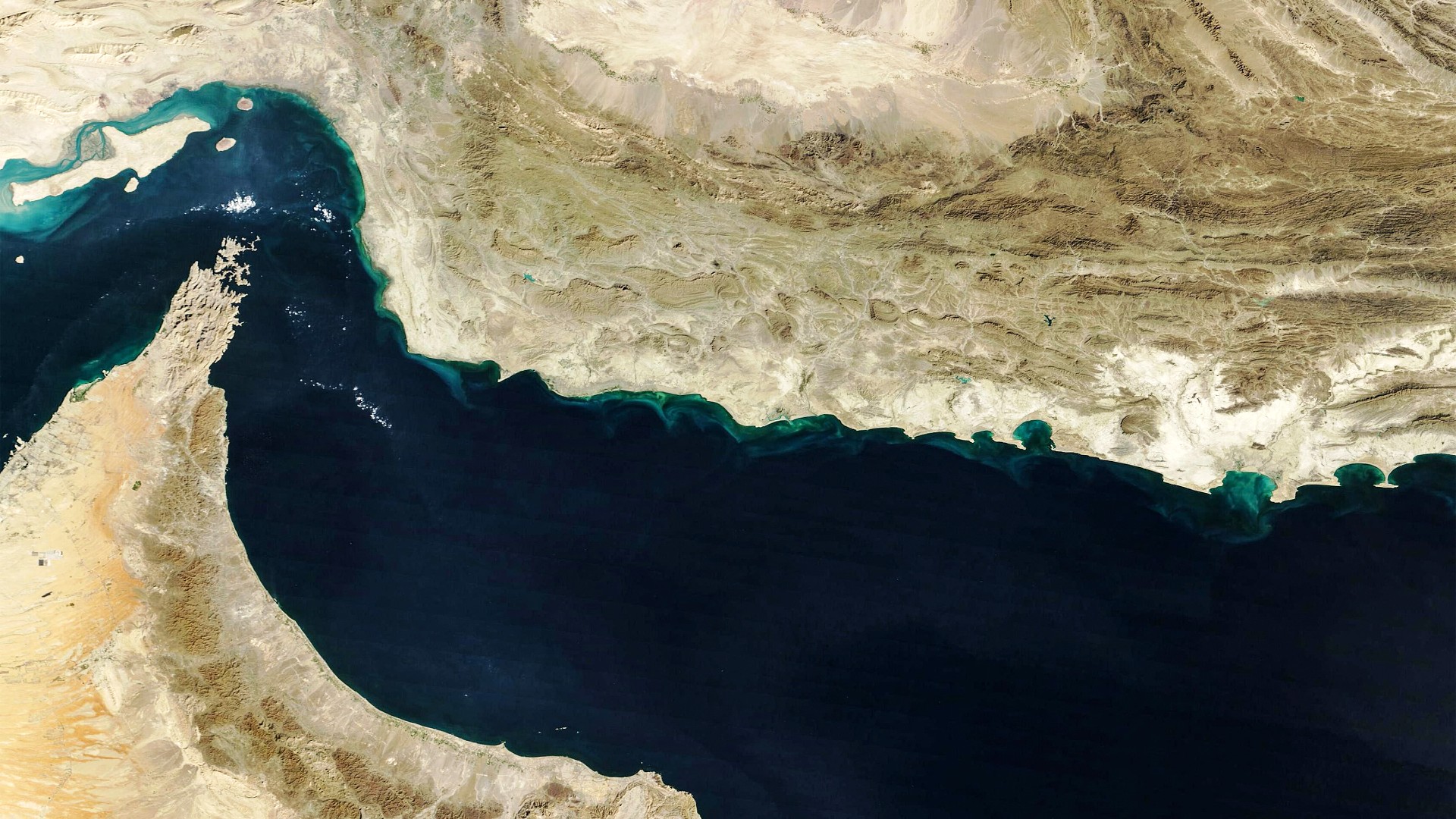
    At the peak of the U.S.-China trade war in the preceding year, the two powers imposed reciprocal tariffs totaling over 100% on each other’s goods. A fragile truce followed the escalation, and this summit was framed around three core unanswered questions: whether the truce will hold, what long-term trade deal will replace it, whether Beijing can help broker a diplomatic resolution to the ongoing Iran crisis that has blocked the Strait of Hormuz, and how the two powers will navigate the long-simmering tensions over Taiwan – the self-governing island that China claims as its sovereign territory, and which the U.S. maintains unofficial diplomatic and defense ties with.

    Beijing’s elaborate welcome was not just a gesture of hospitality to Trump and the 30 top American CEOs accompanying him on the trip; it was a deliberate display of geopolitical strength broadcast to audiences across the United States and the entire globe. Almost immediately after talks got underway, Chinese state media released comments from Xi that made clear Taiwan remains a major flashpoint that could derail progress between the two sides. When reporters pressed both leaders on whether they had discussed Taiwan during their Temple of Heaven visit, neither leader responded to the question.

    John Delury, senior fellow at the Asia Society’s Center on US-China Relations, framed the summit as a visible marker of shifting global power dynamics. “We are witnessing a historical change,” Delury explained. “I hesitate to put too much on this specific summit, but the inexorable rise of China to a place where it is legitimately rivaling the U.S. – that is now happening before our eyes. Beijing is now the second world capital.”

    Xi has positioned himself as a steady, predictable global leader in contrast to what many global observers frame as Trump’s mercurial policy style. In the years since Trump’s first term, China has expanded its global trade reach dramatically, pre-emptively building new economic partnerships to offset the risk of renewed U.S. tariffs. Over the past year, China demonstrated its economic leverage during the trade war: it matched Trump’s tariffs tit-for-tat, and restricted exports of rare earth minerals – critical inputs for advanced global manufacturing – forcing Washington to return to negotiations and agree to lower tariff rates.

    Today, China controls 30% of global manufacturing output, processes over 90% of the world’s rare earth minerals, and produces between 60% and 80% of global supplies of solar panels, wind turbines and electric vehicles. Xi has indicated he believes this summit has already made clear to the U.S. and the world just how deeply dependent global economies are on Chinese manufacturing and technology. While ongoing international concerns over China’s human rights record and its close diplomatic ties to Russia and North Korea persist, those issues have been pushed to the background amid Trump’s broader reshaping of the global world order. Many global analysts now see the trajectory of global power shifting in China’s favor.

    China enters these talks with a clear upper hand, as Trump faces domestic political headwinds of his own, including sinking approval ratings, and international pressure over the ongoing Iran crisis that has shut down the Strait of Hormuz – a critical global energy shipping lane whose closure has sent shockwaves through the global economy. Trump has publicly said he is counting on Beijing’s help to reopen the corridor. As Iran’s largest trading partner with decades of close diplomatic ties to Tehran, Beijing holds significant influence over the Iranian government. If Xi can help push Tehran toward negotiations to de-escalate the crisis, that would give China even greater leverage in talks with the U.S.

    U.S. Secretary of State Marco Rubio framed the U.S. position ahead of the trip, telling Fox News, “It’s in their interest to resolve this. And we hope to convince them to play a more active role.” But analysts widely agree China will demand major concessions in exchange for cooperation on Iran. According to Chinese state media, Xi has already made clear to Trump during closed-door talks that the Taiwan issue has the potential to spark direct conflict between the two powers. Analysts expect Xi will pressure the U.S. to delay or halt arms sales to Taiwan – a requirement that would put Washington in a difficult position, as it is legally bound to provide the island with defensive military capabilities. Officials in Taipei are closely watching the summit’s outcome with significant anxiety.

    This visit differs from Trump’s first trip to China in key ways: unlike his first visit, when former First Lady Melania Trump accompanied him, this trip centers heavily on the high-powered U.S. business delegation, which includes some of the biggest names in American tech and industry: Tesla CEO Elon Musk, Apple CEO Tim Cook, and Nvidia CEO Jensen Huang, all of whom attended the opening state banquet.

    Trump has centered his trade demands around pushing China to further open its domestic markets to increased access for U.S. companies. As of the end of the first day of talks, few concrete details of any potential deal have been released to the public. A preliminary White House statement only confirmed that the two sides “discussed ways to enhance economic cooperation”, including expanding U.S. firms’ access to the Chinese market and facilitating Chinese investment in U.S. domestic industries. On the Iran issue, the statement added that “both countries agreed that Iran can never have a nuclear weapon” and “the Strait of Hormuz must remain open to support the free flow of energy”.

    Additional talks between the two leaders are scheduled for the following day, which are expected to yield more concrete details on potential agreements. For Trump, a tangible diplomatic win from the summit is critical to boost his sinking domestic approval ratings back home. Xi, for his part, has signaled China is open to expanding cooperation in trade and agriculture, a move widely interpreted as a signal Beijing is prepared to increase purchases of U.S. soybeans, beef, and Boeing commercial aircraft.

    The two leaders have agreed to a new framing of the bilateral relationship as “constructive, strategic and stable”, a positioning that will guide U.S.-China ties for the next three years. At the same time, China is grappling with its own serious domestic economic challenges, including rising youth unemployment, uneven post-pandemic growth, a persistent real estate sector crisis, and record high levels of local government debt. While Beijing seeks a global order less centered on U.S. hegemony, it still has a critical strategic interest in maintaining stable, functional relations with Washington.

    At the close of the opening day’s state banquet, after remarking that he had received a “magnificent welcome like no other” in Beijing, Trump formally invited Xi to visit Washington D.C. for a return summit in September. Xi struck a unifying tone in response, saying that the “great rejuvenation of the Chinese nation” and Trump’s campaign slogan “Make America great again” can progress hand in hand. He closed his remarks with a toast to the future of both nations, ending the evening with a single word: “Cheers.”

  • US federal judge blocks US sanctions against UN’s Francesca Albanese

    US federal judge blocks US sanctions against UN’s Francesca Albanese

    In a landmark ruling that upholds core free speech principles, a US federal judge issued a temporary preliminary injunction on Wednesday halting the Trump administration’s sanctions against Francesca Albanese, the United Nations Special Rapporteur on Palestine, finding the punitive measures likely violated her constitutional right to free expression.

    Albanese was targeted with US sanctions in July 2025, just weeks after she published a sweeping, critical report on June 30 that condemned Israel’s military campaign in Gaza. In that document, she identified over 60 major global firms — including tech giants Google, Amazon, and Microsoft — alleging the companies were complicit in shifting Israel’s occupation-based economy into what she framed as an economy of genocide. The report called on the International Criminal Court (ICC), national judicial bodies worldwide to launch investigations and prosecute implicated corporate leaders and companies, and urged UN member states to impose targeted sanctions and asset freezes on the entities named.

    The sanctions imposed on Albanese carried severe practical consequences: she was barred from entering the United States, and was shut out of the US banking system, cutting off access to basic financial services. The legal challenge to the sanctions was brought by Albanese’s husband Massimiliano Cali, a senior World Bank economist based in Tunisia, who filed the civil suit on behalf of himself, Albanese, and the couple’s US citizen daughter. The complaint argued that the Trump administration had unlawfully seized Albanese’s accessible assets without adhering to due process, violated existing US sanctions legislation, and effectively de-banked her, leaving her unable to meet routine daily needs.

    In his opinion accompanying the injunction order, US District Judge Richard Leon emphasized that safeguarding free speech is always aligned with the public interest. The judge further ruled that Albanese’s status as a non-US resident does not strip her of protections under the First Amendment to the US Constitution, noting that the administration targeted her specifically because of the content and message of her public criticism.

    Albanese celebrated the court’s decision in a public post on X, writing, “BREAKING! US court has suspended the US sanctions against me! As the judge says: ‘Protecting the Freedom of speech is always just the public interest’. Thanks to my daughter and my husband for stepping up to defend me, and everyone who has helped so far. Together we are One.”

    The ruling comes amid growing international solidarity with Albanese. Earlier that month, on May 7, Spanish Prime Minister Pedro Sanchez awarded the UN expert the Order of Civil Merit in a clear show of support. A day before that honor, Sanchez formally asked the European Commission to activate the EU’s Blocking Statute, a regulation designed to protect EU individuals and institutions from extraterritorial US sanctions, to shield both the ICC and the United Nations from US punitive measures.

  • Malaysia slams Norway for revoking export license for a naval missile system

    Malaysia slams Norway for revoking export license for a naval missile system

    In a sharp rebuke that has highlighted growing friction over international defense contracts, Malaysian Prime Minister Anwar Ibrahim has publicly condemned Norway’s decision to revoke an export license for a key naval missile system earmarked for the Royal Malaysian Navy, warning the unilateral move risks eroding long-term trust in European defense contractors. The dispute centers on the Naval Strike Missile (NSM) system and related launcher components, which were contracted to equip Malaysia’s upcoming fleet of littoral combat ships as a core part of the Southeast Asian nation’s ongoing military modernization drive.

    Speaking Thursday, Anwar confirmed he conveyed Malaysia’s “vehement objection” to the cancellation directly during a phone conversation with Norwegian Prime Minister Jonas Gahr Støre. In an official statement released after the call, the Malaysian leader emphasized that Kuala Lumpur has met every contractual obligation for the deal, which was first signed in 2018, with unwavering consistency and good faith. “Malaysia has honored every obligation under this contract since 2018: scrupulously, faithfully and without equivocation,” Anwar said. “Norway, it appears, has not felt compelled to extend us the same courtesy and demonstration of good faith.”

    Per Malaysia’s national news agency Bernama, Kongsberg Defense & Aerospace AS, the Norwegian manufacturer of the NSM anti-ship missile system, has distanced itself from the policy move, stating that all export licensing decisions fall exclusively under the jurisdiction of the Norwegian government. As of Thursday, Oslo has not issued any public statement addressing the license revocation or Anwar’s criticisms.

    Malaysian Defense Minister Mohamed Khaled Nordin revealed to local media outlets that the Malaysian government had already completed payments for nearly 95% of the total contract value before Norwegian authorities blocked the shipment in March. Without the NSM systems, Malaysia’s littoral combat ship modernization program faces significant delays, which Anwar says will undermine the navy’s operational readiness and carry unforeseen consequences for the regional military balance.

    The Malaysian prime minister stressed that signed international defense contracts are binding, formal agreements, not disposable arrangements to be changed at random. “Signed contracts are solemn instruments. They are not confetti to be scattered in so capricious a manner,” Anwar said. “If European defense suppliers reserve the right to renege with impunity, their value as strategic partners flies out the window.”

    In response to the cancellation, Khaled confirmed that Malaysian officials are currently reviewing all available legal pathways, including potential claims for financial compensation from the Norwegian side, to resolve the breach of contract.