标签: Asia

亚洲

  • Don’t use GDP to judge China’s strength – look at this instead

    Don’t use GDP to judge China’s strength – look at this instead

    As U.S. President Donald Trump prepares to touch down in Beijing on May 14 for a high-stakes bilateral summit with Chinese President Xi Jinping, Chinese officials are ready to lead with one key economic figure to showcase the country’s perceived resilience: an official 5% GDP growth target and performance figure for 2025. But while the 5% target is a stated policy goal, analysts argue that a far more telling indicator of China’s actual economic health lies in an unpublicized metric that reveals deep structural inefficiencies: the Incremental Capital Output Ratio, or ICOR.

    ICOR measures how much new investment is required to generate one additional unit of economic output. In a healthy, efficient economy, this ratio remains low, as capital flows to productive, high-return projects. When capital is misallocated — flowing into unneeded infrastructure, unprofitable projects, and overcapacity that cannot be absorbed by domestic demand — the ratio climbs, and in China, it has been rising sharply for decades.

    Calculated as gross capital formation as a share of GDP divided by real GDP growth, ICOR is not an official Chinese data point, but it can be derived from public data released by China’s National Bureau of Statistics. During China’s high-growth era between 2000 and 2007, ICOR held steady at around 3.9, meaning 3.9 percentage points of GDP in investment was required to generate 1 percentage point of GDP growth. For comparison, during their own rapid growth periods, South Korea and Taiwan posted far lower ICORs of 3.2 and 2.7 respectively, indicating that even at its economic peak, China’s investment efficiency lagged behind its regional peers.

    China’s investment productivity began a steady decline after the 2008 global financial crisis, when Beijing rolled out a massive large-scale stimulus package to offset falling export demand. Between 2008 and 2019, China’s ICOR climbed from roughly 4.5 to 7.2, nearly doubling the pre-crisis baseline. Economists attribute this shift to the exhaustion of China’s easy growth drivers: the most productive coastal manufacturing expansion, cross-regional infrastructure buildout, and rural-to-urban labor migration had largely run their course by the 2010s, leaving less high-return opportunities for new investment.

    The upward trajectory of ICOR has only accelerated since 2020. Using China’s official GDP figures, the country’s current annual ICOR stands at approximately 8.5, with a five-year rolling average approaching 9. When adjusted using more conservative, independent growth estimates from the Rhodium Group, a U.S.-based independent research firm that pegs China’s 2025 actual growth between 2.5% and 3%, the implied ICOR jumps to between 14 and 17. Even the most favorable interpretation of official Chinese data confirms a clear trend: the Chinese economy is rapidly losing investment efficiency, fueled by a flood of subsidized credit directed to politically prioritized projects rather than commercially viable opportunities.

    Beijing has built a reputation for consistently hitting its pre-set GDP growth targets, so much so that even senior Chinese officials have publicly questioned the legitimacy of the official numbers. Rather than treating GDP as a natural economic output, Chinese authorities treat the target as a non-negotiable policy goal, achieved through directed credit allocation to state-linked entities. State-owned enterprises, local government financing vehicles, and politically connected real estate developers access below-market-rate borrowing that does not reflect underlying project risk, and pour capital into ventures that would fail basic commercial return tests. The end result is a growing pile of excess production and unused capacity that Chinese consumers do not want, created solely to hit arbitrary growth metrics.

    Unable to absorb this surplus domestically, Beijing redirects it to global markets, selling goods below production cost and effectively exporting the losses from its domestic capital misallocation to trading partners around the world. This dynamic has major implications for the agenda of the upcoming Trump-Xi summit, challenging the conventional narrative that frames U.S.-China economic relations as a competition between a declining U.S. and a dynamically rising China.

    Over the past two decades, the U.S. has maintained a relatively stable ICOR, reflecting an economy where investment and output grow in rough, sustainable proportion. By contrast, China’s economy now requires exponentially more investment to generate every additional yuan of GDP, a structural weakness that undermines claims of inherent Chinese economic strength. China is now structurally dependent on continuous credit expansion and steady export revenues to service its growing debt load and maintain domestic political stability. This means that U.S. trade policy tools such as targeted tariffs can apply direct pressure to the core mechanisms Beijing relies on to manage domestic order, particularly the export revenues that keep its debt system functioning.

    That does not mean unilateral U.S. trade action is the most effective strategy, the analysis argues. Instead of walling the U.S. off from global trade alone, Washington should pursue coordinated action with like-minded allies to address the root of the problem: Beijing’s subsidized overcapacity model. Every major global economy is already coping with a flood of underpriced Chinese exported surplus, so a coordinated multilateral framework that targets subsidized overproduction at its source will create far more sustainable leverage than unilateral tariffs, which risk isolating the U.S. from the global partners it needs to enact meaningful change.

    None of this data suggests China is on the brink of imminent economic collapse. China’s governing system has already demonstrated a striking ability to manage gradual deterioration: rolling over bad debt, extending repayment timelines, and pushing underlying imbalances into the future rather than addressing them. But managed gradual decline is not the same as economic strength, and Beijing has so far shown no willingness to tackle the core structural imbalances driving falling investment efficiency on its own. While Beijing will continue to tout its 5% official growth figure as proof of economic resilience ahead of the summit, the real metric to watch is the one Chinese officials will not discuss: the rising hidden cost of generating every unit of that growth. This analysis comes from Daniel Swift, a senior research analyst for economics, finance and trade at the Center on Economic and Financial Power at the Foundation for Defense of Democracies, and a retired U.S. diplomat.

  • Philippine senator wanted by the International Criminal Court flees from Senate

    Philippine senator wanted by the International Criminal Court flees from Senate

    MANILA, Philippines — A high-stakes political crisis has gripped the Philippines this week, after a sitting Philippine senator facing International Criminal Court (ICC) charges of crimes against humanity slipped out of the heavily guarded Senate compound amid chaotic gunfire between security personnel and government law enforcement agents, senior government officials confirmed Thursday.

    Ronald dela Rosa, 64, a former national police chief under ex-President Rodrigo Duterte, had taken shelter inside the Senate compound Wednesday to avoid execution of an ICC arrest warrant unsealed just days earlier. The chaos that cleared his escape path began Wednesday night, when Senate security personnel opened multiple volleys of gunfire during a heated confrontation with a National Bureau of Investigation (NBI) agent assigned to serve the warrant. In the confusion that followed the shootout, dela Rosa managed to slip past security and leave the compound undetected.

    Shortly after the incident, President Ferdinand Marcos Jr. addressed the nation in a late-night televised broadcast, urging the public to avoid panic and stressing that authorities would conduct a full, transparent investigation into the escape. Law enforcement sources confirmed that one line of active inquiry centers on suspicions the gunfight was deliberately orchestrated to create a diversion and cover for dela Rosa’s exit.

    In a public press briefing Thursday, Senate President Alan Cayetano — a close political ally of the Duterte family — pushed back against claims of foul play, insisting “there is no obstruction of justice” in the incident. Cayetano argued that because no ICC arrest warrant had been officially presented to the Senate leadership, dela Rosa was under no legal obligation to remain on the premises and was free to leave at his own discretion. Political critics have rejected this explanation, however, and are calling for Cayetano and the Senate’s top security official to be held legally and politically accountable for facilitating the fugitive senator’s escape.

    Dela Rosa’s legal troubles are directly tied to the deadly national anti-drug crackdown launched by Duterte when he held the presidency from 2016 to 2022. Duterte himself was taken into ICC custody last March to face trial in The Hague on separate charges of crimes against humanity stemming from the same campaign. The unsealed ICC warrant against dela Rosa, made public Monday, accuses him of direct responsibility for the crime against humanity of murder, linked to the killings of no fewer than 32 people between July 2016 and April 2018 — the period when dela Rosa led the Philippine National Police and oversaw implementation of Duterte’s anti-drug initiative.

    Both Duterte and dela Rosa have repeatedly denied authorizing extrajudicial killings, though Duterte openly publicly threatened drug suspects with death throughout his time in office.

    The escape comes amid escalating open political conflict between the Duterte political bloc and the Marcos administration, a rift that lays bare deep enduring divisions within Philippine politics. The tension has escalated rapidly in recent days: Vice President Sara Duterte, Rodrigo Duterte’s daughter and current second-in-command of the country, has openly accused Marcos of orchestrating the “kidnapping” of her father and his illegal transfer to the international court. On Monday, the Marcos-allied majority in the House of Representatives voted to impeach Sara Duterte over allegations of unexplained illicit wealth, misuse of public funds, and a public threat to assassinate President Marcos, his wife, and the House speaker if she were killed amid the deepening political feud. Sara Duterte has denied all wrongdoing, but has declined to respond to the specific allegations against her in detail. Cayetano announced Thursday that the Senate will convene as an impeachment trial court as early as next Monday to begin preparations for the vice president’s trial.

    The current Senate leadership shakeup that set this chain of events in motion also ties directly to the dela Rosa case. Just this Monday, Cayetano reclaimed the Senate presidency after securing the support of 13 out of the body’s 24 senators. His razor-thin majority was secured after dela Rosa — who had been absent from Senate proceedings for months over fears of imminent arrest — made a surprise appearance at Monday’s leadership vote, arriving at the compound in Cayetano’s own vehicle. After the vote concluded, NBI agents moved to serve the ICC arrest warrant on the senator, who immediately fled to the Senate plenary hall and was taken into protective custody by his allied senators before the Wednesday night escape.

  • Dust storms and lightning kill at least 96 people in northern India

    Dust storms and lightning kill at least 96 people in northern India

    Deadly extreme weather has left northern India reeling, with official confirmation Thursday placing the death toll from a wave of dust storms, heavy rainfall and lightning at no less than 96, with dozens more injured. The destructive weather system swept across multiple districts of Uttar Pradesh, India’s largest state by population, late Wednesday, leaving a trail of destroyed property and disrupted communities in its wake.

    According to local officials, most fatalities stemmed from falling trees, collapsing poorly built structures, and direct lightning strikes, common hazards during pre-monsoon storm events. Emergency response teams including police and disaster management units quickly mobilized, deploying chainsaws and heavy cranes to clear fallen vegetation that blocked critical road and railway links across hard-hit districts.

    Pre-monsoon storms are a routine seasonal occurrence across northern India between March and June, when hot summer temperatures give way to the annual south Asian monsoon rains that replenish the region’s water supplies. But this latest event brought unusually intense and destructive conditions that have caused widespread harm.
    Narendra N. Srivastava, a senior local administrative official, noted that emergency crews have already been deployed across all impacted areas. Damage assessments confirm widespread destruction to residential buildings, agricultural crops, and electrical power infrastructure, with rural communities bearing the brunt of the impact.

    Residents of the hardest-hit districts described sudden, terrifying onslaughts of extreme wind that upended daily life in minutes. In Prayagraj district, local resident Ram Kishore recalled the rapid onset of the storm, saying that within just a few minutes of the storm’s arrival, the entire sky turned pitch black. Flying tin roofing sent residents scrambling for shelter indoors, he added, with the sound of falling trees echoing through neighborhoods throughout the evening.

    In neighboring Bhadohi district, another local resident, Savitri Devi, shared her family’s narrow escape after their mud-built home was severely damaged by strong winds. Devi said the family fled outside immediately when their home’s walls began shaking from the force of the wind; the roof collapsed just moments after they escaped. The family spent the night taking shelter at a relative’s home, left homeless by the storm.

    In response to the disaster, Uttar Pradesh Chief Minister Yogi Adityanath has issued urgent orders for all involved agencies: complete full relief operations across affected areas within 24 hours, and expedite the distribution of financial compensation and emergency life-saving aid to all families impacted by the extreme weather.

  • Gunfire chaos as Philippine senator resists ICC arrest: What we know so far

    Gunfire chaos as Philippine senator resists ICC arrest: What we know so far

    Manila, the Philippines — A chaotic eruption of gunfire inside the Philippine Senate this week has plunged the country’s already fractured political landscape into open crisis, capping a weeks-long standoff over an International Criminal Court (ICC) arrest warrant for a close ally of former president Rodrigo Duterte and exposing the deepening rift between the country’s two most powerful political dynasties.

    The crisis centers on Senator Ronald “Bato” dela Rosa, one of Duterte’s most loyal long-time associates. As chief of the Philippine National Police from 2016 to 2018, dela Rosa served as the public face of Duterte’s brutal nationwide war on drugs, a campaign that left thousands of suspected drug users and small-scale dealers dead. Human rights organizations have documented hundreds of cases of extrajudicial summary executions during the crackdown, leading the ICC to open a crimes against humanity investigation into the campaign.

    The ICC unsealed its arrest warrant for dela Rosa on Monday this week, coinciding with the senator’s first appearance on the Senate floor after months of unexplained absence from public life. The development came months after Duterte himself was taken into custody and transferred to The Hague in March 2025 to face his own ICC charges connected to the drug war. Though Duterte withdrew the Philippines from the ICC during his presidency in 2019, the tribunal has maintained it retains jurisdiction over crimes committed before the withdrawal, including thousands of drug war deaths that dated back to Duterte’s time as mayor of Davao City.

    Within days of the warrant being made public, dela Rosa sought protective refuge within the Senate, filing a petition with the Philippine Supreme Court to block local authorities from executing the ICC’s order. On Wednesday, the high court rejected his request for an immediate temporary restraining order, giving President Ferdinand “Bongbong” Marcos Jr.’s administration 72 hours to submit its official response to the petition.

    Hours after the Supreme Court’s ruling, dela Rosa took to Facebook Live to issue a public appeal, warning supporters he had received intelligence that authorities were en route to arrest him. “I am calling for your help: let us not have another Filipino brought to The Hague like President Duterte,” he told viewers. Roughly 60 minutes later, multiple gunshots rang out on the Senate’s second floor, triggering panic across the complex.

    Chaotic scenes unfolded live on national television: journalists and legislative staff scrambled for cover, the entire Senate building was placed under immediate lockdown, and heavily armed security personnel in flak jackets cordoned off the entire premises. Initial conflicting accounts emerged over the source of the gunfire: Senate Secretary Mark Llandro Mendoza told local reporters that agents from the National Bureau of Investigation (NBI) had attempted to enter the building and fired shots while retreating. But NBI director denied the claim, stating no agents had been deployed to the Senate that day.

    Interior Secretary Jonvic Remulla later entered the building to meet with legislative leaders, and emerged alongside newly installed Senate President Alan Peter Cayetano to confirm no injuries were reported. The pair confirmed shots had been fired but declined to name potential perpetrators, noting an official investigation was still ongoing. By the following morning, police announced they had detained at least one person in connection with the shooting. President Marcos addressed the nation in a YouTube video shortly after the incident, calling for calm and promising a full probe. “We will get to the bottom of this… Was this encounter part of destabilisation? We will need to know,” he said.

    The gunfire incident is the most visible escalation of a rapidly worsening political power struggle between the Marcos and Duterte political clans, an alliance that collapsed spectacularly after the two groups won the 2022 national election in a landslide. Just this week, the House of Representatives — where Marcos allies hold a majority — voted to impeach Vice President Sara Duterte, Rodrigo Duterte’s daughter and Marcos’ top political rival, over allegations of corruption and plots to assassinate the president. The articles of impeachment were formally transmitted to the Senate on the same day the shooting occurred, and the chamber will now act as an impeachment court with the power to remove Sara Duterte from office and bar her from running for president in the 2028 election.

    Dela Rosa’s surprise return to the Senate this week also upended the chamber’s power balance: his presence helped secure enough votes to install Cayetano — a former Duterte foreign minister and vice presidential running mate — as the new Senate president. The 24-member Senate is now controlled by a majority bloc composed of dela Rosa and other Duterte allies, leaving Marcos-aligned senators in the minority. The overlapping crises of the ICC arrest standoff, impeachment trial, and now the Senate shooting have brought long-simmering tensions between the two dynasties to a head, leaving the Philippines facing one of its most unstable political periods in recent history.

  • BRICS foreign ministers meet in India as Iran war, oil prices and divisions test the bloc’s unity

    BRICS foreign ministers meet in India as Iran war, oil prices and divisions test the bloc’s unity

    Two days of high-stakes diplomatic talks between BRICS foreign ministers kicked off in New Delhi on Thursday, bringing together representatives from the bloc’s 10 current member states at a moment of deepening geopolitical friction and growing global economic volatility. The summit unfolds against a backdrop of multiple overlapping crises: the ongoing conflict involving Iran has disrupted global energy supply chains, pushed international oil prices sharply higher, and created new rifts among the grouping’s recently expanded membership, while U.S. President Donald Trump holds a landmark meeting with Chinese President Xi Jinping in Beijing concurrently.

    Founded in 2001 and formally established as a coordination bloc in 2006, BRICS was originally built as a collective voice for major emerging economies, designed to counterbalance the influence of Western-dominated global governance bodies such as the G7. South Africa joined the original four members—Brazil, Russia, India, and China—in 2010, marking the bloc’s first expansion. A major wave of new memberships followed in 2024, when Egypt, Ethiopia, Iran, and the United Arab Emirates joined, with Indonesia becoming the 10th full member in 2025. Over the past two decades, the bloc has positioned itself as an alternative leadership channel for the Global South, attracting widespread support from developing nations that have long criticized Western-led financial institutions for skewed representation and unfair policies.

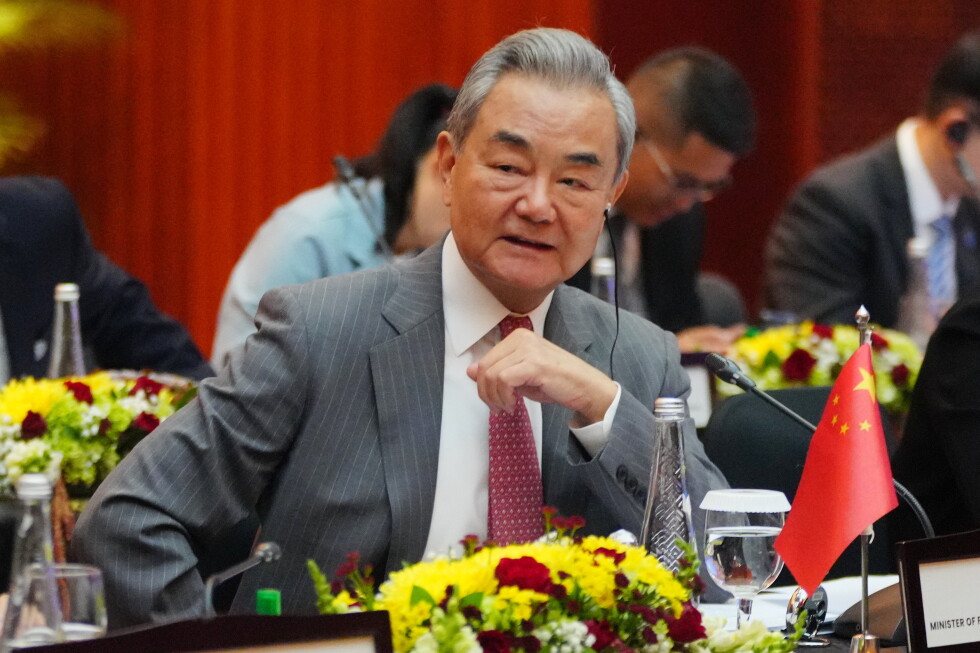
    Attendees at this year’s summit include Iranian Foreign Minister Abbas Araqchi and Russian Foreign Minister Sergey Lavrov. China is being represented by Ambassador Xu Feihong, as top Chinese diplomat Foreign Minister Wang Yi remains in Beijing to support the Trump-Xi summit. India’s Foreign Minister Subrahmanyam Jaishankar, who holds the 2025 BRICS chairmanship, opened the talks by outlining the summit’s core priorities: addressing pressing global and regional challenges, and identifying actionable pathways to deepen practical cooperation across all member states.

    In his opening address, Jaishankar emphasized that BRICS has a critical role to play in helping developing nations navigate overlapping, cascading crises, from public health vulnerabilities and inadequate development financing to skyrocketing prices for energy, food, and fertilizer. “We meet at a time of considerable flux in international relations,” Jaishankar told delegates, noting that emerging and developing economies increasingly look to BRICS to deliver a “constructive and stabilizing role” amid global uncertainty.

    Despite the bloc’s expanding global influence and growing appeal in the Global South, deep internal divisions have come to the fore ahead of this week’s talks, testing BRICS’ ability to present a unified front to the world. Longstanding regional rivalries, including the competition for influence between India and China, have created persistent frictions, while member states hold widely differing alignments with Western powers. Russia’s full-scale invasion of Ukraine already laid bare these ideological and strategic gaps, and the bloc’s 2024 expansion has added new layers of strain, as competing regional interests have made it even harder to align on collective positions.

    Now, the escalating conflict in the Middle East has pushed these divisions into the open. Both Iran and the UAE are current BRICS members, but the two nations hold sharply competing interests in the region. On Wednesday, Iranian deputy foreign minister Kazem Gharibabadi confirmed that disagreements over the conflict had already blocked BRICS from agreeing to a unified statement.

    Gharibabadi told India’s Press Trust of India that one unnamed BRICS member had pushed for the bloc to release language formally condemning Iran, a move that has derailed consensus-building efforts. “We want India’s BRICS chairship to be successful. It is not a good approach to send a signal to the world that the BRICS is divided. One country is insisting on condemning Iran,” Gharibabadi said.

  • Asian stocks are mixed as investors watch takeaways from Trump-Xi summit

    Asian stocks are mixed as investors watch takeaways from Trump-Xi summit

    HONG KONG – Global financial markets kicked off Thursday with uneven momentum across Asian equities, one day after major U.S. indexes notched fresh all-time records. Traders across the region were laser-focused on outcomes from the highly anticipated summit between U.S. President Donald Trump and Chinese President Xi Jinping in Beijing, looking for any shifts that could reshape trade, geopolitics and global energy flows.

    The two leaders held talks at Beijing’s Great Hall of the People, covering the full scope of U.S.-China ties including the sensitive issue of Taiwan. Most market analysts entered the meeting with tempered expectations, projecting no major breakthroughs on longstanding bilateral disputes would emerge from the one-day summit.

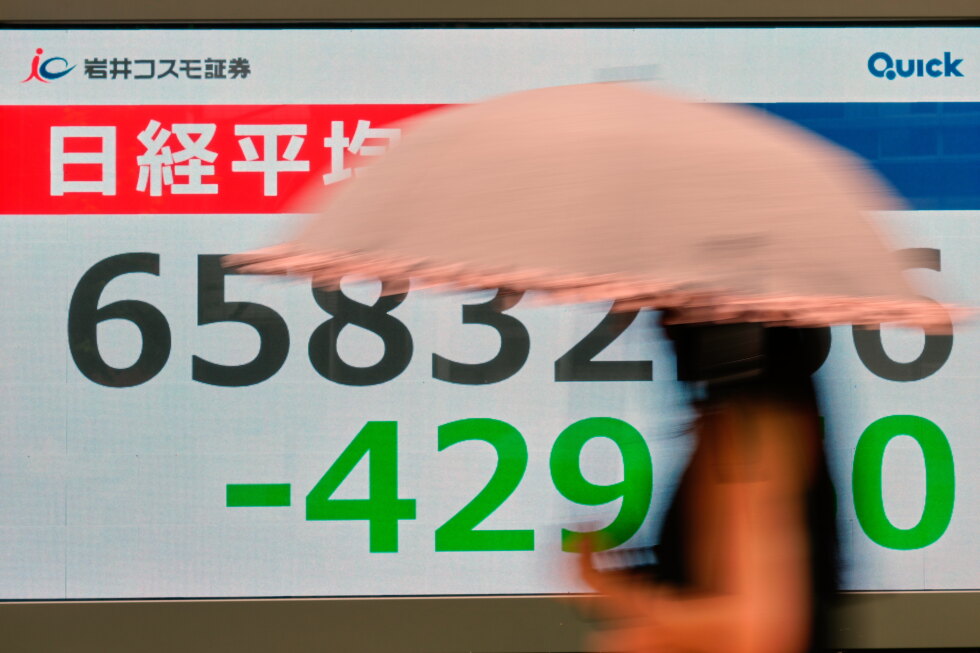
    Early futures trading for U.S. stocks pointed to a mild upward opening when markets resume trading stateside. Across East Asia, benchmark indexes painted a mixed picture: Japan’s Nikkei 225 gained 0.3% to close at 63,448.87, after climbing to an intraday all-time high above 63,700 earlier in the session, lifted by stronger-than-expected quarterly earnings from major Japanese corporations. South Korea’s Kospi advanced 0.5% to 7,884.71, with the biggest gains coming from the country’s technology sector. Hong Kong’s Hang Seng Index added 0.7% to reach 26,584.88, while mainland China’s Shanghai Composite Index pulled back 0.9% to 4,204.41. Australia’s S&P/ASX 200 posted a marginal dip of less than 0.1% to settle at 8,627.80, while Taiwan’s Taiex rose 0.6% and India’s Sensex climbed 0.5% by closing time.

    Beyond equities, oil prices continued their upward climb, driven by persistent uncertainty over the ongoing two-month-old war in Iran. Market participants have pinned hopes on the Trump-Xi summit to deliver diplomatic progress, after senior U.S. officials noted that Beijing maintains close economic ties with Tehran that could be leveraged to pressure Iran into reopening the critical Strait of Hormuz, a chokepoint for nearly a fifth of global oil supplies.

    As of Thursday trading, Brent crude, the global benchmark for oil prices, rose 0.4% to $106.04 per barrel. That figure is far higher than the roughly $70 per barrel price seen just before the Iran conflict broke out in late February. The uptick came one day after the International Energy Agency warned that supply disruptions stemming from the Strait of Hormuz standoff are draining global crude stockpiles at a faster pace than ever recorded. U.S. benchmark West Texas Intermediate crude also gained 0.4% to trade at $101.43 per barrel.

    Investors are also monitoring developments around China’s import policies for Nvidia’s cutting-edge H200 artificial intelligence chips. Nvidia CEO Jensen Huang is among a cohort of top U.S. business leaders including Tesla’s Elon Musk and Apple’s Tim Cook joining Trump on his Beijing trip, sparking speculation about potential shifts in tech trade rules.

    On Wednesday, U.S. markets closed out the session with tech stocks leading broad gains that pushed major benchmarks to new record highs. The broad S&P 500 climbed 0.6% to 7,444.25, notching another all-time closing high. The tech-heavy Nasdaq Composite rose 1.2% to 26,402.34, also hitting a new record, while the blue-chip Dow Jones Industrial Average posted a modest 0.1% dip to 49,693.20.

    In bond markets, the yield on the 10-year U.S. Treasury note edged down marginally to 4.46% from Wednesday’s 4.47%, but remains far above the 3.97% level recorded before the Iran war began. A government report released Wednesday showed U.S. wholesale prices spiked in April, driven largely by energy market volatility triggered by the Iran conflict. Also on Wednesday, the U.S. Senate confirmed Kevin Warsh, Donald Trump’s nominee, to serve as the next chair of the Federal Reserve, succeeding Jerome Powell, whom Trump repeatedly criticized for refusing to cut interest rates as quickly and deeply as the president demanded.

    In currency markets, the U.S. dollar dipped slightly to 157.85 Japanese yen, down from 157.86 yen in the previous session. The euro also saw a marginal uptick, rising to $1.1715 from $1.1711.

    Associated Press Business Writer Stan Choe contributed reporting to this article.

  • Chinese-linked ships cross Strait of Hormuz on eve of Trump-Xi meeting

    Chinese-linked ships cross Strait of Hormuz on eve of Trump-Xi meeting

    In a development that overlaps with a high-stakes diplomatic visit to China by former U.S. President Donald Trump, multiple vessels connected to China passed through the strategically critical Strait of Hormuz within a 24-hour window this week, adding a new layer of complexity to already tense global discussions around the ongoing Iran conflict. The most closely monitored of these vessels is a Chinese-owned supertanker loaded with two million barrels of Iraqi crude oil. Ship tracking data confirms the tanker completed its passage through the strait on Wednesday, before disabling its automatic identification system transponder while navigating the Gulf of Oman — a move that has drawn heightened international attention to its movements.

    The Strait of Hormuz, the world’s most important chokepoint for global oil and gas trade, has emerged as the central flashpoint in escalating tensions between Iran and the United States. In a bid to assert full territorial authority over the waterway, Iran has moved to impose transit tolls on commercial vessels passing through the strait, while the U.S. has enforced a sweeping blockade banning any vessels with ties to Iran — or ships that have paid Iran the required transit fee — from global shipping markets. Open-source intelligence analysts, working with publicly available maritime tracking data, confirmed that a total of six other Chinese-linked vessels completed their transit of the strait just one day before the supertanker’s passage. That group included five oil tankers and one vessel carrying liquefied petroleum gas. As of this reporting, there is no public confirmation confirming whether any of the Chinese-linked vessels paid the required toll to Iran, though Iranian authorities have previously publicly confirmed they accept Chinese yuan as a valid form of payment for transit fees.

    The timing of these transits coincides with Trump’s arrival in Beijing on Wednesday, kicking off a two-day official visit to meet with Chinese President Xi Jinping. While negotiations over bilateral business and trade agreements between the world’s two largest economies top the official agenda, the escalating conflict over Iran and the status of the Strait of Hormuz are expected to dominate behind-the-scenes discussions. Speaking to reporters ahead of his departure for Beijing, Trump acknowledged that Iran would feature prominently in his talks with Xi, even as he downplayed the need for Chinese cooperation to reach a favorable deal for the U.S. with the Iranian government. “We have a lot of things to discuss. I wouldn’t say Iran is one of them, to be honest with you, because we have Iran very much under control,” Trump told reporters ahead of the trip.

    U.S.-China relations are already defined by broad systemic competition, with the two global powers vying for influence in areas ranging from artificial intelligence innovation to critical mineral supply chains and cross-strait relations around Taiwan. U.S. policy has failed to force Iran into submission on nuclear and regional security issues, a development that has been quietly welcomed by Beijing, but China has not remained a passive bystander to the conflict. According to exclusive reporting from Middle East Eye, the first outlet to break the story, China supplied advanced air defense systems to Iran in the aftermath of the June 2025 conflict between Iran and Israel, which concluded with U.S. military strikes on Iranian nuclear infrastructure. MEE further reported that on the eve of a planned February 2026 attack, China delivered kamikaze drones to Iranian forces. These reports were later corroborated by The New York Times, which confirmed shipments of Chinese shoulder-fired air defense systems arrived in Iran this past April. The Financial Times has also reported that Iranian forces used a sophisticated Chinese surveillance satellite to target U.S. military bases stationed across the Gulf region.

    Despite its military and logistical support for Iran, experts note that Beijing’s core strategic goal remains a negotiated resolution to the conflict that would reopen the Strait of Hormuz to full commercial traffic, a move critical to stabilizing global energy markets on which China’s economy depends. “China and the US are aligned in opposing Iran having a nuclear weapons and seeing the Strait of Hormuz reopened,” Ahmed Aboudouh, an associate fellow at Chatham House and head of the China Studies research unit at the Emirates Policy Center, told Middle East Eye.

    This aligns with recent public diplomatic moves from Beijing. Chinese state media confirmed on Wednesday that China’s top diplomat, Foreign Minister Wang Yi, urged Pakistan to expand its mediation efforts between Iran and the United States in a call with Pakistani Foreign Minister Ishaq Dar on Tuesday. Wang emphasized the need to resolve the issue of the strait’s reopening “properly”, adding that “China will continue to support Pakistan’s mediation efforts and make its own contribution toward this end,” according to China’s official state news agency Xinhua.

  • ‘Rogue state behaviour’: Israel carrying out covert influence operations in Canada, report says

    ‘Rogue state behaviour’: Israel carrying out covert influence operations in Canada, report says

    A groundbreaking new report released by Canadians for Justice and Peace in the Middle East (CJPME) has leveled serious allegations against Israel, claiming the country operates a far-reaching, deeply rooted covert influence campaign across Canada – and that the Canadian federal government has so far declined to classify these activities as foreign interference. The advocacy group has put forward a slate of urgent policy recommendations, urging Ottawa to formally name Israel as a high-priority foreign threat actor on par with nations like China and India, expel Israeli diplomatic personnel, and impose a full ban on Israeli-manufactured spyware.

    In the 187-page report, CJPME argues that while cross-national lobbying in pursuit of national interest is a standard global practice, Israeli activities in Canada cross critical ethical and legal lines due to their consistent lack of public disclosure. The report lays out five detailed, documented case studies of covert operations, all structured to reshape Canadian public opinion, bend regulatory policy, and manipulate media narratives through hidden local intermediaries. CJPME’s findings draw on corroborating reporting from respected Canadian and international outlets, including Canadian investigative newsroom The Breach, left-leaning investigative site Press Progress, The Globe and Mail, The Toronto Star, Israeli outlet Haaretz, and The New York Times.

    The first documented incident centers on undisclosed polling conducted in the weeks after the October 7, 2023, Hamas attacks on southern Israel. According to the report, Toronto-based public relations firm Aurora Strategies carried out the poll on behalf of the Israeli consulate, without disclosing the Israeli government’s funding or involvement. The poll used intentionally biased framing to skew results in support of Israel’s military campaign in Gaza, and Liberal Party insiders reportedly discussed sharing the unpublished results directly with Prime Minister Justin Trudeau’s office before its public release.

    A second case dates back to a 2019 Canadian Federal Court ruling that labeled “Product of Israel” labeling for goods produced in illegal Israeli settlements in the occupied West Bank as misleading to consumers. The report confirms that Israel’s Ministry of Justice quietly contracted a Toronto-based law firm to intervene in the legal proceedings, with firm staff even drafting pre-written talking points for Canadian federal officials to use on the issue. The covert effort was designed to pressure the Canadian government to appeal the ruling and preserve the labeling system that benefits Israeli settlement producers.

    Third, the report details so-called “propaganda junkets” organized by the Israeli government, which use Canadian domestic groups as unacknowledged proxies to fly Canadian politicians and other influential public figures to Israel on all-expense-paid trips. CJPME emphasizes that the lack of transparency around these trips enables hidden influence-building, noting that many unelected influential participants face no mandatory disclosure requirements comparable to elected lawmakers. The report draws a parallel to the 1985 ban on paid trips to Apartheid-era South Africa implemented by former Prime Minister Brian Mulroney, arguing that even full transparency would not erase the ethical harm of these covert trips – even as some Conservative MPs defied Mulroney’s voluntary ban decades ago.

    The fourth case focuses on a large-scale disinformation operation uncovered in 2024, run by Israel’s Ministry of Diaspora Affairs targeting Canadian audiences. According to the report, the Israeli government hired a Tel Aviv-based political marketing firm to build fake English-language websites – including one platform branded “United Citizens for Canada” – alongside hundreds of artificial intelligence-powered fake social media accounts generated using ChatGPT. These accounts spread anti-Muslim racist messaging framed as pro-Israel content, portraying Muslim communities as a threat to Western society as part of a broader Israeli strategy to suppress global pro-Palestinian advocacy beyond its borders. At the time the operation was uncovered, Canadian officials confirmed that they viewed the fake platforms as foreign interference and validated core elements of the allegations when raising concerns with Israeli authorities, but no public accountability measures have ever been implemented.

    The final case outlined is what CJPME terms a campaign of transnational repression targeting Canadian activists who publicly criticize Israeli policy. The report documents that this campaign includes coordinated surveillance, ideological profiling, and doxxing – the public release of private personal information – of Palestinian solidarity organizers in Canada. In recent months, the report notes, Israel’s Ministry of Diaspora Affairs has pushed a narrative framing all opposition to Israel’s ongoing blockade of Gaza as tied to a conspiracy organized by Hamas and the Muslim Brotherhood. Israel’s ambassador to Canada, Iddo Moed, has publicly called on the Canadian government to restrict specific civil liberties related to pro-Palestinian advocacy, which CJPME describes as open lobbying to curtail core Canadian democratic rights. To counter this surveillance effort, the report recommends a full ban on the purchase and use of Israeli spyware tools including NSO Group’s Pegasus, Cytrox’s Predator, and Paragon Solution’s Graphite, all of which have been used to track and target government critics globally.

    Beyond the spyware ban, CJPME’s full set of recommendations calls on the Canadian government to leverage its existing legal and diplomatic tools to counter foreign interference, including expelling Israel’s ambassador to Canada and other implicated diplomatic staff, and imposing targeted sanctions on all actors involved in the covert influence campaigns. “A holistic approach to countering illicit Israeli influence will require holding Israeli state officials accountable while finding ways to discourage Canadian participation in these schemes,” the report concludes.

  • After more than 25 years, former winner Australia is back in sailing’s America’s Cup

    After more than 25 years, former winner Australia is back in sailing’s America’s Cup

    After a 25-year absence from the iconic America’s Cup sailing competition, Australia is officially making a comeback, with its challenger entry for the 38th edition of the world’s oldest sailing trophy accepted by event organizers.

    Sydney’s Royal Prince Edward Yacht Club announced Thursday that its challenge submitted alongside Team Australia has been cleared for the 38th America’s Cup, scheduled to kick off next year in Naples, Italy. Australia joins a growing field of challengers gunning for a spot in the final match against defending champion Team New Zealand, including a confirmed entry from the United States.

    Team Australia has wasted no time building an elite, championship-caliber leadership squad, welcoming some of the biggest names in global sailing to key roles. Olympic gold medal-winning sailor Tom Slingsby, who currently competes in the global SailGP series for an Australian team, will step into the position of head of sailing for the syndicate. Three-time America’s Cup champion Glenn Ashby has been tapped to lead the team’s performance and design division.

    Speaking on his new appointment, Slingsby emphasized the deep personal meaning of returning Australia to the competition as an independent national contender. “The opportunity to represent Australia in the America’s Cup with an Australian team is something that genuinely means a lot to me,” he said. “It’s been a dream throughout my career to be part of bringing Australia back to the Cup in a meaningful way.”

    Leading the entire campaign as chief executive officer is Grant Simmer, a foundational member of the legendary 1983 Australia II team that pulled off one of the biggest upsets in sports history, ending the New York Yacht Club’s unbroken 132-year winning streak in the America’s Cup. For Simmer, the 2027 comeback campaign is both a full-circle moment and a thrilling new chapter. “For me, this campaign is both deeply personal and incredibly exciting,” he shared in a formal statement. “I first became involved in the America’s Cup in the early 1980s and was fortunate to be part of the team that changed the course of the Cup forever.”

    Australia’s return to the America’s Cup as a flagged contender fills a gap that has lasted more than two decades. The last official Australian challenger syndicate was Young Australia, which competed in the 2000 America’s Cup held in Auckland, New Zealand. In the years since, Australian sailors and designers have claimed America’s Cup glory as part of winning teams from the United States, Switzerland and New Zealand, but no fully Australian-led and flagged entry has competed until now.

    The path to the 38th America’s Cup final was set last October, when Team New Zealand claimed the 37th America’s Cup title in Barcelona, Spain, beating INEOS Britannia by a score of 7-2 to secure their third consecutive America’s Cup victory. Representing the Royal New Zealand Yacht Squadron, the Kiwi team will now automatically advance to the best-of-13 final match in 2027, where they will face the winner of the challenger series hosted in Naples next year.

    Next year’s competition will also bring a landmark new rule for AC75 yachts, requiring every race crew to include at least one female sailor. Tash Bryant, a world-leading Australian female sailor, called the policy a transformative milestone for gender equity in elite sailing. “The changes represent an important moment for the future of the sport,” she said. “The evolution of the boats and the competition is opening the door to broader opportunities and visibility for women in elite sailing, while also creating clearer pathways for younger generations coming through the sport.”

  • Record complaints filed over UK press smear of anti-genocide artist Misan Harriman

    Record complaints filed over UK press smear of anti-genocide artist Misan Harriman

    A coordinated smear campaign targeting high-profile British photographer and Southbank Centre chair Misan Harriman by right-wing UK news outlets has triggered an unprecedented wave of public complaints to the nation’s media regulator, shattering all previous records for public pushback against inaccurate press coverage.

    The public complaint drive, organized by media accountability platform NewsCord, crossed the 50,000-submission mark in just 48 hours after launching, and has now collected more than 80,000 signatures demanding regulatory action. This total triples the earlier all-time high of roughly 25,000 complaints submitted to the Independent Press Standards Organisation (Ipso) over Jeremy Clarkson’s 2022 defamatory column about Meghan Markle in *The Sun*, marking a historic moment for public demands for press accountability in the UK.

    The campaign against Harriman, an Oscar-nominated photographer, long-time social justice activist and prominent pro-Palestine voice, erupted after he posted two pieces of content to social media earlier this month. First, he raised a factual question after a late April stabbing attack in London’s Golders Green: why had both police and most mainstream media outlets failed to mention that the attack included a third victim, a Muslim man, when coverage uniformly focused only on the two Jewish men stabbed later the same day? Second, he shared a short video reflecting on Reform UK’s strong local election performance, which included a contextual quote from iconic Jewish-American writer Susan Sontag about human behavior and political extremism.

    Right-wing outlets distorted both posts to manufacture false accusations against Harriman. They labeled his factual observation about the unreported third victim a baseless “conspiracy theory,” despite clear evidence backing his claim: the Metropolitan Police’s official public statement about the attack only referenced two victims, and major outlets including Sky News, Channel 5 and the BBC all omitted the Muslim victim from their initial headlines. Outlets then took Sontag’s quote, pulled from Harriman’s video completely out of context, and falsely claimed he had compared Reform voters to Nazis.

    Within a single week, four major right-wing outlets – *The Telegraph*, the Daily Mail, GB News and the Daily Express – published near-identical hit pieces repeating these false claims, with Reform UK MP Robert Jenrick publicly calling for Harriman to be removed from his post as chair of the publicly funded Southbank Centre.

    The smear campaign has sparked widespread backlash across British public life. More than 250 high-profile celebrities have signed an open letter organized by the non-profit Good Law Project backing Harriman, with signatories including Gary Lineker, Louis Theroux, Annie Lennox, Greta Thunberg and Mark Ruffalo. As of press time, the open letter has gathered more than 15,000 total signatures from members of the public.

    The open letter condemns the campaign as “entirely without foundation in fact,” noting its core goal is to “traduce and marginalise Misan” and send a warning to other public figures that speaking out on contentious issues will result in targeted harassment. It adds: “We believe that safeguarding freedom of expression is essential to a healthy democracy. And that trying to silence critics of Israel by smearing them as antisemitic does not protect Britain’s Jewish community.”

    A separate cross-party group of 20 UK parliamentarians has also written to Culture Secretary Lisa Nandy to denounce the coordinated attack. The lawmakers note that outlets selectively edited Harriman’s words to “whipping up a furore to engineer an ever-growing environment of cancel culture,” adding that the campaign, led by right-wing media and backed by right-wing politicians, aims to close open debate and further marginalize minority communities. Signatories of the parliamentary letter include crossbench peer Baroness Sayeeda Warsi, Labour MPs John McDonnell and Naz Shah, and Green Party co-leaders Adrian Ramsay and Carla Denyer. The letter also raises alarms about a growing trend of pressuring public institutions to cut ties with figures engaging in legitimate political discourse, a practice that deepens social division rather than fostering cohesion.

    Nima Akram, founder of NewsCord, told Middle East Eye that the coordinated nature of the hit pieces is no accident: the outlets share a common political project focused on “weakening publicly-funded culture, attacking pro-Palestine voices, and using cultural figures as proxies for pressuring Labour into right-wing policy.” Akram stressed that Ipso has a clear responsibility to investigate the campaign, arguing that if the regulator cannot enforce its own accuracy rules against a misinformation drive of this scale, UK press regulation is effectively meaningless. If outlets are allowed to get away with defaming a Black pro-Palestine activist for asking a factually correct question and quoting a well-known writer, Akram said, it will set a dangerous precedent that creates a playbook for silencing all dissenting voices in public life.

    For his part, Harriman pushed back against the smears, saying: “We have reached the point where truth itself is being crushed by the very institutions that are supposed to uphold it. I will never whisper about the oppressed. I stand with truth, I stand by my right to use my voice to help others.” A veteran social justice advocate, Harriman serves as an ambassador for Save the Children, was nominated for Amnesty UK’s People’s Human Rights Champion award, and has long advocated against genocide in Sudan, the Democratic Republic of Congo and Gaza. He is also widely known for his photography of pro-Palestine ceasefire marches, including a viral 2024 image of a Muslim man and a Jewish man holding a joint ceasefire sign that was auctioned to raise funds for Palestinian aid.

    NewsCord is formally calling on Ipso to launch a full investigation into all four outlets involved in the smear campaign, and to require the outlets to issue public acknowledgements and corrections of their misleading reporting.