Global financial markets were roiled this week after an unconfirmed report claimed the United States and Iran were nearing a preliminary peace agreement, triggering a sharp single-day drop in crude oil prices and a broad rally in equities — while also igniting widespread accusations of coordinated insider trading and market manipulation across social media platforms.
On Wednesday, news outlet Axios published a report stating the two adversarial nations were close to finalizing a one-page memorandum of understanding that would end ongoing hostilities and establish a framework for future, more in-depth negotiations over Iran’s nuclear program. The report emerged amid the ongoing US-Israeli military campaign against Iran, with a fragile ceasefire currently in place along most frontlines.
Within minutes of the report going public, international benchmark Brent crude plummeted from $108 per barrel to $97, before partially recovering to settle roughly 7% lower on the day at approximately $102 per barrel. The sudden sell-off was rooted in widespread market expectations that a finalized peace deal would reopen the Strait of Hormuz, a critical global energy chokepoint that has been subject to competing blockades enforced by both Iran and the US despite the current truce. The reopening would unlock millions of barrels of Iranian crude exports onto global markets, pushing overall supply higher and pulling prices down.
Data compiled by market monitoring outlet Unusual Whales, which tracks trading activity that matches the pattern of potential insider trading, revealed that just 70 minutes before Axios published its report, market participants placed nearly $920 million in bearish short bets on crude oil. If those positions were held through the price drop, Unusual Whales estimates the holders of these short positions walked away with an estimated $125 million in profit in just a few hours.
The revelation of the extremely well-timed bet sparked fierce debate among traders, financial analysts and public figures on the social platform X, with many openly accusing well-connected insiders of manipulating markets through coordinated leaks of false or unconfirmed news. “Every major announcement in this war has been front-run by someone who knew it was coming. What kind of war is this? This is more like a trading desk with an army,” one X user wrote. Former Republican U.S. Congresswoman Marjorie Taylor Greene echoed the outrage, writing, “When is everyone going to start realizing that the manic on again off again war/peace rhetoric is really just insider trading? And sprinkle in some murder. Only a select few in the top tax bracket are benefiting from this, and the majority of you ain’t in it.”
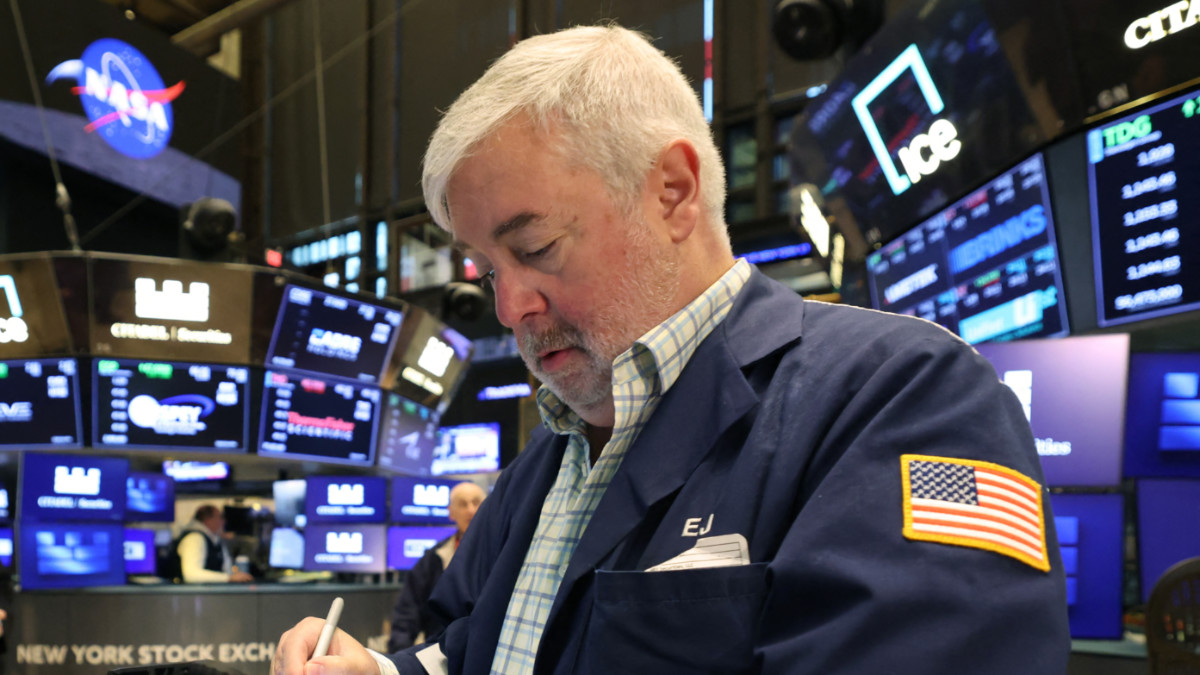
Alongside the oil sell-off, the unconfirmed peace report triggered a broad rally across U.S. stock indexes: the technology-heavy Nasdaq Composite climbed 1.5%, while the S&P 500 gained more than 1% on the day. But traders remained deeply divided over whether the market move was based on legitimate progress or manufactured for private gain. Many observers noted that this pattern of leaked de-escalation reports followed by inconsistent official statements has repeated multiple times in recent weeks. “These fake timed peace deal reports by Axios with the selling and buying that accompanies them, followed by the president then doing the inverse and Iran saying it’s a lie has been happening for weeks now,” one X user wrote. “I’ve never seen such in your face insider trading. Market is a casino.”
Some critics have also pointed out a consistent pattern that links these peace deal leaks to movements in U.S. Treasury bond markets. Luke Gromen, founder of global macroeconomic research firm FFTT, LLC, pointed out on X that unconfirmed reports of a US-Iran peace deal almost always emerge shortly after 10-year U.S. Treasury yields break above the 4.4% threshold on the upside. “Actually, if I think about it, I don’t find it curious at all,” Gromen added.
Higher bond yields push up borrowing costs for the U.S. government and filter through to higher interest rates for consumer products like mortgages and auto loans. Yields have spiked repeatedly since the outbreak of hostilities between the US-allied coalition and Iran, driven by investor fears that supply-disrupted high oil prices would reignite stubborn inflation across the global economy. A peace deal that pushes oil prices lower would also ease inflation pressure, pulling bond yields back down and lifting stock valuations — creating a clear profit opportunity for well-positioned insiders.
Critics also note that Axios has a history of publishing reports aligned with the Trump administration’s diplomatic timeline. The outlet previously reported that Washington and Tehran were nearing a nuclear deal shortly before the US and Israel launched a military strike on Iran on February 28. On April 5, Axios reported that the two sides were pushing for a 45-day ceasefire, and just two days later, Iran and the US agreed to a two-week truce that was subsequently extended.