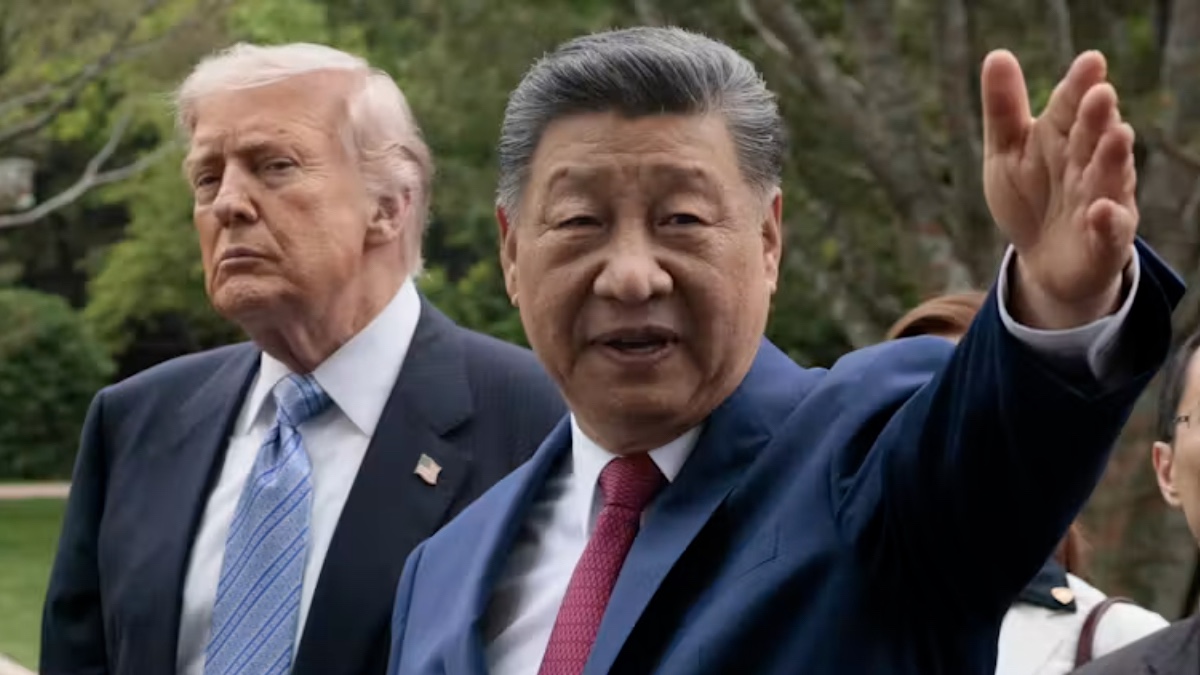
On Wednesday, Spanish Prime Minister Pedro Sanchez made a public call for the European Commission to put into effect the EU’s long-dormant Blocking Statute, a defensive regulatory tool designed to counteract extraterritorial third-country sanctions. His demand comes in response to sweeping US sanctions imposed over the past year by the Donald Trump administration that target senior International Criminal Court (ICC) personnel and a top United Nations human rights official, measures that threaten the operational independence of both global institutions.
标签: Asia
亚洲
-

Palestine ambassador protests to UK over ‘erasure’ from British Museum exhibits
A high-stakes historical and political controversy has erupted in the United Kingdom after the Palestinian ambassador to the UK submitted an official formal complaint to the Foreign, Commonwealth & Development Office over the deletion of the term “Palestine” from archaeological exhibits at the British Museum.
The alteration of exhibit labels took place in February, when museum leadership replaced references to “Palestine” in displays focused on ancient Egypt and the Phoenician civilization with the term “Canaan.” Officials justified the change by arguing that “Palestine” was not a historically meaningful geographical descriptor for the specific time periods covered in the exhibits. The revised labels now refer to the relevant region as Canaan and reclassify the Hyksos people, previously described as being of “Palestinian descent,” as of “Canaanite descent.”
Investigative reporting from The Telegraph has traced the decision back to pressure from UK Lawyers for Israel (UKLFI), a controversial pro-Israel advocacy group. In a formal letter sent to British Museum director Nicholas Cullinan, UKLFI contended that labeling the eastern Mediterranean coast as Palestine in exhibits covering 1700–1500 BC amounted to erasing the ancient kingdoms of Israel and Judea, and incorrectly framed the ancestral origins of the Jewish people as tied to Palestine. The organization’s objections specifically targeted the wording of those two exhibit labels, leading directly to the revision.
Critics of the change note that historical evidence contradicts the museum’s claim that the term Palestine is anachronistic for ancient contexts. One of the earliest surviving references to the region dates back to the 12th century BC, inscribed on the Great Harris Papyrus, an ancient Egyptian document that refers to the area as “Peleset”—a linguistic precursor to the name Palestine that covers territory including modern-day Gaza and the Israeli city of Ashdod. Despite the existence of these well-documented ancient sources, museum leadership moved forward with the label changes.
In an interview with The Guardian, Palestinian ambassador Husam Zomlot emphasized the gravity of the dispute, framing the erasure of Palestine from historical exhibits as an existential issue for the Palestinian people. This objection carries particular weight: the United Kingdom formally recognized Palestine as a sovereign state just months before the label changes were made. “I sent a letter to the minister in charge at the Foreign Office, and we are still waiting for a response,” Zomlot said Wednesday. “This is not only a political issue, not only a legal issue, not even just a historical dispute. This is an existential matter. Erasing our past is erasing our present.”
The British Museum has pushed back against claims that the change was a direct response to UKLFI pressure. In a statement to Middle East Eye in February, a museum spokesperson argued that the term Palestine, while one of the oldest documented names for the eastern Mediterranean’s southern Levant region, is only appropriate for historical contexts dating to the later second millennium BC. The spokesperson added that the institution uses UN-endorsed terminology for modern maps of the region, referencing Gaza, the West Bank, Israel and Jordan, and uses the identifier “Palestinian” for cultural and ethnographic contexts when appropriate. Even so, the spokesperson acknowledged that the term was changed because it is no longer considered politically neutral in contemporary discourse—an admission that has fueled further criticism.
Palestinian advocacy groups have decried the museum’s decision as blatant hypocrisy. Energy Embargo for Palestine, a grassroots campaign organization, pointed out that the British Museum positions itself as a neutral guardian of global cultural heritage, claiming to preserve and communicate history objectively. “And yet after looting Palestinian artefacts from across the Middle East, it is now unashamedly preparing itself to rewrite history, to erase Palestine, and its millions of people, out of the history books,” the group said in a formal statement.
While the British Museum has repeatedly claimed it did not entirely remove the term Palestine from all its exhibits, photographic evidence contradicts this assertion. Documents obtained via a Freedom of Information request by independent website Unredacted also show museum staff cited incoming audience emails and social media posts from high-profile historians as additional justification for the terminology change.
This incident is not an isolated case: the British Museum is just the latest in a growing list of UK public institutions targeted by UKLFI over content related to Palestine. Earlier in February, UKLFI pressure prompted Encyclopaedia Britannica to amend multiple entries in its children’s platform Britannica Kids, removing the term Palestine from regional maps. A year prior, London’s Chelsea and Westminster Hospital removed a children’s artwork created by students in Gaza. UKLFI director Caroline Turner initially claimed the removal came in response to patient complaints, but a subsequent Freedom of Information request forced the hospital to admit that the only complaint received had been submitted by UKLFI itself.
-

Latmiya: Inside the Ashura rituals shaping Iran’s wartime narrative
Across shadowed gathering halls in Iran, hundreds of men clad in black strike their chests in synchronized rhythm, while religious orators chant measured, mournful refrains centered on martyrdom, sacrifice, and modern conflict. These dramatic performances, commonly lit with ominous red lighting and widely circulated across Iranian social media platforms and YouTube, have emerged as a defining feature of the nation’s wartime public landscape following the 12-day Iran-Israel conflict in June 2025.
Known as latmiyah, these mourning recitations trace their origins to centuries-old Ashura rituals, which commemorate the 680 CE martyrdom of Shia Imam Hussain ibn Ali, grandson of the Prophet Muhammad, at the Battle of Karbala. In Shia religious memory, Hussain’s death—after he refused to swear allegiance to the unjust Caliph Yazid ibn Muawiyah—has long stood as a foundational narrative of resistance against illegitimate rule. In the years following the 2025 conflict, high-profile state-endorsed eulogists including Mahdi Rasouli, Hossein Taheri, Seyed Reza Narimani and Hossein Sotoudeh have released a wave of new wartime recitations that frame the ongoing US-Israel military campaign against Iran through the ancient symbolic lens of Karbala.
The fusion of religious ritual and wartime messaging has split public opinion: pro-government supporters online have praised the new recitations as powerful expressions of national and religious solidarity, while critics decry them as a deliberate effort by the Islamic Republic to tie traditional religious mourning to state-led political mobilization. In a growing shift, these modern recitations have also begun incorporating Persian nationalist motifs, framing the current conflict not only as a defense of Shia Islam, but also as a fight for Iranian national sovereignty. This dual framing has sparked broader debate over the narratives shaping Iran’s wartime public discourse, and who holds the authority to define the meaning of Karbala, nationhood, and resistance in modern Iran.
To understand this contemporary moment, it is necessary to trace the deep historical roots of Ashura rituals in Iranian political and social life. Millions of Shia Muslims across Iran and the broader region mark Ashura every year through mourning processions, poetry recitations, and pilgrimage to Karbala, located in central Iraq. After the Safavid dynasty established Twelver Shia Islam as Iran’s official state religion in the 16th century, Ashura rituals became a core pillar of religious and communal life, building a ritual infrastructure that outlasted successive dynasties and political systems, and repeatedly shaped the course of Iranian politics.
As early as the 1891–1892 Tobacco Protest, a nationwide movement opposing a foreign concession that granted control over Iran’s tobacco industry to a Western power, preachers spread leading Shia cleric Mirza Hasan Shirazi’s anti-tobacco fatwa through Ashura gatherings in mosques and bazaars. Participants in the 1905–1911 Constitutional Revolution similarly leaned heavily on Ashura symbolism in their demonstrations and political rhetoric. Decades later, the 1979 revolution that ousted Shah Mohammad Reza Pahlavi centered chants of “Our movement is Hussaini, our leader is Khomeini,” drawing a direct parallel between the 7th-century struggle for justice and the modern revolutionary movement.
In each of these moments, Ashura mourning rituals did more than preserve religious memory: they built emotional and political authority through preachers, reciters, and religious singers, known as maddahs. After the establishment of the Islamic Republic in 1979, this political role of ritual was amplified. During the 1980s Iran-Iraq War, Karbala symbolism became the central language of state wartime mobilization, cementing the role of maddahs as key intermediaries between the state and Iranian society.
That same ritual infrastructure remains central to the Islamic Republic’s mobilization efforts following the 2025 conflict. State-backed maddahs now frame both the June 2025 Iran-Israel war and the ongoing US-Israel campaign against Iran as modern extensions of the Karbala narrative, using mourning recitations to cast the conflicts as tests of sacrifice, resistance, and loyalty to the state. In a 2026 eulogy, for example, Sotoudeh framed Supreme Leader Ayatollah Mojtaba Khamenei as Iran’s modern “flag bearer,” drawing a direct parallel to Abbas ibn Ali, Hussain’s brother who carried the Islamic standard at Karbala.
This symbolic framing directly echoes recent statements from Iranian leaders. Two weeks before his death in February 2026, then-Supreme Leader Ali Khamenei drew an explicit parallel, stating that just as Hussain refused to pledge allegiance to Yazid, Iran would never “pledge allegiance to the corrupt people…who are today in power in America.”
Public polling and on-the-ground accounts confirm that most Iranians broadly oppose foreign military intervention in their country’s affairs, with online videos showing near-nightly pro-government rallies drawing hundreds to thousands of attendees, many featuring eulogists performing the new latmiyah recitations. But opposition to foreign intervention does not automatically translate into support for the state’s framing of the conflict through Karbala symbolism.
Multiple Iranian citizens who spoke to *Middle East Eye* expressed skepticism about the regime’s co-optation of Karbala narratives for political and foreign policy purposes. One Iran-based journalist claimed that some attendees at pro-government rallies in low-income neighborhoods had received financial incentives to participate, a claim *Middle East Eye* was not able to independently verify.
The limits of the state’s exclusive control over Ashura symbolism are not a new development. During the 2009 Green Movement opposition protests, demonstrators chanted slogans comparing Ali Khamenei to Yazid, the same unjust caliph that Karbala narratives condemn. More recently, during 2023 Ashura commemorations, mourners and independent maddahs across Iranian cities chanted anti-government slogans using the same Karbala motifs the state employs for its own messaging.
These examples demonstrate that while Ashura symbolism can confer political legitimacy, it does not serve only the interests of the state. While state-linked Karbala narratives can mobilize limited support during wartime, their long-term power depends on whether they are paired with broader social and political reforms that resonate with the Iranian public.
A key new development in recent years has been the growing integration of Persian nationalist symbols into state-backed eulogies. Shortly after the June 2025 Iran-Israel war, Ali Khamenei asked prominent maddah Mahmoud Karimi to perform a reworked version of the iconic patriotic anthem *Ey Iran* during an Ashura commemoration. Karimi revised several verses to add religious themes, rebranding Iran itself as the “land of Karbala” and folding Iranian national memory directly into the ritual language of Ashura.
In another example, a live recitation by maddah Hossein Taheri during last year’s Muharram commemoration drew heavily on imagery from the *Shahnameh*, Ferdowsi’s 10th-century epic of ancient Persian heroes and myths, blending Shia mourning traditions with references to Persian national legend. In the eulogy, Taheri declared that Hussain does not fight alone, because his modern supporters come from the “lineage of Rostam,” the *Shahnameh*’s most famous legendary warrior.
Critics argue that the state’s turn to Persian nationalist symbols is an attempt to shore up broader public legitimacy for its wartime policies amid growing domestic discontent. This debate over nationalist symbolism comes amid its use by anti-government protesters: following a sharp collapse in the value of the Iranian rial in December 2025, January 2026 anti-government protests saw demonstrators chanting slogans comparing Khamenei to Zahhak, the villainous mythical tyrant from the *Shahnameh*.
Iran has long sought to frame national identity and religious mission as inseparable. During the Iran-Iraq War, Ali Khamenei articulated this view, stating: “You cannot defend Iran without fighting for Islam, and you cannot protect the borders of Islam without raising the flag of Iran.” The presence of Iranian flags carried by many mourners during last year’s Ashura ceremonies suggests this idea still resonates beyond official state speeches, with official data recording tens of thousands of privately organized mourning ceremonies held during last year’s Ashura commemorations, a testament to how deeply these rituals remain rooted in Iranian civil society.
This deep social embeddedness explains why Karbala symbolism remains such a useful tool for the Islamic Republic during moments of war and national crisis. But wartime mobilization is not equivalent to lasting political legitimacy. The state can draw on Ashura, adapt its narratives, and fuse it with national symbols, but it cannot control how these narratives are received and interpreted by the Iranian public. The resonance of the state’s framing depends not only on the stories Tehran tells, but on the domestic political and economic conditions in which Iranians encounter those stories. Without broader political and economic reform, even the most skillful symbolic adaptation can only go so far.
-

How China quietly erased Taiwan from coffee’s world stage
In April 2026, barista Bala claimed the top prize at the World Latte Art Championship in San Diego, wowing judges with intricate latte art of a raccoon, giraffe, and red pandas to secure a winning score of 531 points. The event counted Chinese coffee chain Luckin Coffee as an official sponsor, and when Bala stepped onto the winner’s podium, competition organizers initially listed him as representing Taiwan.
What followed just one week later was a quiet, unannounced revision that has exposed how geopolitical pressure can penetrate even niche, seemingly apolitical global cultural industries. The Specialty Coffee Association (SCA), which oversees the World Coffee Championships (WCC), altered Bala’s affiliation in official records, changing the listing from “Taiwan” to “Chinese Taipei” with no public explanation. The organization went further, removing older ranking documents from its website that had for years listed past Taiwanese champions under the same original designation.
This small bureaucratic change is far more than a trivial footnote to broader geopolitical tensions between Beijing and Taiwan. It marks a clear signal that Chinese coercive pressure has expanded into an under-monitored domain: the global governance infrastructure of the international specialty coffee sector. The incident also lays bare a stark truth: when private non-governmental organizations that manage global cultural and industrial activities face large-scale geopolitical pressure, their long-proclaimed neutrality collapses almost immediately.
Taiwan’s specialty coffee community climbed to global prominence gradually, building its legacy over more than two decades of competition. The World Barista Championship launched in 2000, but it was not until 2007 that the first Taiwanese competitor, national champion Lin Tung-Yuan (Van Lin), stepped onto the international stage. What came next was an extraordinary streak of success: Pang-Yu Liu took gold at the 2014 World Cup Tasters Championship, while Jacky Lai won the 2014 World Coffee Roasting Championship in the same year. Berg Wu became Taiwan’s first World Barista Champion in 2016, followed by Chad Wang’s win at the 2017 World Brewers Cup, and Xie Yi-chen claimed the 2024 World Latte Art Championship title. Bala’s 2026 victory was the latest milestone in this decades-long journey.
As recently as 2022, the SCA itself celebrated Taiwan’s thriving specialty coffee scene when it announced it would bring the WCC event to Taipei, highlighting the island’s estimated 4,000 roasters and 16 world championship finalists, explicitly naming the island’s top competitors under their Taiwanese affiliations. Through 19 years of advocacy, the Taiwan Coffee Association had fought to retain the “Taiwan” designation for its competitors — a fight that ended in defeat with the 2026 revision.
The name change did not occur in a vacuum. Just six months prior, in October 2025, the SCA made another consequential institutional shift: it absorbed the widely recognized Q Grader Program — a global certification for coffee quality assessment held by roughly 10,000 professionals worldwide — from the Coffee Quality Institute, which had managed the program for 20 years. The SCA restructured the certification around its 2023 Coffee Value Assessment (CVA) framework, which for the first time formally recognizes origin, processing method, and cultural context as core components of a coffee’s overall value, noting publicly that “coffee is more than a score — it is culture, craftsmanship and context.”
The contrast between this rhetoric and the quiet renaming of Taiwan is not a contradiction, but a reflection of a single underlying logic. Once origin becomes a formal part of commercial coffee value, the question of who controls how an origin is named shifts from a mundane administrative task to an exercise of geopolitical power. The progressive language of respect for cultural context serves as a market positioning tool, while the renaming demonstrates how that power is actually exercised.
In a May 1 statement, the SCA defended its decision, framing it as a routine administrative change and pointing to the naming conventions used by the International Olympic Committee and FIFA as precedent. That comparison confirms the core issue: like these large international sports bodies, the SCA is a private organization that governs a global cultural activity while remaining highly vulnerable to pressure from its largest single market, China. Its commitment to neutrality holds only until pressure becomes too great to resist.
Coinciding with the SCA’s revision was another major shift in the global coffee industry that underscores growing Chinese influence. In late April 2026, just days before the name change was implemented, Centurium Capital — the controlling shareholder of Luckin Coffee, the official sponsor of Bala’s winning championship — announced it had acquired iconic American third-wave coffee chain Blue Bottle Coffee from Nestle in a deal worth under $400 million. While the two events have not been publicly linked, their timing tells a broader story: Chinese capital is not only lobbying for policy changes in global coffee governance, it is actively buying up the cultural infrastructure that these global bodies regulate.
For analysts and policymakers tracking Chinese “sharp power” expansion, the incident carries a clear warning: coercive pressure has now reached niche global sectors that have flown under the radar of most monitoring efforts. The Taipei Times reported that the name change followed suspected behind-the-scenes political pressure from China, with sources noting Luckin’s role as a top championship sponsor points to implicit Chinese influence. If a global standards body for a cultural industry can be pressured into such a change with no public pushback, no similar private global governance body is immune to the same pressure — from industry consortia to certification groups to sports federations across the world.
For consumers who see purchasing ethically sourced specialty coffee as a small political act of supporting producers and their identities, the lesson is equally sobering. The specialty coffee industry’s widely used progressive language of honoring origin, terroir, and cultural context did not protect Taiwan’s coffee community from erasure of its identity. In fact, it created the conditions for that erasure, by shifting authority over defining origin from producers themselves to global certifying bodies.
In response to the change, Taiwan’s coffee community has launched a public pushback, organizing a “one-person-one-email” campaign calling on the WCC to reverse the revision. Berg Wu, the 2016 world champion, was among the first to speak out publicly. “Taiwan is not just a name,” he wrote on Facebook shortly after the change. “It is an identity and a shared memory built by many competitors, coaches, judges, cafes, roasters, and all the consumers who have supported us along the way.” That 26-year-old shared legacy was altered in just seven days, a quiet reminder of how geopolitical power can reshape even the most unexpected corners of global culture.
-

Trump pauses ‘Project Freedom’ amid potential deal with Iran
Tensions in one of the world’s most critical energy chokepoints have taken a sudden turn, after former U.S. President Donald Trump announced a temporary halt to Washington’s newly launched naval escort mission through the Strait of Hormuz. The pause, he says, comes amid unexpected signals that a breakthrough in a negotiated agreement with Iran could be close at hand.
Launched just days earlier amid an ongoing Iranian blockade of the strategic waterway, the U.S. mission — codenamed Operation Project Freedom — was framed by the Trump administration as an effort to free commercial vessels blocked by Tehran and secure safe passage for global maritime traffic. In a post to his Truth Social platform, Trump clarified that while the naval escort operation will be paused for a short window, the existing economic blockade on Iran will stay fully in place, unchanged.
The pause was agreed following a request from Pakistan and other partner nations, Trump explained, to create space for negotiators to work toward finalizing and signing a new agreement between Washington and Tehran. A spokesperson for U.S. Central Command (Centcom) had previously characterized the initiative as a targeted temporary mission to protect maritime transit, designed to create what officials called a “safe corridor” and “security umbrella” spanning the strait. The spokesperson added that the U.S. had already received encouraging feedback from international shipowners and maritime insurance providers ahead of the pause. The operation, which drew on a force of more than 100 aircraft and roughly 15,000 military personnel, was billed by Trump when it launched on Sunday as a humanitarian mission to retrieve vessels that Tehran had barred from exiting the waterway. At that time, the president issued a sharp warning to Iran, stating that any attempt to interfere with the operation would trigger an immediate U.S. military response.
The days leading up to the pause have been marked by competing, conflicting claims of military clashes between the two nations. Shortly after Trump’s initial warning, Iran’s Fars News Agency reported that Iranian forces had hit a U.S. warship with two missiles as it moved through the strait. Trump quickly denied the report the following Monday, and instead claimed that only a South Korean-flagged vessel had been struck, adding that U.S. forces had destroyed seven Iranian fast-attack boats operating in the Gulf. Iran has since denied Trump’s account of the clash.
Located between Iran on its northern coast and Oman to the south, the Strait of Hormuz is widely recognized as the world’s most vital energy chokepoint. Roughly one-fifth of the globe’s daily crude oil and global liquefied natural gas supplies transit through the narrow waterway, making any disruption to shipping there a critical concern for global energy markets. The International Energy Agency has previously noted that a full or prolonged closure of the strait would cause the largest global supply disruption in history, cutting off more than 10 million barrels of daily oil output and reducing global LNG supplies by 20 percent.
Trump’s announcement of the operational pause comes against a backdrop of steadily escalating regional tensions, even after a regional ceasefire went into effect on April 8. Just days before the pause, U.S. military forces claimed to have targeted multiple Iranian vessels operating in the strait. Separately, the United Arab Emirates’ defense ministry has accused Iran of carrying out back-to-back days of missile and drone attacks on Emirati territory. Iran’s foreign ministry spokesperson has rejected those accusations as entirely unfounded, insisting that all recent Iranian military action has been directed solely at U.S. targets. The spokesperson added in an official statement that Iran will not hesitate to take all necessary and appropriate measures to defend its core national interests and territorial security.
-

Bus and oil tanker collide in Indonesia, killing at least 16 people
On a midday Wednesday in Indonesia’s Sumatra island, a devastating highway collision between a passenger intercity bus and a fuel tanker has left at least 16 people dead and four others injured, local disaster management officials confirmed. The crash unfolded on the Trans-Sumatra Highway in North Musi Rawas regency, South Sumatra province, as the bus traveling from Lubuklinggau city in South Sumatra to the neighboring city of Jambi carried roughly 20 passengers when it veered into the opposite lane and struck the oncoming tanker.
Preliminary investigations, shared by Mugono, a local disaster agency official who goes by a single name consistent with common Indonesian naming conventions, point to a sudden mechanical emergency just moments before impact. According to initial findings, the bus began emitting sparks, prompting the driver to swerve right off the bus’s original travel lane in an attempt to prevent an on-board fire. That evasive maneuver put the bus directly in the path of the speeding oncoming tanker, leaving the tanker’s driver no time to react to avoid a catastrophic head-on crash.
The extreme force of the collision ignited an intense blaze that quickly engulfed both the bus and the tanker, trapping dozens of people inside the burning vehicles. All fatalities died from burns sustained in the fire: the count of the dead includes the bus driver, 13 bus passengers, and the tanker’s driver and assistant. Among the four survivors pulled from the wreckage, three suffered critical burn injuries while the fourth sustained only minor harm, and all four were immediately transported to a nearby local health clinic for emergency care.
Authorities have not yet finalized the total death toll, as officials are still working to trace the bus’s full passenger manifest and cross-check data to confirm how many people were on board at the time of the crash. Visual documentation released by Indonesia’s National Search and Rescue Agency captures the scale of the disaster: thick black plumes of smoke billow into the sky above roaring orange flames as firefighters work to extinguish the blaze. After the fire was contained, the highway was left strewn with twisted, charred metal wreckage from both destroyed vehicles.
Rescue teams composed of disaster management personnel, local traffic police, and other first responders worked to evacuate victims and clear the crash site, but the operation faced significant complications. Multiple victims remained pinned under the wreckage, slowing recovery efforts and causing major traffic disruptions along the busy Trans-Sumatra Highway.
This fatal collision is far from an isolated incident: deadly road and transit accidents are an all-too-common occurrence across Indonesia, a pattern widely attributed to underfunded road infrastructure and widespread lax vehicle and driver safety standards. Just one week prior to this Sumatra crash, another deadly transit incident near Jakarta, the nation’s capital, claimed 15 lives. In that earlier crash, a long-distance passenger train hit a broken-down taxi stranded on the tracks, then collided with a stopped commuter train near a suburban station. All 15 fatalities were women, all seated in the commuter train’s women-only rear carriage.
-

China is stepping up its Iran war diplomacy ahead of Trump’s summit with Xi
As a highly anticipated bilateral meeting between U.S. President Donald Trump and Chinese President Xi Jinping approaches, China’s growing diplomatic influence in the ongoing Iran conflict has moved into the global spotlight, following high-stakes talks Wednesday between the two nations’ top foreign policy officials in Beijing.
Over the past decade, Beijing has steadily expanded its footprint in global diplomacy, shifting from its long-standing policy of avoiding entanglement in distant regional conflicts to emerge as a key power broker mediating disputes spanning from Southeast Asian border tensions to the war in Eastern Europe. While Beijing has not taken on the formal title of mediator in the Iran war, both Washington and Tehran have publicly acknowledged its outsized quiet influence in pushing for de-escalation of the conflict.
The Trump administration has repeatedly pushed Beijing to leverage its close economic ties with Tehran to force the reopening of the Strait of Hormuz, a critical global oil chokepoint that Iran has blockaded amid the fighting. During Wednesday’s talks with Iranian Foreign Minister Abbas Araghchi — his first visit to Beijing since the war began on February 28 — Chinese Foreign Minister Wang Yi reiterated China’s call for an immediate comprehensive ceasefire, stating that Beijing is deeply troubled by the human and security costs of the ongoing conflict.
“The entire international community shares a urgent collective goal of restoring normal, secure passage through the Strait of Hormuz, and China hopes all relevant parties will move quickly to answer the strong calls from the global community,” Wang told Araghchi, according to China’s official state news agency Xinhua. Wang also added that Beijing recognizes Iran’s legitimate right to develop peaceful nuclear energy and welcomes Tehran’s long-standing pledge to refrain from pursuing nuclear weapons.
The timing of Araghchi’s visit is not accidental, with the Trump-Xi summit scheduled for next week in Beijing, where the Iran conflict is expected to top the bilateral agenda. A day ahead of the Beijing talks, U.S. Secretary of State Marco Rubio urged Chinese officials to use the meeting to pressure Tehran to lift its blockade of the strategic waterway.
Araghchi signaled that progress on reopening the strait could be within reach, telling reporters through Xinhua that “currently, it is possible to resolve the issue of reopening the Strait of Hormuz as soon as possible.” Wang’s renewed public call for the strait’s reopening has already created new momentum for behind-the-scenes negotiations between Washington and Tehran to end the conflict, analysts note.
Regional and global policy experts have offered mixed assessments of what the high-profile meeting signals about China’s evolving role. Tuvia Gering, a nonresident fellow at the Atlantic Council’s Global China Hub, noted that the coordinated visit demonstrates Beijing and Tehran’s aligned messaging, and reinforces China’s ambition to secure a permanent seat at the table for any future regional security agreement. “However, unless Beijing rolls out a concrete, actionable peace initiative, I would not characterize this as a meaningful shift in China’s approach to the conflict,” Gering added.
Hoo Tiang Boon, a professor of Chinese foreign policy at Singapore’s Nanyang Technological University, pointed out that the visit was arranged at Beijing’s initiative, marking a deliberate display of China’s leverage over Tehran. “By summoning the Iranian foreign minister and holding high-profile talks, Beijing cannot be accused of sitting on the sidelines and refusing to engage,” Hoo noted.
Many analysts highlight that China holds a unique position in any mediation efforts thanks to its status as a leading economic power with deep ties to all key stakeholders in the conflict, from Iran to major Gulf Arab states and Pakistan. Unlike most other global powers, Beijing is positioned to offer large-scale postwar reconstruction investment and targeted economic relief to war-impacted regions, tools few other actors can match.
George Chen, a partner at the international advisory firm The Asia Group, argued that China’s role in the Iran dispute is irreplaceable. As Tehran’s largest crude oil buyer, Beijing’s policy positions carry significant weight with Iranian leadership, he noted, adding that China is also one of the few major powers that has publicly expressed sympathy for Iran’s position at the United Nations. The U.S. government has additionally noted that Iran’s ballistic missile program was developed with early Chinese technology support, and Beijing continues to sell Iran dual-use industrial components that can be repurposed for missile manufacturing.
This is not China’s first high-profile mediation success in the Middle East. In 2023, Beijing played a central role in brokering the restoration of formal diplomatic relations between longtime regional rivals Saudi Arabia and Iran, a breakthrough that drastically reduced the risk of direct and proxy conflict across the Gulf. Muhammad Zulfikar Rakhmat, a researcher at Indonesia’s Center of Economic and Law Studies, called the 2023 deal a major geopolitical win for China, but noted that Beijing is deliberate about when it chooses to engage. “Its mediation tends to be opportunistic and low-risk, often occurring when conditions are already ripe for an agreement,” Rakhmat explained, noting that both Riyadh and Tehran already had strong incentives to re-engage before Beijing stepped in.
Beyond the Middle East, Beijing has built a growing track record of conflict mediation in recent years. It hosted multiple rounds of talks between Thailand and Cambodia during their 2024 border conflict, and joined the U.S. for initial ceasefire negotiations in Malaysia, helping broker a second ceasefire when fighting resumed late last year. Beijing has also put forward formal peace proposals for the war in Ukraine, and even hosted Ukraine’s foreign minister for talks, despite its public “no-limits” strategic partnership with Russia.
Experts note that China’s diplomatic messaging in global conflicts follows a consistent pattern, with Beijing repeatedly emphasizing respect for the U.N. Charter and national sovereignty. Amid the Iran conflict, President Xi last month reiterated this framing, calling for “upholding the principles of peaceful coexistence, upholding national sovereignty, upholding the rule of international law, and coordinating development and security.” Hoo noted that this consistent messaging has become a hallmark of China’s mediation efforts.
Thitinan Pongsudhirak, a professor of international relations at Thailand’s Chulalongkorn University, argued that for distant conflicts, Beijing often faces low tangible stakes but can reap major diplomatic benefits, particularly as the world adjusts to the Trump administration’s unconventional negotiating style. “What the U.S. is doing under Trump is deeply damaging, and everyone suffers from it … and China is displaying global leadership and exerting its global role by speaking to the rules-based international system,” Pongsudhirak said. “It’s an inescapable contrast” between the two approaches to global diplomacy, he added.
Wu contributed reporting from Bangkok.
-

Australian court rejects convicted murderer’s appeal of deportation to small island nation
In a landmark unanimous ruling by Australia’s highest judicial body, an Iranian man convicted of murdering his wife has lost his final legal challenge to prevent his deportation to the Pacific island nation of Nauru, clearing the way for the Australian government’s controversial multi-million-dollar resettlement deal to move forward.
The 61-year-old perpetrator, identified in court documents only as TCXM to protect refugee confidentiality standards in Australia, had appealed a lower court’s 2023 ruling that greenlit his deportation to Nauru under a 30-year visa arrangement. All seven High Court justices rejected his appeal, closing off the last avenue of legal recourse for the convicted murderer.
TCXM first arrived in Australia from Iran in 1990 and was granted a protection visa five years later. In 1999, he was sentenced to 22 years in prison for the fatal murder of his wife. His visa was canceled in 2015 following his conviction, and he was moved from prison to immigration detention, where he remained for eight years. Iran does not allow the forced repatriation of its citizens from other countries, and Australia maintains a longstanding policy of not refouling refugees to nations where they would face persecution, leaving Australian authorities with no clear path to remove him from the country until the Nauru deal was struck.
The Nauru resettlement agreement emerged as a policy solution to a political and legal crisis created by a 2023 High Court ruling. That earlier decision found that Australia could no longer hold stateless people or non-citizens who cannot be returned to their home countries in indefinite immigration detention with no path to third-country resettlement. In response to that ruling, more than 350 non-citizens — many of them convicted criminals, including TCXM — were released from detention on temporary bridging visas, creating widespread public and political pressure on the government to find a long-term solution.
Under the 2023 bilateral deal, Australia agreed to pay Nauru a total of AU$408 million (US$296 million) to host up to an agreed number of unwanted non-citizens over a 30-year period, with an additional annual ongoing payment of AU$70 million (US$51 million) to the small island nation, which has a total population of just 12,000 people. To date, eight men have already been resettled in Nauru under the agreement, which has faced fierce domestic criticism for what opponents call its exorbitant and unjustified cost to Australian taxpayers.
In his appeal to the High Court, TCXM put forward two core arguments against his deportation. First, he claimed that Nauru’s limited public health infrastructure could not provide adequate care for his severe chronic asthma. Second, he argued that the bilateral resettlement agreement between Canberra and Nauru was unlawful, and that his deportation amounted to punitive action by the executive branch of government, which violates the Australian Constitution — the document reserves the power of punishment exclusively to the judicial system, not the government. Both arguments were rejected by the court’s full bench.
Immigration Minister Tony Burke, who had defended the deportation order through the legal process, praised the High Court’s outcome as a critical victory for Australia’s sovereign control of its immigration system. “I welcome the decision of the court. A canceled visa must have consequences in our migration system,” Burke said in a post-ruling statement.
TCXM was permitted to remain in Australian territory during his legal challenge, and no official timeline has been announced for when his deportation will be carried out. He was one of the first three non-citizens selected for resettlement in Nauru under the new program, and his legal challenge was widely viewed as a key test case for the validity of the government’s entire deal with the Pacific nation.
This is not the first time Australia has partnered with Nauru to manage irregular migration and unwanted non-citizens. For more than a decade, Canberra funded offshore detention camps on Nauru and in Papua New Guinea for asylum seekers who attempted to reach Australia by boat, a policy that largely ended the large-scale people smuggling trade that once flourished in Southeast Asia, as thousands of asylum seekers attempted the dangerous crossing on rickety, overloaded fishing vessels.
-

China calls for Strait to be reopened ‘as soon as possible’ in Iran talks
In a high-stakes diplomatic gathering in Beijing on Wednesday, Chinese Foreign Minister Wang Yi held talks with his newly appointed Iranian counterpart Abbas Araqchi, marking Araqchi’s first visit to China since the outbreak of the US-Israeli military conflict against Iran. At the top of the agenda was the ongoing crisis in the Strait of Hormuz, with Wang pressing for the immediate reopening of the critical global waterway that has been largely blocked by reciprocal restrictions from Iran and the US since the war began.
As one of the world’s most vital chokepoints for global energy trade, the Strait of Hormuz carries roughly a fifth of the world’s daily crude oil supplies. Its prolonged closure has sent ripples through energy markets, leaving the international community on edge about potential price spikes and supply disruptions. Wang emphasized in the meeting that restoring safe and unobstructed navigation through the strait aligns with the shared interests of the entire global community, and he called on all relevant parties to answer the international community’s urgent call to lift the blockades without delay.
On the broader conflict, Wang stressed that reaching a lasting, comprehensive ceasefire remains the world’s most urgent priority. He warned that any resumption of large-scale hostilities would only deepen the region’s crisis and bring more catastrophic harm to civilians and infrastructure. Reaffirming China’s consistent neutral mediation position, Wang noted that Beijing has long avoided direct entanglement in the conflict while working quietly behind the scenes to push all sides toward dialogue. He reiterated that China remains fully ready to facilitate further talks and support international efforts to de-escalate tensions across the Middle East.
In a notable gesture of diplomatic engagement, Wang also publicly recognized Iran’s longstanding commitment to not developing nuclear weapons, a point that aligns with China’s broader efforts to preserve the non-proliferation framework in the region. According to Iranian state media readouts of the meeting, Araqchi used the occasion to reaffirm Iran’s commitment to deepening bilateral cooperation with China, telling Wang that partnership between the two countries will grow even stronger in the coming years.
This meeting comes as the international community prepares for a landmark summit next week between US President Donald Trump and Chinese President Xi Jinping, a meeting that was originally scheduled for March but postponed after the US and Israel launched their wide-ranging military strikes on Iran. If the summit proceeds as planned next week, it will mark the first visit by a sitting US president to China in nearly a decade, and the Iran conflict and the Strait of Hormuz impasse are widely expected to top the bilateral agenda.
Notably, both US and Iranian officials have already credited Chinese diplomatic mediation for helping broker the April ceasefire between the two sides, which was formally arranged through Pakistan. China has also repeatedly criticized the US naval blockade of Iranian ports, describing the move as “irresponsible and dangerous” that risks unraveling the fragile ceasefire agreement that has been in place for months.
For China, the stakes of the Strait of Hormuz reopening are deeply personal. China is one of the largest buyers of Iranian crude oil, even as the oil remains under US unilateral sanctions. Data from the Center on Global Energy Policy shows that China imported an average of 1.38 million barrels of Iranian crude per day in 2025, accounting for roughly 12 percent of China’s total crude imports. Despite this heavy reliance on energy supplies that pass through the strait, Trump told reporters at the White House earlier this week that Xi Jinping has acted with “very respectful” posture toward the US in recent months. He claimed that China has not challenged US positions on the conflict, adding that “Xi would not challenge the US because of me.”
As diplomatic activity ramps up on multiple fronts ahead of the Trump-Xi summit, the outcome of the talks on the Strait of Hormuz could have far-reaching implications for global energy security, the future of the Iran conflict, and the trajectory of bilateral relations between the world’s two largest economies.
-

China’s top envoy tells his Iranian counterpart a ‘comprehensive ceasefire’ is needed
BEIJING – In a high-profile diplomatic meeting marked by growing international concern over protracted military hostilities, China’s top foreign policy official Wang Yi conveyed deep unease Wednesday about the more than two-month-long conflict involving Iran, Israel and the United States, while stressing that an immediate full cessation of fighting is the only acceptable path forward.
The talks held in Beijing marked a significant milestone: it was the first in-person visit to China by Iranian Foreign Minister Abbas Araghchi since active hostilities broke out between the three parties on February 28. The face-to-face engagement comes as global pressure mounts for major powers to step in and de-escalate tensions that threaten to spiral into a wider regional conflict.
Captured on video from the closed-door meeting, Wang laid out China’s clear stance on the escalating crisis. “We believe that a comprehensive ceasefire is urgently needed, that a resumption of hostilities is not acceptable, and that it is particularly important to remain committed to dialogue and negotiations,” Wang stated, emphasizing Beijing’s long-held position that diplomatic negotiation is the only sustainable solution to protracted international conflict.
The meeting comes amid heightened global attention on China’s role in Middle Eastern diplomacy, as the country has positioned itself as a neutral broker working to reduce tensions across the region. The in-person talks between the two top diplomats signal ongoing diplomatic outreach to bring all parties back to the negotiating table amid months of stalled de-escalation efforts.