标签: Asia

亚洲

  • Xi Jinping and Kim Jong Un vow stronger ties as North Korea visit wraps up

    Xi Jinping and Kim Jong Un vow stronger ties as North Korea visit wraps up

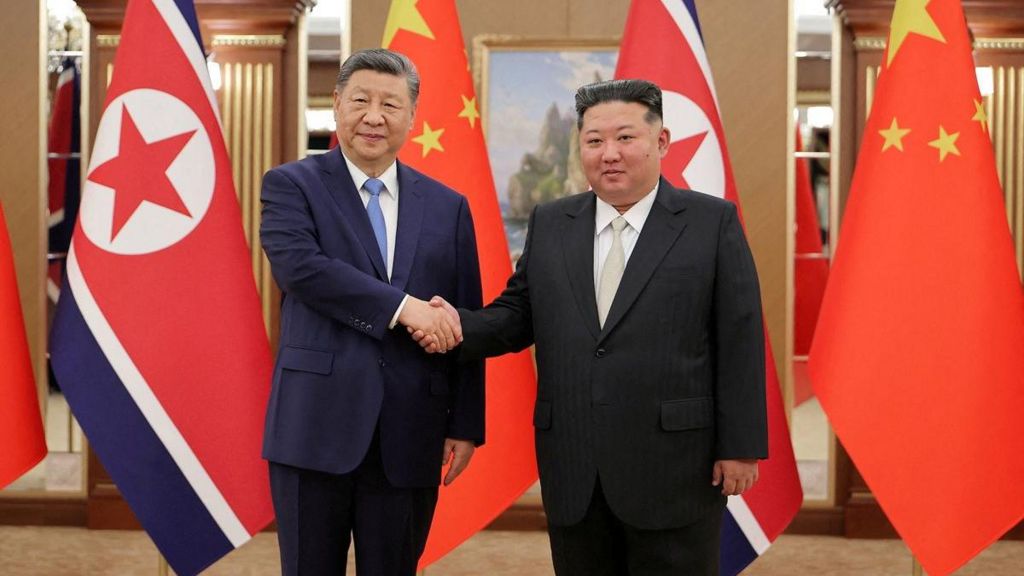
    After a seven-year gap since his last official trip to North Korea, Chinese President Xi Jinping has concluded a high-profile two-day state visit to Pyongyang, an encounter that has underscored the complex, long-standing alliance between the two neighboring socialist nations amid evolving global power shifts.

    North Korean leader Kim Jong Un extended an exceptionally warm welcome to Xi following his arrival on Monday, rolling out the ceremonial red carpet and staging elaborate acrobatic performances to honor the visiting head of state. While no binding, concrete policy agreements were announced publicly after the closed-door talks, both leaders emphasized the symbolic weight of the meeting, according to reports from North Korea’s state-run news outlet KCNA. Kim framed Xi’s selection of Pyongyang as his first state visit of the year as clear evidence of the “utmost importance” Beijing places on the bilateral relationship.

    The visit comes at a moment of growing strategic repositioning for Beijing: as North Korea has deepened its diplomatic and military ties with Moscow in recent years, China has moved to reassert its influence over its strategically critical, often unpredictable neighbor. Analysts note the trip allows Xi to reinforce a core message for Pyongyang: that China remains North Korea’s primary political and economic benefactor, a lifeline that has sustained the country through decades of harsh international sanctions imposed over its nuclear weapons program. For Kim, hosting a major global leader like Xi just weeks after Xi held separate summits with U.S. President Donald Trump and Russian President Vladimir Putin serves as a high-profile demonstration that North Korea maintains influential international partnerships despite its continued isolation over its nuclear program.

    In remarks carried by China’s state news agency Xinhua during an official state banquet on Monday evening, Xi emphasized the deep geographic and historical bonds between the two nations, noting that “China and North Korea are linked by mountains and rivers and share a common destiny.” Kim echoed the sentiment, affirming that North Korea will continue to prioritize its friendship with Beijing and reaffirming Pyongyang’s unwavering support for China’s One China principle. Against a backdrop of widespread global geopolitical upheaval, Kim stressed that the visit serves as a reminder of the enduring strength of the two countries’ friendship. Xi added that the two leaders reached “important consensus” on advancing high-level diplomatic exchanges and expanding people-to-people connections to align with shifting global trends.

    The 2026 visit also marks a notable milestone: this year celebrates the 65th anniversary of the China-North Korea defense pact, the only active mutual defense agreement China holds with any nation globally. Beyond diplomatic rhetoric, the trip also included symbolic gestures honoring the shared history of the two countries. On Tuesday, Xi and Kim traveled to Pyongyang’s Friendship Tower, a monument honoring Chinese soldiers who fought alongside North Korean forces during the Korean War. They also visited the country’s top leadership training academy, where the two leaders planted a fir tree to represent what both sides described as an evergreen, enduring friendship between the two nations. Throughout his stay, Xi was hosted at Pyongyang’s exclusive Kumsusan State Guest House, a purpose-built facility completed in 2019 ahead of Xi’s last visit to the capital that has since hosted other visiting global leaders including Russian President Vladimir Putin and Belarusian President Alexander Lukashenko.

    Notably absent from all official state media readouts of the talks was any public discussion of North Korea’s nuclear program and the longstanding goal of Korean Peninsula denuclearization — an omission that observers say was entirely expected. In recent years, China has significantly softened its public calls for denuclearization, rarely raising the issue in official joint statements with North Korean leadership.

    Xi was accompanied by a high-powered delegation of top Chinese officials, including his closest political advisor Cai Qi, Defense Minister Dong Jun, Foreign Minister Wang Yi, and Commerce Minister Wang Wentao, signaling the high priority Beijing placed on the engagement.

    Despite the lavish displays of shared friendship and solidarity, underlying strategic and ideological differences between the two countries remain visible in the official readouts of the visit. In his public remarks, Xi referenced working together to open “a brighter future for the socialist cause of both countries” — a nod to a longstanding point of friction between Beijing and Pyongyang. For decades, China has encouraged North Korea to adopt Beijing’s own model of socialist development: maintaining rigid one-party rule while opening its markets to foreign trade and investment. Sydney Seiler, Korea Chair at the Center for Strategic and International Studies, noted on social platform X that key details in Chinese official reports suggest Xi may hold frustration over Pyongyang’s rejection of this path. “North Korea still refuses to learn from China’s developmental experience,” Seiler wrote, pointing to the complete absence of any reference to economic reform in Kim’s public remarks during the visit.
  • All 24 Indian crew rescued from tanker set ablaze off Oman after US strike

    All 24 Indian crew rescued from tanker set ablaze off Oman after US strike

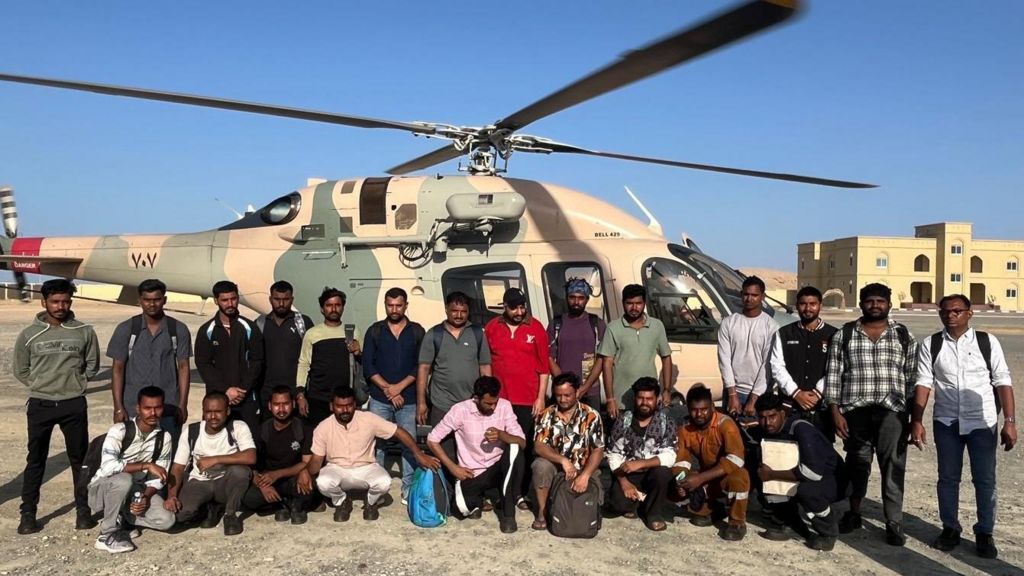
    In an incident that underscores the escalating dangers to commercial maritime traffic in the Gulf region, all 24 Indian crew members aboard the stricken tanker MT Marivex have been successfully evacuated to safety following a strike by United States military forces off the coast of Oman. The event, which unfolded on Monday 8 June local time, is the latest in a growing string of disruptions to global shipping linked to rising geopolitical tensions between the U.S., Iran and Israel.

    According to official confirmation from India’s Ministry of Ports, Shipping and Waterways spokesperson Opesh Kumar Sharma, the fire broke out on board the unladen Palau-flagged tanker at approximately 1:30 p.m. local time. Immediately after the blaze ignited, crew members transmitted urgent distress signals, reporting that the vessel was both on fire and at risk of sinking. Sharma confirmed that initial assessments confirmed all seafarers were unharmed, and Indian authorities had launched a cross-agency coordination effort to secure the crew’s safe return. The Indian government declined to offer immediate further details on the incident’s root cause at the time of the announcement.

    Local Omani authorities led the evacuation operation, with helicopter crews extracting all 24 sailors from the burning tanker and transferring them to safety on Masirah Island, according to multiple Indian media reports. The Reuters news agency later confirmed that the MT Marivex had been previously targeted with U.S. sanctions over its alleged ties to Iranian oil networks.

    U.S. Central Command later issued an official statement acknowledging the operation, saying that American military forces disabled the empty tanker after it violated the U.S.-led blockade on Iran by attempting to sail to an Iranian port. The statement detailed that an F/A-18 Super Hornet strike fighter launched from the USS Abraham Lincoln aircraft carrier fired a precision-guided munition at the tanker’s engineering and steering compartments after the crew refused to comply with U.S. military orders. The statement concluded that the vessel was no longer en route to Iran. The strike occurred south of the Strait of Hormuz, the critical global maritime chokepoint that carries approximately 20% of the world’s daily energy supplies during normal operations.

    Two major Indian seafarers’ unions, the All India Seafarers Union and the Forward Seamen’s Union of India, monitored the incident from its onset. The All India Seafarers Union reported that it received the first distress alert from a crew member just moments after the fire started, and maintained constant communication with both the crew and responding authorities throughout the rescue. The Forward Seamen’s Union of India labeled the incident a “matter of serious concern,” calling for rapid action to protect the crew, provide support to their families back in India, and prioritize the safety of all commercial seafarers operating in the high-risk region. Both unions ultimately confirmed the safe evacuation of all 24 crew members.

    The incident comes amid a months-long period of heightened risk for commercial shipping in Gulf waters, where rising geopolitical friction linked to the ongoing Iran conflict and U.S.-led enforcement actions have drastically increased security hazards for civilian vessels. Tensions between the U.S., Iran and Israel have already disrupted key shipping routes and driven a sharp increase in military activity across the Gulf of Oman and the surrounding Strait of Hormuz, leaving civilian seafarers caught in the crossfire of geopolitical competition.

  • Hundreds of aftershocks jolt Philippines as officials say death toll could rise

    Hundreds of aftershocks jolt Philippines as officials say death toll could rise

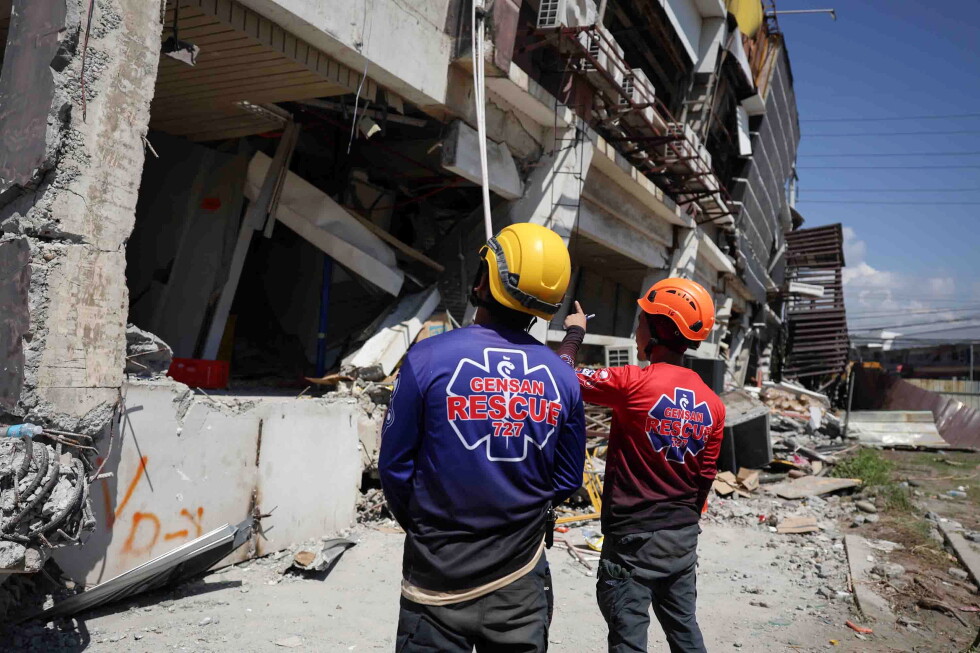
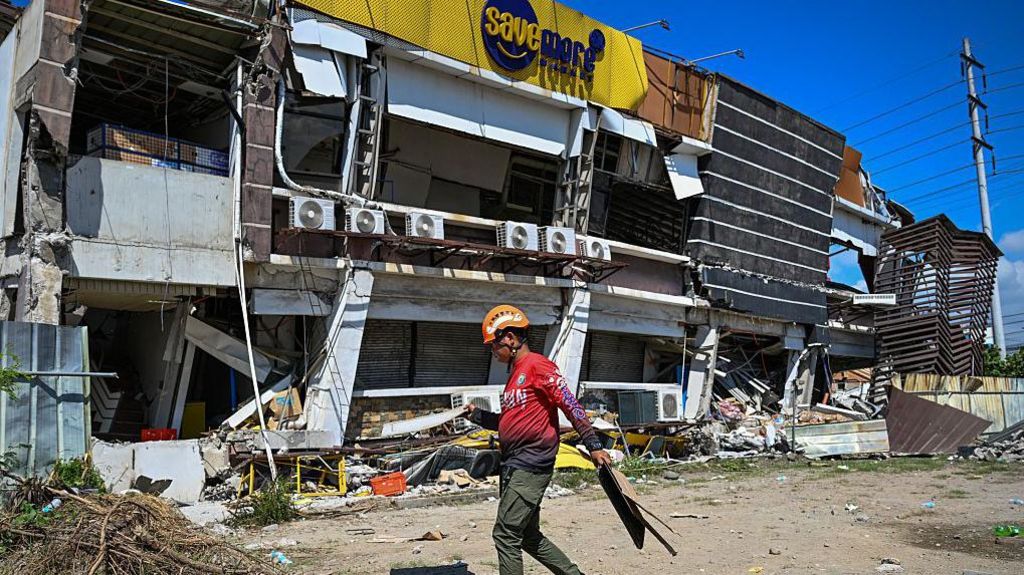
    A powerful magnitude 7.8 earthquake that struck the southern Philippine island of Mindanao early Monday has left at least 37 people dead and 487 others injured, with disaster officials warning the casualty count is likely to climb as emergency teams reach cut-off coastal communities. Hundreds of aftershocks have continued to rattle the disaster zone, hampering rescue and recovery efforts across the region.

    The seismic event left a trail of catastrophic destruction in its wake: multi-story buildings have collapsed, paved roads have split open or been swallowed by landslides, and large portions of Mindanao remain completely cut off from power and communications infrastructure. The initial quake also triggered widespread tsunami warnings across regions as far as southern Indonesia and Japan’s Pacific coastline, forcing tens of thousands of residents to evacuate their homes for higher ground.

    As search operations entered their first full day, disaster response officials confirmed that priority remains focused on pulling survivors from rubble and reaching isolated communities. “We hope the death toll does not increase further, but we are expecting it to move. Our priority today is search and rescue,” Bernardo Alejandro, assistant secretary of the Philippines’ disaster response oversight agency, told local radio station DZMM. As of initial assessments, close to 2,000 residential structures and more than 6,000 public schools have sustained damage across the affected region.

    The Philippines sits along the geologically active Pacific Ring of Fire, making it highly prone to major earthquakes and volcanic eruptions. Monday’s temblor originated from tectonic movement along the Cotabato Trench, a fault zone off the country’s southern tip that has produced some of the deadliest seismic events in the nation’s recorded history. In 1976, a magnitude 7.9 quake from the same trench generated a devastating tsunami that killed an estimated 5,000 people.

    On-the-ground accounts from survivors capture the chaos and terror of the two-minute-long quake. In Lebak town, public school teacher Cesar Sundo described the shaking as feeling like being violently rocked in a hammock, with the intensity building by the second. Thousands of young students, most under 10 years old, panicked and cried as the ground bucked beneath them. By chance, the entire school was gathered outside for their weekly Monday morning flag ceremony when the quake hit, a circumstance that likely saved countless lives.

    “They were lucky to be outside. They were able to stay put and sit down,” explained Renato Solidum, the Philippines’ science minister and a veteran seismologist, confirming that the outdoor assembly saved many students from injury or death when structures collapsed around them. “These areas have experienced strong earthquakes before. This is one of the strongest.”

    Viral footage captured from the scene shows a branch of popular local fast-food chain Jollibee in General Santos City crumble to the ground as onlookers scream and retreat to safety. The chain released an official statement Monday night confirming that all its employees across earthquake-impacted areas are unharmed.

    Philippine President Ferdinand Marcos Jr. has mobilized the full capacity of the national government to coordinate disaster response. Both the transportation and health secretaries have traveled from the capital Manila to Mindanao to oversee relief efforts on the ground. Health secretary Teodoro Herbosa noted that medical teams treating injured survivors have been interrupted repeatedly by strong aftershocks even as they work.

    Access to many hard-hit communities remains severely limited. In Jose Abad Santos, a coastal town on Mindanao’s eastern Davao Occidental province, landslides have buried the region’s only paved highway, cutting off half the town from overland access. “Relief goods have to be flown in to far-flung barangays (villages),” Mayor Jason John Joyce told DZMM.

  • Australia elects to field in 1st one-day cricket international against Bangladesh

    Australia elects to field in 1st one-day cricket international against Bangladesh

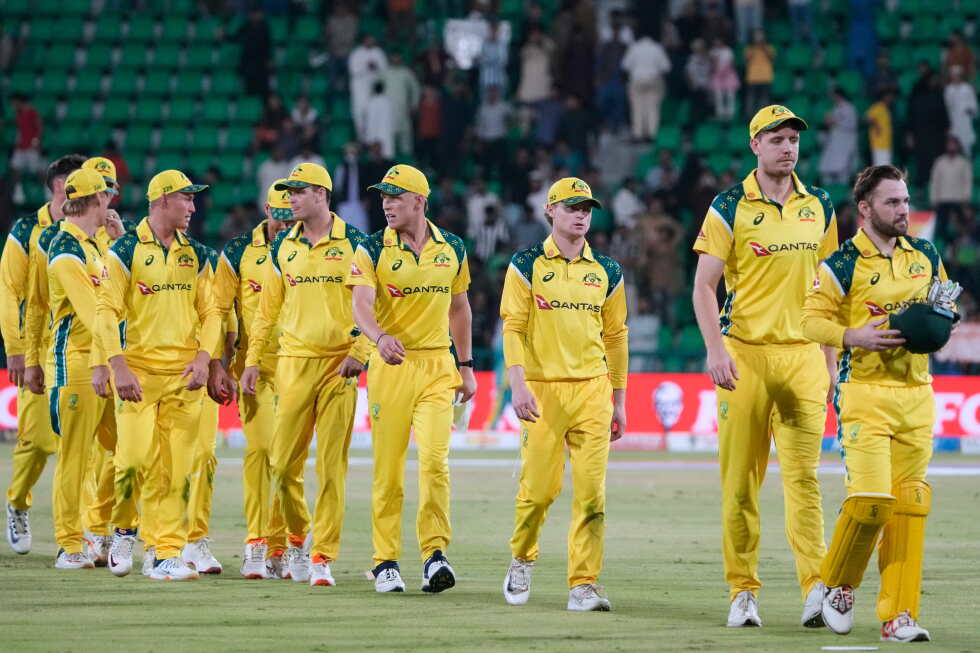
    The first 50-over one-day international between Australia and Bangladesh kicked off in Mirpur on Tuesday, marking the resumption of a bilateral ODI series between the two nations after 15 years. Australia won the pre-match coin toss and opted to take the field first, holding the hosts to bat in the opening fixture of a three-match ODI tour that will also include three T20 games.

    The Australian side is led by wicketkeeper-batter Josh Inglis for the second consecutive tournament, stepping in for regular 50-over captain Mitchell Marsh, who remains sidelined as he recovers from an ankle injury sustained during this year’s Indian Premier League. Star batter Travis Head also opted out of the tour to take personal leave, forcing a reshuffled lineup for the visitors.

    Australia’s most recent series, on spin-friendly wickets in Pakistan last week, ended in a 2-1 defeat, but conditions in Mirpur are set to be drastically different for this series. All three ODIs are being hosted at the Mirpur venue, which is expected to deliver pitches that heavily favor fast bowling over spin. To adapt to these local conditions, Australia’s squad features a pace-heavy bowling attack, including seamers Nathan Ellis and Xavier Bartlett, and seam-bowling all-rounder Cameron Green. The selectors also retained middle-order batter Marnus Labuschagne in the starting XI, despite the batter delivering a series of under-par performances against Pakistan.

    Bangladesh enters this opening match on a strong run of home form. The hosts have won their last four consecutive home ODI series, defeating Sri Lanka, the West Indies, Pakistan and New Zealand thanks to their consistent strategy of preparing pace-friendly wickets. For the first ODI, Bangladesh named a three-man seam attack led by star quicks Taskin Ahmed and Mustafizur Rahman, alongside young talent Nahid Rana. The fixture also marks the long-awaited return of batter Mosaddek Hossain to ODI cricket, who takes the field for the first time in the format since 2022.

    Full starting lineups for the opening match are as follows:
    – Bangladesh: Tanzid Hasan, Saif Hassan, Najmul Hossain Shanto, Tawhid Hridoy, Litton Das, Mosaddek Hossain, Mehidy Hasan Miraz (captain), Taskin Ahmed, Mustafizur Rahman, Nahid Rana, Tanvir Islam
    – Australia: Matt Short, Cooper Connolly, Josh Inglis (captain), Marnus Labuschagne, Alex Carey, Cameron Green, Matthew Renshaw, Liam Scott, Xavier Bartlett, Nathan Ellis, Adam Zampa

  • 20,000 people displaced by the Philippine earthquake that killed at least 37

    20,000 people displaced by the Philippine earthquake that killed at least 37

    On Monday morning, a 7.8-magnitude earthquake — one of the most powerful seismic events to strike the Philippines in 50 years — hit off the coast of Mindanao, the nation’s second most populous island. As of Tuesday, official tallies confirm at least 37 people have been killed, nearly 500 injured, and more than 20,000 displaced by the disaster, with only four people still listed as missing.

    By Tuesday, rescue teams had shifted to a methodical search of collapsed and severely damaged structures across southern affected provinces, working to locate any possible trapped survivors or unaccounted casualties. Rafaelito Alejandro, spokesperson for the Philippine Office of Civil Defense, emphasized that even structures that appear partially intact require full inspection to account for anyone who may have been caught in the collapse.

    Most of the casualties are concentrated across four southern regions. In General Santos, a bustling coastal city of 700,000 known nationally as the Philippines’ tuna capital, at least 13 lives were lost to falling debris and building collapses. Sarangani province recorded 18 fatalities, the majority of which came from a single massive landslide that buried multiple homes in the mountain town of Glan. Additional deaths were reported in South Cotabato, Davao Occidental, and on Balut Island.

    Immediately after the quake, widespread tsunami fears prompted thousands of residents to evacuate coastal areas for higher ground. The Philippine Institute of Volcanology and Seismology (PHIVOLCS) recorded tsunami surges reaching up to 1.4 meters above average tide levels along Philippine coasts, but the only confirmed tsunami damage was the destruction of six stilt-built shanties in one small coastal village. Smaller after-surges were also documented as far away as Indonesia, Palau, and southern Japan.

    Preliminary government damage assessments count roughly 2,000 private homes and 117 public government facilities damaged across affected provinces. General Santos’ international airport, a key regional transport hub, remains closed to all traffic except humanitarian missions, forcing the cancellation of 63 scheduled domestic flights. The quake struck on June 8, the first day of public classes across the Philippines following a two-month summer break, leaving many injured students who had gathered for mandatory morning flag-raising ceremonies. Roughly 6,000 public school buildings in impacted provinces now require full structural safety assessments before classes can resume, and authorities have warned that cracked, compromised structures face high risk of collapse during major aftershocks. “We cannot force the immediate reopening of schools because we have to ensure the integrity of the buildings,” Alejandro said.

    PHIVOLCS director Teresito Bacolcol confirmed the quake originated from tectonic movement along the Cotabato Trench, an undersea fault system off Mindanao’s southern coast. The epicenter was located 33 kilometers below sea level, roughly 32 kilometers southwest of Maasim town in Sarangani province. This week’s quake is the strongest to hit the Philippines since an 8.1-magnitude event also triggered by the Cotabato Trench in August 1976, which killed an estimated 8,000 people and generated catastrophic tsunami waves between 8 and 10 meters high that engulfed multiple coastal towns. PHIVOLCS had already been preparing to mark the 50th anniversary of the 1976 disaster this August with the installation of public seismic hazard markers to encourage ongoing community preparedness, Bacolcol told the Associated Press. Another 7.8-magnitude quake in 1990 killed more than 1,000 people across northern Philippines.

    In response to the disaster, Philippine President Ferdinand Marcos Jr. has dispatched senior national disaster mitigation officials from Manila to oversee on-the-ground operations. The government is currently distributing tens of thousands of food packs and emergency construction materials to displaced survivors, while conducting full assessments of damage to critical infrastructure including bridges and roads. International allies have already offered support: the United States, a long-time treaty ally of the Philippines, confirmed it is coordinating with Manila and prepared to deploy additional assistance if requested, while France, Japan, and New Zealand have also issued statements of solidarity and offers of support.

    Located along the Pacific Ring of Fire, a seismically active arc of tectonic faults that circles the Pacific Ocean basin, the Philippines faces frequent earthquakes and volcanic eruptions. The archipelago also sees an average of 20 typhoons and tropical storms annually, making it one of the most disaster-prone nations on Earth.

  • China’s exports jump 19.4% in May from a year earlier, despite Iran war

    China’s exports jump 19.4% in May from a year earlier, despite Iran war

    HONG KONG – New data released Tuesday by China’s General Administration of Customs reveals that the country’s export growth accelerated notably in May, defying widespread market expectations that were weighed down by ongoing geopolitical disruptions linked to the Iran conflict. The latest figures put year-on-year export expansion at 19.4%, a solid jump from the 14.1% growth recorded in April, marking a third consecutive month of improving export momentum.

    Analysts point to several key drivers behind the stronger-than-forecast performance. Even amid global supply chain jitters and heightened Middle Eastern tensions, demand for China’s high-value goods has held firm. Passenger vehicle exports have surged in recent months, fueled by growing international demand for Chinese-made electric vehicles, while technology and AI-related products—most notably advanced semiconductors and semiconductor manufacturing equipment—have emerged as consistent top contributors to outbound shipments, propping up overall export volumes.

    Import growth also picked up speed last month, climbing 27.4% year-on-year, up from April’s 25.3% expansion. The acceleration in inbound goods points to steady recovery in domestic Chinese demand, as manufacturers increase imports of raw materials and intermediate components to meet strong export orders, and consumer demand for imported goods continues to gradually rebound following earlier economic slowdowns.

    Against this overall positive trade performance, one key downward trend persists: bilateral trade between China and the United States has continued to contract, extending a slump that began shortly after U.S. President Donald Trump returned to office last year. Immediately upon taking office, Trump implemented steep, broad-based tariffs on Chinese imports and applied similar trade measures to other major U.S. trading partners, upending long-standing bilateral trade flows.

    Cumulative data for the first five months of 2025 underscores the contraction: Chinese exports to the U.S. fell 2.7% compared with the same period a year earlier, while Chinese imports of U.S.-origin goods dropped by an even sharper 5.5%. Trade experts note that the ongoing tariff regime continues to create persistent uncertainty for cross-border businesses, leading many importers and exporters on both sides to diversify their supply chains and shift orders to alternative markets, a restructuring that is likely to keep bilateral trade volumes depressed in the coming quarters.

    Overall, the May trade data paints a mixed picture for China’s external sector: the country’s export base has proven more resilient than many analysts predicted, even amid global geopolitical instability, but long-term trade headwinds from U.S. trade policy remain a major downside risk for the remainder of the year.

  • US adds BYD to list of firms with alleged Chinese military ties

    US adds BYD to list of firms with alleged Chinese military ties

    In a move that escalates bilateral commercial and diplomatic tensions between Washington and Beijing, the U.S. Department of Defense has added a slate of major Chinese firms to a congressional-mandated roster of companies linked to the Chinese military, counting among the new entries e-commerce and technology giant Alibaba Group and leading electric vehicle manufacturer BYD. The list, formally established under Section 1260H of the U.S. defense authorization statute, currently carries more than 80 entries of Chinese-owned commercial entities that operate within the United States. The official purpose of the inventory is to alert U.S. institutions to perceived national security risks tied to doing business with the listed firms. Crucially, the designation does not trigger an immediate ban on commercial activity between American entities and the added companies, a framing that signals the incremental escalation of pressure on Sino-U.S. economic ties. Alongside Alibaba and BYD, other high-profile new additions to the list include Chinese search engine operator Baidu, EV startup Nio, and state-owned commercial aircraft manufacturer Comac. Longstanding entries that remain on the roster from previous rounds of additions include other major Chinese technology players: telecommunications giant Huawei, internet conglomerate Tencent, drone manufacturer DJI, and leading global EV battery producer CATL. Officials at the Chinese Embassy in Washington D.C. pushed back sharply against the new designation in a statement provided to the BBC, labeling the entire list as a discriminatory tool that unfairly targets legitimate Chinese businesses. The embassy emphasized that all Chinese firms operating in the United States have consistently abided by American federal and local laws throughout their operations, adding that the unilateral blacklisting lacks any legitimate factual or legal foundation. Spokespeople for multiple companies named on the updated roster have issued public refutations of the Pentagon’s claims. A representative for Alibaba flatly rejected the government’s characterization, stating that the company has never operated as a military-linked entity, nor is it part of any Chinese state-run military-civil fusion initiative. “There is no basis whatsoever for our inclusion on this list,” the spokesperson said, adding that the company “will pursue all available legal avenues to counter baseless misrepresentations of our business and operations.” The BBC has reached out for official comment from other newly added companies including BYD and Baidu, and as of the latest reporting, no additional on-the-record responses have been released. This latest update to the Section 1260H list comes amid a broader ongoing shift in U.S. policy toward Chinese technology and industrial firms, with Washington increasingly framing commercial ties with large Chinese companies through a national security lens. Analysts note that while the designation does not carry immediate punitive measures, it can create chilling effects for investment, partnership, and market access for the listed firms, complicating their global expansion and access to U.S. capital markets.

  • ‘Vulnerability exposed’: War on Iran will change how the US bases troops in Gulf

    ‘Vulnerability exposed’: War on Iran will change how the US bases troops in Gulf

    When the United States completed construction of Logistical Support Area (LSA) Jenkins on Saudi Arabia’s Red Sea coast near Yanbu back in 2022, few anticipated how quickly this relatively remote outpost would become the blueprint for America’s entire regional military strategy. Today, multiple current and former U.S. officials, military analysts, and intelligence leaders confirm that stepped-up activity at LSA Jenkins is a direct response to a stark new reality: Iran’s advanced missile and drone arsenal has rendered large, fixed U.S. military bases close to Iranian shores dangerously vulnerable.

    For decades, large, permanently manned forward bases have anchored U.S. military dominance across the Persian Gulf. But the outbreak of the U.S.-Israeli campaign against Iran has upended that long-standing model. As Iranian projectile attacks repeatedly targeted U.S. installations within range of its coast, activity at the more distant LSA Jenkins surged, insiders tell Middle East Eye. The base’s entire purpose, explains Abbas Dahouk, former U.S. defense and army attaché to Saudi Arabia, is to underpin Washington’s Iran strategy by providing critical strategic depth far beyond the reach of Iran’s immediate strike capabilities.

    Tehran has made the full withdrawal of U.S. military forces from all regional bases a core demand for any long-term ceasefire agreement. While Washington has shown no indication it will meet that demand outright, the proven accuracy and effectiveness of Iranian missiles and drones—reportedly aided by Chinese and Russian satellite intelligence—has sparked urgent internal debate over the future of large U.S. bases across the Gulf. Remarkably, multiple sources confirm that U.S. leadership is already leaning toward drawing down forces from the very installations Tehran is demanding it abandon.

    David Petraeus, former CIA director and former head of all U.S. military forces in the Middle East, acknowledged this shifting calculus in May comments to Bloomberg. “The truth is that we are not as inclined to occupy these bases now that we have seen what the Iranians can throw at them,” Petraeus said, noting the threat landscape is far more challenging than when he led U.S. Central Command. He added that the current CentCom commander has already broken with long-standing practice of locating command leadership in the same time zone as deployed forces, instead running military operations remotely from Tampa, Florida.

    This new reality was underscored in recent weeks when a fragile ceasefire between Washington and Tehran collapsed, triggering fresh hostilities. After the U.S. launched new strikes, Iran retaliated with ballistic missile attacks targeting U.S. bases in Kuwait. While U.S. Central Command claimed it intercepted all incoming missiles, commercial satellite imagery from Soar Atlas revealed a destroyed shelter at Kuwait’s Ali al-Salem Air Base, plus extensive damage to a terminal at Kuwait International Airport—a casualty Tehran blamed on a malfunctioning U.S. Patriot interceptor.

    The attack laid bare the unsustainable position of large U.S. bases in Kuwait, which currently hosts more U.S. troops—roughly 14,000—than any other Middle Eastern country, including the major installations of Camp Arifjan and Ali al-Salem Air Base. Both bases have come under repeated intense Iranian attack. “The war has exposed the vulnerability of all fixed bases,” notes Mark Cancian, senior military analyst at the Center for International and Strategic Studies. “The US is reevaluating its posture in the Middle East, and there’s likely to be changes. I wouldn’t be surprised if these bases were reduced in scope.”

    Multiple U.S. officials and analysts, speaking on condition of anonymity to Middle East Eye, say the future of U.S. military presence in the region will increasingly mirror the LSA Jenkins model: smaller, more dispersed installations located farther from Iran, making them far harder targets for Iranian strikes. This shift aligns with a gradual transition Washington began 20 years ago, when it moved away from the dense fixed-base model established in Kuwait after the 1991 Gulf War toward a framework built on negotiated access rather than permanent occupation.

    Today, the U.S. maintains a spectrum of basing arrangements across Gulf states. Kuwait, Bahrain, and Qatar host full-time permanent U.S. troop deployments, while Oman has no permanent U.S. bases, instead holding a standing agreement that grants pre-negotiated access to ports and airspace. Notably, Oman has experienced far fewer attacks than its Gulf neighbors since the outbreak of hostilities with Iran. Currently, around 2,700 U.S. troops are deployed to Saudi Arabia—half the number stationed there two decades ago, reflecting the ongoing shift toward a more flexible posture.

    “It sounds like semantics, but the type of agreement does make a difference for the US and host country. The Gulf states are very sensitive to the language they use on how US troops are hosted. And it leaves the US presence more nimble,” a U.S. defense consultant who advises the Pentagon told Middle East Eye on condition of anonymity. “This war will force a light footprint approach like Oman that prioritises access.”

    Kuwait’s unique geography, positioned at the northern tip of the Gulf, leaves it uniquely exposed to missile and drone attacks from Iran and allied Iraqi militias—a vulnerability that has forced the U.S. to already evacuate many personnel from its large Kuwaiti bases. Compounding this challenge is the growing strain on U.S. air defense stockpiles: in the opening weeks of the war, Gulf states were denied requests for additional interceptor missiles, and a May Washington Post report revealed the U.S. has only 200 Terminal High Altitude Area Defense (THAAD) interceptors remaining in its global stockpile.

    “Defending all of these bases would stretch US interceptors,” Dahouk explained. “The US had to make a choice between hardening the bases and risking lives or evacuating. We evacuated.”

    Former U.S. ambassador to Kuwait Douglas Silliman noted that retaining a large permanent U.S. presence in Kuwait would require major new investments to harden existing facilities, many of which were built decades ago to lower defensive standards. “Many US military facilities in Kuwait are not as hardened as some other US facilities in the region. If the US and Kuwait would like to keep a significant US presence after the Iran war – and I think it’s likely that both sides will want to – they will have to invest in hardening those facilities,” he said.

    This shift toward more distant, flexible positions is already underway. Middle East Eye first reported that after Iran heavily damaged the large Prince Sultan Air Base southeast of Riyadh earlier this year, the U.S. secured access to Saudi Arabia’s Taif Air Base, located farther from Iranian strike ranges.

    Iran’s effective control of the Strait of Hormuz has also created new sustainment challenges for the U.S. Navy, which has been effectively locked out of the key waterway. Today, the U.S. Fifth Fleet is based in Bahrain’s Persian Gulf waters, U.S. Central Command is headquartered in Qatar, Al Dhafra Air Base operates in the UAE, and Jebel Ali Port remains the most frequent stop for U.S. naval vessels in the region—all now within easy reach of Iranian capabilities.

    Ironically, the shift to Red Sea access was foreshadowed more than a decade ago. Dahouk recalls that in 2015, then-Saudi Defense Minister and current Crown Prince Mohammed bin Salman offered the U.S. port access to Jizan on Saudi Arabia’s Red Sea coast, an offer that received serious internal consideration at the time. “An additional port call option without having to transit through the Persian Gulf would reduce reliance on Jebel Ali Port,” Dahouk notes—a solution that looks far more necessary today than it did a decade ago.

  • How one of India’s most successful female politicians is losing her party

    How one of India’s most successful female politicians is losing her party

    Just one month after losing power in India’s 100-million-population eastern state of West Bengal, the Trinamool Congress (TMC) — once the country’s most successful regional political force — is facing an unprecedented existential crisis, as a large-scale rebellion of its own legislators and a growing parliamentary split threaten to dismantle the party built by charismatic founder Mamata Banerjee.

    Banerjee is no ordinary regional political figure. In 2011, the firebrand leader pulled off what many considered a political miracle: ending 34 consecutive years of Communist Party rule in West Bengal, bringing down one of the world’s longest-serving democratically elected left-wing governments. Her landmark victory earned her a spot on Time magazine’s list of the 100 most influential people in the world, and she went on to lead the state for 15 years, cementing the TMC’s status as a dominant regional power and her own reputation as one of India’s most formidable opposition leaders.

    That legacy makes the past month’s rapid unraveling all the more startling. In last month’s state election, Prime Minister Narendra Modi’s national ruling Bharatiya Janata Party (BJP) swept to power, ending TMC’s 15-year incumbency amid a campaign defined by anti-incumbency sentiment, religious polarization, and widespread controversy over electoral roll integrity. Contrary to narratives of total defeat, however, the TMC remained a formidable electoral force: it secured 26 million popular votes, just 3 million fewer than the BJP, holding 40% of the total vote share, 80 seats in the state legislative assembly, and 28 national parliamentary seats.

    Instead of regrouping to rebuild opposition, the party is fracturing from within. The most severe blow has come from the state legislature, where roughly three-quarters of TMC’s elected legislators have launched an open revolt against Banerjee and her nephew Abhishek Banerjee, widely positioned as her political heir. Rebels have seized control of the TMC’s legislative caucus, appointed their own opposition leader, and levied accusations of signature forgery against the party’s top leadership against top party leadership.

    What began as a state-level mutiny has now spread to India’s national capital in New Delhi. Reports indicate that 20 out of the TMC’s 28 sitting members of parliament have submitted a formal letter to the parliamentary speaker requesting to split from the TMC’s parliamentary group and align with the BJP-led national ruling alliance. If the split is formalized, it will escalate the crisis from a legislative rebellion to an existential threat to TMC’s very existence as a unified political party.

    This parliamentary revolt is just the most visible sign of a broader organizational collapse. In Falta, a constituency that TMC won with 56% of the vote in the 2021 state election, the party failed to even field a candidate for a recent repoll. Earlier this June, a public rally organized by Banerjee drew only a few hundred attendees — a stark contrast to the massive crowds that once packed her events at the height of her political power. TMC leaders are being arrested on corruption charges daily, local party offices sit empty, long-standing organizational networks are being dismantled, and once-powerful party figures face public attacks even in their former strongholds.

    Political analysts say the rapid collapse of TMC exposes deep structural weaknesses in the party’s foundation. Unlike the 34-year Communist government it ousted in 2011, TMC never built a robust ideological framework that could sustain the party through a loss of power. According to Dwaipayan Bhattacharyya, a political scientist studying Indian regional politics, the party’s unity always rested on two interconnected pillars: Banerjee’s unrivaled personal charismatic brand, and access to state patronage that comes with holding public office.

    “To maintain control across the entire state, Banerjee relied far more on powerful local strongmen granted extensive autonomy over their regional fiefdoms than on formal party institutions,” Bhattacharyya explained. This system functioned seamlessly while TMC held power: local leaders competed aggressively for influence, generating frequent internal rivalries and occasional violence, but incumbency provided access to patronage, political protection, and what critics describe as widespread opportunities for illicit enrichment.

    Today, both pillars holding TMC together have collapsed. The party lost control of the state government, and Banerjee’s own personal defeat in her Kolkata constituency has badly tarnished the aura of invincibility that long anchored her political brand. Left exposed to rival factions, anti-corruption investigations, and voter anger, local power brokers face overwhelming pressure to defect and switch their political allegiances.

    This is where the BJP steps in as a catalyst for the split. Rahul Verma, a fellow at the New Delhi-based Centre for Policy Research, notes that the rise of a nationally dominant BJP has completely reshaped the incentives for regional politicians across India. “In previous decades, defections were usually limited to individual leaders breaking away on their own. Today, entire factions can stage a rebellion because the BJP offers an alternative center of power, access to new resources, and formal political protection,” Verma explained. He added that this pattern mirrors the 2022 split of the powerful western Indian regional party Shiv Sena, where a succession battle and the concentration of power within a single political family triggered a large-scale defection.

    Verma frames TMC’s crisis as part of a broader shift in Indian politics, where regional parties have grown increasingly centralized and family-centric. Ambitious long-time party lieutenants often accept the authority of a founding leader, but many refuse to defer power to a hereditary heir, a dynamic that played out in the Shiv Sena split when Uddhav Thackeray elevated his son Aditya Thackeray to lead the party. Before the BJP’s national rise, dissidents rarely had the resources to mount a successful challenge to sitting family leadership — but that dynamic has shifted dramatically.

    “When you combine generational leadership transitions with patronage-driven party structures, you get a volatile mix: once a regional party loses power, local leaders who joined for access to power and influence see little reason to stay loyal,” Verma added.

    For her part, 71-year-old Banerjee has remained openly defiant in the face of the crisis. She has labeled the BJP’s election victory “illegal” and “immoral,” alleging that the party stole roughly 100 assembly seats through electoral manipulation. She has dismissed the ongoing rebellion as blatant opportunism, noting “For so long, some people enjoyed power with us, and now that we have lost office, they immediately reached an understanding with another party.” Still, she remains adamant that TMC can recover: “We will rebuild the party anew. TMC is not for its leaders; it is for its grassroots workers.”

    It remains too early to tell whether TMC can survive what is increasingly being framed as an existential crisis. Some analysts note that the current rebellion, led by a relatively minor former communist legislator who previously defected to TMC, could fizzle out, with rebels splintering further and eventually returning to Banerjee’s fold. But if the 20 MPs calling for a split hold their ground, the challenge could reshape West Bengal’s political landscape permanently.

    Still, analysts warn that writing off Banerjee entirely would be a mistake. “If there is one face in West Bengal that still attracts widespread attention, and one voice that people cannot simply dismiss, it is hers,” Bhattacharyya said. Any successful revival, however, will require more than Banerjee’s well-documented charisma: it will demand deep organizational renewal and difficult leadership changes, areas that have not historically been Banerjee’s greatest strengths.

    Throughout her decades-long political career, Banerjee has repeatedly defied long political odds. But the challenge facing her today is unlike any she has encountered before. Overthrowing a 34-year incumbency is one thing; rebuilding a political party from scratch after most of its own elected leaders abandoned it is an entirely different test.

  • Iran attacking Israel seeks to shape the region on its own terms

    Iran attacking Israel seeks to shape the region on its own terms

    On June 7, 2026, Iran launched a large-scale barrage of missile strikes against Israel, marking its first direct attack on Israeli territory in two months. The immediate catalyst for this assault came hours earlier, when Israeli forces carried out a targeted strike on a Hezbollah position in Beirut, Lebanon’s capital – an operation that former U.S. President Donald Trump had explicitly urged Israeli Prime Minister Benjamin Netanyahu to avoid just days prior.

    Within hours of Iran’s initial missile volley, the Israeli military launched retaliatory air strikes against military and infrastructure targets across western and central Iran, once again ignoring the Trump administration’s repeated calls for regional de-escalation and restraint. In response, Iran quickly organized a second wave of missile attacks, before official Iranian military spokesperson announced the conclusion of Tehran’s offensive operations. In an official public statement, Tehran issued a stark warning: if Israel continues its military campaign against Hezbollah positions in Lebanon, Iran will launch a far more severe military response in the future.

    What sets this round of cross-border escalation apart from prior confrontations is the distinct geopolitical context in which it unfolds. Over the course of the ongoing regional conflict, Iran has moved steadily to establish a new regional order structured around revised rules of engagement that it dictates – and a growing body of evidence suggests Tehran is on track to successfully implement this new framework.

    The first defining feature of this emerging order is Iran’s growing willingness and ability to dictate acceptable military action to both Israel and the United States. Critically, Iran initiated this latest round of fighting not in response to an attack on its own sovereign territory, but to push back against Israeli military operations in Lebanon, aiming to set clear limits on what Israel can do in its own neighboring border region. Just six months ago, Israel was able to conduct unrestricted military operations across Lebanon without fear of direct Iranian retaliation. Today, shifted regional dynamics brought on by months of open conflict have left Tehran sufficiently emboldened to impose explicit constraints on Israeli military activity.

    This same dynamic of Iranian assertiveness has played out more gradually over the past month in the Strait of Hormuz, the vital global energy chokepoint through which nearly 20% of the world’s oil supplies pass daily. Shortly after the full-scale regional war began in late February, Iran established de facto control over movement through the waterway, and has shown no indication that it plans to relinquish this leverage. This control, too, is a core component of Iran’s new regional order: Tehran is sending a clear message to its rivals that compliance with its demands is required, or it will tighten its chokehold on the global energy economy. So far, U.S. policy has reflected a clear willingness to accept this new status quo rather than risk the consequences of military confrontation to reverse it.

    The second key element of this new order is Iran’s expanding toolkit of coercive options to pressure its opponents into accepting the new rules, all while avoiding meaningful punitive consequences. Tehran has now proven it can launch large-scale missile barrages into Israel, strike critical infrastructure across U.S.-aligned Gulf Arab states, target American military personnel operating in the region, and disrupt global energy supplies – all without triggering the large-scale regime-change intervention that long deterred such actions. Iran still retains a wide range of unplayed leverage as well: it can expand targeting of energy and water desalination infrastructure across the Gulf, or reactivate its Houthi allies in Yemen to disrupt global shipping through the Red Sea. Already, following the latest escalation, the Houthis have announced a full ban on all Israeli-flagged commercial shipping transiting the Red Sea.

    While the U.S. has issued repeated public threats to retaliate against Iran – including strikes on Iranian civilian infrastructure, a seizure of Iran’s critical Kharg Island oil export terminal, or the deployment of naval convoys to enforce free passage through the Strait of Hormuz – Washington has backed down from every planned action, driven by fear of the catastrophic regional escalation that would follow.

    The third defining feature of Iran’s emerging order is the growing rift in longstanding coordinated policy between the U.S. and Israel, a development that has long been a core strategic goal for Tehran. In response to Iran’s initial missile strikes against Israel, Trump emphasized that his top priority was preventing Israel from launching a major retaliatory campaign. “I am going to call Bibi right now and tell him not to retaliate,” Trump stated publicly immediately after the first Iranian assault. The current situation, in which a sitting Republican U.S. president is urging Israel not to respond to direct Iranian missile attacks targeting civilian populations, would have been considered nearly unimaginable just six months ago, a testament to how dramatically regional dynamics have shifted.

    While Trump has not yet threatened to withhold American missile interceptor defense supplies from Israel over its resumption of hostilities, even with continued U.S. defensive support, sustaining a major new conflict with Iran poses significant challenges for Jerusalem. For example, large-scale ground operations to target Iranian missile launchers would stretch Israeli air power thin, particularly without active U.S. assistance in targeting enemy positions, and the ongoing active front against Hezbollah in the north would draw down already strained Israeli military resources even further.

    Looking ahead, a critical open question remains: how long will the U.S. be willing to deplete its own domestic stocks of missile interceptors to defend Israel, in a conflict that the U.S. president explicitly urged Israel not to initiate? In the short term, this arrangement may hold, but over the long run, it is not sustainable for the U.S. to dedicate a large share of its national missile defense inventory to protect Israel in an ongoing open conflict.

    The fourth and final feature of the new regional order is that a lasting regional peace settlement appears increasingly out of reach. Netanyahu cannot politically accept an Iranian veto over Israeli military action in Lebanon, nor can he afford to erode longheld Israeli deterrence by allowing unpunished Iranian missile attacks on Israeli territory. At the same time, Trump cannot advance his stated goal of negotiating a new peace deal with Iran while Israel continues its military campaign in Lebanon. For its part, Iran has every incentive to keep increasing pressure on its opponents, inflicting steadily rising costs with little fear of meaningful consequences under the new regional order it has built.

    Ultimately, this shifting dangerous landscape is the outcome of a poorly considered war of choice that will go down as one of the most ill-conceived military engagements in modern American history.

    This analysis is contributed by Andrew Gawthorpe, a lecturer in history and international studies at Leiden University, republished under a Creative Commons license from The Conversation.