标签: Asia

亚洲

  • Brain-computer interface enables mind over matter

    Brain-computer interface enables mind over matter

    Chinese neuroscientists have achieved a significant clinical milestone with the successful development of Beinao No 1 NeuCyber Matrix, an advanced brain-computer interface system demonstrating remarkable results in human trials. This groundbreaking technology represents a paradigm shift from conventional machine assistance to enabling partial self-recovery in paralyzed patients.

    The Chinese Institute for Brain Research in Beijing reported that their domestically developed wireless system has shown stable, long-term performance in treating conditions including spinal cord injuries, ALS, and stroke-related paralysis. The system’s effectiveness is exemplified by the case of 31-year-old Xiao Rui, who suffered quadriplegia from a spinal injury two years ago. Remarkably, within just five days post-implantation, Xiao mentally commanded a robotic arm to pour water. One year later, he has regained sufficient control to independently feed himself, including picking up strawberries and bringing them to his mouth.

    Professor Yi Zhiqiang, Director of Neurosurgery at Peking University First Hospital, emphasized the transformative potential: ‘From this pioneering patient, we anticipate Beinao No 1 will deliver groundbreaking advancements benefiting millions with neurological conditions.’ The technology has already been implanted in seven patients, with over thirty clinical trials scheduled across numerous medical institutions nationwide this year.

    The system utilizes innovative membrane electrodes composed of lipid materials that rest on the brain’s surface without penetration, recording electrocorticography signals through direct cortical contact achieved via skull opening. These signals are wirelessly processed and decoded to interpret the patient’s intended movements, enabling control of external devices and even exoskeletons for assisted walking.

    Institute Director Luo Minmin confirmed the system’s exceptional stability and effectiveness, noting: ‘Our patients can now control computer cursors and exoskeleton devices with their thoughts, marking tremendous progress toward functional recovery.’ The research team anticipates completing clinical trials by next year, potentially revolutionizing treatment for global stroke patients with safer, more effective neurotechnology solutions.

    The technological advancement follows the institute’s recent recognition in Nature journal for revealing common mechanisms behind fast-acting antidepressant therapies. The next-generation Beinao No 2 system is currently showcased at Beijing’s prestigious Zhongguancun Forum, demonstrating China’s growing leadership in cutting-edge neuroscience innovation.

  • Peppercorns fuel Lugao’s prosperity

    Peppercorns fuel Lugao’s prosperity

    Nestled within the mountainous terrain of Jinyang county, Sichuan province, the township of Lugao has transformed its agricultural fortunes through the cultivation and international export of its signature green Sichuan peppercorns. Achieving a remarkable economic milestone in 2025, the region successfully exported 13.6 metric tons of dried peppercorns to the European Union, commanding a premium price of $18 per kilogram.

    This lucrative venture has significantly boosted local incomes, with farming households seeing an average increase of 2,500 yuan annually, according to Huang Tianyin, head of Lugao township. The premium EU pricing represents a substantial markup of 5-6 yuan per kilogram compared to domestic market rates.

    Jinyang county, recognized as China’s premier production hub for green Sichuan peppercorns, maintains an impressive agricultural footprint with over 68,000 hectares dedicated to cultivation. The industry generates an annual output of 17,327 tons and boasts a comprehensive output value reaching 1.2 billion yuan, as reported by Deng Min, deputy county head of Jinyang.

    Lugao serves as the core production zone within this agricultural powerhouse, with peppercorns cultivated across 4,000 hectares. The crop constitutes 83.6% of the township’s total agricultural output value, while the local trading market facilitates annual transactions exceeding 5,000 tons with turnover surpassing 200 million yuan.

    The success story emerges from challenging geographical conditions characterized by high mountains, steep slopes, and deep valleys. Lugao has strategically leveraged its natural advantages—ample sunshine, suitable soil composition, and the unique microclimate of the Jinsha River dry-hot valley—to develop a thriving specialized forestry economy.

    Quality enhancement initiatives have been instrumental in achieving international standards. The township has implemented comprehensive infrastructure upgrades including modernized irrigation systems, standardized planting technique training programs, and the establishment of demonstration planting bases. Since 2021, five standardized demonstration bases have been established, including a dedicated 44-hectare export-oriented facility.

    Meeting EU market requirements demanded rigorous adherence to agricultural standards, as explained by Li Wenchun, deputy director of Jinyang’s agriculture office. “Every production phase—from pruning and fertilizing to pest management and weeding—follows strict protocols under unified guidance,” Li noted. The cultivation process prohibits pesticides and chemical herbicides, relying exclusively on organic fertilizers and manual weeding practices.

    Bolstered by their successful market entry, Jinyang county officials plan further international expansion in 2026. The strategy involves implementing a standardized full-chain management system from cultivation to export, alongside establishing an additional 67 hectares of export-oriented planting bases to deepen their presence in European markets.

  • China launches maritime mission control

    China launches maritime mission control

    China has inaugurated a new era in its commercial space operations with the commissioning of the Dongfang Hengyuan, the nation’s pioneering marine engineering vessel exclusively designed for full-lifecycle maritime rocket launch missions. The specialized ship represents a strategic advancement in China’s space capabilities, engineered to overcome the unique challenges of open-sea satellite deployments.

    Constructed at Huanghai Shipbuilding in Weihai, Shandong province, the 77-meter vessel was launched on March 11 as a stationary mobile command center at sea. Unlike converted research ships previously used for space support, the Dongfang Hengyuan was specifically designed by Harbin Engineering University as a dedicated command and measurement hub.

    The vessel’s technical specifications include a width of 17.8 meters, depth of 7.6 meters, and displacement capacity of 3,200 metric tons. It incorporates an all-electric propulsion system enabling a cruising speed of 15 knots, complemented by a dynamic positioning system that maintains station-keeping accuracy for precise launch operations and scientific observations.

    According to Chief Engineer Zhang Guochang of the university’s Yantai Research Institute, the ship will serve multiple functions beyond its primary launch command role, operating as both a floating laboratory and educational facility. The vessel is scheduled for June delivery, when it will integrate with the Oriental Spaceport launch vessel and collaborate with the Dongfang Hengjing maritime test platform to enhance China’s comprehensive maritime launch capabilities.

    The project originates from a successful May 2024 bid by Harbin Engineering University for a hydrological detection platform initiative focusing on marine meteorological surveys critical for space launch operations. The program encompasses comprehensive studies of meteorological elements including wind patterns, visibility conditions, cloud coverage, and electromagnetic environment characteristics, alongside marine geological and hydrological assessments.

    Project leadership confirms that despite technical complexities and demanding timelines, the venture has overcome numerous challenges through coordinated efforts with consortium partners including Shanghai Merchant Ship Design and Research Institute, Hunan Guotian Technology, and Huanghai Shipbuilding. The advancement leverages the university’s decades of research in ship and ocean engineering, incorporating technological innovations such as DP2 dynamic positioning, ultra-short baseline underwater positioning systems, and real-time vibration monitoring technologies.

  • Moving forward in Snow’s footsteps

    Moving forward in Snow’s footsteps

    A new chapter in Sino-American cultural understanding is being written by a generation inspired by legendary journalist Edgar Snow. At a recent media forum in Zhengzhou, Henan province, Adam Foster, founding chairman and chairman emeritus of the Helen Foster Snow Foundation, joined China Daily reporter Dylan Walker in discussing the enduring importance of people-to-people exchanges and cross-generational storytelling.

    The dialogue, hosted as part of ongoing cultural exchange initiatives, explored how the mission of bridging understanding between China and the world continues nearly a century after Snow’s groundbreaking work. While Snow utilized the journalistic tools of his era, today’s communicators employ digital media, social platforms, and multimedia storytelling to convey China’s development narrative to global audiences.

    Forum participants emphasized that despite technological evolution, the core mission remains unchanged: fostering genuine human connections and mutual understanding across cultures. The discussion particularly highlighted how these exchanges contribute to broader initiatives like rural revitalization, demonstrating how international perspective-sharing can support domestic development goals.

    The event underscored the continuing relevance of the Snow family’s legacy, with Foster representing multiple generations dedicated to cross-cultural communication. This ongoing commitment to building bridges between China and international communities reflects an enduring recognition that human connections form the foundation of global cooperation and understanding.

  • Kyrgyzstani entrepreneur: ‘Shopping in China’ means more than business

    Kyrgyzstani entrepreneur: ‘Shopping in China’ means more than business

    After more than a decade in China’s commercial hub of Yiwu, Meerzat Omuralieva has transformed from a disoriented international student into an established entrepreneur and community guide for newcomers. The Kyrgyzstani businesswoman recently shared her remarkable journey at a media forum in Zhengzhou, revealing how her experience of ‘shopping in China’ evolved into something far deeper than mere commerce.

    Omuralieva’s story represents a growing trend of international entrepreneurs finding both professional success and personal fulfillment in China’s dynamic market environment. Her decade-long immersion in Yiwu—a city renowned as the world’s largest small commodity market—allowed her to master Mandarin, develop a globally recognized brand, and ultimately establish what she describes as a true home away from home.

    The entrepreneur’s narrative underscores how China’s business ecosystem serves as a catalyst for cross-cultural exchange and personal transformation. Rather than merely serving as a procurement destination, China provided Omuralieva with the platform to build meaningful connections, acquire language skills, and develop business acumen that transcended traditional buyer-seller relationships.

    Her experience highlights the symbiotic relationship between China’s commercial centers and international entrepreneurs who contribute to local economies while finding unexpected personal growth. Omuralieva now actively assists newcomers navigating Yiwu’s complex market landscape, creating a supportive community for international business professionals seeking to establish themselves in China.

    This case study exemplifies how China’s open economic policies and commercial infrastructure continue to attract global talent, fostering mutual understanding and creating lasting bonds that extend well beyond transactional business relationships.

  • Ecological civilization paving way to prosperity

    Ecological civilization paving way to prosperity

    In a groundbreaking dialogue between international education and environmental policy, Linda de Boer, a student at prestigious US boarding school Philips Academy Andover, recently engaged with Chinese ecological researcher Zhang Yongsheng to explore China’s transformative approach to sustainable development. The discussion revealed how China’s ecological civilization concept is fundamentally reshaping global understanding of progress and prosperity.

    Director-General Zhang Yongsheng of China’s Research Institute for Eco-civilization, affiliated with the Chinese Academy of Social Sciences, articulated the paradigm shift from traditional industrial development to ecological civilization. Where conventional models since the Industrial Revolution treated environmental protection and economic growth as conflicting priorities, China’s new framework recognizes them as mutually reinforcing elements.

    The transformation gained momentum in 2012 under President Xi Jinping’s leadership, introducing the revolutionary ‘green is gold’ principle that has redefined China’s developmental philosophy. This shift addresses three critical shortcomings of traditional development: environmental unsustainability, social inequality, and the well-being paradox where economic growth doesn’t necessarily translate to increased happiness.

    Ecological civilization represents an evolutionary advancement beyond industrial civilization, characterized by two fundamental distinctions. First, it replaces anthropocentrism with harmonious coexistence within nature’s boundaries. Second, it reimagines the concept of ‘good life’ beyond material consumption, creating development models that simultaneously achieve economic prosperity and environmental sustainability.

    China’s electric vehicle industry exemplifies this transformation. While trailing in traditional automotive manufacturing, China leveraged climate action requirements to establish leadership in the emerging EV sector. This demonstrates how environmental standards can create competitive advantages rather than constraints.

    The green development framework encompasses four strategic pillars: stringent environmental protection, green development through systemic reforms, global openness through free trade agreements, and South-South cooperation sharing green technology with developing nations. China now offers zero tariffs to African countries and reduced tariffs to ASEAN nations, facilitating global green transition.

    China’s environmental journey began parallel to industrialized nations in 1972, though initially constrained by misconceptions that environmental problems were exclusive to capitalist systems. The country’s rapid economic expansion following WTO accession in 2000 exacerbated environmental challenges, revealing the inherent conflicts in traditional industrialization models.

    The turning point emerged in 2005 with then-Zhejiang Party Secretary Xi Jinping’s seminal concept: ‘Lucid waters and lush mountains are invaluable assets.’ This philosophical breakthrough recognized environmental protection as an economic driver rather than burden, initiating China’s transition from environmental management to ecological civilization.

    China’s ambitious climate targets stem from both the unsustainability of previous development patterns and the emergence of new opportunities. The global shift toward carbon neutrality commitments reflects this transformed understanding, accelerated by renewable energy costs dropping approximately 90% and electric vehicles becoming cost-competitive with traditional automobiles.

    China’s experience offers valuable insights for all nations confronting environmental crises. The ecological civilization model demonstrates that developing countries need not follow the ‘develop first, clean up later’ path but can achieve simultaneous economic growth and environmental protection from development’s earliest stages.

  • Air China resumes direct flights between Beijing and Pyongyang

    Air China resumes direct flights between Beijing and Pyongyang

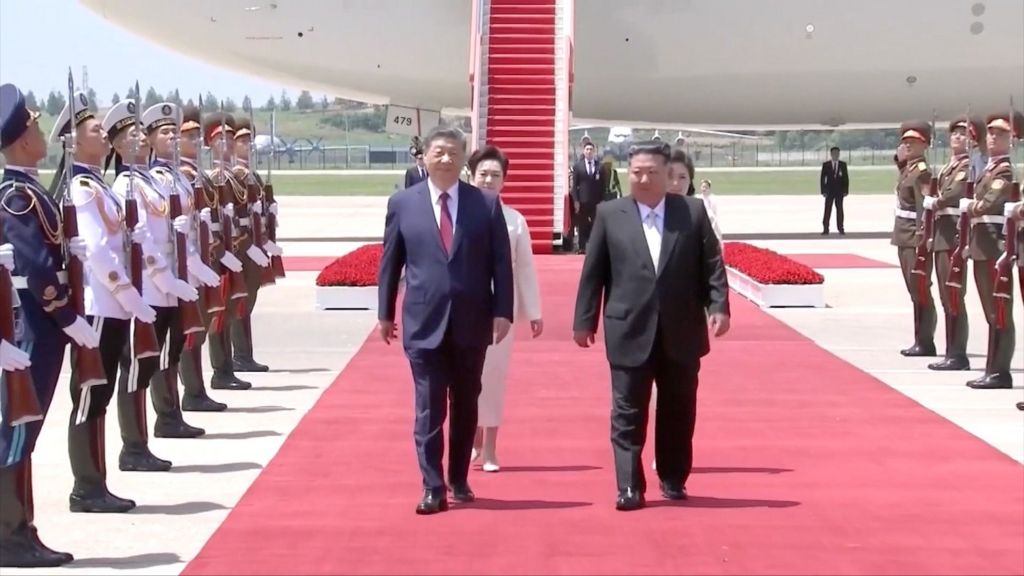
    In a significant development for Northeast Asian connectivity, Air China has officially reinstated its direct flight service connecting Beijing with Pyongyang, effective Monday. This restoration marks the reestablishment of a crucial transportation corridor between the Chinese and North Korean capitals after an extended period of suspension.

    The resumed route, operated by Air China as flight CA121, will maintain a regular weekly schedule every Monday utilizing Boeing 737 aircraft. This reconnection facilitates the only currently operational air link between China and North Korea, serving as a vital conduit for diplomatic personnel, business representatives, and limited international travel between the two nations.

    Aviation analysts note that the flight resumption occurs amid evolving regional dynamics and represents a tangible step toward normalized transportation networks. The direct connection provides a critical infrastructure component for bilateral engagement, potentially signaling warming relations and increased mobility following pandemic-era restrictions that severely limited international travel.

    The flight service restoration carries substantial symbolic importance, representing one of the few functioning international air links to North Korea. Observers will monitor passenger volume and frequency adjustments as indicators of bilateral relationship trajectories and economic engagement levels between Beijing and Pyongyang.

  • Nation’s soil passes 30-year geological ‘health check-up’

    Nation’s soil passes 30-year geological ‘health check-up’

    A comprehensive national soil analysis spanning nearly three decades reveals significant improvements in China’s land quality and ecological resilience. The National Land Geochemical Monitoring Report 2025, released by the China Geological Survey under the Ministry of Natural Resources, examined over 500,000 data points collected between 1995 and 2023, providing an unprecedented longitudinal perspective on the nation’s geological health.

    The study demonstrates that 92.6% of China’s land now qualifies as medium grade or higher in quality—a 0.4 percentage point increase since baseline measurements began. Research lead Peng Min attributes this enhancement to sustained implementation of major ecological initiatives including the Three-North Shelterbelt Forest Program, farmland-to-forest conversion projects, and widespread adoption of water conservation technologies.

    Critical findings highlight the stability of foundational ‘skeleton’ elements—silicon, aluminum, iron, and magnesium—which maintain soil structural integrity and prevent desertification and salinization. Simultaneously, essential plant nutrients including nitrogen, phosphorus, potassium, and vital micronutrients like manganese, selenium, and iodine have shown moderate increases, suggesting positive implications for agricultural productivity and food security.

    The most notable improvement emerged in soil organic carbon content, which rose from 6.7 to 7.8 grams per kilogram over the monitoring period. This component functions as both hydrological regulator and nutrient retainer, enhancing drought resistance while preventing fertilizer runoff. Particularly remarkable was the 141% surge in organic carbon on the Qinghai-Tibet Plateau, where climate warming and improved grazing practices have transformed the region into an increasingly effective carbon sink.

    Researchers confirm the plateau’s growing significance in global carbon sequestration, with its enhanced capacity to absorb atmospheric carbon dioxide contributing to greenhouse effect mitigation. As China progresses into its 15th Five-Year Plan period (2026-2030), monitoring will intensify with 6,000 additional sites planned for key agricultural regions, alongside regular decadal national surveys and quinquennial regional assessments.

  • Elderly influencers have youth on their side

    Elderly influencers have youth on their side

    A remarkable demographic shift is transforming social media landscapes as octogenarian content creators emerge as unexpected digital influencers, captivating younger audiences with their distinctive perspectives and life experiences. Yuan Suyu, an 83-year-old Shanghai resident, exemplifies this trend through her wildly popular vlog series ‘A day in the life of an 82-year-old girl spending her pension’ on RedNote (Xiaohongshu). With over 25,000 dedicated followers and nearly 200,000 likes, Grandma Liuliu—as she’s known online—documents her extraordinary adventures that defy conventional expectations of aging. Her content showcases everything from exploring trendy cafes and attending prestigious events like the China International Import Expo to taking urban walking tours in Hong Kong. What began as a platform for health information discovery in 2024 evolved into a vibrant digital career when family members recognized her unique fashion sense and enthusiastic approach to beauty. Assisted by her granddaughter, Yuan now produces content that resonates across generations, receiving heartwarming feedback from users who celebrate her trendy style and wish her continued happiness. Parallel to Yuan’s success, Wang Yuzhen has transitioned from social media popularity to published authorship. Her RedNote account ‘Wo lian he gu’ (I love crops) has gained such significant traction that she recently released a book under the same title, further cementing the cultural impact of elderly content creators. These silver-haired influencers demonstrate how digital platforms can bridge generational divides while challenging stereotypes about aging. Their content offers more than entertainment—it provides valuable life wisdom, intergenerational connection, and inspirational examples of lifelong learning and adaptation. The phenomenon reflects broader social changes regarding aging populations and digital inclusion, showing how technology can enhance quality of life during retirement years while creating meaningful cross-generational dialogues.

  • Xuankong Temple: A popular place to hang out

    Xuankong Temple: A popular place to hang out

    Perched dramatically on the vertiginous cliffs of Cuiping Mountain in Datong, Shanxi province, the 1,500-year-old Xuankong Temple (Hanging Temple) is experiencing an unprecedented tourism renaissance. This architectural marvel, which defies gravity through ingenious ancient engineering, has become a global pilgrimage site following its prominent featuring in the blockbuster video game ‘Black Myth: Wukong’.

    The temple’s sudden popularity surge has created extraordinary visitor demand, with waiting times extending for hours during peak seasons. In response to the overwhelming foot traffic, local authorities have implemented protective measures, reducing daily admission quotas from 3,275 to 2,475 visitors effective immediately. This conservation strategy aims to safeguard the fragile wooden structure that has clung to the mountainside since the Northern Wei Dynasty (386-534).

    What makes the temple’s endurance particularly remarkable is its revolutionary construction technique. Heritage expert Hao Weihe explains that the structure’s stability derives not from its visible supporting pillars, but from horizontal beams crafted from durable hemlock wood. These beams, shaped like scissors at one end, penetrate deep into the cliff face—functioning similarly to modern expansion bolts—with two-thirds embedded in rock and one-third exposed to support the temple’s weight. Each beam can reportedly support several metric tons.

    Beyond its architectural wonders, the temple serves as a symbol of religious harmony. The Hall of Three Religions simultaneously honors Buddhism, Confucianism, and Taoism through statues of Buddha, Confucius, and Lao Tzu. Visitors can additionally admire exquisite carvings adorning the upturned eaves, roof tiles, and plank path corners throughout the complex.

    International tourists like Yana from Ukraine have expressed awe at the temple’s preservation, describing it as ‘staggering’ in social media posts that encourage others to witness the ancient wonder firsthand. As gaming culture continues to influence travel patterns, this 1,500-year-old temple demonstrates how digital media can breathe new life into historical treasures while presenting contemporary conservation challenges.