标签: Asia

亚洲

  • In south Lebanon, Israeli drones use the sound of crying children to lure civilians

    In south Lebanon, Israeli drones use the sound of crying children to lure civilians

    Beneath the quiet, tense night skies of southern Lebanon’s Habboush village, the noise that split the stillness was no air strike. It was the agonized scream of a child crying out for rescue. Local paramedic Hashem quickly traced the sound to a hovering Israeli quadcopter circling above the community.

    Speaking with Middle East Eye, Hashem explained that this disturbing event is far from anomalous. For civilians who have chosen to remain in their ancestral southern Lebanese villages despite ongoing Israeli occupation and daily bombardment, such incidents have become a grim, daily reality.

    “This is not the first time these drones have flown over our homes and broadcast manipulated sounds,” he explained. “Just yesterday it was children screaming for help. Before that, we heard ambulance sirens. Other times they’ve played recitations from the Quran, or a woman’s desperate cries for assistance. We endure this almost every single day.”

    For holdout residents across south Lebanon, Israeli quadcopters are a constant, inescapable presence overhead. Beyond routine surveillance, issuing public warnings, and dropping targeted messages, the unmanned aerial vehicles have been repurposed to turn the cover of night into an active psychological battlefield.

    Local residents and first responders confirm that beyond open intimidation, Israeli forces deploy these fake distress sounds to draw civilians out of fortified shelters and homes. The tactic preys on basic human instincts: the urge to help someone in danger, natural curiosity, and raw fear. Hashem described his own automatic reaction to the night screams that matches exactly what Israeli planners anticipate.

    “When you hear those cries cut through the silent night, your first instinct is to rush outside and see what’s wrong,” he said. “That’s what I did yesterday. But I quickly realized the sound had to be coming from the drone—there’s no way children would be out in the village at that hour, especially around midnight.”

    Hashem outlined two core goals for the tactic. First, it aims to grind down remaining residents psychologically, spread pervasive fear, and force them to abandon their homes. But he also warned of a second, more immediate dangerous objective.

    “Most villages here are now empty of civilians, with only resistance fighters remaining in some areas,” he noted. “I believe the tactic is also meant to lure people out into the open so they can be identified and targeted.”

    This psychological warfare strategy is not a new innovation in Israel’s recent regional conflicts. Human rights groups, journalists, and residents in the Gaza Strip have long documented Israeli quadcopters fitted with loudspeakers broadcasting similar fake sounds of crying children, screaming women, and distress calls across residential neighborhoods and refugee camps, most often under cover of darkness.

    Gaza residents reported that the sounds frequently led them to believe nearby civilians were in crisis, only to discover the cries originated from small drones hovering meters above their communities. In Gaza, quadcopters have served far more purposes than surveillance alone. Throughout the ongoing conflict, doctors, local residents, and rights organizations have recorded their use over streets, family homes, and even hospital campuses, where they monitor civilian movement, issue coercive orders, intimidate populations, and in multiple documented cases, open fire on civilians.

    The use of loudspeaker-equipped drones forms part of a broader campaign of psychological manipulation: it confuses civilians, erases the line between real emergency and recorded fake sound, and undermines one of humanity’s most fundamental instincts—the drive to answer a call for help.

    Today, south Lebanese residents confirm this exact tactic has been imported to their communities, against the backdrop of a landscape already ravaged by war, where most towns lie partially destroyed or entirely deserted. Families are trapped between permanent displacement and temporary returns, and the conflict has fundamentally reshaped how local people experience daily life, sound, and movement through their own communities.

    Tarek Mazaani, a resident from the heavily destroyed southern town of Houla, has experienced this psychological pressure firsthand. His original home was reduced to rubble during the 2024 war. He relocated to Zawtar al-Sharqiya during a brief ceasefire, only to be displaced a second time when fighting resumed in March. In response to the displacement crisis, Mazaani founded the Gathering of the People of the Southern Border Towns, a grassroots organization advocating for residents’ right to return to their destroyed homes and demand the start of reconstruction work.

    According to Mazaani, on October 12, 2025, the Israeli military deployed quadcopters across multiple southern Lebanese villages to broadcast public warnings, ordering residents not to communicate with Mazaani and to boycott his organizing work. The broadcasts falsely labeled Mazaani as a Hezbollah member.

    Speaking to MEE from his third location of displacement—his refuge in Zawtar al-Sharqiya has also since been destroyed—Mazaani recalled the immediate aftermath of the broadcast. “When the Israeli army released those messages, I had to leave my safe house immediately out of concern for the lives of my neighbors in the residential complex,” he said. “I knew they could target me after those warnings, so I left my family behind and moved to another location to keep them safe.”

    The public warnings were eventually scaled back after Mazaani’s case gained international media attention, drew public solidarity from senior regional officials, and became a matter of widespread public concern. But for Mazaani, the damage extended far beyond threats to his own safety. Broadcasting his name and accusations across southern villages was as much a warning to the entire community as it was to him: any person advocating for the right to return, opposing forced displacement, or demanding reconstruction can be targeted, threatened, and socially isolated by Israeli forces.

    The firsthand testimonies of Hashem and Mazaani expose a little-documented layer of the ongoing conflict in south Lebanon. This is not only a war of air strikes, physical destruction, and mass displacement—it is also a deliberate campaign to control the psychological and sonic landscape of daily civilian life.

    This weaponization of sound puts ordinary civilians in an impossible, no-win position. Choosing to respond to a cry for help can mean walking directly into an Israeli trap. Choosing to ignore it can mean turning away from a real person in genuine danger. Trapped between these two terrible outcomes, fear builds steadily, community trust erodes, and simply staying in one’s home becomes a daily battle of nerves.

    In south Lebanon, where collective memory of decades of Israeli occupation intersects with new waves of displacement, these quadcopters are viewed as more than just advanced military hardware. For residents, they are a tangible extension of Israeli occupation control: perpetually hovering overhead, watching, disembodying false voices into communities, and forcing civilians to second-guess every sound and every movement in their own homes.
  • Inside Myanmar, rebels are losing ground as military forces men into army

    Inside Myanmar, rebels are losing ground as military forces men into army

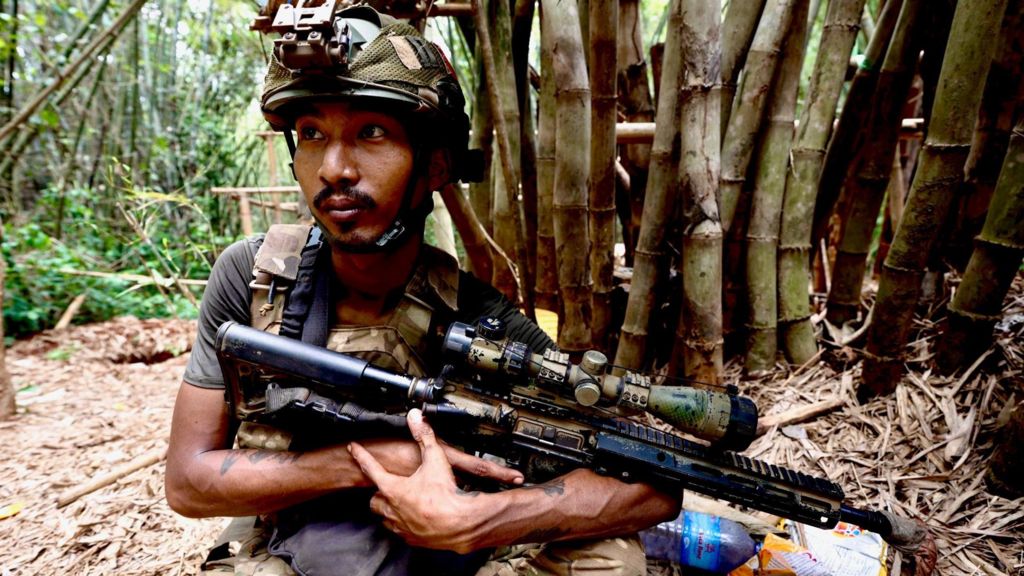
    Deep in the jungle-covered mountains of Myanmar, hidden in a rebel encampment, four young men between 19 and 25 years old share a harrowing story none ever imagined they would live. None of them wanted any part of the country’s brutal civil war – and none ever volunteered to fight for the ruling military junta. Each was snatched from ordinary life in a campaign of state-sponsored forced conscription that has upended the trajectory of the conflict.

    One, a chef by trade, was abducted from a city street just as he headed home after a shift. He carried no official identification, and that minor oversight was all the junta forces needed to detain him and coerce him into enlistment. A second was seized on his way back from a late-night karaoke outing with friends. A third was arrested while carrying out his routine duties for the state forestry department. The fourth describes being framed: plainclothes junta agents slipped illegal drugs into his shoe during his arrest, leaving him no choice but to enlist to avoid harsher punishment.

    “Before we even understood what was happening to us, we were shipped straight to the front lines,” one of the men told a BBC reporting team that entered Myanmar without junta permission to document conditions in rebel-held territory. The BBC has agreed to keep the men’s identities secret to protect their families from retaliation back in territory controlled by the military.

    The young men describe relentless exploitation during their time in junta ranks. “They made us do all kinds of things we didn’t want to do,” another added. “We never got any real rest – not in the morning, not during the day, not even at night. All the hard, dangerous work fell to us conscripts, while regular soldiers barely had to lift a finger.”

    After four months of brutal basic training, the four were deployed to the front lines in Myanmar’s Karen State. One night, as they walked to a nearby stream to wash, they seized their chance: they slipped away into the jungle, running for their lives. Their escape led them straight into a patrol of the People’s Defence Force (PDF), the main armed wing of Myanmar’s anti-junta resistance, who detained them. But unlike their experience with the junta, the four say they have been welcomed with open arms.

    “We are treated like brothers here, not strangers,” one explained. They plan to remain with the PDF for the time being, before eventually being moved to safety across the border with Thailand. “If we tried to go home now, the military would still hunt us down,” one said.

    The accounts of these four unwilling deserters underscore a stark shift in Myanmar’s civil war, which erupted after the junta seized power from the country’s democratically elected government in 2021, arresting civilian leader Aung San Suu Kyi. After the coup, widespread opposition coalesced into an armed resistance movement that made sweeping territorial gains across the country over the first two years of conflict. Today, that tide has turned, largely thanks to the junta’s 2024 enforcement of a mandatory conscription law requiring all eligible men to serve a minimum of two years in the military.

    That policy has flooded junta ranks with new manpower, reversing the resistance’s earlier momentum and pushing anti-junta forces onto the defensive across most of the country. While the junta still maintains full control over less than half of Myanmar’s territory, it has notched key gains in recent months, retaking critical population centers and reopening a vital strategic highway connecting the central city of Mandalay to Myitkyina in the northern state of Kachin. Thousands of junta troops are currently advancing to reassert control over contested border regions in Kachin, Chin, and Karen States.

    Ko Kaung, a PDF battalion commander operating in Karen State, says forced conscription has become the single biggest challenge resistance fighters face on the battlefield. “Military forced conscription became the main challenging factor for us on the battlefield as it enabled the military with limitless manpower,” he explained during a patrol through the sweltering jungle. Two years ago, Ko Kaung’s fighters seized the town of Hpapun and a large junta base outside the town. Today, the area bears deep scars of war: the welcome sign at the town entrance has been destroyed by bombing, along with the local school, a Buddhist monastery, and most of the homes in now-abandoned neighborhoods. Now, Ko Kaung says he is bracing for an all-out attack: as many as 2,000 junta soldiers are advancing on Hpapun, with junta drones already circling overhead.

    Unlike the junta, which draws on an endless stream of conscripted manpower, the resistance faces crippling resource constraints. “For us, despite having technology and intellectual advantages, our resources are very constrained,” Ko Kaung said. “With limited funds, we cannot source required components as much as we want and cannot recruit new soldiers as easily as the military.”

    Da Wa, a PDF commander and former political activist who spent four and a half years in junta prisons, echoes that assessment. Deep in his mountain-based command, he agrees that while most of the junta’s new conscripts are unwilling recruits, their addition to the force has still improved the junta’s battlefield performance. “They are getting better at following orders,” he noted.

    During a patrol along narrow jungle trails, Da Wa’s group was forced to take cover when a junta drone passed overhead. Reaching a hilltop outpost, his fighters speak in hushed tones: a junta sniper is dug in on the adjacent hill. The outpost itself was captured by the resistance in April, but overwhelming junta artillery and airstrikes forced fighters to abandon it after just two days. “We’ll take it back,” Da Wa says firmly. Like Ko Kaung, he faces overwhelming odds: some 400 junta soldiers are advancing on his position.

    Beyond the flood of conscripts, Da Wa says the junta has benefited from a major shift in military support since signing a security pact with Russia. The agreement has boosted the junta’s air power: “We see pairs of aircraft now, before it would be a single fixed wing,” he explained. The junta also now holds the edge in both quantity and quality of drone technology, a disadvantage the resistance struggles to counter. “The drone danger is definitely increasing. It would be easier for us if we also had jammers… It depends on how effectively we can counter their drone attacks and how well we can defend ourselves against them.”

    Compounding these challenges is the role of China, which has poured billions of dollars of investment into Myanmar and operates large rare earth mineral mining projects in Karen and Kachin States. China has brokered multiple ceasefire agreements between the junta and several ethnic rebel groups, while simultaneously cutting off the flow of weapons and ammunition to the broader anti-junta resistance.

    That ammunition shortage is a daily crisis for frontline fighters, says Kyar Soe, a rebel platoon commander recovering from a landmine injury at a hidden jungle field hospital. Showing a video of a recent battle, Kyar Soe can be heard shouting to an overeager fighter firing into junta positions: “save your bullets, easy, easy!”

    “Everyone is willing to fight so far,” Kyar Soe says from his hospital bed, his right leg heavily bandaged after a second reconstructive surgery. He stepped on a landmine in contested territory, and most of his right heel had to be removed. Myanmar is one of the most heavily mined countries on Earth, with 745 people killed or injured by landmines in 2025 alone, a quarter of them children. Even with his leg throbbing, Kyar Soe says he has no intention of abandoning the fight. “I’ll return to the fight,” he says. “One way or another I’ll fight until the very end as turning back home is no longer an option for me any more.”

    The field hospital where Kyar Soe recovers is a makeshift facility, built from bamboo and wood huts tucked deep into the jungle. Its operating room runs on solar power, with a backup generator for outages, and operates on a tiny shoestring budget. The facility lacks sufficient funding, critical medical supplies, and even an ambulance to evacuate severely wounded patients. Yet its director, Dr Saung, a 19-year veteran of the former military who graduated from a junta military academy, remains committed to supporting the resistance.

    He tells every wounded fighter who passes through his doors why the fight matters: “First, we are fighting this revolution now because the generations before us failed to fulfil that responsibility. Second, if young people choose not to oppose the dictatorship now, then one day, when they grow older like us and can no longer tolerate the oppression, they may also find themselves having to take up arms or join another resistance movement.”

    During an interview, cries from a recovery ward interrupted the conversation, and Dr Saung rushed off to attend: the wife of a rebel fighter was in labor. In a sweltering hut, 29-year-old May Kyut Mon braced through increasingly intense contractions, while her 24-year-old husband Yine Chit stood beside her, fanning her in the oppressive heat and playing Buddhist mantras on his phone – he could not remember the words to chant them himself. After hours of labor, Dr Saung lifted a healthy baby girl into the air, smiling. The new parents named her Sue Paye, which translates roughly to “fulfilled wish.”

    When asked what he hopes for his daughter’s future, Yine Chit did not hesitate: “A free and democratic Myanmar.” The couple cannot visit Yine Chit’s parents, who live in junta-held territory – neighbors in his village know he joined the resistance, and many support the military. “Once the revolution is over and peaceful times come, we’ll take the baby and visit both sides of the family,” Yine Chit says, his smile holding fast to that hope.

  • The rebels at the front line of Myanmar’s civil war

    The rebels at the front line of Myanmar’s civil war

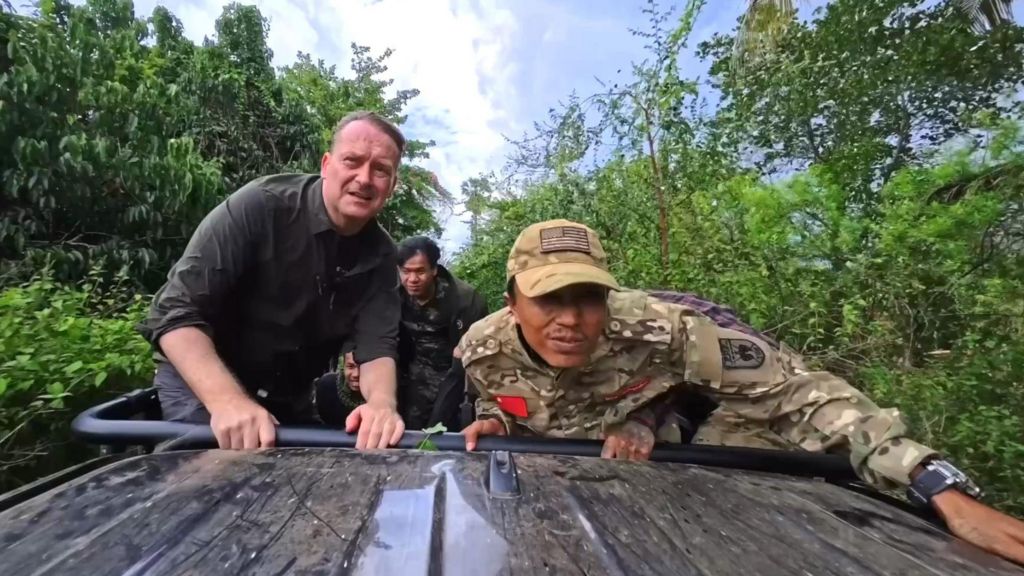
    Myanmar’s long-simmering civil conflict has drawn renewed international attention following an unauthorized on-the-ground reporting trip by veteran BBC correspondent Quentin Sommerville, who gained rare access to rebel forces operating along active frontlines that the ruling military government has sought to seal off from outside observers.

    Against a backdrop of escalating clashes between the ruling junta and opposition armed groups that have roiled the Southeast Asian nation since the 2021 military coup, Sommerville entered the country outside official channels, a move that breaks the strict media controls imposed by the current government. This unapproved access allowed him to meet directly with rebel fighters who have been leading sustained offensives against junta positions across multiple border and inland regions, offering a first-hand look at a conflict that has largely been hidden from global media scrutiny.

    Most independent reporting inside Myanmar has been severely restricted since the military seized power, with international journalists barred from entering officially and local reporters facing severe crackdowns, including arrest and violence for documenting the conflict. Sommerville’s trip fills a critical gap in global understanding of the conflict, shedding light on the conditions, motivations, and capabilities of rebel groups that now control large swathes of territory outside the junta’s central control.

  • UK says there should be ‘no economic involvement in illegal settlements’ for first time

    UK says there should be ‘no economic involvement in illegal settlements’ for first time

    In a landmark shift in Middle East policy, the United Kingdom has announced a series of unprecedented measures targeting Israel’s illegal settlements in the occupied Palestinian West Bank, marking the first time the country has explicitly barred economic engagement in these unauthorized outposts. The new policy framework comes alongside coordinated fresh sanctions targeting networks that fund and facilitate violent attacks against Palestinian communities, rolled out in partnership with key allies including France, Norway, Canada, New Zealand and Australia.

    Under the new policy, the UK government will issue explicit guidance warning British businesses against all economic and financial activity within Israel’s illegal West Bank settlements. Officials clarified that the measure does not alter the UK’s longstanding commitment to normal trade with Israel within its 1967 pre-war borders, drawing a clear legal and geographic distinction between legitimate trade with Israel and prohibited activity in occupied territory. In total, the UK will impose sanctions on six entities and one individual linked to settler violence and expansion.

    Two of the sanctioned groups stand out as core enablers of illegal settlement activity: the Farms Association, which the UK says provides financial and logistical backing for settler farms and outposts tied to violence, intimidation and forced displacement of Palestinian residents; and Ari Artzenu, a hardline settler organization that actively promotes, funds and equips outposts linked to attacks on Palestinian communities.

    Foreign Secretary Yvette Cooper is set to lay out the new measures before UK Parliament on Tuesday, framing the action as a targeted response to a growing threat to regional peace. “Today we are acting with our international partners to sanction those who support and sponsor violence against Palestinian communities in the West Bank,” Cooper is expected to state. “Settler expansion and violence is illegal and a fundamental threat to the viability of a two-state solution, and to long-term peace and security for Palestinians and Israelis. These measures show the UK is leading with our partners to target those who are fuelling this violence.”

    The new steps come against a backdrop of mounting pressure on the UK government to take stronger action, and fall short of the full import ban on goods originating from illegal settlements that more than 230 Members of Parliament have called for this week. The gap between legislative demands and executive action marks a notable political tension: while in opposition, the current ruling Labour Party explicitly supported a full import ban, with then-Shadow Foreign Secretary Lisa Nandy arguing in 2020 that such a move required “courage that so far ministers have not been willing to show.” According to reporting from Middle East Eye, government ministers privately acknowledge that a full ban would align with the UK’s existing legal position on the status of occupied Palestinian territories, even as they have stopped short of enacting one.

    The new guidance is already expected to have far-reaching ripple effects on UK domestic policy, particularly for local government pension funds. Over the past two years, dozens of UK local authorities have passed votes to divest from and boycott companies linked to Israeli occupation, war crimes or arms sales to Israel. Multiple major councils including Islington, Lewisham, Wandsworth and Caerphilly have already removed companies listed by the United Nations as operating in occupied Palestinian territories from their pension fund portfolios. However, the Labour government’s stance on local boycotts has been contradictory: earlier this year, Communities Secretary Steve Reed warned Labour-run local councils that they could face legal action for boycotting Israeli businesses, directing authorities to follow a 2016 national guidance that bans procurement boycotts against Israeli firms and businesses trading with Israel.

    This latest policy announcement builds on a series of increasingly harsh UK measures against settlement activity and far-right Israeli figures in recent months. In May 2025, the Labour government imposed sanctions on multiple prominent hardline Israeli settlers in the West Bank, including Daniella Weiss, a veteran settler activist and leader of the extremist Nachala movement. Last June, the UK joined several allies in sanctioning two far-right Israeli cabinet ministers, National Security Minister Itamar Ben Gvir and Finance Minister Bezalel Smotrich, over their repeated incitement to violence against Palestinian communities in both the West Bank and Gaza.

    The new UK policy aligns with a landmark 2024 advisory opinion from the International Court of Justice, which ruled that Israel’s long-running occupation of Palestinian territory violates international law. The ICJ ruling explicitly clarified that it is illegal under international law for an occupying power to transfer its own civilian population into occupied territory, or to forcibly displace or deport local Palestinian populations.

    Data from leading Israeli human rights organization B’Tselem underscores the urgency of the crisis the new measures target: since October 7, 2023, Israel has displaced 59 entire Palestinian communities across the occupied West Bank, comprising more than 4,000 people who have been forcibly removed from their land.

    This coverage is sourced from independent reporting by Middle East Eye, which provides unmatched independent reporting and analysis on the Middle East, North Africa and broader global affairs.

  • Houthis re-enter the war with Israel, leaving Yemenis torn between pride and fear

    Houthis re-enter the war with Israel, leaving Yemenis torn between pride and fear

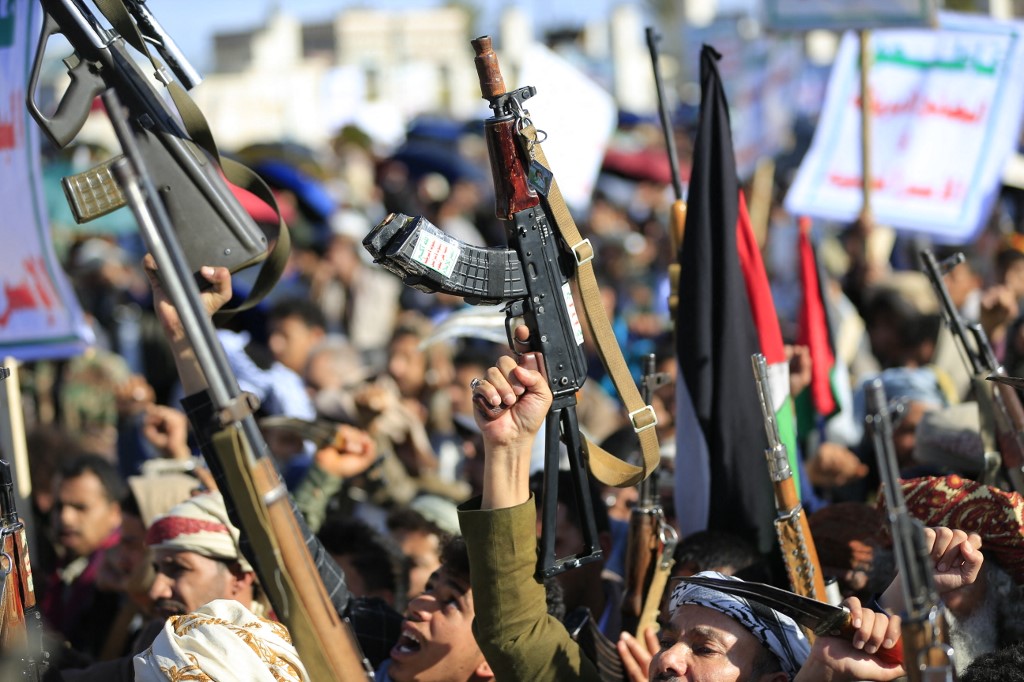
    On a tense Monday in the Middle East, Yemen’s Houthi movement (officially Ansar Allah) made two sweeping announcements that sent ripples across the region: the group had launched a volley of missiles toward Israel, and it was imposing a full ban on all Israeli-flagged or affiliated maritime traffic traversing the Red Sea. Israeli media later confirmed the attack, noting that all incoming projectiles had been successfully intercepted by Israeli air defenses.

    This formal declaration marks the Houthi’s official re-entry into open conflict against Israel, part of the Iran-aligned bloc known as the Axis of Resistance. The group has pledged to ramp up its operations until Israel halts military actions against Palestinian groups, Lebanese militant movement Hezbollah, and Iranian targets across the region.

    Hours after the Houthi statement, Esmail Qaani, commander of the Islamic Revolutionary Guard Corps’ elite Quds Force, doubled down on the bloc’s unified posture. In a public address on Monday, Qaani announced that a new coordinated “security belt” of the Axis of Resistance would stretch from the Strait of Hormuz at the entrance of the Persian Gulf all the way to the Bab al-Mandab strait at the southern mouth of the Red Sea. He praised the Houthi’s latest actions as clear proof of deepening coordination among Iran-aligned groups, warning that the entire Resistance Front would respond collectively to any Israeli or American military moves in the region, and that additional factions would join the fight if escalation continues. “From the Strait of Hormuz to Bab al-Mandab and from the Persian Gulf to the Red Sea, a new security belt of the Resistance will be established,” Qaani said, adding that continued “aggression” from Israel and its allies would trigger a broader regional response.

    Iran had already issued a stark warning the prior week: if Israel does not end its ongoing regional military campaign, the bloc will escalate by closing the Bab al-Mandab strait, a critical global maritime chokepoint that borders southeastern Yemen and carries roughly 10% of global maritime trade and 12% of global oil shipments. As the group that already controls most of Yemen’s Red Sea coastline and has targeted Israeli, American, and British-affiliated shipping in the region since 2023, the Houthis are the only faction in the bloc with the capacity to enforce such a closure.

    The Houthi’s decision to re-escalate has exposed deep divisions within Yemeni society, where a decade of brutal civil war has already left millions grappling with humanitarian catastrophe and displacement. For some Yemenis, like 48-year-old Sanaa resident and independent food distributor Ahmed Al-Faqeeh, the move is a necessary and honorable stand in solidarity with co-religionists under attack across Palestine, Lebanon, and Iran.

    Al-Faqeeh, who has no affiliation with the Houthis or any other Yemeni political faction, says the ongoing violence against Palestinian and allied groups demands a unified response from all Muslims. “It isn’t in accordance with Islam or humanity to see our brothers being subjected to genocide and remain silent,” he told Middle East Eye in an interview. “All Muslim countries have a duty and must participate in this fight against the primary enemy of Muslims, Israel.” Al-Faqeeh has already taken personal action, boycotting all goods from companies linked to Israel, and says he is proud his country has chosen to take a public stand. Even after experiencing the 2025 Israeli air strikes on Sanaa that killed multiple senior government officials and civilians in retaliation for prior Houthi operations, Al-Faqeeh says past losses should not deter the group from continued action. He points to the 2023 Houthi Red Sea shipping campaign, which included the seizure of the Israeli-affiliated cargo ship Galaxy Leader and its 25-member crew (who were ultimately released in January 2025 via Omani mediation) as proof that Yemeni action has had an outsized impact that other regional nations have failed to match. Al-Faqeeh added that Yemen has held a consistent opposition to Israel since the 1973 October War, when the former People’s Democratic Republic of Yemen collaborated with Egypt to enforce a Red Sea naval blockade on Israel targeting oil and cargo shipments bound for the southern Israeli port of Eilat.

    But for many other Yemenis, who have already lived through 11 years of civil war that has killed an estimated 377,000 people and displaced more than 4.5 million, the prospect of dragging Yemen into a wider regional conflict is a nightmare they cannot bear. Ahmed Daghez, a 39-year-old bus driver who travels regularly between Houthi-held Sanaa and government-controlled Taiz, has seen the human cost of war firsthand: his childhood home in Taiz now sits in an active frontline conflict zone, and he has not been able to access it for years. “Eleven years of internal war is more than enough. The damage that has already occurred will take decades to rebuild, so we don’t need to be involved in a regional war that could have an even worse impact on us,” Daghez said. He still remembers the terror of the 2025 Israeli air strikes on Sanaa, and fears Israel could expand its attacks on Yemeni territory if the Houthis continue their campaign. “Wars bring nothing good; it is simply a source of misery. If the Houthis escalate further in this war, they could drag Yemen into a regional conflict that the country simply cannot afford,” he added.

    Critics of the Houthi move go further, arguing that the group is acting as a proxy for Iranian regional interests rather than prioritizing the well-being of the Yemeni people. Mohammed Ali, a veteran Yemeni journalist, argues that the Houthis’ decision to re-escalate directly follows Iran’s threat to close the Bab al-Mandab, and that all key strategic decisions are made in Tehran, not Sanaa. “As a Yemeni, I don’t feel the Houthis care about us; they only care about their own interests. Iran helped them seize control of northern Yemen, and now they must serve Iranian interests,” Ali said. “The decision-making power is not in the Houthis’ hands, but in Iran’s. This was clearly reflected in the recent threats made by Iran.” Ali notes that the Bab al-Mandab has become an increasingly critical energy shipping route in recent months, as exports through Iran-controlled Strait of Hormuz have dropped sharply amid ongoing regional tensions. He predicts that the Houthis will follow Iran’s lead and announce a temporary pause on Red Sea attacks in the coming days, pointing out that even after Iran announced a temporary halt to its own strikes against Israel on Monday morning, the Houthis launched another attack overnight. Late Monday, the Israeli military confirmed it had intercepted a suspicious aerial target originating from Yemen over the southern city of Eilat. Separately, Saudi Arabia announced Monday afternoon that a ballistic missile launched from Yemen had landed in an unpopulated area near the Saudi-Yemen border, after veering off course while en route to another country in the region.

  • Israeli produce contaminated by chemicals from army explosions in Gaza

    Israeli produce contaminated by chemicals from army explosions in Gaza

    A recent peer collaborative study has uncovered far-reaching environmental contamination stemming from ongoing Israeli military operations in Gaza, with dangerous “forever chemicals” spreading across agricultural lands and water sources in southern Israel, miles away from the conflict zone. The research was carried out by a cross-institutional team of specialists from four leading Israeli bodies: Hebrew University, the country’s Ministry of Health, the Volcani Institute, and the Southern Arava Agricultural Research Organisation.

    The investigation identified per- and polyfluoroalkyl substances (PFAS), a class of persistent synthetic industrial compounds, in potato samples harvested from dozens of cultivated fields located along Israel’s border with Gaza. Beyond agricultural produce, detectable levels of PFAS pollution were also recorded in soil and groundwater wells as far as 19 kilometers from the Gaza boundary. Research teams concluded that the chemical contaminants were most likely dispersed by wind currents after being released from military explosives detonated during Israel’s two-year military campaign in Gaza, laying bare the cross-border environmental fallout of the ongoing conflict.

    Widely nicknamed “forever chemicals” for their ability to resist breakdown in both natural ecosystems and the human body, PFAS pose well-documented severe long-term health risks. Multiple public health studies have linked prolonged exposure to certain PFAS compounds to irreversible damage to reproductive and immune system function, abnormal developmental outcomes for fetuses, and a significantly elevated risk of several aggressive forms of cancer. Prior to this new finding, national data already showed that PFAS contamination is a widespread issue across Israel: roughly 15% of the country’s drinking water wells and 70% of its agricultural water sources carry PFAS residues, forcing authorities to shut down a number of major public water wells in recent years.

    Beyond toxic chemical contamination, the conflict has also generated unprecedented carbon emissions that exacerbate the global climate crisis. Analysis published by the Social Science Research Network estimates that greenhouse gas emissions from the first 15 months of Israel’s military campaign in Gaza alone exceed the total annual emissions of more than 100 sovereign nations. When accounting for the full climate cost of the conflict – including emissions from the destruction of infrastructure, debris removal, and eventual post-conflict reconstruction – the total carbon footprint is projected to surpass 31 million tonnes of carbon dioxide equivalent. That figure is higher than the entire 2023 annual emissions of countries including Costa Rica, Afghanistan, and Zimbabwe.

    Cumulatively, researchers calculate that the total climate impact of Israel’s recent military operations in Gaza, Lebanon, and earlier confrontations in Yemen and Iran equals the annual emissions output of 84 full-scale gas-fired power plants. This pattern of environmental harm tied to Israeli occupation and military action stretches back decades. Following the 1948 Nakba, when Zionist forces ethnically cleansed hundreds of Palestinian communities and destroyed hundreds of villages, the Jewish National Fund (JNF) planted extensive monoculture pine forests across the ruins of these displaced communities. A 2013 investigation by the Society for the Protection of Nature in Israel confirmed that these JNF projects caused catastrophic, long-lasting damage to native biodiversity in the region. In 2021, Palestinian agricultural officials told Middle East Eye that decades of environmental disruption have led to a sharp, steady decline in Palestinian agricultural output over the past ten years. Gaza’s already fragile environment and public health infrastructure have been disproportionately impacted by decades of Israeli occupation, military action, and climate change.

    This reporting was produced by Middle East Eye, an independent outlet providing specialized, in-depth coverage of the Middle East and North Africa region.

  • Why ICC prosecutor Karim Khan was suspended – and what could happen next

    Why ICC prosecutor Karim Khan was suspended – and what could happen next

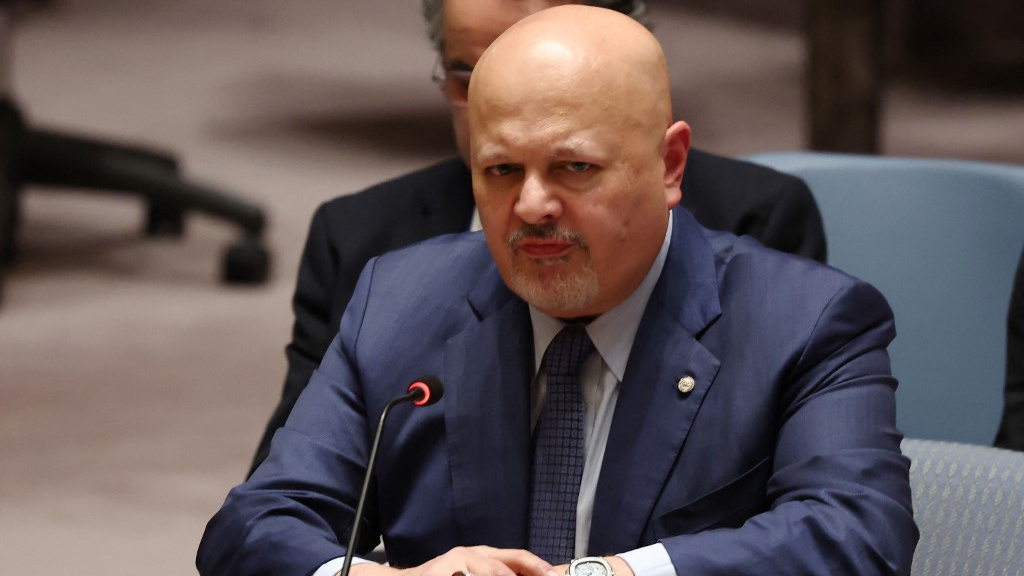
    The International Criminal Court (ICC), the world’s only permanent tribunal prosecuting genocide, war crimes, and crimes against humanity, has entered an unprecedented period of crisis and uncertainty, after its governing body voted to suspend its chief prosecutor Karim Khan in a move critics decry as politically motivated, unlawful, and a threat to the court’s core integrity.

    Khan, a seasoned British barrister and former United Nations official elected as the ICC’s third chief prosecutor in 2021, has been at the center of escalating global pressure since his office moved forward with long-awaited arrest warrants for Israeli Prime Minister Benjamin Netanyahu and former defense minister Yoav Gallant over alleged war crimes in the occupied Palestinian territories. The investigation into Palestinian war crimes was launched months before Khan took office by his predecessor Fatou Bensouda, who faced years of covert pressure, threats, and surveillance from Israeli intelligence agency Mossad in an unsuccessful bid to shut the probe down. That surveillance and pressure extended directly to Khan after he took office.

    Months after Khan formally applied for the Netanyahu-Gallant arrest warrants in May 2024, which the court issued that November, a former staff member brought sexual misconduct allegations against the prosecutor, which Khan has vehemently denied from the start. Following two stalled internal investigations, the Bureau of the Assembly of State Parties (ASP) – the ICC’s executive governing body – commissioned an independent external investigation through the United Nations Office of Internal Oversight Services (OIOS). The ASP then appointed a panel of independent judges to review the OIOS findings, which in March 2025 delivered a unanimous ruling clearing Khan of any wrongdoing, concluding no evidence of misconduct or breach of duty had been established.

    In a highly unconventional move that broke with the court’s own established procedures, a majority of the 21-member ASP Bureau voted Monday to disregard the independent judicial panel’s findings and move forward with Khan’s suspension. Even Ben Swanson, the former assistant secretary-general of OIOS who oversaw the investigation, submitted evidence to the ASP confirming that neither the final report nor underlying evidence met the standard of proof required to support a finding of misconduct. Khan’s legal team has called the suspension “unlawful, procedurally unfair and unsupported by evidence,” and has pledged to challenge the decision through all available legal channels.

    The suspension comes amid years of escalating public and covert pressure on Khan from major world powers opposed to the ICC’s Palestinian war crimes investigation. In an explosive interview with Middle East Eye last month, Khan detailed the extraordinary intimidation he has faced: U.S. Senator Lindsey Graham explicitly threatened sanctions if he moved forward with the warrants, while then-British Foreign Secretary David Cameron warned the UK would withdraw from the court and cut its funding (the UK is one of the ICC’s largest contributors) if the warrants were issued. Shortly after Donald Trump returned to the U.S. presidency in January 2025, the U.S. imposed sweeping sanctions on Khan, later expanding sanctions to include two of his deputy prosecutors, eight ICC judges, the U.N. Special Rapporteur on Palestine, and multiple Palestinian NGOs that provided evidence for the investigation. Russia also sanctioned Khan after he issued an arrest warrant for Russian President Vladimir Putin over the 2022 invasion of Ukraine.

    Khan has repeatedly argued that the misconduct allegations are a baseless, biased campaign to oust him over his commitment to pursuing the Palestinian war crimes investigation. He warned last month that the push to remove him has pushed the ICC into uncharted, dangerous territory, creating a precedent that allows political pressure to remove independently elected court officials on flimsy, unfounded grounds.

    “ If a process can be suborned, if it can be subverted, if it can be undermined, because state appointees and diplomats, for whatever reason, think they know better, then this is a template for getting rid of any elected official, now or in the future, on spurious or flimsy or fabricated or unfounded grounds,” Khan told MEE.

    Critics within the ICC membership have echoed these warnings. Norwegian Deputy Foreign Minister Andreas Kravik, speaking to MEE last week, emphasized that the ASP Bureau is bound to respect the court’s own established procedures for handling misconduct claims. “Otherwise, there will be at least a perception of politicisation of the process. And that would hurt the integrity of the court,” Kravik said. “That’s something that we cannot afford, especially in this time when the court is under real pressure by other states and where certain states are trying, at the best of their ability, to portray the court as a politicised entity not operating in conformity with core principles of international law.”

    Khan has been on formal leave for over a year, and his removal will now go to a full vote of all 125 ICC member states at a special ASP session the Bureau has pledged to convene shortly. Under ASP rules, a two-thirds majority of voting member states must first uphold the Bureau’s finding of serious misconduct, followed by a second vote requiring an absolute majority of at least 63 votes to remove Khan from office permanently.

    If the full ASP votes to remove Khan, the prosecutor has confirmed he will appeal the decision to the International Labour Organization Administrative Tribunal (ILOAT), the independent body that handles employment disputes for ICC staff. A former International Court of Justice judge, Abdul Koroma, issued a legal opinion last month warning that the ILOAT could order Khan’s reinstatement and order the ICC to pay up to €1.5 million in damages if his removal is found unlawful.

    In a statement following the suspension vote, the ASP Bureau defended its action, noting its assessment drew on the OIOS report, underlying evidence, judicial advice, and written submissions, and added that all materials would remain confidential to protect the privacy and rights of all parties involved.

    Today, both Khan’s future as chief prosecutor and the long-term integrity and legitimacy of the International Criminal Court hang in the balance, as the institution faces an unprecedented test of its ability to resist political pressure from major global powers and uphold its mandate to deliver impartial international justice.

  • UK: Study shows Gaza a major reason for collapse in support for Labour

    UK: Study shows Gaza a major reason for collapse in support for Labour

    A newly released opinion study has uncovered a major political shift unfolding across the United Kingdom, rooted in widespread voter anger over the conflict in Gaza. The data confirms that more than 50 percent of former Labour Party voters who plan to back another centre or left-wing party in the next national general election point to Israel’s military campaign in Gaza as a key factor driving their decision to abandon Keir Starmer’s party.

    Commissioned jointly by the Palestine Solidarity Campaign (PSC) and Friends of the Earth, and carried out by leading UK pollster Opinium, the findings underscore how the Gaza crisis and the UK government’s ongoing alignment with Israel continue to reshape the country’s political landscape, contradicting a common narrative that public outrage over the conflict is limited to a small, sectarian, or Muslim-only base of opposition.

    The poll analyzed voting patterns from last month’s UK local elections, tracking how voters who supported Labour in the 2024 general election shifted their support in these local contests. Data shows that 40.7 percent of these defecting voters switched their allegiance to the left-wing Green Party, which saw historic gains across the country in last month’s ballots. Another 29.6 percent moved to the centrist Liberal Democrats, 11.1 percent backed the right-wing Reform UK, and 9.3 percent switched to the governing Conservative Party.

    Among all ex-Labour voters who shifted to other centre and left-wing parties, 53 percent confirmed that the current UK Labour government’s support for Israel was an influencing factor in their decision to switch. Broken down, 21 percent said the issue influenced their choice “a great deal,” while an additional 31 percent said it impacted their vote “somewhat.”

    The poll also highlighted clear generational divides in voter sentiment over the Gaza conflict. Two-thirds of voters aged 18 to 34 who left Labour cited Gaza as a motivating factor, compared to 54 percent of voters aged 35 to 49, 49 percent of 50 to 64-year-olds, and 43 percent of voters aged 65 and older. The strongest correlation between Gaza discontent and defection, though, was seen among voters who switched to the Green Party: two-thirds of these new Green voters said the Labour Party’s stance on Gaza pushed them to switch their support. For context, just 32 percent of ex-Labour voters who moved to the Liberal Democrats cited Gaza as a factor, compared to 44 percent of those who switched to the Scottish National Party, Plaid Cymru, or independent centre-left candidates.

    Led by Zack Polanski, the Green Party recorded dramatic gains in last month’s local elections, a surge that pollster Sir John Curtice noted came primarily at Labour’s expense. Curtice observed that the Greens inflicted far deeper damage on Labour’s vote share than right-wing challenger Reform UK in these contests.

    Further data from the election breakdown shows that candidates who signed PSC’s “Pledge for Palestine” — a commitment to advance Palestinian rights if elected — won 27 percent of the seats they contested, outperforming Labour candidates who won just 22 percent of seats they contested. Reform UK candidates won 30 percent of the seats they contested, while Liberal Democrat candidates took 21 percent, just one point behind Labour.

    This reporting comes from Middle East Eye, an outlet that provides independent, in-depth coverage of the Middle East, North Africa, and global affairs connected to the region.

  • Two reportedly killed as women take part in rare protest in Afghanistan

    Two reportedly killed as women take part in rare protest in Afghanistan

    In western Afghanistan’s Herat city, a rare public demonstration against the Taliban’s recent mass detention of women accused of violating hardline Islamic dress rules has ended in chaos, with conflicting accounts of violence that have drawn international condemnation.

    The protest unfolded earlier this month, days after local Taliban authorities launched a new crackdown on women perceived to be failing to comply with mandatory hijab regulations. The enforcement push, announced publicly on Friday, saw morality police from the Ministry for Propagation of Virtue and Prevention of Vice begin stopping vehicles and patrolling public spaces from Saturday onward, checking women’s compliance with the dress code. Multiple eyewitnesses confirmed to the BBC that they had directly observed women being taken into custody for non-compliance, though local Herat government officials have dismissed reports of dozens of arrests as false rumor.

    Both men and women joined the street demonstration to oppose the detentions, in one of the most high-profile public challenges to Taliban rule since the group retook full control of Afghanistan in August 2021. Witnesses and participating protesters allege that Taliban security forces responded with excessive force, deploying batons, whips, and live ammunition to break up the gathering. One protester told AFP that officers fired shots into the air to scare crowds, while a press photographer on the scene confirmed seeing security forces strike demonstrators and fire weapons toward the assembled crowd. “A significant number of people were injured” based on his direct observation, the photographer stated, adding that the incident left local residents “extremely frightened.”

    Videos circulated widely on social media in the aftermath of the crackdown, with audio that clearly captures the sound of gunfire and women screaming in distress as they plead for security forces to stop beating demonstrators. In one viral clip, protesters can be heard chanting three core demands: “education, work, freedom.”

    Conflicting accounts of casualties have since emerged. Local medics told the BBC that two people were killed in the incident, though they did not confirm the cause of death, and multiple others were left wounded. Taliban authorities have pushed back on these claims: Herat Police spokesperson Sayed Masoud Hosseini denied any fatalities occurred, while acknowledging that officers had intervened in the protest to “ensure security and maintain public order.” Hosseini argued that the demonstration had “disturbed public order” and claimed protesters were “creating tension under the pretext of protesting issues related to the observance of hijab, which is considered a divine obligation.” The BBC has not been able to independently verify the conflicting claims of violence and casualties.

    The incident has drawn immediate pushback from the international human rights community. Richard Bennett, the United Nations special rapporteur tasked with monitoring human rights conditions in Afghanistan, posted on social platform X that he was “alarmed by excessive use of force against seemingly peaceful protesters in Herat,” calling for all those responsible for the violence to be “held accountable.”

    Public opposition to Taliban policy, particularly demonstrations led by women, has been extremely rare over the three years since the group returned to power. Early, small-scale attempts by women to protest the sweeping restrictions imposed on their access to education, employment, and public life gradually died out after harsh crackdowns: multiple women told the BBC they were intimidated into silence after experiencing beatings, arbitrary detention, verbal abuse, and even death threats including threats of execution by stoning. The mandatory hijab rule, imposed on all women across Afghanistan in May 2022, is one of dozens of restrictive policies that have rolled back decades of progress on Afghan women’s rights and access to public life. Local residents report that since the new crackdown began in Herat, public markets that once drew large numbers of female shoppers have been left largely empty, as women fear leaving their homes to avoid arbitrary arrest.

  • Israel’s Ben Gvir calls for arresting Lebanese ‘women and youth’ to pressure Hezbollah

    Israel’s Ben Gvir calls for arresting Lebanese ‘women and youth’ to pressure Hezbollah

    Tensions across the Israel-Lebanon border have surged to new heights after a senior Israeli far-right minister publicly called for the abduction of Lebanese women and young people as a pressure tactic against the Hezbollah militant group, sparking fresh international condemnation over alleged violations of international humanitarian law.

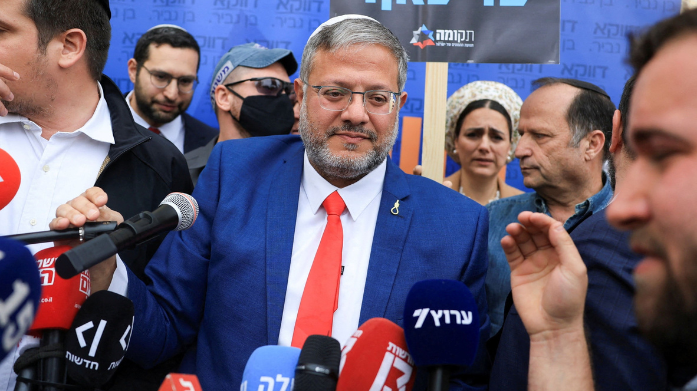
    National Security Minister Itamar Ben Gvir laid out the extreme proposal during a closed-door Israeli security cabinet meeting on Tuesday, a gathering where top officials uniformly backed a plan to expand ongoing military operations against Hezbollah in southern Lebanon. In remarks confirming his stance after the meeting, Ben Gvir argued for unorthodox strategies to weaken the group. “Let’s start thinking outside the box about Hezbollah,” he said, adding: “Conquering territory and killing many terrorists, but also arresting their women and youth and holding them in Israeli prisons. That is what hurts them the most.”

    Ben Gvir’s proposal does not exist in a vacuum: records confirm that Israeli forces have already abducted dozens of unnamed Lebanese civilians since the 2024 cross-border war began, though the exact total remains undisclosed. These captives are among 1,316 people currently detained under Israel’s controversial 2002 “unlawful combatant” law, a statute originally crafted to enable indefinite, renewable detention of Lebanese individuals who fall outside Israeli formal jurisdiction. The law allows Israeli authorities to hold detainees without formal indictments, court-issued arrest warrants, or access to legal counsel. It also permits officials to withhold information about detainees’ whereabouts and conditions of detention, a practice leading global human rights organizations have labeled a blatant breach of binding international law. The current detainee population held under this law also includes hundreds of Palestinian people from Gaza and Syrian nationals.

    Escalation of hostilities remains at the top of the Israeli government’s agenda, even after the United States announced a ceasefire agreement for Lebanon in mid-April. According to official statements from the security cabinet meeting, Israeli leaders have formally pushed to expand military strikes and dramatically increase defense allocations for the campaign against Hezbollah. Development Minister Yitzhak Wasserlauf called on Finance Minister Bezalel Smotrich to immediately unlock additional funding for military artillery and operations, a demand that received quick backing from Defense Minister Israel Katz. “The prime minister made an important decision to attack, and we must expand our armaments even further,” Katz said.

    Lebanese officials have already documented the staggering human cost of unrelenting Israeli strikes that have continued despite the purported ceasefire. Lebanese Defense Minister Michel Menassa confirmed this week that Israeli forces have carried out roughly 3,500 separate attacks and hundreds of controlled explosions across Lebanese territory since the 17 April ceasefire was announced. The ongoing violence has displaced more than 1.2 million Lebanese people nationwide, according to official data. Lebanon’s health ministry reports that at least 3,637 people have been killed by Israeli forces since the latest large-scale assault began in March, with more than 800 of those deaths occurring after the mid-April ceasefire announcement. For its part, Hezbollah’s cross-border strikes have killed 34 Israelis since March, the majority of them active-duty soldiers, including 18 fatalities in the period following the 17 April truce announcement.

    This report draws on independent on-the-ground reporting from Middle East Eye, a media organization specializing in original coverage of the Middle East, North Africa and adjacent regions.