标签: Asia

亚洲

  • People participate in 2026 Macao Intl Parade

    People participate in 2026 Macao Intl Parade

    Macau transformed into a vibrant tapestry of global cultures on March 29, 2026, as the city hosted its spectacular International Parade. The event saw enthusiastic participation from diverse art groups representing numerous countries and regions, who converged on the streets to present an array of artistic performances.

    The parade served as a living embodiment of Macau’s unique cultural identity, where Eastern and Western traditions seamlessly intertwine. Performers adorned in colorful costumes moved through the cityscape, creating an electric atmosphere that captivated both residents and visitors alike. The rhythmic beats of international music, combined with dynamic dance routines and visual spectacles, turned the event into a moving celebration of global unity.

    This cultural extravaganza highlighted Macau’s distinctive position as a melting pot where Chinese heritage meets Portuguese influences and broader international elements. The carefully choreographed presentations not only entertained massive crowds but also educated attendees about various cultural traditions from around the world.

    Organizers successfully created an inclusive environment where different artistic expressions coexisted harmoniously, reinforcing Macau’s reputation as a city that celebrates diversity. The 2026 edition continued the parade’s tradition of promoting cross-cultural understanding through the universal language of performance art, leaving participants and spectators alike with lasting memories of joy and cultural appreciation.

  • China has over 7.3m voluntary organ donors

    China has over 7.3m voluntary organ donors

    China has achieved a monumental milestone in its healthcare system, with national records now indicating over 7.33 million citizens have voluntarily registered as organ donors. This remarkable figure was officially confirmed by the China Organ Donation Administrative Center, highlighting a significant advancement in the country’s medical donation framework.

    The national program has facilitated more than 65,000 cases of posthumous organ donations following circulatory death, resulting in life-saving transplants for over 200,000 patients suffering from critical organ failure. Additionally, these donations have enabled vision restoration procedures for more than 100,000 individuals through corneal transplants.

    Beyond organ-specific donations, the program has also recorded more than 69,000 whole-body donations to medical science, contributing substantially to medical education and research advancement throughout the country.

    In recognition of these extraordinary contributions, China has established a network of more than 380 memorial sites dedicated to honoring organ donors nationwide. These memorials host annual commemorative ceremonies coinciding with the Qingming Festival, a traditional Chinese period for honoring ancestors and the deceased.

    China’s formal organ donation initiative began with pilot programs in 2010, culminating in a nationwide expansion by 2013. The program represents one of the world’s most rapidly growing voluntary donation systems, demonstrating increasing public participation in life-saving medical philanthropy.

  • Concerns voiced over Japan’s Hormuz plan

    Concerns voiced over Japan’s Hormuz plan

    Japan’s contemplation of deploying Self-Defense Forces (SDF) to the Strait of Hormuz for post-ceasefire minesweeping operations has ignited substantial criticism from security analysts and regional experts. Foreign Minister Toshimitsu Motegi’s recent statement regarding potential dispatch of naval assets has raised alarms about the continuing erosion of Japan’s pacifist constitutional constraints.

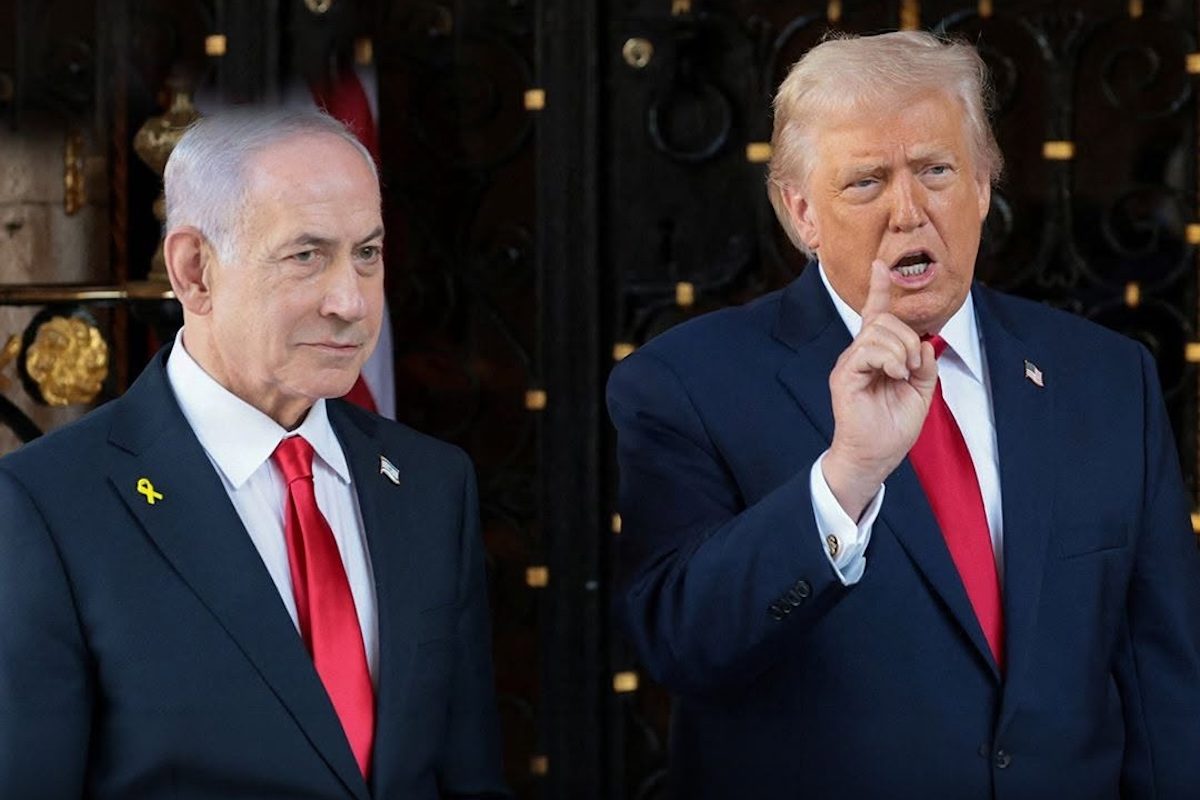
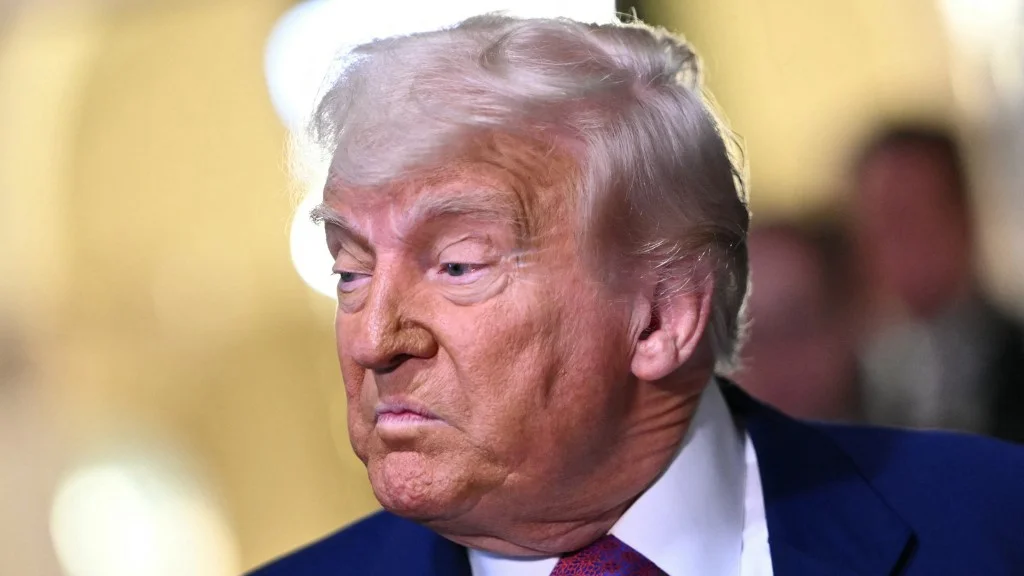
    During a March 22 appearance on Fuji Television, Motegi highlighted Japan’s advanced minesweeping capabilities while cautiously suggesting that Tokyo would consider such deployment “if a ceasefire is reached and mines are obstructing navigation.” This proposition follows heightened pressure from the United States, with former President Donald Trump explicitly urging Japan to enhance its military contributions during recent bilateral discussions with Prime Minister Sanae Takaichi.

    The potential deployment represents another milestone in Japan’s gradual shift from its post-war pacifist stance, enabled through successive reinterpretations of Article 9 of its constitution. Since 2015 security legislation reforms, Japan has incrementally expanded the SDF’s overseas operational scope, including Persian Gulf minesweeping operations after the 1991 Gulf War, non-combat support in Iraq following the 2003 invasion, and ongoing anti-piracy escort missions in the Gulf of Aden since 2009.

    Academic experts warn that this pattern demonstrates a strategic normalization of overseas military activities. Dr. Liu Shuliang of the Tianjin Academy of Social Sciences observes that Japan is methodically transforming exceptional deployments into routine operations, effectively preparing the groundwork for larger-scale future military engagements beyond traditional defensive parameters.

    The proposal faces significant domestic opposition, with recent polls indicating that 52-67% of Japanese citizens oppose Middle East military deployments. Meanwhile, international relations specialists like Professor Chen Hong of East China Normal University identify the US-Japan alliance as the primary external catalyst driving Japan’s military normalization, with Washington increasingly expecting Tokyo to assume greater regional security responsibilities.

    Analysts suggest that Japan’s incremental approach to expanding military operations could establish a concerning precedent for other nations seeking to broaden their security roles beyond traditional boundaries, potentially destabilizing established international norms and regional security architectures.

  • China sanctions Japanese lawmaker close to Takaichi over his ties to Taiwan

    China sanctions Japanese lawmaker close to Takaichi over his ties to Taiwan

    China has enacted immediate sanctions against prominent Japanese legislator Keiji Furuya, citing his alleged collaboration with Taiwanese separatist elements. The measures, announced Monday by China’s Foreign Ministry, include comprehensive entry bans to mainland China, Hong Kong, and Macao, alongside restrictions on engagements with Chinese entities and individuals.

    Furuya, who chairs the bipartisan Japan-Taiwan lawmakers’ consultation council, maintains regular diplomatic contact with Taiwanese officials. His most recent meeting with Taiwanese President Lai Ching-te in Taipei during mid-March precipitated the Chinese response. Beijing asserts these activities violate the foundational One-China principle and constitute unacceptable interference in China’s internal affairs.

    The sanctioned lawmaker represents a key political ally of Japanese Prime Minister Sanae Takaichi, having recently orchestrated the governing Liberal Democratic Party’s successful electoral strategy. This development marks the latest escalation in Sino-Japanese tensions that intensified following Takaichi’s November remarks characterizing potential Chinese military action against Taiwan as a national security threat warranting Japanese military response.

    Furuya responded to the sanctions by emphasizing the normalcy of inter-parliamentary exchanges between nations sharing common values. He noted minimal personal impact given his decades-long absence from China and lack of Chinese assets.

    This incident continues a pattern of Chinese sanctions against Japanese politicians, including last year’s measures against opposition lawmaker Seki Hei for similar allegations regarding Taiwan-related discourse.

  • Air China passenger plane from Beijing arrives in Pyongyang

    Air China passenger plane from Beijing arrives in Pyongyang

    In a significant development for air connectivity between the two neighboring nations, an Air China passenger aircraft successfully touched down at Pyongyang’s Sunan International Airport on Monday morning. This arrival from Beijing Capital International Airport represents the formal reinstatement of the Chinese flag carrier’s commercial passenger services between the Chinese and North Korean capitals after a substantial operational pause.

    The arrival ceremony witnessed the presence of Wang Yajun, China’s Ambassador to the Democratic People’s Republic of Korea (DPRK), who personally welcomed passengers disembarking from the historic flight. He was accompanied by a delegation of Chinese diplomatic officials stationed in Pyongyang, underscoring the diplomatic importance attached to the route’s reactivation.

    This resumption marks a tangible step toward reestablishing regular air links between the two countries, which had been severely limited due to extensive international travel restrictions implemented during the global health crisis. The reinitiated service is poised to facilitate essential travel for diplomats, business personnel, and potentially tourists, serving as a crucial aerial bridge between the two allied nations.

    The operational restoration demonstrates ongoing coordination between Chinese and North Korean aviation authorities amid evolving regional dynamics. Aviation analysts will be monitoring passenger load factors and flight frequency on this route as indicators of bilateral travel demand recovery and diplomatic engagement levels.

  • Chinese boy breaks history as world junior champion

    Chinese boy breaks history as world junior champion

    In a groundbreaking achievement for Chinese street dance, 13-year-old Li Yongqiu from Chongqing has become the nation’s first junior world champion at the prestigious Juste Debout competition. The young prodigy, known by his dance alias “Qiu Qiu,” claimed the title on March 8, 2026, in Paris after outperforming more than 4,000 international competitors.

    Li’s victory proved particularly impressive as he demonstrated exceptional versatility by adapting his breaking techniques to house and hip-hop musical styles—genres outside his primary discipline. His final performance showcased not only technical mastery but remarkable composure under pressure.

    “As Chinese, we strive for excellence,” Li stated following his historic win. “We shouldn’t back down just because others are doing well; on the contrary, the better they are, the more determined I am to excel, and even surpass them.”

    Coaches attribute Li’s success to his relentless work ethic and distinctive personality. Head coach Lai Junquan described him as “relentless in perfecting moves, highly self-disciplined in training and has a strong internal drive, making him very well suited for breaking.” Personal coach Chen Long revealed that Li maintains an intensive training regimen of five to six days weekly, practicing three hours after school on weekdays and six to eight hours on weekends—all while maintaining academic performance.

    The Juste Debout competition, established in France in 2002, represents the pinnacle of international street dance competition. This year’s event attracted elite dancers from over 40 countries specializing in hip-hop, popping, locking, and breaking styles.

    Li’s journey began at age 8 when he first discovered breakdancing. His exceptional talent earned him placement on the Chongqing Breakdancing Team in 2022, a program organized by the Chongqing Social Sports Guidance Center and local sports authorities.

    With breaking now officially included in the Olympic program starting with the 2024 Paris Games, Li has set his sights on representing China on the world’s biggest athletic stage. His coaches emphasize that while technical guidelines exist, street dance’s essence lies in its expressive freedom. “If everything were standardized, it would lose its charm,” noted Coach Lai. “That’s why, along with learning international styles, we are also exploring our own traditional cultures to incorporate into street dance.”

    Li’s achievement sparked broader Chinese success at the competition, with Liu Yangjunmiao reaching the junior top eight, and duo Zhang Xinlan and Zhang Chuyi advancing to the adult popping division top eight as the only Asian pair to achieve this distinction.

  • Middle East crisis takes toll on Australian travel

    Middle East crisis takes toll on Australian travel

    Australia’s tourism sector is confronting significant challenges as the ongoing Middle East conflict creates substantial disruptions for international travelers. The crisis, involving the United States, Israel and Iran since February 28, has severely impacted global supply chains and aviation networks that serve as critical connectors for Australia’s long-haul tourism market.

    According to Peter Shelley, Managing Director of the Australian Tourism Export Council, approximately 70% of inbound tour operators have reported varying degrees of disruption including cancellations and postponed bookings. The effects are particularly pronounced in markets dependent on Gulf airline networks, where route alterations and schedule changes are generating substantial uncertainty among European leisure and group travelers.

    Aviation infrastructure represents the fundamental backbone for Australia’s tourism industry, given the country’s geographical isolation as a long-haul destination. The current crisis has triggered a concerning combination of cancellations, weakened forward bookings, and increased hesitation among travel planners. Compounding these challenges, rising fuel costs are translating into higher airfares, creating additional financial pressure on both operators and travelers.

    Shelley emphasized that for an industry still recovering from pandemic-era setbacks, such global shocks significantly hamper recovery efforts by making it more difficult to convert travel demand into actual visits. The council, representing over 1,000 tourism enterprises nationwide, is focusing on providing real-time industry insights to government authorities while collaborating with international partners to manage disruptions and maintain confidence in Australia as a premier destination.

    Tourism Australia Managing Director Robin Mack acknowledged that while air travel has experienced some disruption, the country continues to welcome international visitors from key markets including China. The government agency is actively monitoring the situation through its global network of partners and maintaining marketing activities to sustain demand for Australian tourism experiences.

    Industry professionals like Melbourne tour operator James Chen note that affected travelers are exploring alternative transit routes while emphasizing the importance of coordinated travel advisories and government-industry cooperation to ensure visitors can make informed travel decisions. Despite current challenges, Australia remains an attractive destination that requires maintained focus on safe, reliable travel infrastructure.

  • What to know as military-led Myanmar transitions back to an elected government

    What to know as military-led Myanmar transitions back to an elected government

    Myanmar’s Parliament commenced proceedings on Monday to select the nation’s next president, initiating what appears to be a carefully choreographed transition from direct military rule to a nominally elected government. This political maneuver comes exactly five years after the military seized power by ousting Aung San Suu Kyi’s democratically elected administration.

    The process gained momentum as Senior General Min Aung Hlaing, the head of the military-led government, formally relinquished his concurrent position as commander-in-chief of the armed forces. This strategic resignation fulfills a constitutional requirement that prohibits the president from holding both offices simultaneously, effectively clearing the path for his anticipated ascension to the presidency.

    General Min Aung Hlaing emerges as one of three presidential nominees, though his victory appears virtually assured given the military’s entrenched political dominance. The legislature remains heavily stacked with military-appointed representatives and lawmakers from army-backed parties, creating an insurmountable majority for any opposition candidates.

    The selection mechanism involves three distinct groups—the Lower House, Upper House, and military bloc—each proposing vice presidential candidates. From these nominations, the 586-member legislature will conduct a vote, with the top candidate assuming the presidency and the remaining two becoming vice presidents. This elaborate process could conclude as early as Thursday.

    This political theater unfolds against the backdrop of Myanmar’s devastating civil conflict, which has engulfed significant portions of the country. The recent parliamentary elections, conducted in limited constituencies due to security concerns, faced widespread criticism from pro-democracy advocates who denounced them as illegitimate exercises designed to sanction continued military dominance.

    The absence of meaningful opposition further underscores the predetermined nature of this transition. Major political parties, including Suu Kyi’s National League for Democracy, were either barred from participation or boycotted what they considered fundamentally unfair electoral conditions. Suu Kyi herself remains imprisoned on politically motivated charges while her party faced forced dissolution in 2023.

    Min Aung Hlaing, who has commanded Myanmar’s military since 2011, transferred formal control of the armed forces to his close aide General Ye Win Oo during a ceremony in the capital Naypyitaw. The 69-year-old general’s international reputation remains tarnished by the military’s brutal 2017 campaign against Rohingya Muslims, which the United Nations has characterized as ethnic cleansing.

  • Conservationist’s dedication to oceans makes a change

    Conservationist’s dedication to oceans makes a change

    What began as a college student’s fascination with the sea has evolved into a transformative marine conservation movement spanning nearly two decades. Pu Bingmei, who grew up in China’s arid northwest, discovered her life’s purpose upon encountering the ocean for the first time in Sanya, Hainan province in 2007.

    The stark contrast between the pristine waters she initially witnessed and the deteriorating coastal conditions she observed subsequently compelled her to action. Beginning with weekly beach cleanups during her college years, Pu has now dedicated 16 years to full-time conservation work with the Blue Ribbon Ocean Conservation Association.

    The association’s journey demonstrates the evolution of environmental activism from basic cleanup operations to sophisticated ecosystem management. Starting with fewer than 10 members who operated on the simple principle that collecting beach garbage prevented ocean pollution, the organization gradually developed scientific monitoring systems. Through systematic beach litter analysis, they identified infrastructure deficiencies including insufficient trash bins and inadequate collection frequencies, providing data-driven solutions to local government.

    In 2013, the association launched a groundbreaking project in Meilian, a traditional fishing village. Recognizing the unsustainability of fishing practices, Pu leveraged her tourism management background to orchestrate an economic transformation. She persuaded villagers to abandon destructive fine-mesh nets and repurpose fishing boats, while introducing health and wellness tourism initiatives that established over 200 homestays. This created local employment opportunities that reversed youth migration patterns.

    Beyond pollution control, Pu’s team developed specialized expertise in marine mammal rescue. They established trained response teams after recognizing that stranded animals—particularly cetaceans—face critical internal injuries from their own body weight on land. The December 2017 attempted rescue of a 300-kilogram sperm whale proved educational despite its tragic outcome, leading to improved protocols.

    The association’s dedication culminated in a landmark 2024 success: the rehabilitation and release of a male short-finned pilot whale, a national second-class protected animal. This 145-day rescue operation required around-the-clock care from more than 100 volunteers who took turns holding the whale upright in a rescue pool—China’s first successful rescue of this species.

    Pu notes the profound shift in public consciousness: ‘What struck me most was the growing environmental awareness. Initially, people joined for small gifts, but now they participate out of genuine initiative.’ Her expertise has gained international recognition, with Gulf region countries seeking her consultation.

    ‘The oceans are connected,’ Pu emphasizes. ‘From picking up a piece of trash to inspiring global cooperation, it is actual actions that truly make a difference.’

  • Wushu’s Olympic goals take shape in Tianjin

    Wushu’s Olympic goals take shape in Tianjin

    The northern Chinese port city of Tianjin is currently hosting a landmark gathering of young martial arts talent from 78 nations at the 10th World Junior Wushu Championships, marking a pivotal moment in the sport’s quest for Olympic inclusion. Running from Wednesday through Monday, this prestigious event represents the first time the premier junior wushu competition has been held on the Chinese mainland, following its 2012 edition in Macao.

    Beyond the pursuit of medals, the championships serve as an official qualification pathway for the 2026 Youth Olympic Games in Dakar, where wushu will make its highly anticipated debut as a global multi-sport event. Forty-eight athletes competing in Tianjin will secure direct qualification spots for this historic Olympic appearance.

    The competition features 83 gold medals across 66 taolu (routine) events and 17 sanda (sparring) events, categorized into child, youth, and junior divisions. Chinese athlete Wang Chengxu claimed the first gold medal for the host nation in the boys’ junior changquan (long fist) event, delivering a precise performance that earned 8.92 points.

    International Wushu Federation Secretary-General Zhang Yuping emphasized the sport’s cultural significance, stating: “Youth represent our future, and we are delighted to see an increasing number of young people embracing wushu. It serves not only as a sport but as a cultural bridge that transcends borders and connects people.”

    Tianjin’s selection as host reflects its deep martial arts heritage, having previously hosted the international invitational wushu championships in 1986—a milestone in the sport’s global development. Huang Ji of the Tianjin Municipal Bureau of Sports noted the city’s longstanding reputation as a martial arts hub provides ideal foundations for such events.

    The championships carried special symbolic significance for Huo Jinghong, descendant of legendary martial artist Huo Yuanjia, who participated in the opening ceremony. “A century after my ancestor’s passing,” she reflected, “it is a profound honor to represent his legacy and witness Tianjin hosting this world-class competition, fulfilling our forebears’ aspirations to strengthen the nation and achieve harmony.”

    Actor and IWUF goodwill ambassador Wu Jing highlighted wushu’s role in promoting Chinese culture worldwide: “Harmony in diversity and stopping war is the true essence of martial valor. We hope to give youth deeper understanding not just of martial arts, but the chivalric tradition and surrounding culture.”

    International participants echoed the sentiment. Georgian competitor Gvantsa Karchava expressed: “Wushu truly deserves Olympic recognition, and I’m excited to contribute to this movement. My team and I deeply appreciate China’s culture, people, and everything surrounding this sport.” Thai coach Meme Sirinapha described wushu as “a philosophy of living,” adding: “I want young Olympic competitors to embody athletic excellence while finding joy in sports participation.”