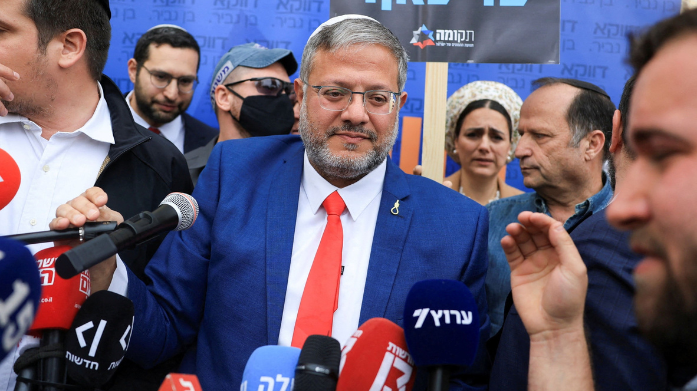
Tensions across the Israel-Lebanon border have surged to new heights after a senior Israeli far-right minister publicly called for the abduction of Lebanese women and young people as a pressure tactic against the Hezbollah militant group, sparking fresh international condemnation over alleged violations of international humanitarian law.
National Security Minister Itamar Ben Gvir laid out the extreme proposal during a closed-door Israeli security cabinet meeting on Tuesday, a gathering where top officials uniformly backed a plan to expand ongoing military operations against Hezbollah in southern Lebanon. In remarks confirming his stance after the meeting, Ben Gvir argued for unorthodox strategies to weaken the group. “Let’s start thinking outside the box about Hezbollah,” he said, adding: “Conquering territory and killing many terrorists, but also arresting their women and youth and holding them in Israeli prisons. That is what hurts them the most.”
Ben Gvir’s proposal does not exist in a vacuum: records confirm that Israeli forces have already abducted dozens of unnamed Lebanese civilians since the 2024 cross-border war began, though the exact total remains undisclosed. These captives are among 1,316 people currently detained under Israel’s controversial 2002 “unlawful combatant” law, a statute originally crafted to enable indefinite, renewable detention of Lebanese individuals who fall outside Israeli formal jurisdiction. The law allows Israeli authorities to hold detainees without formal indictments, court-issued arrest warrants, or access to legal counsel. It also permits officials to withhold information about detainees’ whereabouts and conditions of detention, a practice leading global human rights organizations have labeled a blatant breach of binding international law. The current detainee population held under this law also includes hundreds of Palestinian people from Gaza and Syrian nationals.
Escalation of hostilities remains at the top of the Israeli government’s agenda, even after the United States announced a ceasefire agreement for Lebanon in mid-April. According to official statements from the security cabinet meeting, Israeli leaders have formally pushed to expand military strikes and dramatically increase defense allocations for the campaign against Hezbollah. Development Minister Yitzhak Wasserlauf called on Finance Minister Bezalel Smotrich to immediately unlock additional funding for military artillery and operations, a demand that received quick backing from Defense Minister Israel Katz. “The prime minister made an important decision to attack, and we must expand our armaments even further,” Katz said.
Lebanese officials have already documented the staggering human cost of unrelenting Israeli strikes that have continued despite the purported ceasefire. Lebanese Defense Minister Michel Menassa confirmed this week that Israeli forces have carried out roughly 3,500 separate attacks and hundreds of controlled explosions across Lebanese territory since the 17 April ceasefire was announced. The ongoing violence has displaced more than 1.2 million Lebanese people nationwide, according to official data. Lebanon’s health ministry reports that at least 3,637 people have been killed by Israeli forces since the latest large-scale assault began in March, with more than 800 of those deaths occurring after the mid-April ceasefire announcement. For its part, Hezbollah’s cross-border strikes have killed 34 Israelis since March, the majority of them active-duty soldiers, including 18 fatalities in the period following the 17 April truce announcement.
This report draws on independent on-the-ground reporting from Middle East Eye, a media organization specializing in original coverage of the Middle East, North Africa and adjacent regions.