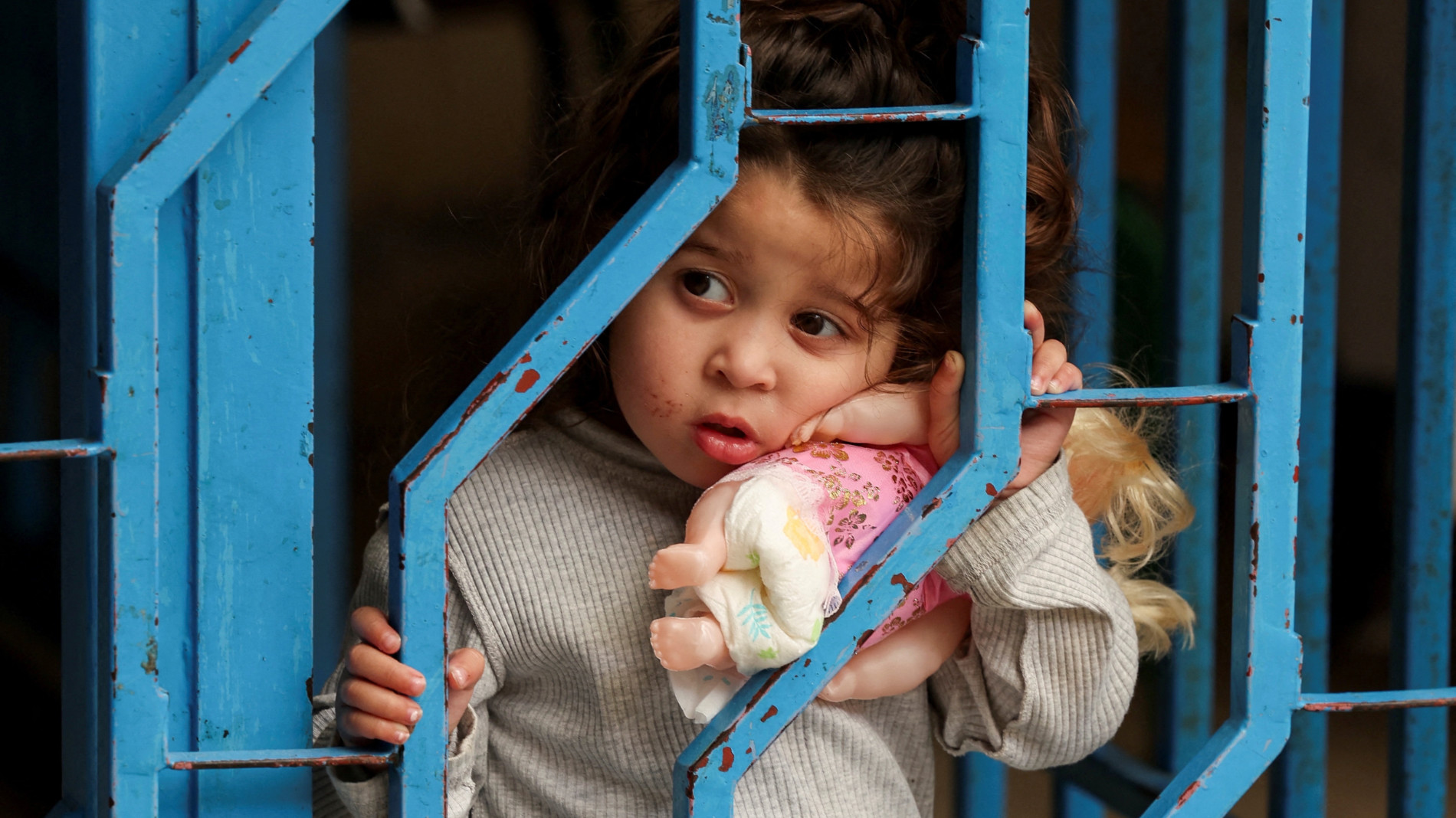
Beneath the quiet, tense night skies of southern Lebanon’s Habboush village, the noise that split the stillness was no air strike. It was the agonized scream of a child crying out for rescue. Local paramedic Hashem quickly traced the sound to a hovering Israeli quadcopter circling above the community.
Speaking with Middle East Eye, Hashem explained that this disturbing event is far from anomalous. For civilians who have chosen to remain in their ancestral southern Lebanese villages despite ongoing Israeli occupation and daily bombardment, such incidents have become a grim, daily reality.
“This is not the first time these drones have flown over our homes and broadcast manipulated sounds,” he explained. “Just yesterday it was children screaming for help. Before that, we heard ambulance sirens. Other times they’ve played recitations from the Quran, or a woman’s desperate cries for assistance. We endure this almost every single day.”
For holdout residents across south Lebanon, Israeli quadcopters are a constant, inescapable presence overhead. Beyond routine surveillance, issuing public warnings, and dropping targeted messages, the unmanned aerial vehicles have been repurposed to turn the cover of night into an active psychological battlefield.
Local residents and first responders confirm that beyond open intimidation, Israeli forces deploy these fake distress sounds to draw civilians out of fortified shelters and homes. The tactic preys on basic human instincts: the urge to help someone in danger, natural curiosity, and raw fear. Hashem described his own automatic reaction to the night screams that matches exactly what Israeli planners anticipate.
“When you hear those cries cut through the silent night, your first instinct is to rush outside and see what’s wrong,” he said. “That’s what I did yesterday. But I quickly realized the sound had to be coming from the drone—there’s no way children would be out in the village at that hour, especially around midnight.”
Hashem outlined two core goals for the tactic. First, it aims to grind down remaining residents psychologically, spread pervasive fear, and force them to abandon their homes. But he also warned of a second, more immediate dangerous objective.
“Most villages here are now empty of civilians, with only resistance fighters remaining in some areas,” he noted. “I believe the tactic is also meant to lure people out into the open so they can be identified and targeted.”
This psychological warfare strategy is not a new innovation in Israel’s recent regional conflicts. Human rights groups, journalists, and residents in the Gaza Strip have long documented Israeli quadcopters fitted with loudspeakers broadcasting similar fake sounds of crying children, screaming women, and distress calls across residential neighborhoods and refugee camps, most often under cover of darkness.
Gaza residents reported that the sounds frequently led them to believe nearby civilians were in crisis, only to discover the cries originated from small drones hovering meters above their communities. In Gaza, quadcopters have served far more purposes than surveillance alone. Throughout the ongoing conflict, doctors, local residents, and rights organizations have recorded their use over streets, family homes, and even hospital campuses, where they monitor civilian movement, issue coercive orders, intimidate populations, and in multiple documented cases, open fire on civilians.
The use of loudspeaker-equipped drones forms part of a broader campaign of psychological manipulation: it confuses civilians, erases the line between real emergency and recorded fake sound, and undermines one of humanity’s most fundamental instincts—the drive to answer a call for help.
Today, south Lebanese residents confirm this exact tactic has been imported to their communities, against the backdrop of a landscape already ravaged by war, where most towns lie partially destroyed or entirely deserted. Families are trapped between permanent displacement and temporary returns, and the conflict has fundamentally reshaped how local people experience daily life, sound, and movement through their own communities.
Tarek Mazaani, a resident from the heavily destroyed southern town of Houla, has experienced this psychological pressure firsthand. His original home was reduced to rubble during the 2024 war. He relocated to Zawtar al-Sharqiya during a brief ceasefire, only to be displaced a second time when fighting resumed in March. In response to the displacement crisis, Mazaani founded the Gathering of the People of the Southern Border Towns, a grassroots organization advocating for residents’ right to return to their destroyed homes and demand the start of reconstruction work.
According to Mazaani, on October 12, 2025, the Israeli military deployed quadcopters across multiple southern Lebanese villages to broadcast public warnings, ordering residents not to communicate with Mazaani and to boycott his organizing work. The broadcasts falsely labeled Mazaani as a Hezbollah member.
Speaking to MEE from his third location of displacement—his refuge in Zawtar al-Sharqiya has also since been destroyed—Mazaani recalled the immediate aftermath of the broadcast. “When the Israeli army released those messages, I had to leave my safe house immediately out of concern for the lives of my neighbors in the residential complex,” he said. “I knew they could target me after those warnings, so I left my family behind and moved to another location to keep them safe.”
The public warnings were eventually scaled back after Mazaani’s case gained international media attention, drew public solidarity from senior regional officials, and became a matter of widespread public concern. But for Mazaani, the damage extended far beyond threats to his own safety. Broadcasting his name and accusations across southern villages was as much a warning to the entire community as it was to him: any person advocating for the right to return, opposing forced displacement, or demanding reconstruction can be targeted, threatened, and socially isolated by Israeli forces.
The firsthand testimonies of Hashem and Mazaani expose a little-documented layer of the ongoing conflict in south Lebanon. This is not only a war of air strikes, physical destruction, and mass displacement—it is also a deliberate campaign to control the psychological and sonic landscape of daily civilian life.
This weaponization of sound puts ordinary civilians in an impossible, no-win position. Choosing to respond to a cry for help can mean walking directly into an Israeli trap. Choosing to ignore it can mean turning away from a real person in genuine danger. Trapped between these two terrible outcomes, fear builds steadily, community trust erodes, and simply staying in one’s home becomes a daily battle of nerves.
In south Lebanon, where collective memory of decades of Israeli occupation intersects with new waves of displacement, these quadcopters are viewed as more than just advanced military hardware. For residents, they are a tangible extension of Israeli occupation control: perpetually hovering overhead, watching, disembodying false voices into communities, and forcing civilians to second-guess every sound and every movement in their own homes.