标签: Asia

亚洲

  • Attacks on US Muslims rose eleven-fold this year alone, advocacy group says

    Attacks on US Muslims rose eleven-fold this year alone, advocacy group says

    Hate violence targeting Muslim-American people and community institutions has surged to its highest level in 15 months during the current Trump administration, a prominent Muslim civil rights and advocacy organization has confirmed. The Muslim Public Affairs Committee (MPAC) documented this alarming upward trajectory in a new policy paper released Thursday, revealing an eleven-fold jump in targeted hate incidents in just the first three months of the year alone.

    According to MPAC’s analysis, at least nine of these recorded attacks took place in March alone. The incidents span a wide spectrum of violence and intimidation, ranging from property vandalism and bomb threats targeting houses of worship to sexual assault directed at Muslim women wearing traditional religious attire.

    Khuram Zaman, founding director of MPAC’s Center for Security, Technology and Policy, tied the sharp spike in attacks to the U.S.-led military campaign against Iran that launched at the end of February. Speaking to independent outlet Middle East Eye, Zaman noted that this military escalation created a clear dividing line between lower baseline levels of anti-Muslim hate seen earlier in the year and the sharp rise seen after the conflict began.

    “What has been most striking is how mainstream extreme anti-Muslim rhetoric has become in public discourse since the war started,” Zaman explained. “Comments calling for burning mosques or planting improvised explosive devices at Islamic centers would once have been relegated to the darkest corners of the internet. Now, that violent language is increasingly normalized and accepted on mainstream social media platforms.”

    Zaman’s assessment is backed by separate research from the Center for the Study of Organized Hate (CSOH), which tracked a sharp and immediate surge in explicitly anti-Muslim content on X, the social platform owned by Elon Musk, in the hours immediately after the Iran campaign began. Between January 1 and March 5, CSOH documented a wave of posts that dehumanize Muslim people, push for their exclusion from public life, and incite direct violence. Content analyzed ranged from individual hate-filled rants to formal calls for extremist legislation, including a proposed “Muslim Exclusion Act” and demands for the mass deportation of all Muslim people from the U.S.

    MPAC’s policy paper emphasizes that this violent rhetoric is not limited to anonymous social media users: it is increasingly being voiced by sitting Republican members of Congress, a trend that has further normalized anti-Muslim bigotry across the country. Florida Representative Randy Fine has emerged as one of the most high-profile voices of this movement, having called for the deportation of New York City’s Muslim mayor Zohran Mamdani and publicly stated, “If they force us to choose, the choice between dogs and Muslims is not a difficult one.” While Fine has faced criticism from Democratic lawmakers, he has faced no repercussions from his own party or from President Trump.

    Tennessee Representative Andy Ogles has similarly stated openly that he believes “Muslims don’t belong in American society.” Both Fine and Ogles are members of the newly launched “Sharia-Free America” congressional caucus, which now counts more than 60 Republican members. That makes the caucus larger than the Congressional Hispanic Caucus and the House Freedom Caucus, and comparable in size to the Congressional Black Caucus. Zaman stressed that caucus members have explicitly called for the denaturalization and deportation of Muslim American citizens, a policy he described as ethnic cleansing.

    While anti-Muslim sentiment in the U.S. has persisted at varying levels since the aftermath of the September 11 attacks, MPAC’s report warns that the current shift toward mainstream acceptance of open bigotry represents a dangerous new phase. The organization’s analysis confirms a long-documented trend: periods of heightened U.S. military engagement in the Middle East consistently correspond to rises in domestic anti-Muslim hate, fueled by skewed media coverage and political rhetoric designed to mobilize public support for military action.

    The report pushes back against the common political claim that restricting the rights of Muslim Americans strengthens national security, noting that no evidence supports this assertion. Instead, the group warns, the erosion of Muslim Americans’ civil rights undermines the social cohesion and community trust that effective domestic security depends on.

    At its core, MPAC’s primary policy demand is a permanent end to the U.S.-Israeli military campaign in Iran. The report warns that prolonged conflict will likely lead to a revival and expansion of the intrusive domestic security policies that defined the post-9/11 era, including targeted mass surveillance of Muslim American communities and expanded investigative authority for the FBI. Historically, such policies have led to widespread erosion of civil liberties, from expanded watchlists to intrusive monitoring of religious and community spaces, ultimately weakening U.S. civil society as a whole.

    The impact of rising anti-Muslim hate extends beyond Muslim communities, the report adds. So-called “adjacent communities” — people of color who are often misidentified as Muslim, including Sikh, Hindu, Armenian, and Christian Arab Americans — have also seen a rise in hate attacks as bigotry becomes more normalized.

    MPAC is calling on the Trump administration and all U.S. public institutions to take urgent action: to swiftly condemn all anti-Muslim hateful rhetoric and violence, hold perpetrators of hate crimes accountable, and proactively engage with affected communities to address their safety needs.

    Zaman added that meaningful progress will not be possible until major social media companies take decisive action to remove content inciting violence and restrict accounts that spread anti-Muslim misinformation. “When targets of hate are Muslim people, our mosques and our communities, there is simply no sense of urgency from the platforms or from political leaders to address the threat,” he said.

  • US says it will pursue ships in Pacific Ocean supporting Iran

    US says it will pursue ships in Pacific Ocean supporting Iran

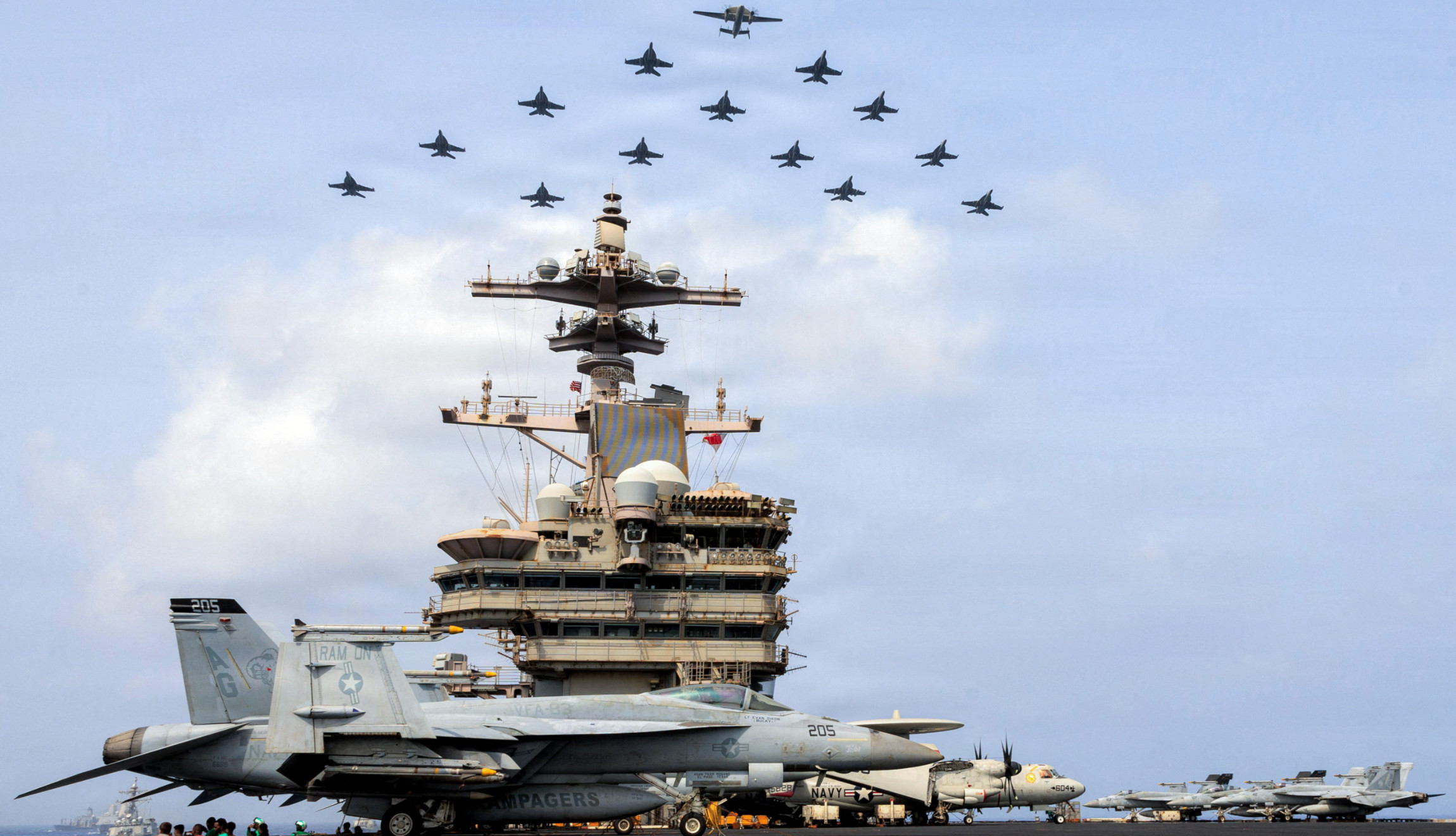
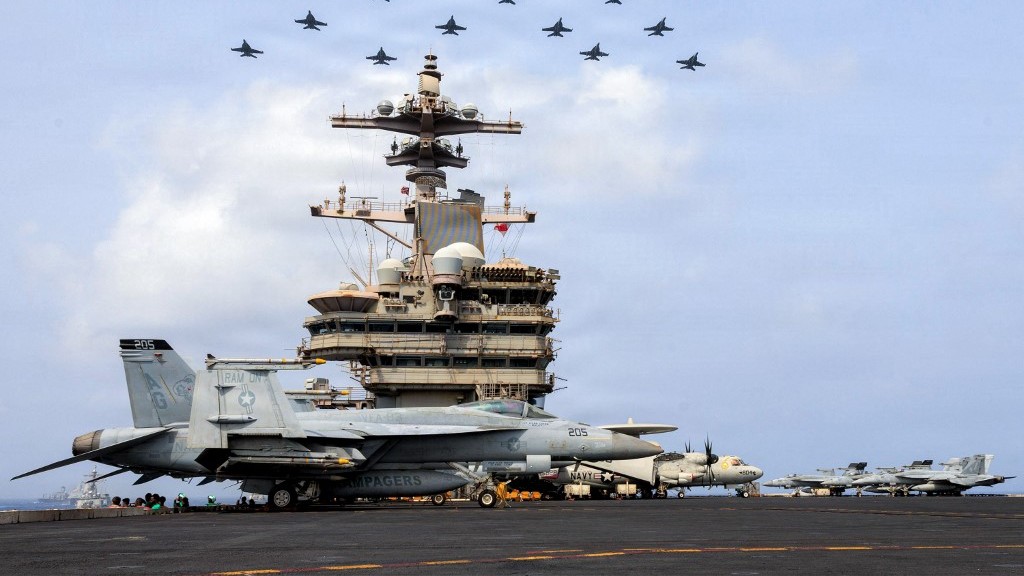
    In a sweeping announcement from the Pentagon Thursday, the top U.S. military official outlined a new, expanded policy that will see American forces intercept any vessel suspected of carrying material support to Iran — a mission that extends beyond the Middle East to the Indian and Pacific Oceans.

    Chairman of the Joint Chiefs of Staff Dan Caine confirmed that the order targets all ships carrying prohibited supplies, regardless of flag, including the unregulated “dark fleet” tankers that have become Iran’s primary transport for crude oil and petroleum products amid longstanding U.S. sanctions. “The Joint Force, through operations and activities in other areas of responsibility, like the Pacific… will actively pursue any Iranian-flagged vessel, or any vessel, attempting to provide material support to Iran,” Caine told reporters.

    The announcement comes days after the U.S. launched a formal maritime blockade of Iran, a move that followed Tehran’s recent imposition of new transit rules in the Strait of Hormuz, the strategically critical waterway connecting the Persian Gulf to global markets. Under Iran’s new system, the country has prioritized passage for its own vessels exiting the Gulf while blocking most ships heading to neighboring Arab states. Tehran is also moving forward with a plan to implement a new toll system for transit, which could charge commercial vessels as much as $2 million for passage through the strait.

    Caine pushed back on characterizations that the U.S. action blocks access to the Strait of Hormuz itself, clarifying that enforcement operations will target areas along Iran’s coastline and territorial seas, as well as adjacent international waters. “This is a blockade of Iran’s ports and coastline, not a blockade of the Strait of Hormuz,” Caine said.

    The decision to extend interception operations into the Pacific has already stoked geopolitical concern, particularly given China’s extensive economic and strategic ties to Iran, analysts told Middle East Eye. While Beijing has repeatedly avoided direct military confrontation with Washington, analysts note that China holds major stakes in the region and in trade routes that could be significantly disrupted by the expanded U.S. policy.

    Under the weight of crippling U.S. economic sanctions, Iran has built up a shadow network of unregistered oil tankers disconnected from Western insurance and financial systems, commonly referred to as the “dark fleet.” The vast majority of these ships carry Iranian oil and petroleum products to Chinese refineries, which are the Islamic Republic’s largest remaining customer for energy exports. Maritime experts have previously noted that while multiple vessels carrying Iranian cargo have transited the Strait of Hormuz in recent days, none have exited into the Gulf of Oman, where the U.S. Navy maintains a large deployed presence.

    The expanded blockade has drawn renewed attention to Sino-U.S. friction over Iran policy, with widespread speculation about whether U.S. forces will attempt to board and search Chinese-flagged vessels carrying cargo to or from Iran. Earlier this week, unconfirmed remarks attributed to China’s defense minister circulated on social media, claiming Beijing would refuse to comply with the U.S. blockade. But Yun Sun, director of the China program at the Washington-based Stimson Center, confirmed to Middle East Eye that the remarks have never been authenticated by the Chinese government and have been disavowed by Chinese state media.

    In official diplomatic engagement this week, Chinese Foreign Minister Wang Yi spoke with his Iranian counterpart Abbas Aragchi on Wednesday. In a public readout of the call released by Beijing, Wang called on all parties to respect the “sovereignty, security and legitimate rights and interests of Iran as a country bordering the Strait of Hormuz,” while also adding that “the freedom and security of navigation in the internationally accessible strait should also be guaranteed.”

    Sun noted that Beijing has little incentive to challenge U.S. naval dominance in the Strait of Hormuz, which sits thousands of miles from China’s core territorial claims. At the same time, China has actively positioned itself as a leading strategic power in the Pacific, creating a potential flashpoint if U.S. interception operations target Chinese vessels in the region.

    Beyond energy trade, the expanded U.S. blockade also casts a spotlight on ongoing military cooperation between Beijing and Tehran. Multiple recent reports have confirmed Chinese military exports to Iran: Chinese firms have already shipped sodium perchlorate — a key chemical used to produce solid propellant for ballistic missiles — to Iran via maritime transport. Middle East Eye previously reported that China supplied air defense systems to Iran following the June 2025 attacks on the country, and has since delivered unmanned aerial vehicles. The New York Times also reported Saturday that Beijing may have shipped shoulder-fired surface-to-air missiles to Iran, though the exact route of those shipments remains unclear.

  • Trump says Israel agrees to 10-day Lebanon ceasefire

    Trump says Israel agrees to 10-day Lebanon ceasefire

    In a surprise announcement posted to his Truth Social platform Wednesday, former US President Donald Trump confirmed that Israel and Lebanon have reached an agreement for a 10-day ceasefire set to enter into force at 10pm local time Thursday, or 5pm EST. The announcement came after Trump held separate calls with Lebanese President Joseph Aoun and Israeli Prime Minister Benjamin Netanyahu.

    Trump wrote in his post that both leaders had agreed to implement the temporary truce to open a path toward long-term peace between their two nations, and he extended an invitation to both leaders to attend high-level peace talks at the White House. These talks would mark the first substantive negotiations between Israel and Lebanon since 1993, and the first planned White House meeting of its kind since 1993, Trump added, noting that both sides have expressed a desire for lasting peace and that he expects rapid progress.

    The announcement caps days of behind-the-scenes US diplomatic efforts to arrange the first direct highest-level contact between the Lebanese and Israeli heads of state in decades. However, senior Lebanese government sources have pushed back on the narrative of coordinated direct talks, revealing that President Aoun refused to hold a direct call with Netanyahu before a ceasefire was formally put in place.

    This diplomatic friction comes just two days after Washington hosted a first round of direct ambassador-level talks between Israeli and Lebanese envoys, the first such official direct engagement between the two nations since 1993. The senior Lebanese official explained that Lebanon had already demonstrated goodwill by participating in the Washington talks, but would not take an additional step that would grant Netanyahu a symbolic political victory he failed to achieve through military force on Lebanese soil. The official added that a pre-ceasefire call between Aoun and Netanyahu would carry severe domestic political consequences for Lebanon, warning it could trigger widespread internal unrest that would destabilize the already fragile country.

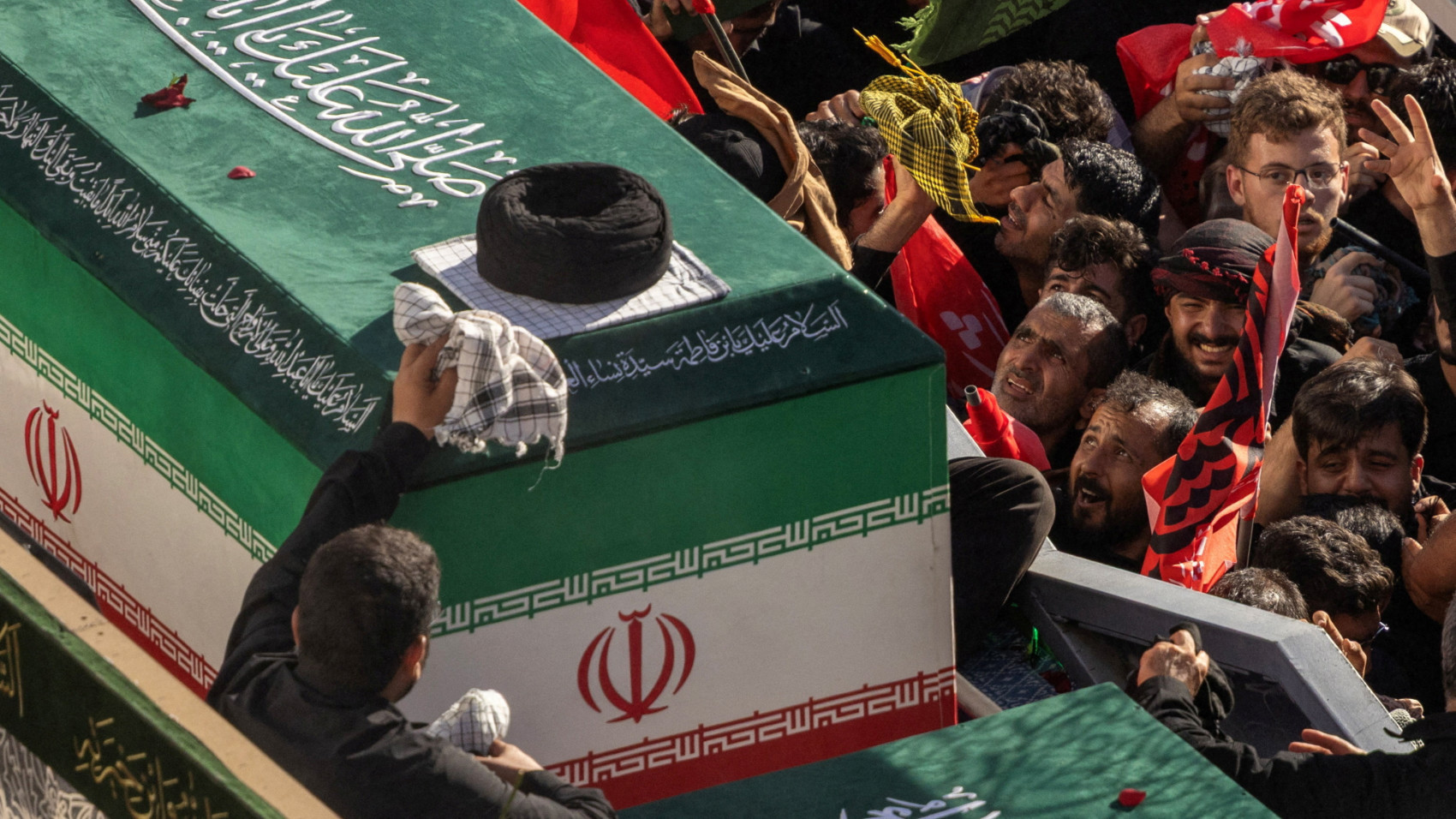
    The current crisis erupted after US-Israeli strikes on Iran killed Iranian Supreme Leader Ali Khamenei on March 2, prompting Lebanese Shia movement Hezbollah to launch a retaliatory cross-border rocket strike against Israel. In response, Israel launched a sustained, large-scale military campaign across Lebanon. A truce agreement was reached to pause US-Israeli military operations against Iran starting April 8 that was meant to include Lebanon, but Israel continued its offensive, leveling entire towns and villages across southern Lebanon. Despite the ongoing fighting, Iranian officials have continued to prioritize a ceasefire in Lebanon as part of ongoing diplomatic negotiations with the US to end the broader regional conflict.

    Even as news of the impending ceasefire broke Thursday morning, Israeli forces continued their military campaign. After Israeli media reported that a direct call between Aoun and Netanyahu would happen imminently, Israeli warplanes targeted and destroyed the Qasmiyeh bridge, the last remaining crossing connecting southern Lebanon to the rest of the country. Lebanon’s state-run National News Agency confirmed that enemy aircraft carried out two consecutive strikes on the structure, which connected the Sour and Saida regions, leaving it completely destroyed.

    The Qasmiyeh strike is part of a broader Israeli campaign to sever transportation links across southern Lebanon. Last month, the Israel Defense Forces announced it would target all bridges and crossings along the Litani River, which cuts across southern Lebanon from east to west, a move designed to isolate large swathes of the territory from the rest of the country. In recent weeks, the military has carried out that plan, damaging or destroying at least nine spans across the river. The Qasmiyeh bridge had already been hit in late March, suffering major damage, but Lebanese military engineers had partially repaired it and reopened it to traffic just last week. According to Lebanese outlet L’Orient Today, Lebanese soldiers stationed near the bridge preemptively closed access roads ahead of Thursday’s strike, but the attack still completely shattered the crossing, leaving it irreparable, a Lebanese security official told Reuters.

    The ongoing Israeli strikes have continued to claim civilian lives across the country. On Thursday alone, at least 11 people including women and children were killed in multiple Israeli strikes across southern Lebanon, while one additional person was killed in a strike targeting a vehicle on the highway connecting Beirut to Damascus, the capital of neighboring Syria. Official Lebanese government data puts the total death toll from Israeli attacks in Lebanon since March 2 at more than 2,190 people.

    The violence has disproportionately targeted medical and humanitarian personnel. On Wednesday, Lebanese paramedic organizations confirmed that the Israeli military killed four rescue workers and wounded six more in three sequential targeted strikes on the southern village of Mayfadoun. The strikes deliberately targeted medical teams in waves: the first wave hit medics responding to a call for wounded civilians, the second struck responders who arrived to assist the first team, and a third hit medics rushing to support both groups. The Lebanese Ministry of Health reports that 91 healthcare workers have been killed by Israeli forces in the past six weeks alone.

    Israel has not carried out large-scale strikes on Beirut since April 8, when the military conducted roughly 100 simultaneous strikes across Lebanon in a 10-minute window that killed more than 350 people. But deadly strikes against civilian and infrastructure targets across southern Lebanon have continued unabated, as Israeli ground forces push forward with their incremental ground invasion into the southern part of the country. Notably, the US announcement of the ceasefire deal made no mention of Hezbollah, the political and military movement that controls much of southern Lebanon and has been Israel’s primary opponent in the ongoing fighting.

  • Zionist militia frequently contacted Nazi Germany, Israeli documents reveal

    Zionist militia frequently contacted Nazi Germany, Israeli documents reveal

    Long-sealed documents pulled from Israeli state archives have recently brought a long-rumored chapter of Zionist paramilitary history into sharp, new clarity, detailing repeated efforts by the radical Zionist Stern Gang to forge a strategic partnership with Nazi Germany during the 1930s and 1940s, when British forces held the Mandate of Palestine. First reported by leading Israeli newspaper Haaretz, the declassified files trace these secret outreach attempts directly to Avraham Stern, founder of the extremist armed group that split from the larger Irgun Zionist militia to continue anti-British resistance through World War II. The core ideological foundation for the proposed alliance, records show, was shared opposition to British rule in Palestine – the territory the wider Zionist movement targeted as the site of a future independent Jewish state.

    The documents lay out how the Stern Gang dispatched member Naftali Lubenchik to meet secretly with German officials on the group’s behalf. A 1951 archival account notes that Lubenchik held the false belief that Nazi Germany did not aim for the total physical annihilation of European Jewry, but only sought to expel Jewish populations from the continent and concentrate them in a single territory. This misreading of Nazi intentions laid the groundwork for the militia’s diplomatic overtures.

    Long before these contacts became public, the mainstream Zionist paramilitary Haganah – the dominant armed Zionist organization in Mandatory Palestine – was already aware of the Stern Gang’s actions. A 1941 Haganah intelligence document, titled “Contacts with the Axis” (a reference to the Nazi Germany-Fascist Italy alliance), contains previously unreported remarks from Eliyahu Golomb, the Haganah’s de facto commander at the time. Speaking to a small, closed circle of associates, Golomb acknowledged he had received intelligence that a high-profile Jewish militant codenamed “S” had been in contact with German enemy forces. The newly released records confirm the “S” in question was Avraham Stern.

    A Polish immigrant who settled in Palestine in the 1920s, Stern held radical views: he pushed for unrestricted Jewish immigration to the region and demanded the full expulsion of what he called the “foreign” British presence from land he deemed inherently Jewish. His animosity toward British rule ran so deep that he was willing to set aside ideological differences with the Nazi regime to achieve his goal of a Jewish state, a stance that put him sharply at odds with the other major Zionist factions of the era. While the Irgun and Haganah had agreed to a moratorium on anti-British attacks for the duration of the war against Nazi Germany, the Stern Gang continued to launch assaults on British targets and even rival Jewish groups throughout the conflict.

    Historical records compiled by Haaretz confirm multiple separate outreach attempts to German leadership. One formal proposal even outlined terms for “active partnership” with Nazi Germany in the war, framing the alignment as rooted in “shared interests between German policy and Jewish national aspirations” and calling for a formal post-war alliance between a newly established Jewish state and the German Reich. As late as 1943, Stern Gang member Natan Friedman – who later changed his name to Natan Yellin-Mor and went on to serve as a member of Israel’s parliament, the Knesset – wrote that “Germany has not yet been defeated and may still become our ally.”

    Ultimately, the Stern Gang’s efforts to secure a Nazi alliance never came to fruition, but the Haganah closely monitored every step of the outreach, per Haaretz’s reporting. By 1942, after a string of deadly bank robberies and violent shootouts between the militia and British mandatory authorities, British forces tracked down Stern, killing him at the age of 34. At the time, Stern’s collaboration overtures were a major source of embarrassment for the mainstream Zionist movement, and the Haganah even joined British efforts to crack down on the Stern Gang, hunting down its members.

    The newly declassified files also lay bare the full extent of Stern’s core worldview at the time. One document records his conviction that Britain had “betrayed the Jewish people and will never allow the establishment of a Jewish state.” In contrast, he argued, “Germany has no special interest in Palestine, and since the Nazis want to cleanse Europe of Jews, nothing is simpler than transferring them to their own state.” Stern firmly believed a practical agreement with the Nazis was achievable, writing, “negotiations should be opened, and Jews of Europe should be recruited into a special army that would fight its way to Palestine and conquer it from the British.” Additional files confirm Stern sought to “seize control of all of Eretz Yisrael [Greater Israel] by force with the help of a foreign power” – a foreign power explicitly identified as Nazi Germany.

    For his part, Yair Stern, son of Avraham Stern, has pushed back on the framing of his father’s actions in an interview with Middle East Eye for a documentary focused on the militia founder. He downplays the Nazi overtures as a minor, context-specific episode intended to rescue European Jews from persecution, arguing his father could not have known the full scope of the Nazis’ planned Holocaust – which was not formalized until shortly before Avraham Stern’s death in 1942. He also dismisses confessions from former Stern Gang members about the collaboration efforts, claiming the statements were extracted under duress during Haganah interrogations and cannot be considered credible.

  • US military fully withdraws from Syria after 10 years

    US military fully withdraws from Syria after 10 years

    After a decade-long deployment focused on countering the Islamic State group, the last remaining U.S. military forces have exited their final base in Syria’s northeastern Hasakah province, marking the end of Washington’s active military presence in the war-torn country, Syrian officials confirmed to Middle East Eye.

    Within hours of the U.S. pullout, Syrian government forces entered the Qasrak base, a strategic site that includes an operational airstrip, with local officials confirming the full completion of the withdrawal process.

    Leading Syria analyst Charles Lister clarified in a public social media post that the unit tasked with securing the former U.S. base is the 60th Division of the Syrian national army, a formation mostly made up of Kurdish fighters previously aligned with the Syrian Democratic Forces (SDF)—a militia that served as Washington’s primary on-the-ground partner for 10 years. Lister added that U.S. troops and their military equipment exited Syria through neighboring Jordan, a route chosen to evade potential attacks by Iranian-aligned paramilitary groups operating in Iraq.

    In an official statement released Thursday, Syria’s foreign ministry welcomed the full transfer of all former U.S. military sites to the sovereign Syrian government. The ministry emphasized that the handover demonstrates the successful integration of the SDF into Syrian national institutional structures, and confirms the Syrian state’s right and full responsibility to lead counterterrorism efforts and address all regional security threats within its own borders.

    The full U.S. withdrawal comes in the wake of a major political shift in Syria: new President Ahmed al-Sharaa’s defeat of longtime ruler Bashar al-Assad in December 2024, which ended more than 14 years of civil war. Washington has thrown its support behind Sharaa’s new transitional government, and had maintained roughly 1,000 troops in Syria through most of its deployment.

    Earlier in 2025, the U.S. already withdrew from two other major military bases in Syria: the al-Tanf outpost in southern Syria and the al-Shaddadi base in the country’s northeast. The withdrawal also followed a U.S.-brokered deal between the SDF and Damascus reached earlier this year, under which the Syrian government agreed to take primary responsibility for rooting out remaining Islamic State cells and other militant factions across the country.

    U.S. military presence in Syria first launched in 2015, built on a long-standing partnership with the SDF that repeatedly frayed U.S.-Turkey relations. Ankara has long viewed the SDF as a front for the People’s Protection Units (YPG), the Syrian affiliate of the Kurdistan Workers’ Party (PKK)—a group labeled a terrorist organization by the U.S., European Union, and Turkey, which has waged an insurgency against the Turkish state for 40 years.

    Over the past two years, however, peace negotiations between Ankara and the PKK created new space for the Damascus government to reach a formal agreement with the SDF, which had long sought regional autonomy in northeastern Syria. A brief, limited offensive by Syrian government forces, paired with mediation from U.S. envoy Tom Barrack, ultimately paved the way for a deal that stabilized the northeastern region. Under that agreement, the SDF ceded control of large stretches of territory, including the former Islamic State capital Raqqa and the key eastern province of Deir Ezzor, back to Syrian national authorities.

  • ‘How does one survive?’: Factory protests expose strain in India’s industrial system

    ‘How does one survive?’: Factory protests expose strain in India’s industrial system

    A grassroots movement of discontented factory workers has erupted across major industrial hubs in northern India, bringing rare mass unrest to the region as thousands demand living wages and improved working conditions that have stagnated for years amid soaring living costs.

    What began a week ago as small, largely peaceful demonstrations across Uttar Pradesh state and neighboring regions has escalated rapidly, with major disruptions in Noida — a key manufacturing satellite city adjacent to India’s capital New Delhi. Thousands of mostly non-unionized contract workers, employed across small-scale factories producing auto components, electronics, and ready-made garments, blocked major highways and industrial access roads in coordinated actions this week. The movement has since spread beyond factory floors, with domestic workers in Noida joining the protests to demand better pay, affordable housing, and improved access to healthcare and education for their children.

    Most of the participating factory workers earn between 10,000 and 15,000 Indian rupees ($107 to £79) per month, a pay rate that has remained frozen for years despite sharp increases in the cost of basic goods. The vast majority are migrant workers from poorer rural regions, who live paycheck to paycheck in cramped, low-cost informal housing on the outskirts of industrial cities. Even a single missed day of work cuts deeply into their already strained household budgets.

    The anger that fueled the protests was partially triggered by a stark example of regional pay inequality: neighboring Haryana state recently approved a 35% increase to its minimum wage after a separate round of worker demonstrations, highlighting the large gaps in pay for similar work across Indian state borders. As protests intensified, the Uttar Pradesh state government, where Noida is located, announced a temporary wage hike for two districts and promised additional policy adjustments. But workers widely rejected the proposal, arguing the increase failed to keep up with rising costs and did not address longstanding systemic issues.

    Worker accounts reveal the daily exploitation many face. Soni Singh, a Noida factory worker, told reporters he works 12 to 14-hour shifts six days a week, but only receives overtime pay for three of the four hours beyond his mandatory 8-hour shift, bringing his monthly income to roughly 13,000 rupees. Another anonymous female worker explained that her monthly costs leave no room for savings: “I pay 5,000 rupees in rent and spend another 4,000 on groceries and necessities. What do we save? Nothing. We just get by.”

    Labor experts and activists emphasize the unrest is rooted not just in low pay, but in the inconsistent enforcement of India’s existing labor regulations. Minimum wage rates are set by individual Indian states, leading to massive geographic variations for identical work, and periodic required revisions are routinely delayed across much of the country. Weak enforcement means many small-scale employers simply ignore minimum wage mandates, and workers have little leverage to push back because formal jobs remain scarce.

    What makes this wave of protests unusual for India is the absence of leadership from major national trade unions, marking a spontaneous grassroots uprising of informal and contract workers who are typically excluded from formal labor organizing. The movement has quickly taken on political overtones: Uttar Pradesh Chief Minister Yogi Adityanath has labeled instances of protest violence a “conspiracy” to undermine the state’s economic development, while leading opposition figure Rahul Gandhi has backed the workers, accusing the ruling government of ignoring their legitimate grievances.

    Beyond immediate political tensions, the protests expose deep structural flaws in India’s rapidly growing economy. Official government data shows that nine out of 10 Indian workers earn less than 25,000 rupees (roughly $300) per month — a figure that aligns with the highest minimum wage for skilled workers in the country, underscoring how low earnings remain for most of the workforce. More than 310 million Indians work in the informal sector, which offers almost no job security or social protections. Wages have failed to keep pace with skyrocketing living costs, with recent global supply disruptions linked to Middle East conflicts pushing up cooking gas and other essential energy prices, adding additional strain to working households.

    The situation creates a difficult bind for all sides, analysts note. Small and micro enterprises, which form the backbone of India’s manufacturing sector and employ the vast majority of industrial workers, typically operate on extremely thin profit margins. Vaibhav Gupta, who owns a small plastic utensil factory in Delhi with 50 employees, acknowledged workers’ pressure to keep up with rising costs, but said sudden mandatory wage hikes threaten the survival of small businesses like his. “When labour comes together to demand a raise, we have to listen, but that often means cutting into already thin margins or absorbing losses on existing purchase orders,” he explained.

    Recent national labor code reforms, which consolidated dozens of overlapping existing labor laws into four streamlined frameworks, were intended to both strengthen worker protections and simplify compliance for employers, but many analysts say the reforms have not delivered on their promises. Arvind Goel, co-chair of the industrial relations committee at the Confederation of Indian Industry, has proposed that the government cover part of social security costs for micro and small enterprises to help them comply with minimum wage rules and reduce labor conflict.

    As of this week, most Noida workers have returned to their jobs, though small-scale protests continue across the region. State officials have announced steps to enforce existing overtime pay rules and ensure timely wage payments, and news reports indicate that a broader national minimum wage revision is currently under consultation. But many workers remain skeptical that meaningful change will come. “We’re working more every year, but not getting ahead,” one Noida factory worker said. “If this is the future, how will we ever live a decent life — or save anything for our children?”

  • World’s largest intelligent container ship sets sail

    World’s largest intelligent container ship sets sail

    In a landmark milestone for global maritime decarbonization and intelligent shipping innovation, the world’s largest fully electric-powered intelligent container vessel departed Wednesday from Ningbo-Zhoushan Port in East China’s Zhejiang Province for its maiden voyage to Jiaxing Port, after formal delivery earlier the same day.

    Named *Ning Yuan Dian Kun*, the 740 twenty-foot equivalent unit (TEU) vessel is the first of its kind developed entirely through domestic Chinese expertise, marking a pivotal step forward for the global shipping industry’s transition away from fossil fuel dependence. Built by state-owned China State Shipbuilding Corp, the ship was designed entirely by the Shanghai Merchant Ship Design and Research Institute (SDARI), with its custom all-electric propulsion system supplied by another CSSC subsidiary, the Shanghai Marine Equipment Research Institute (SMERI).

    Ma Hongmeng, SDARI’s senior engineer and lead project manager for the intelligent container ship, noted that from initial project approval to final delivery, the vessel’s development demonstrates China’s full lifecycle capacity to build cutting-edge zero-carbon vessels. Defined by pure electric propulsion, autonomous navigation functionality, and industry-leading operational efficiency, *Ning Yuan Dian Kun* signals that China’s coastal container shipping sector has entered a new era of zero-emission, smart operations — a critical foundation for meeting national carbon neutrality targets and driving industry-wide energy transition.

    Wu Guodong, a senior engineer at SMERI, emphasized that the institute’s indigenously developed electric propulsion system has passed rigorous open-sea trials, which confirmed its robust reliability, performance advantages, and broad adaptability for maritime use. With all operational performance metrics meeting or exceeding design expectations, the breakthrough from conceptual design to real-world application cements China’s global leadership in pure electric ship power system integration, while laying a solid technical groundwork for the entire shipping industry’s shift toward greener, carbon-neutral operations.

    Measuring 127.8 meters long and 21.6 meters wide, *Ning Yuan Dian Kun* was custom-built for Ningbo Ocean Shipping Co, and will operate permanently on the coastal trade route between Ningbo and Jiaxing. To accommodate the unique technical requirements of this new-generation intelligent vessel, the Ningbo Maritime Safety Administration has assembled a dedicated specialized service team to provide end-to-end support. The team will conduct continuous performance tracking and precise technical assessments across every stage of the vessel’s lifecycle — from initial design and construction through ongoing navigation — to ensure full understanding of the ship’s unique technical profile and effective mitigation of operational risks.

    Powered by 10 container-integrated power units with a total energy storage capacity of 19,600 kilowatt-hours, the vessel delivers fully zero-emission, near-silent operation across its entire voyage, perfectly aligned with the practical demands of coastal container transport, according to Ma.

    Wang Ting, captain of *Ning Yuan Dian Kun*, confirmed the transformative impact of the fully electric design compared to traditional fossil fuel-powered vessels. “The most striking difference is the lack of noise. On old fuel ships, the engine room was constantly filled with the roar of the main engine, but now voyages are almost completely silent,” Wang explained. “This creates a far more comfortable working environment that lets the crew focus better on navigation — that’s a huge improvement brought by green energy.”

    Wang added that electric propulsion also delivers major operational advantages: electric motors produce linear, instantaneous torque output, making acceleration and deceleration smooth, highly responsive, and virtually free of lag, which simplifies vessel handling. However, the new technology also brings new requirements for crew, who must now master efficient energy management, closely monitor power consumption, and plan voyage speeds more intentionally to optimize battery use.

    Fitted with two permanent magnet synchronous propulsion motors, *Ning Yuan Dian Kun* cuts annual carbon emissions by 1,462 tons compared to an equivalent fossil fuel-powered vessel, while eliminating all emissions of sulfur oxides, nitrogen oxides, and fine particulate matter entirely. “This lets us achieve full-process zero pollution, from navigation and berthing to cargo loading and unloading,” Ma noted.

    For Ningbo Ocean Shipping Co, the launch of *Ning Yuan Dian Kun* builds on an existing commitment to green fleet transformation. The company already operates 32 green, energy-efficient vessels, accounting for 57% of its owned fleet, meaning a large-scale green fleet is already taking shape at the firm.

    Chen Xiaofeng, chairman of Ningbo Ocean Shipping Co, said the company expects *Ning Yuan Dian Kun* to deliver breakthroughs in key zero-carbon shipping technologies. “Our goal is to build China’s first fully operational demonstration model for seagoing fully electric vessels, advancing the expansion of pure electric technology from inland waterways to coastal maritime transport,” Chen explained. “We aim to develop a complete, replicable technical and operational framework for zero-carbon shipping that can be adopted across the industry.”

  • Experts call for stable Sino-US trade ties

    Experts call for stable Sino-US trade ties

    Against a shifting backdrop of global trade rebalancing, leading economists, business leaders and policy analysts are calling on China and the United States — particularly Washington — to build a more stable and predictable policy environment that can underpin mutually beneficial bilateral commercial cooperation, noting the two global economic powers still hold massive untapped potential to deepen cross-border business ties.

    New data released by China’s General Administration of Customs reveals that Sino-US bilateral trade fell 16.6 percent year-on-year to $128.68 billion in the first quarter of 2026, a decline that comes as China reshapes its trade portfolio toward faster-growing emerging markets and regional trade partners. Over the same period, China’s trade with the European Union expanded 17.6 percent year-on-year in U.S. dollar terms, while trade with the Association of Southeast Asian Nations (ASEAN) rose 18.4 percent, according to the official statistics.

    Li Wei, a professor of international relations at Renmin University of China, attributes the sharp Q1 contraction in Sino-US trade to mounting structural challenges facing the bilateral economic relationship. He explained that Washington’s increasing reliance on national security justifications for restrictive trade measures against China has disrupted established cross-border trade flows and injected widespread uncertainty into global commodity and supply chains.

    China’s Ministry of Commerce has repeatedly emphasized the country’s openness to strengthening trade collaboration with the United States, while cautioning that unilateral trade restrictions and inconsistent policy frameworks have created measurable headwinds for bilateral commerce. The ministry has repeatedly called for collaborative action to establish a more stable policy landscape that can rebuild business confidence on both sides.

    Sean Stein, president of the US-China Business Council, stressed that targeted, pragmatic action is needed to address legitimate national security concerns without undermining the foundation of bilateral trade, with the goal of building a more resilient and sustainable bilateral trade relationship. “We should rationalize security concerns and make it the right size, not over-blow it,” he said. Stein pointed out that as the world’s two largest economies and two largest consumer markets, China and the United States carry an outsize responsibility for shaping global economic growth, cross-border research and development, and the stability of global supply chains.

    Looking beyond the dynamics of the bilateral relationship, Robert Koopman, former chief economist of the World Trade Organization, noted that trade policy is not the primary determinant of long-term global trade expansion. “Tariffs and related measures account for only a part of trade dynamics, while broader factors such as technological change and innovation play a far more significant role,” he explained.

    Lynn Song, chief China economist at Dutch financial group ING, projected that the economic drag from U.S. trade restrictions will likely ease over the course of 2026, and external demand for Chinese goods will remain a key driver of China’s economic growth this year — barring the introduction of new, large-scale tariff shocks.

    Louise Loo, head of Asia Economics at Oxford Economics, a leading British think tank, added granular context to China’s shifting trade trends: while Chinese exports to ASEAN members, South Korea and India have outpaced 2025’s average growth rate, and sequential monthly growth has returned for exports to the EU, the U.S. and Canada, U.S.-bound shipments still remain below year-earlier levels. Loo noted that since Washington first rolled out new tariff measures against China in February 2025, U.S.-bound exports have declined, but this gap has been more than offset by surging trade volumes with ASEAN and Northeast Asian partners.

    This reorientation of China’s trade flows underscores a broader regional rebalancing of trade, as supply chains and demand patterns continue to evolve across the Asia-Pacific. Even amid geopolitical headwinds, regional economic ties have demonstrated unexpected resilience: despite strained Sino-Japanese diplomatic relations dating back to November 2025, bilateral trade between China and Japan grew 17.8 percent year-on-year to $85.19 billion in the first quarter of 2026, according to customs data, highlighting the deep economic complementarity between the two economies.

    Chen Zilei, a professor of Japanese studies at Shanghai University of International Business and Economics, said that against the backdrop of strained political ties, Tokyo must recognize how critical bilateral trade with China is to Japan’s own domestic economic growth and long-term industrial competitiveness.

    This perspective aligns with on-the-ground business sentiment. A February 2026 survey from the Japanese Chamber of Commerce and Industry in China found that despite ongoing geopolitical tensions, roughly 59 percent of Japanese member companies plan to either increase or maintain their current investment levels in China in 2026 — a 3 percentage point increase from the chamber’s previous survey.

    Stephen Ma, chairman of Nissan Motor China, noted that China’s vast consumer market and rapidly expanding domestic demand are opening new growth opportunities for the global automotive sector. He added that these opportunities reflect China’s maturing market, rising operational efficiency, and growing investor confidence. The Japanese automaker sold 653,000 vehicles in China in 2025, with sales growing 4.5 percent year-on-year in the second half of the year.

  • Former China Mobile Internet chief under investigation

    Former China Mobile Internet chief under investigation

    China’s top anti-graft oversight body announced Thursday that Hong Xiaoqin, the former chairman and general manager of China Mobile Internet Co., Ltd., has been placed under investigation over allegations of severe violations of Communist Party of China discipline and national legislation.

    The inquiry is being carried out jointly by two teams of investigators: a disciplinary inspection team dispatched to the China Mobile group by the Central Commission for Discipline Inspection (CCDI), the Party’s top anti-corruption agency, and supervisory officials from the Ordos Supervision Commission, based in the Inner Mongolia Autonomous Region. As of the latest public update, no additional details surrounding the specific allegations or the scope of the probe have been released to the public.

    Publicly available official career records outline Hong’s decades-long tenure within the China Mobile ecosystem. Born in 1964, Hong is a senior engineering professional who held a series of key leadership positions across the state-owned telecommunications giant’s regional branches before taking the top role at the internet subsidiary. His previous appointments include deputy general manager of China Mobile’s Guangdong branch and general manager of the firm’s Inner Mongolia branch.

    Founded in 2015 in Guangzhou, the capital of south China’s Guangdong Province, China Mobile Internet Co. operates as a dedicated subsidiary of China Mobile, the world’s largest mobile network operator by subscriber count. The unit focuses exclusively on the group’s internet-centric business operations, and was previously structured as the China Mobile Internet Base before its formal incorporation as a standalone subsidiary.

  • Taiwan forum hears calls for protection of resistance war history

    Taiwan forum hears calls for protection of resistance war history

    On Thursday, attendees of the seventh annual forum for social groups of Taiwan compatriots gathered in Beijing, where a resonant call emerged to preserve the historical memory of the Chinese People’s War of Resistance Against Japanese Aggression for future generations. Organized by the All-China Federation of Taiwan Compatriots, the event brought together participants from across global Taiwanese communities, who kicked off their forum schedule with a visit to the Museum of the War of Chinese People’s Resistance Against Japanese Aggression in the Chinese capital.

    Among the attendees was Cheng Tung-ping, honorary president of the World Federation of Taiwan Chambers of Commerce and a Taiwanese businessman based in Germany. Following his tour of the museum, he emphasized that every person of Chinese descent, regardless of where they reside, has a responsibility to understand the immense suffering and unyielding spirit of the Chinese people during the 14-year resistance against Japanese aggression, which ran from 1931 to 1945. This chapter of national history, he stressed, can never be erased or forgotten.

    Cheng praised the Chinese mainland’s meticulous work in safeguarding historical sites, archives and memorials related to the resistance war, noting that these well-preserved resources create a tangible space for the legacy of the era to be passed down to younger generations. He extended a call to young Chinese people from all regions, including Taiwan, to visit the museum in person, engage directly with the historical artifacts and firsthand accounts on display, and carry forward the collective memory of the nation.