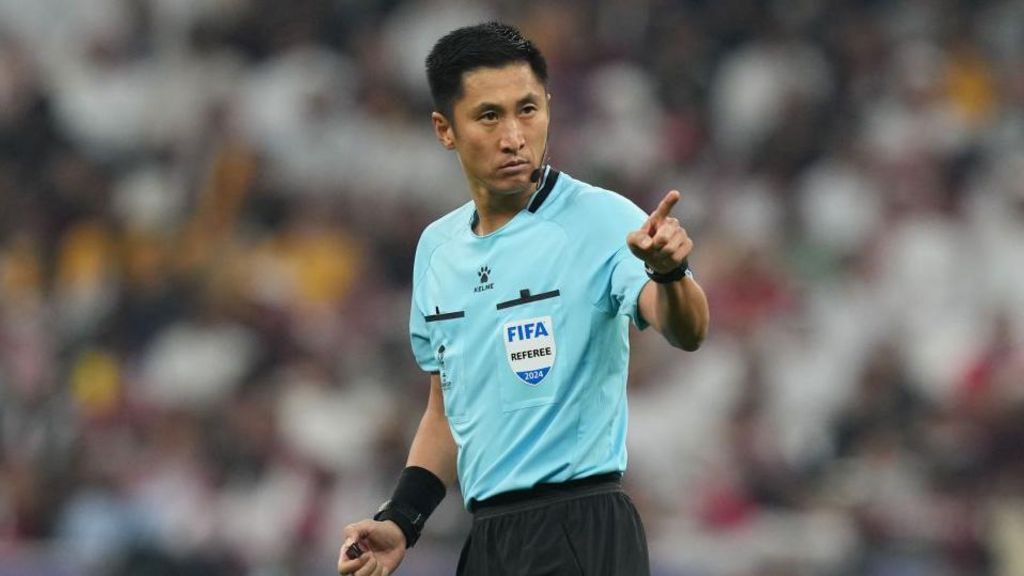
As the 2026 FIFA World Cup kicks off this week, China finds itself in a familiar position: absent from the competition’s national team bracket for the third consecutive tournament after its only appearance in 2002. This time around, however, one Chinese figure has captured the hearts and attention of domestic football fans across the country: 46-year-old veteran referee Ma Ning, who is set to become the first Chinese referee to officiate at a World Cup in 20 years, earning his place as China’s unlikely breakout star of the tournament.
Ma’s journey to the 2026 World Cup marks a historic milestone for Chinese football. Having held FIFA certification since 2011 and made his first World Cup appearances four years ago in Qatar as an off-pitch fourth official, this tournament will be his first opportunity to serve as a lead referee on the global game’s biggest stage. He is currently joined by two other Chinese officials – assistant referee Zhou Fei and video assistant referee Fu Ming – at a 10-day pre-tournament referee training camp in Miami, where all selected officials complete final preparations ahead of the opening matches.
Widely recognized for his uncompromising, strict officiating style, Ma earned the popular nickname “Card Master” early in his career after a 2015 Shanghai domestic match where he issued nine yellow cards and three red cards to enforce on-pitch discipline. That reputation has translated into massive viral popularity among Chinese fans, who have turned memes and discussion of Ma into one of the biggest trending topics across Chinese social media platforms including RedNote (Xiaohongshu) and Weibo, with related topics racking up millions of views in the lead-up to the tournament.
Two weeks before the tournament began, Ma launched his own official RedNote account to document his World Cup preparations, and quickly amassed more than 197,000 followers in under a fortnight. His first viral post saw him joke about his red-card reputation, pulling a small red notebook – a playful nod to RedNote’s Chinese name and his signature calls – from the front pocket of his referee uniform. Subsequent posts have shown him packing his competition gear, completing gym training, and featured equipment from his brand partners: Ma has already secured major sponsorship deals with leading Chinese tech firms including Lenovo and consumer electronics giant Hisense, a rare level of commercial endorsement for a football referee.
For many Chinese football fans starved of national team success, Ma’s presence at the World Cup has become a bittersweet talking point. While many fans have rallied around the referee, celebrating his achievement as a win for Chinese football even in the absence of a national team, other posts have reflected the widespread disappointment around the state of the men’s game domestically. Viral memes circulating on Weibo contrast the squads of other participating nations with a single photo of Ma, while popular social media captions highlight the gap: “Other countries get to cheer for their teams, we get to cheer for our referee handing out cards.”
China’s men’s national team has not qualified for the World Cup since its solitary debut in 2002, where the squad exited in the group stage without earning a single point or scoring a goal. Over the past two decades, Chinese men’s football has been crippled by systemic issues, from widespread match-fixing and corruption that has resulted in lifetime bans for dozens of players, referees and club officials, to ongoing financial instability that has left multiple top-tier clubs on the brink of collapse. Beyond his career as an elite referee, Ma also serves as a lecturer at the Nanjing Sport Institute, where he trains the next generation of Chinese football officials.
As the tournament prepares to get underway, Ma has struck a confident tone in his public posts: “I take up this appointment with confidence and composure. World Cup, here we come.”