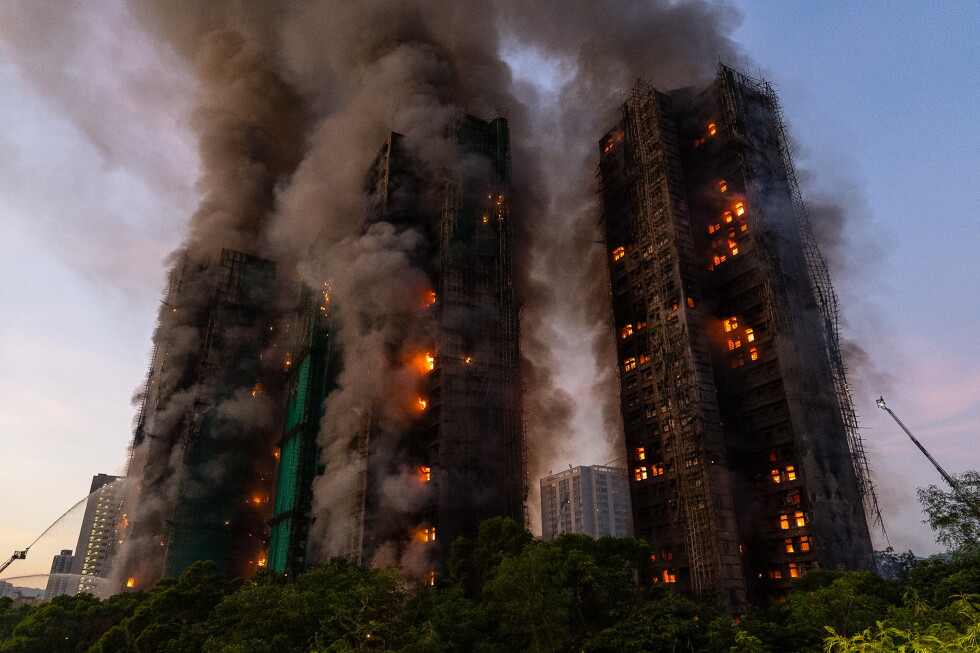
HONG KONG – Nearly eight months after Hong Kong’s deadliest fire in recent decades claimed 168 lives, local authorities have brought formal charges against seven individuals and two companies in connection with the November 2025 tragedy that ripped through a crowded suburban residential complex.
The catastrophic blaze broke out on November 26, 2025, rapidly spreading across seven apartment buildings at Wang Fuk Court, a tight-knit residential community in Tai Po that was home to thousands of people. For months after the fire reduced the complex to ashes, surviving former residents and bereaved family members of the victims have waited anxiously for accountability and answers about what led to the devastating loss of life.
In an official statement released Wednesday, law enforcement and anti-graft officials confirmed that the seven suspects and two corporate entities face a total of 25 criminal charges. Beyond the core charges of manslaughter and conspiracy, the allegations also include money laundering, intentional efforts to undermine public judicial proceedings, and tax evasion.
All seven charged individuals held distinct roles in a large-scale renovation project underway at Wang Fuk Court at the time of the fire. The two corporate defendants are the main contractor leading the renovation work and the project’s appointed consultancy firm.
The first court hearing for the cases was scheduled to open Wednesday afternoon. This latest development follows a wave of arrests earlier this year: back in March, Hong Kong police took 38 individuals into custody on charges tied to the disaster, ranging from manslaughter to fraud, with nine of those suspects already formally charged. Separately, the city’s Independent Commission Against Corruption also arrested 23 people that same month on suspicion of bribery and conspiracy to defraud.
An independent public inquiry into the root causes of the fire is still ongoing. Legal counsel for the inquiry previously shared that a preliminary assessment found nearly every fire safety system installed in the complex failed to operate during the blaze, with the breakdown traced entirely to preventable human error.