标签: Asia

亚洲

  • Pope Leo slams ‘those who manipulate religion’ for war, as White House invokes divine calling

    Pope Leo slams ‘those who manipulate religion’ for war, as White House invokes divine calling

    A sharp public rift between the first American-born head of the Catholic Church, Pope Leo XIV, and the Trump administration has deepened this week, centered on the controversial use of religious rhetoric to justify the seven-week US-Israeli war on Iran. The escalating war of words reached a new peak on Thursday, when Pope Leo issued his most direct rebuke to date of leaders who twist sacred scripture to advance military and political ambitions.

    In a post on the social platform X, the Pope repeated a pointed line from a recent address he delivered during a visit to Cameroon: “Woe to those who manipulate religion and the very name of God for their own military, economic, and political gain, dragging that which is sacred into darkness and filth.” He expanded on this condemnation in his original speech, adding that the globe is currently being exploited by a small group of authoritarian actors who put their own interests above global peace.

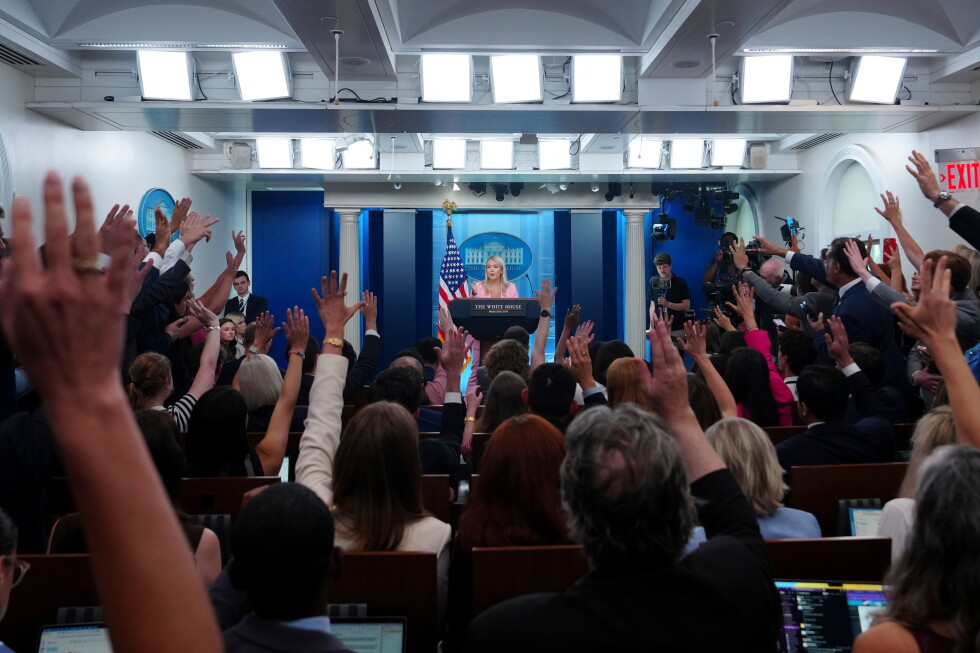
    Coinciding nearly exactly with the Pope’s post, US Secretary of War Pete Hegseth made his own religious reference during a press briefing in Washington D.C. Hegseth, who has repeatedly framed the war against Iran as a divine mission for the United States in regular Pentagon press briefings, compared journalists covering the conflict to Pharisees — the biblical figures Christians believe witnessed Jesus’ miracles but rejected his teachings. His analogy implied reporters were refusing to acknowledge what he framed as miraculous US military achievements in the war, which official counts confirm have killed more than 3,000 Iranian civilians and combatants to date.

    This framing of the war as a religious cause has been a particular point of friction with Pope Leo, a longstanding public advocate for global peace and diplomatic conflict resolution. While the Pope’s anti-war stance aligns with longstanding Vatican policy, it has put him in direct conflict with President Donald Trump, who has launched a series of public attacks against the American pontiff for contradicting what he frames as core US interests.

    The feud has stretched on for nearly a week, with Trump attempting to fracture the Pope’s public standing by highlighting the pontiff’s brother, Louis Prevost, who is an open supporter of Trump’s Make America Great Again movement. Speaking to reporters Thursday, Trump sought to downplay the intensity of the dispute, claiming “I’m not fighting with him. I have nothing against the Pope. His brother is Maga all the way.” Trump also falsely claimed that Pope Leo supports Iran acquiring a nuclear weapon, a claim the Pope has never publicly made, as he has declined to weigh in on US allegations of an Iranian nuclear weapons program.

    Earlier in the week, the conflict sparked widespread controversy after Trump shared an AI-generated image that depicted him as Jesus Christ, healing a sick man in a hospital bed. After widespread public backlash, Trump removed the post, later claiming he had believed the image showed him as a doctor associated with the Red Cross, telling reporters “It’s supposed to be me as a doctor making people better. And I do make people better. I make people a lot better.” Observers widely rejected the explanation, noting the image clearly showed Trump in a holy robe with glowing, miraculous hands positioned over the patient.

    The public attack on the Pope came immediately before that controversial post, with Trump launching a tirade against Pope Leo on social media that criticized his positions on crime and foreign policy. The former president also brought up COVID-era restrictions on religious gatherings, writing “He talks about ‘fear’ of the Trump Administration, but doesn’t mention the FEAR that the Catholic Church, and all other Christian Organizations, had during COVID when they were arresting priests, ministers, and everybody else, for holding Church Services, even when going outside, and being ten and even twenty feet apart. I like his brother Louis much better than I like him. I don’t want a Pope who criticizes the President of the United States.”

    This is not the first time Pope Leo has broken with the Trump administration: he has already publicly condemned Israel’s ongoing war in Lebanon and Trump’s hardline crackdown on undocumented immigrants inside the United States. The broader Catholic Church hierarchy has largely stood behind Pope Leo, creating new religious divisions between American Catholics and the Evangelical Christian community that forms one of Trump’s core political support bases.

    Multiple senior Catholic cardinals spoke out against the administration’s war agenda in an interview with CBS’s 60 Minutes that aired Sunday. Just one day earlier, Washington D.C.’s archbishop Cardinal Robert McElroy delivered an uncommonly direct political rebuke during a public peace mass, calling on Christian believers to move past passive prayer and actively advocate for an end to the conflict. “As citizens and believers in this democracy that we cherish so deeply, we must advocate for peace with our representatives and leaders. It is not enough to say we have prayed. We must also act… our president will move to re-enter this immoral war,” McElroy said. “No. Not in our name. Not at this moment. Not with our country.”

  • Australia’s most decorated living soldier granted bail over war crime charges

    Australia’s most decorated living soldier granted bail over war crime charges

    One of Australia’s most high-profile military figures, Victoria Cross recipient and former Special Air Service (SAS) corporal Ben Roberts-Smith, has been approved for bail following his arrest last week on six counts of the war crime of murder. The 45-year-old, who denies all allegations against him, stands accused of involvement in the killings of multiple unarmed Afghan detainees between 2009 and 2012 — allegations that include both personally carrying out fatal acts and ordering subordinates to kill. The case marks an unprecedented moment in Australian legal history, as it is the first time criminal war crime charges have been brought against an Australian special forces soldier for actions in the 20-year Afghan conflict.

    Roberts-Smith appeared at his bail hearing via video link from Sydney’s Silverwater Prison on Friday. His legal team argued the extraordinary nature of the case, which is set to involve years of delays and massive volumes of sensitive national security material, made pre-trial detention unfair to his right to mount a proper defense. Leading barrister Slade Howell told the Sydney Local Court that the matter falls into completely uncharted legal territory for Australia, with layers of complexity that will almost certainly slow court proceedings significantly. He noted that if Roberts-Smith remained in custody, he would not be able to access and securely store the sensitive materials needed to build his defense, irreparably compromising his right to a fair trial. Howell also added that the intensity of ongoing global and domestic media scrutiny surrounding the allegations could ultimately undermine the possibility of selecting an impartial jury, and that the evidence presented in the earlier civil defamation case would differ drastically from what will be brought forward in criminal proceedings.

    The decision to grant bail came after Judge Greg Grogan ruled that Roberts-Smith’s case was exceptional, and that the strict bail conditions imposed would mitigate any risks raised by prosecutors. The terms of Roberts-Smith’s release require him to report to local police three times weekly, surrender all electronic devices for unrestricted law enforcement access, and forfeit his passport before he can leave custody. Prosecutors had pushed for the former soldier to remain behind bars, arguing that the charges are graver than almost any other criminal matter before Australian courts, and that Roberts-Smith was planning to relocate overseas just days before his arrest, demonstrating a clear flight risk. Prosecutor Simon Buchen SC also highlighted that the allegations had already gone through a full civil trial in 2023, where a judge found the claims of misconduct to be substantially true on the balance of probabilities, meaning the allegations are not untested as his defense has claimed. Prosecutors also raised concerns that Roberts-Smith could seek to interfere with witnesses or tamper with evidence if released.

    The current criminal proceedings build on a years-long investigation into alleged Australian special forces misconduct in Afghanistan. In 2018, Nine Entertainment newspapers first published the initial allegations against Roberts-Smith, prompting the decorated soldier to launch a high-profile defamation suit against the publications. While the defamation trial ended with a ruling that substantial truth existed to the reports of war crimes, the criminal proceedings that followed require a higher legal standard: proof beyond a reasonable doubt for a conviction. Legal analysts note the case is expected to take at least several years to reach trial, due to the massive volume of evidence and national security procedural steps that will be required before any jury can hear the matter.

  • Trump says Israel and Lebanon have agreed to 10-day ceasefire

    Trump says Israel and Lebanon have agreed to 10-day ceasefire

    In an unexpected announcement posted to social media Thursday, former U.S. President Donald Trump revealed that the Israeli and Lebanese national governments have reached an agreement for a 10-day ceasefire set to go into effect the same evening. Alongside the ceasefire reveal, Trump stated he will invite Lebanese President Joseph Aoun and Israeli Prime Minister Benjamin Netanyahu to the White House for talks aimed at forging a more durable long-term truce between the two neighboring nations.

    The announcement comes weeks after Israel launched a sweeping military campaign of intensive airstrikes and a ground incursion into Lebanon that has already killed and injured thousands of people and forced more than one million Lebanese civilians from their homes. But despite the optimistic framing of the deal from Trump, experts have highlighted critical gaps that cast serious doubt on the ceasefire’s ability to hold: the agreement was struck solely between the two national governments, and does not include Hezbollah, the primary Lebanese political and militant group that has been the main target of Israel’s military operations.

    Nicholas Grossman, an international relations professor at the University of Illinois, pointed out a fundamental flaw in the negotiated arrangement. “A ceasefire between Israel and Lebanon is a weird thing to tout, since Lebanon isn’t a combatant,” he explained, noting “there is no Lebanese fire for the Lebanese government to cease.”

    The announcement also sparked internal friction in Israel: Amichai Stein, diplomatic correspondent for Israeli outlet i24News, reported that multiple members of Netanyahu’s Cabinet expressed outrage during a closed-door meeting, criticizing Trump for publicly announcing Israel’s consent to the ceasefire before the Israeli Security Cabinet granted formal approval.

    Diplomatic context further complicates the situation: Iran has repeatedly stated that a ceasefire between Israel and Lebanon is a non-negotiable precondition for continuing nuclear and security negotiations with the U.S. – talks that stem from Trump’s unauthorized February military action against Iran, launched without congressional approval.

    Even as the ceasefire was being announced, a group of 24 United Nations independent experts issued a harsh condemnation of Israel’s ongoing military assault on Lebanon Wednesday, describing the campaign as “a blatant violation of the UN Charter, a deliberate destruction of prospects for peace, and an affront to multilateralism and the UN-based international order.”

    The experts, which included UN special rapporteurs Farida Shaheed (right to education), Ben Saul (right to food), and Francesca Albanese (occupied Palestinian territories), emphasized that Israel launched its largest coordinated wave of airstrikes on Lebanon since 1980 even as ceasefire negotiations were being finalized. “We are witnessing the continuing utmost contempt for the international legal order, for diplomacy, and above all for the lives of civilians and the environment in Lebanon,” the group said, rejecting Israeli claims that the operation is an act of self-defense: “This is not self-defense.”

    The experts also drew a parallel between the situation in Lebanon and the humanitarian crisis in Gaza, noting that Israel’s blanket evacuation orders and systematic destruction of civilian housing align with patterns of “domicide” first seen in the Gaza campaign. “Forced displacement of a civilian population constitutes crimes against humanity and is a war crime under international law,” the statement added.

    On-the-ground humanitarian data underscores the severity of the crisis. Since Israel escalated its offensive in early March, more than one million people – over 20 percent of Lebanon’s entire population – have been displaced. UNICEF USA confirmed Thursday that at least 600 children have been killed or wounded in Israeli attacks since March 2, with more than 390,000 children displaced by the violence. “Nowhere is safe for children in Lebanon,” the organization warned.

    As of Wednesday, Israeli military forces continued to carry out intensive bombing campaigns across southern Lebanon, leveling entire towns, destroying civilian infrastructure including homes and schools, and killing non-combatants. Lebanese officials reported that an Israeli triple-tap airstrike on the southern Lebanese town of Mayfadoun Wednesday killed three paramedics responding to earlier strikes.

    In their formal demand, the UN experts called on Israel to “immediately cease all military operations in Lebanon” and urged the United States – Israel’s closest ally and primary supplier of military arms – to leverage its considerable influence to force an end to the bombing campaign.

  • Airline adding bunk beds for economy travelers but bans snacks, smells and cuddling

    Airline adding bunk beds for economy travelers but bans snacks, smells and cuddling

    For millions of air travelers, catching uninterrupted, restful sleep while crammed into an economy seat on a 16+ hour long-haul flight has long been nothing more than a distant dream. Now, New Zealand’s flag carrier Air New Zealand is preparing to turn that dream into a accessible reality with the upcoming launch of Skynest, the world’s first purpose-built lie-flat sleep pods designed exclusively for budget economy passengers.Starting this November, the triple-tier bunk bed-style pods will be available exclusively to economy and premium economy passengers flying on Air New Zealand’s new Boeing 787-9 Dreamliner aircraft operating the high-demand Auckland to New York route — one of the planet’s longest commercial air routes, where passengers are forced to remain seated upright for a grueling 16 to 18 hours straight.

    Travelers can pre-book a private, four-hour block of time in one of the curtained berths, with pricing starting at 495 New Zealand dollars (equivalent to roughly $291 USD), charged as an add-on separate from the base economy ticket price. The carrier has installed six Skynest pods on each of the route’s Dreamliners, arranged in a stacked triple-bunk configuration between standard passenger cabins. Due to the tight shared space arrangement, Air New Zealand has released a clear set of etiquette and usage rules for pod users.

    The rules prohibit children from using the pods, ban outside visitors, outlaw snacking inside the enclosed space to avoid crumbs and pest risks, and restrict each booking to a single passenger only. “That means solo snoozes only please, no musical nests or tag-teaming,” the company explains on its official website. Travelers must also change into special disposable socks provided by the airline before entering the pod, and are forbidden from wearing heavily scented perfumes or body products to avoid disturbing nearby sleepers. To address passenger concerns around hygiene, Air New Zealand confirms that all pillows, blankets and fitted sheets are completely replaced and refreshed between every four-hour booking. At the end of the pre-booked block, users are woken first by a gradual adjustment in cabin lighting, with flight attendants on hand to give a more firm wake-up call for any travelers who sleep through the soft alert.

    In terms of dimensions, each berth matches the length of a standard twin mattress at 80 inches (203 centimeters), but the compact design means there is no headroom for sitting upright. Accessing the pod requires users to bend, kneel, crawl or climb into the space, and the width tapers from 25 inches (64 centimeters) at shoulder height down to just 16 inches (41 centimeters) at the foot of the bunk. The airline also anticipates that snoring will be a common occurrence in the shared pod space, so complimentary earplugs are provided for all users. “Statistically, someone’s going to do it. It might be you,” the website notes dryly.

    While lie-flat convertible seats and beds have been a standard premium offering for first and business class travelers for decades, Air New Zealand’s Skynest marks the first time a major carrier has offered purpose-built lie-flat sleeping accommodation for economy passengers. The new product is part of a broader industry trend among global airlines, which are increasingly offering paid add-ons and upgrades to economy passengers to boost ancillary revenue beyond base ticket sales. Air New Zealand first publicly announced the Skynest concept was in development back in 2020.

    The launch comes at a challenging time for the carrier, which has had to adjust its operations amid ongoing global fuel price volatility tied to the ongoing conflict in the Middle East. In response to spiking jet fuel costs, Air New Zealand has raised base fares, cut underperforming domestic routes, and suspended its official earnings outlook back in March, warning that further route adjustments could be necessary in coming months. Even with these headwinds, the carrier is betting that its innovative sleep pod offering will fill a long-unmet need for passengers enduring ultra-long-haul budget travel, making the long trip between New Zealand and the United States far more comfortable.

  • Major refinery fire won’t lead to fuel rationing, Australian PM says

    Major refinery fire won’t lead to fuel rationing, Australian PM says

    A devastating 13-hour blaze triggered by equipment failure has disrupted output at one of Australia’s only two operating oil refineries, deepening existing strain on the nation’s fuel market that has already been roiled by global supply shocks tied to the ongoing Iran conflict. Prime Minister Anthony Albanese has moved quickly to reassure the public, confirming that strict fuel rationing will not be introduced despite the production cuts.

    The fire broke out at Viva Energy’s Corio Refinery, located just outside the regional Victorian city of Geelong, shortly before midnight on Wednesday. When extinguishing operations concluded 13 hours later, the facility faced significant output reductions. As one of just two domestic refineries still operating in Australia, the Corio site plays an outsize role in national fuel supply: it meets half of Victoria’s fuel demand and roughly 10 percent of the entire country’s total requirements.

    During an on-site visit Friday — which required Albanese to cut short a Southeast Asian diplomatic tour focused on shoring up alternative fuel supplies — the prime Minister outlined the current production status. According to official assessments, 80 percent of the refinery’s usual diesel and aviation fuel output remains online, while 60 percent of petrol production is still operational. Albanese noted that both the government and Viva Energy expect production volumes to gradually ramp up in the coming days and weeks as repairs progress.

    Australia currently operates at level two of a four-stage national fuel security framework that was finalized by federal, state and territory leaders just one month ago. The third tier of this plan introduces binding restrictions on fuel consumption, including formal rationing. Albanese confirmed that the damage from the fire does not warrant an escalation to this higher alert level, and urged Australian motorways and businesses to avoid panic buying or unnecessary stockpiling.

    While ruling out immediate rationing, the government has acknowledged that the refinery damage will likely put additional upward pressure on already elevated fuel prices and tighten domestic reserves. Australia has long been heavily dependent on imported refined fuel, making it particularly vulnerable to global supply disruptions. Earlier this week, ahead of his interrupted tour, Albanese announced that the government had secured an additional 100 million liters of diesel from suppliers in Brunei and South Korea to offset existing gaps. Speaking to reporters after his site visit, the prime Minister also affirmed that Australia needed to expand domestic refining capacity to reduce its exposure to international market volatility moving forward.

  • Vietnam’s president arrives in Guangxi by high-speed train

    Vietnam’s president arrives in Guangxi by high-speed train

    In a continuation of his official visit to China, Vietnam’s top leader To Lam, who holds both the positions of President of Vietnam and General Secretary of the Communist Party of Vietnam Central Committee, has arrived in South China’s Guangxi Zhuang Autonomous Region following a cross-country high-speed train trip.

    To Lam departed from Beijing on Thursday, according to official updates from China Daily. The journey spanned approximately 2,400 kilometers and took nearly 10 hours before the train pulled into Nanning East Railway Station, the main high-speed rail hub serving Guangxi’s capital city Nanning. A photo from China Daily photojournalist Zou Hong documents the arrival.

    This leg of To Lam’s trip comes after earlier engagements in Beijing, and Guangxi holds unique strategic importance for China-Vietnam relations as a major border province that shares a long land and maritime boundary with Vietnam. The high-speed rail journey itself also highlights the connected transportation infrastructure that supports growing people-to-people and economic ties between the two neighboring countries.

  • After a paralyzing stroke, a South Korean pianist recreates himself as a one-handed performer

    After a paralyzing stroke, a South Korean pianist recreates himself as a one-handed performer

    Twelve years ago, a devastating stroke upended the life and career of South Korean pianist Lee Hun, leaving him paralyzed on his right side and uncertain he would ever regain the ability to walk, let alone return to the instrument he devoted his life to. Today, the 54-year-old artist stands on the cusp of his biggest milestone since his life-altering injury: making his first debut with a full orchestra at next month’s Icheon Young-Artist International Music Festival, a performance that represents far more than a new artistic challenge for the nation’s only professional left-hand-only pianist.

    In August 2012, when the stroke struck, Lee was a doctorate candidate in music at the University of Cincinnati, building the career he had spent decades working toward. He collapsed suddenly at his home, and while emergency life-saving surgery saved his life, the stroke damaged roughly 60 percent of his brain’s left hemisphere. The damage left him unable to move his right arm and leg, and he also experienced temporary aphasia that robbed him of the ability to communicate clearly. He was transported back to his home country of South Korea in a wheelchair, and his father — legendary South Korean baseball player Lee Hae Chang — later recalled that his own son could not recognize him when he arrived home.

    In the immediate aftermath of the stroke, Lee’s priorities were drastically different from the musical ambitions that once defined his life. “After the stroke, I didn’t even imagine playing the piano. I only thought about whether I could stand on my feet again,” Lee shared in a recent interview with the Associated Press at his Seoul home. The road to recovery was grueling not just for Lee, but for his family, who stepped in to provide daily care. His mother, Poong Ok Hee, recalled frequent conflicts sparked by Lee’s intense mood swings as he adjusted to his new reality, with Lee often pushing back against her offers of help and guidance.

    The turning point came in 2013, when Lee shared a meal with his former piano mentor, Chun Yung Hae, a former dean of the College of Music at Seoul’s Kyung Hee University. Chun shared a life-changing piece of information that rekindled Lee’s dormant passion for performance: there are more than 1,000 published compositions written exclusively for the left hand. That night, Lee sat back at the piano bench for the first time since his stroke and began to practice.

    After years of relentless, exhaustive training, Lee made his formal debut as a one-handed pianist in 2016 at Seoul St. Mary’s Hospital, the same facility where he had completed his stroke rehabilitation and treatment. His program included Camille Saint-Saëns’ iconic *6 Etudes for the Left Hand Alone*, followed by a duet of *Amazing Grace* with Chun — Lee playing the melody with his left hand, Chun accompanying with her right. At least one attendee was moved to tears by the performance. Chun, who encouraged Lee to return to music to pull him out of his deep despair, never imagined he would reach such heights so quickly. “He is a pianist so he must play the piano. He was completely hopeless and in despair, so I tried to give him some hope. But I didn’t expect him to play as well as this,” the former educator said.

    In the years since his debut, Lee has steadily built a career as a working concert artist, giving solo recitals across the country, appearing on national television programs, and even publishing a memoir chronicling his recovery. Through years of physical therapy and determination, he has regained the ability to walk unassisted and communicate clearly in Korean, a milestone many never expected he would reach. Local media outlets have dubbed him “Korea’s Paul Wittgenstein,” a nod to the iconic Austrian pianist who pioneered left-hand solo piano repertoire after losing his right arm in World War I. It was Wittgenstein who commissioned Maurice Ravel’s famous *Piano Concerto for the Left Hand* — the very piece Lee will perform with the festival orchestra on May 2.

    Speaking about the upcoming performance, Lee admitted he is overwhelmed by nerves: “I’m so, so nervous I could die. It’s just one concerto but working with an orchestra has its own difficulties.” Even so, the challenging composition has been a long-held dream for Lee, according to Chung Eun-hyon, head of his management agency Tool Music. “He has told me it’s his dream to play the concerto,” Chung said. “I feel deeply emotional as I help make his dream come true.”

    Lee Eungkwang, head of the cultural foundation that organizes the Icheon festival, says Lee’s music resonates with audiences in a way that transcends technical skill. “Before becoming a one-handed pianist, Lee said he focused on how to perfect skills to wow audiences. Now, he agonizes over how to convey his emotions and interpretation of music to people,” he explained. “He plays a sort of music that truly touches the heart of people and it’s not about finger dexterity.”

    For Lee, the milestone of performing Ravel’s concerto is not the end of his journey. He still holds onto the hope of one day making a full two-handed comeback to performance, a goal he got a glimmer of hope for when he successfully pressed a single piano key with his right hand during a concert in November 2024. Medically, his doctor Koo Jaseong of Seoul St. Mary’s Hospital says the odds of a full recovery are extremely low, but that does not diminish what Lee has already achieved. “I still would like to give him a round of applause for his efforts. Though rare, there have been reports of miraculous recoveries too,” Koo said. When asked about his dream of returning to two-handed performance, Lee simply said, “I’m really curious what it was like when he played with both hands.”

  • South Korea’s runaway wolf finally captured after nine-day search

    South Korea’s runaway wolf finally captured after nine-day search

    For nine days, a young wolf on the run from a South Korean zoo held the entire nation’s attention, capturing public imagination and sparking widespread concern for his safety. Now, that tense search has come to a successful end: Neukgu, the two-year-old grey wolf that slipped his enclosure at Daejeon’s O-World zoo and theme park, has been captured alive and healthy near a local expressway.

    According to official statements from Daejeon’s municipal government, the capture went down at 00:44 local time Friday, equal to 16:44 GMT, in the city’s Anyeong-dong district. A routine medical check conducted immediately after recapture confirmed Neukgu’s vital signs — including pulse and body temperature — were completely normal, easing worries about his condition after more than a week navigating unfamiliar wild and suburban terrain.

    The months-long captive wolf was never an easy target for the hundreds of rescue officials deployed to track him down. The search was marked by multiple near-misses that kept the public on edge. The first close call came earlier this week, when authorities received a Monday night sighting report placing Neukgu on a mountainside just 2 kilometers (1.2 miles) from the O-World enclosure he escaped from. A short time later, a viral video circulated on South Korean social media showing the young wolf darting across a dark road, lit only by the headlights of a passing car. Search teams swarmed the area immediately after both leads, but each time, the elusive wolf managed to slip away before crews could close their net.

    Neukgu’s daring escape and days-long run from capture resonated far beyond local search operations. He became a viral cultural sensation, even inspiring a cryptocurrency meme coin that positioned the wolf as a “symbol of independence” and the “wolf that wouldn’t stay caged” to online audiences.

    For conservationists, Neukgu carries far more meaning than viral fame. Born in 2024, he is part of a captive breeding program at O-World focused on restoring Korean wolves, a subspecies that once roamed the entire Korean Peninsula but is currently classified as extinct in the wild. Even before his recapture, the public raised widespread concerns about his well-being: many feared the captive-born wolf would not be able to survive for long in the wild, while animal welfare advocates warned he could be killed during search efforts — echoing the 2018 death of Porongi, an escaped puma from the same zoo that was killed during capture operations.

    The concern crossed all levels of South Korean society, even reaching the country’s highest office. South Korean President Lee Jae Myung publicly shared a social media post praying for Neukgu’s safe return ahead of the successful capture.

    All those public fears were laid to rest after Thursday’s final search operation. Acting on a new tip-off, authorities deployed search teams to the Anyeong-dong area Thursday evening, and this time, the net held. Crews used a tranquillizer gun to safely subdue Neukgu before transporting him back to his zoo enclosure. Official footage of the operation, released by the Daejeon city government, shows sedated Neukgu being carefully carried by rescue workers and placed in a secure transport carrier. Subsequent photos released by the city show the wolf receiving routine medical care from zoo staff after his return.

    In a public social media statement following the capture, Daejeon’s municipal government expressed gratitude to all parties involved. “Thank you to everyone who worked hard to bring Neukgu home,” the post read. “To everyone who worried about Neukgu’s safety and cheered us on, thank you all so much.”

  • Saudi Arabia pressed US to secure a Lebanon ceasefire to preserve Iran negotiations, sources say

    Saudi Arabia pressed US to secure a Lebanon ceasefire to preserve Iran negotiations, sources say

    Diplomatic efforts to de-escalate tensions across the Middle East have taken a sharp turn after Saudi Arabia successfully pushed the United States to prioritize a ceasefire in Lebanon, with the goal of preserving fragile negotiations between Washington and Tehran and clearing the way for the reopening of the strategically vital Strait of Hormuz, multiple senior sources from the US, European and Arab nations have confirmed to Middle East Eye.

    According to Arab and Western officials familiar with the exchange, Saudi Crown Prince Mohammed bin Salman directly pressed US President Donald Trump on the urgency of a ceasefire between Israel and Lebanese armed groups during a private telephone conversation held Wednesday. Just 24 hours after that call, Trump made a public announcement of a planned 10-day ceasefire in Lebanon, a step multiple sources attribute directly to intensive lobbying from Riyadh.

    Despite the announcement, major questions remain unresolved: it is still uncertain whether Israel will adhere to the truce terms, and it remains unclear what level of pressure the Trump administration will ultimately bring to bear on Israeli Prime Minister Benjamin Netanyahu to enforce the pause. Domestically, Lebanon has also faced internal friction over the deal: Hezbollah has publicly criticized the Lebanese government for holding rare direct negotiations with Israel over the ceasefire framework.

    A Western official with direct knowledge of the phone call between the two leaders told Middle East Eye that Crown Prince Mohammed bin Salman made clear that securing a Lebanon ceasefire is a non-negotiable prerequisite to reopening the Strait of Hormuz and ending broader regional hostilities.

    Further diplomatic meetings are already in the works, sources confirm: Saudi Foreign Minister Prince Faisal bin Farhan is scheduled to hold talks with US Secretary of State Marco Rubio as early as next week, and Saudi Defense Minister Khalid bin Salman – the crown prince’s brother and close senior advisor – is expected to join the meeting. Saudi diplomatic teams have also begun circulating a formal negotiation position paper across regional and international capitals, according to Western and Arab officials.

    Last week, Trump stated that Netanyahu had agreed to “scale back” Israeli military operations in Lebanon following formal complaints from Iran over ongoing strikes, but a formal, publicly announced ceasefire represents a far more significant step toward de-escalation. Tehran has repeatedly made clear that no meaningful talks with Washington can proceed without a full ceasefire in Lebanon. Iranian Parliament Speaker Mohammad Bagher Ghalibaf and a top Iranian nuclear and security negotiator have both reaffirmed this position in recent statements.

    A two-week US-Iran truce, mediated by Pakistan, was announced earlier this month and explicitly included Lebanon in its terms, but Israeli strikes on Lebanese territory continued uninterrupted after the deal was struck. If the newly announced 10-day ceasefire holds, it is expected to clear the way for Washington and Tehran to extend their bilateral truce, which is set to expire on April 21. Trump confirmed Wednesday that formal negotiations could resume in the Pakistani capital of Islamabad as soon as within the next 48 hours.

    Pakistan has publicly emerged as the primary intermediary between the US and Iran, but multiple Western and Arab officials note that Islamabad’s diplomatic maneuvering would not be possible without extensive backing from Saudi Arabia, a long-time strategic ally and major financial patron of Pakistan. The two nations maintain a formal mutual defense pact, and Riyadh has repeatedly stepped in to provide critical economic support to Islamabad during periods of financial strain. Just this week, Saudi Arabia agreed to issue a $3 billion loan to cash-strapped Pakistan to help the country cover an urgent debt repayment to the United Arab Emirates.

    A senior Western official noted that Saudi Arabia holds unique influence to encourage Trump to prioritize mediation and acknowledge the importance of Iran’s demand for a Lebanese ceasefire. The kingdom has walked a careful diplomatic line in recent months: it initially opposed large-scale US military strikes on Iran, but ultimately provided limited support to Washington, including opening the King Fahd Air Base in Taif to US operations after Iranian strikes damaged infrastructure at the US-run Prince Sultan Air Base, a development first revealed exclusively by Middle East Eye. Riyadh also previously pushed the US to maintain targeted strikes on Iranian positions after Iranian-aligned groups attacked Saudi and regional energy infrastructure.

    “Saudi Arabia answered the US call and did the minimum necessary to appease Trump. But now they are focused on reopening the Strait of Hormuz and a ceasefire. They don’t want further escalation. It’s a dance,” the senior Western official told Middle East Eye. This aligns with earlier reporting from The Wall Street Journal, which revealed that Saudi Arabia has already urged Trump to reject proposals for a US blockade of the Strait of Hormuz.

    At present, Saudi Arabia is able to bypass Iranian control of the Strait of Hormuz via the East-West pipeline that connects Gulf oil fields to the Red Sea, allowing the kingdom to export roughly 5 million barrels of crude oil per day despite the closure. Riyadh’s current top priority is preventing the closure of the Bab el-Mandeb Strait by Houthi forces in Yemen, another critical chokepoint for global energy trade.

  • Attacks on US Muslims rose eleven-fold this year alone, advocacy group says

    Attacks on US Muslims rose eleven-fold this year alone, advocacy group says

    Hate violence targeting Muslim-American people and community institutions has surged to its highest level in 15 months during the current Trump administration, a prominent Muslim civil rights and advocacy organization has confirmed. The Muslim Public Affairs Committee (MPAC) documented this alarming upward trajectory in a new policy paper released Thursday, revealing an eleven-fold jump in targeted hate incidents in just the first three months of the year alone.

    According to MPAC’s analysis, at least nine of these recorded attacks took place in March alone. The incidents span a wide spectrum of violence and intimidation, ranging from property vandalism and bomb threats targeting houses of worship to sexual assault directed at Muslim women wearing traditional religious attire.

    Khuram Zaman, founding director of MPAC’s Center for Security, Technology and Policy, tied the sharp spike in attacks to the U.S.-led military campaign against Iran that launched at the end of February. Speaking to independent outlet Middle East Eye, Zaman noted that this military escalation created a clear dividing line between lower baseline levels of anti-Muslim hate seen earlier in the year and the sharp rise seen after the conflict began.

    “What has been most striking is how mainstream extreme anti-Muslim rhetoric has become in public discourse since the war started,” Zaman explained. “Comments calling for burning mosques or planting improvised explosive devices at Islamic centers would once have been relegated to the darkest corners of the internet. Now, that violent language is increasingly normalized and accepted on mainstream social media platforms.”

    Zaman’s assessment is backed by separate research from the Center for the Study of Organized Hate (CSOH), which tracked a sharp and immediate surge in explicitly anti-Muslim content on X, the social platform owned by Elon Musk, in the hours immediately after the Iran campaign began. Between January 1 and March 5, CSOH documented a wave of posts that dehumanize Muslim people, push for their exclusion from public life, and incite direct violence. Content analyzed ranged from individual hate-filled rants to formal calls for extremist legislation, including a proposed “Muslim Exclusion Act” and demands for the mass deportation of all Muslim people from the U.S.

    MPAC’s policy paper emphasizes that this violent rhetoric is not limited to anonymous social media users: it is increasingly being voiced by sitting Republican members of Congress, a trend that has further normalized anti-Muslim bigotry across the country. Florida Representative Randy Fine has emerged as one of the most high-profile voices of this movement, having called for the deportation of New York City’s Muslim mayor Zohran Mamdani and publicly stated, “If they force us to choose, the choice between dogs and Muslims is not a difficult one.” While Fine has faced criticism from Democratic lawmakers, he has faced no repercussions from his own party or from President Trump.

    Tennessee Representative Andy Ogles has similarly stated openly that he believes “Muslims don’t belong in American society.” Both Fine and Ogles are members of the newly launched “Sharia-Free America” congressional caucus, which now counts more than 60 Republican members. That makes the caucus larger than the Congressional Hispanic Caucus and the House Freedom Caucus, and comparable in size to the Congressional Black Caucus. Zaman stressed that caucus members have explicitly called for the denaturalization and deportation of Muslim American citizens, a policy he described as ethnic cleansing.

    While anti-Muslim sentiment in the U.S. has persisted at varying levels since the aftermath of the September 11 attacks, MPAC’s report warns that the current shift toward mainstream acceptance of open bigotry represents a dangerous new phase. The organization’s analysis confirms a long-documented trend: periods of heightened U.S. military engagement in the Middle East consistently correspond to rises in domestic anti-Muslim hate, fueled by skewed media coverage and political rhetoric designed to mobilize public support for military action.

    The report pushes back against the common political claim that restricting the rights of Muslim Americans strengthens national security, noting that no evidence supports this assertion. Instead, the group warns, the erosion of Muslim Americans’ civil rights undermines the social cohesion and community trust that effective domestic security depends on.

    At its core, MPAC’s primary policy demand is a permanent end to the U.S.-Israeli military campaign in Iran. The report warns that prolonged conflict will likely lead to a revival and expansion of the intrusive domestic security policies that defined the post-9/11 era, including targeted mass surveillance of Muslim American communities and expanded investigative authority for the FBI. Historically, such policies have led to widespread erosion of civil liberties, from expanded watchlists to intrusive monitoring of religious and community spaces, ultimately weakening U.S. civil society as a whole.

    The impact of rising anti-Muslim hate extends beyond Muslim communities, the report adds. So-called “adjacent communities” — people of color who are often misidentified as Muslim, including Sikh, Hindu, Armenian, and Christian Arab Americans — have also seen a rise in hate attacks as bigotry becomes more normalized.

    MPAC is calling on the Trump administration and all U.S. public institutions to take urgent action: to swiftly condemn all anti-Muslim hateful rhetoric and violence, hold perpetrators of hate crimes accountable, and proactively engage with affected communities to address their safety needs.

    Zaman added that meaningful progress will not be possible until major social media companies take decisive action to remove content inciting violence and restrict accounts that spread anti-Muslim misinformation. “When targets of hate are Muslim people, our mosques and our communities, there is simply no sense of urgency from the platforms or from political leaders to address the threat,” he said.