标签: Asia

亚洲

  • US, Iran accuse each other of ceasefire breach

    US, Iran accuse each other of ceasefire breach

    Fresh geopolitical friction erupted between the United States and Iran on Sunday, as both nations traded sharp accusations of violating an existing ceasefire agreement, raising new risks to regional stability in the Persian Gulf.

    Speaking from Tehran, Iranian Foreign Ministry spokesperson Esmaeil Baghaei condemned what he called the U.S. unlawful naval blockade of Iran’s port facilities and coastal territories, labeling the action a criminal breach of the agreed ceasefire terms.

    Across the Atlantic in Washington, the mutual blame game continued: ABC News’ chief Washington correspondent Jonathan Karl reported via social platform X that U.S. President Donald Trump had directly told him Iran was responsible for a “serious violation” of the ceasefire. Trump added that a final diplomatic deal would be reached “one way or another. The nice way or the hard way,” according to Karl’s account.

    Earlier that same day, Trump expanded on his administration’s stance in a post on his Truth Social platform, confirming that U.S. diplomatic negotiators would travel to Islamabad on Monday to participate in a new round of bilateral talks with Iran. In a stark warning, Trump claimed the U.S. has put forward “a very fair and reasonable DEAL” to Iran, and threatened that if Tehran rejects the proposal, the United States will destroy every power plant and every bridge across Iran.

    The escalating verbal exchange comes amid a complete shutdown of commercial shipping through the Strait of Hormuz, one of the world’s most critical energy chokepoints. After the U.S. deployed naval forces to enforce a blockade of Iranian waters over the weekend, Iran moved to reassert its own sovereign control over the strategic waterway, leaving all maritime traffic at a standstill as of Sunday. The standoff has already raised global concerns over potential disruptions to international energy supplies, with the strait accounting for roughly a fifth of global oil trade volumes.

  • Xinjiang tour guide whose video went viral wishes to visit Taiwan

    Xinjiang tour guide whose video went viral wishes to visit Taiwan

    A 26-year-old tour guide from China’s Xinjiang Uygur autonomous region has captured the hearts of millions of online users, after a spontaneous, heartfelt video of her introducing a landmark infrastructure project went viral across Chinese social media. Now, Dilinur Tursunjan says her biggest personal wish after the viral fame is to cross the Taiwan Strait and visit the Taiwanese family that became her close friends during their Xinjiang trip.

    Dilinur first connected with the family from Taiwan last October, when the group began their cross-regional tour of Xinjiang, starting in the northern part of the autonomous region and extending to southern Xinjiang this past March. Over the course of nearly a month traveling together, a deep, warm bond formed between Dilinur and the family. She describes their connection as something even closer than ordinary friendship, built on shared experiences and mutual respect during their journey across Xinjiang’s stunning landscapes.

    It was during this trip that Dilinur filmed the viral clip, as she brought the Taiwanese family to visit the newly opened Tianshan Shengli Tunnel. The video, which captured her genuine pride in the mega-engineering project, quickly spread across major social platforms, racking up millions of views and likes and sparking widespread discussion among netizens that lasted for days.

    In the video, Dilinur shared a powerful reflection on the tunnel’s construction: “Because our people need this open, accessible road, our great motherland can move mountains and redirect rivers. Drilling through the Tianshan Mountains was never an easy task, but we got it done because the wellbeing of our people waits on the other side of the range.” Her unscripted, sincere words resonated deeply with viewers across the country.

    Stretching 2,500 kilometers across northwest China, the Tianshan Mountains have long formed a natural divide between northern and southern Xinjiang, creating long, slow travel routes between the two regions. Completed after just over four years of construction, the 22.13-kilometer Tianshan Shengli Tunnel holds the title of the world’s longest expressway tunnel, and opened to public traffic in December 2025. The project cut what was once a three-hour mountain crossing down to a smooth 20-minute drive, transforming connectivity for local residents and travelers alike.

    While guiding the Taiwanese family through the site, Dilinur explained the immense challenges construction crews overcame to complete the project. Workers labored at altitudes above 4,000 meters, where they faced constant exposure to freezing temperatures, low oxygen levels, and extremely complex geological conditions rife with sudden hazards including landslides, rock bursts, and unexpected water inrushes. Leveraging a suite of cutting-edge, world-class innovative construction technologies, Chinese engineering teams successfully completed the tunnel in an impressive 52 months, beating expectations for such a complex high-altitude project.

    Dilinur emphasized that her viral comments were completely unscripted and came straight from her heart. She told reporters that when she was researching background information to prepare for the tour, the story of the tunnel’s construction left a deep impression on her, and her overwhelming pride in this extraordinary national project made her words flow naturally on camera.

    Now, after forming such a close bond with her Taiwanese guests, Dilinur says she is eager to make the trip to Taiwan to see them, and to experience the island’s natural scenery and culture in person, turning the cross-Strait friendship built on a Xinjiang road trip into a new shared memory.

  • Trump says US envoys to arrive in Islamabad on Monday for talks

    Trump says US envoys to arrive in Islamabad on Monday for talks

    Former U.S. President and current leading political figure Donald Trump has confirmed that a delegation of American diplomatic envoys is scheduled to arrive in Pakistan’s capital city of Islamabad on Monday for official bilateral talks, according to an official announcement updated by Xinhua News Agency on April 19, 2026.

    The confirmation of the diplomatic visit comes amid a period of shifting regional and international diplomatic engagements, with multiple high-level diplomatic moves unfolding across South Asia, the Middle East, and the broader global stage in the same timeframe. This scheduled diplomatic mission marks a new step in bilateral interactions between the United States and Pakistan, two countries with long-standing but historically complex diplomatic and security ties.

    Alongside this announcement, a series of other major global developments are also unfolding: regional tensions remain high in the Strait of Hormuz amid ongoing conflict-related developments, while a newly implemented 10-day ceasefire between Israel and Lebanon has taken effect, with an upcoming high-profile meeting between the two nations’ leaders scheduled to be hosted on U.S. soil, per Trump’s confirmation. Other key international events include the 55th anniversary celebration of China’s iconic Ping-Pong Diplomacy held in New York, and policy shifts in regional nations such as Thailand’s regulatory move to reorient cannabis retail operations exclusively toward medical use.

  • Turkey says Muslim countries concerned by Israel-Greece-Cyprus alliance

    Turkey says Muslim countries concerned by Israel-Greece-Cyprus alliance

    Speaking at this weekend’s Antalya Diplomacy Forum in southern Turkey, Foreign Minister Hakan Fidan has amplified longstanding Turkish concerns over the expanding trilateral military alliance between Israel, Greece, and Cyprus, warning that the bloc has sparked quiet unease among Muslim nations across the region.

    Fidan pointedly noted that Greece, a longstanding member of the North Atlantic Treaty Organization, has moved forward with the partnership despite its NATO commitments, adding that Turkish officials have never received public or private assurances that the alliance was not structured to counter Turkish regional interests.

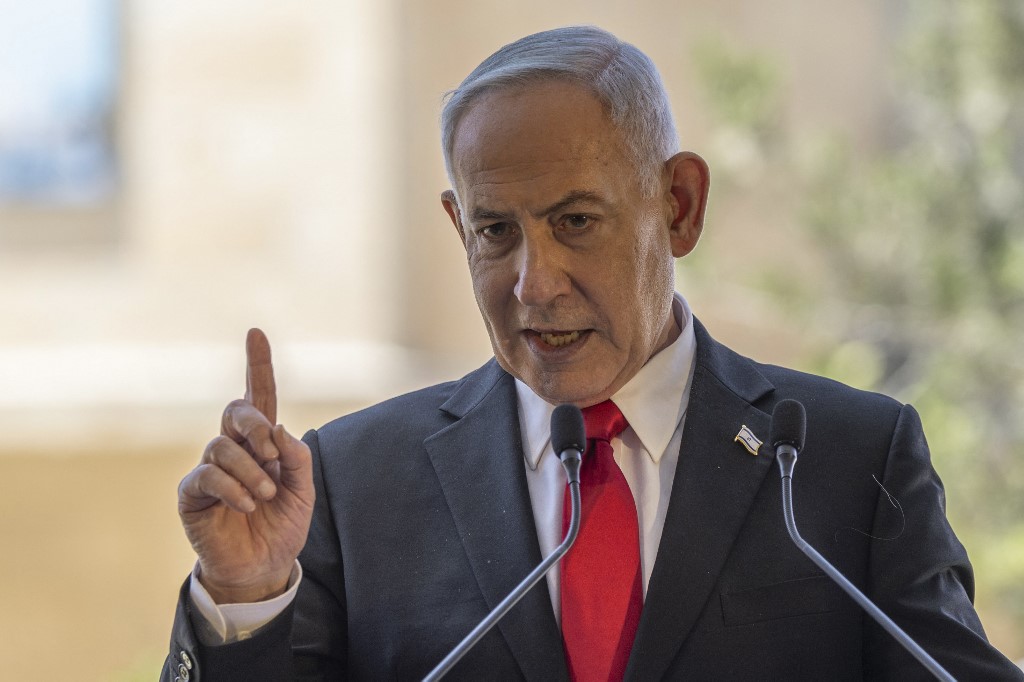
    The top diplomat referenced a provocative 2023 comment made by Israeli Prime Minister Benjamin Netanyahu during a trilateral summit in Jerusalem. Standing alongside his Greek and Cypriot counterparts, Netanyahu issued a veiled jab at regional powers with imperial ambitions, saying: “To those who fantasise they can re-establish their empires and their dominion over our lands, I say: Forget it. It’s not going to happen. Don’t even think about it.” Fidan confirmed the comment was widely interpreted as a direct reference to Turkey.

    The Israel-Greece-Cyprus alignment, first launched in the early 2010s, already includes formal security and defense cooperation, encompassing joint military exercises, cross-border intelligence sharing, and coordinated strategic planning in the Eastern Mediterranean. Just last week, Fidan drew sharp backlash from Athens when he claimed the alliance is designed to encircle Turkey from the south, warning that the bloc “brings more problems” and “leads to war.”

    Greek officials immediately rejected the accusation, emphasizing that their cooperation with Israel and Cyprus is purely defensive in nature and not targeted at any third country. Repeating his position on Sunday, Fidan pushed back against Athens’ denials, arguing that the military dimension of the trilateral partnership is undeniable.

    “Greece can say what it wants, but the picture is clear,” Fidan told attendees of the forum. “There is no other country in Europe that has taken this kind of step towards military cooperation and partnership.”

    He added that Turkey’s concerns extend far beyond national security, noting that the alliance is a source of quiet anxiety for Muslim countries across the region, even if most have chosen not to voice their worries publicly. “Israel has been recently running an expansionist policy, and Turkey’s concerns aren’t unwarranted,” Fidan said.

    In a bid to counter framing that Turkey is building a counter-bloc to the Israel-led alliance, Fidan clarified that recent regular dialogue mechanisms Turkey has established with Saudi Arabia, Egypt, and Pakistan to coordinate on regional issues are not equivalent to a military alliance, and are not directed against Israel. “We aren’t like Israel. They established a military alliance with Greece and Cyprus against the Muslim countries,” Fidan said. “We, unlike Israel, try to end the conflicts in the region, stabilise it.”

    Internal tensions within the trilateral alliance have already come to light in recent months. A December 2023 report from Cypriot newspaper Politis revealed that Nicosia is uncomfortable being dragged into the growing standoff between Israel and Turkey, accusing Netanyahu of stoking tensions to score domestic political gains. A regional official familiar with internal negotiations confirmed to Middle East Eye at the time that Cyprus is uneasy with Israel’s aggressive approach, calling the prime minister’s rhetoric “the usual playbook with Israel: messaging to its domestic audience with lots of bluster and gusto, ignoring the hard facts and projecting its own narrative.”

    The report also noted that selective leaks from Israeli sources claiming the three countries planned to form a joint military brigade — with 1,000 troops each from Israel and Greece, and 500 from Cyprus — had particularly agitated Cypriot officials. Both Cypriot Defense Minister Vasilis Palmas and a senior Greek official denied any plans for a joint brigade in separate comments to Middle East Eye in December and early 2024 respectively.

  • Iran blocks two more oil tankers from transiting Strait of Hormuz: report

    Iran blocks two more oil tankers from transiting Strait of Hormuz: report

    Tensions over maritime access to the strategically critical Strait of Hormuz have flared once again, after Iranian armed forces intercepted two oil tankers attempting to traverse the waterway on Sunday, forcing them to turn back, according to a new report from Iran’s semi-official Tasnim News Agency.

    The two intercepted vessels were flying the national flags of Botswana and Angola, and were deemed to be attempting an “illegal” crossing before Iranian military intervention, the outlet confirmed.

    The interception comes amid sharp rhetorical friction between Iran and the European Union over rules governing passage through the strait, which handles roughly 20% of global oil trade and is one of the world’s most vital energy chokepoints. Iranian Foreign Ministry spokesman Esmaeil Baghaei recently delivered a scathing rebuke of European demands for unrestricted, toll-free access through the waterway, accusing the bloc of blatant hypocrisy in its application of international law.

    Baghaei’s remarks were a direct response to a social media post on platform X from EU High Representative for Foreign Affairs Kaja Kallas. In his response, Baghaei questioned the EU’s selective adherence to global rules, writing: “Oh, that ‘international law?!’ The one that the EU dusts off to lecture others while quietly green-lighting a US-Israeli war of aggression against Iran – and looking the other way on atrocities against Iranians?”

    “Spare the sermons; Europe’s chronic failure to practice what it preaches has turned its ‘international law’ talk into peak hypocrisy,” he added.

    Kallas had previously warned that any system requiring payment for passage through the strait would set a dangerous precedent that could disrupt maritime trade routes globally. She also noted that the EU’s Aspides naval mission, launched in February 2024 to protect freedom of navigation in the Red Sea and surrounding waters, could be rapidly expanded to safeguard shipping across the broader Persian Gulf region.

    The latest interception follows a weeks-long shift in Iran’s enforcement of control over the strait. Iran significantly tightened access restrictions after the U.S. and Israel launched large-scale airstrikes on Iranian territory, barring all vessels with links to Israel and the United States from transiting the waterway. The U.S. responded by imposing its own reciprocal trade restrictions after scheduled peace talks between Iran and the U.S. held in Islamabad collapsed without agreement.

    Earlier this month, a two-week ceasefire between Iran and the U.S. went into effect starting April 8. During the ceasefire, Iranian Foreign Minister Seyed Abbas Araghchi stated publicly that the strait would remain fully open to all legitimate commercial shipping. However, just one day before the latest interception, Iran’s top military body, the Khatam al-Anbiya Central Headquarters, announced it would resume strict enforcement of access rules, citing the continuation of U.S. trade restrictions against Iran.

    As of the report, Tehran has made clear it will maintain full control over maritime traffic through the Strait of Hormuz until all hostilities with the U.S. and Israel are permanently ended.

  • Sanyuesan Festival brings technology and culture together in Nanning

    Sanyuesan Festival brings technology and culture together in Nanning

    Southwest China’s Nanning, the capital of the Guangxi Zhuang Autonomous Region, played host to the grand opening of the 2026 Guangxi Sanyuesan Festival this Saturday, marking a fresh reimagining of one of China’s most beloved ethnic cultural celebrations through a dynamic fusion of traditional heritage and modern digital innovation.

    Observed on the third day of the third month in the traditional Chinese lunar calendar, Sanyuesan has been a core cultural observance for the Zhuang ethnic group for centuries, serving as a time for communal gathering, folk performances, and honoring ancestral traditions. For this year’s iteration, event organizers have pushed creative boundaries to reintroduce the centuries-old holiday to new generations, building a immersive folk celebration that marries long-held cultural customs with 21st-century technological advances.

    Three core themes anchor the 2026 festival: cutting-edge interactive technology experiences, cross-cultural exchange between China and the Association of Southeast Asian Nations (ASEAN), and a showcase of the one-of-a-kind natural and cultural charm that defines Guangxi. Unlike traditional iterations of the holiday that centered almost exclusively on folk performances and ritual gatherings, this year’s event integrates augmented reality installations, digital cultural exhibitions, and live-streamed interactive experiences that allow attendees both on-site and online to engage with Zhuang culture in entirely new ways. It also spotlights shared cultural ties between Guangxi and ASEAN member states, turning the regional ethnic festival into a platform for transnational cultural connection.

    The event has drawn widespread attention for its approach to cultural preservation, proving that centuries-old traditions can be refreshed for modern audiences without losing their core meaning. As the festival kicks off, attendees and cultural observers alike are eager to see how this blend of old and new will shape the future of ethnic cultural celebrations across China.

  • Chinese people at home and abroad bond together in ritual ceremony

    Chinese people at home and abroad bond together in ritual ceremony

    On Sunday, April 19, 2026, thousands of people of Chinese descent from across China and around the world gathered in Xinzheng, a city in central China’s Henan province that is widely recognized as the birthplace of the Yellow Emperor, the legendary common cultural ancestor of the Chinese nation, to take part in the annual traditional worship ceremony.

    Rooted in a historical tradition that stretches back more than 2,500 years to the Spring and Autumn Period (770–476 BC), this yearly ritual has been preserved and passed down through successive generations of Chinese communities, retaining its core cultural significance even as it adapts to modern times. Today, the ceremony stands as one of the most important shared cultural events for Chinese people worldwide, serving as a touchstone for collective cultural memory and identity.

    The 2026 iteration of the ceremony followed the nine standardized procedural steps that were officially formalized when the ritual was granted national intangible cultural heritage status by China’s cultural authorities. This standardization has helped protect the ritual’s traditional authenticity while making it accessible to participants from all backgrounds, whether they are long-time local residents or international visitors traveling to Xinzheng for the event.

    For attendees, the gathering is far more than a cultural observation: it is an opportunity to strengthen connections with shared heritage, reinforce a collective sense of cultural belonging, and foster bonds between Chinese communities across the globe. Many participants note that the annual ceremony creates a space for people with shared cultural roots to come together, regardless of their current place of residence, to honor the legacy of the Yellow Emperor and celebrate the shared cultural identity that unites all people of Chinese descent.

  • Mediators push US-Iran ceasefire extension as deal hopes fade

    Mediators push US-Iran ceasefire extension as deal hopes fade

    As a critical Wednesday deadline for a US-Iran ceasefire approaches, diplomatic mediators have begun pushing to extend the truce, after hopes of locking in a comprehensive peace agreement dimmed over the weekend, multiple anonymous senior regional sources told Middle East Eye.

    While negotiators had made incremental progress on core sticking points in the days leading up to the weekend, the shifting geopolitical context has widened unresolved gaps across key negotiation tracks, a senior Turkish official confirmed. The official noted that the complex, multifaceted talks have seen some modules move forward as scheduled, but irreconcilable differences remain on other critical components that cannot be bridged in the remaining timeline before the two-week ceasefire expires on Wednesday.

    Pakistani mediators, who have played a central role in facilitating the talks, are eager to extend the deadline to keep negotiations alive, and remain optimistic that a final resolution can be secured in the days following the original expiration. Turkish Foreign Minister Hakan Fidan has publicly backed the extension push, saying additional time is a non-negotiable requirement to reach a durable deal. Still, a senior Turkish security official warned that the risk of total negotiations collapse is tangible, and a breakdown could spark a far more brutal new round of open conflict between the two nations.

    Before the weekend shift in diplomatic momentum, negotiators had laid out a detailed draft framework covering the full scope of disputed issues. The draft includes provisions to transfer Iran’s stockpile of highly enriched uranium to Pakistan, implement a multi-year moratorium on domestic uranium enrichment, establish new transit rules for the Strait of Hormuz, require partial disarmament of Iran-aligned armed groups across the Middle East, and deliver immediate sanctions relief alongside the unfreezing of an estimated $100 billion in Iranian sovereign assets held abroad. Notably, Iran’s ballistic missile program is entirely excluded from the current draft agreement.

    One of the most contentious unresolved disputes centers on the length of the enrichment suspension. The U.S. originally demanded a 20-year moratorium, while conflicting reports place Iran’s current offer between a five-year and 12-year halt. After the initial moratorium period expires, the agreement would allow Iran to extend the pause in consultation with the International Atomic Energy Agency (IAEA). On the transfer of enriched uranium, however, sources indicate Tehran has come close to accepting the proposal: Pakistan originally suggested sending the stockpile to a neutral third country, a principle Iran agreed to, before Tehran put forward Pakistan itself as the storage destination, which Islamabad accepted.

    The draft framework also lays out new rules for shipping through the Strait of Hormuz, a chokepoint for 20% of the world’s daily oil trade. Under the proposal, Iran would fully reopen the strait, collect a transit tariff to be split with Oman, and maintain exclusive control over transits, requiring individual approval for every passing vessel. Critically, the deal would ban military warships from transiting the strait, a provision that would block British and French plans to escort commercial tankers through the waterway.

    The weekend shift in momentum came after rising tensions in the Strait of Hormuz Saturday: Iran announced it was closing the waterway just two days after reopening it, citing the ongoing U.S. naval blockade, which Tehran says constitutes a direct violation of the existing ceasefire. The move was intended to demonstrate Iran’s continued sovereignty over its territorial waters and push back against the blockade, according to Iranian sources.

    On Sunday, U.S. President Donald Trump accused Iran of violating the ceasefire with the strait closure, but confirmed that U.S. negotiating teams would travel to Islamabad for a new round of talks Monday. In an interview with Fox News and a subsequent post on Truth Social, Trump issued an extreme warning, saying the U.S. would “blow up the whole country” if Iran refused to sign a deal, adding that “it’s time for the Iran killing machine to end” after 47 years of inaction by previous U.S. administrations. In response, Iran’s state-owned Tasnim news agency reported that Tehran has not yet committed to sending a negotiating delegation to Pakistan as long as the U.S. naval blockade remains in place.

    On the issue of regional armed groups aligned with Iran, the draft requires the partial disbandment of Iraq’s Popular Mobilisation Forces (PMF) and Lebanon’s Hezbollah, and could open a path to a non-aggression pact or even full peace deal between Lebanon and Israel. The proposal would require Iranian-aligned PMF factions to withdraw from border regions near Kuwait and Jordan, and cap the total number of PMF fighters at 15,000, down from the group’s current estimated 238,000 total members. For Hezbollah, the agreement would require the group to dismantle all offensive weapons targeting Israel, while allowing it to retain small arms for self-defense.

    Multiple sources have cast major doubt on the feasibility of the Hezbollah disarmament provision. One senior Lebanese source noted that Hezbollah emerged as a resistance movement in response to Israeli invasion, and that the Lebanese military lacks the capacity to defend the country from Israeli incursion, meaning the group will never agree to give up its offensive capabilities. Iran has also pushed back on the provision, flatly denying that it exercises control over either Hezbollah or the PMF, and insisting both groups make their own decisions independent of Tehran.

    Additional layers of uncertainty hang over the negotiations beyond core policy disputes. Reports are conflicting over whether Iran’s top leadership has signed off on the draft framework: one source says Supreme Leader Mojtaba Khamenei has approved the text, but other sources claim Khamenei remains severely injured from the attack that killed his predecessor, Ayatollah Ali Khamenei, having lost a leg and suffered serious facial trauma that leaves him unable to communicate. There is also no consensus on how any final agreement would be structured or announced, with negotiators only agreeing to separate “packets of agreements on different files” so far.

    Beyond Iran’s internal divides, the deal also faces major external threats from key regional actors. Israeli Prime Minister Benjamin Netanyahu has already been pressured by the Trump administration to pause Israel’s offensive in southern Lebanon, but the current draft falls far short of Israel’s core war aims: it allows Iran to retain its regime, keep its ballistic missile program, and only suspend rather than permanently end uranium enrichment. With Israel facing an election year, Netanyahu’s popularity has already suffered from a ceasefire that does not deliver a definitive victory, and senior sources confirm he will reject the current framework. There are also widespread doubts that Israel’s intelligence service Mossad will abandon its decades-long goal of forcing regime change in Iran.

    Three Gulf Arab states that suffered major damage to their energy infrastructure and urban centers during the recent conflict also stand opposed to the draft. After initially lobbying against a U.S.-led attack on Iran, the United Arab Emirates, Kuwait, and Bahrain have since pushed Trump to continue military operations to eliminate Iran’s military and nuclear capabilities, with some evidence indicating the UAE and Bahrain even participated in recent drone strikes on Iranian targets. For these states, the current draft would be seen as a betrayal of their security interests by the U.S.

  • Iranian president reaffirms stance on nuclear rights

    Iranian president reaffirms stance on nuclear rights

    TEHRAN – In a firm public statement carried by the Iranian Students News Agency on Sunday, Iranian President Masoud Pezeshkian doubled down on his country’s long-held position, rejecting United States attempts to block Tehran from accessing its legally recognized nuclear rights. Pezeshkian specifically pushed back against recent remarks by US President Donald Trump, who has claimed Iran should not be permitted to exercise its sovereign rights to nuclear development, calling the argument fundamentally unreasonable.

    Pushing for clarity on the US position, Pezeshkian noted that Washington has yet to outline any specific violation or offense that would justify stripping Iran of the nuclear rights it is entitled to under international frameworks. Beyond the nuclear issue, the Iranian president added that the country remains committed to working toward ending ongoing regional conflicts, with the goal of reaching a resolution that preserves Iran’s national dignity.

    The statement comes amid long-running international tensions over Iran’s nuclear program, with successive US administrations imposing sanctions and diplomatic pressure to curb Tehran’s activities. Pezeshkian’s remarks mark the latest formal reaffirmation of Iran’s consistent stance that it retains full sovereign right to peaceful nuclear development for civilian energy and medical purposes.

  • Pakistan tightens security ahead of expected US-Iran talks

    Pakistan tightens security ahead of expected US-Iran talks

    As the second round of long-awaited negotiations between the United States and Iran draws near, Pakistan has rolled out one of its largest security deployments in recent years, locking down key urban centers to ensure the safety of the upcoming diplomatic talks.

    Authorities in the South Asian nation have issued a high-level security alert for Islamabad, the national capital, and its adjacent garrison city Rawalpindi, the two primary hubs set to host the diplomatic event. Unnamed police sources familiar with the security plan confirm that around 20,000 regular police officers have been assigned to security duties across the so-called twin cities, with additional backup from hundreds of elite commandos including specially trained sniper units to counter potential threats.

    To reinforce the security perimeter, specialized rapid response units have also been put on high standby. Additional teams from the Punjab Highway Patrol, the Dolphin Force counter-terror unit, and the Quick Response Unit are positioned at key checkpoints and transit routes, while the integrated Safe City surveillance network and rooftop sniper outposts maintain continuous 24-hour monitoring of all public and sensitive areas across the region.

    This is not the first time Pakistan has rolled out such stringent security measures for US-Iran diplomatic engagement. Similar extensive security arrangements were implemented ahead of the first round of talks, which were launched to de-escalate rising tensions and hostilities that have disrupted stability across the Middle East in recent months.

    Security officials confirmed that advance delegations from the United States, including dedicated US security personnel, have already begun arriving in the country to coordinate logistics and security protocols ahead of the talks. As part of the finalized security plan, Pakistani authorities have enacted sweeping movement restrictions: all public and commercial transport services have been suspended across both Islamabad and Rawalpindi, and most access points to the capital’s high-security Red Zone, which houses key government buildings and foreign diplomatic missions, have been permanently sealed off for the duration of the event.

    Major five-star hotels frequently used to host high-profile international delegations, including the iconic Islamabad Serena Hotel and Islamabad Marriott Hotel, have been requisitioned by the government to accommodate negotiating teams and accompanying delegates. Hotel management has requested all existing non-official guests to vacate their rooms ahead of the talks. Additionally, all public hostels and private guest houses across the capital have been ordered to suspend operations until further official notice.