标签: Asia

亚洲

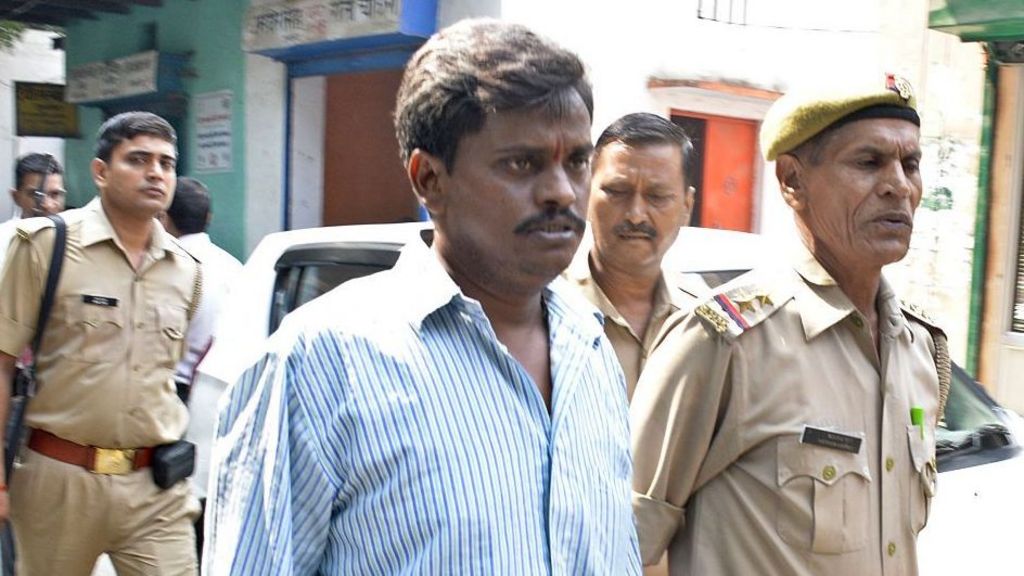
  • Modi’s party is set to take control of West Bengal in key election, dealing a blow to opposition

    Modi’s party is set to take control of West Bengal in key election, dealing a blow to opposition

    NEW DELHI – A series of staggered state elections across India are on track to reshape the country’s national political balance, with Prime Minister Narendra Modi’s ruling Bharatiya Janata Party (BJP) positioned to secure a historic breakthrough in West Bengal, one of the opposition’s longest-held strongholds.

    Partial results released by India’s Election Commission show the Hindu nationalist BJP leading in at least 190 of the 294 seats in West Bengal’s state legislative assembly, with final official counts scheduled to be confirmed by Monday evening. If the projected results hold, this will mark the first time the BJP has claimed governing power in West Bengal, a politically critical state where the All India Trinamool Congress (AITC), led by Modi’s most vocal national critic Mamata Banerjee, has held office since 2011. Banerjee’s party spent more than a decade building a regional political fortress in the state, and the BJP’s efforts to unseat her administration have stretched across multiple election cycles.

    The projected outcome already carries major national ramifications for Modi midway through his third term as prime minister. Following the 2024 general election, the BJP was forced to rely on a coalition of smaller regional allies to form a majority government. A historic win in West Bengal is expected to bolster Modi’s domestic political standing, cement his authority within the ruling alliance, and clear a path for his planned 2029 campaign for a fourth consecutive term – a record in modern Indian politics.

    For India’s fragmented national opposition, the projected loss in West Bengal represents a severe setback. Banerjee had positioned herself as the de facto leader of a loose coalition of regional anti-BJP parties, working to unify disparate opposition groups against the ruling party’s nationwide dominance. Her defeat is expected to weaken her bargaining power within the already divided opposition bloc, which has long struggled to put forward a unified, sustained challenge to Modi’s popularity.

    The West Bengal poll has already been mired in controversy, with opposition leaders issuing sharp criticism after the Election Commission removed millions of names from the state’s electoral rolls ahead of voting. The election commission’s decision to purge the voter rolls sparked widespread accusations of bias favoring the ruling BJP, claims that have added tension to the already high-stakes contest.

    West Bengal is not the only state facing a political shift in this round of India’s regularly scheduled state elections, which are held on staggered cycles across the country’s 28 states and 8 federal territories. Three other states also held elections alongside West Bengal, each delivering surprising results that upend local political orders.

    In the southern developed state of Tamil Nadu, a relatively new political party led by massively popular Tamil film star Joseph Vijay is on track to oust the incumbent DMK government. Vijay launched his Tamilaga Vettri Kazhagam party just two years ago, marking one of the fastest political rises in modern Indian politics – a path that mirrors a longstanding tradition in Tamil Nadu, where film stars have repeatedly won election to the state’s highest office.

    In Kerala, another southern Indian state, the opposition bloc led by the Indian National Congress is projected to defeat the incumbent Communist Party of India (Marxist) government, ending decades of continuous leftist rule in one of the last remaining strongholds of communist governance in India.

    In the northeastern state of Assam, meanwhile, Modi’s BJP is set to return to power for a third consecutive term, extending its hold on the region and solidifying its status as the dominant political force across most of India.

  • Australian Jews tell antisemitism inquiry of surge in hate before Bondi Hanukkah massacre

    Australian Jews tell antisemitism inquiry of surge in hate before Bondi Hanukkah massacre

    SYDNEY, Australia — One month after a father-son terrorist attack left 15 Jewish worshipers dead at a Hanukkah gathering on Sydney’s iconic Bondi Beach, Australia’s highest-level formal inquiry into growing antisemitism and social cohesion has convened its first public hearings, kicking off a two-week examination of how hate targeting Jewish communities has spread across Australian institutions and broader society. The massacre, which authorities confirmed was inspired by the Islamic State group, marked the deadliest antisemitic attack in modern Australian history and came amid an unprecedented nationwide surge in hate crimes against Jewish people that has shaken a community long unaccustomed to such widespread levels of threat.

    The attack was carried out by Sajid and Naveed Akram, a father and son who were legally licensed to own the firearms they used – a striking detail in a country that has kept some of the world’s strictest gun control regulations for nearly 30 years, following the 1996 Port Arthur massacre. Sajid Akram was killed by responding police at the scene, while Naveed Akram survived his wounds and has been charged with terrorism, 15 counts of murder, and 40 counts of attempted murder; he has not entered any pleas to the charges.

    In opening remarks at Monday’s first sitting, commission head Virginia Bell connected the sharp rise in Australian antisemitism to parallel surges across Western nations, noting the clear tie between escalating tensions and the outbreak of the Israel-Hamas war in October 2023. “It’s important that people understand how quickly those events can prompt ugly displays of hostility toward Jewish Australians simply because they’re Jews,” Bell said. Additional hearings on targeted topics will be held throughout the year, with the commission’s final binding report and policy recommendations due for publication in December.

    All witnesses who appeared before the commission on opening day were Jewish Australians, many of whom requested to testify under pseudonyms to protect their personal safety from further harassment. For community members, the hearing was a chance to lay bare the daily fear that has reshaped life for Australia’s small Jewish population after a year of mounting attacks. Sheina Gutnick, the daughter of 62-year-old victim Reuven Morrison – who died after charging one of the gunmen with a brick to stop the attack – recounted a harassment incident she experienced a year before the massacre: while walking through a Sydney shopping mall carrying her infant child, a stranger verbally abused her after spotting her Star of David necklace, with no bystanders stepping in to intervene. “I felt shocked, exposed and unsafe,” Gutnick told the commission. She added that she now avoids large public family gatherings and hesitates to travel to certain neighborhoods across Sydney.

    Data presented to the inquiry underscores the scale of the surge: in the 12 months following the October 2023 start of the Israel-Hamas war, more than 2,000 antisemitic incidents were reported to the Executive Council of Australian Jewry, which tracks hate crime against Australian Jewish communities. That figure represents a more than fourfold increase from the previous annual record of just under 500 incidents recorded the year before the war. While similar increases have been documented in the United Kingdom and other Western countries, witnesses told the commission the speed and severity of the shift has been particularly jarring for Australia’s tight-knit Jewish community, which had never before faced such a volume of serious, violent threats.

    Toby Raphael, vice president of Sydney’s Newtown Synagogue, which was defaced with swastikas during a 2025 wave of antisemitic attacks, told the commission that constant fear has become the new normal for Australian Jews. “Now everyone is scared all the time,” Raphael said. He recalled that just a few years ago, he had reassured synagogue congregants that no security was needed for weekly services; today, the synagogue is guarded, and Raphael serves on a parent-led security team at his son’s Jewish day school, which is also protected by armed professional security guards. “Why do kids have to go to school like that? This is the world that the Jews of Australia live in now and it needs to change,” he said.

    The rise in high-profile antisemitic attacks predated the Bondi Beach massacre: last August, the Australian government cut diplomatic ties with Iran after concluding the Iranian state had orchestrated at least two separate antisemitic attacks on Australian soil. Many witnesses told the commission the ongoing escalation has pushed them to consider leaving Australia entirely to seek safety for their families elsewhere. Alex Ryvchin, a leader of a major Australian Jewish organization whose home was targeted in an arson attack in early 2025, told the commission he had warned for months that the unaddressed rise in antisemitism would lead to mass casualties. “This was January, and by December there was a horrific massacre which has transformed us permanently,” Ryvchin told the hearing. He added that he now believes Australia is “on a path to catastrophe” if urgent action is not taken.

    The Bondi Beach massacre has also reignited national debate over gun regulation in Australia, a policy area that has remained largely settled since the 1996 Port Arthur shooting that led to the country’s strict current laws. The Royal Commission released an interim report in April that examined gaps in law enforcement and security response to antisemitic crime, and recommended that Australian policymakers prioritize passing nationally consistent gun laws and implementing a new national weapons buyback program. Federal and state governments are currently reviewing the proposal and considering further regulatory changes.

  • Japan and Australia agree to deepen cooperation on energy, defense and critical minerals

    Japan and Australia agree to deepen cooperation on energy, defense and critical minerals

    CANBERRA, Australia – In a landmark first visit to Australia by Japan’s sitting Prime Minister Sanae Takaichi, the top leaders of the two Indo-Pacific nations have pledged to expand comprehensive strategic cooperation across energy security, defense collaboration, and critical minerals development, as escalating conflict in Iran raises fresh fears of disruption to global supply chains.

    Takaichi held official strategic talks with Australian Prime Minister Anthony Albanese at Australia’s Parliament House in Canberra on Monday, covering a broad swath of regional and global issues ranging from China’s regional influence, developments in Southeast Asia and Pacific Island nations, to nuclear non-proliferation and the ongoing issue of North Korean abductions of Japanese citizens.

    Addressing reporters after the closed-door discussions, Takaichi emphasized that any prolonged disruption to shipping through the Strait of Hormuz — a critical chokepoint for 20% of the world’s daily oil trade — would send severe shockwaves through the Indo-Pacific region. “We affirmed that Japan and Australia will maintain close communication and respond to this developing situation with a strong sense of urgency,” she said via an interpreter.

    Bilateral energy ties already form a backbone of the two nations’ relationship: Australia currently supplies nearly half of Japan’s total liquefied natural gas imports, while Japan ranks among Australia’s top five suppliers of refined gasoline and diesel. This existing partnership has taken on new urgency in recent months, after Israeli and U.S. strikes on Iranian targets starting in February triggered supply chain disruptions that forced Albanese to embark on a regional tour of Singapore, Brunei and Malaysia in recent weeks to shore up Australian fuel supplies.

    Albanese noted that the new set of bilateral agreements reached Monday would protect both nations from growing global volatility. “For Australians, it will mean we are less vulnerable to global shocks like we are seeing right now because of conflict in the Middle East,” he said. “Our joint statement on energy security reaffirms our commitment to navigate the current energy crisis together and maintain open trade flows of essential energy goods including liquid fuels and gas.”

    A core new commitment in the agreements elevates critical minerals cooperation to a central pillar of the bilateral economic security relationship, directly targeting China’s dominant grip on global heavy rare earth processing — a sector critical to manufacturing heat-resistant high-strength magnets used in defense systems and electric vehicle batteries. The joint statement issued by both leaders explicitly raised “strong concerns over all forms of economic coercion, and the use of non-market policies and practices that are leading to harmful overcapacity and market distortions, as well as export restrictions, particularly on critical minerals.” To advance this partnership, the Australian government will commit up to 1.3 billion Australian dollars (US$930 million) to support joint critical minerals development projects involving Japanese partners.

    The talks also produced new advances in defense cooperation, coming just two weeks after Japanese and Australian defense ministers signed contracts to launch construction of a AU$10 billion (US$6.5 billion) fleet of Japanese-designed frigates for the Royal Australian Navy. Under the deal, Mitsubishi Heavy Industries will build the first three Mogami-class frigates in Japanese shipyards, with an additional eight vessels to be constructed locally at a Western Australian shipyard.

    In a light-hearted moment following the formal talks, Albanese — an amateur disc jockey who performs at charity events under the stage name DJ Albo — joked about Takaichi’s well-documented passion for heavy metal music. “Sanae and I will spend more time together later today and we will continue our discussions including on issues like heavy metal music and other important matters of state,” he said.

    Albanese added that the expanded partnership will deliver tangible benefits to residents of both nations, as the world grapples with growing geopolitical uncertainty that threatens global trade and economic stability.

  • Samsung family pays off record $8bn inheritance tax bill

    Samsung family pays off record $8bn inheritance tax bill

    Five years after the passing of legendary Samsung chairman Lee Kun-hee, the controlling Lee family of South Korea’s largest conglomerate has fulfilled one of its most significant financial obligations: paying off a historic 12 trillion won ($8 billion) inheritance tax bill, the largest such payment in South Korean national history.

    The massive tax liability stemmed directly from the vast estate Lee Kun-hee left behind when he died in October 2020. At the time of his death, the former chairman’s total net worth was estimated at 26 trillion won, a portfolio that included controlling stakes in Samsung’s core listed entities, high-end private real estate holdings, and one of Asia’s most valuable private art collections. Under South Korea’s strict inheritance tax rules, the Lee family was required to settle the full tax bill in incremental installments rather than a single lump sum. Over the past half-decade, executive chairman Lee Jae-yong, along with his mother Hong Ra-hee and sisters Lee Boo-jin and Lee Seo-hyun, have made six incremental payments to clear the entire obligation, with the final transfer completed earlier this week. Samsung officially confirmed the completion of the settlement in a brief statement to reporters on Sunday.

    To put the scale of this payment in perspective: the total 12 trillion won settlement equals approximately 150% of South Korea’s entire annual inheritance tax revenue for 2024, marking an unprecedented contribution to the country’s public finances. In an official comment released alongside the confirmation of the final payment, the Lee family emphasized that “paying taxes is a natural duty of citizens”, a statement widely interpreted as an effort to reinforce public trust amid longstanding scrutiny of chaebol wealth and tax practices.

    Samsung, the flagship firm of South Korea’s most powerful chaebol (family-controlled industrial conglomerate), has a sprawling business footprint that touches nearly every sector of the global economy: from consumer electronics, where it ranks as the world’s largest smartphone manufacturer and a top TV producer, to advanced semiconductor manufacturing, where it is the world’s second-largest chipmaker. In recent quarters, exploding global demand for high-performance AI chips has sent Samsung Electronics’ share price soaring, driving a dramatic surge in the Lee family’s combined net worth. According to the latest Bloomberg Billionaires Index data, the collective net worth of the Lee family now exceeds $45 billion, more than double where it stood just one year ago. This rapid wealth growth has put the family’s tax practices back in the public spotlight, making the completion of the historic inheritance tax settlement a notable milestone for both the conglomerate and South Korea’s corporate landscape.

  • More than 300 families evacuate in Philippines due to ashfall from volcano

    More than 300 families evacuate in Philippines due to ashfall from volcano

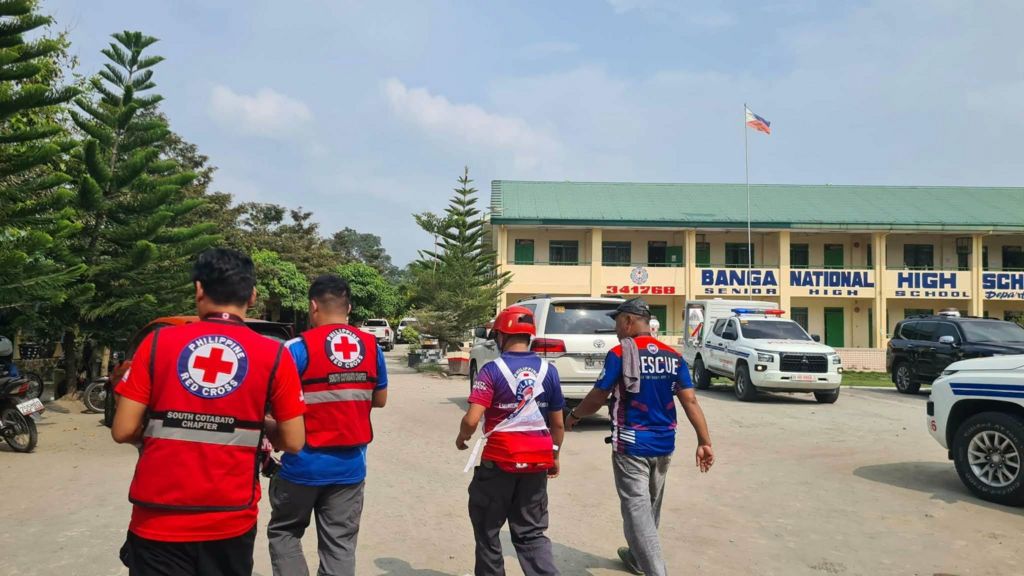
    Manila, Philippines – A sudden pyroclastic flow at one of Southeast Asia’s most iconic active volcanoes forced more than 300 local families to flee their homes this weekend after massive ash clouds blanketed nearby communities, Philippine disaster management officials confirmed Monday.

    Teresito Bacolcol, director of the Philippine Institute of Volcanology and Seismology (PHIVOLCS), clarified that no full explosive eruption occurred at Mayon Volcano, the 2,462-meter peak that has seen intermittent mild eruptive activity since early this year. Saturday’s incident was triggered by the sudden collapse of accumulated lava deposits along the volcano’s southwestern slope, which sent a fast-moving avalanche of superheated gas, ash, and molten rock cascading downhill just before sunset.

    While authorities have not reported any casualties or fatalities linked to the event, the thick ash cloud that erupted from the flow drifted across 87 villages across three Albay province towns, catching residents off guard and creating dangerous travel conditions. Visibility dropped to nearly zero even on major regional highways, slowing vehicle traffic to a standstill in many high-impact areas.

    Caloy Baldo, mayor of Camalig – a town of 8,000 people sitting just below the volcano’s foothills – told the Associated Press that while some residents initially panicked, local emergency teams quickly moved to reassure communities and coordinate evacuations. The ashfall caused widespread damage to local vegetable farms, and resulted in the deaths of four water buffalo and one cow in Camalig, Baldo added. Cleanup operations are already underway across affected parts of the town to clear ash from roads, public infrastructure and residential properties.

    Mayon Volcano, famous for its near-perfect symmetrical cone shape, is one of the Philippines’ most popular tourist attractions. It is also the most active of the country’s 24 active volcanoes. PHIVOLCS raised the volcano’s 5-tier alert system to Level 3 back in January after a string of mild eruptions produced frequent rockfalls – some carrying boulders as large as passenger cars – and intermittent small pyroclastic flows. Under Level 3, the volcano is considered at heightened risk of more hazardous explosive activity.

    As of Monday, surface activity at the volcano has calmed, but the threat of further dangerous events remains, Bacolcol said. The highest alert level, Level 5, indicates an ongoing large-scale explosive eruption that produces life-threatening lava flows, pyroclastic surges, and heavy widespread ashfall.

  • For foreign workers in the Mideast, risk from the Iran war collides with economic strain at home

    For foreign workers in the Mideast, risk from the Iran war collides with economic strain at home

    Across the Gulf Arab states and broader Middle East, millions of low-wage migrant workers from impoverished South Asian, Southeast Asian and African nations are facing an impossible choice rooted in the ongoing conflict between the U.S.-Israel alliance and Iran. For many, the decision is not even their own to make, as the violence has already claimed their lives.

    For 35-year-old Mohammad Abdullah Al Mamun, a Bangladeshi migrant worker who spent 15 years laboring in Saudi Arabia to support his family, the dream of coming home for good ended on March 8. Mamun had only met his 6-year-old son once, just a few short days in a lifetime of separation. This year, he had drawn up careful plans: return to Bangladesh’s Cox’s Bazar, one of the country’s poorest regions, use his years of savings to build a larger family home, and finally build a relationship with the child he barely knew. That dream died when a missile struck the workers’ camp where he was staying. He suffered catastrophic burns and did not survive, becoming one of more than two dozen foreign migrant workers killed in cross-regional attacks since the conflict erupted in February. Earlier this month, Mamun’s body arrived home in a coffin, leaving his widow, mother and siblings to grapple with an uncertain future. “We don’t know what we will do next,” said his widow Sadia Islam Sarmin. His mother Shahida Khatun added, “The pain of losing a child. There are no words to describe the agony.”

    Migrant workers have long been the unseen backbone of the Gulf’s modern oil-fueled economies, making up a majority of the population in many Gulf states. While Western, Arab and Indian professionals hold upper-tier roles in business and finance, low-income laborers from poor Asian and African nations work grueling long hours in extreme desert heat at oil facilities, construction sites and factories, often with minimal legal or safety protections. That lack of protection has been thrown into sharp relief by the recent conflict.

    The Coalition for Labour Justice for Migrants in the Gulf, an advocacy group tracking the crisis, reports that few migrant workers had access to emergency bomb shelters when attacks began, and many were left stranded as conflict disrupted travel and evacuation routes. Waves of missile and drone strikes launched by Iran and its allied armed groups have killed at least 24 foreign workers across the Gulf and another four in Israel, including eight mariners killed at sea. “It’s a very precarious situation for migrant workers,” explained Udaya Wagle, a migration and labor researcher at Northern Arizona University.

    A fragile ceasefire was announced in early April, but efforts to negotiate a permanent end to hostilities have repeatedly stalled. Iran has blockaded the Strait of Hormuz, the world’s most critical chokepoint for global oil and gas exports, stating it will only reopen the waterway if the war ends and the U.S. lifts its economic blockade of Iran. The disruption to global energy supplies has sent prices of gas, fertilizer and essential commodities soaring, hitting already vulnerable importing nations across South and Southeast Asia particularly hard.

    For the low-wage migrant workers caught in the middle, this creates a devastating dilemma. If they stay in the Middle East, they face the constant risk of renewed fighting, but they can earn far higher wages than they could ever access at home—remittances that are often the only lifeline keeping their families out of poverty. If they return home, they leave behind that critical income to return to nations already reeling from skyrocketing prices and economic instability brought on by the conflict.

    Low-wage laborers like Mamun are the most exposed to harm, experts say. They fill what development advocates call the “3D jobs”—dirty, dangerous and difficult—with little access to emergency support. In Qatar, a 27-year-old Bangladeshi factory worker who earns less than $400 a month, sending two-thirds of that salary home to his family, has already seen shrapnel from a strike land near his living quarters. Even as missiles fly overhead, he continues working 12-hour shifts, with no other option to support his family. He spoke on condition of anonymity, fearing retaliation from local authorities. “We have no choice but to keep working,” he said.

    While Qatar introduced limited labor reforms ahead of the 2022 FIFA World Cup, including partial rollback of the controversial kafala system that tied workers’ visas to a single employer, activists say widespread labor abuses persist, and workers have almost no avenues to seek justice for exploitation or danger. That vulnerability is compounded for workers in informal roles, who rarely have fixed contracts or access to emergency benefits.

    Ahmed al-Aliyli, an Egyptian taxi driver based in Qatar, has not been able to send any money home to his family in Egypt for two months. Before the conflict, he earned up to $3,000 a month; now his income has plummeted to just a third of that pre-war level as conflict has disrupted travel and tourism. “We are the collateral damage of this war,” he told reporters.

    Shariful Islam Hasan, a researcher with BRAC, Bangladesh’s largest development organization, warns that an impending slowdown in key Gulf sectors like construction and real estate will hit migrant workers directly. Workers from Bangladesh and Pakistan are disproportionately at risk, he says, because most hold informal, contract-free positions. The labor advocacy coalition adds that even where reforms have been made, many workers’ work permits remain tied to individual employers, leaving them effectively trapped in place even if they want to leave. There are also growing fears that some employers are using the chaos of the conflict to withhold wages, deny emergency leave and carry out arbitrary dismissals with no consequences.

    For most migrant workers, returning home permanently is simply not a viable economic option. Remittances from Gulf workers make up roughly 1% of India’s total GDP, 3% to 5% of GDP for Bangladesh, Pakistan and Sri Lanka, and nearly 10% of Nepal’s entire national output. These remittances are more critical than ever now, as household incomes stagnate across South Asia, and governments struggle to secure enough foreign currency to import energy and essential goods. With their home nations already reeling from economic crisis, giving up Gulf wages would leave many families unable to afford food, energy or education.

    Marlene Flores, a Filipino migrant worker in Qatar, says she feels the shockwaves every time a missile is intercepted over the country. But even with the safety risk, she says the tax-free salary and health benefits she gets in Qatar are more stable than what she could access back home, where the Philippines has declared a national energy emergency. “It’s not easy for me to say,” she admitted, “But I would really stay here.”

    Even in Israel, which hosts a large population of foreign migrant care workers, many face the same impossible calculation. Jeremiah Supan, a Filipino caregiver, continues to care for his two elderly clients even as daily missile alerts force him to dash for cover, sometimes running through active danger to fetch food or medicine for the people he cares for. He knows he could die at any moment, but he cannot see how his family would survive if he gave up his job and returned to the Philippines. “I know that in the blink of an eye, one can die,” he said. “But what life shall we return to?”

    This report is sourced from on-the-ground contributions from journalists across Manila, Dhaka, Cairo and Kuala Lumpur, with reporting coordinated by the Associated Press.

  • A North Korean women’s soccer team is set to play in a tournament in South Korea

    A North Korean women’s soccer team is set to play in a tournament in South Korea

    Six years after the last official visit by North Korean athletes to South Korean soil, a historic moment of cross-border sports exchange is set to take place later this month, offering a rare flash of engagement between two nations technically divided by a decades-long armed conflict.

    North Korea’s Pyongyang-based Naegohyang Women’s Football Club has qualified for the semifinal round of the Asian Football Confederation (AFC) Women’s Champions League, which will be hosted in the South Korean city of Suwon, located roughly 30 kilometers south of Seoul. The match is scheduled for May 20, where Naegohyang will face a rematch against South Korea’s Suwon FC Women, who they defeated 3-0 during the group stage of the continental tournament in Myanmar last November.

    South Korea’s Unification Ministry, the government body responsible for managing inter-Korean relations, confirmed the upcoming visit in an official statement released to reporters on Monday. South Korea’s national governing body for the sport, the Korea Football Association (KFA), added that the AFC has formally communicated that North Korean officials have submitted the required roster of players and support staff traveling to Suwon for the competition. According to the KFA, AFC rules mandate that North Korea will face significant financial penalties from the confederation if the team fails to appear for the scheduled semifinal. The other semifinal fixture will match Australia’s Melbourne City FC against Japan’s Tokyo Verdy Beleza, with the final scheduled to take place just three days after the semifinal round, also in Suwon. Naegohyang earned its spot in the final four after defeating a Vietnamese club in the quarterfinal round held in March this year.

    As of Monday, North Korean state media has not yet made any public announcement of the club’s upcoming trip to South Korea.

    This upcoming match marks the first time that any North Korean athletic delegation has traveled to South Korea since December 2018, when a North Korean table tennis team crossed the border for a friendly competition. That visit came months after North Korean athletes marched alongside a high-level diplomatic delegation during the opening ceremony of the 2018 Pyeongchang Winter Olympics hosted in South Korea, a high point of diplomatic detente between the two neighbors. The last time North Korean female soccer players competed on South Korean territory was during the 2014 Incheon Asian Games, when the North Korean national women’s team participated in the continental multi-sport event.

    Beyond club competition, North Korean women’s soccer has established itself as a global powerhouse in youth international competition in recent years. The country currently holds both the FIFA Under-17 Women’s World Cup and FIFA Under-20 Women’s World Cup titles, defending its status as the top-ranked program in both age groups.

    Despite this moment of cross-border sports engagement, broader inter-Korean relations have remained frozen for years, following the collapse of landmark nuclear diplomacy between North Korean leader Kim Jong Un and then-U.S. President Donald Trump in 2019. Talks between Pyongyang, Seoul and Washington broke down after the two sides failed to reach agreement on the easing of sweeping U.S.-led sanctions imposed on North Korea over its illegal nuclear and ballistic missile programs. In recent months, tensions have escalated sharply, as Kim has accelerated development of North Korea’s nuclear and missile arsenals, with multiple tests targeting both U.S. military allies in Asia and the U.S. mainland. Kim has formally labeled South Korea as Pyongyang’s “most hostile adversary,” and has waged an aggressive campaign to block the spread of South Korean popular culture and language within North Korean borders, cracking down on unapproved outside cultural influence.

    While inter-Korean sports exchanges were once a key confidence-building measure during periods of warmer relations — with the two sides fielding combined teams and marching together under a single unified flag at multiple Olympic Games — all official cross-border athletic activities have ground to a halt in recent years amid the ongoing diplomatic freeze.

  • Israel extends detention of ‘tortured’ Gaza flotilla activists

    Israel extends detention of ‘tortured’ Gaza flotilla activists

    In a development that has drawn sharp international condemnation, an Israeli court has granted a two-day extension to the detention of two pro-Palestinian activists seized by Israeli forces from a Gaza-bound humanitarian flotilla in international waters, their legal representative confirmed Sunday.

    The two detainees — Saif Abu Keshek, a Spanish-Swedish citizen of Palestinian descent, and Thiago Avila, a Brazilian national — were taken into Israeli custody by Israeli authorities late Wednesday after the interception of the Global Sumud Flotilla. More than 100 other fellow activists on board the aid vessel were instead diverted and transferred to the Greek island of Crete following the raid.

    Allegations of abusive treatment have quickly emerged from the detention process. According to Brazil’s embassy in Israel, which conducted an official monitored visit with Avila, the activist reported being tortured, beaten and subjected to ongoing mistreatment while held by Israeli officials. During the visit, which separated Avila from embassy representatives by a glass barrier and prevented open, unmonitored communication, diplomatic staff observed clear visible bruising on his face. Avila also told officials he experiences severe persistent pain, most acutely in his shoulder.

    The Global Sumud Flotilla organization, which coordinated the aid mission, has also backed abuse claims against Abu Keshek, citing direct eyewitness accounts that confirm he was tortured and subjected to severe ill-treatment while held aboard an Israeli military vessel before being transferred to Israeli territory.

    An official spokesperson for the Israeli judiciary confirmed the two-day extension of the activists’ remand, pushing their next custody review to May 5. Israeli authorities had originally petitioned the court for a four-day extension of detention, basing their request on a series of contested criminal allegations against the pair.

    Adalah, the Israeli legal rights group representing the two activists, has publicly outlined the charges: assisting an enemy during wartime, unauthorized contact with a foreign agent, membership in a terrorist organization, providing services to a designated terrorist group, and transferring property to terrorist actors. Both Abu Keshek and Avila have formally rejected all allegations against them.

    Hadeel Abu Salih and Lubna Tuma, the Adalah solicitors arguing the case before the Israeli court, emphasized that the entire legal proceedings against the foreign activists are fundamentally “flawed and illegal.” The legal team noted there is no valid legal basis for applying Israeli criminal law extraterritorially to actions carried out by foreign nationals in international waters, where the flotilla was intercepted. Abu Salih further added that both men were subjected to physical violence during their transfer to Israel, and were held continuously handcuffed and blindfolded from their arrest through Thursday morning.

    As of Sunday, the Israeli military had not issued an immediate response to a request for comment from Reuters on the abuse allegations. Israel’s Foreign Ministry has previously labeled organizers of the Global Sumud Flotilla as “professional provocateurs.”

    The mission that ended in interception is the second Global Sumud Flotilla, which set off from the Spanish port of Barcelona on April 12 with the explicit goal of breaking Israel’s long-running aerial, land and sea blockade of the Gaza Strip by delivering desperately needed humanitarian aid to the besieged enclave. In response to the arrests, the governments of Spain and Brazil released a joint official statement Friday branding the detention of the two activists as illegal under international law.

  • Green Party leader Zack Polanski condemns ‘vile antisemitic caricature’ in The Times

    Green Party leader Zack Polanski condemns ‘vile antisemitic caricature’ in The Times

    A major political and media controversy has swept the United Kingdom this week, centered on a deeply divisive cartoon published by The Times of London depicting Green Party leader Zack Polanski, who is openly Jewish. Polanski and his party have lambasted the national newspaper for running what they describe as a blatantly antisemitic caricature, echoing harmful age-old tropes about Jewish people.

    The cartoon depicts Polanski with an exaggerated hooked nose — a visual trope long used to dehumanize Jewish people in antisemitic propaganda — kicking police officers who were in the process of arresting Essa Suleiman, the 45-year-old Somali-born British suspect in a recent stabbing attack in Golders Green, a heavily Jewish neighborhood in northwest London. Suleiman stands accused of stabbing two Jewish men in the attack, alongside a separate charge of attempted murder for a separate incident earlier the same day where he allegedly targeted a Muslim acquaintance of 20 years, Ishmail Hussein.

    The illustration references circulating cell phone footage that appears to show arresting officers repeatedly kicking Suleiman in the head during his apprehension. After the attack, Polanski publicly condemned the stabbings, but later retweeted a post on the social platform X that raised questions about the officers’ use of force during the arrest. That retweet sparked immediate backlash from senior political and law enforcement figures across the UK.

    Metropolitan Police Commissioner Mark Rowley released an open public letter to Polanski expressing his disappointment with the Green leader’s response, a move that prompted its own criticism from observers who questioned the police’s commitment to political impartiality and called for the letter to be withdrawn.

    Top politicians have levied harsh criticism at Polanski in the wake of the incident. Former Conservative minister and current Reform UK figure Robert Jenrick went so far as to accuse Polanski of being “on the side of terrorists”, while UK Prime Minister Keir Starmer labeled Polanski’s criticism of officer conduct “disgraceful” and claimed he was “not fit to lead any political party”.

    Polanski has hit back at these attacks, noting that he is the only Jewish leader of a national political party in the UK, and accusing Starmer of weaponizing antisemitism to score cheap political points. He added that he already faces persistent antisemitic abuse on a daily basis, revealing that two separate people have been arrested for antisemitic actions targeting him in just the last six weeks. He also shared that he was targeted with a Nazi salute by a Reform UK supporter at a recent rally in Hastings.

    The Green Party has confirmed it filed an official complaint with The Times editor Tony Gallagher over the cartoon, saying it is “astonishing” that a major national outlet would choose to publish such imagery at a time when antisemitic sentiment and violence are rising across the UK. In a statement, the party condemned what it called the “deeply irresponsible” rhetoric from both senior politicians and media outlets, arguing that their attacks open Polanski up to further targeted harm in the aftermath of a violent attack on the Jewish community he is part of.

    Speaking in an interview with BBC’s Laura Kuenssberg on Sunday, Polanski confirmed that The Times has yet to issue an apology or withdraw the offensive caricature. He later issued an apology for sharing the retweet questioning officer conduct, acknowledging that X was not an appropriate forum to raise concerns about police behavior. He did, however, stand by his view that all public servants, including police officers, should be open to scrutiny, and noted he has requested a meeting with Rowley to resolve the tensions between him and the Met.

    In further developments related to the case, the Metropolitan Police confirmed last Friday that Suleiman — who had only been released from a psychiatric hospital days before the attacks — would not face terrorism charges. He has instead been charged with three counts of attempted murder and one count of illegal possession of a bladed weapon in public.

    The Golders Green attack has already become a flashpoint in ongoing national debates about pro-Palestine protests, which have been held across the UK since the outbreak of the 2023 Israel-Gaza war. Starmer and other senior politicians have seized on the attack to call for greater restrictions on pro-Palestine marches, even suggesting that some demonstrations could be banned entirely, and that offensive language used during protests should be policed.

    When Kuenssberg asked Polanski whether he agreed with Starmer’s labeling of the common protest chant “globalise the intifada” as racist, Polanski rejected the prime minister’s framing. He reaffirmed his support for freedom of speech and freedom of protest in the UK, arguing that policing protest language would do nothing to improve safety for Jewish communities. Noting that the term intifada originally refers to uprisings against Israeli occupation in the 1980s, Polanski pointed out that the occupation remains ongoing, making public discussion of the issue a legitimate and necessary part of public discourse. He added that he opposed creating new laws to restrict protest, and instead called for protections for peaceful protest activity.

    On the question of whether the Green Party takes the threat of antisemitism seriously, Polanski noted that Jewish safety is not an abstract issue for him as a Jewish community member. He acknowledged that no political party has fully eliminated antisemitism within its ranks, and agreed that all parties need to expand anti-racism training and improve candidate vetting to address antisemitism, Islamophobia and all other forms of racism across the political spectrum.

  • Japanese PM reaffirms intention to revise Constitution

    Japanese PM reaffirms intention to revise Constitution

    On Japan’s Constitution Memorial Day, Prime Minister Sanae Takaichi publicly reaffirmed her long-stated goal to amend the nation’s 1947 pacifist Constitution, a step that would mark the first change to the country’s founding legal framework since it took effect more than 70 years ago, according to reports from local Japanese media.

    Takaichi delivered her remarks via pre-recorded video at a rally organized by supporters of constitutional revision, framing the push for change as a necessary update for modern Japan. She argued that the post-World War II supreme law, which has anchored the nation’s governance for decades, needs periodic adjustments to align with shifting contemporary societal and geopolitical demands, Kyodo News reported.

    As leader of the ruling Liberal Democratic Party (LDP), Takaichi noted her administration will push forward with substantive deliberations in the Diet, Japan’s national parliament, and work to secure cross-party buy-in to advance the amendment process toward a final vote. The LDP has prioritized constitutional reform for years, with the most contentious proposed change centered on Article 9, the iconic clause that formally renounces war as a tool of state policy and prohibits Japan from maintaining formal offensive military capabilities.

    This clause has been the cornerstone of Japan’s pacifist foreign and defense policy since the end of World War II, and any alteration to its text would represent a seismic shift in the nation’s global security posture. Takaichi first ramped up public pressure for reform at an LDP party convention held on April 12, where she declared that the moment for constitutional change has arrived. She told attendees at that event that the party aims to have a concrete constitutional amendment proposal ready for presentation at the 2027 LDP annual convention. That announcement has already triggered widespread public pushback, with large-scale protests drawing crowds of opponents to the Japanese parliament building in Tokyo as recently as mid-April, where demonstrators called for the preservation of Article 9 in its original form.