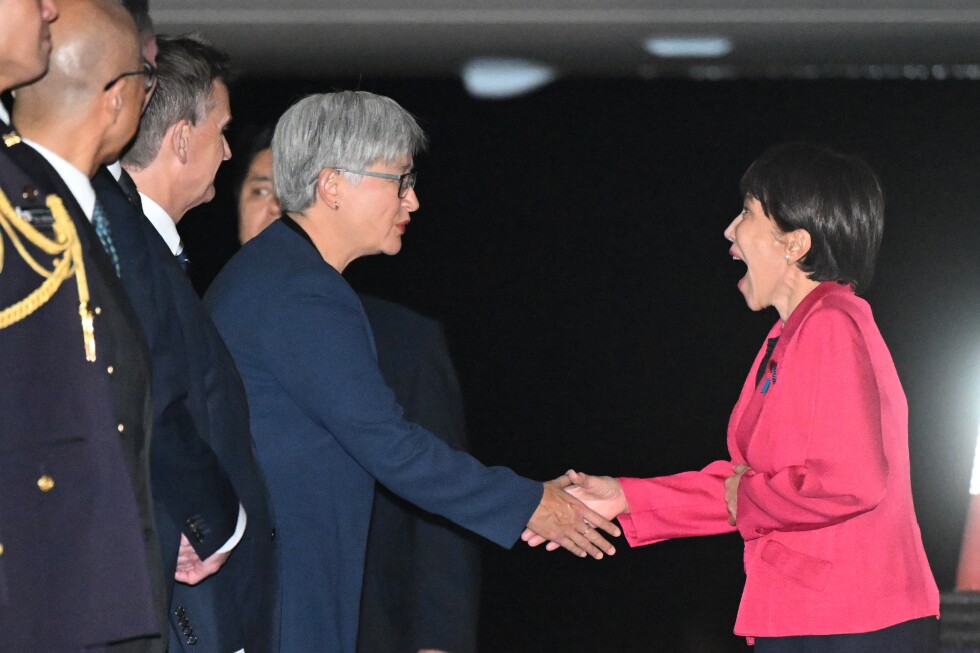
CANBERRA, Australia – In a landmark first visit to Australia by Japan’s sitting Prime Minister Sanae Takaichi, the top leaders of the two Indo-Pacific nations have pledged to expand comprehensive strategic cooperation across energy security, defense collaboration, and critical minerals development, as escalating conflict in Iran raises fresh fears of disruption to global supply chains.
Takaichi held official strategic talks with Australian Prime Minister Anthony Albanese at Australia’s Parliament House in Canberra on Monday, covering a broad swath of regional and global issues ranging from China’s regional influence, developments in Southeast Asia and Pacific Island nations, to nuclear non-proliferation and the ongoing issue of North Korean abductions of Japanese citizens.
Addressing reporters after the closed-door discussions, Takaichi emphasized that any prolonged disruption to shipping through the Strait of Hormuz — a critical chokepoint for 20% of the world’s daily oil trade — would send severe shockwaves through the Indo-Pacific region. “We affirmed that Japan and Australia will maintain close communication and respond to this developing situation with a strong sense of urgency,” she said via an interpreter.
Bilateral energy ties already form a backbone of the two nations’ relationship: Australia currently supplies nearly half of Japan’s total liquefied natural gas imports, while Japan ranks among Australia’s top five suppliers of refined gasoline and diesel. This existing partnership has taken on new urgency in recent months, after Israeli and U.S. strikes on Iranian targets starting in February triggered supply chain disruptions that forced Albanese to embark on a regional tour of Singapore, Brunei and Malaysia in recent weeks to shore up Australian fuel supplies.
Albanese noted that the new set of bilateral agreements reached Monday would protect both nations from growing global volatility. “For Australians, it will mean we are less vulnerable to global shocks like we are seeing right now because of conflict in the Middle East,” he said. “Our joint statement on energy security reaffirms our commitment to navigate the current energy crisis together and maintain open trade flows of essential energy goods including liquid fuels and gas.”
A core new commitment in the agreements elevates critical minerals cooperation to a central pillar of the bilateral economic security relationship, directly targeting China’s dominant grip on global heavy rare earth processing — a sector critical to manufacturing heat-resistant high-strength magnets used in defense systems and electric vehicle batteries. The joint statement issued by both leaders explicitly raised “strong concerns over all forms of economic coercion, and the use of non-market policies and practices that are leading to harmful overcapacity and market distortions, as well as export restrictions, particularly on critical minerals.” To advance this partnership, the Australian government will commit up to 1.3 billion Australian dollars (US$930 million) to support joint critical minerals development projects involving Japanese partners.
The talks also produced new advances in defense cooperation, coming just two weeks after Japanese and Australian defense ministers signed contracts to launch construction of a AU$10 billion (US$6.5 billion) fleet of Japanese-designed frigates for the Royal Australian Navy. Under the deal, Mitsubishi Heavy Industries will build the first three Mogami-class frigates in Japanese shipyards, with an additional eight vessels to be constructed locally at a Western Australian shipyard.
In a light-hearted moment following the formal talks, Albanese — an amateur disc jockey who performs at charity events under the stage name DJ Albo — joked about Takaichi’s well-documented passion for heavy metal music. “Sanae and I will spend more time together later today and we will continue our discussions including on issues like heavy metal music and other important matters of state,” he said.
Albanese added that the expanded partnership will deliver tangible benefits to residents of both nations, as the world grapples with growing geopolitical uncertainty that threatens global trade and economic stability.