SYDNEY, Australia — One month after a father-son terrorist attack left 15 Jewish worshipers dead at a Hanukkah gathering on Sydney’s iconic Bondi Beach, Australia’s highest-level formal inquiry into growing antisemitism and social cohesion has convened its first public hearings, kicking off a two-week examination of how hate targeting Jewish communities has spread across Australian institutions and broader society. The massacre, which authorities confirmed was inspired by the Islamic State group, marked the deadliest antisemitic attack in modern Australian history and came amid an unprecedented nationwide surge in hate crimes against Jewish people that has shaken a community long unaccustomed to such widespread levels of threat.
The attack was carried out by Sajid and Naveed Akram, a father and son who were legally licensed to own the firearms they used – a striking detail in a country that has kept some of the world’s strictest gun control regulations for nearly 30 years, following the 1996 Port Arthur massacre. Sajid Akram was killed by responding police at the scene, while Naveed Akram survived his wounds and has been charged with terrorism, 15 counts of murder, and 40 counts of attempted murder; he has not entered any pleas to the charges.
In opening remarks at Monday’s first sitting, commission head Virginia Bell connected the sharp rise in Australian antisemitism to parallel surges across Western nations, noting the clear tie between escalating tensions and the outbreak of the Israel-Hamas war in October 2023. “It’s important that people understand how quickly those events can prompt ugly displays of hostility toward Jewish Australians simply because they’re Jews,” Bell said. Additional hearings on targeted topics will be held throughout the year, with the commission’s final binding report and policy recommendations due for publication in December.
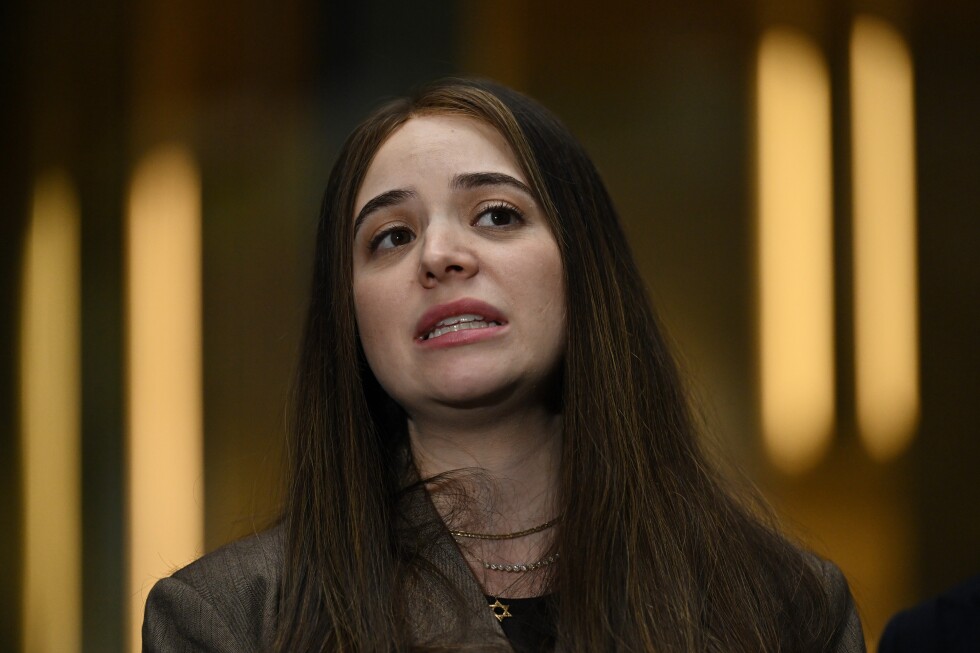
All witnesses who appeared before the commission on opening day were Jewish Australians, many of whom requested to testify under pseudonyms to protect their personal safety from further harassment. For community members, the hearing was a chance to lay bare the daily fear that has reshaped life for Australia’s small Jewish population after a year of mounting attacks. Sheina Gutnick, the daughter of 62-year-old victim Reuven Morrison – who died after charging one of the gunmen with a brick to stop the attack – recounted a harassment incident she experienced a year before the massacre: while walking through a Sydney shopping mall carrying her infant child, a stranger verbally abused her after spotting her Star of David necklace, with no bystanders stepping in to intervene. “I felt shocked, exposed and unsafe,” Gutnick told the commission. She added that she now avoids large public family gatherings and hesitates to travel to certain neighborhoods across Sydney.
Data presented to the inquiry underscores the scale of the surge: in the 12 months following the October 2023 start of the Israel-Hamas war, more than 2,000 antisemitic incidents were reported to the Executive Council of Australian Jewry, which tracks hate crime against Australian Jewish communities. That figure represents a more than fourfold increase from the previous annual record of just under 500 incidents recorded the year before the war. While similar increases have been documented in the United Kingdom and other Western countries, witnesses told the commission the speed and severity of the shift has been particularly jarring for Australia’s tight-knit Jewish community, which had never before faced such a volume of serious, violent threats.
Toby Raphael, vice president of Sydney’s Newtown Synagogue, which was defaced with swastikas during a 2025 wave of antisemitic attacks, told the commission that constant fear has become the new normal for Australian Jews. “Now everyone is scared all the time,” Raphael said. He recalled that just a few years ago, he had reassured synagogue congregants that no security was needed for weekly services; today, the synagogue is guarded, and Raphael serves on a parent-led security team at his son’s Jewish day school, which is also protected by armed professional security guards. “Why do kids have to go to school like that? This is the world that the Jews of Australia live in now and it needs to change,” he said.
The rise in high-profile antisemitic attacks predated the Bondi Beach massacre: last August, the Australian government cut diplomatic ties with Iran after concluding the Iranian state had orchestrated at least two separate antisemitic attacks on Australian soil. Many witnesses told the commission the ongoing escalation has pushed them to consider leaving Australia entirely to seek safety for their families elsewhere. Alex Ryvchin, a leader of a major Australian Jewish organization whose home was targeted in an arson attack in early 2025, told the commission he had warned for months that the unaddressed rise in antisemitism would lead to mass casualties. “This was January, and by December there was a horrific massacre which has transformed us permanently,” Ryvchin told the hearing. He added that he now believes Australia is “on a path to catastrophe” if urgent action is not taken.
The Bondi Beach massacre has also reignited national debate over gun regulation in Australia, a policy area that has remained largely settled since the 1996 Port Arthur shooting that led to the country’s strict current laws. The Royal Commission released an interim report in April that examined gaps in law enforcement and security response to antisemitic crime, and recommended that Australian policymakers prioritize passing nationally consistent gun laws and implementing a new national weapons buyback program. Federal and state governments are currently reviewing the proposal and considering further regulatory changes.