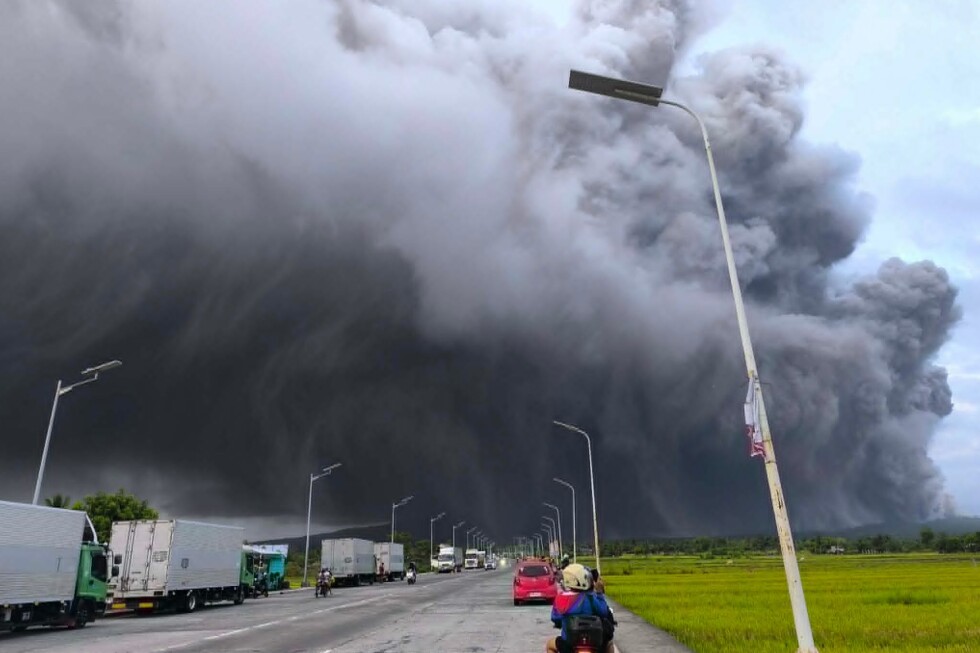
Manila, Philippines – A sudden pyroclastic flow at one of Southeast Asia’s most iconic active volcanoes forced more than 300 local families to flee their homes this weekend after massive ash clouds blanketed nearby communities, Philippine disaster management officials confirmed Monday.
Teresito Bacolcol, director of the Philippine Institute of Volcanology and Seismology (PHIVOLCS), clarified that no full explosive eruption occurred at Mayon Volcano, the 2,462-meter peak that has seen intermittent mild eruptive activity since early this year. Saturday’s incident was triggered by the sudden collapse of accumulated lava deposits along the volcano’s southwestern slope, which sent a fast-moving avalanche of superheated gas, ash, and molten rock cascading downhill just before sunset.
While authorities have not reported any casualties or fatalities linked to the event, the thick ash cloud that erupted from the flow drifted across 87 villages across three Albay province towns, catching residents off guard and creating dangerous travel conditions. Visibility dropped to nearly zero even on major regional highways, slowing vehicle traffic to a standstill in many high-impact areas.
Caloy Baldo, mayor of Camalig – a town of 8,000 people sitting just below the volcano’s foothills – told the Associated Press that while some residents initially panicked, local emergency teams quickly moved to reassure communities and coordinate evacuations. The ashfall caused widespread damage to local vegetable farms, and resulted in the deaths of four water buffalo and one cow in Camalig, Baldo added. Cleanup operations are already underway across affected parts of the town to clear ash from roads, public infrastructure and residential properties.
Mayon Volcano, famous for its near-perfect symmetrical cone shape, is one of the Philippines’ most popular tourist attractions. It is also the most active of the country’s 24 active volcanoes. PHIVOLCS raised the volcano’s 5-tier alert system to Level 3 back in January after a string of mild eruptions produced frequent rockfalls – some carrying boulders as large as passenger cars – and intermittent small pyroclastic flows. Under Level 3, the volcano is considered at heightened risk of more hazardous explosive activity.
As of Monday, surface activity at the volcano has calmed, but the threat of further dangerous events remains, Bacolcol said. The highest alert level, Level 5, indicates an ongoing large-scale explosive eruption that produces life-threatening lava flows, pyroclastic surges, and heavy widespread ashfall.