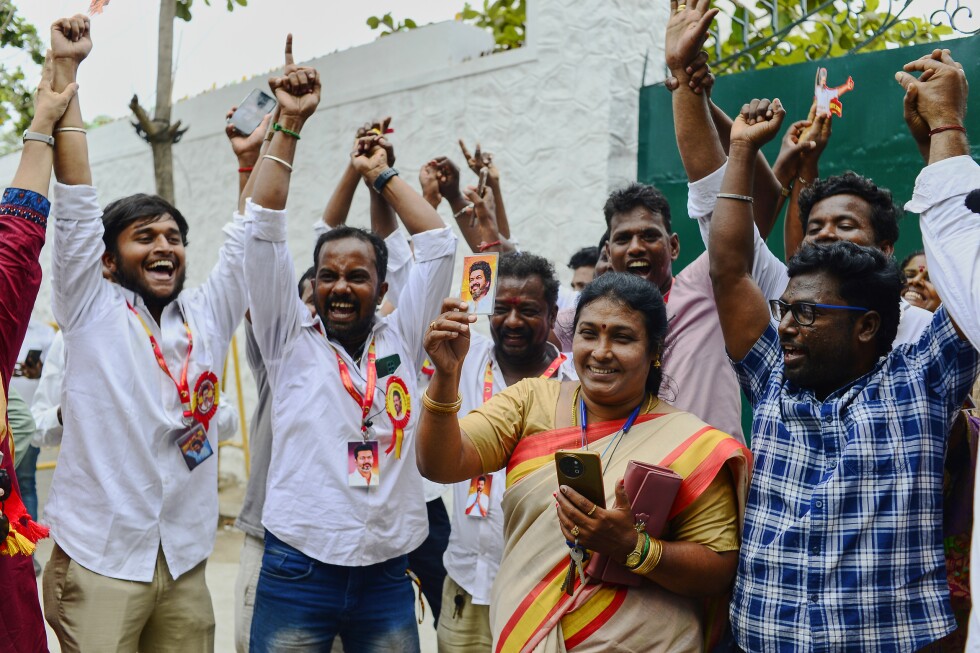
NEW DELHI – A series of staggered state elections across India are on track to reshape the country’s national political balance, with Prime Minister Narendra Modi’s ruling Bharatiya Janata Party (BJP) positioned to secure a historic breakthrough in West Bengal, one of the opposition’s longest-held strongholds.
Partial results released by India’s Election Commission show the Hindu nationalist BJP leading in at least 190 of the 294 seats in West Bengal’s state legislative assembly, with final official counts scheduled to be confirmed by Monday evening. If the projected results hold, this will mark the first time the BJP has claimed governing power in West Bengal, a politically critical state where the All India Trinamool Congress (AITC), led by Modi’s most vocal national critic Mamata Banerjee, has held office since 2011. Banerjee’s party spent more than a decade building a regional political fortress in the state, and the BJP’s efforts to unseat her administration have stretched across multiple election cycles.
The projected outcome already carries major national ramifications for Modi midway through his third term as prime minister. Following the 2024 general election, the BJP was forced to rely on a coalition of smaller regional allies to form a majority government. A historic win in West Bengal is expected to bolster Modi’s domestic political standing, cement his authority within the ruling alliance, and clear a path for his planned 2029 campaign for a fourth consecutive term – a record in modern Indian politics.
For India’s fragmented national opposition, the projected loss in West Bengal represents a severe setback. Banerjee had positioned herself as the de facto leader of a loose coalition of regional anti-BJP parties, working to unify disparate opposition groups against the ruling party’s nationwide dominance. Her defeat is expected to weaken her bargaining power within the already divided opposition bloc, which has long struggled to put forward a unified, sustained challenge to Modi’s popularity.
The West Bengal poll has already been mired in controversy, with opposition leaders issuing sharp criticism after the Election Commission removed millions of names from the state’s electoral rolls ahead of voting. The election commission’s decision to purge the voter rolls sparked widespread accusations of bias favoring the ruling BJP, claims that have added tension to the already high-stakes contest.
West Bengal is not the only state facing a political shift in this round of India’s regularly scheduled state elections, which are held on staggered cycles across the country’s 28 states and 8 federal territories. Three other states also held elections alongside West Bengal, each delivering surprising results that upend local political orders.
In the southern developed state of Tamil Nadu, a relatively new political party led by massively popular Tamil film star Joseph Vijay is on track to oust the incumbent DMK government. Vijay launched his Tamilaga Vettri Kazhagam party just two years ago, marking one of the fastest political rises in modern Indian politics – a path that mirrors a longstanding tradition in Tamil Nadu, where film stars have repeatedly won election to the state’s highest office.
In Kerala, another southern Indian state, the opposition bloc led by the Indian National Congress is projected to defeat the incumbent Communist Party of India (Marxist) government, ending decades of continuous leftist rule in one of the last remaining strongholds of communist governance in India.
In the northeastern state of Assam, meanwhile, Modi’s BJP is set to return to power for a third consecutive term, extending its hold on the region and solidifying its status as the dominant political force across most of India.