标签: Asia

亚洲

  • Old and new Gulf faultlines exposed by Iran war

    Old and new Gulf faultlines exposed by Iran war

    On April 28, the United Arab Emirates (UAE) made a landmark announcement that it would withdraw from the Organization of the Petroleum Exporting Countries (OPEC), a move that lays bare how ongoing Middle East conflict has not only deepened hostilities between Iran and its Gulf neighbors, but also fractured unity within the Gulf Cooperation Council itself.

    Founded in 1960, OPEC stands out as one of the few enduringly successful multilateral bodies in the Middle East. For decades, its coordinated pricing and production policies enabled Gulf oil-producing states to accumulate the capital needed to renationalize their energy resources and fund the rapid, transformative development that turned small desert nations into global economic players. The bloc has weathered nearly every regional upheaval, revolution and war in its 65-year history, even after Qatar departed in 2019 amid a regional blockade led by its Gulf neighbors.

    For years, tension has simmered between the UAE and Saudi Arabia, OPEC’s largest producer and de facto leader, which holds outsized influence over the bloc’s policy decisions. The UAE has long pushed to raise its own production quota, leveraging its untapped spare oil capacity, but repeated attempts have failed to yield changes that align with its economic goals. Yet industry friction alone does not explain the UAE’s decision to exit the organization entirely.

    Though the two Gulf powers maintained close alignment through the mid-2010s, the UAE and Saudi Arabia have drifted steadily apart in recent years, driven by sharp divergences on key regional priorities. Their strategies for ongoing conflicts in Yemen and Sudan differ dramatically, as do their approaches to normalization with Israel: the UAE established full formal relations with Israel in 2020, while Saudi Arabia has pledged it will only normalize ties once an independent Palestinian state is established. Beyond geopolitics, the two nations have emerged as fierce economic competitors, and the ongoing regional war connected to Iran has only accelerated their rivalry.

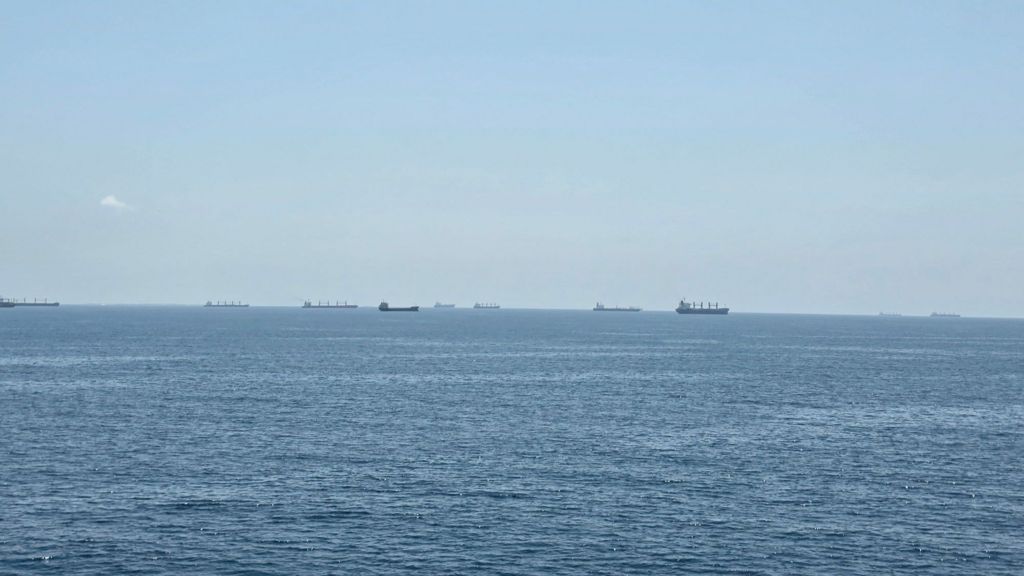
    After Iran responded to U.S.-Israeli attacks in February with strikes across Gulf states and a blockade of the strategic Strait of Hormuz, the conflict has laid bare the flaws in existing regional strategies. For Saudi Arabia, the war has exposed the limits of its gradual outreach to Iran and its reliance on the U.S., which is firmly aligned with Israel. In response, Riyadh has deepened defense cooperation with nuclear-armed Pakistan, a shift that has caused significant friction with the UAE, which maintains close strategic ties with Pakistan’s regional rival India. The UAE has publicly pushed Pakistan to issue a stronger condemnation of Iran during the current conflict, a demand Islamabad cannot meet due to its role as a neutral mediator in regional peace talks. Frustrated by Pakistan’s position, the UAE recently demanded Islamabad repay a $3.5 billion loan, only for Saudi Arabia to immediately step in with emergency financial support for Pakistan.

    Notably, the UAE’s OPEC withdrawal announcement was timed to coincide with a Gulf Cooperation Council summit in Riyadh, where leaders gathered to try to find common ground on the ongoing Iran conflict. The timing was widely interpreted as a deliberate public snub to Saudi leadership.

    The regional war has reignited a host of long-simmering disputes across the Gulf, including the decades-long sovereignty conflict between the UAE and Iran over three strategic islands: Abu Musa, Greater Tunb, and Lesser Tunb. Iran seized control of the islands in 1971, the same year the UAE gained independence from Britain, and the islands give Iran unrivaled strategic control over Gulf shipping lanes. The UAE has never relinquished its claim to the territory, while Iran maintains the islands have always been part of its sovereign territory. Historians believe the handover of the islands was part of a secret deal between Britain and the Shah of Iran in the early 1970s, in which the Shah agreed to abandon Iran’s long-held claim to Bahrain in exchange for control of the three islands. Access to historical records of these negotiations remains restricted, with multiple freedom of information requests for 1960s-era UK Foreign Office documents denied on national security grounds.

    Beyond the UAE-Saudi and UAE-Iran rifts, the conflict has hit other Gulf states hard. Kuwait, a small northern Gulf state, has faced repeated attacks from Iran-aligned Shia militias based in Iraq, a wave of violence that has revived traumatic memories of Iran-linked political unrest in the 1980s and Saddam Hussein’s 1990 invasion that left much of the country, including coastal Failaka Island, damaged and abandoned.

    Economically, the war has hit Gulf states unevenly. Nations that lack alternative shipping routes to bypass the blockaded Strait of Hormuz – including Bahrain, Kuwait, and Qatar – have suffered the worst economic damage. Bahrain, which already runs persistent budget deficits, relies on aid from wealthier Gulf neighbors to keep its economy afloat. By contrast, the UAE, Saudi Arabia, and Oman all have geographic access to alternative shipping routes that allow them to bypass Hormuz entirely. In fact, Oman, which controls one bank of the strait, could emerge as a long-term beneficiary of the disruption: it could earn revenue by charging tolls for alternative shipping routes under a new agreement with Iran, or see its Arabian Sea ports grow in global significance, potentially reviving its historical status as a major regional trading power. That outcome, however, is unwelcome to both the UAE and Saudi Arabia, which prefer to maintain their dominance of Gulf energy shipping.

    In sum, the U.S.-Israeli strike on Iran that triggered the current crisis has reactivated long-buried fault lines across the Gulf and created new divisions between regional states. It has also undermined the few remaining channels for multilateral regional cooperation, turning an already fragmented and volatile region even more unstable. This analysis is by Toby Matthiesen, Senior Lecturer in Global Religious Studies at the University of Bristol, republished with permission from The Conversation under a Creative Commons license.

  • Trump likes the idea of the government owning some US companies but took a pass on Spirit Airlines

    Trump likes the idea of the government owning some US companies but took a pass on Spirit Airlines

    WASHINGTON — In a striking break from decades of Republican ideological orthodoxy, U.S. President Donald Trump has embraced a new role for the federal government as an activist investor in the private sector — a policy shift that recently led to the collapse of a potential government rescue of cash-strapped budget carrier Spirit Airlines, which ceased operations Saturday after talks reached an impasse.

    For years, Trump has railed against political opponents as communists, framing himself as a defender of the free-market principles that turned the U.S. into a global superpower. But since returning to the Oval Office, he has openly championed government ownership of equity stakes in major domestic companies, casting the strategy as a way to both shore up U.S. economic security and turn a profit for American taxpayers.

    The demise of Spirit highlights how this new approach operates. The discount airline was pushed to the brink of collapse by spiking fuel costs tied to the ongoing Iran war, and the Trump administration had weighed a $500 million deal that would give the federal government a controlling stake in the Florida-based carrier. Speaking to reporters Friday, a day before Spirit halted operations, Trump insisted any government investment would only move forward “only if it’s a good deal.” “If we can help them, we will,” he said. “But we have to come first.” He did not immediately issue a public statement addressing the airline’s shutdown after it was finalized.

    Trump has pointed to his administration’s earlier investment in chip giant Intel as proof of concept for the strategy. He has monitored the company’s stock performance closely, and this week took to social media to boast that the U.S. government had netted more than $30 billion in gains from the Intel stake over the previous 90 days. That investment, which converted loans and grants allocated under the Biden administration’s 2022 CHIPS and Science Act into an $11.1 billion equity purchase, came even as Trump used his 2025 address to Congress to label the CHIPS Act a “horrible, horrible thing” and called on Republican congressional majorities to claw back unspent funding to reduce the federal deficit.

    The Spirit and Intel deals are far from isolated moves. A review of the Trump administration’s actions shows a growing portfolio of government equity holdings and state-backed interventions across key U.S. economic sectors:
    – The administration holds a “golden share” in U.S. Steel that limits operational autonomy for new owner Japan’s Nippon Steel
    – Officials brokered an agreement that gives the U.S. government a cut of chip sales to China made by American firms Nvidia and AMD
    – The government has invested in MP Materials, a U.S. rare earths producer, to break China’s dominant grip on the supply of critical minerals needed for smartphones, electric vehicles and advanced defense technologies
    – Additional equity stakes have been taken in Lithium America, Trilogy Metals and Vulcan Elements, with preferential financing extended to energy and nuclear firms Westinghouse and ReElement Technologies
    – The administration abandoned plans to end federal conservatorship of mortgage giants Fannie Mae and Freddie Mac, a policy Trump initially pursued during his first term. Speaking Friday, Trump argued that holding onto the companies had increased their value, noting “If I would have sold it, I would have felt like a schmuck.”

    Beyond equity investments, Trump has built close, often transactional ties with corporate leadership. He speaks regularly with CEOs by phone, but has also pressured firms to align with his policy agenda: he ordered retail giant Walmart not to raise prices to offset costs from his tariffs, and suggested he would “remember” favorably companies that declined to seek refunds after the U.S. Supreme Court ruled his tariffs were illegal.

    The ideological contradiction at the heart of Trump’s policy has drawn intense scrutiny from both supporters and critics. During his 2024 presidential campaign, Trump repeatedly labeled the Biden administration communist and socialist, telling a Pennsylvania crowd in April 2024 “We will cast out the communists… We will liberate our country from these tyrants and villains once and for all.” In contrast, Joe Biden consistently framed himself as a committed capitalist who supported corporate profit so long as companies paid their fair share of taxes; while the Biden administration did extend loans and grants to domestic chipmakers as part of industrial policy, those investments were structured to follow formal legislation passed by Congress.

    Critics argue Trump’s approach is driven more by a pursuit of power and personal ego than coherent policy. “This is entirely a reflection of a transactional-minded president who wants unilateral control of the economy,” said Tad DeHaven, a policy analyst at the libertarian Cato Institute. “At the end of the day, it is about power, it is about leverage and it is about control.” Even some congressional Republicans have pushed back: Sens. Ted Cruz of Texas and Tom Cotton of Arkansas publicly objected to the proposed Spirit Airlines bailout.

    But supporters counter that the strategy is a pragmatic response to growing Chinese economic competition, pointing out that Chinese state-supported firms can operate with little regard for short-term profits, undercutting U.S. manufacturers and threatening America’s standing as a global technological and military leader.

    “This is a strategic move, necessitated by the growth of China as an economic peer and rival,” said Sujai Shivakumar, a senior fellow at the Washington-based Center for Strategic and International Studies. “The key point is that we should not sacrifice our national economic and industrial framework in the name of ‘free markets’ or other ideologies. Pragmatism, in various forms of industrial and innovation policy, have always been a feature of our economic system since the very beginning of our republic.”

    Outside analysts agree with the core logic of leveling the playing field against subsidized foreign competitors but warn that Trump’s unilateral, ad-hoc approach carries significant risks. “It is unclear whether the Trump administration has fully grasped the risks of ‘making some bad bets,’” said Monica Gorman, a managing director at Crowell Global Advisors who led manufacturing and industrial policy work in the Biden White House. Gorman stressed that a formal legislative framework is needed to govern these investments, rather than relying on the president’s personal discretion. “Congress really needs to step in and design a legislative framework for U.S. industrial policy that governs equity stakes as well as other mechanisms such as loans and grants,” she said. “All of these are important tools in the U.S. industrial policy toolkit, but we need more guidance on when and how to use them.”

  • Jacobs powers New Zealand to 6-wicket win over Bangladesh to level T20 series

    Jacobs powers New Zealand to 6-wicket win over Bangladesh to level T20 series

    On a rain-disrupted match day in Mirpur, Bangladesh, debutant batter Bevon Jacobs delivered a career-defining innings to drag New Zealand back from the brink of defeat, securing a six-wicket victory over Bangladesh in the third and final T20 of their three-match series on Saturday. The result left the all-square series tied at 1-1, after the hosts claimed a six-wicket win in the opening fixture and the second match was washed out entirely by bad weather.

    Bangladesh, sent into bat first by New Zealand, got off to a rocky start that foreshadowed their eventual collapse. The hosts lost their first three wickets in just 14 deliveries, slumping to 50-3 after 6.4 overs before a heavy rainstorm halted play for more than two hours. The match was cut to a 15-over-per-side contest when play resumed, and Bangladesh’s aggressive all-out attacking strategy backfired spectacularly. The hosts lost their final seven wickets for only 39 runs off 35 balls, being bowled out for 102 in 14.2 overs.

    Towhid Hridoy top-scored for Bangladesh with 33 runs, while captain Litton Das contributed 26 and opener Saif Hassan added 16. No other Bangladesh batter reached double figures, capping off a dismal batting performance. For New Zealand, pacer Josh Clarkson put in a career-best display, claiming 3 wickets for just 9 runs in his two overs. Fast bowlers Ben Sears and Nathan Smith supported Clarkson with two wickets each, tearing through Bangladesh’s lower order. Leg-spinner Ish Sodhi also made history, picking up 1 wicket for 22 runs to overtake Tim Southee as New Zealand’s leading T20 wicket-taker with 165 career wickets, one more than Southee’s 164.

    New Zealand’s chase got off to a disastrous start, putting the tourists firmly on track for a series defeat. Pacer Shoriful Islam gave Bangladesh a massive early advantage, claiming three wickets for only four runs in his opening two overs, leaving New Zealand reeling at 25-3 after just four overs. Off-spinner Mahedi Hasan extended the hosts’ momentum by dismissing stand-in captain Nick Kelly soon after, dropping New Zealand to 33-4 and leaving the side in a precarious position.

    But Jacobs, playing in the early stages of his international career, turned the tide of the match single-handedly. Captain Das kept Shoriful in the attack, and Jacobs responded by hammering consecutive boundaries off the pacer to ease mounting pressure on New Zealand. The young batter brought up his maiden international half-century off 29 balls, finishing the innings unbeaten on 62 runs off just 31 deliveries, a knock that included five fours and three towering sixes. Jacobs sealed the victory in style with back-to-back boundaries, hitting a boundary followed by a six to push New Zealand to 104-4 after 11.4 overs, completing the required chase with more than three overs to spare. Shoriful Islam finished as Bangladesh’s leading wicket-taker with 3 wickets for 19 runs, denied a match-winning performance by Jacobs’ sensational knock.

  • Board of top Arab-American advocacy group refuses to resign amid growing dispute

    Board of top Arab-American advocacy group refuses to resign amid growing dispute

    The American-Arab Anti-Discrimination Committee (ADC), a leading U.S. civil rights organization advocating for Arab-American communities, is facing unprecedented internal upheaval following the April 27 ousting of its longtime national executive director Abed Ayoub, a controversy that has exposed deep rifts over governance, workplace culture and accountability.

    In the wake of Ayoub’s termination, growing public and internal pressure has mounted for the entire ADC board to step down to make way for a full organizational overhaul. But Board Chair Safa Rifka, an 80-year-old infertility and reproductive endocrinologist, has rejected these calls in an emailed statement to Middle East Eye (MEE), provided through the public relations firm Poston Communications. Rifka argues that any mass board resignation would capitulate to what he calls a social media-driven campaign of misinformation, and would betray ADC’s core mission at a moment of heightened urgency for Arab-Americans.

    The chain of events that led to Ayoub’s removal began on April 1, when he submitted a 39-page formal restructuring proposal to the full ADC board. The document, titled *ADC/ADCRI Transformational Restructuring and Compliance Strengthening Plan* (ADCRI is ADC’s research arm), called for a 90-day institutional reset to address longstanding structural flaws. Ayoub’s plan centered on clarifying the long-muddled line between board governance and day-to-day management — a gap that he wrote had generated repeated concerns from community members over inconsistent treatment and unclear accountability. He proposed building a disciplined institutional framework that aligns organizational purpose, staffing, systems, authority and oversight, and shifting ADC from a personality-led operation to a transparent, accountable institutional model. Ayoub also called for full transparency around donation collection and expenditure, staff roles and compensation, and major decision-making processes.

    Ayoub argued that the restructuring was critical because ADC had grown exponentially following the October 7 attacks on Israel and the subsequent Israeli military campaign in Gaza, events that upended U.S. civil society and triggered a sharp rise in anti-Arab and anti-Palestinian hate crimes, workplace retaliation and campus censorship across the country. Even critics of Ayoub acknowledge that ADC stepped up dramatically to defend its community during this period: the organization’s legal team has intervened in high-profile cases, from fighting the deportation of former Columbia University student Mahmoud Khalil to defending University of Michigan students and staff disciplined for pro-Palestine advocacy, and filing a lawsuit against anti-Muslim Republican lawmaker Randy Fine. Ayoub noted in his proposal that while this rapid growth was a marker of the organization’s vital work, it had left outdated systems and governance structures unable to keep pace, creating a liability that undermined the group’s impact.

    Three days after submitting his plan, on April 4, Ayoub filed an internal complaint alleging ongoing harassment and a hostile work environment at ADC. “I cannot effectively lead with board members who force us to fight internally and externally. No Executive Director can,” he wrote in the complaint, a copy of which MEE has reviewed. Ayoub told MEE that the board appointed an investigation committee staffed by the very members he had accused of misconduct, comparing the process to “Israel investigating itself.” He also alleged a pattern of personal belittlement during his tenure, as well as anti-Shia sentiment from some board members — claims that Rifka has denied, saying his leadership has always prioritized open dialogue across all segments of the Arab-American diaspora.

    On April 11, Ayoub left for a pre-planned family vacation, and requested medical leave for an undisclosed health condition on April 21. Rifka claims that after Ayoub could not be reached to confirm a specific return date, the board had “no other choice but to assume [Ayoub’s] voluntary resignation.” The same day, the board appointed stewardship director Nabil Mohamed as Ayoub’s replacement, a change that was not announced publicly until May 1, despite being finalized in late April. Ayoub’s email access was revoked on April 23, and he received his formal termination notice four days later. He is now suing ADC, represented by the Nisar Law Group, calling his firing “unjust” and “unlawful,” the outcome of an orchestrated “smear campaign” against him. Ayoub has stated that if he receives any financial compensation from the lawsuit, he will donate all funds to create a “Survivor’s Fund” for more than a dozen women who have accused ADC of verbal abuse, sexual harassment and sexual assault dating back to 2006.

    Internal accounts of Ayoub’s tenure are divided. A current part-time ADC staffer, connected to MEE by the organization’s PR firm, described the workplace as “chaotic” under Ayoub, claiming he often disappeared from the office and ignored staff concerns. Ayoub countered that he was always available to staff during working hours, and noted that he took second and third jobs in evenings and weekends to support his family. Ed Hasan, a governance expert appointed to the ADC board by Rifka in December who was himself ousted in April, told MEE that the organization suffers from an unprofessional work environment marked by conflicts of interest and lax handling of discrimination claims — but placed the blame not on Ayoub, but on board leadership.

    The crisis deepened in late April, when U.S. Representative Rashida Tlaib, the only Palestinian-American member of Congress, resurfaced decades-old allegations of misconduct against women at ADC that date back to 2006 and 2013 in an Instagram video. Since then, multiple current and former female staffers have shared their experiences on social media, with some defending Ayoub and others accusing him of downplaying harassment claims — claims Ayoub outright rejects. A group of anonymous current Arab-American female ADC employees launched an Instagram account on April 25 demanding the organization be returned to the community it serves. Since Jenin Younes was named the organization’s public face on April 24, the board has defended its actions, saying it maintains a zero-tolerance policy for harassment, discrimination, intimidation and retaliation, and encouraging anyone with concerns to submit reports directly to the organization. In a May 1 statement posted to its website, the board said it is “actively strengthening ADC’s structure and strategy to maximize our impact at a time when our community continues to face intensifying civil rights challenges.” Rifka also told MEE that the board had already been pursuing governance reforms, including bylaw updates and clearer separation of board and executive functions, and claimed these efforts may have prompted Ayoub to leave — a claim Ayoub rejects, asking “Why would I put that full plan together just to leave?”

    The internal chaos now threatens ADC’s funding, as the organization’s largest individual donor has threatened to pull her support. In a May 1 email to Rifka and ADC staff obtained by MEE, California-based donor Diane Shammas — who has given a total of $500,000 to ADC over her years of support — said she is “frankly outraged by the abrupt removal of Abed Ayoub.” Shammas, who previously left the ADC board over complaints of dismissiveness and unequal treatment of female employees in the DC office, added that the ongoing concerns about governance, workplace culture and internal culture are “equally troubling.” Her longstanding support for the organization, she wrote, is “notably compromised,” and she will “regrettably have to reassess my continued involvement and financial support.” ADC’s latest public tax filing shows the organization recorded $675,000 in revenue in 2024, and has seen a dramatic budget boost in recent months, drawing some of its largest donations in a decade amid rising demand for its civil rights and advocacy work following the 2024 U.S. election.

  • A Tang spring that survived an emperor’s flight

    A Tang spring that survived an emperor’s flight

    When a visitor first steps before *The Court Lady Guoguo’s Spring Outing*, they do not encounter a static record of ancient history. What strikes the eye first is quiet movement. There are no sweeping palace grounds, no blooming riverbank, no leafy flowering trees, no detailed spring landscape to anchor the viewer’s gaze. Across the silk handscroll, only a small procession winds through empty space: nine figures, eight horses, robes dyed soft pale red, muted green and creamy white, moving with the understated rhythm of slow hoofbeats across open ground. This deliberate absence of scenery is not an oversight—it is the core of the work’s genius. The painter does not describe spring; they let it breathe through the riders themselves.

    The work, known in Chinese as *Guoguo Furen Youchun Tu*, has long been linked to Zhang Xuan, a master painter of China’s Tang Dynasty (618–907 CE). The original Tang work has been lost to history, and the piece that survives today is a meticulous copy created during the Song Dynasty (960–1279 CE). Now housed as a crown jewel of the Liaoning Provincial Museum, it stands as one of the most valuable surviving visual documents of Tang Dynasty court life. In China’s framework of cultural heritage, it is far more than an ancient painting: it is a national cultural relic, a rare tangible window into the elegance, confidence, and quiet fragility of the High Tang era, when the Chinese empire reached the peak of its early medieval power.

    For Western audiences, its place in art history can be framed through comparison to iconic European masterpieces: it sits somewhere between Botticelli’s *Primavera*, Velázquez’s *Las Meninas*, and the shimmering late depictions of European aristocracy drawn on the eve of political collapse. Like *Primavera*, it reframes the spring season as a world defined by human form, rhythmic movement, and effortless grace. Like *Las Meninas*, it is not merely a portrait of its subjects—it is a meditation on social hierarchy, visibility, and proximity to sovereign power. Like Watteau’s fêtes galantes, it captures the quiet luxury of aristocratic leisure with the unspoken awareness that such golden worlds are rarely eternal. Yet this is not Florence, Madrid, or Versailles—this is Tang Dynasty China, a civilization with a distinct cultural identity all its own.

    The Tang Dynasty, particularly during the reign of Emperor Xuanzong in the early 8th century, stands as one of the most cosmopolitan eras in Chinese history. Its imperial capital, Chang’an (modern-day Xi’an), was no isolated regional city—it was one of the greatest metropolises of the medieval world, comparable in cultural influence and global reach to Constantinople, Abbasid Baghdad, or Renaissance Florence. Merchants, Buddhist monks, traveling musicians, diplomatic envoys, and skilled craftspeople from across Eurasia walked its streets. The Tang court absorbed Central Asian musical traditions, imported foreign textiles, adopted Buddhist visual imagery, and embraced equestrian culture from the Eurasian steppe. Aristocratic women regularly rode horses, appeared in public spaces, and even wore garments traditionally associated with men. It was this era of unrivaled imperial confidence that gave birth to the world captured in *The Court Lady Guoguo’s Spring Outing*.

    At the heart of this historical moment stands Yang Guifei, Emperor Xuanzong’s beloved imperial consort, whose legacy has long been tangled with the fate of the Tang empire. Popular historical memory has often compared her, imperfectly, to Helen of Troy or Marie Antoinette: a woman whose beauty was blamed for the collapse of an era. Yet these comparisons are only a starting point. Yang Guifei was neither a ruling queen like Marie Antoinette nor a mythic figure like Helen. She was a woman of the Tang court whose beauty, family connections, and tragic fate became inextricably linked to the memory of an empire at its most radiant and its most vulnerable.

    As Yang Guifei rose in influence, her entire family shared her elevation. Her three sisters were granted noble titles: the Ladies of Han, Guo, and Qin. Among them, Lady Guoguo emerged as one of the most visible and prominent women in the imperial court. She was far more than just a noble beauty. Her family’s sudden proximity to the throne turned private kinship into public political power, much like the court ladies of Versailles who functioned as public symbols of power even as they did not rule directly.

    The handscroll depicts this courtly performance without overt drama. The procession is grouped in subtle layers, and the figures do not shout their status through exaggerated gestures—they carry it quietly in their posture. The horses move at varying paces: some stride forward, some turn aside, some seem to pause mid-journey, held in the rhythm of the ride. The robes of the riders fall in controlled, graceful lines, and their faces are calm, almost unreadable. Nothing feels hurried, nothing is accidental.

    One of the most compelling scholarly debates around the work centers on the rider leading the procession at the very front of the scroll. Many Chinese art historians argue that this figure, dressed in male attire and guiding the group, is Lady Guoguo herself. This interpretation is not universally accepted, as the painting bears no inscriptions labeling individual figures, and other scholars place Lady Guoguo among the female riders in the central group. Following this reading of the leading figure, however, reveals the most nuanced understanding of the work’s meaning—not because it is the most dramatic interpretation, but because it is the most revealing.

    History remembers Lady Guoguo as a woman who did not shrink from public view. She was part of the Yang family at the height of imperial favor, a clan whose female members did not merely inhabit privilege—they made it visible. The horse she rides reinforces this reading: its distinctive three-flower mane, trimmed into three raised tufts along its neck, and the round red tassel ornament (called tixiong) on its chest are clear markers of high rank, ceremonial status, and aristocratic display. If this leading figure is indeed Lady Guoguo, placed at the front of the procession, dressed as a young nobleman, and mounted on such a distinguished animal, she is not merely joining a spring ride—she is announcing her presence. She is the first figure viewers see because she is the figure meant to be seen.

    If this interpretation holds, the painting becomes quietly radical for its time. In Tang court tradition, a high-ranking noblewoman would typically be shielded in the middle of a retinue, surrounded by attendants, protected by hierarchy and social distance. Rank in courtly society was expressed not just through luxury goods, but through spatial placement. Being positioned in the center meant protection; riding at the front meant being seen first and claiming public space.

    The front rider’s clothing, posture, and mount therefore carry profound meaning. Male attire for elite women was not unheard of in Tang China, but on a figure of Lady Guoguo’s standing, it becomes more than a fashion statement—it is a deliberate declaration of presence and power. The horse, too, is far more than a decorative prop. In Tang court culture, a rider’s mount, its trappings, and its position in the procession all communicated clear signals of social status. A noblewoman on horseback was fundamentally different from a woman hidden away in a closed carriage: she occupied public space, she stepped out into the world.

    The details of the horse deepen this meaning. In Tang equestrian culture, manes were clipped into decorative styles known as one-flower, two-flower, and three-flower. The three-flower mane, the most distinctive of these styles, was an immediate visual sign of rank, refinement, and aristocratic privilege. The round red tassel on the horse’s chest also carried ceremonial meaning. In *The Court Lady Guoguo’s Spring Outing*, these details are not incidental decoration: they turn the horse into a visible marker of identity, hierarchy, and courtly display. This is why the painting still feels vivid and alive more than a millennium after it was copied—it is not a portrait of passive feminine beauty, but a record of intentional female visibility.

    The scene also carries a famous echo in Tang poetry. Du Fu, one of China’s greatest poets, wrote of the third day of the third lunar month, a traditional spring outing day: “The air is clean and mild; by the waters of Chang’an gather many fair women.” His poem *Liren Xing* (The Beautiful Women), which is often studied alongside this painting, gives verbal form to the same world of aristocratic spring outings, courtly women, and uneasy luxury. Du Fu painted the riverbank in words; Zhang Xuan (or the Song copyist following his tradition) painted the procession on silk. Together, poem and image preserve the atmosphere of a civilization confident enough to turn leisure into a monument.

    Yet even as the painting captures this moment of golden calm, history was already turning toward catastrophe. Just years after the spring outing it depicts, the An Lushan Rebellion tore across the Tang empire, ending the era of High Tang prosperity. During the imperial court’s flight from Chang’an, Yang Guifei was forced to die at Mawei, and the entire Yang family, once so close to the throne, became the target of a moral and political reckoning. The painting does not show this coming disaster—and that is precisely its power. It gives audiences the still, calm moment just before the world breaks apart.

    The painting’s own journey through history is no less dramatic than the fall of the Tang court. The original Tang work disappeared centuries ago, and only the Song copy survived. It passed through multiple imperial collections and was recorded in the *Shiqu Baoji*, the Qing Dynasty court’s comprehensive catalogue of imperial art holdings. In the 20th century, after the fall of the Qing Dynasty, the last emperor Puyi moved hundreds of palace paintings and calligraphies out of the Forbidden City under the pretext of awarding them as imperial gifts. The handscroll eventually traveled with Puyi from Beijing to Tianjin, then to Changchun in Manchukuo, the Japanese-backed puppet state in northeast China, where it was stored in the former imperial palace.

    In August 1945, as Japan surrendered and Manchukuo collapsed, Puyi fled the city. He selected more than one hundred of the most precious works from the palace collection to carry with him, and *The Court Lady Guoguo’s Spring Outing* was among them. At Shenyang’s Dongta Airport, Soviet forces detained Puyi, and the collection of paintings was seized. They were later transferred to Chinese custody, and eventually entered the collection of the Northeast Museum, which is today’s Liaoning Provincial Museum. The irony of the painting’s survival is striking: a depiction of serene aristocratic leisure outlived centuries of upheaval because a fleeing emperor failed to escape with it.

    The modern history of the painting also includes a quiet, uncelebrated figure: Feng Zhonglian, a 20th-century Chinese artist. As art scholar Jeffrey Sze recounts, a friend once shared Feng’s story with a personal intimacy that never appears on museum labels: Feng was his maternal grandmother. A pioneering modern artist and one of the leading experts in copying ancient Chinese masterworks, Feng was entrusted in 1954 to create a careful copy of the Song Dynasty version of *The Court Lady Guoguo’s Spring Outing*. Her task was not to reinterpret the work through a modern lens, but to set aside her own artistic identity to preserve the original. She had to study the original silk, brush lines, mineral pigments, the aging of the surface, and the subtle rhythm of the original work to replicate it faithfully.

    Feng was no mechanical copyist. She was a trained artist with the skill to suppress her own individual style—a mark of the highest discipline in the tradition of copying ancient Chinese painting. In Western art practice, restoration most often focuses on conservation; in China, the tradition of copying ancient masterworks is also a form of cultural transmission. Feng did not insert herself into the painting; she helped the original work remain visible for future generations.

    This is what makes *The Court Lady Guoguo’s Spring Outing* far more than a portrait of Tang Dynasty beauty. It is a chain of survival across centuries: Zhang Xuan’s lost Tang original, the Song copy that preserved its composition, the Qing imperial collection that safeguarded it, Puyi’s removal from the Forbidden City, its wartime seizure in Shenyang, its placement in public museum custody, and Feng Zhonglian’s disciplined act of modern transmission. The handscroll depicts a spring day, but its own history is a story of endurance.

    On the scroll, Lady Guoguo and her companions continue to ride through an unpainted landscape. All around them is empty silk. Across that empty space, dynasties have fallen, emperors have fled, wars have ended, museums have been built, and artists have worked in quiet discipline to ensure that this ancient spring can still be seen by modern audiences. That may be the work’s true meaning: it is not just a snapshot of a Tang Dynasty spring, it is a testament to a Chinese cultural legacy that has survived the ravages of time.

  • US to shut centre intended to monitor Gaza ceasefire as peace plans stall: Report

    US to shut centre intended to monitor Gaza ceasefire as peace plans stall: Report

    In a clear indication that the Trump administration’s attention on the war-ravaged Gaza Strip is fading as it prioritizes its military campaign against Iran, the United States is moving forward with plans to close down the joint civil-military monitoring hub it set up in Israel to oversee the 2025 Gaza ceasefire agreement, according to recent regional reporting.

    Reuters first confirmed the shutdown of the Civil-Military Coordination Centre (CMCC) in a Friday report, noting that the body’s core functions – which include monitoring ceasefire compliance and coordinating humanitarian aid deliveries to Gaza – will be transferred to a US-led international stabilization task force that has been mandated to deploy to the besieged Palestinian enclave. The operation will be brought under the umbrella of the International Stabilisation Force (ISF), headed by US Major General Jasper Jeffers, but the future of that broader multinational force remains far from settled.

    Per the report, the drawdown of US personnel at the former CMCC is already underway: the troop count will fall from roughly 190 service members to just 40, before those remaining military roles are ultimately taken over by civilian employees from third-party countries. To date, it remains unclear what tangible effects the closure will have on on-the-ground conditions in Gaza.

    When the CMCC was first established, its primary mandate centered on facilitating and verifying the delivery of humanitarian aid to Palestinian civilians in the territory, which was heavily damaged by months of conflict. However, anonymous senior officials told Reuters that aid flows into Gaza have remained largely frozen since the center launched, even with the monitoring body in operation. While Germany, France, the United Kingdom, Egypt and the United Arab Emirates took part in initial planning sessions at the hub in its first months of operation, most of these partner nations have all but stopped sending permanent representatives to the site in recent months.

    The ceasefire agreement that the CMCC was tasked to upholding has been systematically violated by Israeli forces since it took effect in October 2025, leading to a complete halt in all progress on reconstruction efforts across Gaza. Official data and UN reports confirm that more than 800 Palestinian civilians and fighters have been killed in ongoing Israeli strikes and incursions since the ceasefire was signed.

    When the truce was first announced, then-President Donald Trump celebrated the deal with high-profile fanfare, embarking on a Middle East victory tour to mark the breakthrough. Speaking at a landmark peace summit hosted in the Egyptian Red Sea resort of Sharm el-Sheikh, Trump declared publicly that “The war in Gaza is over…now the rebuilding begins.” But even at that time, diplomats and independent analysts warned Middle East Eye (MEE) that the White House would quickly lose interest in the agreement, and that the US would step back from enforcing Israeli compliance with its ceasefire commitments.

    This week, Khaled Khiari, United Nations Assistant Secretary-General for the Middle East, issued a stark warning reaffirming that the blockaded enclave continues to face “ongoing and deadly Israeli strikes” despite the US-brokered ceasefire arrangement. Critics have long noted that even when the CMCC was fully staffed and operational, there were almost no meaningful checks in place to prevent Israeli violations of the truce, and Israeli officials exercised disproportionate control over the center’s operations.

    A December 2025 report from The Guardian exposed that Israeli intelligence carried out such extensive surveillance activities within the CMCC that US and other international partners formally lodged complaints. The Israeli military was found to be recording both open and closed discussions and meetings at the hub through overt and covert means, prompting the CMCC’s US commander, Lieutenant General Patrick Frank, to privately confront his Israeli counterpart and demand that the espionage campaign end.

    The US secured a United Nations Security Council mandate to launch the ISF back in November 2025. Earlier this year, the initiative appeared to gain momentum: regional sources indicated Indonesia was preparing to deploy up to 8,000 troops to the force, while Jordan and Egypt began training security personnel aligned with the Palestinian Authority to support operations in Gaza. However, the recent US-Israeli military offensive against Iran has dramatically altered regional priorities, throwing the entire ISF deployment plan into doubt. A senior anonymous US official told MEE that key Arab and Muslim states that had previously committed to joining the force are now reassessing their participation in the project.

    Middle East Eye, which provides independent, in-depth coverage of the Middle East and North Africa region, first reported on the growing uncertainty surrounding the monitoring center and the ISF deployment.

  • 61% of Americans see Trump’s Iran war as ‘mistake’: new poll

    61% of Americans see Trump’s Iran war as ‘mistake’: new poll

    A new joint poll conducted by The Washington Post, ABC News and Ipsos, released Friday, has revealed that more than 60 percent of U.S. adults now view President Donald Trump’s military conflict in Iran as a fundamental mistake. What makes this shift in public opinion extraordinary is how rapidly it has occurred: in just two months since the war began, the conflict has already hit levels of public disapproval that took previous, widely discredited U.S. wars years to reach.

    CNN senior political analyst Aaron Blake notes that polling data stretching back decades puts this rapid backlash in stark context. It took more than three years of the Iraq War for a 60-percent majority of Americans to label the conflict a mistake, while the Vietnam War required six years of continuous fighting and tens of thousands of American troop deaths to cross the same threshold.

    To understand how unprecedented this speed of disapproval is, it is necessary to look back at public opinion at the start of past major conflicts. When the U.S. invaded Iraq in 2003 under President George W. Bush, even amid growing grassroots protest, 81 percent of voters backed the invasion in April 2003, with just 16 percent calling it a mistake. It was only as the occupation devolved into a years-long deadly quagmire, and it became clear the Bush administration’s justifications for the war – claims of weapons of mass destruction – were deliberate falsehoods, that public support eroded steadily, finally hitting 64 percent opposition by 2007.

    Vietnam never commanded the overwhelming early backing that Iraq saw, but even so, 60 percent of Americans supported President Lyndon Johnson’s 1965 decision to deploy direct U.S. military intervention, with just 24 percent calling the move a mistake. While widespread anti-war protests became a defining cultural moment of the conflict, public opinion did not solidify against the war until 1968, and it was not until 1971 – after more than 50,000 U.S. troops had been killed in action – that a 61 percent majority called the war a mistake.

    Unlike both Iraq and Vietnam, Trump’s Iran war has never enjoyed even a fleeting period of broad public consensus. Just days after the launch of the campaign, branded “Operation Epic Fury” by the Trump administration, a Reuters/Ipsos poll found only 27 percent of Americans approved of the opening strikes that killed 555 Iranians, including Supreme Leader Ayatollah Ali Khamenei and multiple senior Iranian officials. Even at that early stage, 43 percent already disapproved of the action, a gap far wider than that seen at the start of any prior major U.S. conflict, with the remaining 30 percent of respondents still undecided.

    Over the following two months, that undecided bloc has swung firmly against the conflict. Multiple damaging developments have fueled the shift: public confirmation that a U.S. double-tap airstrike on an Iranian school killed at least 155 people, 120 of them children; Iranian retaliation that blocked oil shipments through the Strait of Hormuz, pushing U.S. gasoline prices soaring above $4 per gallon; and increasingly aggressive rhetoric from Trump that critics have labeled an overtly genocidal posture toward Iran, which has made any peaceful negotiated resolution increasingly remote even under the current fragile ceasefire.

    Friday’s poll confirms that while the war retains a core loyal base of 36 percent of Americans who still view it as the right decision – nearly all of whom identify as Republican – this base is heavily outnumbered by the 61 percent who now call the conflict a mistake.

    Majorities of respondents across all demographic groups also linked the war to a range of serious national risks: 61 percent said it has increased the threat of terrorist attacks targeting Americans, 60 percent said it raises the risk of the U.S. economy tipping into recession, and 56 percent said it has damaged the United States’ relationships with its key global allies.

    A deeper breakdown of polling data exposes a particularly troubling trend for the Trump administration: the war has almost no support outside the president’s most dedicated base. 91 percent of self-identified Democrats now label the conflict a mistake, and 71 percent of independent voters – a large majority of whom were undecided when the war began – have also turned against it, leaving just 24 percent of independents in support.

    Even within the Republican Party, the war has created a sharp divide. 86 percent of self-identified MAGA Republicans still back the conflict, but moderate non-MAGA Republicans are deeply split: 50 percent still call the war the right decision, while 49 percent now view it as a mistake. Many of these Republican skeptics were rattled by Trump’s threatening remark last month that “a whole civilization will die tonight” if Iran refused to accept a negotiating deal on his terms. A majority of all Republicans, 53 percent, said they viewed that incendiary threat negatively.

    It remains unclear whether even Trump’s most loyal supporters will continue backing the war if the conflict drags on, and recent public remarks from top administration officials suggest the White House remains in denial about the scale of public opposition. On Thursday, Defense Secretary Pete Hegseth appeared before Congress, where Senator Kirsten Gillibrand, a New York Democrat, pressed him on the administration’s failure to build broad public support for the conflict, noting that three out of five Americans now oppose it. Hegseth rejected the premise outright, claiming “I believe we do have the support of the American people.” He pushed back on critics by noting the conflict is only two months old, arguing that calls for withdrawal are premature – a curious framing, given Trump himself initially claimed the war would last only four to five weeks.

    During his testimony, Hegseth compared the Iran conflict to past long-running U.S. wars, arguing “Iraq took how many years? Afghanistan took how many years? And they were nebulous missions that people went along with. This is different.” That claim of a clear mission, however, falls flat: the Trump administration has offered a constantly shifting set of justifications for the war, ranging from regime change in Tehran, defending Iranian anti-government protesters, destroying Iran’s nuclear program, eliminating its ballistic missile arsenal, seizing Iranian oil fields, defending Israel, and reopening the Strait of Hormuz.

  • Love, lies, angry ghosts: Indians are bingeing on two-minute dramas

    Love, lies, angry ghosts: Indians are bingeing on two-minute dramas

    Across the busy cities and quiet small towns of India, millions of viewers like Neeta Bhojwani are carving out small pockets of daily leisure around a new entertainment phenomenon: bite-sized micro-dramas. For 36-year-old Bhojwani, a homemaker based in Udaipur, the trend started when a promotional ad popped up on her Instagram feed. Today, she is one of the format’s most loyal fans, buying an annual subscription to streaming platform Story TV and logging hours of weekly viewing, binge-watching snappy episodes that rarely top two minutes each. “Watching these is such a great way to pass time,” she says of the quick-hit shows that fit seamlessly into fragmented daily schedules.

    Defined as snackable, mobile-first fictional content designed for viewing during snatched breaks, micro-dramas have exploded from a niche novelty into India’s fastest-growing entertainment category, according to a 2025 report from venture capital and investment firm Lumikai. The sector is currently valued at $300 million (£222 million), with projections forecasting exponential growth to $4.5 billion by 2030.

    Like many global digital entertainment trends, micro-dramas originated in China, where the format is known as duanju. Major Chinese-backed platforms such as DramaBox and ReelShort pioneered the model, together boasting a combined valuation of $3 billion to $4 billion by industry estimates, and Chinese micro-drama revenues already outpaced domestic box office earnings in 2024. The format first gained traction in India around 2024, when homegrown startups including Kuku and Reelies built initial audiences through targeted social media advertising. For years, the format was dismissed as a passing fad far from the mainstream of Indian entertainment. That narrative has shifted dramatically in recent months, as some of the country’s biggest and most established media powerhouses rush to stake their claim in the booming market.

    Zee Entertainment Enterprises, India’s oldest private television network, and Balaji Telefilms, one of the country’s top television production houses, have each announced new partnerships with micro-drama startups to develop original content. In April 2026, JioStar – the media conglomerate owned by Mukesh Ambani, Asia’s wealthiest individual – launched its dedicated micro-drama platform Tadka, which already hosts more than 100 original shows spanning genres from teen coming-of-age dramas to cross-class romantic melodramas. Industry reports also indicate that Yash Raj Films, India’s oldest major film studio, and Red Chillies Entertainment, the production banner owned by Bollywood superstar Shah Rukh Khan, are evaluating potential investments in the space, though neither company has commented publicly on the speculation.

    Media analyst Vanita Kohli-Khandekar, a contributing editor at *Business Standard*, says the move by big media into micro-dramas is an inevitable evolution of the entertainment industry. “It is only natural for big media companies to get into this [micro-drama] space. If Disney or Warner Bros can be in anything from films and TV to streaming and theme parks, it makes sense for them or other larger firms to be in micro-dramas too,” she explains.

    The micro-drama boom arrives at a pivotal moment for India’s traditional entertainment sectors. In the years following the Covid-19 pandemic, Bollywood and India’s legacy film and television industries have struggled to adapt to shifting audience viewing habits, while competing with a crowded field of new digital entertainment options. Traditional television advertising revenues have declined as digital ad spend grows, and while box office revenues continue to climb, almost all growth is concentrated in a small handful of major blockbusters, leaving smaller productions struggling to turn a profit. For media companies looking for new growth avenues, micro-dramas offer a particularly attractive value proposition: low production costs paired with massive, untapped audience demand.

    Gagan Goyal, a partner at India Quotient, the venture capital fund that backs leading Indian micro-drama startup Kuku, confirms the platform is already generating consistent revenue from user subscriptions, though he declined to share specific financial figures. Kuku, one of the first Indian startups to enter the space, targets the millions of Indian consumers who skipped personal computers and moved directly from traditional television to smartphone-based entertainment, a demographic that makes up a large share of India’s massive online audience.

    Lal Chand Bisu, co-founder and CEO of Kuku, frames the rise of micro-dramas as the fourth major evolution of video entertainment, following the launch of cinema halls, broadcast television, and long-form streaming. “We are in the fourth video-content evolution wave since cinema halls were established, which is mobile-first premium content viewing,” he says.

    Production costs for the format remain drastically lower than traditional film or long-form television. A full micro-drama series, which typically runs 50 short episodes adding up to a total runtime of 90 to 120 minutes, costs between 1 million and 1.5 million rupees ($10,878 to $16,316) to produce. As Goyal puts it: “It is like creating a dozen 90-120 minute films (the usual length of a full micro-drama) with the budget of one blockbuster movie.”

    Unlike long-form video, which finds most of its audience on YouTube, micro-drama viewers overwhelmingly discover new content through ads on Instagram and Facebook, capitalizing on users’ habitual scrolling through short-form feeds. But converting a casual click into a loyal platform user comes with unique challenges. Because viewers typically tune in during short intervals – such as office lunch breaks or commutes – micro-dramas must hook audiences within seconds, with straightforward, uncomplicated plots that can be picked up and put down easily. Even after a viewer finishes an entire series, platforms face the ongoing challenge of encouraging users to stay on the app and watch additional content.

    To address these hurdles, most platforms rely on two key strategies: maintaining a massive library of content to binge, and ending every single episode on a cliffhanger to keep audiences coming back. “The high volume helps in reducing drop-offs and targeted social media ads then help bring viewers back,” explains Sajal Kumar, a screenwriter who leads Kuku’s content team. Platforms also leverage granular audience demographic data to develop concepts tailored to specific viewer groups, further boosting engagement.

    Currently, Kuku produces 150 new shows per month, and the company plans to scale output to 1,000 shows monthly over the next two years with the help of artificial intelligence tools to streamline production. This focus on high volume has led to an industry-wide trend of story copying and cross-language remakes, with many early Indian startups building their libraries by adapting popular Chinese and Korean micro-dramas. But a growing number of industry insiders argue that long-term sustainability will depend on prioritizing quality over quantity, and investing in original intellectual property.

    Vicky Bahri, founder and CEO of Mumbai-based micro-drama platform Klip, says his company has focused entirely on original content written by an in-house team of writers. “Many start-ups in India have created remakes of Chinese and Korean micro-shows to build up their content library. But shows on our platform are completely original and created by a team of in-house writers,” he says. Bahri notes that original concepts will allow his company to build valuable, reusable intellectual property down the line, so he has increased per-series production budgets to between 2 million and 4 million rupees, and has begun casting recognizable actors to draw larger audiences. Even Kuku has followed suit, raising its average production budget to 2 million to 2.5 million rupees per series.

    For all the sector’s explosive growth, building long-term profitability remains a key hurdle for most new players. Bahri says he is prepared to invest up to 2 billion rupees over the next few years to grow Klip without turning an immediate profit. Sanket Vanzara, founder of Don Vanzara Productions, which is currently developing a micro-drama for JioStar, says the industry as a whole needs to reframe its priorities to cement micro-dramas as a permanent, legitimate entertainment vertical. “The industry needs to recalibrate and focus on producing high-quality content instead of just focusing on high volume of shows,” he says. “Quality shows will help retain audiences and actually help in turning micro-dramas into a legitimate entertainment avenue.”

    As millions of Indian viewers continue to integrate micro-dramas into their daily routines, and major media players pour capital into the space, the format is well on its way to transforming India’s entertainment ecosystem for good.

  • Met Police chief accused of misinformation over Palestine marches synagogues claim

    Met Police chief accused of misinformation over Palestine marches synagogues claim

    A public dispute has erupted between the organisers of London’s recurring pro-Palestine ceasefire marches and the head of London’s Metropolitan Police, after Commissioner Mark Rowley claimed protest leaders have repeatedly sought to route demonstrations near Jewish synagogues — allegations organisers and prominent Jewish community figures have vehemently rejected as false and inflammatory.

    Rowley made the remarks during an interview with *Good Morning Britain* earlier Friday, when he was pressed over how his force is safeguarding London’s Jewish community following a stabbing attack that injured two people in Golders Green, a north London neighbourhood with a large Jewish population. Rowley told reporters he was “really troubled” by what he described as intentional planning to march near synagogues, adding that police had been forced to impose route restrictions every time to block the move. “Even that intent causes me concern that they repeatedly ask to do such things,” he said.

    But senior leaders of the UK’s Palestine Solidarity movement immediately pushed back against Rowley’s claims, framing the comments as dishonest and dangerously divisive at a time of already elevated community tension across the UK. Ryvka Bernard, deputy director of the Palestine Solidarity Campaign (PSC), the lead organiser of the central London marches, called Rowley’s intervention reckless, arguing it would only stoke unnecessary fear.

    “It’s shocking that Rowley would make such dishonest and reckless comments in a moment when his police force should be focused on protecting vulnerable people,” Bernard said. She emphasized the movement has consistently rejected any effort to conflate the Jewish community with the actions of the Israeli government, adding that “this dangerous misinformation … will only serve to create more fear and anxiety.”

    Bernard flatly denied Rowley’s core accusation: “None of our marches or proposed march routes has ever targeted a synagogue or even directly passed one along its route, and the Met Police knows that.” She clarified that the demonstrations are rooted in solidarity with Palestinians facing Israeli military action in Gaza and opposition to the UK government’s support for Israel’s campaign, a mission that will hold for the upcoming 16 March march as well.

    Lindsey German, convener of the Stop the War Coalition, another key organising partner for the protests, echoed the denial, calling Rowley’s claims “simply untrue.” “We have never set out with intent to march near a synagogue and we have never intentionally held a demonstration outside or near to one,” German said, noting that organisers intentionally plan routes to keep far away from Jewish places of worship.

    She pointed to a high-profile January dispute as evidence of organisers’ willingness to compromise. During that demonstration, police blocked organisers from assembling near the BBC’s London headquarters over the presence of a synagogue several hundred yards away, forcing the group to shift a static gathering to near the UK Parliament and leading to the arrest of senior organisers who attempted to walk to the BBC to lay a wreath for Palestinian children killed in Gaza. German said organisers had already offered multiple adjustments to the timing and route ahead of the event to avoid disrupting worshippers, only to have those compromises rejected.

    The latest controversy comes amid growing political pressure on UK police to crack down on large pro-Palestine demonstrations, which have drawn hundreds of thousands of participants since Israel launched its military campaign in Gaza in October 2023. Last week, Jonathan Hall, the UK’s independent reviewer of terrorism legislation, called for a formal “moratorium” on the recurring marches, citing a recent uptick in antisemitic attacks across London tied to demonstrations.

    But many prominent Jewish community leaders have pushed back against that narrative, including senior north London Rabbi Herschel Gluck, who explicitly rejected any link between the pro-Palestine marches and the Golders Green stabbing Wednesday. “It is certainly not the marches that caused the tragic stabbing attacks on Wednesday in Golders Gluck,” Gluck told Middle East Eye.

    Gluck, who also serves as president of the Shomrim neighbourhood patrol group that serves London’s Jewish communities, noted that a large proportion of regular march participants are Jewish, saying “pro rata, there are more Jews than any other community” taking part in the demonstrations. He added that banning the protests over antisemitism concerns would be counterproductive, noting that restricting free speech runs counter to longstanding Jewish values.

    He also argued that police are facing undue political pressure to harden their stance on the marches, accusing politicians from the Labour, Conservative, and Reform UK parties of exploiting concerns over antisemitism to distract voters from pressing domestic issues including sluggish economic growth, the ongoing cost of living crisis, and global instability. “They are just using the situation for their own ends and not really caring for the Jewish community. They are using the conflict to create more conflict,” Gluck said.

    Gluck called on political leaders to engage with all segments of the UK Jewish community, including those that speak out against Israel’s military campaign in Gaza. “They’re not marginal, but sadly, certain politicians choose not to listen also to these Jewish voices. And I think that again borders on antisemitism, when they decide not to listen to the concerns, feelings, and strong sentiments of a very large segment of the Jewish community. We need to enable and foster a more peaceful and harmonious atmosphere.”

    The ongoing row has raised concerns among protest organisers that Rowley’s comments will erode already fragile trust between demonstration leaders and law enforcement, while amplifying harmful narratives that incorrectly paint all pro-Palestine activism as inherently antisemitic. Despite the public conflict, organisers confirmed the 16 May march will proceed as planned, reaffirming their longstanding commitment to peaceful protest and opposition to all forms of racism.

  • How Iranian monarchists have targeted anti-war activists

    How Iranian monarchists have targeted anti-war activists

    Across Western diaspora communities, Iranian dissidents who speak out against foreign military intervention in Iran and express solidarity with Palestine are facing an escalating, coordinated campaign of violence and harassment, perpetrated by pro-monarchist Iranian opposition groups with ties to far-right and pro-Israel actors. The pattern of abuse, enabled by inadequate law enforcement responses, has already resulted in a fatal stabbing in Canada and a non-fatal attack in the UK, leaving dozens of activists living in constant fear for their safety.

    Arjang Alidai, an Iranian-British engineer based in Greater Manchester, is one of dozens of activists who have been targeted in recent months. Alidai became a marked figure after he participated in the 2024 Iranian presidential election – a vote that many anti-government Iranian exiles boycotted, and which they frame as complicity with the current Islamic Republic government. His activism at anti-war rallies in support of Gaza and against a US-Israeli military strike on Iran has only intensified the abuse. He has received hundreds of grotesque threats, including the chilling line: “We’re going to find you, we’re going to rape you, we’re going to kill you.”

    Alidai told Middle East Eye that the intimidation campaign became relentless after large-scale protests erupted inside Iran this past January. Pro-monarchist counter-protesters regularly harass him at public demonstrations, hurling accusations of treason and personal, sexualized abuse. Monarchist-linked social media accounts have published his personal information, forcing him to shut down all his public online profiles. He has even received death threats via phone calls from untraceable international numbers. After reporting the full scope of abuse to Greater Manchester Police, the only guidance officers offered was to close his social media and change his phone number – a response Alidai calls deeply disappointing. “I’ve had to keep looking over my shoulder,” he said.

    Alidai’s experience is far from an isolated case. Ghazal Diani, an Iranian tech startup founder and anti-war activist, says she has received online threats to track her down and stab her, wiping her out entirely. At one recent anti-war demonstration, she said a monarchist counter-protestor directly threatened to stab her in person. Many of the insults targeting Diani are explicitly misogynistic, she added, and she no longer dismisses the threats as empty words. “At the beginning you think these are just words and don’t take it seriously, but these things can escalate. I genuinely feel scared,” Diani said. She reported the threats to London’s Metropolitan Police, but was told investigators would only open a case if a violent attack actually occurred.

    That “something more serious” Diani and police warned about has already happened. On April 22, Mohammed Reza, an Iranian father of two who was demonstrating against war on Iran outside London’s Downing Street, was stabbed multiple times by an Iranian-origin counter-protestor. Reza, who had previously faced repeated verbal and physical abuse in public, survived the attack, but the incident underscored the lethal danger the harassment campaign has created.

    To understand the ideological roots of this violence, experts point to the core ideology of the Iranian monarchist movement, which positions itself as the ideological opposite of the Islamic Republic that ousted the Pahlavi dynasty in the 1979 Islamic Revolution. Monarchists identify as secular nationalist, drawing heavily on imagery and language from Iran’s pre-Islamic history, often referring to themselves as “Children of Cyrus” after the ancient Achaemenid Empire founder. At rallies, they fly the historic lion and sun flag that served as Iran’s national standard under the shah.

    The movement is led by Reza Pahlavi, son of the last shah of Iran, whose dynasty built an ideology rooted in de-Islamicization and alignment with Western powers. Reza Shah, who founded the Pahlavi dynasty in 1925, launched a widespread campaign to remold Iranian national identity around pre-Islamic heritage, banning traditional Muslim practices, forcing women to abandon hijabs, and spreading state propaganda that blamed Arab conquests for Iran’s national decline. Reza Zia-Ebrahimi, a reader in the history of nationalism and race at King’s College London, describes this ideology as “dislocative nationalism.”

    “It is derived from European colonial ideas and aims to dislodge Iran from its objective reality as a Muslim country in the Middle East, and rather reimagines it as some kind of lost European nation where people who speak Indo-European languages become connected via the Aryan race theory,” Zia-Ebrahimi explained. “It is fundamentally Islamophobic and embraces colonialism and western hegemony.”

    This ideological framework explains why many monarchists actively support Western military intervention and sanctions against Iran, and back Israel’s military campaign in Gaza. “It stems from the fact that Palestinians are Arabs, and monarchists view Arabs as responsible for their downfall because they brought Islam to Iran,” Zia-Ebrahimi said.

    In recent months, the movement has increasingly targeted Iranian Muslim community spaces across the UK. Clashes have broken out outside the Islamic Centre of England, a London-based Shia institution linked to Tehran, and outside Birmingham’s Imam Reza Cultural Centre, where monarchists gathered for successive nights to hold loud, disruptive counter-protests during a public mourning ceremony following the death of Ayatollah Khamenei in February.

    A defining feature of the modern Iranian monarchist movement in diaspora is its formal, institutional alliance with pro-Israel groups and Western far-right actors, whose ideologies reinforce one another. At monarchist rallies, the lion and sun flag is often displayed alongside Israeli flags and British far-right St George’s Cross banners, with protesters chanting openly anti-Muslim slogans. High-profile Western far-right and pro-Zionist figures, including pro-Israel campaigner Mark Birbek, Campaign Against Antisemitism director Gideon Falter, and British far-right activist Tommy Robinson, have all appeared at monarchist events.

    Zia-Ebrahimi confirmed that this alliance has become fully formalized and institutionalized, and that the campaign targeting anti-war Iranians is part of a broader coordinated effort. “There has been a lot of Israeli investment in amplifying monarchist messaging on diaspora news channels and on social media, where they create an army of bots that attack, insult and intimidate alternative Iranian voices,” he said.

    In recent weeks, footage has emerged of monarchist activists marching through British cities clad in black, flying flags associated with the Savak – the brutal, notorious secret police force of the Pahlavi era that imprisoned and tortured thousands of political dissidents. Zia-Ebrahimi warned that what once seemed like a fringe movement is growing into a far more dangerous threat, emboldened by open backing from mainstream Western political figures. “Before we were dealing with a bunch of clowns, but now it is turning into something far more dangerous,” he said.

    The lethal potential of this rising extremism was demonstrated earlier this year in Canada, where Masood Masjoodi, an Iranian-Canadian university professor and public critic of both the Islamic Republic and Reza Pahlavi, was murdered. Two individuals with known ties to the monarchist movement, who had previously targeted Masjoodi with harassment, have been charged with his killing. Samira Mohyeddin, an Iranian-Canadian journalist and founder of On The Line Media, said Masjoodi repeatedly warned authorities he was under threat for months before his death – a failure that underscores how seriously the movement is being overlooked.

    “There are a lot of us being threatened on a daily basis, and unfortunately our police don’t do anything until something happens to someone,” Mohyeddin said. She added that community organizers have heard rumors of monarchist groups drawing up target lists of people they deem acceptable to attack. Mohyeddin warned that without urgent intervention to rein in the movement, violence will only escalate. She drew a parallel between the group’s authoritarian rhetoric and 20th-century fascist movements, noting that chants of “One flag, one leader one country” mirror slogans used by the Nazi regime.

    “Going down this path has nothing to do with liberty, justice, freedom, equality – we’re heading towards another kind of fascism that is very dangerous, and I think we’ll see a very hardcore group of people escalate even further,” she said.