标签: Asia

亚洲

  • United Arab Emirates says it is leaving Opec and Opec+

    United Arab Emirates says it is leaving Opec and Opec+

    In a seismic shift that reshapes the landscape of global energy geopolitics, the United Arab Emirates (UAE) has formally confirmed its complete withdrawal from the Organization of the Petroleum Exporting Countries (OPEC) and the broader OPEC+ coalition of oil-producing nations. The country’s Ministry of Energy framed the decision as the outcome of a full, strategic review of its national production framework, in a public statement released to global markets.

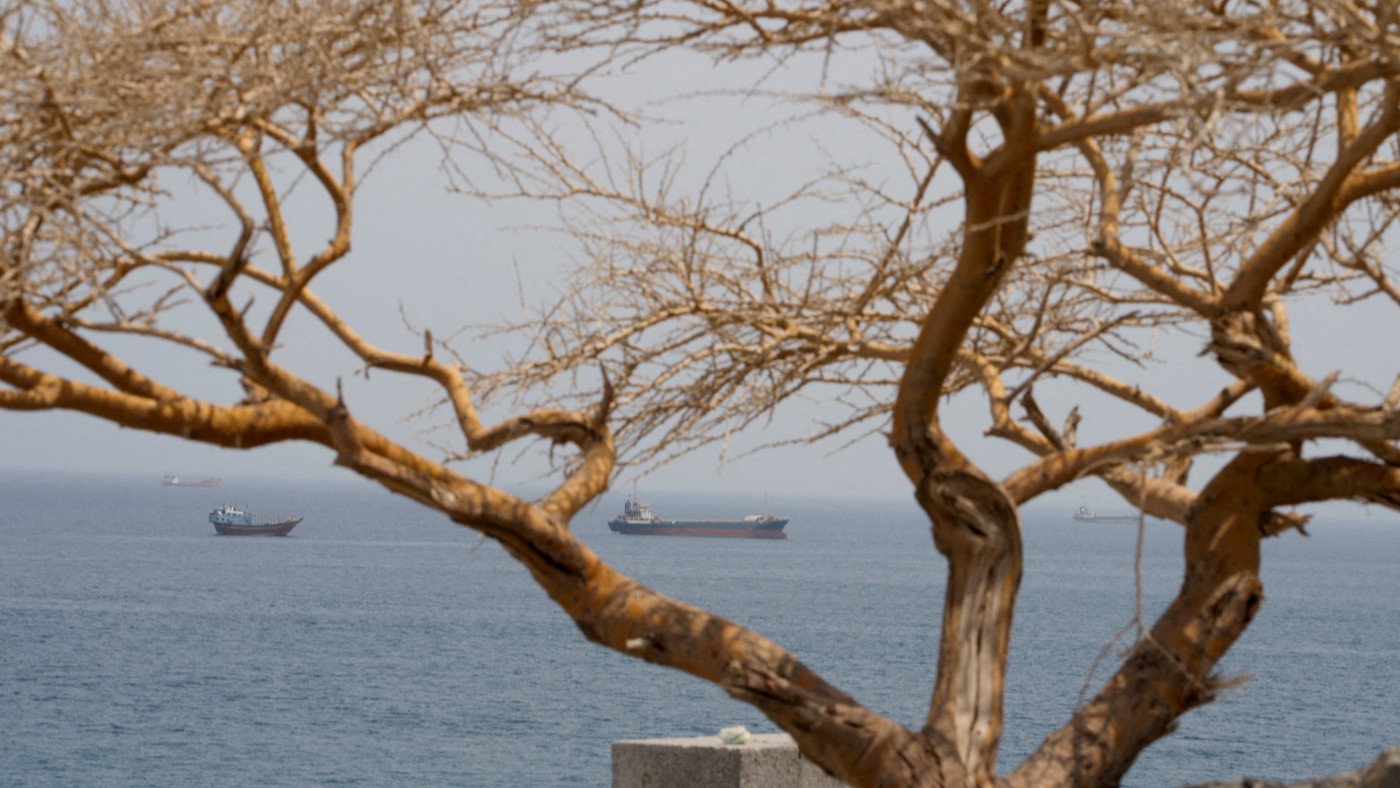
    The statement acknowledged that short-term market instability, driven by ongoing supply disruptions across the Arabian Gulf and the critical Strait of Hormuz, has already upended global energy supply dynamics. Even so, it noted that long-term structural projections point to consistent, sustained growth in global energy demand through the medium and longer terms, a core consideration that guided the policy shift.

    Emphasizing the legacy of its decades-long participation in the cartel, the ministry noted that the UAE’s membership dates back to 1967, when the Emirate of Abu Dhabi first joined the organization. Following the formal unification of the United Arab Emirates as a sovereign state in 1971, the country retained its OPEC membership, and over the decades, it has positioned itself as an active stakeholder working to stabilize global oil markets and foster productive dialogue between major producing nations across the world.

    The announcement comes against a backdrop of escalating regional crisis triggered by the ongoing US-Israeli military campaign against Iran that began in late February. The conflict has inflicted widespread economic and security damage across multiple Gulf Cooperation Council (GCC) states, with the UAE bearing a disproportionate share of the impact. As the Gulf nation with the closest formal and economic ties to Israel, the UAE has become a primary target for retaliatory Iranian strikes, which have consisted of thousands of ballistic missiles and drone attacks. These assaults have severely damaged Dubai’s reputation as a safe luxury tourism destination, while also cutting the country’s oil export volumes to a fraction of their pre-conflict levels.

    Within the Gulf bloc, the UAE has emerged as one of the most hawkish voices on the conflict, rejecting calls from some neighboring states for diplomatic de-escalation with Iran and openly calling for the US-led military campaign to continue. Regional analysts widely attribute this hardline stance to two core factors: the UAE’s overwhelming dependence on the Strait of Hormuz, the chokepoint through which roughly a fifth of global oil supplies transit daily for export, and the deep reluctance among the country’s ruling elite to allow Iran to consolidate its position as the dominant regional power in the Gulf.

    Tensions between the UAE and its fellow GCC members boiled over earlier this week, when senior UAE officials publicly criticized the bloc’s collective response to the Iran conflict. Speaking at a Dubai policy conference, UAE presidential advisor Anwar Gargash slammed the six-member GCC, half of whose members also hold OPEC membership, for failing to mount a unified, forceful response after Iran launched retaliatory attacks against GCC states.

    “The GCC’s stance was the weakest in its history, when you consider the scale of the attack and the threat it posed to every single member of the bloc,” Gargash told attendees. He added that while he had anticipated a muted, weak response from the 22-member Arab League, the Cairo-based pan-Arab organization, he never expected the same level of inaction from the Gulf Cooperation Council. “I don’t expect it from the GCC, and I am surprised by it,” he said.

    When pressed by Reuters reporters on whether the UAE had consulted with Saudi Arabia, OPEC’s de facto leader and the UAE’s closest regional neighbor, ahead of announcing its withdrawal, UAE Energy Minister confirmed that the country did not hold direct consultations with any other government or OPEC member ahead of the decision. As global energy markets and regional powers digest the unexpected policy shift, further updates on the implications for oil prices and regional alliances are expected in the coming days.

  • Photos show demolition of Christian churches by Azerbaijan in Nagorno-Karabakh

    Photos show demolition of Christian churches by Azerbaijan in Nagorno-Karabakh

    Newly released satellite imagery has put to rest lingering questions over the fate of two historic Armenian churches in Khankendi, the city known to ethnic Armenians as Stepanakert, located in Azerbaijan’s disputed Nagorno-Karabakh region. The visual evidence, published by Radio Free Europe, confirms early reports that both the Holy Mother of God Cathedral — a modern spiritual center consecrated only in 2019 — and the smaller Church of St. Jacob have been completely destroyed.

    Initial claims of the cathedral’s demolition first circulated across Armenian media outlets back in April, sparking outrage among Armenian religious and political communities before the satellite confirmation. As the primary site of Christian worship for Khankendi’s longstanding Armenian population, the cathedral held deep cultural and spiritual significance for the local community.

    The Mother See of Holy Etchmiadzin, the administrative and spiritual heart of the global Armenian Apostolic Church, was quick to condemn the destruction when reports first emerged. The institution accused Azerbaijan of a deliberate campaign targeting Armenian Christian sacred sites, framing the damage as part of a broader effort to erase traces of Armenian cultural and historical presence in the disputed region.

    To understand the context of this development, Nagorno-Karabakh held a decades-long status as a majority ethnic Armenian enclave that was self-governed by the unrecognized Republic of Artsakh following the conclusion of the first Nagorno-Karabakh war in the 1990s. But in September 2023, a rapid military offensive by Azerbaijani government forces retook full control of the entire territory, bringing it back under Baku’s official rule consistent with international legal recognition of the area as Azerbaijani sovereign territory. The 2023 offensive triggered a mass exodus, with more than 100,000 ethnic Armenians — the vast majority of the region’s remaining Armenian population — fleeing across the border into the Republic of Armenia to escape the new governance.

    Tensions remain high between the two neighboring states in the aftermath of the 2023 offensive, with the continued detention of Armenian separatist figures by Azerbaijani authorities serving as a persistent flashpoint that fuels widespread anger in Armenia. In line with standard journalistic practice, Middle East Eye reached out to both the Armenian Ministry of Foreign Affairs and the Azerbaijani Ministry of Foreign Affairs to request official comment on the confirmed church destructions, but neither side had issued a response by the time of this report’s publication.

  • Ex-Mossad chief says Israeli settler violence reminds him of the Holocaust

    Ex-Mossad chief says Israeli settler violence reminds him of the Holocaust

    One of Israel’s most senior former intelligence leaders has delivered a scathing rebuke of unaddressed settler violence against Palestinian communities in the occupied West Bank, drawing a deeply personal, provocative comparison to the Holocaust that has reignited debate over the Israeli government’s failure to curb escalating attacks.

    Tamir Pardo, who led Israel’s iconic Mossad intelligence agency from 2011 to 2016, shared his searing observations during a recent on-the-ground interview with Israel’s Channel 13. The interview took place during a tour of violence-ravaged Palestinian villages, which Pardo joined alongside a group of retired senior Israeli military officials.

    Pardo, whose mother survived the Nazi Holocaust that killed 6 million European Jews, opened up about the visceral reaction he had to what he witnessed during the tour. “My mother was a Holocaust survivor, and what I saw reminded me of the events that happened against Jews in the last century,” he stated. The former intelligence director went further, adding, “What I saw today made me feel ashamed to be Jewish.”

    Beyond the emotional condemnation, Pardo issued a stark warning about the long-term consequences of unchecked settler aggression. He argued that ongoing settler crimes, which have been largely unpunished by Israeli authorities and in some cases actively enabled by state actors, are laying the groundwork for another devastating escalation of conflict similar to the October 7, 2023 attacks that killed roughly 1,200 people in southern Israel.

    “It will be in a different format, much more painful, because the region is much more complicated. The state has chosen to sow the seeds for the next October 7,” Pardo warned. He added that while Israeli law enforcement agencies are fully aware of the scale and severity of settler violence, political leadership has deliberately chosen to look the other way. “What I saw today is the existential threat to the State of Israel,” he emphasized.

    Pardo specifically called out the outsized political influence held by hardline settler groups, which enjoy open backing from top figures in Israel’s current far-right governing coalition, including controversial ministers Bezalel Smotrich and Itamar Ben Gvir. While Pardo acknowledged that it is still possible to reverse course and address the crisis, he warned that doing so would come at a profound cost, even raising the prospect of internal civil conflict within Israel. “If we want, we can correct this, but the price will be very high,” he said. “It is very much in our interest not to reach that point.”

    The former Mossad chief also reflected on a decades-old warning from prominent Israeli philosopher Yeshayahu Leibowitz, who publicly condemned Israel’s occupation of Palestinian territories shortly after the 1967 Six-Day War. In his 1968 essay *The Territories*, Leibowitz argued that permanent military rule over millions of Palestinians would inevitably corrupt Israeli society as a whole, writing that “the corruption characteristic of every colonial regime would also prevail in the state of Israel” and calling for an immediate full withdrawal from occupied lands. Pardo noted that he once rejected Leibowitz’s assessment as wrong, but his recent tour of affected West Bank villages has convinced him the philosopher’s prediction held significant truth.

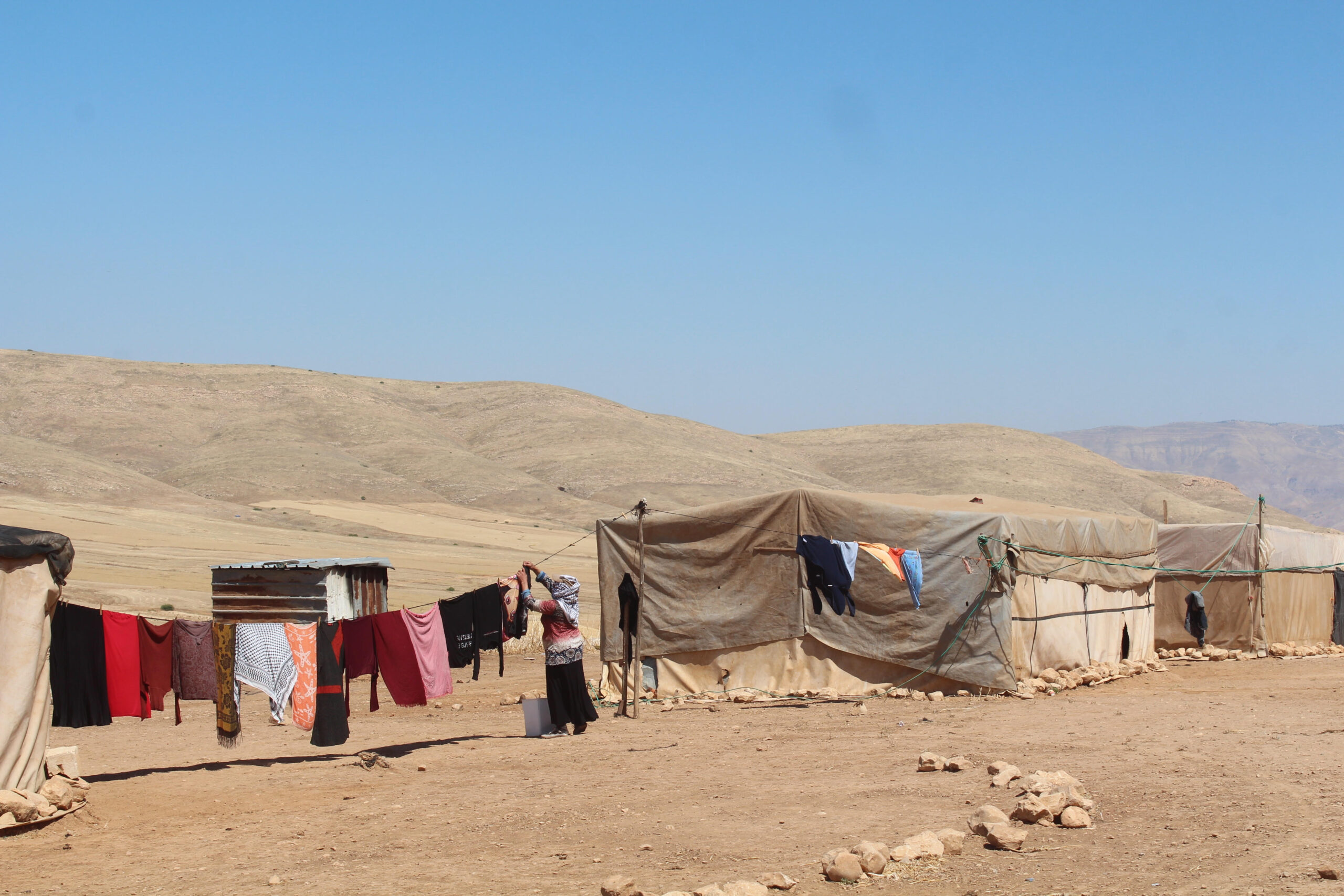
    Pardo’s comments come amid a well-documented surge in settler violence and territorial expansion in the West Bank that has accelerated dramatically since October 2023. According to the Wall and Settlement Resistance Commission, Israeli settlers have killed at least 16 Palestinians in the West Bank so far in 2025. A United Nations report published in March 2025 added further context, documenting that more than 36,000 Palestinians have been displaced from their homes in the West Bank between November 2024 and October 2025, driven by a wave of coordinated military raids and settler attacks. Over that same 12-month period, the UN recorded 1,732 separate incidents of settler violence that resulted in casualties or property damage – a 25% increase compared to the previous year. Many of these attacks have taken the form of systematic forced displacement of Palestinian communities from their historical land, with settlers increasingly using live fire against unarmed civilian residents.

  • The Supreme Court seems likely to shut down a lawsuit by Falun Gong over Cisco’s aid to China

    The Supreme Court seems likely to shut down a lawsuit by Falun Gong over Cisco’s aid to China

    WASHINGTON – During oral arguments held Tuesday, a majority of U.S. Supreme Court justices signaled clear openness to granting tech conglomerate Cisco’s request to dismiss a high-profile human rights lawsuit that alleges the company deliberately provided technology enabling the persecution of Falun Gong practitioners in China. The case centers on a challenge to a lower appellate court ruling that cleared the way for the suit to be heard in U.S. federal courts, bringing long-simmering debates over corporate accountability for overseas human rights abuses to the nation’s highest court.

    The lawsuit, first filed by Falun Gong adherents back in 2011, accuses Cisco of knowingly customizing its digital infrastructure to help Chinese authorities track, identify, detain and torture followers of the spiritual movement. Declassified internal documents and internal corporate materials leaked to the press in 2008, later confirmed by a 2023 Associated Press investigation, back up many of these claims: those records show Cisco framed China’s massive “Golden Shield” internet censorship and surveillance program as a lucrative business opportunity, openly referred to Falun Gong as an “evil cult” in alignment with Chinese government rhetoric, and advertised that its products could flag more than 90% of Falun Gong-related online content. The company even built a national-level tracking system specifically designed to monitor Falun Gong believers, marking the group as a national security “threat” in official marketing materials to Chinese officials.

    Cisco has forcefully denied all allegations, arguing it cannot be held legally liable in U.S. courts under the two statutes cited by plaintiffs: the 18th-century Alien Tort Statute (ATS) and the 1991 Torture Victim Protection Act (TVPA). The company’s legal counsel Kannon Shanmugam reiterated the firm’s denial during Tuesday’s arguments, telling the bench that “Cisco vigorously disputes those allegations.”

    The court’s conservative majority, which holds a 6-3 advantage in the chamber, centered its questions on the scope of authority for lower courts to hear similar transnational human rights cases. Multiple conservative justices raised concerns that lower tribunals have allowed too many foreign-focused civil rights claims to proceed. Justice Neil Gorsuch, one of the court’s most conservative members, pointedly asked whether the door to U.S. courthouses for such suits is being “not closely guarded,” signaling skepticism of retaining broad access for these claims.

    This skeptical tilt aligns with a years-long trend: both the Supreme Court and successive Democratic and Republican presidential administrations have pushed back against allowing U.S. courts to hear claims over human rights abuses committed by foreign governments on foreign soil. To counteract this well-documented skepticism, lawyers for the Falun Gong plaintiffs have emphasized that a significant share of Cisco’s decision-making and product development related to the Golden Shield project was carried out at the company’s U.S. headquarters, giving U.S. courts legitimate jurisdiction over the case.

    Only the court’s two liberal justices, Sonia Sotomayor and Ketanji Brown Jackson, voiced clear support for allowing the lawsuit to move to trial. Sotomayor pushed back directly on Cisco’s claims during arguments, noting “Cisco was a willing partner with the Chinese government. It knew that those people will be tortured.”

    The Supreme Court’s final ruling in the case is scheduled to be issued by the end of June 2024. The outcome will set a major precedent for future corporate human rights litigation, potentially closing off U.S. courts as a venue for holding American tech companies accountable for their role in enabling authoritarian surveillance and repression overseas.

  • Path cleared for Everest climbers after huge ice block

    Path cleared for Everest climbers after huge ice block

    For two weeks, a massive fallen glacial serac had put all spring climbing plans on hold at Mount Everest, trapping teams below Base Camp and threatening to upend the annual prime climbing season. But following urgent days of work by elite high-altitude crews, a usable alternative path has been carved through the dangerous Khumbu Icefall, opening the way for climbing teams to resume their acclimatization rotations toward the summit.

    Ram Krishna Lamichhane, director general of Nepal’s Department of Tourism, confirmed to the BBC that specialized icefall doctors have successfully installed fixed ropes all the way to Camp 2, which sits at an altitude of roughly 6,400 to 6,500 meters (21,000 to 21,325 feet) above sea level. “Still there are some risks, but icefall doctors have picked up the most convenient available route and identified the path forward,” Lamichhane said. He added that climbers are expected to begin moving toward Camp 1 and Camp 2 for acclimatization exercises starting tomorrow.

    The disruption began in early April, when rope-fixing teams launching preparations for the 2026 spring season encountered the 100-foot (30-meter) tall serac that had calved off the glacier and blocked the standard route. Crews were forced to pause work for two weeks as they waited for the unstable ice block to begin melting naturally, putting all season preparations roughly two weeks behind the original schedule. This delay has sparked growing concerns that the backlog will lead to the dangerous summit queues that have plagued crowded Everest seasons in past years.

    The route-clearing work was a collaborative effort carried out by experienced icefall doctors from Nepal’s Sagarmatha Pollution Control Committee (SPCC) alongside veteran sherpas from expedition operator associations, who specialize in navigating the constantly shifting icefall terrain. Lakpa Sherpa, a veteran climber and expedition manager who oversaw part of the work, explained that modern technology played a key role in speeding up the operation. Airlift support was used to deliver critical supplies including fixed ropes, aluminum ladders, snow stabilizer bars and food to high-altitude crews during the most challenging phases of the work. Teams also leveraged cutting-edge survey tools: “3D photogrammetry and real-time drone surveys to map the Khumbu Icefall and assess hazards like seracs and crevasses,” he said.

    While the route to lower camps is now open for traffic, officials and expedition leaders have stressed that major hazards remain in the area. Lakpa Sherpa warned that the original massive unstable serac is still at high risk of collapse within the next four to five days, and urged climbing teams to avoid carrying heavy payloads through the affected section of the icefall. “Safety is our highest priority; further rotations should proceed with extreme caution and at your own risk,” he said. Acknowledging the delays to the season timeline, he urged permit holders to remain calm: “The season is slightly delayed but the summit will come,” he added.

    Nepal’s Department of Tourism echoed that safety message in a post to X, noting, “As climbers navigate the route, utmost caution is urged, particularly in the serac-affected section. Wishing all a safe ascent.”

    This year, 425 climbers have received official permits to attempt a summit of Mount Everest from the Nepali side of the border. According to the Department of Tourism, these permits will generate roughly 924.2 million Nepalese Rupees, equivalent to approximately $6.1 million or £4.5 million, in government revenue, making the spring climbing season a key contributor to Nepal’s tourism-driven economy.

  • Palestine Action defendant says guard ‘assaulted me multiple times’ during Elbit raid

    Palestine Action defendant says guard ‘assaulted me multiple times’ during Elbit raid

    On Monday, a key defendant in the high-profile trial linked to a Palestine Action raid on an Elbit Systems factory gave dramatic testimony at London’s Woolwich Crown Court, detailing what he says were repeated assaults by a on-site security guard during the August 2024 break-in near Bristol.

    Thirty-one-year-old Jordan Devlin is one of six people facing criminal damage charges connected to the incident at the Filton facility, which manufactures military technology. His co-defendants are 30-year-old Leona Kamio, 29-year-old Charlotte Head, 21-year-old Fatema Rajwani, 22-year-old Zoe Rogers, and 23-year-old Samuel Corner. Corner faces an additional charge of grievous bodily harm with intent, accused of striking a police officer with a sledgehammer during the incident.

    Taking the stand to testify before jurors, Devlin described the sequence of confrontation that unfolded after security guard Angelo Volante intervened in the raid. Devlin, who told the court he was unarmed when Volante first encountered the group, explained that Volante had already seized a sledgehammer from co-defendant Rogers, who was standing nearby. Devlin said he stepped between the two because he believed Volante intended to harm Rogers, triggering a physical altercation.

    “Volante assaulted me multiple times,” Devlin told the court, recounting that the guard kicked him and launched a series of wild swings at him after Devlin caught Volante’s leg during the attack. Body-worn camera footage from Volante was presented to jurors, and Devlin argued that when slowed down, the footage captures Volante delivering a downward swing that would have seriously injured him if it had connected with the back of his head. Devlin went so far as to accuse Volante of enjoying the confrontation, saying “He was looking like he wanted to hurt her… I could see from his face, he was enjoying the opportunity to bully people. He should have lost his job, been barred from the security industry altogether.”

    Photographs of injuries Devlin sustained during the raid were also shown to the court. Devlin pointed to a distinct red linear mark across his shoulder, which he said was likely caused by a blow from the handle of Volante’s sledgehammer. He further testified that after he grabbed the sledgehammer from Volante, the guard deliberately pressed against him to turn off his body-worn camera — and just seconds after the camera cut out, Volante attempted to bite his neck.

    Devlin also described a second, unrecorded confrontation in a factory alcove that was not captured by either body-worn cameras or on-site CCTV. During that grapple over the sledgehammer, Devlin said Volante drove the weapon into his face, leaving him with the black eye visible in his post-arrest mugshot, which was shown to jurors. “The moment I was struck my tinnitus went off, and I stepped back stunned,” Devlin recalled, adding that he even attempted to de-escalate the tension by joking about a “Star Wars moment,” suggesting the two duel with the sledgehammer as if they were light sabers. Devlin noted he has been unable to verify this second altercation because CCTV footage from the relevant part of the factory is missing, a gap the court has previously confirmed.

    The trial proceedings have already revealed that two on-floor CCTV cameras never had their footage retrieved by investigators, a point defense counsel raised earlier this month when questioning PC Sarah Grant, the officer tasked with recovering the facility’s security recordings. Body-worn footage shown to the court also captures a separate incident where Volante runs at Devlin and strikes him across the neck with a sledgehammer handle, knocking him to the ground.

    Devlin also detailed his confrontation with responding police officer PC Aaron Buxton. He told the court Buxton put him in a headlock and pulled him to the slippery floor, which had been covered in fire extinguisher fluid during the raid. After Buxton fell to the ground, Devlin said he was unable to identify the man as a police officer or see anyone approaching because his goggles were coated in Pava spray, an incapacitating agent Buxton had fired just moments earlier. Devlin told the court he did not learn Buxton was a police officer until three days after his arrest, adding “If they had said they were police, it would have been over a lot easier.”

    Jurors viewed Buxton’s body-worn camera footage from the ground, which shows Corner raising a sledgehammer and striking the officer. Devlin told prosecutors he had no idea Corner was nearby at the time, as he was crouched focused on Buxton. When prosecutors asked Devlin if he admitted to causing property damage during the raid, he openly acknowledged the damage, telling the court “Yes I do, and it was an honour.”

    The trial of the six Palestine Action defendants is ongoing.

  • Indian billionaire’s son offers to save Escobar’s hippos

    Indian billionaire’s son offers to save Escobar’s hippos

    Decades after the death of Colombian drug lord Pablo Escobar, a decades-long ecological crisis in Colombia has drawn an unexpected offer from one of Asia’s wealthiest families. The crisis traces back to Escobar, the infamous leader of the Medellín Cartel who was killed by police in 1993, who illegally smuggled a pair of African hippopotamuses into his luxurious Hacienda Nápoles estate, located 155 miles northwest of Bogotá. After Escobar’s death, the two hippos were left to roam freely, and the Magdalena River basin, with its fertile swamps, lack of natural predators, and ideal conditions in the Antioquia region, allowed the species to explode in population. Now numbering in a growing herd recognized as the largest population of hippos outside their native Africa, these animals, nicknamed the ‘cocaine hippos’, have been officially classified as an invasive species by the Colombian government.

    Colombian authorities and environmental groups have long documented the damage caused by the non-native hippos: they have displaced local native wildlife, threatened fishing communities along the Magdalena River, and disrupted the regional ecosystem. Adult male hippos can weigh up to three tons, making aggressive encounters with humans a serious public safety risk. For years, Colombia attempted multiple population control measures, including surgical castration, but all efforts failed to slow the herd’s rapid growth. Facing an uncontrolled population projected to expand far beyond current limits, the government made the controversial decision to cull approximately 80 hippos to manage the crisis.

    That plan is now facing a potential alternative following a public proposal from Anant Ambani, son of Mukesh Ambani—Asia’s richest man. In a formal letter to Colombia’s Minister of Environment, the CEO of Vantara, Ambani’s private zoo in Gujarat’s Jamnagar district, stated that the facility is ‘willing to receive and care for’ the targeted hippos, offering to provide lifelong care for the entire herd on its grounds. The proposal, shared publicly on the zoo’s official Instagram account, emphasized that ‘at the heart of this proposal is Vantara’s belief that every life matters and that we have a shared responsibility to protect life wherever possible’. As of this reporting, Colombian officials have not issued any formal response to the offer.

    Vantara, a 3,500-acre private zoo located near the world’s largest oil refinery owned by Mukesh Ambani, currently houses more than 2,000 animal species including elephants, tigers, and other large megafauna. The facility gained global attention in 2024 when it served as one of the venues for Anant Ambani’s high-profile, extravagant pre-wedding celebrations. However, the zoo has also faced repeated criticism from wildlife conservation activists, who have raised concerns over a range of issues including the incompatibility of Gujarat’s hot, dry climate for many of the species held in captivity there.

    The ‘cocaine hippo’ dilemma remains one of Colombia’s most intractable environmental challenges, balancing ecological protection for native ecosystems and public safety against animal welfare advocacy. The unexpected offer from the Ambani family has opened a new chapter in a debate that has divided conservationists for years, with the Colombian government yet to indicate whether it will accept the proposed relocation plan.

  • ‘We were left alone’: Along Israel’s ‘Yellow Line’, Lebanese feel abandoned by the state

    ‘We were left alone’: Along Israel’s ‘Yellow Line’, Lebanese feel abandoned by the state

    Every dawn and dusk along the Mediterranean seafront of Sour, Lebanon’s largest southern coastal city, a quiet, anxious ritual plays out. Dozens of residents gather along Nabih Berri Street, their gazes fixed southward across the glittering water, all the way to the border town of Naqoura, where the line between their homeland and occupied territory now blurs.

    On the horizon, eight kilometers from Sour, the white limestone cliffs of al-Bayada rise from the sea. Today, those cliffs are an advanced forward operating base for Israeli troops, part of the expanding ground invasion that has pushed deep into southern Lebanon. Even when the soldiers are hidden from view, their presence hangs heavy over the city, leaving locals with a constant, unsettling feeling of being watched.

    Lina, a local resident whose apartment overlooks the newly seized territory, spoke with quiet despair. “Israel has long targeted Naqoura. The headland gives them unobstructed view of our entire coastline,” she explained. “We already lived under constant drone surveillance for years. Now they watch us directly from that cliff.”

    Sour has become a hub for thousands of displaced Lebanese who fled their homes near the Blue Line – the UN-drawn boundary established in 2000 to mark Israel’s withdrawal from southern Lebanon. Even Sour has suffered severe damage from repeated Israeli strikes, but for these displaced families, it remains the only available refuge. For most of them, their original homes are either uninhabitable after weeks of bombardment or now lie under Israeli occupation.

    After Hezbollah granted limited press access to the frontline, journalists were able to travel a short distance south of Sour for a few hours to document the situation on the ground. The winding coastal highway that once bustled with local traffic and tourist traffic is now almost entirely empty. Only a handful of vehicles pick their way through a landscape of ruin, where posters of Hezbollah fighters killed after the Lebanese front opened on 8 October 2023 line every damaged guardrail.

    A checkpoint manned by a small contingent of Lebanese army personnel blocks the road further south; no civilian or journalist can pass. Israeli troops hold positions less than a kilometer away, in al-Bayada, the first coastal town to fall within Israel’s self-imposed “Yellow Line” – a new demarcation drawn roughly 10 kilometers inside Lebanese territory, established after a 10-day ceasefire took effect. This new occupation buffer zone follows the same model Israel employed in Gaza, barring tens of thousands of residents of border communities from returning to their land and homes.

    A short drive inland from the coast lies al-Mansouri, a small village that mirrors the devastation seen across every community in southern Lebanon. Empty streets stretch between piles of collapsed concrete, and every structure bears the scars of Israeli bombardment. Even the village mosque was not spared: its minaret was sheared off by an airstrike, leaving a jagged stump against the sky.

    After the ceasefire came into force on 17 April, a new tragedy unfolded when a small group of villagers tried to return to their homes to assess damage and retrieve belongings. Almost immediately, they came under direct fire from Israeli forces. One resident, speaking on condition of anonymity to Middle East Eye, described the chaotic aftermath. “We scattered across the village to hide when the firing started,” they said. “Neither our security forces nor the Red Cross were allowed to come in. This is land we’ve spilled blood to defend, and we were left completely alone.”

    Survivors recounted that any attempt to escape by car was met with immediate gunfire from both ground troops and attack aircraft. What followed was a four-day siege, where trapped residents survived only by picking wild lemons from orchards to eat. Mohammad, a 30-something villager who was not present during the siege, described how he pieced together his own father’s final moments from surviving witnesses. “He was trapped in a ring of fire,” Mohammad said, his gaze vacant. “Then the building he was hiding in was hit by a strike.”

    Official data from Lebanon’s health ministry confirms the escalating human cost: more than 2,500 people have been killed in Israeli strikes across southern Lebanon since 2 March alone, including 177 children, 277 women, and 100 medical personnel.

    While al-Mansouri does not technically fall inside the Yellow Line, it sits directly on its edge, and Israeli positions on the overlooking hilltop give troops full visibility across the entire village. Moussa Zein, a 65-year-old resident who recently returned to al-Mansouri to try to rebuild, said locals are still struggling to process the new reality of occupation on their doorstep. “The ceasefire is violated dozens of times every single day, while our government drifts aimlessly into talks with the enemy,” Mohammad added, referencing the recent direct negotiations between Tel Aviv and Beirut hosted in Washington – the first such talks in 30 years.

    Like many residents, Moussa is determined to stay in his home, despite the daily risk of Israeli strikes that have continued even after the ceasefire. What deters him more than the threat of violence is the scale of destruction: the village has no running water, no electricity, and basic services remain completely destroyed. “Our lives, our parents’ lives, have all been shaped by repeated wars and invasions,” Mohammad said. “For years, no one paid attention to what was happening here. But now the whole world can see: Hezbollah is just a pretext for Israel to seize our land.” As evidence, he points to comments Israeli Prime Minister Benjamin Netanyahu made last summer on the I24 news network, where he described his goal as fulfilling a “historic and spiritual mission” deeply tied to the vision of Greater Israel and the Promised Land. “The occupation cannot last. We believe in the resistance – it is the only thing that can protect us,” Mohammad said.

    A few kilometers southeast of al-Mansouri, Majdal Zoun, another small town on the Yellow Line’s edge, shares the same fears and uncertainty. Once home to roughly 5,000 residents, the hilltop town is now almost entirely deserted. Almost every house bears the scars of Israeli strikes, and it is nearly impossible to find a single intact structure. A group of young women displaced to Sour return to the town every day, refusing to abandon their ancestral home. “This is our village. We will not leave it to the enemy, so we come back and forth every day. We believe in the resistance,” they said in unison, standing at the village cemetery looking out toward Sour on the horizon. When a surveillance drone hums low overhead, they glance up anxiously, their faces tightening with fear. “Majdal Zoun’s geographic position makes it a prime target for Israel. We are scared they will try to seize it any day now,” one added.

    From the southern edge of Majdal Zoun, the occupied village of Shama is visible just two kilometers away. Its historic fort, which houses the shrine of the prophet Shamoun al-Safa, has been heavily damaged in Israeli strikes. In mid-April, Lebanon’s Ministry of Culture announced it had filed an urgent complaint with UNESCO, calling for immediate international intervention to protect the archaeological and religious site. During the Middle East Eye visit, no troop movements were visible, but several Israeli flags flying over the fort can be seen clearly from Majdal Zoun.

    Further inland to the east, the village of Tayr Harfa is also under Israeli occupation. Regular explosions echo across the hills, and plumes of smoke rise above the tree line. “They are blowing up every house that’s still standing. After bombing us, they want to raze everything to the ground, just like they did in Gaza,” said Ali, a 39-year-old resident from the area. Ali’s own village is now surrounded on its southern flank by the Israeli army, and he fears for its future. “Unfortunately, we expect nothing from the Lebanese army. We only have the resistance to rely on. Otherwise, Majdal Zoun will fall too,” he said. Ali praised what he called the heroic resistance of Hezbollah fighters, who inflicted significant losses on Israeli troops before the ceasefire and stopped them from advancing further into Lebanese territory. Confrontations continue even after the truce: on 23 April, Hezbollah announced it had shot down an Israeli surveillance drone operating over the area.

    A few kilometers further north in the village of Qlaileh, the community is mourning the loss of several Hezbollah fighters killed in recent combat. One mother sits gently stroking a portrait of her dead son, her eyes filled with constant tears. Beside her, 30-year-old Rana said the fighters’ sacrifices will not be forgotten. “We cannot rely on anyone but ourselves. We will fight to keep our land, because this is all we have,” she said.

  • Iraq: Businessman Ali al-Zaidi nominated to become new prime minister

    Iraq: Businessman Ali al-Zaidi nominated to become new prime minister

    Five months after Iraq held its national parliamentary elections, the largest legislative bloc, the Shia-led Coordination Framework, has tapped Ali al-Zaidi, a little-known low-profile businessman with no prior elected office experience, to step into the role of prime minister-designate and lead efforts to form a new national government. Following the bloc’s formal selection, Iraq’s presidential office issued an official statement confirming that President Nizar Amede had officially assigned Zaidi the mandate to assemble a new cabinet, giving him a 30-day window to complete the negotiations and finalize his government.

    A native of southern Iraq’s Dhi Qar province, Zaidi brings a deep private sector background to the political role. Until 2019, he served as chairman of Al-Janoob Islamic Bank, one of Iraq’s largest private financial institutions; he currently leads Al-Watania Holding Group, a sprawling multinational conglomerate with diverse business interests across the region. Notably, in 2024, the United States imposed sanctions on Al-Janoob Islamic Bank over allegations of money laundering, financial fraud, and unauthorized use of U.S. currency, and Iraq’s own Central Bank subsequently moved to ban the institution’s operations.

    Zaidi’s nomination marks an unexpected outcome that sidelines two high-profile Shia political figures who were widely tipped as the Coordination Framework’s leading candidates: incumbent Prime Minister Mohammed Shia al-Sudani and former Prime Minister Nouri al-Maliki. In a public statement, the coalition praised both Sudani and Maliki for what it called their “historic and responsible stance” in stepping aside to clear the way for Zaidi’s selection.

    Maliki’s withdrawal from contention came against clear external pressure: in January, former U.S. President Donald Trump threatened that Washington would “no longer help” Iraq if Maliki secured the nomination. Once counted as a close U.S. ally, Maliki has shifted sharply toward alignment with Iran in recent years, and has faced longstanding criticism over his tenure, including accusations of stoking deadly sectarian tensions across Iraq and presiding over systemic government corruption that contributed to the collapse of the Iraqi military and the loss of large swathes of Iraqi territory to the Islamic State group in 2014.

    The nomination process unfolds against a backdrop of heightened regional tensions that have repeatedly threatened to drag Iraq into open conflict. In recent weeks, a fragile ceasefire has held between the United States and Iran, with intermittent diplomatic talks underway to de-escalate a two-month cross-regional conflict that began amid the Israel-Gaza war. Since the outbreak of hostilities in Gaza in 2023, Iran-aligned armed groups operating in Iraq have launched frequent sporadic attacks on U.S., Israeli, and Gulf state interests within Iraqi territory. The United States has long demanded that these armed groups be disarmed, while Iraqi political factions aligned with Iran have pushed for the full withdrawal of all remaining U.S. military forces from Iraqi territory.

    International reaction to Zaidi’s nomination has been measured so far. The United Kingdom’s ambassador to Iraq, Irfan Siddiq, issued a public post on X welcoming the development. “The United Kingdom welcomes the nomination of a new Prime Minister in Iraq,” Siddiq wrote. “We wish Mr. Ali al-Zaydi success in swiftly forming a new government and look forward to working with the new government on the urgent challenges facing Iraq – particularly on security and the economy.”

  • Netanyahu helped ‘create a genocide in Gaza’, top Biden official says

    Netanyahu helped ‘create a genocide in Gaza’, top Biden official says

    In a bombshell revelation that adds to mounting internal U.S. criticism of American policy toward the Israel-Gaza conflict, a top-ranking former Biden administration State Department leader has publicly stated that Israeli Prime Minister Benjamin Netanyahu bears responsibility for creating what she describes as a genocide in the Gaza Strip.

    Wendy Sherman, who served as U.S. Deputy Secretary of State from 2021 through 2023, made the remarks during a recent interview with Bloomberg’s *The Mishal Husain Show*, published Friday. While she clarified that she is not in a position to issue a formal legal ruling on whether the crime of genocide has been committed in the blockaded Palestinian enclave, she left no room for ambiguity about the scale of human and physical destruction there, stating: “there was no doubt that Gaza was demolished.”

    Sherman, a veteran diplomat who has held senior roles across multiple U.S. presidential administrations, reaffirmed her longstanding commitment to the U.S.-Israel alliance and support for the right of a Jewish state to exist. But she drew a clear line between that backing and her condemnation of the current Israeli campaign, arguing that “Netanyahu ‘led us down a road – and we have been part of it – that has, in essence, created a genocide in Gaza that has destabilised the Middle East.’”

    Her comments align with findings from the United Nations’ top investigative body focused on the Israeli-Palestinian conflict, which ruled in September that Israel has committed the crime of genocide in Gaza.

    The ongoing conflict erupted after the October 2023 Hamas-led attack on southern Israel that killed more than 1,100 Israelis. Since that date, Israeli military operations in Gaza have killed at least 72,500 Palestinians, with thousands more still missing and presumed dead under the rubble of destroyed buildings. Over the course of the campaign, Israeli forces have reduced roughly 80 percent of Gaza’s civilian infrastructure – including residential homes, hospitals, and schools – to ruins.

    In her interview, Sherman balanced her remarks by affirming the rights of both peoples to peace and security. “Palestinians deserve a home, dignity and peace,” she said, adding that “Israel also has the right to achieve security and peace.” A self-described strong supporter of Israel, Sherman emphasized that her criticism does not extend to the Jewish state’s right to exist, but rather to the wholesale destruction unfolding in Gaza. “I am not a supporter of destroying any civilization, or any people – that goes for the Palestinians or the Iranian people, as much as I might find the regime odious,” she added.

    Sherman is far from alone among former senior U.S. officials in condemning Washington’s role in the conflict. Back in July 2024, a group of 12 former U.S. government officials who resigned in protest over U.S. support for Israel publicly accused the Biden administration of “undeniable complicity” in the deaths of Palestinian civilians in Gaza. The group, which included former staffers from the State Department, Education Department, Interior Department, White House, and U.S. military, said in a joint statement that the administration was violating U.S. law by continuing to ship weapons to Israel, exploiting loopholes to bypass oversight.

    “America’s diplomatic cover for, and continuous flow of arms to, Israel has ensured our undeniable complicity in the killings and forced starvation of a besieged Palestinian population in Gaza,” the former officials wrote.

    Similar conclusions have been drawn by sitting U.S. lawmakers. In September, Democratic Senators Chris Van Hollen and Jeff Merkley released a bipartisan report concluding that the United States is complicit in Israel’s “ethnic cleansing” of Palestinians, and found that Netanyahu’s longstanding policies in the occupied West Bank amount to “slow motion” ethnic cleansing.