标签: Asia

亚洲

  • As Gaza is destroyed, a VR project preserves what Israel tried to erase

    As Gaza is destroyed, a VR project preserves what Israel tried to erase

    What began as a homesick graduate student’s quiet quest to reconnect with his long-unseen home has evolved into a powerful act of cultural preservation and political resistance, born from the unfolding catastrophe in Gaza.

    In 2022, Naim Aburaddi, a Gaza-born PhD candidate in media studies at the University of Colorado Boulder, had not set foot in his native enclave for seven years, blocked from returning by Israel’s decades-long military siege. Cut off from the places that shaped him, Aburaddi, a scholar of media representation, turned to emerging technology to bridge the distance. He shipped a 360-degree camera to Gaza, where a local journalist friend guided it through the spaces Aburaddi ached to revisit: bustling Gaza City souks, crowded public squares, a 1,000-year-old Turkish bathhouse, and the beloved Mediterranean shoreline. After six months of slow transit through blocked borders, the camera captured footage that allowed Aburaddi to step back into Gaza — if only virtually, bypassing Israel’s total control over the enclave’s entry and exit. When the footage arrived, Aburaddi wept.

    Joined by Ahlam Muhtaseb, a media studies professor at California State University San Bernardino, and the research team at X-Real Lab, the small personal project quickly expanded. Between July 2022 and July 2023, the team hired Gaza-based videographer Ahmad Hasaballah to capture thousands of additional 360-degree clips, building an immersive extended reality (XR) experience that would allow displaced Palestinians across the West Bank and around the world to reconnect with a home many had never been able to visit. For generations of Palestinians displaced during the 1948 Nakba, who have been barred from returning to their ancestral lands, and for audiences around the world who only know Gaza through media narratives focused exclusively on conflict, the experience offered something unprecedented: an unfiltered, first-person look at everyday Palestinian life, on Palestinian terms.

    Then, on October 7, 2023, everything changed. Following the Hamas-led attacks on southern Israel that killed around 1,200 people, Israel launched a full-scale military offensive on Gaza that has killed more than 72,000 Palestinians, according to local health officials. Multiple human rights organizations, leading genocide scholars, and United Nations officials have formally concluded that Israel is committing genocide in the besieged enclave. One by one, the ordinary, beloved sites captured in the project’s pre-war footage began to be destroyed by Israeli airstrikes and ground operations. Hasaballah fled to southern Gaza for safety, and the team’s 360-degree camera was buried under rubble after an Israeli attack. Hasaballah’s father was killed in the same strike.

    Stunned by the scale of destruction that had erased much of the life they had documented, Aburaddi and Muhtaseb paused the project for months. Only in early 2024 did they realize the archive they held was something far more precious than they had ever imagined: the largest existing collection of 360-degree footage of pre-genocide Gaza, a time capsule of Palestinian daily life and cultural heritage that had survived an campaign intent on erasing it.

    “We had wanted to show the culture and the history. We never thought in our wildest dreams, in nightmares, that we were capturing history, and that everything we were creating and we were capturing was going to be like a memory,” Aburaddi told Middle East Eye.

    Aburaddi named the project *The Phoenix of Gaza XR*, a name he says honors the resilience of Gaza’s people: “The people in Gaza, again, will be like a phoenix that will rise from under the rubble and they will rebuild Gaza again.”

    Since early 2026, the immersive exhibit has toured universities and community spaces across the United States, inviting visitors to don VR headsets and step into Gaza as it existed before the 2023 war. Visitors can stand on the side of a street in a Gaza refugee camp as a skateboarder zooms past, wander the halls of the 1,500-year-old Church of Saint Porphyrius, admire the architecture of the Great Omari Mosque, or wander the stone alleys of Gaza City’s historic markets. They can stand beside children wading in the Mediterranean, listen to the hum of daily traffic, watch farmers harvest figs, grapes, and dates, or sit in a car winding along the beachfront Al-Rashid Street. Where the team captured 360-degree still photography instead of video, visitors can observe two elderly men reading the Quran in a mosque courtyard, as a young boy prepares for prayer at a nearby water fountain.

    By mid-October 2023, just weeks after the war began, many of these iconic sites were already destroyed or severely damaged. The Church of Saint Porphyrius, which had sheltered hundreds of Palestinians fleeing Israeli airstrikes, was bombed by the Israeli military on October 19, 2023, killing 18 civilians and destroying much of the historic structure. Today, many of the ordinary people captured in the pre-war footage are missing, dead, or displaced.

    Unlike traditional news footage that separates audiences from the reality of life in Gaza, the immersive sensory experience of the XR exhibit forces visitors to confront the contrast between the vibrant, ordinary life that existed before October 2023 and the total devastation that followed. “It made me wonder how and what it would be like if we were in that situation,” a 19-year-old Hunter College student who visited the exhibit told Middle East Eye.

    The project expanded further months into the war, when the team recovered the buried 360-degree camera from rubble and asked local Gaza journalist Yahya Sobeih to revisit the same sites the team had documented a year earlier, capturing the destruction left by Israeli attacks. Princeton University’s IDA B Wells Data Lab joined to support the expanded work, and the exhibit now offers visitors the option to compare the pre-war sites with their current state, walking among the rubble and debris that remain. Shardi Marji, a New York-based activist who has helped organize tour stops for the exhibit, called it a transformative work of art that compels action: “You are transported to the place to bear witness to what was destroyed,” she said.

    For Ali Bashar, a 26-year-old New York visitor who said he had become desensitized to endless war footage from Gaza, the immersive experience was impossible to look away from. “I felt I could watch it over and over and still learn or see something new,” he said.

    Leading experts on genocide emphasize that the crime of genocide is defined not only by mass death, but by the intentional effort to erase a people’s history, culture, and connection to their land. In an October 2024 report titled *Genocide as Colonial Erasure*, UN Special Rapporteur on the occupied Palestinian territories Francesca Albanese noted that Israel’s campaign in Gaza has been marked by multiple forms of targeted erasure: domicide, the destruction of homes; urbicide, the destruction of urban spaces; scholasticide, the destruction of educational institutions; medicide, the destruction of healthcare systems; cultural genocide, the destruction of cultural heritage; and ecocide, the destruction of Gaza’s natural environment. “As Israeli leaders promised, Gaza has been made unfit for human life,” Albanese wrote. *The Phoenix of Gaza XR* lays bare the scale of this intentional erasure.

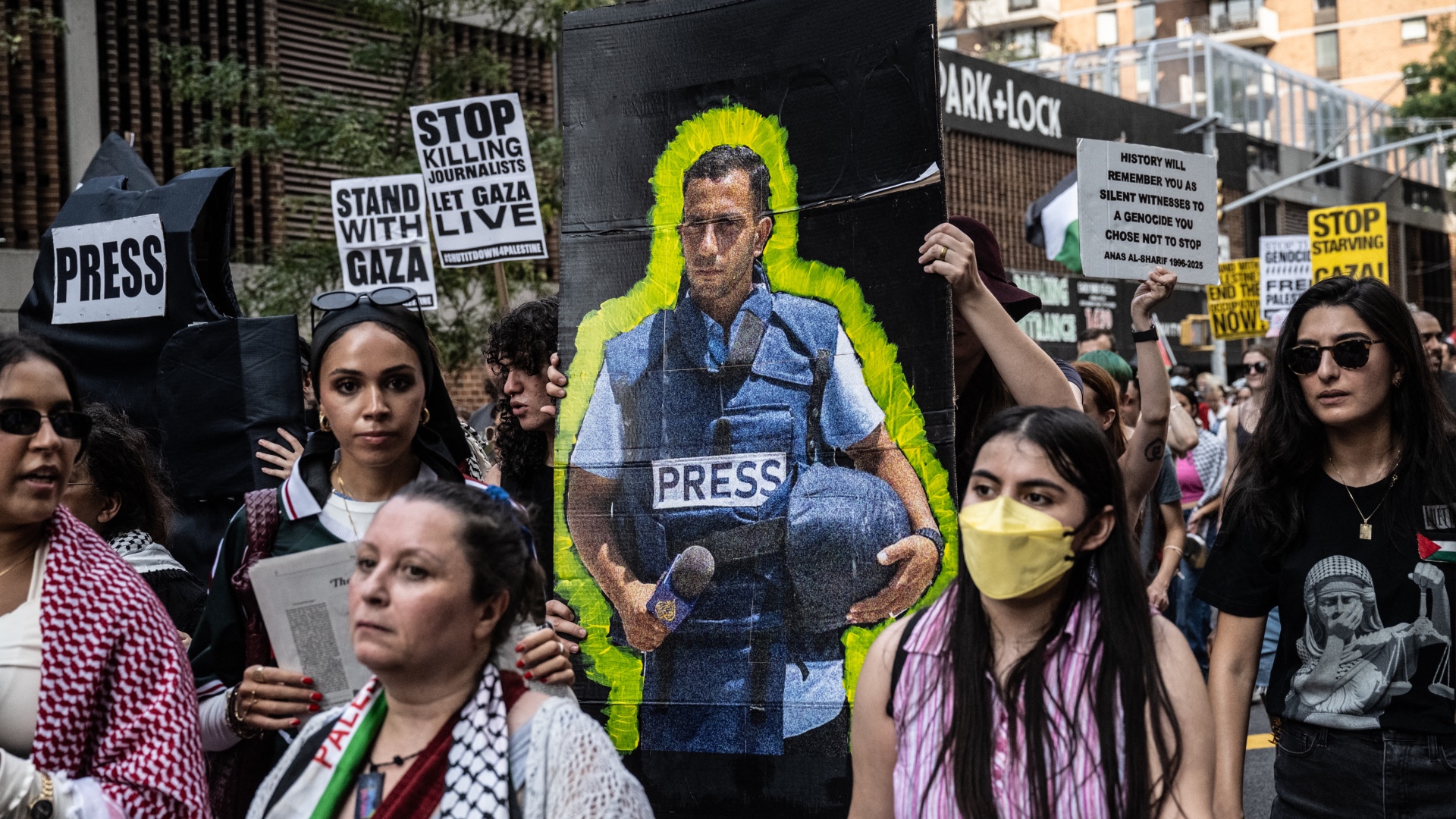
    Muhtaseb, speaking to a crowd of more than 100 visitors at Hunter College in April 2026, explained that the project’s purpose has shifted from its original goal to now act as deliberate resistance to erasure. Originally, it was designed to counter one-dimensional media narratives that only frame Gaza as a site of conflict, erasing the ordinary joy, culture, and humanity of its people. Today, it is a bulwark against the total erasure of that life. Muhtaseb paused, overcome with emotion, as she told the crowd that Sobeih, the journalist who captured the post-attack footage, was assassinated by Israeli forces in May 2025. The 32-year-old had been sitting in a restaurant celebrating the birth of his daughter Sana when he was killed. He is one of roughly 270 journalists killed in Gaza since the war began. After his death, his wife Amal, a professional photographer, insisted on joining the project to carry on his work.

    For Aburaddi, the project is the fulfillment of the goal that led him to study media in the first place: challenging harmful stereotypes about his home. Raised in a one-room tent in a Gaza refugee camp, he grew up watching international media misrepresent his people and their homeland. After leaving Gaza for journalism studies in Turkey in 2014, he focused his academic work on Palestinian media representation. Today, beyond its role as public education and resistance, the project has practical value for legal and reconstruction efforts: the 360-degree archive is already being consulted by Amnesty International for war crimes investigations, and the team is collaborating with urban designers at Brown University and computer engineers at Boston University to build 3D models of destroyed historic sites to support future reconstruction of Gaza.

    Since the project launched in 2022, it has been presented to audiences in Uganda, Italy, Canada, the Netherlands, Norway, and more than 50 colleges and community spaces across the United States. After completing a tour of East Coast US universities in mid-April 2026, with stops at Hunter College, Brown University, and MIT, a special screening was held at the University of Colorado Boulder’s Fisk Planetarium later that month. The exhibit is set to travel to South Africa in June 2026, with future stops planned in Japan and Spain.

    “Here we are preserving these memories. We are preserving them in virtual reality, in immersive media, where Israel cannot attack them, and a lot of people across the world can visit and access, and we are preserving this for the next generation,” Aburaddi said. “They were able to attack the locations, they were able to kill a lot of people, but they couldn’t kill the memory.”

  • ‘Empowered’: UAE’s exit from Opec appeases Trump, delivers blow to Saudi Arabia

    ‘Empowered’: UAE’s exit from Opec appeases Trump, delivers blow to Saudi Arabia

    The United Arab Emirates’ planned departure from the Organization of the Petroleum Exporting Countries next month is far more than a simple energy policy shift. Analysts and regional diplomats frame the move as both a direct challenge to Saudi Arabia’s longstanding dominance of the cartel and a calculated geopolitical gesture to the United States, underscoring how the ongoing war on Iran has deepened historical divides in the Gulf rather than uniting regional powers against a common foe.

    On its face, the split stems from years of simmering disagreement between the UAE and Saudi Arabia over OPEC production quotas. For decades, Riyadh has championed supply caps to keep global oil prices elevated, a strategy aligned with its economic priorities: as a nation of 35 million people with more than double the UAE’s proven oil reserves, it relies on sustained high per-barrel prices to fund domestic spending and infrastructure.

    The UAE, by contrast, has long pushed for looser production rules. With just 1 million citizens sharing the country’s oil revenue, and massive investments in expanded extraction infrastructure that have left it with OPEC’s largest spare production capacity relative to current output, the Emirates has opted for a volume-focused strategy. Many of its economic planners argue that leaving oil in the ground carries growing long-term risk, as the global energy transition could erode the value of fossil fuel reserves over the next decade.

    “The UAE is the OPEC country with the largest amount of spare capacity compared to production,” explained Arne Lohmann Rasmussen, chief analyst and head of research at Global Risk Management. “You can argue that this is the right economic calculus because what’s inside the ground might not have the same value that it will in five or ten years.”

    Yet while these policy divides stretch back years, experts note that a major shift had already occurred before the outbreak of the U.S.-Israeli war on Iran. Once famous for warning oil traders they would be “ouching like hell” if they bet against its supply-cut commitments, Saudi Arabia has recently pivoted to a strategy of recapturing global market share, backing massive production increases that aligned it much closer to the UAE’s position. That makes the timing of the exit a clear signal that geopolitics, not just energy economics, are driving the decision.

    “The policy differences between the UAE and Saudi Arabia have been there for a long time, but Saudi Arabia has pivoted to taking back market share, and the war has actually made their old argument less salient. This exit is much more political,” said Greg Priddy, a senior fellow for the Middle East at the Center for the National Interest.

    In recent months, the UAE has steadily deepened its security and diplomatic alignment with the U.S. and Israel, even as other regional powers have taken more cautious stances on the Iran war. Earlier this month, Axios reported that Israel deployed an Iron Dome air defense system and supporting technicians to the UAE amid repeated Iranian drone and missile attacks on the Gulf state. Unlike Saudi Arabia, which has supported the U.S. war effort while backing Pakistani-mediated talks to de-escalate tensions between Washington and Tehran, the UAE has lobbied aggressively behind the scenes and in public for the U.S. to continue military operations, and has worked to block diplomatic outreach that could bring an end to the conflict.

    Leaving OPEC now, as the Trump administration weighs whether to pursue a negotiated deal with Iran or escalate military action, aligns directly with a longstanding Trump administration criticism of the cartel as an anti-competitive body that “rips off” global consumers. Analysts have even raised the possibility that the exit is part of a broader trilateral bargain between the UAE, U.S. and Israel.

    “It is possible that this break could also be the result of some sort of ‘deal’ between the UAE and Israel and the US, wherein they helped defend the UAE from Iran in exchange for delivering a major blow to Opec, which Trump has long sought,” Ellen Wald, a senior fellow at the Atlantic Council and leading expert on Gulf energy politics, wrote in a recent public post. Wald added that she would not be surprised to see a formal U.S.-UAE defense agreement announced in the near future.

    The move also fits into the UAE’s preparations for prolonged regional volatility. Recent reporting confirms that UAE Foreign Minister Sheikh Abdullah bin Zayed told U.S. Secretary of State Marco Rubio that Abu Dhabi is prepared for the war to last up to nine months, and the country has already approached the Trump administration to request a currency swap line to protect access to U.S. dollars in the event that its foreign reserves are depleted amid sustained conflict.

    Beyond alignment with the U.S., the exit is widely viewed as a major escalation of the UAE’s long-running regional rivalry with Saudi Arabia, which has dominated OPEC’s agenda since the cartel’s founding 65 years ago. As the two largest Gulf powers, both Riyadh and Abu Dhabi harbor ambitions to project regional influence, and their competing interests have already spilled into multiple conflicts: Saudi Arabia launched strikes against UAE-backed forces in Yemen just before the Iran war began, and the two states back opposing factions in Sudan’s ongoing civil war. Most recently, Middle East Eye revealed that Saudi-paid weapons shipments from Pakistan began arriving in eastern Libya in March to support commander Khalifa Haftar, in a bid to pull his faction away from the UAE’s sphere of influence.

    While many hoped the Iranian attacks on Gulf states would push the two rivals back into a united bloc, the war has instead accelerated their competition, and the UAE’s exit from OPEC creates an irreversible shift in the regional balance of power.

    UAE Energy Minister Suhail al-Mazrouei has framed the move as a long-planned objective that was simply timed correctly amid the current chaos, noting that “the timing in our view is right because it has a minimum impact on all of the producers.” Bernard Haykel, a professor of Near Eastern studies at Princeton University who has followed the UAE’s debate over leaving OPEC for years, agreed that the war created a unique opening for the dramatic move.

    “They finally did it, probably because of the war. Everything is up in the air, and there is an opportunity to make dramatic decisions,” Haykel said. “In practical terms, the Emiratis have very considerable spare capacity. If they want to play the role of market regulator like the Saudis have, they can do it. This empowers them in a big way.”

    Energy analysts largely agree the timing is strategically shrewd. Competing blockades of the Strait of Hormuz by the U.S. and Iran have all but halted traditional Gulf oil shipping, cutting the UAE’s exports from a pre-war 3.5 million barrels per day to roughly 1.9 million barrels per day, all of which are now exported via the Fujairah pipeline that bypasses the Strait. That means any additional spare capacity the UAE brings online will not immediately flood the global market, avoiding a sudden price crash that would trigger widespread backlash. Even after the war ends, analysts note that major supply disruptions from the conflict have left global oil inventories depleted enough to absorb higher UAE exports without major disruption.

    In the longer term, however, experts warn the departure of OPEC’s third-largest producer could spell the end of the 65-year-old energy alliance. “This is a big blow to OPEC,” Rasmussen said. “We could be writing its obituary.”

    This report draws on independent analysis from Middle East Eye, a publication specializing in coverage of the Middle East and North Africa.

  • Rare earth mining is poisoning Mekong River tributaries, threatening ‘the world’s kitchen’

    Rare earth mining is poisoning Mekong River tributaries, threatening ‘the world’s kitchen’

    For 75-year-old Thai fisherman Sukjai Yana, each morning on the Mekong River brings the same grim routine. Perched on the bow of his weathered long-tail fishing boat in Chiang Saen, a generations-old fishing hub in northern Thailand, he pulls in his net to sort a meager catch of small fish, his disappointment growing as he wonders whether buyers will even take his contaminated-looking haul. Some days, he earns nothing at all.

    Yana is far from alone in this crisis. He is one of an estimated 70 million people across mainland Southeast Asia who depend on the nearly 5,000-kilometer Mekong River, a waterway that has sustained communities and ecosystems for millennia. Today, a surging global demand for rare earth minerals has sparked an unregulated mining boom that is poisoning the Mekong and its tributaries, putting millions of lives, livelihoods, and even global food supplies at risk.

    The epicenter of this boom is war-torn Myanmar, but operations have rapidly spread east into Laos, sending toxic runoff from mining sites downstream through Thailand, toward Cambodia and Vietnam. While the Mekong has long struggled with cumulative pressures—from plastic pollution and upstream hydropower dams to destructive riverbank sand mining—environmental experts warn that mining-related toxic contamination could prove an existential threat to the entire river basin.

    ## A Growing Danger to Public Health and Food Systems
    Rare earth mining works by stripping away riverbank rock and flushing soil with harsh chemicals to extract the sought-after minerals, leaving behind a trail of waste laced with dangerous heavy metals: arsenic, mercury, lead, and cadmium. These toxins seep into tributaries and flow into the main Mekong, accumulating in fish and irrigating farmland across the region. Exposure to these elements raises the risk of cancer, organ failure, cognitive impairment, and developmental harm, with children and pregnant women facing the most severe consequences.

    Thailand is currently bearing the brunt of the contamination, with toxins already threatening its $10 billion-plus annual export market for rice, fruits, and vegetables that feed consumers from U.S. grocery stores to Japanese kitchens and Malaysian dinner tables. In the hilly Thai village of Tha Ton, 63-year-old farmer Lah Boonruang points to the full range of toxin-exposed crops he grows—rice, garlic, corn, onions, mangoes, and bananas—all irrigated with water from the Kok River, a Mekong tributary that flows out of Myanmar carrying heavy metal pollution. “If we can’t export, a farmer is the first to die,” he said, echoing widespread fear across agricultural communities.

    For Thailand’s 63-year-old Lahu ethnic elder Sela Lipo, the contamination has severed a centuries-old cultural tie to the river. Famed as skilled fisherpeople, the Lahu have been officially warned to avoid using river water for drinking, fishing, or irrigation. “The Lahu’s way of life is always with a river,” Lipo explained. “The contaminated river has cut off our lifeline.”

    Thai environmental leaders warn that the contamination could unravel the country’s most iconic agricultural industry. “Our worry is that toxins accumulate in the rice we export. This would make our rice farming industry, which is our culture, collapse,” said Niwat Roykaew, founder of The Mekong School, an environmental institute based in Chiang Khong, northern Thailand. Thai scientists have already recorded elevated heavy metal levels in other key Mekong tributaries, including the Sai and Ruak rivers.

    ## Limited, Local Action Amid Cross-Border Barriers
    Addressing the crisis has proven extraordinarily difficult. Thailand’s government has acknowledged it has little political or diplomatic leverage to shut down unregulated mining operations across its borders in conflict-riven Myanmar and Laos. Domestic action is also constrained by limited scientific expertise, incomplete data, and insufficient funding, according to Aweera Pakkamart of Thailand’s Pollution Control Department.

    Currently, most of the work to track and address contamination falls to local governments, public universities, and regional bodies such as the Mekong River Commission, which focus primarily on monitoring heavy metal levels and educating at-risk communities about the dangers they face.
    Warakorn Maneechuket, a researcher at Thailand’s Naresuan University, has confirmed that recent samples of water, fish, and sediment from Mekong tributaries contain dangerously high concentrations of mining-related heavy metals. Dissecting a catfish caught from the Kok River in her lab, she points to clear signs of toxic exposure: tumor-like growths, discolored scales, and abnormal eye pigmentation.

    To expand monitoring and raise public awareness, Naresuan University researcher Tanapon Phenrat has helped develop a custom smartphone app that trains local fishers to identify and upload photos of suspicious, contaminated fish. The app builds a crowdsourced citizen science database that researchers hope will help quantify the full scale and spread of contamination across northern Thailand. “Each and every sample is very important,” Phenrat noted.

    ## The Global Demand Driving a Local Disaster
    The unregulated mining boom flooding the Mekong with toxins is fueled by exponentially growing global demand for rare earth elements, materials that are foundational to nearly all modern technology. From smartphones and electric vehicle batteries to military hardware including F-35 fighter jets, submarines, missiles, and radar systems, rare earths are a critical input for both civilian and defense industries. While the elements themselves are geologically common, costly mining and complex refining processes have left global supply chains heavily concentrated, making new sources highly sought after.

    Researchers at the U.S.-based Stimson Center used satellite imagery analysis to identify nearly 800 unregulated and suspected rare earth mining sites along Mekong tributaries in Myanmar, Laos, and Cambodia. Regan Kwan, a Stimson Center researcher tracking the expansion, explained that Myanmar’s ongoing civil war has driven a geographic diversification of mining operations, with new sites popping up along 26 different river stretches across Laos. Most of Myanmar’s rare earth output is exported to China, with more than $4.2 billion in heavy rare earths shipped between 2017 and 2024, a majority of that trade occurring after the 2021 military takeover of Myanmar.

    At the same time, the U.S. has prioritized securing new independent supplies of critical rare earth minerals for its own defense stockpiles, which have been drawn down by military commitments in the Middle East and support for Ukraine. This global competition for new sources has created a race to extract that has bypassed all environmental regulations and cross-border cooperation, leaving the Mekong to pay the price.

    Brian Eyler, another Stimson Center expert on the Mekong, called the toxic runoff crisis one of the most devastating events to hit the river basin in modern history. Only 20th century conflicts including the Vietnam War and the Khmer Rouge genocide caused more widespread harm, Eyler noted, adding that mining contamination ranks a close second. He described the crisis as an “atomic bomb” for the Mekong basin, far more damaging than other well-documented threats such as large upstream dams—and it is still growing, with no signs of slowing down.

  • Leading Arab-American advocacy group roiled by calls for leaders to resign and donations to be returned

    Leading Arab-American advocacy group roiled by calls for leaders to resign and donations to be returned

    One of the United States’ most prominent Arab American civil rights and pro-Palestine advocacy organizations is facing cascading calls for its entire leadership to resign, following widespread allegations of long-unaddressed sexual harassment, assault, and a toxic work environment that disproportionately harmed women. Multiple former and current staff, volunteers, and even sitting U.S. Congresswoman Rashida Tlaib have joined the pressure campaign against the American-Arab Anti-Discrimination Committee (ADC), which has already ousted its executive director and a board member in response to the growing scandal.

    The crisis erupted into public view on April 25, when all current ADC employees – a group of Arab women – launched an Instagram account to amplify their demands. In their public statement, the staffers emphasized that the organization’s mission is accountable first to the Arab American community that built it, not a small group of entrenched leaders. “No small group of individuals has the right to compromise that mission while expecting staff and community members to absorb the consequences,” the statement read. The group also made clear it stands with more than a dozen women who say they were harmed by leadership failures, including Tlaib, adding: “We believe survivors, and we are committed to ensuring their safety and dignity moving forward.”

    Tlaib, one of the highest-profile Arab American elected officials in the U.S., previously released a video detailing her own experiences with harassment at the organization, as well as accounts from other survivors who reached out to her after she took office. She publicly called on the ADC to remove her official photo from the organization’s website, and specifically named then-national executive director Abed Ayoub as complicit in downplaying reports of misconduct. Within hours of Tlaib’s video being posted, Ayoub was removed from his role and replaced by the group’s national legal director, Jenin Younes. The ADC framed the leadership shakeup as a deliberate shift to prioritize its expanding legal advocacy work, but critics dismiss the move as an insufficient half-measure that leaves the most accused leaders in place.

    To date, neither Tlaib nor Ayoub have issued public comment on the allegations, as requests for response from Middle East Eye went unanswered before publication. In an official statement shared to the ADC’s social media channels last Monday, attorneys for board chair Safa Rifka acknowledged past allegations, noting that some reported incidents date back more than a decade, when the group says it previously took corrective action. “Because we recognize that the passage of time does not erase harm, we reiterate our previous apology sincerely and without reservation today,” the statement read, adding that the organization has maintained a zero-tolerance policy for harassment for more than 10 years. The group invited anyone impacted by negative experiences to reach out directly via private message.

    But survivors and critics say the apology and limited leadership changes do not go far enough. Multiple women who have accused top ADC leaders of misconduct told Middle East Eye they delayed speaking out for years due to fear of retaliation, compounded by cultural stigma around reporting sexual harm within Arab communities. Documentation reviewed by MEE shows formal written complaints about the workplace culture date as far back as 2006.

    Ed Hasan, a long-time ADC donor and governance expert who was invited to join the ADC board last December to help address organizational issues, was fired from his volunteer board role within five months after raising formal concerns about misconduct and governance failures. In an interview with MEE, Hasan called the situation one of the worst cases of institutional dysfunction he has seen in nearly 20 years of work in the field. “Nobody was transparent with me,” he said. “I’ve been doing this for almost 20 years. This is one of the worst cases I’ve seen.”

    A demand letter sent to ADC leadership by Hasan’s attorneys alleges his firing was a direct act of retaliation for fulfilling his fiduciary duty as a board member by raising documented concerns about harassment, broken governance rules, conflicts of interest during internal investigations, and a legally flawed confidentiality agreement. The letter characterizes his removal as “procedurally void, substantively baseless, and retaliatory in nature,” and the move puts the organization at risk of a future lawsuit. Hasan also noted that nearly all of the 10-member board are men over the age of 60, most have overstayed their term limits laid out in the organization’s bylaws, and leadership has repeatedly changed bylaws to consolidate power. He added that the ADC has no dedicated human resources team to address workplace complaints, and that the board customarily investigates itself when allegations arise, creating widespread conflicts of interest.

    The growing scandal has already sparked backlash from long-time supporters of the organization, with many donors demanding refunds of their contributions in comments across the ADC’s social media platforms. “I can no longer in good faith support this organization. I am shocked at this level of infighting, corruption and lack of accountability… Can someone contact me to issue a refund?” wrote Ali Dabaja, a Lebanese-American physician. Another donor, Rania Masri, added: “I will stop my donation to ADC. Pushing Abed Ayoub out of the organization AND pushing Ed Hassan out of the board and maintains those who are accused of sexual harassment AND maintaining Safa as the board chair – none of these actions bodes well. How shameful.”

    Hasan summed up the frustration with the organization’s response, saying: “They don’t respect women. They really don’t. I get the culture stuff, but this is ADC. It’s a firm. It’s an organisation to help people.”

    Founded to combat anti-Arab discrimination in the U.S., the ADC has grown into one of the nation’s largest pro-Palestine advocacy groups, particularly since the October 7, 2023 attacks on Israel and the subsequent Israeli military campaign in Gaza that has killed more than 72,000 people. Since the start of the second Trump administration in January 2025, the group has also taken on high-profile legal work defending Arab Americans’ free speech rights, and launched a hotline for community members targeted for harassment or detention by federal immigration officials.

  • Kim Jong Un praises troops who ‘self-blasted’ to avoid capture by Ukraine

    Kim Jong Un praises troops who ‘self-blasted’ to avoid capture by Ukraine

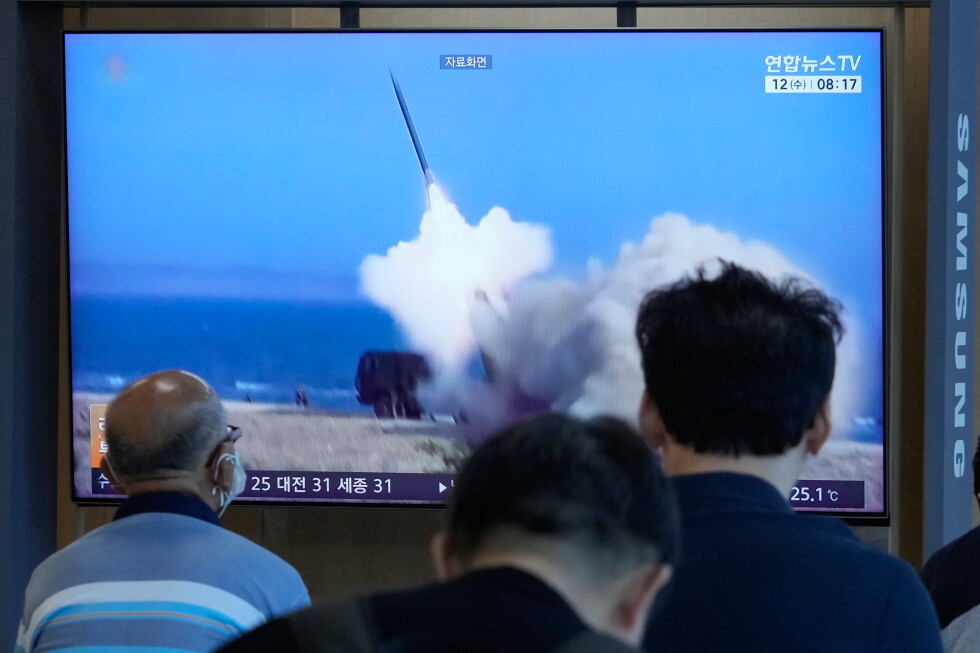
    In a high-profile public event that has drawn international attention, North Korean leader Kim Jong Un has publicly celebrated North Korean troops who carried out suicide attacks using hand grenades while fighting alongside Russian forces in Ukraine, formally confirming an extreme battlefield policy that intelligence communities have suspected for months.

    The comments, delivered during a Monday ceremony unveiling a memorial for fallen North Korean soldiers in Pyongyang, were carried by North Korean state media outlet KCNA. Kim labeled troops who “unhesitatingly opted for self-blasting suicide attacks to defend the great honor” of the country as true heroes, and framed their actions as the pinnacle of military loyalty. “Their self-sacrifice expecting no compensation, and the devotion expecting no reward… This [is] the definition of the height of loyalty of our army,” Kim told attendees, which included top Russian officials: Russian Defence Minister Andrey Belousov and State Duma Speaker Vyacheslav Volodin.

    South Korean intelligence estimates that Pyongyang has deployed at least 15,000 troops to support Russia’s efforts to retake territory in western Kursk Oblast, with more than 6,000 of those service members killed in combat to date. Neither North Korea nor Russia has publicly verified these casualty and deployment figures. Multiple intelligence agencies and North Korean defectors have long corroborated that North Korean troops are under standing orders to take their own lives rather than allow themselves to be captured by Ukrainian forces. Within North Korea’s military doctrine, capture by enemy forces is classified as an act of treason against the state and ruling party.

    Evidence of this policy has emerged through multiple channels in recent months. Last year, South Korea’s National Intelligence Service recovered handwritten orders from deceased North Korean soldiers that explicitly outlined the requirement for self-harm to avoid capture. Earlier this year, South Korean broadcaster MBC released an interview with two North Korean prisoners of war held by Ukraine, where one fighter expressed open regret for failing to take his own life, saying, “Everyone else blew themselves up. I failed.”

    Beyond his praise for suicide attackers, Kim also extended recognition to all troops who have died in combat in Ukraine. He noted that even those who fell while leading frontline charges, or who died frustrated at failing to complete their assigned duties rather than mourning their physical wounds from bullets and shrapnel, deserve recognition as faithful party warriors and patriots.

    The public commemoration comes amid rapidly deepening military and political cooperation between Pyongyang and Moscow. In June 2024, Russian President Vladimir Putin and Kim Jong Un signed a mutual defense pact that committed both nations to provide mutual assistance in the event of armed aggression against either party, with Kim describing the agreement as the “strongest ever” bilateral treaty between the two countries. Beyond deploying combat troops to support Russia’s war effort, North Korea has also pledged to send thousands of civilian workers to assist with reconstruction efforts in war-damaged Kursk Oblast.

  • War deepens generational rift inside Iranian-American households

    War deepens generational rift inside Iranian-American households

    While a fragile ceasefire between the United States and Iran has paused open military hostilities, the fragile peace has done little to mend deep, often painful divisions that have torn through the Iranian-American diaspora community. What outsiders see as explosive clashes on social media and competing street protests—one side cheering US-Israeli airstrikes on Iran, the other condemning them—masks the most wrenching friction that plays out far from public view: inside family homes, across dinner tables, where differing visions for Iran’s future have pitted loved ones against one another.

  • A faraway conflict threatens livelihoods in India’s glass hub

    A faraway conflict threatens livelihoods in India’s glass hub

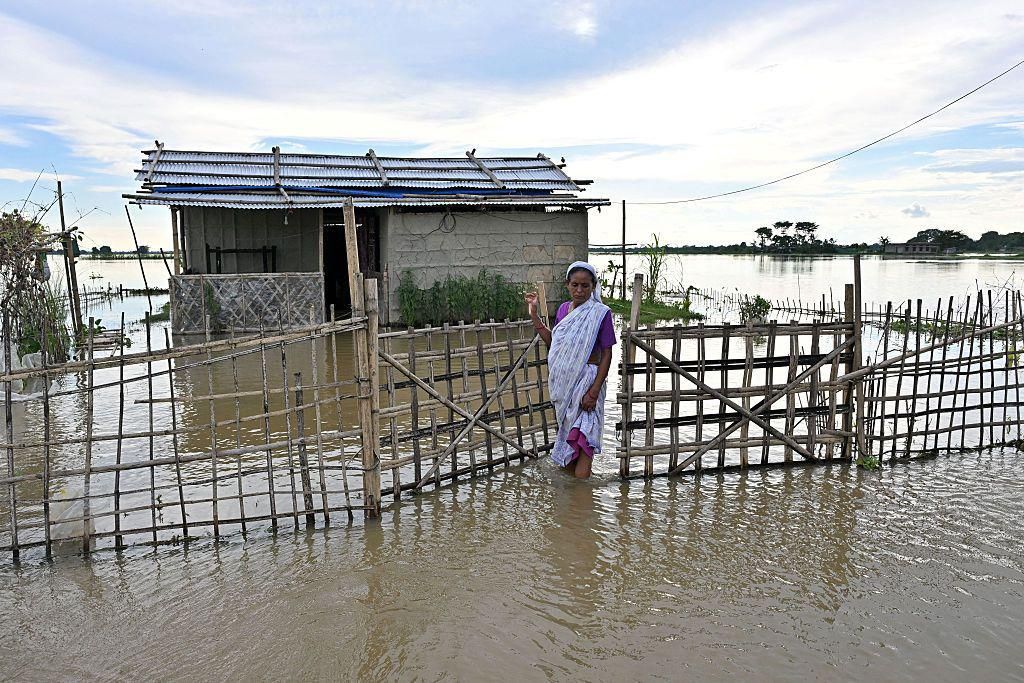
    Half an hour’s drive from the world-famous Taj Mahal in India’s northern Uttar Pradesh Pradesh, Firozabad has built its identity around glass. Known nationally as India’s “glass city”, this industrial hub accounts for 70% of the country’s total glass output, with most production spread across hundreds of small and medium-sized family-run factories. The sector sustains nearly 150,000 daily-wage workers, whose incomes hover between 500 and 1,000 rupees ($5.29 to £3.91) a day – earnings that leave almost no buffer against sudden cost increases or production disruptions. Today, that vulnerability has been laid bare by escalating tensions in the Middle East, whose ripple effects have reached deep into Firozabad’s workshops and left thousands of livelihoods hanging in the balance.

    Glass manufacturing is an energy-intensive process: furnaces must maintain extremely high, consistent temperatures around the clock to keep production running safely. If a furnace cools completely, it can suffer irreversible damage, and restarting it requires massive time and capital investments most small factory owners cannot afford. This means the entire industry relies entirely on a stable, affordable supply of natural gas – and that supply has been thrown into chaos by Middle East conflict.

    Nearly half of India’s total natural gas imports pass through the Strait of Hormuz, the narrow strategic Gulf shipping route that has been heavily disrupted by ongoing regional tensions. While some shipments have resumed in recent weeks, factory owners across Firozabad report they have yet to see any relief from the shortage. To cope with the national supply squeeze, the Indian government implemented a 20% cut to commercial gas allocations, forcing producers to adapt their operations to ration fuel.

    Sanjay Jain, who has operated a glass bangle manufacturing unit in Firozabad for four decades, told BBC reporters his production has plummeted sharply since the cuts went into effect. To keep his furnaces from cooling beyond repair, Jain has lowered operating temperatures and paused production for three to four days at a time – a stopgap measure that has cut his output drastically but kept his business from total collapse.

    The crisis in Firozabad exposes India’s broader systemic vulnerability to global energy shocks. The country relies heavily on imported natural gas across all sectors, from transportation to residential use, leaving industrial hubs built around gas-dependent manufacturing uniquely exposed. Firozabad’s 400-plus small manufacturing clusters produce a vast range of glass goods, from bangles and home decor to car headlamp covers and luxury chandeliers, feeding a domestic glass market valued at more than $200 million. Many small factory owners report losses ranging from 25% to 40% since the Middle East conflict escalated, with no clear path forward if supply instability continues.

    Natural gas shortages are not the only pressure weighing on the industry. Mukesh Bansal, a representative of the All India Glass Manufacturers’ Federation, explained that the conflict has driven up costs across the entire supply chain. Many key chemical components used to melt glass are imported from the Middle East, so trade disruptions have pushed raw material prices sharply higher. On top of that, global shipping cost increases have priced many Indian exporters out of international markets, particularly the large U.S. market for decorative glass goods. Bansal noted his own business has suffered losses exceeding 45% since the conflict began, saying “the combination of gas shortages and rising input costs has made this situation almost unmanageable.”

    The strain is hitting low-wage workers the hardest. Umesh Babu, a 35-year-old bangle maker who works 10-hour days in an uninsulated open-air workshop just meters from a 1,000C furnace, has already seen his work week drop from six days to four. To cut household expenses, he has pulled his children out of school. “This is the only skill I have,” he said. “If the factories stop hiring, I don’t know where I’ll turn to feed my family.”

    The Indian federal government has acknowledged the urgency of the crisis, stating it “recognises the need for uninterrupted furnace operations” and is implementing emergency measures to stabilize energy supplies. Federal ministries have held regular coordination briefings, and the petroleum ministry has prioritized energy allocations for critical sectors including pharmaceuticals, steel, automobiles and agriculture. Uttar Pradesh’s state government also announced a temporary wage increase after thousands of northern Indian factory workers held protests earlier this month that turned violent in parts of the state, where demonstrators demanded living wages and better working conditions. Workers say the temporary increase still falls far short of what they need to keep up with soaring inflation.

    Economists warn that without long-term intervention, many of Firozabad’s small and micro manufacturing units will not survive. Economist Arun Kumar noted that most of these labor-intensive small operations operate on extremely limited working capital, leaving them no financial buffer to withstand extended shortages. “If this situation continues, many units will either shut down permanently or operate at severely curtailed capacity for the foreseeable future,” he said.

    Damage to energy infrastructure across the Middle East from recent fighting between March and early April could take months to repair, meaning supply disruptions will persist even after the Strait of Hormuz returns to full operation. “The situation won’t go back to normal for months even after the route reopens,” Kumar explained.

    A recent UN Development Programme report warns that the ongoing conflict could push as many as 2.5 million additional people in India into extreme poverty. For Firozabad’s glass sector, which sits at the heart of India’s small and medium enterprise ecosystem – a segment that contributes 30% of India’s national GDP and employs hundreds of millions of people – this crisis is more than a local problem: it is a warning of how global geopolitical instability can quickly unravel livelihoods for low-income workers across the world.

  • UK ambassador to US says only special relationship US has is ‘probably’ with Israel

    UK ambassador to US says only special relationship US has is ‘probably’ with Israel

    Leaked private comments from Britain’s top envoy to the United States have upended diplomatic niceties between the two historic allies, just as King Charles III’s state visit to Washington was getting underway, throwing into sharp relief existing frictions over Middle East policy and domestic political controversy in London.

    Sir Christian Turner, who took up the ambassadorship earlier in 2024 following the forced exit of his predecessor Peter Mandelson over ties to convicted sex offender Jeffrey Epstein, made the unguarded remarks during a February Q&A session with a group of British sixth-form students visiting the U.S. capital. The comments were first published by the *Financial Times* on Tuesday, the second day of King Charles’ scheduled visit to the U.S.

    Turner’s most explosive claim upended the long-standing diplomatic framing of UK-US relations: he argued that the iconic phrase “special relationship” – a term used for decades to describe the tight bond between London and Washington – is little more than a nostalgic, backward-looking concept weighed down by outdated historical baggage. Instead, he asserted that if any country truly holds a special relationship with the United States today, that country is Israel.

    The revelation has already sparked significant embarrassment for Keir Starmer’s British government, coming at a moment when UK-US relations are already frayed over London’s initial reluctance to join the U.S.-Israeli military campaign against Iran. Despite ultimately granting Washington access to British bases for strikes on Iranian missile facilities and operations to reopen the Strait of Hormuz, Starmer has faced relentless public criticism and mockery from former President Donald Trump over the delayed approval.

    Tensions escalated further last week when the Trump administration threatened punitive measures against NATO allies it accused of failing to back the Iran war, including a provocative suggestion that Trump could recognize Argentine sovereignty over the Falkland Islands – a territory long claimed and controlled by the United Kingdom.

    Just this week, UK Minister of State for Europe and North America Stephen Doughty reiterated London’s break with Washington’s policy, confirming that Britain does not support the U.S. blockade of Iranian ports and insists on unimpeded, free passage for global maritime traffic without arbitrary tolls or unnecessary security risks.

    Beyond foreign policy, Turner also opened a new domestic political firestorm in his comments, questioning the lack of accountability for high-profile U.S. figures tied to the Epstein scandal. He noted it was “extraordinary” that the convicted sex offender’s sprawling network of connections had not led to consequences for prominent American politicians, business leaders and public figures – including Microsoft co-founder Bill Gates, who has been linked to Epstein in public reporting. By contrast, Turner pointed out that senior British figures, including his own predecessor Mandelson, have already been forced out of office over their ties to Epstein.

    Turner went so far as to suggest that Starmer himself could be forced out of office over his 2024 appointment of Mandelson as ambassador, ahead of upcoming UK local elections on May 7. He described the prime minister as “on the ropes” politically over the controversy, and acknowledged that Starmer is a “stubborn guy” while noting that senior figures in the ruling Labour Party could move to remove him after the local polls close.

    In the aftermath of the leak, the UK Foreign Office moved quickly to distance the government from Turner’s remarks, emphasizing that the comments were made in a private, informal setting for visiting students and do not represent the official position of the British government. Turner did acknowledge in his comments that the UK and U.S. retain deep historical and cultural ties, particularly in the defense and security sectors, where the two countries remain deeply intertwined. He added that rather than leaning on the nostalgic framing of the special relationship, Britain should proactively work to redefine its partnership with the U.S. and move away from over-reliance on an American security umbrella.

  • United Arab Emirates says it is leaving Opec and Opec+

    United Arab Emirates says it is leaving Opec and Opec+

    In a seismic shift that reshapes the landscape of global energy geopolitics, the United Arab Emirates (UAE) has formally confirmed its complete withdrawal from the Organization of the Petroleum Exporting Countries (OPEC) and the broader OPEC+ coalition of oil-producing nations. The country’s Ministry of Energy framed the decision as the outcome of a full, strategic review of its national production framework, in a public statement released to global markets.

    The statement acknowledged that short-term market instability, driven by ongoing supply disruptions across the Arabian Gulf and the critical Strait of Hormuz, has already upended global energy supply dynamics. Even so, it noted that long-term structural projections point to consistent, sustained growth in global energy demand through the medium and longer terms, a core consideration that guided the policy shift.

    Emphasizing the legacy of its decades-long participation in the cartel, the ministry noted that the UAE’s membership dates back to 1967, when the Emirate of Abu Dhabi first joined the organization. Following the formal unification of the United Arab Emirates as a sovereign state in 1971, the country retained its OPEC membership, and over the decades, it has positioned itself as an active stakeholder working to stabilize global oil markets and foster productive dialogue between major producing nations across the world.

    The announcement comes against a backdrop of escalating regional crisis triggered by the ongoing US-Israeli military campaign against Iran that began in late February. The conflict has inflicted widespread economic and security damage across multiple Gulf Cooperation Council (GCC) states, with the UAE bearing a disproportionate share of the impact. As the Gulf nation with the closest formal and economic ties to Israel, the UAE has become a primary target for retaliatory Iranian strikes, which have consisted of thousands of ballistic missiles and drone attacks. These assaults have severely damaged Dubai’s reputation as a safe luxury tourism destination, while also cutting the country’s oil export volumes to a fraction of their pre-conflict levels.

    Within the Gulf bloc, the UAE has emerged as one of the most hawkish voices on the conflict, rejecting calls from some neighboring states for diplomatic de-escalation with Iran and openly calling for the US-led military campaign to continue. Regional analysts widely attribute this hardline stance to two core factors: the UAE’s overwhelming dependence on the Strait of Hormuz, the chokepoint through which roughly a fifth of global oil supplies transit daily for export, and the deep reluctance among the country’s ruling elite to allow Iran to consolidate its position as the dominant regional power in the Gulf.

    Tensions between the UAE and its fellow GCC members boiled over earlier this week, when senior UAE officials publicly criticized the bloc’s collective response to the Iran conflict. Speaking at a Dubai policy conference, UAE presidential advisor Anwar Gargash slammed the six-member GCC, half of whose members also hold OPEC membership, for failing to mount a unified, forceful response after Iran launched retaliatory attacks against GCC states.

    “The GCC’s stance was the weakest in its history, when you consider the scale of the attack and the threat it posed to every single member of the bloc,” Gargash told attendees. He added that while he had anticipated a muted, weak response from the 22-member Arab League, the Cairo-based pan-Arab organization, he never expected the same level of inaction from the Gulf Cooperation Council. “I don’t expect it from the GCC, and I am surprised by it,” he said.

    When pressed by Reuters reporters on whether the UAE had consulted with Saudi Arabia, OPEC’s de facto leader and the UAE’s closest regional neighbor, ahead of announcing its withdrawal, UAE Energy Minister confirmed that the country did not hold direct consultations with any other government or OPEC member ahead of the decision. As global energy markets and regional powers digest the unexpected policy shift, further updates on the implications for oil prices and regional alliances are expected in the coming days.

  • Photos show demolition of Christian churches by Azerbaijan in Nagorno-Karabakh

    Photos show demolition of Christian churches by Azerbaijan in Nagorno-Karabakh

    Newly released satellite imagery has put to rest lingering questions over the fate of two historic Armenian churches in Khankendi, the city known to ethnic Armenians as Stepanakert, located in Azerbaijan’s disputed Nagorno-Karabakh region. The visual evidence, published by Radio Free Europe, confirms early reports that both the Holy Mother of God Cathedral — a modern spiritual center consecrated only in 2019 — and the smaller Church of St. Jacob have been completely destroyed.

    Initial claims of the cathedral’s demolition first circulated across Armenian media outlets back in April, sparking outrage among Armenian religious and political communities before the satellite confirmation. As the primary site of Christian worship for Khankendi’s longstanding Armenian population, the cathedral held deep cultural and spiritual significance for the local community.

    The Mother See of Holy Etchmiadzin, the administrative and spiritual heart of the global Armenian Apostolic Church, was quick to condemn the destruction when reports first emerged. The institution accused Azerbaijan of a deliberate campaign targeting Armenian Christian sacred sites, framing the damage as part of a broader effort to erase traces of Armenian cultural and historical presence in the disputed region.

    To understand the context of this development, Nagorno-Karabakh held a decades-long status as a majority ethnic Armenian enclave that was self-governed by the unrecognized Republic of Artsakh following the conclusion of the first Nagorno-Karabakh war in the 1990s. But in September 2023, a rapid military offensive by Azerbaijani government forces retook full control of the entire territory, bringing it back under Baku’s official rule consistent with international legal recognition of the area as Azerbaijani sovereign territory. The 2023 offensive triggered a mass exodus, with more than 100,000 ethnic Armenians — the vast majority of the region’s remaining Armenian population — fleeing across the border into the Republic of Armenia to escape the new governance.

    Tensions remain high between the two neighboring states in the aftermath of the 2023 offensive, with the continued detention of Armenian separatist figures by Azerbaijani authorities serving as a persistent flashpoint that fuels widespread anger in Armenia. In line with standard journalistic practice, Middle East Eye reached out to both the Armenian Ministry of Foreign Affairs and the Azerbaijani Ministry of Foreign Affairs to request official comment on the confirmed church destructions, but neither side had issued a response by the time of this report’s publication.