标签: Asia

亚洲

  • Beijing says China-EU trade talks set in the fall, to be held regularly each year

    Beijing says China-EU trade talks set in the fall, to be held regularly each year

    Against a backdrop of a ballooning bilateral trade deficit and shifting global trade dynamics, China and the European Union have formalized a new framework for regular high-level trade engagement, agreeing to hold ministerial-level trade negotiations one to two times annually to grow and rebalance their commercial relationship, China’s Ministry of Commerce confirmed Thursday.

    The announcement follows a Monday meeting in Brussels between EU Trade Commissioner Maroš Šefčovič and Chinese Commerce Minister Wang Wentao, where Beijing extended a formal invitation for Šefčovič to visit China in autumn 2024, confirmed ministry spokesperson He Yadong to reporters. Under the newly launched China-EU Trade and Investment Consultation Mechanism, the two partners have also outlined plans to deepen collaborative work in two high-priority global sectors: artificial intelligence development and the global transition to renewable energy.

    The new consultation structure comes as the EU faces mounting domestic and international pressure to address its growing trade imbalance with China. Last year alone, the EU’s trade deficit with China expanded to roughly €360 billion ($410 billion), averaging nearly €1 billion per day. The surge in Chinese exports of electric vehicles and energy storage batteries to European markets has been a key driver of this widening gap, prompting increasing calls from European industry leaders for policy intervention.

    In remarks after his Brussels meeting, Šefčovič emphasized that as the trade gap grows, the bloc is committed to protecting its domestic industrial base and advancing a fair global competitive landscape, setting an October deadline for achieving tangible progress on trade rebalancing. Tensions have already escalated in recent weeks: new EU trade rules targeting Chinese imports took effect Wednesday, designed to shield the European steel sector and impose stricter controls on low-value small parcels shipped via cross-border e-commerce.

    Chinese stakeholders have pushed back on European trade restrictions, framing the imbalance as a product of EU policy choices. A post last week from Yuyuantantian, a social media account linked to Chinese state media, noted that China has signaled openness to increasing imports from the EU, but argued the bloc must ease its existing export controls on high-tech goods bound for China and stop framing trade and economic issues as geopolitical weapons.

    The current standoff also unfolds against a broader global backdrop of shifting supply chain strategy. In June 2024, G7 leaders issued a joint communique committing to building resilient alternative supply chains for critical minerals — inputs central to high-tech manufacturing and national defense production — with the explicit goal of reducing collective reliance on Chinese supplies.

  • Eight Thai monks killed after 11-year-old drives truck into procession

    Eight Thai monks killed after 11-year-old drives truck into procession

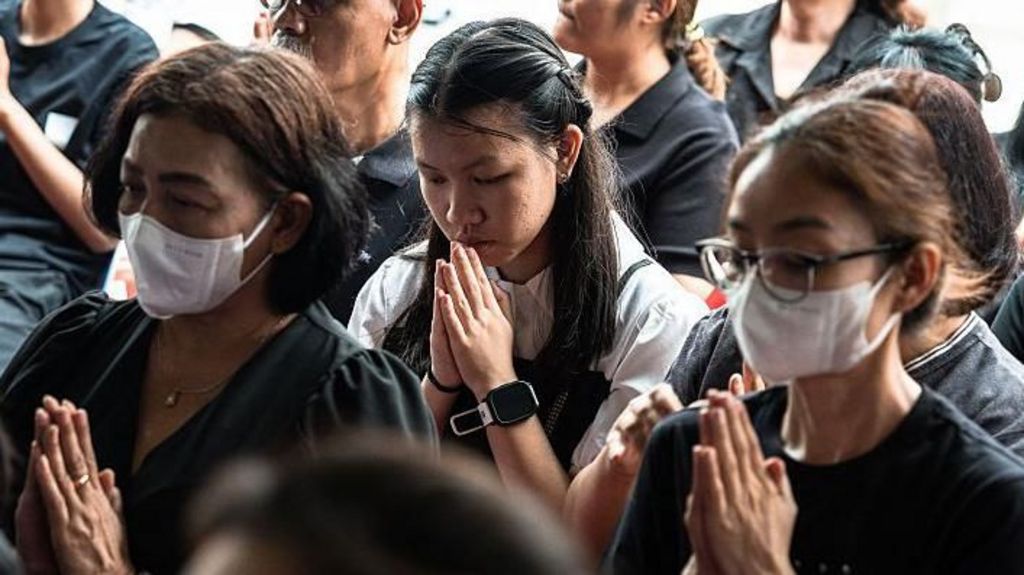
    A devastating traffic incident has shaken the Buddhist community in northeast Thailand, leaving eight monks dead and more than a dozen injured after an 11-year-old boy lost control of a stolen pickup truck and struck a walking pilgrimage procession, local law enforcement officials confirmed.

    The tragedy unfolded on a public roadway in Mukdahan province, where a group of 35 Buddhist monks and five lay devotees were traveling on foot as part of a religious pilgrimage. Without warning, the unlicensed child driver plowed into the procession, causing catastrophic harm, regional police spokesperson Major General Pairoj Thaiphutsa told reporters.

    Widespread footage of the crash site circulating on social media captures the grim aftermath: saffron-colored monk robes and personal items strewn across the roadside next to the heavily damaged pickup truck. Emergency response teams arrived quickly to triage casualties, with five of the monks pronounced dead at the scene. Three more injured monks succumbed to their wounds after being transferred to local medical facilities, according to official police updates.

    Preliminary investigations confirm the boy had taken the vehicle from his parents without permission before losing control of the truck and colliding with the procession. Law enforcement authorities have launched a full probe into the incident to determine the exact root causes of the crash, and the seized truck has been sent for forensic analysis to rule out mechanical failure or other contributing factors.

    “Our team has summoned the child’s parents for questioning to clarify who bears legal responsibility for the child’s supervision, which will allow us to move forward with the appropriate legal process,” Major General Pairoj explained in a press briefing.

    As of the latest updates, several of the more than 10 injured monks remain in critical condition. Mukdahan Hospital has issued an urgent public appeal for community blood donations to meet the massive transfusion needs of surviving victims, as local medical facilities work around the clock to stabilize those hurt in the crash.

  • South Korea disputes US congressional report claiming discrimination against Seattle-based Coupang

    South Korea disputes US congressional report claiming discrimination against Seattle-based Coupang

    A diplomatic and regulatory dispute has emerged between South Korea and the United States after a U.S. congressional committee published a report accusing Seoul of unfair, discriminatory treatment of U.S.-listed e-commerce giant Coupang, prompting a sharp pushback from South Korean government officials.

    The controversy traces back to June 2024, when South Korea’s Personal Information Protection Commission (PIPC) imposed a record-breaking 625 billion won ($403 million) fine against Coupang following a massive 2023 data breach that exposed personal information belonging to more than 37 million individuals, 33 million of whom are active Coupang customers. According to PIPC findings, the breach was not the result of advanced, sophisticated hacking; rather, it stemmed from severe gaps in Coupang’s internal security protocols. A former Coupang employee retained unauthorized access to customer databases using a stolen security key after leaving the company, and lax internal controls allowed an unidentified Chinese developer to access all stored user data without detection for an extended period. Regulators also noted that Coupang violated South Korean data protection law by failing to report the breach within the mandatory 72-hour window, a failure that compounded risks to consumers.

    On Wednesday, the U.S. House Judiciary Committee released a 35-page report that framed the fine and preceding investigation as part of a pattern of growing discrimination against U.S.-owned businesses operating abroad. The report went as far as to accuse South Korean antitrust and privacy regulators of using coercive investigation tactics and running a deliberate harassment campaign against the company.

    The South Korean government issued a formal, firm rejection of these claims just one day later. Foreign Ministry spokesperson Park Il stated that the U.S. congressional report relies exclusively on one-sided claims from Coupang and completely omits Seoul’s official position on the case. Park emphasized that all investigative steps and regulatory penalties against Coupang were conducted in full compliance with South Korea’s domestic laws, and rejected assertions that the company faced unfair treatment or discriminatory regulation.

    “Our handling of the Coupang case has focused on addressing the personal data breach and protecting South Korean consumers,” Park said, adding that all investigative actions and penalties were implemented lawfully and without bias. “Claims that our government carried out discriminatory investigations and imposed unfair regulations on the company simply do not align with the facts.”

    For its part, Coupang has apologized to affected customers for the security failure, but has moved to challenge the fine through South Korea’s administrative court system. The company argues that the privacy regulator failed to adequately recognize steps it has taken to strengthen security protocols and mitigate harm to users after the breach was discovered. In an emailed statement, Coupang said it regrets the circumstances that led to the congressional investigation, and affirmed its commitment to reaching a constructive resolution that allows the company to continue acting as a connector for U.S.-South Korea trade and investment.

    Headquartered in Seattle, Coupang brands itself as a U.S. technology and Fortune 150 company that links thousands of American businesses and brands to global markets. Despite its U.S. corporate registration, the vast majority of the company’s revenue comes from its operations in South Korea, where it is a leading e-commerce platform famous for its same-day and next-day delivery of groceries, prepared food, and general consumer goods.

    According to reporting from South Korea’s Yonhap News Agency, which cites U.S. Senate lobbying disclosure documents, Coupang has spent more than $1 million on lobbying activities in the U.S. since the data breach scandal became public in November of last year. Those lobbying efforts have targeted both the White House and Congress, as the company works to build support for its position in the dispute with South Korean regulators.

  • India’s Modi and Japan’s Takaichi expand defense and economic security ties

    India’s Modi and Japan’s Takaichi expand defense and economic security ties

    In high-stakes diplomatic talks held in New Delhi on Thursday, Japanese Prime Minister Sanae Takaichi and Indian Prime Minister Narendra Modi have concluded their summit with a sweeping package of bilateral agreements designed to deepen ties across defense, economic coordination, and maritime security.

    Following the closed-door negotiations, Modi outlined the key outcomes of the meeting to reporters, noting that the two nations will move forward with joint development of naval radio antenna infrastructure and have formally adopted a shared roadmap guiding long-term economic security collaboration. Beyond these core initiatives, Modi added that the leaders had reached consensus on ramping up joint work across a portfolio of high-priority strategic sectors, including artificial intelligence, commercial and military shipbuilding, renewable biogas energy, semiconductor supply chain development, and other cutting-edge critical technologies.

    “For both India and Japan, economic security is not a separate policy concern — it is a shared core security interest,” Modi emphasized in his post-summit remarks.

    The deepening partnership builds on decades of growing economic ties between the two Asian powers. Japan currently ranks among India’s top sources of foreign direct investment, and has anchored signature infrastructure projects across India, most prominently the Mumbai-Ahmedabad high-speed rail line, one of India’s most ambitious modern transit upgrades. Today, more than 1,400 Japanese firms maintain active operations in India, with nearly half of those businesses focused on manufacturing activity.

    Fresh official data from the Indian government puts bilateral trade between the two nations at $27.5 billion for India’s 2025-26 fiscal year. Japanese investment inflows into India between April and December 2025 alone totaled $3.2 billion, a figure that aligns with Tokyo’s 2024 pledge — made during Modi’s official visit to Tokyo last year — to more than double its cumulative investment in India to over $61 billion over the coming decade. Takaichi’s three-day visit to New Delhi was held to mark the 16th iteration of the annual India-Japan summit, a recurring dialogue that has grown in strategic importance in recent years.

    Both India and Japan have made boosting bilateral collaboration in the Indo-Pacific a top foreign policy priority, and both are core members of the Quad, a regional security grouping that also includes the United States and Australia. The Quad was established to coordinate on maritime security, defense cooperation, and infrastructure development to counter the growing influence of China across the Indo-Pacific region.

    Takaichi reaffirmed that New Delhi and Tokyo share unwavering commitment to Japan’s Free and Open Indo-Pacific (FOIP) initiative, which is rooted in principles of unimpeded freedom of navigation and universal respect for established international law. “Expanding our partnership on maritime security is particularly critical to upholding peace and stability across the entire region,” Takaichi stated.

    Notably, the summit came as regional tensions over Indo-Pacific strategy remain high, and Chinese officials pushed back against the initiative Thursday. During a regular Beijing press briefing, Chinese Foreign Ministry spokesperson Guo Jiakun argued that some outside powers frame their initiatives as promoting “freedom and openness” while actually pursuing policies of confrontation and division within the region. Guo stressed that this kind of approach directly contradicts the widespread desire among Indo-Pacific nations for peace, shared development, and cross-border cooperation.

    “The Asia-Pacific needs stability, not turmoil; it needs a laser focus on cooperation, not bloc-based division,” Guo said. Associated Press correspondent Ken Moritsugu contributed reporting from Beijing for this article.

  • Pilot who hit Beijing’s tallest building wrote about ‘ending his life,’ Chinese authorities say

    Pilot who hit Beijing’s tallest building wrote about ‘ending his life,’ Chinese authorities say

    BEIJING – Just one week after a small civilian aircraft collided with Beijing’s tallest structure, Chinese local officials have released conclusive findings from their investigation, confirming the crash was a deliberate act of suicide by the 66-year-old pilot. In an official public statement shared via social media by the Chaoyang District People’s Government, investigators confirmed the incident stemmed entirely from personal issues tied to the pilot, identified only by his surname Liu.

    The crash, which occurred at roughly 6 p.m. last Friday during rush hour in downtown Beijing’s central business district as office workers were heading home for the day, left Liu dead at the scene and injured 13 additional people on the ground. Officials updated the public on the status of those injured Thursday, noting none of the wounds sustained were life-threatening, and one injured person has already been released from the hospital after receiving treatment.

    The aircraft hit the 108-story CITIC Tower, a landmark skyscraper widely known locally as the China Zun, named for its distinctive design that replicates the shape of an ancient Chinese ceremonial wine vessel. The impact left a large visible hole in the building’s glass exterior, triggering immediate public concern over aviation security protocols in the Chinese capital, particularly in dense, heavily populated urban areas.

    Per the official investigation breakdown, Liu was flying a two-seat trainer aircraft. He first completed a brief flight with an instructor before departing for a solo flight from a general aviation airport located on the outer edge of Beijing’s suburban area. Mid-flight, he intentionally deviated from the pre-approved, planned flight route, and all communication with air traffic control was lost shortly after.

    Investigators also shared key background details on Liu: he was unemployed, had gone through a divorce, and lived alone prior to the incident. He had long struggled with insomnia and clinical anxiety, and multiple entries in his personal diary explicitly referenced his plan to end his own life, the Chaoyang district government statement confirmed.

  • China says pilot crashed small plane into skyscraper for ‘personal reasons’

    China says pilot crashed small plane into skyscraper for ‘personal reasons’

    Last Friday, a small civilian aircraft crashed into CITIC Tower — Beijing’s tallest skyscraper, also known as China Zun — leaving the pilot dead and 13 other people injured, according to official statements released by local authorities in Beijing’s Chaoyang District on Thursday.

    Nearly a week after the incident, authorities have released the full findings of their ongoing investigation, confirming that the 66-year-old pilot, identified only by his surname Liu, carried out the crash intentionally due to long-standing personal mental health struggles. A divorced freelance worker who lived alone in Beijing, Liu had reportedly lived with chronic insomnia and clinical anxiety for an extended period before the incident. Investigators found multiple references to ending his own life in Liu’s personal diary, leading the inquiry panel to conclude the crash was a deliberate act of endangering public safety driven by personal reasons.

    The crash claimed Liu’s life at the scene. Of the 12 injured people hospitalized following the collision, one has already been discharged and the rest are receiving treatment, authorities confirmed.

    Located just a few kilometers from Zhongnanhai, the headquarters of the Communist Party of China, the 109-story CITIC Tower is one of the most prominent high-rise structures in central Beijing. Amateur footage of the crash showing debris falling from the skyscraper spread rapidly across Chinese social media platforms in the hours after the incident, before most clips were removed as the investigation got underway. Even unrelated posts, photos and memes featuring the landmark were taken down in the aftermath of the crash, a move that drew attention from international observers.

    Following the incident, multiple aviation operators told the BBC that national aviation regulators had ordered an immediate suspension of all light aircraft operations across parts of the country, a precautionary move to enhance security amid the ongoing investigation.

    Flight tracking service Flightradar24 confirmed that the aircraft Liu was flying was an Aurora SA60L, a two-seat, single-engine light sport aircraft produced by Chinese domestic manufacturer Sunward Aircraft. Designed primarily for recreational flying, aerial photography and short touring trips, the plane measures 6.9 meters in length and has an 8.6-meter wingspan. Authoritative records show Liu earned his sport pilot license in 2021 and upgraded to a full private pilot license just two years before the crash, in 2024.

    According to the official flight timeline, Liu took off from an airfield in Beijing’s Pinggu District on the day of the crash, completing a supervised training flight before departing on a solo flight. During the solo portion of his flight, Liu deliberately deviated from his pre-approved flight route and designated operating area, before losing contact with air traffic controllers at the airfield. Moments later, the plane collided with the CITIC Tower.

  • Hong Kong marks Party’s anniversary with events

    Hong Kong marks Party’s anniversary with events

    On July 1, 2026, the Hong Kong Special Administrative Region (HKSAR) kicked off a citywide series of celebratory events marking two landmark milestones: the 105th anniversary of the founding of the Communist Party of China (CPC) and the 29th anniversary of Hong Kong’s return to the motherland. The dual commemorations, launched at an official opening ceremony, bring together thematic exhibitions highlighting China’s progress in space exploration and green development, alongside community-focused activities spread across all 18 of Hong Kong’s administrative districts, bringing celebrations to residents across the city.

    In his opening address at the ceremony, HKSAR Chief Executive John Lee Ka-chiu outlined the core goals of the celebrations: to deepen Hong Kong residents’ understanding of the nation’s major developmental achievements over the past decades, nurture a stronger sense of national confidence, and reinforce patriotic sentiment across the community – with a particular focus on engaging young people.

    Lee emphasized that under the thoughtful framework and successful implementation of the “one country, two systems” policy, Hong Kong holds a unique strategic advantage: it retains close, uninterrupted connections with global markets while standing firmly backed by the full support of the Chinese mainland. Under the CPC’s leadership, the Chinese nation has delivered extraordinary progress in boosting living standards and driving sustainable economic growth, Lee noted, adding that the nation’s overall advancement has laid a solid foundation for Hong Kong’s ongoing prosperity, and the central government has repeatedly shown unwavering care and steadfast support for the city.

    “Hong Kong’s transition from chaos to stability, and its steady march toward greater prosperity, stands as clear proof of the enduring vitality of the ‘one country, two systems’ framework,” Lee told attendees.

    Also speaking at the ceremony, Zhou Ji, director of the Liaison Office of the Central People’s Government in the HKSAR, pointed out that 2026 marks the start of China’s 15th Five-Year Plan (2026-2030), and the nation holds high expectations for Hong Kong’s role in this new developmental phase. By actively integrating into and serving the country’s overall development blueprint, Zhou said, Hong Kong can unlock new growth opportunities, secure long-term prosperity and stability, and make greater contributions to the development of a powerful modern nation and the advance of national rejuvenation.

    Zhou added that the central government has consistently offered full support to Hong Kong as it navigates a range of challenges, while helping the city preserve its unique competitive advantages and position in the global economy.

    Following the ceremony, Kenneth Fok Kai-kong, a Hong Kong legislator, shared his perspective in a written statement, noting that China’s rapid economic expansion and long-term social stability would not have been possible without the CPC’s leadership. “We must fully and faithfully implement the ‘one country, two systems’ policy, support the HKSAR government in its governance work, better integrate into and serve the national development strategy, jointly safeguard Hong Kong’s long-term prosperity and stability, and contribute Hong Kong’s strength to the great rejuvenation of the Chinese nation,” Fok said.

    Earlier in the day, the HKSAR government hosted an official reception to mark the 29th anniversary of Hong Kong’s return to the motherland. At the reception, Lee announced that the SAR government will accelerate work to draft Hong Kong’s first-ever five-year development plan and advance construction of the Northern Metropolis project, moves designed to strengthen and consolidate Hong Kong’s core competitive advantages.

    A pre-recorded video message from Lai Ka-ying, Hong Kong’s first homegrown astronaut and a payload specialist currently serving on China’s Tiangong Space Station, was screened for guests. In her message, Lai extended her wishes that Hong Kong will continue to grow more prosperous and stable under the unwavering support of the motherland. Ahead of the official ceremonies, a flotilla of fishing boats decked with China’s national flag and the flag of the HKSAR sailed through iconic Victoria Harbor, kicking off the day’s celebrations in a vivid display of national and civic pride.

  • Space tests to aid blood and brain research

    Space tests to aid blood and brain research

    More than a month after docking at China’s Tiangong Space Station, the three-person Shenzhou XXIII crew has completed a diverse slate of cutting-edge scientific experiments spanning space medicine, neuroscience, robotics and microgravity physics, China’s manned space agency has confirmed. Led by mission commander and spaceflight engineer Colonel Zhu Yangzhu, with spacecraft pilot Colonel Zhang Zhiyuan and science payload specialist Lai Ka-ying completing the team, the astronauts have supported pioneering research designed to advance human understanding of long-duration spaceflight and improve future deep space mission capabilities.

    In a series of collaborative medical procedures, the crew performed reciprocal ultrasound scans of multiple body regions including the neck, wrist, and abdomen. The biometric data collected during these scans is now being analyzed by terrestrial researchers to map how microgravity alters blood vessel structure, blood flow dynamics, and the adaptive remodeling of sensitive human muscle groups — insights critical for protecting astronaut health on months-long missions beyond low-Earth orbit.

    The team also advanced in-orbit robotics research, conducting haptic interaction trials using the experimental robot Xiaohang. Early findings from these tests will be used to refine motion planning algorithms, a key step toward developing more capable, reliable autonomous robots that can assist astronauts with routine and complex tasks during future space expeditions.

    Neuroscience research forms a core pillar of the mission’s scientific agenda. The Shenzhou XXIII crew used electroencephalogram recording equipment to run multiple experiments focused on visual-motor processing and how human behavioral responses shift under different space-based lighting conditions. Complementing this work, they deployed near-infrared functional brain imaging technology to collect high-resolution data on how long-duration space exposure alters the brain’s functional network organization, as well as the brain’s innate ability to self-adjust and adapt to the extreme environment of space.

    Beyond life sciences, the crew installed and serviced several leading-edge microgravity physics experimental facilities, advancing global research into physical phenomena that can only be observed in weightless conditions. In a novel addition to the mission’s health research, the team also used a specialized diagnostic tool integrating traditional Chinese medicine diagnostic principles to collect physiological data. This data is expected to lay a solid foundation for developing more effective long-term astronaut health monitoring protocols for future missions.

    When off-duty from scientific tasks, the crew made a small piece of culinary history: using a specially designed hot air oven, they prepared roasted pumpkin — a dish no space crew has cooked before. The novel meal follows the 2025 precedent set by Shenzhou XX and Shenzhou XXI crews, who cooked and enjoyed grilled chicken wings and steak, marking the first publicly broadcast space barbecue in human spaceflight history.

    Liu Weibo, an engineer at the Astronaut Center of China, explained that China’s proprietary space oven is a world-first innovation: unlike earlier space cooking devices, it integrates fume extraction, food residue collection, even heating, and food securing systems all within a single closed chamber. While the United States sent an oven to the International Space Station in 2019 for an experiment that baked cookies in microgravity, those cookies were never consumed by crew and were returned to Earth solely for research, making China’s crew space cooking milestones unprecedented.

    Launched on May 24, 2026, the Shenzhou XXIII mission reached Tiangong the following day. It marks China’s 17th overall manned space mission and the 11th crewed expedition to the Tiangong Space Station, continuing the country’s steady progress in building a permanent, research-focused outpost in low-Earth orbit.

  • Farmers warn ban on Chinese-made drones threatens US agriculture

    Farmers warn ban on Chinese-made drones threatens US agriculture

    Across the United States, thousands of agricultural workers and small business owners are sounding the alarm over a impending federal restriction on Chinese-made drones, warning the policy could deliver immediate, irreversible damage to America’s $1.3 trillion agriculture industry. For countless growers and rural operators, these unmanned aerial systems have become as foundational to modern farming as the traditional tractor, transforming everything from crop monitoring to pest control.

    Tony Zenari, a small family farm operator, relies on his Chinese-built drone daily to survey crop health, track weed spread and map flood damage across his fields. Without access to replacement parts, repairs, or new units, Zenari says he will be forced to return to inefficient, high-cost diesel-powered tractors that cost thousands of dollars a week to operate, raising emissions and threatening his farm’s viability. For combat veteran Nick Grott, who founded Indiana’s Patriot Aerial Solutions after his honorable discharge from the military, agricultural drone technology gave him a new professional purpose. Grott, who has tried domestic drone alternatives, says American models still lag behind Chinese manufacturers in key areas like software reliability, video transmission and controller connectivity — features critical to safe, effective agricultural work. William B. Blaylock II, another operator, uses Chinese drones to cut inspection time for farm infrastructure and search for missing or injured cattle across vast stretches of open land, completing work that once took days in just hours.

    These personal accounts are part of more than 32,000 public comments submitted to the U.S. Federal Communications Commission (FCC) urging the agency to reverse its December 2025 decision to add all new foreign-made drones and critical components — including models from industry leader DJI and manufacturer Autel — to a “covered list” of devices deemed to pose an “unacceptable risk” to U.S. national security. While the FCC granted limited exemptions to some devices after the announcement, the order still blocks widespread access to camera-equipped agricultural drones built by the two Chinese firms.

    DJI challenged the FCC’s ruling in a January 2026 petition, arguing the decision violates both constitutional protections and federal law. As the agency’s original May 11 public comment deadline approached, regulators were inundated with submissions, the vast majority from farmers, aerial spray specialists and small rural businesses calling for a policy reversal. In response to a June 9 filing of an independent cybersecurity audit conducted by U.S. cybersecurity firm OnDefend, the FCC extended the public comment window to August 28.

    The independent OnDefend audit, which was added to the official FCC public record, found no evidence of hidden backdoors in DJI drone systems, no unauthorized data transmissions sent outside the United States, and no viable pathway for bad actors to hijack or weaponize the devices for malicious purposes. DJI’s petition is currently under review by the FCC’s Office of Engineering and Technology and the full five-member commission, awaiting a final ruling that will shape the future of U.S. precision agriculture.

    Operators across the industry emphasize that the FCC’s national security justifications for the ban remain entirely unsubstantiated. Andrew Adams, of Michigan-based Aerial Acres AG, LLC, notes that Chinese-built drones have delivered unprecedented precision, efficiency and cost savings to U.S. growers at a time when farm margins are shrinking and input costs are skyrocketing. The technology allows farmers to apply crop protection products and nutrients with pinpoint accuracy, cutting waste and reducing the sector’s environmental footprint. For small and mid-sized farm operations in particular, Adams says affordable Chinese drones have leveled the competitive playing field against large industrial agribusinesses that can absorb higher overhead costs.

    Aaron Wright, founder of Whiskey Mike Drone Solutions, which uses DJI and EAVision spray drones to treat thousands of acres of farmland annually, points out that domestic alternatives still cannot match the combination of hardware performance, software functionality and affordability offered by Chinese manufacturers. “Capitalism is all about free choice in the marketplace,” Wright wrote in his public comment. “Give DJI a chance to prove if they are indeed a threat to our national security or not.”

    Even operators who support targeted, reasonable national security standards say a broad, blanket ban on Chinese-built drones creates unnecessary hardship for millions of responsible civilian users. Blaylock notes that for most American operators, current Chinese-manufactured drones offer an unbeatable mix of affordability, reliability, camera quality, flight safety features and ease of use that no domestic product can match. Cutting off access to these tools without a viable replacement would cripple legal agricultural, commercial and creative work across the country, he argues.

    Industry experts and operators agree that U.S. drone manufacturing is not currently positioned to replace Chinese models in the near term, even if the ban goes into effect immediately. Many key components required for domestic drone assembly, including batteries and motors, are already included on the FCC’s covered list, and domestic supply chains cannot shift away from Chinese-sourced parts overnight.

    A 2023 U.S. Department of Agriculture report identified drone technology as a core pillar of the precision agriculture toolkit needed to address three of the sector’s biggest ongoing challenges: rising production costs, climate change adaptation, and widespread labor shortages. Drones enable fast, accurate scouting, mapping and data collection that directly improve planting and harvest decision-making, boosting crop yields and reducing waste.

    Industry data underscores just how deeply integrated Chinese-built drones are into U.S. agricultural operations. The American Spray Drone Coalition reports that 93.5 percent of the 8,950 agricultural spray drones sold in the U.S. in 2024 were manufactured in China. Following the FCC’s announcement, total annual sales dropped to just 3,711 units in 2025, with Chinese-made models accounting for 75.8 percent of the much smaller market amid a sharp decline in DJI imports.

    Volitant Technologies LLC, a Nebraska-based agricultural drone retailer that serves hundreds of farmer customers across the Midwest, describes DJI’s popular Agras series as “the operational backbone of precision agriculture for thousands of US farms” at a time when growers are facing some of the toughest economic conditions in decades. Losing access to new drone models and critical firmware updates, the company says, will leave U.S. farmers with degraded device performance, lower crop yields, and no path to adopt next-generation precision farming tools without absorbing massive unexpected cost increases.

    For U.S. growers, this threat is not a distant hypothetical. “This is not a theoretical future harm,” Volitant Technologies wrote in its public comment. “Farmers are already making contingency plans for a supply chain that may not be there in two years.”

  • India seeking to recover the body of an Everest climber known as ‘Green Boots’

    India seeking to recover the body of an Everest climber known as ‘Green Boots’

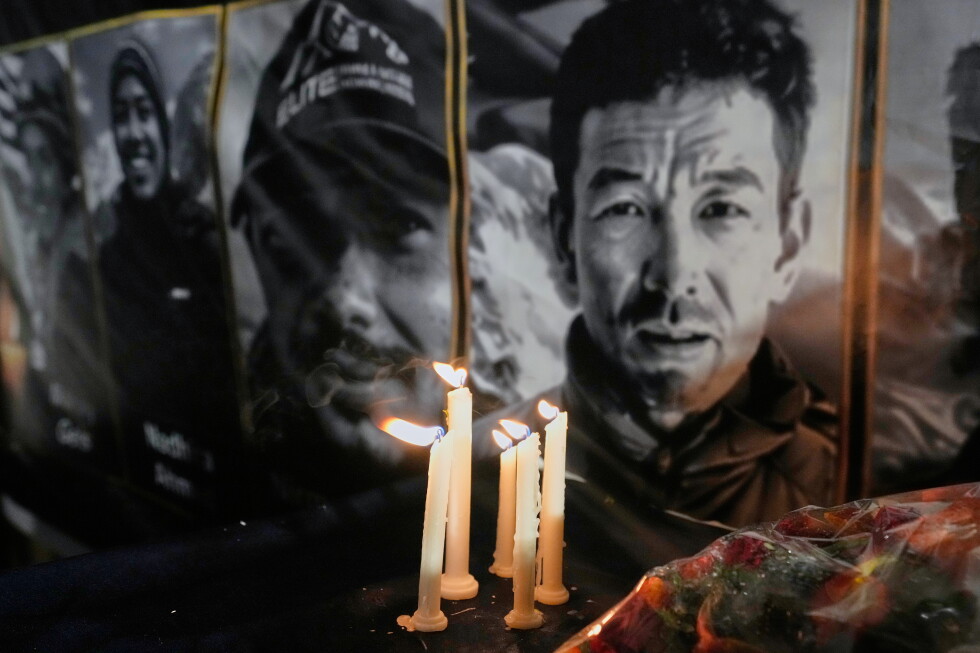
    For nearly 30 years, a set of human remains marked by a pair of vivid green climbing boots has stood as one of the most grimly recognizable landmarks on Mount Everest’s northeast ridge, guiding thousands of climbers through the harsh terrain of the mountain’s deadly 8,000-plus meter “death zone”. Now, nearly three decades after the climber died in one of Everest’s deadliest recorded disasters, Indian authorities have launched the first formal steps to bring his remains down from the world’s highest peak.

    The climber widely known as “Green Boots” is believed by Indian officials to be Dorje Morup, a member of an Indo-Tibetan Border Police (ITBP) expedition that attempted to summit Everest in May 1996. That storm season would go down in mountaineering history as one of the deadliest ever on the peak: when severe weather rolled in over the summit as Morup’s team neared the top, three members of the six-person ITBP expedition chose to turn back, while Morup and two other colleagues pushed on to complete their ascent. All three ITBP climbers ultimately lost their lives in the blizzard, which claimed a total of eight lives across multiple independent expeditions on the mountain that season.

    Ever since 1996, Morup’s remains have rested in a sheltered cave in the death zone – the area above 8,000 meters where oxygen levels are too low to sustain human life for extended periods – taking their nickname from the bright green mountaineering boots the climber wore. For decades, passing climbers on the popular northeast route have used the remains as a key visual marker to gauge their progress toward the summit. Unlike many other bodies left on Everest, “Green Boots” has become a widely known part of the mountain’s climbing lore, referenced in countless expedition accounts and mountaineering histories.

    The ITBP, India’s paramilitary force that manages border security along the Indo-Tibetan border, has now begun the procurement process to hire specialized high-altitude recovery teams to retrieve the remains from the northern route, which lies on the Tibetan side of Everest controlled by Chinese authorities. The recovery effort still faces steep barriers: all access to the northern side of the mountain is tightly regulated by Chinese officials, who have not yet issued any public comment on India’s recovery plan, and closed the entire mountain to foreign climbers for the 2026 spring climbing season without offering a public explanation. Without official Chinese approval, the operation cannot move forward.

    Industry experts note that even with approval, the mission will be one of extreme danger. Body recovery operations in Everest’s death zone are notoriously high-risk: helicopters cannot land or even hover safely at that altitude, forcing recovery teams to carry remains down steep, icy slopes on foot. Teams face constant threats of avalanches, sudden severe weather storms, and life-threatening altitude sickness caused by the extremely low oxygen levels above 8,000 meters. Of the nearly 350 people who have died climbing Everest since the first successful summit in 1953, the majority of their bodies remain on the mountain’s slopes – the high cost and extreme risk of recovery operations make bringing most remains down unfeasible.

    Pemba Sherpa, founder of Kathmandu-based adventure outfitter Xtreme Climbers Treks and Expedition, called the recovery logistically possible but heavily dependent on regulatory approval. “It is not impossible to retrieve the body from Everest, but the first challenge is getting permission from the Chinese officials and then only can they proceed to bring the body down,” Sherpa explained. As of the latest update, it remains unclear whether the recovery team will be made up of Indian, Nepali, or Chinese specialists, and no timeline for the operation has been announced, as planners wait for both regulatory approval and a window of favorable climbing weather on the peak.