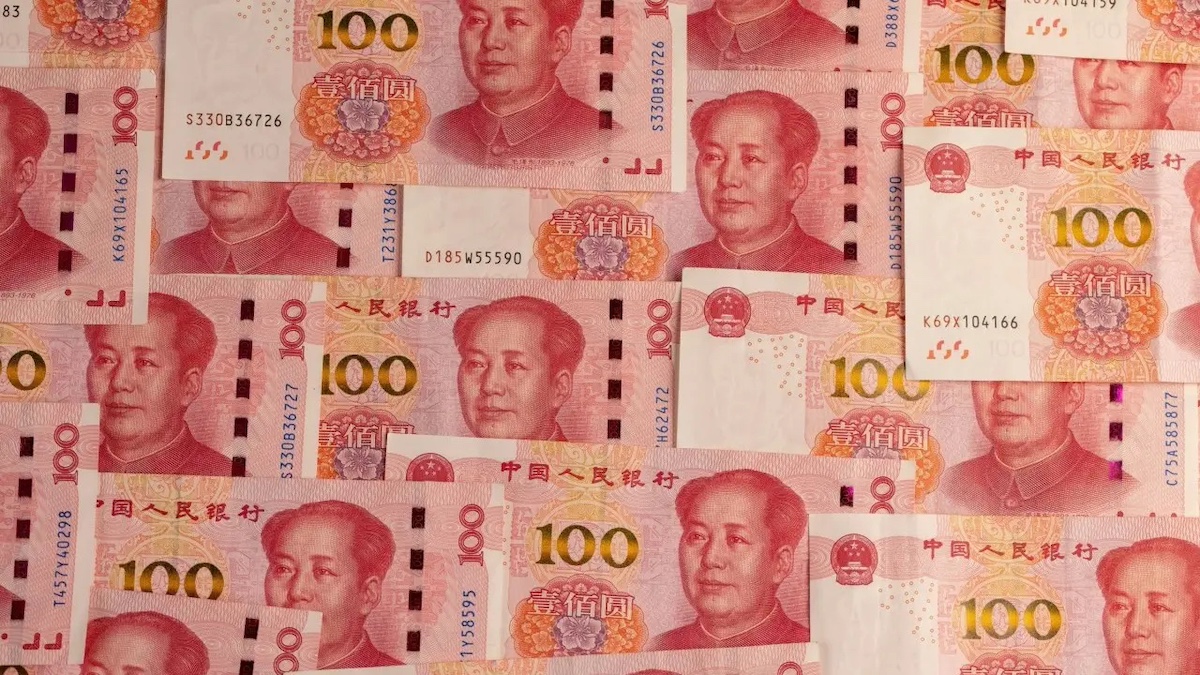
In a recent call for coordinated global action on trade imbalances, German Chancellor Friedrich Merz has emerged as the most high-profile advocate for a second Plaza Accord, a scheme designed to deliberately push up the value of China’s yuan to erode what he frames as the country’s unfair export advantage. Merz claims the Chinese currency is undervalued by roughly 30%, alleging Beijing deliberately keeps it cheap to flood global markets with artificially low-priced goods. He warns that state-subsidized overcapacity in key Chinese manufacturing sectors is destabilizing a global economy still recovering from years of successive shocks. Merz’s grievances are far from isolated in European leadership: European Central Bank President Christine Lagarde has previously estimated the yuan’s undervaluation at around 16%, while European Commission President Ursula von der Leyen has publicly described China’s current export competitive edge as fundamentally unsustainable for the global trading system.
Despite this broad European criticism of China’s currency and trade practices, economic analysts broadly agree that a 1985-style currency pact modeled after the original Plaza Accord – which forced a sharp appreciation of Japan’s yen to correct US trade imbalances – is deeply unlikely to resolve the grievances European leaders have raised, and carries major risks of unintended consequences. There are two core structural flaws in the proposal from the outset: first, China is not a member of the Group of Seven, the bloc that orchestrated the original 1985 agreement among major advanced economies. Second, the 2026 global financial system is unrecognizable from the mid-1980s landscape, making a four-decade-old framework a poor fit for modern challenges.
Attempting to force a sharp, rapid appreciation of the yuan would carry significant downside risks for the global economy, experts warn. A sudden revaluation would exacerbate China’s already persistent deflationary pressures, deepen long-running structural imbalances in the country’s economy, and worsen the ongoing crisis in its struggling property sector. Many analysts argue that the economic damage from a forced yuan revaluation would ultimately outweigh any perceived benefits from reducing China’s export competitiveness, for both China and its global trading partners.
History also directly undermines the case for Merz’s proposal, as the original Plaza Accord failed to deliver long-term benefits and triggered severe economic harm for Japan. Bill Mitchell, a leading currency expert at Australia’s University of Newcastle, points out that the United States is highly unlikely to succeed in bullying China into accepting a currency deal on the terms it forced on Japan in the 1980s. Mitchell notes the original accord was extremely economically disruptive, directly contributing to Japan’s massive 1980s asset bubble and the decades of stagnation that followed, with little to no lasting economic gain for the United States.
Another major complication is that Merz’s proposal puts it on a potential collision course with US President Donald Trump’s own competing trade plan, the self-named “Mar-a-Lago Accord”, which attempts to revive a global trade framework that no longer exists in modern markets. Neither leader’s political track record suggests a coordinated US-Eurozone effort to pressure China on currency would proceed smoothly. Trump has long favored unilateral transactional pressure over multilateral coordinated diplomacy, making joint action unlikely.
For its part, Beijing has closely studied the economic fallout of the 1985 Plaza Accord, which it views as the starting point of Japan’s decades-long stagnation. Chinese leaders have repeatedly made clear they have no interest in repeating Japan’s experience, a position that shapes the country’s ongoing tight management of the yuan via daily central bank fixings and strict capital controls. Chinese officials have also stressed that meaningful, externally forced revaluation is completely off the table until the yuan becomes fully convertible under Beijing’s policy timeline.
Merz and Trump also underestimate the significant political and economic leverage Chinese President Xi Jinping holds to resist external pressure, a stark contrast to the position of Japanese Prime Minister Yasuhiro Nakasone in the 1980s. Xi also has a factually defensible argument: Chinese authorities have actively intervened to prop up the yuan’s value in recent months, even as domestic deflationary pressures would normally drive the currency lower.
Today’s global power dynamics also make the original Plaza Accord playbook unworkable. The 1985 agreement succeeded because the US held overwhelming dominance over the then-Group of Five, and Japan relied heavily on access to American consumers to fuel its export-led growth. Today, US global economic influence has eroded significantly: years of Trump-era tariffs and ongoing geopolitical tensions over Iran have left the US more isolated internationally and its domestic economy more exposed to global shocks. By contrast, China is now the world’s largest trading nation, while the European Union’s 27 member states remain deeply divided on China policy and are still grappling with post-pandemic economic fragility. Germany alone runs a roughly 90 billion euro ($102 billion) annual trade deficit with China, leaving Berlin with very little bargaining leverage to force concessions from Beijing.
Beyond currency dynamics, Merz faces far more pressing structural challenges to European industrial competitiveness. The real “China Shock 2.0” is not driven by exchange rates, but by the rapid rise of Chinese technology leaders in cutting-edge strategic sectors, from electric vehicle giant BYD to artificial intelligence innovator DeepSeek. These companies’ growing global market share is already reshaping Europe’s industrial landscape: German automaker Volkswagen is reportedly considering closing four domestic factories and cutting 100,000 jobs as Chinese brands expand their global footprint.
Analysts stress that European industrial weakness cannot be blamed solely on Chinese competitiveness. Europe’s own weak domestic demand and longstanding industrial complacency are major contributing factors. As Volkswagen shareholder Ingo Speich noted in comments to Reuters, “The high costs are merely a symptom, not the cause… the root cause is weak sales.” His point underscores a core reality: unless European manufacturers develop products that global consumers actually want, debates about currency valuation and cost-cutting will do little to reverse declining market share. Volkswagen’s predicament is a microcosm of Europe’s broader challenge in an era of rising Chinese industrial power. While a stronger yuan might have boosted European manufacturers decades ago, China’s rapid ascent up the global value chain has completely altered this calculation. Today, China’s competitive advantage in electric vehicles, batteries, solar energy and advanced manufacturing stems from industrial policy, economies of scale and technological innovation, not cheap labor or undervalued exchange rates. Even a 10 to 20% yuan appreciation would not erase these competitive advantages, though targeted higher trade barriers might alter market dynamics at the margin.
China is now accelerating structural shifts that are reshaping the entire global economy. When China joined the World Trade Organization in 2001, it unleashed a wave of low-cost, subsidized exports of basic goods like textiles, furniture and entry-level electronics. Today’s phase of Chinese export growth is far more consequential: China is now targeting high-value growth sectors including electric vehicles, clean energy and advanced manufacturing, reshaping competitive dynamics in the industries that will define the 21st century global economy.
Addressing this new wave of Chinese industrial competition requires far more than symbolic currency diplomacy, analysts argue. Chris Bradley, an analyst at the McKinsey Global Institute, notes that advanced economies need to pursue a deep transformation of domestic productivity, invest in innovation, specialize in less cost-sensitive high-value sectors, and implement policies that create a more level global playing field. Bradley’s analysis finds that a 30% boost to domestic productivity, combined with cost convergence in equipment, energy and raw materials, and faster execution of industrial projects modeled on China’s “speed to market” could close between 30 and 80% of the current cost gap between Western and Chinese manufacturers. Bradley adds that achieving a sustainable new global trade equilibrium requires advanced economies to specialize in future-defining industries, revive domestic innovation, and overhaul outdated industrial policy frameworks to address modern competitive distortions. In short, Europe’s core challenge is not just China’s economic rise – it is Europe’s own need to adapt to a new global economic order.
For the euro area, China’s current deflationary pressures and manufacturing glut create unique spillover risks. Valentina Aprigliano, an economist at the Bank of Italy, explains that “For the euro area, the most immediate transmission channel operates through import prices.” Weak domestic price growth in China, combined with robust manufacturing output, is exported abroad via lower-priced imported goods. This channel is particularly impactful for the euro area, which imported more than 430 billion euros in manufactured goods from China in 2025. Import volumes from China grew across most product categories in 2024 and 2025, while per-unit import values declined sharply, especially in 2025.
This dynamic has led many analysts to warn that Europe is at risk of misdiagnosing its trade problems with China. Focusing on currency valuation only addresses surface-level symptoms, not the underlying competitiveness gap between European and Chinese manufacturers. Given China’s ongoing industrial policy momentum, it is no longer credible to argue that yuan appreciation would halt China’s ascent up the global value chain, nor would exchange rate shifts suddenly restore Western Europe’s industrial dominance. A currency agreement alone cannot rebalance EU-China trade, or US-China trade for that matter.
Scott Kennedy, an economist at the Washington-based Center for Strategic and International Studies, notes that China’s high-tech industrial drive has made enormous, uneven progress across key sectors over the past few decades. “These advances have directly translated into enhanced international power and influence for China. The United States and like-minded countries need to respond pragmatically to maximize the opportunities and minimize the risks resulting from these developments,” Kennedy said.
Exchange rate shifts will not slow the momentum behind China’s Made in China 2025 industrial strategy. Chinese firms like BYD, which now outsells Tesla globally, and AI firm DeepSeek, which has upended competitive dynamics among Silicon Valley’s leading technology giants, demonstrate that Beijing’s top-down industrial strategy is delivering tangible results. These successes stem not from an undervalued currency, but from coordinated long-term investment to dominate strategic growth sectors.
Beijing’s latest Five-Year Plan pledges to accelerate China’s technological development and its ongoing structural pivot toward a consumption-led growth model. Keyu Jin, an economist at the Hong Kong University of Science and Technology, explains that this shift is “not only about rebalancing growth, but also about anchoring it more firmly at home. Domestic demand offers insulation from external shocks, and along with developed capital markets, it can go a long way toward strengthening autonomy.”
Jin notes that China currently faces a striking paradox: it is among the world’s most dynamic technological powers, delivering accelerating breakthroughs in artificial intelligence, electric vehicles and advanced manufacturing, yet overall economic growth continues to slow. The reason is no mystery: as China’s latest Five-Year Plan recognizes, the country is undergoing a broad structural transition, not a temporary cyclical slowdown. The old investment and export-led growth model is giving way to a new consumption and innovation-led model that has not yet fully taken hold, and the transition is proceeding more slowly than many global investors would like. Economists broadly agree that Xi must accelerate the transition to convince global markets that technological self-sufficiency and ambitious industrial policy are not just core priorities, but achievable long-term goals.
The yuan’s value plays a complex role in Xi’s current strategic priorities. A stable or gradually appreciating yuan serves three key Beijing policy goals: it reduces the risk of offshore defaults among heavily indebted Chinese property developers, supports the long-term goal of yuan internationalization to establish it as a major global reserve currency, and helps manage trade tensions with Washington, where the Trump administration remains highly sensitive to any hint of competitive devaluation. A firm yuan also helps China avoid importing additional inflation from global commodity markets: in May, Chinese producer prices rose 3.9% year-on-year, a “bad inflation” dynamic also being felt in Japan as Middle East geopolitical conflict drives up global commodity prices.
Still, Beijing is increasingly sensitive to global perceptions that it is boosting American living standards at the expense of Chinese domestic growth. Premier Li Qiang’s recent “China Opportunity 2.0” branding at the Summer Davos forum reflects this sensitivity, a narrative that would be far harder to sell if Beijing allowed the yuan to weaken significantly while pursuing its 4.5 to 5% annual economic growth target.
The yen’s recent dramatic slide to a 40-year low against the dollar adds another layer of complexity to the situation. With the Trump administration taking a largely hands-off approach to the yen’s decline, Beijing may feel it has greater political cover to allow the yuan to drift lower gradually. The yen’s 3.1% drop against the dollar has created broader regional currency ripples, and could tempt Chinese policymakers to test the limits of their currency management just as Merz and other European leaders push for a new Plaza Accord.