标签: Africa

非洲

  • Korir defends Boston Marathon title with course record

    Korir defends Boston Marathon title with course record

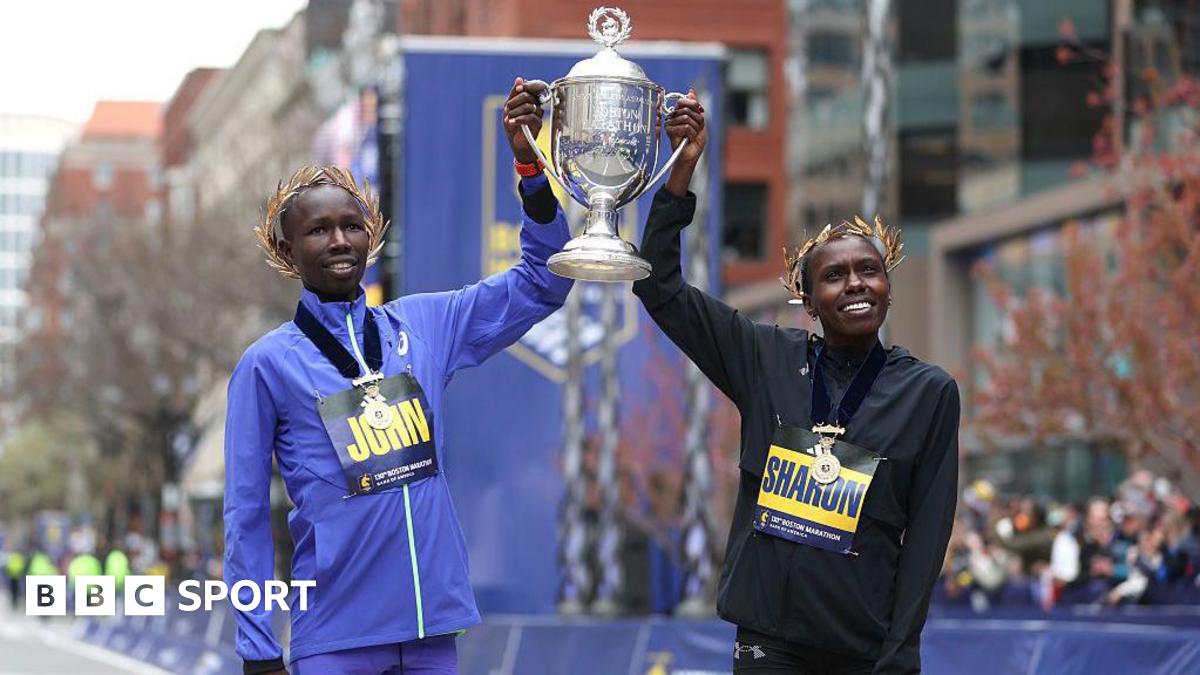
    The 130th edition of the Boston Marathon delivered historic drama and unforgettable performances on Monday, as Kenya’s long-distance running elite once again dominated the world-famous race, with John Korir breaking a 14-year course record to claim his second consecutive men’s title and compatriot Sharon Lokedi holding off challengers to defend her women’s crown.

    Korir, 29, delivered a masterclass in pacing and endurance to cross the finish line in 2 hours 1 minute 52 seconds, an astonishing 1 minute 10 seconds improvement on the previous Boston course mark set by fellow Kenyan Geoffrey Mutai back in 2011. This stunning result already ranks as the fifth fastest marathon time ever recorded globally, capping a remarkable winning streak for the athlete that includes victories at the 2024 Chicago Marathon and the December 2024 Valencia Marathon.

    For Korir, the triumph was even sweeter after a chaotic 2024 race, where he fell early in the route before battling back to claim victory. This year, he faced no such disruptions. “This year was a breeze for me because I had no problems at the start or at the finish,” he told reporters after the race. “It felt like a race back home with all the people cheering. It was in my mind to set the course record and I thank God that he fulfilled my wishes.”

    On the women’s side, Lokedi matched Korir’s back-to-back feat, finishing with a time of 2 hours 18 minutes 51 seconds. While she fell short of breaking her own 2024 Boston course record of 2:17:22, the 2022 New York Marathon champion held off a tight challenge from fellow Kenyan Loice Chemnung, crossing the finish line 44 seconds ahead of her second-place compatriot.

    Lokedi credited mental grit and a sweet moment with a young spectator for carrying her to the finish line. “I just kept telling myself ‘Be patient, be humble, you can do this’,” she said. “And then I saw a little girl who said ‘You got this, ladies!’ And it was so cute, and that was what I needed.”

    The race also made headlines for a remarkable display of athleticism from British runner Calli Hauger-Thackery, who completed the full 26.2-mile course at 22 weeks pregnant, finishing in 2:43:58. This is not the first high-profile marathon finish for the 33-year-old during pregnancy: she won the Honolulu Marathon four weeks into her current pregnancy, followed by a win at the Houston Marathon just one month later.

  • Black beauty queen who represented South Africa at Miss World during apartheid dies aged 76

    Black beauty queen who represented South Africa at Miss World during apartheid dies aged 76

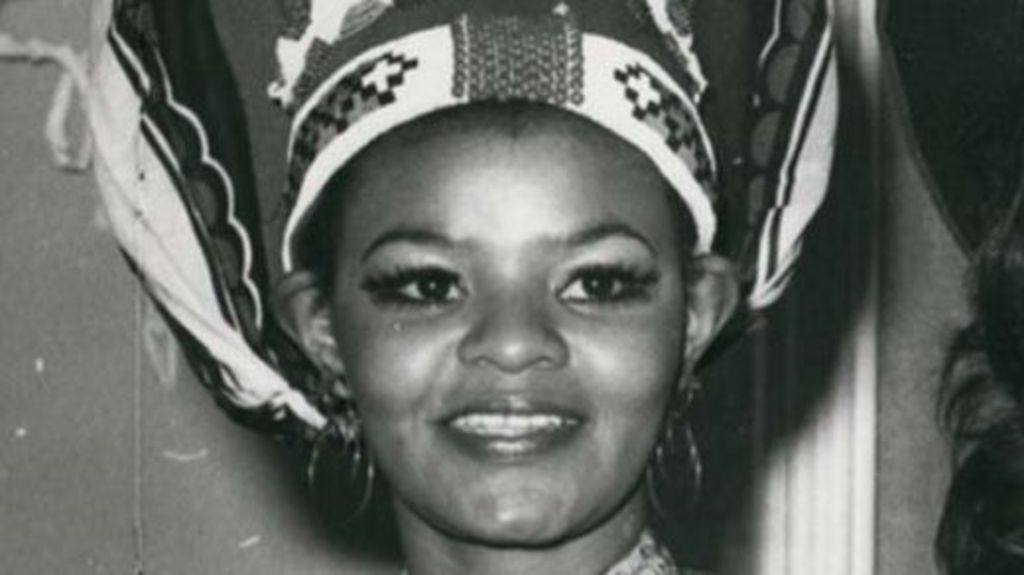
    South African entertainment and cultural pioneer Cynthia Shange, who made history as the first Black woman to represent South Africa at the global Miss World pageant during the apartheid era, has passed away at the age of 76. Her daughter, prominent media personality Nonhle Thema, announced the news of her mother’s death in a heartfelt social media post shared Monday, asking the public for privacy and prayers for her family as they grieve.

    According to local South African media reports, Shange died early Monday morning at a local hospital following a prolonged illness. Alongside the announcement, Thema shared a celebration of life graphic featuring a warm, smiling portrait of Shange, paying tribute to her mother’s gentle character and enduring legacy. “A graceful and compassionate soul whose presence brought warmth, dignity, and kindness to all those who knew her,” the tribute read. “We honour her journey, her strength, and the love she shared so generously.” Funeral arrangements are still being finalized and will be released to the public at a later date.

    Born Cynthia Philisiwe Shange on July 27, 1949, Shange rose to national and international prominence in the early 1970s, when she broke through racial barriers to compete on the world stage. Under the brutal segregationist system of apartheid, Black women were barred from competing in the official, state-sanctioned Miss South Africa pageant, so independent Black organizers created parallel competitions including Miss Africa South. Shange claimed the Miss Africa South title in 1972, earning the right to compete alongside the official white South African representative at that year’s Miss World competition held in London. She finished in fifth place, marking a historic milestone as the first Black woman to represent South Africa at the global contest. While Pearl Gladys Jansen had competed as Miss Africa South two years prior in 1970, Jansen was classified as “coloured” (mixed racial descent) under apartheid’s strict racial hierarchy, making Shange the first Black woman to claim the spot.

    Beyond her trailblazing work in pageantry, Shange built a decades-long, respected career as a film and television actress, becoming a foundational figure in South Africa’s emerging Black film industry. One of her most notable roles came in *Udeliwe*, widely recognized as one of the first Black-led feature films produced in South Africa. She also earned widespread acclaim for her performance in the hit historical drama series *Shaka Zulu*. In recognition of her decades of contributions to South African performing arts, Shange was honored with a Lifetime Achievement Award at the 2024 KZN Simon Mabhunu Sabela Awards just months before her passing.

    Tributes have begun to pour in from across South Africa’s entertainment industry, honoring Shange not only for her professional achievements but for her role in opening doors for future generations of Black South African women in arts and public life.

  • More than 200 rescued from IS-linked group in DR Congo

    More than 200 rescued from IS-linked group in DR Congo

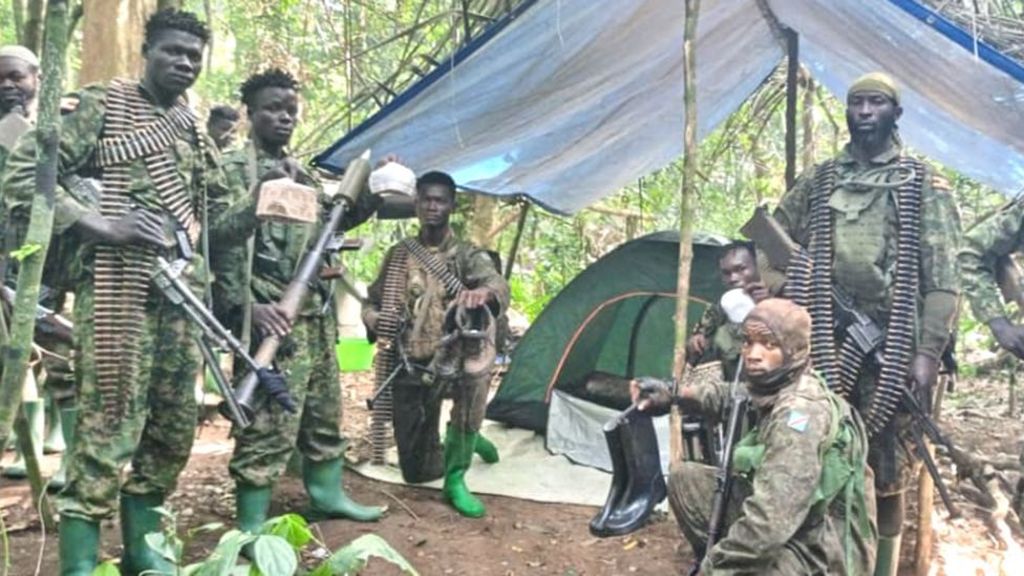
    A joint military mission carried out by Ugandan and Congolese forces has secured the release of more than 200 civilian captives held by the Islamic State-linked Allied Democratic Forces (ADF) in eastern Democratic Republic of the Congo, Uganda’s military has confirmed.

    The operation targeted a fortified militant encampment controlled by the ADF, an insurgent group with roots tracing back to 1990s Uganda, formed by dissidents opposed to the Ugandan government’s treatment of Muslim communities. After being driven out of Uganda by national forces decades ago, the remaining ADF fighters re-established their base across the border in eastern DRC, where they have built a brutal reputation for widespread violence, kidnappings, and killings. Among the freed hostages were multiple children, including a 14-year-old girl, according to an official statement from Uganda’s military.

    While details of when and where the captives were abducted remain undisclosed, survivors reported being held in appalling conditions, including persistent food shortages, forced labor, and harsh punishment for any disobedience. Many of the rescued civilians were found in fragile health, with widespread reports of malaria, respiratory complications, and extreme exhaustion among the group.

    “You are not under detention. You are victims of abduction, and we shall ensure you are handed over to the relevant authorities so you can reunite with your families,” Maj Gen Stephen Mugerwa, commander of the joint Uganda-DRC mission, told the freed captives, per the official statement.

    The raid on the ADF camp also left multiple militant fighters dead and resulted in the seizure of a large weapons cache, the military confirmed. No details have been released about potential casualties among the joint Ugandan and Congolese force.

    The ADF has operated out of remote areas of eastern DRC for more than 20 years. Group leader Musa Seka Baluku first pledged allegiance to the Islamic State in 2016, and IS formally recognized the ADF’s activity in the region in 2019. After years of limited overt operations inside Uganda, the group has been linked to a string of high-profile attacks in the country in recent years, including 2021 suicide bombings in the capital Kampala and a 2023 attack on a school in western Uganda.

    In eastern DRC, however, the ADF’s campaign of violence against civilians has reached staggering levels. A 2024 analysis by BBC Monitoring found the group responsible for more than half of all civilian deaths in the conflict-plagued eastern region. Late last year, a senior researcher with global human rights group Amnesty International described the frequency of ADF abductions and killings as “alarming,” noting that women and girls captured by the group are systematically exploited as sexual slaves.

    “Men, women and children told me how they ran for their lives as fighters armed with blades and guns descended on their villages. Released hostages talked of agonizing spells – sometimes months and years – spent in captivity, practically starved and forced to do various tasks in ADF camps,” Rawya Rageh, Amnesty International’s researcher, reported.

    Uganda first deployed its troops to eastern DRC in 2021 to target ADF strongholds as part of the joint offensive with Congolese forces, a campaign launched to eliminate the militant group from its regional bases. Despite repeated military operations, the ADF has continued to carry out frequent attacks on civilian and military targets across the region, leaving thousands displaced and dead.

  • A top paramilitary commander defects to Sudan’s military as war enters 4th year

    A top paramilitary commander defects to Sudan’s military as war enters 4th year

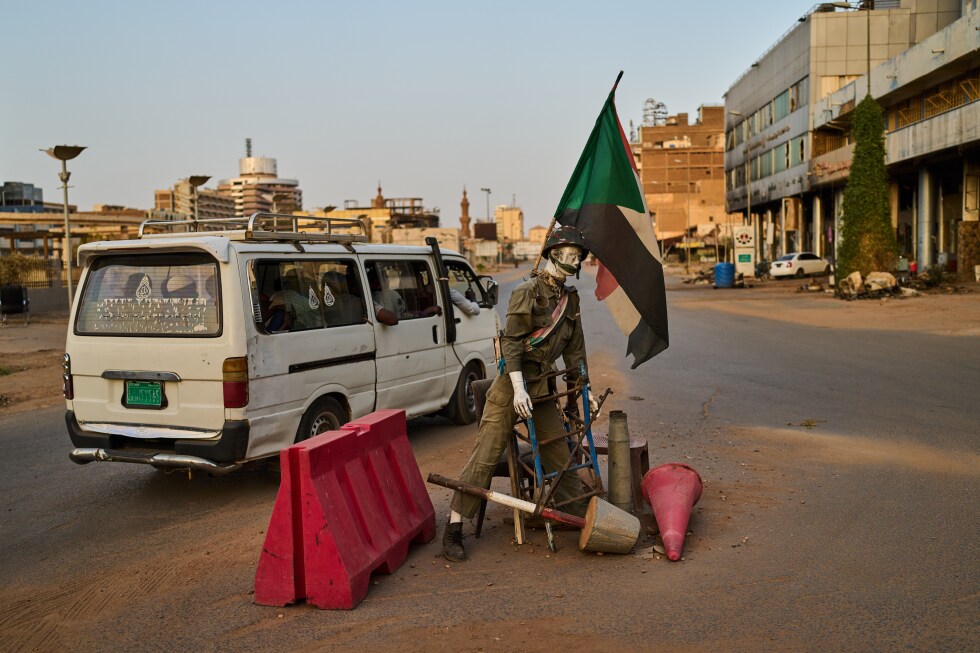
    As Sudan’s devastating civil conflict stretches into its fourth year of brutal fighting, a high-ranking commander from the country’s powerful Rapid Support Forces (RSF) has announced his defection to the national army, a shift that Sudan’s top military leadership has framed as an opening for reconciliation and national rebuilding.

    Army chief and Sovereign Council chair Gen. Abdel-Fattah Burhan formally welcomed Maj. Gen. al-Nour Ahmed Adam — widely known by the alias al-Qubba — in a meeting held Sunday in Sudan’s Northern province, which shares a border with Egypt. The country’s ruling transitional body publicly shared video footage of the meeting across its social media channels, confirming the defection that was first reported earlier this month. Local Sudanese media outlets have confirmed that Adam fled RSF-held territory in the Darfur region alongside dozens of armed fighters and military equipment to cross into government-controlled areas.

    According to independent regional publication *Sudan Tribune*, the commander’s departure stemmed from internal leadership disputes within the RSF. Tensions boiled over after the paramilitary group captured el-Fasher in October 2024 — the last remaining army stronghold in the entire Darfur region — but failed to appoint Adam to the top military commander post for North Darfur province, a position he had reportedly expected. The RSF has so far declined to issue any public statement addressing Adam’s defection.

    Burhan emphasized in an official statement following the meeting that Sudan’s military remains open to reconciliation for combatants willing to lay down their weapons and join efforts to rebuild the war-torn nation. “Doors are open to all those who lay down arms and join the path of national reconstruction,” Burhan said.

    Adam’s defection marks one of the most high-profile departures from the RSF’s ranks since full-scale conflict erupted in April 2023. He is not the first senior RSF commander to switch allegiances in the past year: earlier in 2024, Abu Aqla Kaikel, leader of the Sudan Shield Forces, also left the RSF after the Sudanese Army retook control of the strategic central province of Gezira, a key agricultural and population hub.

    The current conflict grew out of a years-long unresolved power struggle between the Sudanese Army, led by Burhan, and the RSF, a paramilitary force that evolved from the country’s former janjaweed militias tied to decades of conflict in Darfur. Fighting first broke out in the capital Khartoum before spreading across the vast northeast African nation, triggering one of the world’s worst humanitarian crises in modern history.

    Data from the Armed Conflict Location & Event Data Project (ACLED), a U.S.-based conflict monitoring organization, records at least 59,000 confirmed deaths from the war to date. The group has repeatedly warned that the actual death toll is almost certainly far higher, as widespread insecurity, collapsed healthcare infrastructure, and limited access to conflict zones make accurate casualty reporting nearly impossible.

  • Nigerian wins global prize for trying to save bats in a country that shuns them

    Nigerian wins global prize for trying to save bats in a country that shuns them

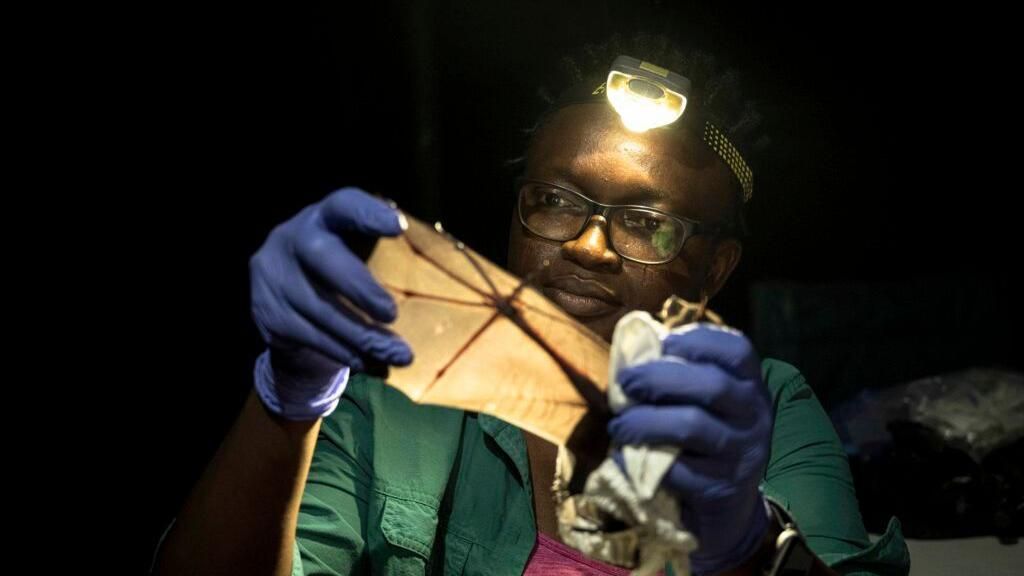
    In a historic milestone for both African conservation and gender representation in environmental leadership, Nigerian ecologist Iroro Tanshi has been awarded the 2026 Goldman Environmental Prize — one of the world’s most prestigious honors for grassroots environmental advocates — for her groundbreaking work protecting endangered bats and curbing destructive human-caused wildfires in southern Nigeria. This year’s award marks the first time in the prize’s 37-year history that all six recipients are women, a shift that underscores the growing impact of female-led conservation across the globe.

    Tanshi’s journey to the prize began with a moment of excitement quickly overshadowed by crisis: just days after she and her team rediscovered the elusive short-tailed roundleaf bat in Afi Mountain Wildlife Sanctuary, a protected 24,700-acre reserve in southeastern Nigeria, a large wildfire tore through the species’ only known habitat. The rediscovery, which marked the first confirmed sighting of the bat in nearly 50 years, was set to be a landmark moment for bat biology, but the uncontrolled blaze threatened to wipe the species out before it could be formally protected.

    “Seeing that bat for the first time after half a century should have been huge, headline-making news,” Tanshi shared in an interview with the BBC’s *Focus on Africa* podcast. “But we immediately faced a serious, urgent problem: the wildfire that was swallowing their home.”

    In Nigeria, widespread cultural stigma has long framed bats as connected to witchcraft, making public support for their protection an uphill battle. Rather than pushing conservation as a distant, disconnected goal, Tanshi centered her campaign on a shared community priority: addressing the damage that unregulated wildfires cause to both local farms and forest ecosystems. This community-centered approach won broad buy-in, turning local residents into core partners in bat and habitat protection.

    Tanshi, currently a postdoctoral researcher specializing in chiropterology (bat research) at the University of Washington in the United States, identified human-caused wildfires — most often set by farmers clearing land for cultivation — as the single greatest threat to the endangered short-tailed roundleaf bat. The 2021 fire that pushed her to launch her campaign burned uncontrolled for three straight weeks, only extinguished by seasonal rainfall. “We couldn’t put it out; all we could do was watch it burn day after day,” she recalled.

    Under Tanshi’s leadership, local community fire brigades were trained and organized to monitor, prevent, and respond to wildfires across the sanctuary and its surrounding areas. According to Goldman Environmental Prize organizers, the initiative has successfully prevented all major wildfire outbreaks in the region between 2022 and May 2025, a major win for both wildlife and local agricultural livelihoods that suffer from unregulated fire spread.

    Beyond fire management, Tanshi’s work has prioritized shifting harmful cultural perceptions of bats through sustained community outreach. She and her team use multiple accessible media platforms to educate local residents — with a particular focus on schoolchildren — on the critical ecological roles bats play, from seed dispersal to plant pollination. Highlighting tangible local benefits, Tanshi often notes that the shea trees that produce the globally traded shea butter, used in food and cosmetics worldwide, rely on bats to disperse their seeds.

    “We don’t avoid the hard conversations about the myths people believe,” Tanshi explained. “Instead, we show people that bats are integral to the ecosystems and the resources they depend on every day. Once you see how many critical roles they play, it’s impossible to ignore how important they are to protect.”

    Reflecting on receiving the award, Tanshi called the honor “incredible”, saying it serves as a powerful confirmation that local, community-led conservation work has global impact. “There are very few things in this world that signal to you that the work you’re doing has global relevance than an honor like this,” she said.

    The 2026 all-women cohort of Goldman Environmental Prize winners highlights the outsized, often underrecognized contribution of women environmental leaders working at the grassroots to protect vulnerable ecosystems and endangered species across the world.

  • Did Pope Leo find his voice in Africa? Or did America and the world finally hear him

    Did Pope Leo find his voice in Africa? Or did America and the world finally hear him

    LUANDA, Angola — During his landmark multi-nation tour across Africa, Pope Leo XIV has emerged with a forceful rebuke of long-standing oppression holding the continent back, but his blunt words have ignited a transatlantic firestorm tied to the ongoing U.S.-Israeli war in Iran and escalating tensions with the Trump administration.

    The pontiff, a reserved Midwestern Augustinian, drew global attention for denouncing the “handful of tyrants” and “chains of corruption” that have kept African nations trapped in instability for centuries. While many observers framed this address as a direct rebuke of former President Donald Trump and Vice President JD Vance’s inflammatory rhetoric around the Iran conflict – particularly after Trump’s unprecedented social media attacks and Vance’s claims of American theological superiority – Vatican insiders insist the message was crafted long before the current controversy flared.

    Cardinal Michael Czerny, a senior Vatican official and close aide to Pope Leo, told the Associated Press that the pope’s homilies and public remarks during the Africa trip were developed well in advance, tailored specifically to local contexts and the lived experiences of African Catholic communities. “If they seem relevant to the current wars, controversy, this reminds us of Jesus saying, ‘Whoever has ears to hear, let them hear!’” Czerny said, adding in a colloquial addendum: “Or in popular idiom, ‘If the shoe fits, wear it!’”

    Pope Leo himself pushed back against the narrative of a public feud with Trump during his flight from Cameroon to Angola on April 18, arguing that his criticism of tyrannical rule and religiously justified war had been misinterpreted. He clarified that his remarks were intended specifically to address the long-running separatist conflict in western Cameroon, and broader systemic harms across Africa, not the U.S. president or the Iran conflict.

    Yet analysis from leading Vatican observers suggests the pontiff is walking a careful line between addressing local African issues and making clear his long-held opposition to Trump’s approach to the Iran war. Long before arriving in Africa, Pope Leo had already publicly broken with Trump over the conflict. Two weeks prior to the Africa tour, during an appearance at his Castel Gandolfo country residence, the pope called Trump’s threat to annihilate Iranian civilization “truly unacceptable,” and issued an unprecedented call for Catholic faithful across the world to pressure their elected representatives to end the war.

    Massimo Faggioli, a theology professor at Trinity College Dublin, described that public appeal to voters as “the Vatican’s nuclear option.” Never before in modern history has a pope directly urged American citizens to pressure their lawmakers over an ongoing conflict – not even during the 1962 Cuban Missile Crisis, when Catholic U.S. President John F. Kennedy stood on the brink of nuclear war with the Soviet Union. At that time, Pope John XXIII issued a public plea for peace and worked behind the scenes through diplomatic channels to de-escalate tensions, but never called on American voters to take sides between their president and the church. Faggioli noted that the current unprecedented approach stems from genuine Vatican alarm that Trump is prepared to escalate the Iran war into a catastrophic conflict.

    Faggioli added that Pope Leo’s attempt to distance himself from interpretations linking his Africa remarks to Trump was a deliberate de-escalation tactic: the Vatican aims to preserve diplomatic space to push for a ceasefire, and avoid an open public clash that would undermine that goal. He also noted that the ongoing tension between the American pope and American political leaders will create lasting complications for Catholic politicians seeking national office on both sides of the aisle, from Republican JD Vance to Democratic California Governor Gavin Newsom, as long as Pope Leo leads the church.

    Kathleen Sprows Cummings, director of the Global Catholic Research Initiative at the University of Notre Dame, observed that many American Catholics are unaccustomed to seeing the Vatican frame foreign policy as a core moral issue, having grown accustomed to church leadership focusing primarily on social issues like abortion, gender and sexuality. When Vance argues the pope should “stick to morality,” Cummings points out that war and peace have been central moral questions for the faith for millennia.

    Vatican officials emphasize that Pope Leo has not shifted his stance or adopted a new, more confrontational approach – the shift is in the context, not the man. Rev. Antonio Spadaro, secretary of the Vatican’s culture department, said the pontiff is simply continuing the long-standing papal tradition of preaching the Gospel’s call to peace. The reaction, he said, originated from Washington, not the Vatican.

    “It’s very dangerous to imagine that the pope is fighting with Trump, because it means demeaning the pope to a level of contrast, one against the other, which Trump may want but that the pope has no intention of doing,” Spadaro said. From his perspective working alongside Pope Leo, the pontiff remains the same steady, direct leader he has always been – it is the chaotic global political backdrop that makes his calm, unflinching words stand out so sharply today.

    Amid the transatlantic political firestorm, the core purpose of Pope Leo’s four-nation Africa tour has not been overshadowed for the millions of African Catholics who have turned out to greet the first American pope in history. The polyglot pontiff has adapted his messaging to local communities, delivering speeches, homilies and prayers in French for Algerian audiences, English and French for Cameroonians, Portuguese for Angolans, and will switch to Spanish for his upcoming stop in Equatorial Guinea.

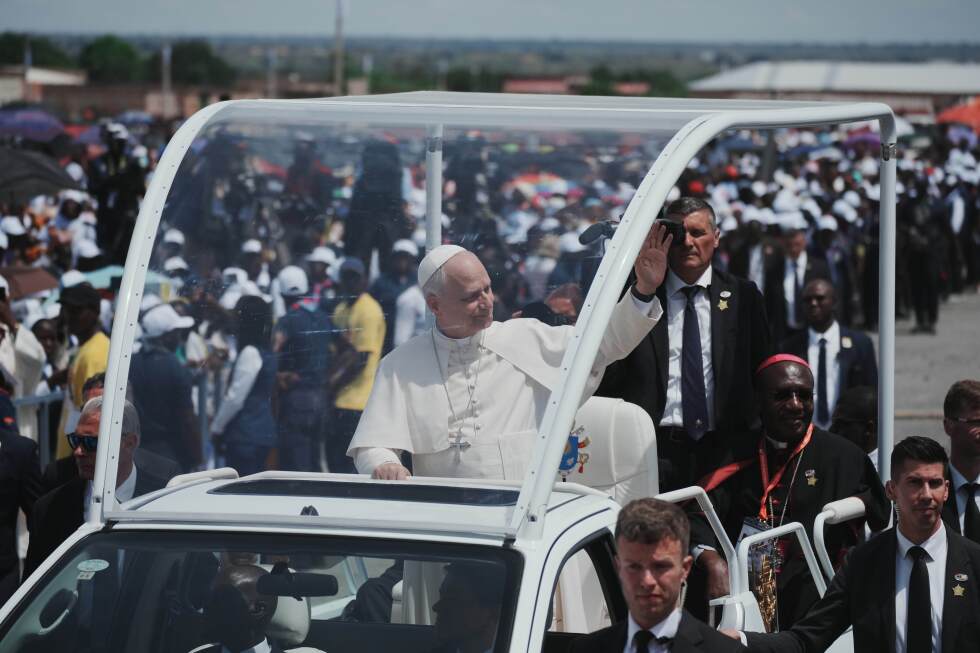
    Thirty-thousand pilgrims gathered at Angola’s iconic Shrine of Mama Muxima on Sunday to join Pope Leo for a rosary prayer. Lucineia Francisco, one of the pilgrims in attendance, left her children at home to make the spiritual journey alone. “My kids were crying to come, but I said no,” she explained from the crowded pilgrimage field. “This is a spiritual journey that I’m really going to face on my own.”

  • Hundreds pack Montevideo’s plaza as La Rueda de Candombe caps a breakout run

    Hundreds pack Montevideo’s plaza as La Rueda de Candombe caps a breakout run

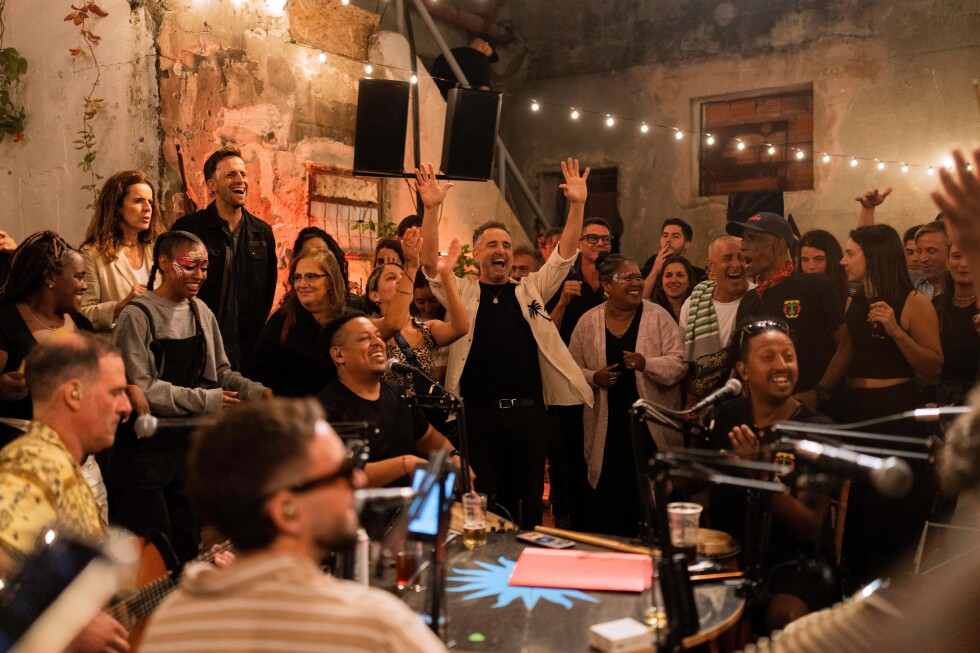
    Every Monday evening as the sun sets over Montevideo, Uruguay’s coastal capital, hundreds of people stream into Plaza de España, gathering around a large wooden table to lose themselves in the rolling, centuries-old rhythms of candombe. What began as an informal jam session between a small group of friends has exploded from humble street-corner origins to one of Uruguay’s most celebrated cultural events, even earning an invitation to the world-famous Cannes Film Festival.

    “It started as something just for us, and we never set out to become this visible,” explained Caleb Amado, a Uruguayan producer and one of the co-founders of La Rueda de Candombe. The late-season closing performance held this Sunday marked the end of the group’s 2025 public gathering schedule, bringing together six core musicians to honor candombe — the dynamic, drum-driven musical tradition that sits at the core of Uruguayan national identity, and a practice officially named an Intangible Cultural Heritage of Humanity by UNESCO.

    The story of La Rueda de Candombe begins in the fall of 2024, when Amado and his collaborator Rolo Fernández traveled to Rio de Janeiro, Brazil. Strolling through the city’s iconic bar districts under warm tropical nights, the pair encountered “rodas” — loose, informal circles of musicians who gather around a table to play and sing, with standing audiences milling close to join the energy. Inspired by the accessible, communal spirit of these gatherings, they returned to Montevideo and gathered four additional local musicians to launch their own version, rooted in Uruguay’s own iconic musical tradition.

    Like the Brazilian rodas that inspired it, La Rueda de Candombe centers its performance around a single table. But the sound it produces is unmistakeably Uruguayan: a driving blend of drums, acoustic guitar and accordion that brings new life to candombe, a genre with roots stretching back to the 18th century, when African traditions were brought to the region by enslaved people. Today, candombe is woven into the very fabric of Uruguayan national identity, a status formalized by its UNESCO designation in 2009.

    In the group’s early days, nearly 100 fans packed into a tiny neighborhood bar called Santa Catalina on a quiet Montevideo corner to listen. Within just a few months, the crowds grew too large for the small space, forcing the weekly gatherings to move out into the open expanse of nearby Plaza España. As word of the communal, energetic performances spread across social media, tourist vans began arriving weekly from across the country, and the event became a must-see stop for visitors to Montevideo.

    Unlike neighboring South American capitals such as Buenos Aires or Rio de Janeiro, spontaneous street performances are relatively rare across Montevideo, even with the city’s abundant public spaces, including a 22-kilometer waterfront promenade that stretches along the Atlantic coast. But social media buzz around La Rueda drew attention from across Uruguay’s creative scene, leading to high-profile collaborations: the group has shared the stage with Oscar-winning Uruguayan singer-songwriter Jorge Drexler at Montevideo’s legendary Centenario Stadium, and has recorded a full studio album of traditional and reimagined candombe tracks. By early 2025, the group’s rising profile earned them an invitation to represent Uruguayan culture at the Cannes Film Festival, which hosts dedicated global cultural showcases alongside its iconic film competition program.

    For Uruguay, candombe has never been just music — it is a living cultural and political tradition tied to the country’s African roots. The genre itself first emerged from the historic Plaza España, where enslaved Africans brought to Montevideo used drum beats to preserve their ancestral rituals at the site where they first disembarked. Traditional candombe is built around three distinct drum types: the small, high-pitched chico, the mid-range repique, and the low, booming piano drum. Every February, the tradition takes over the country during carnival, when dozens of community troupes called comparsas parade through Montevideo’s streets playing nonstop candombe rhythms.

    By the middle of the 20th century, candombe evolved to blend with jazz and mainstream popular music, giving rise to a new subgenre called “candombe canción.” It became a staple of informal community gatherings much like La Rueda, and during the political repression of the 1960s and 1970s, it emerged as a powerful form of cultural and political expression for Uruguayan communities demanding greater autonomy and recognition.

    As the Southern Hemisphere’s colder winter months approach, Amado and Fernández have no plans to pause the project. Instead of slowing down, the pair say La Rueda de Candombe is using the off-season to develop new programming, with plans to expand weekly gatherings to additional public squares across Montevideo in the 2026 season, bringing the centuries-old rhythm to new audiences across the capital.

  • ‘They told me he was dead’: Children born near army base learn truth about UK soldier dads

    ‘They told me he was dead’: Children born near army base learn truth about UK soldier dads

    For decades, hundreds of children born near the British Army Training Unit in Kenya (Batuk) have grown up without answers about their paternal heritage, many left in poverty, socially ostracized, and told their British military fathers were deceased. Now, an unprecedented cross-border legal and genetic initiative has identified 20 missing fathers, secured paternity confirmation for 12 cases through the UK’s highest Family Court, and unlocked life-changing access to British citizenship and child support for dozens of Kenyan people.

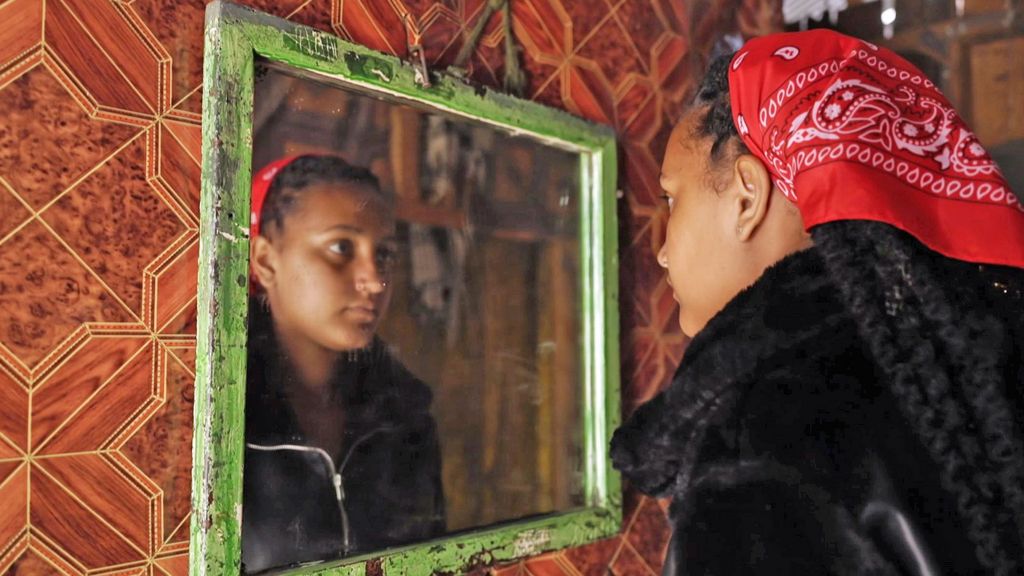
    One of the cases at the center of this breakthrough is nine-year-old Edward, a pseudonym to protect his identity. From early childhood, Edward has faced relentless bullying over his lighter skin tone, with peers taunting him as a “British coloniser” – a reference to the United Kingdom’s 68-year colonial rule of Kenya that ended in 1963. Edward’s mother, Nasibo, a Kenyan woman who entered a relationship with a British contractor stationed at Batuk, was cast out by her family after her partner left Kenya abruptly when she was four months pregnant. She says the man promised to return, gave her an engagement ring before leaving, and never contacted her again. For years, she and Edward have lived in extreme poverty, with no way to trace the man who fathered her son. Now that paternity has been confirmed, Edward is eligible for formal child support payments, though his father has refused to share contact information, forcing legal teams to pursue court action to secure maintenance payments.

    Another story that underscores the years of misinformation surrounding these cases is 18-year-old Yvonne. Orphaned as an infant after her mother’s death, Yvonne was raised by her grandparents and told by Batuk soldiers that her British military father had died. Through genetic matching with her father’s maternal cousin, who had uploaded their DNA to the commercial genealogy platform Ancestry.com, the legal team confirmed Yvonne’s father is alive and currently residing in the UK. After ignoring five court orders to appear for paternity proceedings, he finally attended his hearing, requested a DNA test, and the results confirmed he is Yvonne’s father. Like Edward’s father, he has declined any contact with Yvonne at this time, though extended family members have expressed interest in building a relationship with her.

    Not all outcomes have involved estrangement, however. Twenty-year-old Cathy grew up believing her father, a former British soldier named Phill stationed at Batuk in 2004, was dead. Her mother Maggie told her this after Phill lost contact when his phone was stolen following a deployment change. As a teenager, Cathy tracked Phill down on Facebook, but he did not recognize her name and blocked her messages. Struggling with the loneliness of growing up without a father and lacking answers about her mixed heritage, Cathy made a suicide attempt. Meanwhile, Phill had left the military, struggled with poor mental health, and experienced homelessness after transitioning to civilian life. When paternity was confirmed through the project, Phill called the discovery a “very happy surprise.” He has already begun providing financial support to Cathy and Maggie, and the two are rebuilding their relationship, with Cathy planning to visit the UK in the near future. To date, Phill is the only confirmed father who has voluntarily provided financial support to his Kenyan child.

    The project was launched in 2024 after UK-based solicitor James Netto was approached by families in Nanyuki, the Kenyan market town 185 kilometers north of Nairobi that has hosted Batuk since the base opened in 1964. More than 5,000 British military personnel pass through the training base each year, and the facility has long been mired in controversy over allegations of abuse and misconduct. In December 2024, a two-year Kenyan parliamentary inquiry concluded that British personnel at Batuk operated within a “culture of impunity,” resulting in sexual violence, two murder allegations, widespread environmental damage, and the systemic abandonment of children fathered with local women.

    To address the longstanding issue of unacknowledged paternity, Netto partnered with Kenyan lawyer Kelvin Kubai, who runs the charity Connecting Roots Kenya to support these children, and leading genetics professor Denise Syndercombe Court. The team traveled to Kenya with hundreds of DNA testing kits, collected samples from claimants ranging in age from three to 70 years old, and cross-referenced the results against the nearly 30 million genetic profiles available on commercial genealogy platforms – a large enough dataset to make familial matches even with distant relatives. Netto says the scale and methodology of this project are unprecedented in UK legal history, and the team was stunned by how successful the process was, with matches ranging from distant cousins all the way to direct identification of the fathers themselves. To secure official contact information, the courts ordered UK government agencies including the Ministry of Defence, Department for Work and Pensions, and HM Revenue and Customs to release the identified fathers’ names and addresses.

    Netto says his team has already documented nearly 100 active cases of children born to British soldiers and contractors near Batuk, and he estimates the true number is far higher. In the 12 cases that have received formal paternity confirmation from the UK Family Court, most claimants are now eligible to apply for British citizenship, and all minors and students are eligible for court-ordered child support.

    Rejecting calls for a ban on relationships between British soldiers and local Kenyan women as inherently racist, Kubai argues the only just solution is to hold men accountable when they father children during their deployment. Netto and Kubai plan to bring dozens more cases before the UK High Court over the coming months, continuing their work to connect claimants with their heritage and secure the financial and legal rights they are owed.

    In response to questions about the allegations and the paternity project, the UK Ministry of Defence stated it “deeply regrets those issues and challenges which have arisen in relation to the UK’s defence presence in Kenya” and said it continues to take action to address concerns where possible. It noted that consensual relationships between personnel and local women do not violate MoD policy, and that the ministry does not investigate cases where no criminal allegations have been filed by local authorities. Brigadier Simon Ridgway, commanding officer of the British Army’s Collective Training Group, added that the MoD works with Kenyan children’s services to address paternity claims as they are received. The December 2024 Kenyan parliamentary inquiry has called on the Kenyan government to create formal new systems to hold Batuk soldiers accountable for child support, including mandated DNA testing and long-term psychosocial support for affected children.

  • Pope Leo XIV heads to Catholic shrine in Angola that was a center of African slave trade

    Pope Leo XIV heads to Catholic shrine in Angola that was a center of African slave trade

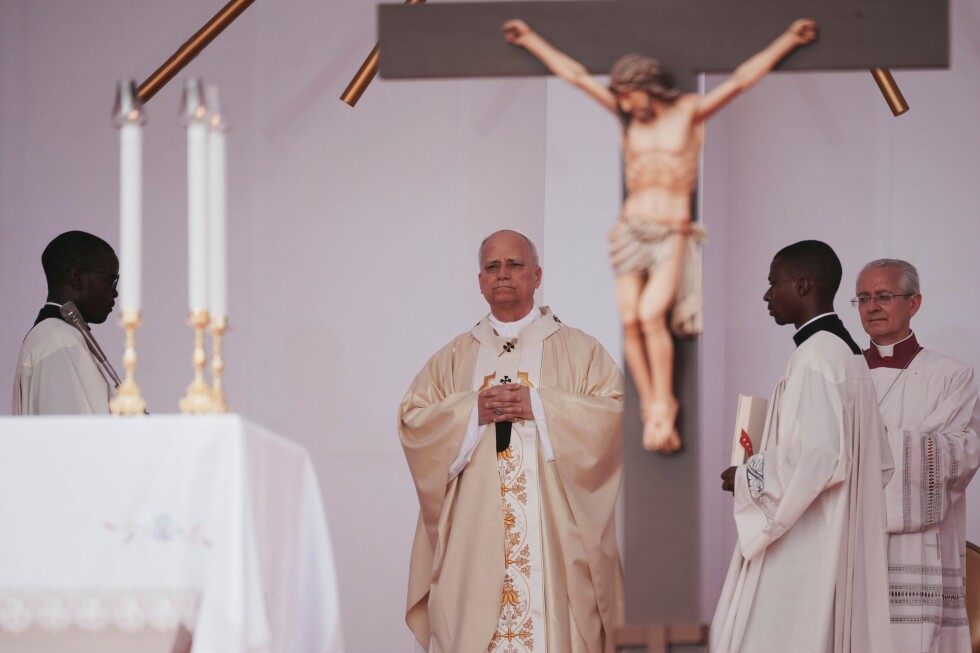
    On a historic stop of his African pilgrimage in Luanda, Angola, Pope Leo XIV kicked off Sunday with a rousing call to action for Angolans to root out the pervasive “scourge of corruption” by embedding a culture of justice and collective sharing across the nation. The visit, which later brought the first U.S.-born pontiff to one of the trans-Atlantic slave trade’s most significant remaining sites, weaves together calls for national reconciliation in Angola with overdue reckoning over the Catholic Church’s centuries-old complicity in human trafficking.

    Speaking to a crowd of roughly 100,000 worshippers gathered in Kilamba, a large residential development constructed by Chinese partners 15 miles outside the Angolan capital, the pontiff used his homily to lift up the aspirations of the Angolan people, while calling out the continued exploitation of the nation’s abundant mineral resources and its most vulnerable citizens. Decades after the end of a brutal post-independence civil war that left deep, unhealed scars across the country, Leo urged an end to old sectarian divides, hatred, and violence. “We wish to build a country where old divisions are overcome once and for all, where hatred and violence disappear, and where the scourge of corruption is healed by a new culture of justice and sharing,” he told the assembled crowd.

    By Sunday afternoon, the pontiff traveled to the Sanctuary of Mama Muxima, a revered contemporary Catholic shrine located 70 miles south of Luanda on the banks of the Kwanza River. But the site’s origins stretch back to the late 16th century, when Portuguese colonizers built the Church of Our Lady of Muxima as part of a colonial fortress. For decades, it operated as a central hub of the trans-Atlantic slave trade: enslaved African people were held at the site, forcibly baptized by Portuguese clergy, then marched overland to the port of Luanda to be loaded onto slave ships bound for the Americas.

    Today, the shrine’s layered history serves as a stark reminder of the Catholic Church’s institutional role in the trans-Atlantic slave trade, from the forced conversion of enslaved people to the Vatican’s long refusal to issue a full, formal acknowledgement and atonement for its complicity. The visit carries particular personal weight for Pope Leo XIV: genealogical research has confirmed the pontiff’s Creole ancestry includes both enslaved African people and white slaveholders in his family line that traces its North American roots to Louisiana.

    For many Black Catholics across the globe, the trip to Muxima represents a long-awaited moment of reckoning and healing, according to Anthea Butler, a Black Catholic scholar and senior fellow at Oxford University’s Koch Center. Butler explained that millions of Black Catholics trace their connection to the faith directly to the era of slavery, when France’s Code Noir required all enslaved people owned by Catholic slaveholders to receive baptism, while many other enslaved Angolans brought their existing Catholic faith with them when they were trafficked to the Americas.

    Scholars have long documented that 15th-century papal directives from the Vatican emboldened Portuguese colonizers to expand their slave trading operations across Africa. In 1452, Pope Nicholas V issued the papal bull *Dum Diversas*, which granted the Portuguese crown and its successors formal permission to “invade, conquer, fight and subjugate” non-Christian peoples across the globe, seize their lands and possessions, and “reduce their persons to perpetual slavery.” A second bull, *Romanus Pontifex*, issued three years later, alongside *Dum Diversas* formed the legal and ideological foundation of the Doctrine of Discovery, the framework that legitimized European colonial seizure of land across Africa and the Americas and justified the enslavement of Indigenous and African peoples.

    While the Vatican formally repudiated the Doctrine of Discovery in 2023, it has never formally rescinded or rejected the original 15th-century papal bulls that authorized the slave trade. The Holy See has argued that a 1537 bull, *Sublimis Deus*, later reaffirmed that Indigenous peoples should not be stripped of their liberty, property, or enslaved, but scholars note this directive did not explicitly reverse or cancel the earlier authorization for the enslavement of African peoples.

    Jesuit priest and slavery historian Christopher J. Kellerman, author of *All Oppression Shall Cease: A History of Slavery, Abolitionism, and the Catholic Church*, acknowledges that most of the 12.5 million Africans trafficked across the Atlantic were initially sold into slavery by African intermediaries, rather than captured directly by European traders. Even so, he notes, when the Muxima fortress and church were constructed, Portuguese forces both conducted independent slave raids and purchased enslaved people, openly relying on the papal permissions granted by the 15th-century bulls. “The popes repeatedly authorized Portugal’s colonization efforts in Africa and Portuguese participation in the slave trade, but the Vatican has never fully admitted this,” Kellerman said in comments to the Associated Press. “It would be so powerful if at some point Pope Leo were to apologize for the popes’ role in the trade.”

    This is not the first time a sitting pope has addressed the harm of the slave trade during a visit to Africa. During a 1985 trip to Cameroon, St. John Paul II asked for forgiveness from African peoples for the crime of the slave trade, and during a 1992 visit to Goree Island, Senegal, West Africa’s largest historical slave trading center, he denounced the injustice of slavery, calling it a “tragedy of a civilization that called itself Christian.”

    The connection between Pope Leo XIV and this painful history runs deeper than institutional responsibility. Harvard University professor Henry Louis Gates Jr., host of the popular genealogy series *Finding Your Roots*, published research confirming 17 of the pope’s American ancestors were Black, recorded in census records as mulatto, Black, Creole, or free people of color, with the pope’s family tree including both enslaved people and slaveholders. Gates presented his findings to Pope Leo during a private audience at the Vatican on July 5, and the Harvard Gazette reports the pope asked specifically about both his Black and white ancestors who held people in bondage. The pope has not yet spoken publicly about his family heritage or Gates’ findings, and some Black Catholic scholars say it would be inappropriate to impose a public narrative about the pope’s identity before he chooses to speak on the matter.

    “It’s important that we tell our own stories,” said Tia Noelle Pratt, a sociologist of religion at Villanova University, Pope Leo’s alma mater, and author of *Faithful and Devoted: Racism and Identity in the African-American Catholic Experience*. “We haven’t heard anything from him about what he thinks about it, and so to impose anything on him, I think would be completely inappropriate.”

    Cardinal Wilton Gregory, the retired first African American archbishop of Washington, who helped facilitate the meeting between Gates and Pope Leo, said he was delighted to support the encounter. “It’s one of the things that I think for many African Americans and people of color, they identify with great pride the pope has roots in our own heritage,” Gregory said. “And I think he’s happy about that too, because it’s another link to the people that he tries to serve and is called to serve.”
  • The US backs a South Africa project to extract rare earths despite a diplomatic clash

    The US backs a South Africa project to extract rare earths despite a diplomatic clash

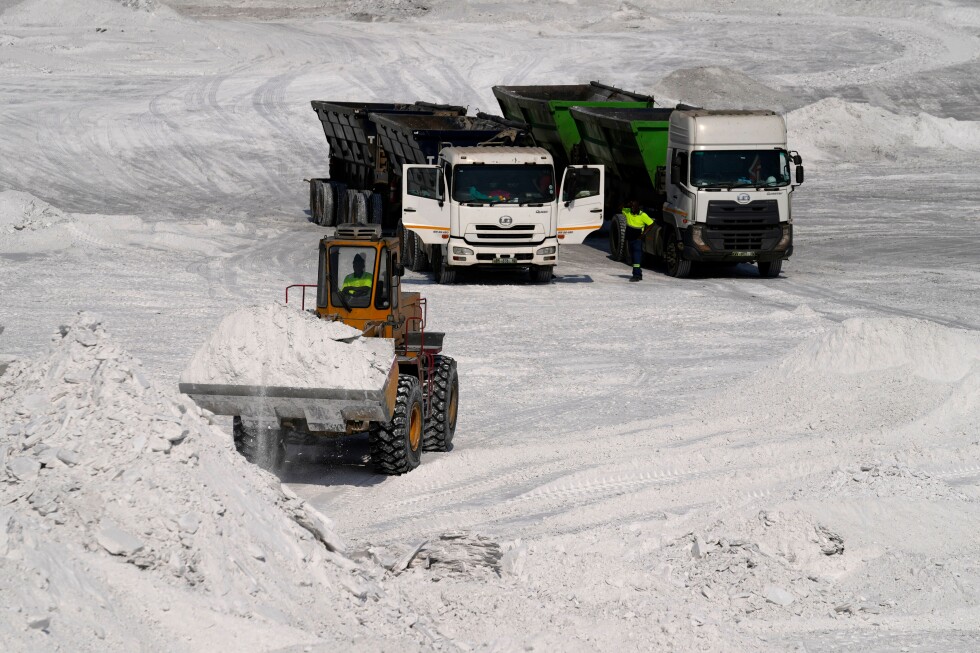
    In the small South African town of Phalaborwa, two massive, sand-like dunes of industrial waste have become the focal point of a high-stakes U.S.-supported initiative to unlock a new supply of rare earth elements — minerals critical to modern high-tech manufacturing that the U.S. currently relies heavily on its top economic rival, China, to provide.

    The Phalaborwa Rare Earths Project, led by UK-founded firm Rainbow Rare Earths, secured a $50 million equity investment from the U.S. International Development Finance Corporation (DFC), a U.S. government agency established during the first Trump administration. The commitment was formalized in 2023 under the Biden administration, but the current second Trump administration has opted to advance the work despite a sharp recent diplomatic rift between the U.S. and South Africa. Shortly after Trump returned to office in February this year, he issued an executive order freezing all U.S. financial aid to South Africa, but strategic economic priorities have overridden that diplomatic friction for the project. The DFC has framed its involvement in Phalaborwa as part of a broader goal to unlock Africa’s untapped mineral wealth while advancing core U.S. strategic interests.

    Rare earth elements, a group of 17 chemically similar metals, are a key subset of the dozens of critical minerals that major global economies have identified as irreplaceable for manufacturing everything from smartphones and robotics to defense systems, electric vehicle motors and wind turbine generators. Expanding domestic and allied access to these critical minerals has been a signature policy priority for Trump across both of his presidential terms, with the current administration announcing this year it will allocate nearly $12 billion to establish a U.S. strategic reserve of these materials.

    Unlike most rare earth projects that develop new ore deposits, Phalaborwa plans to extract its target minerals from 35 million tons of phosphogypsum, a waste byproduct left behind from decades of phosphate rock processing for fertilizer and industrial acid production at the site. Extraction is targeted to launch in 2028, with construction of the on-site processing facility scheduled to begin in early 2027 — and the $50 million DFC investment will only be disbursed once construction gets underway. The project is projected to operate for 16 years, producing high-demand rare earths including neodymium, praseodymium, dysprosium and terbium, all core components of high-performance magnets for clean energy and defense technologies.

    Rainbow Rare Earths chief executive George Bennett told the Associated Press the project’s output will be primarily destined for the U.S. market, noting that American interest in the initiative is heavily tied to national defense supply chains. Project director Alberto Bruttomesso explained that the pre-processing of the waste material by former owners of the site eliminates one of the most costly steps in rare earth extraction, meaning the project can operate as a low-cost producer on par with Chinese mining operations. The firm also says up to 90% of the energy used for extraction will come from renewable sources, bringing the project’s environmental footprint far below that of traditional rare earth mining.

    While rare earth elements are geologically relatively common around the world, they typically appear in very low concentrations and require complex, expensive separation and processing, which has left the global market dominated by China for decades. Industry analysts note that the Phalaborwa project is unique in its experimental approach of extracting minerals from existing above-ground waste, but its long-term potential remains unproven.

    Neha Mukherjee, research manager at industry analyst firm Benchmark Mineral Intelligence, noted that the project’s low operational and capital costs are a major advantage, adding that it fills a pressing gap in global supply. “We do not have enough projects to meet the entire demand outside of China,” Mukherjee explained.

    The Phalaborwa initiative is just one part of a broader, sustained push by the U.S. to expand its access to rare earth and critical mineral supplies, both at home and abroad. Beyond domestic mining investments, the Trump administration has pursued critical mineral deals in Ukraine, and has repeatedly signaled interest in acquiring Greenland largely due to the Arctic island’s large untapped rare earth reserves. In Africa, where China has long held the position of the dominant foreign investor in mining, the U.S. is actively working to catch up, according to mining specialist Patience Mususa of the Nordic Africa Institute in Sweden.

    Other recent U.S.-backed rare earth projects on the continent include a $1.8 million feasibility study grant from the U.S. Trade and Development Agency for the Monte Muambe rare earth project in Mozambique, signed in February. The Trump administration is also continuing to fund the Lobito Corridor, a Biden-era infrastructure initiative to build a 1,290-kilometer railway connecting the mineral-rich interior of the Democratic Republic of Congo and Zambia to the Atlantic coast, designed to open up new export routes for African critical minerals to Western markets.