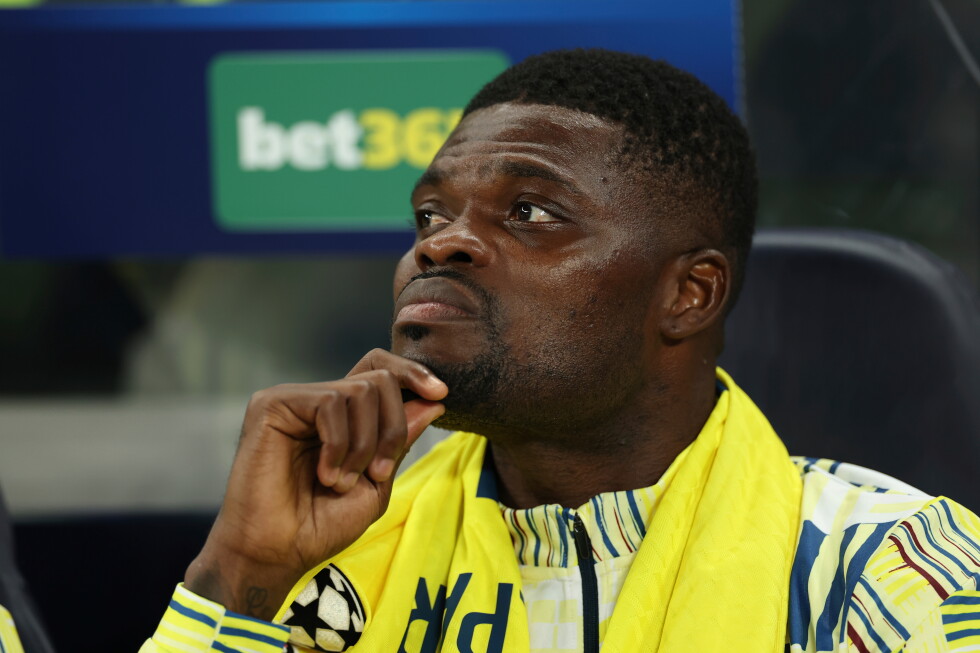
A diplomatic and legal dispute has erupted after Canada rejected a visa application from Ghanaian star midfielder Thomas Partey for his team’s FIFA World Cup group stage match in Toronto, drawing sharp condemnation from the Accra government over what it calls an “extremely unfair” ruling that violates the core legal principle of presumption of innocence.
The 32-year-old Arsenal loanee, currently plying his trade at Spain’s Villarreal, is scheduled to face trial on multiple rape and sexual assault charges in London later this year. All allegations date back to his tenure at Arsenal between 200 and 2025, and Partey has repeatedly maintained his not-guilty plea across all counts. He was forced to withdraw from Ghana’s pre-match camp and return to the team’s base in Rhode Island after the visa refusal left him unable to enter Canada for the World Cup opener against Panama this past Wednesday.
In an official statement released Saturday, Ghana’s Ministry of Foreign Affairs lambasted the Canadian decision as “high-handed and extremely unfair”, noting that the refusal was based solely on unproven allegations that have not received any formal judicial ruling. “We reaffirm the fundamental legal principle of the presumption of innocence, a cornerstone of justice and due process in democratic societies,” the statement read.
While Ghana acknowledged Canada’s sovereign authority to enforce its own immigration regulations, the government argued that basing a visa denial on unadjudicated charges raises serious questions about basic fairness and proportionality. “Accordingly, Ghana is pursuing active diplomatic engagements with the relevant Canadian authorities on this matter,” the statement added.
The Accra administration has already submitted an official note of protest requesting a formal review of the visa decision, and confirmed it is “determined to explore and pursue all available diplomatic, legal and administrative remedies under Canadian and international law” — including filing for judicial review at the Federal Court of Canada if necessary — to secure a full, fair reassessment of the case consistent with due process principles.
The statement added that ongoing discussions are already underway between Ghanaian and Canadian officials, and that Ghana “remains committed to constructive engagements” with Canadian counterparts to reach a timely, amicable resolution of the dispute.
Ghana national team head coach Carlos Queiroz already stood by Partey’s inclusion in the 2026 World Cup squad, explicitly citing the principle of presumption of innocence when announcing the roster. The midfielder will still be eligible to take part in Ghana’s remaining group stage matches: he will be allowed to enter the United States for the team’s June 23 clash against England in Massachusetts, and the final group match against Croatia on June 27 in Philadelphia.
The controversy comes as Partey faces a total of eight charges: five counts of rape connected to two separate alleged victims, one count of sexual assault involving a fourth woman, and two additional rape charges added in March stemming from an allegation by a fifth woman who claims Partey raped her twice on a single day in December 2020. The new charges were filed after the initial set of allegations were made public. Partey’s legal team confirmed in March that the midfielder would enter a not-guilty plea to all new charges.
In closing, the Ghanaian government’s statement invoked the unifying values of international football: “May the beautiful game of football continue to live up to its reputation of uniting nations, forging lasting bonds of friendship, playing by the rules, and promoting fair play both on and off the field.”