标签: Africa

非洲

  • ‘The weapons were loud, but there was always music’: Sudanese band play on through the war

    ‘The weapons were loud, but there was always music’: Sudanese band play on through the war

    Three years after Sudan’s brutal civil war erupted, tearing one of the nation’s most beloved musical groups apart, members of Aswat Almadina – which translates to Sounds of the City – remain scattered across the globe, clinging to a shared mission: keeping the flame of hope for peace burning through their art. The conflict that broke out in April 2023 has left more than 150,000 people dead and displaced an estimated 12 million Sudanese, creating what the United Nations has labeled the world’s worst ongoing humanitarian catastrophe. For the members of Aswat Almadina, the war shattered their lives and careers, but it could not break their bond or their commitment to their homeland.

    Founded in Khartoum in 2014 by Mohammed Almustafa – known publicly as Timon – and lead vocalist Ibrahem Mahmoud, the band carved out a unique space in Sudan’s music scene from its earliest days. Blending the rich traditions of Middle Eastern folk with the energy of urban pop and the improvisational spirit of jazz, their sound was rooted entirely in the capital city they loved. “We called ourselves Sounds of the City because Khartoum is our inspiration,” Timon explained in an interview with BBC’s *Focus on Africa* podcast. “Our music comes from the atmosphere of Khartoum, the natural sounds of the city, the voices of the people, the rhythm of the streets.”

    The band quickly amassed a loyal, widespread following, particularly among young Sudanese, and made history as the first Sudanese group to tour across the entire country. Their lyrics, which openly addressed systemic corruption, social inequality, and the daily hardships facing the nation’s youth, earned them widespread respect and a prestigious appointment as United Nations Development Programme Goodwill Ambassadors in 2017. For Mahmoud, music and activism have always been inseparable. Long before the 2019 uprising that ousted longtime authoritarian leader Omar al-Bashir, Mahmoud was repeatedly detained by state security forces for his politically critical work. “I got arrested a lot by national security because of what I was doing – singing the truth,” Mahmoud says. “Thank God I’m still alive.”

    When anti-government protests erupted across Sudan in late 2018, sparked by austerity measures and cuts to bread and fuel subsidies that exacerbated a already crippling economic crisis, Aswat Almadina’s music became a soundtrack for the revolution. Protesters chanted the band’s lyrics in streets across the nation during the months-long movement that ultimately ended Bashir’s 30-year rule.

    That peaceful transition of power was cut short, however, when full-scale civil war broke out in April 2023. Mahmoud and Timon still vividly recall that day: the entire band was gathered in a small Khartoum recording studio, surrounded by their instruments, writing and recording new material, when the crackle of gunfire echoed through the city streets. “At that time I didn’t believe it was a war,” Mahmoud says. “It was a confusing moment. We didn’t know what was going on. We had never been in this situation before. It was very, very confusing.”

    Convinced the fighting would end quickly, Mahmoud sheltered in the studio and kept creating, even as explosions and gunfire rang out around him. He wrote and recorded *Give Peace A Chance* remotely, collaborating with another musician based in central Sudan even as unstable, flickering internet connections and constant shelling made exchanging files a struggle. “The sounds of the weapons were loud, but there was always music going on,” Mahmoud recalls. “Music is my survival mechanism, it’s always saving my life.”

    Within two months of the war’s start, most band members had fled the country. Timon, who now lives in Cairo Egypt, escaped through the United Arab Emirates, and endured a two-year separation from his family that caused him to miss the birth of his second child. Today, he looks back at pre-war photos of the band’s final Khartoum concert – held just one month before fighting began – with quiet longing. “It was a month before the war. When you look at this, there was a Khartoum. There were very lovely nights in Sudan.” Mahmoud, who previously lived in Nairobi Kenya, now resides in Jeddah Saudi Arabia, but refuses to consider the kingdom his home. “I don’t consider myself based in Saudi Arabia. I’m just visiting. My journey is still going on, and I don’t know when it will end,” he says.

    Though scattered across multiple countries, the band’s connection remains unbroken. They continue to collaborate remotely, and are set to release a new single titled *Sudan* later this April, a track the members say honors both the deep beauty of their homeland and the immense suffering it has endured. They believe their music carries unique weight for millions of Sudanese caught up in the crisis. “The arts have a power,” Mahmoud says. “It carries a lot of emotion for people.”

    For Aswat Almadina, the core mission that defined their work from the start remains unchanged: to inspire a movement of peace for their war-ravaged nation. The band holds onto unshakable hope that one day, all members will stand together in a Khartoum studio again, making music as they once did. “Being part of this band is a dream come true for us,” Timon says. “There’s always hope. I want everyone, not just me, to speak about peace and love. That’s what will make things better, more than speaking about war.”
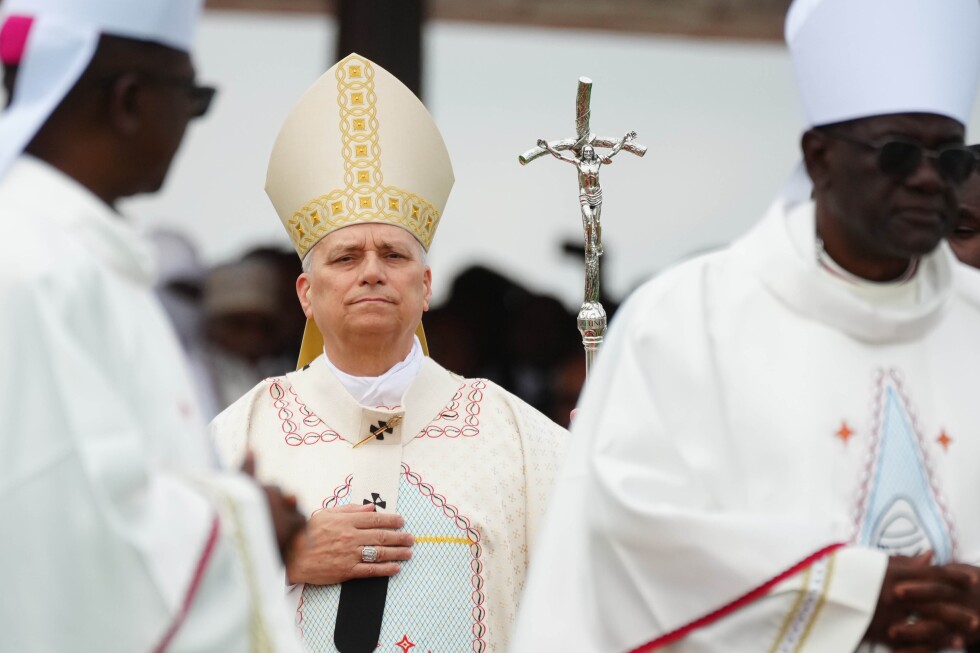
  • Pope says ‘tyrants’ speech was not aimed at Trump

    Pope says ‘tyrants’ speech was not aimed at Trump

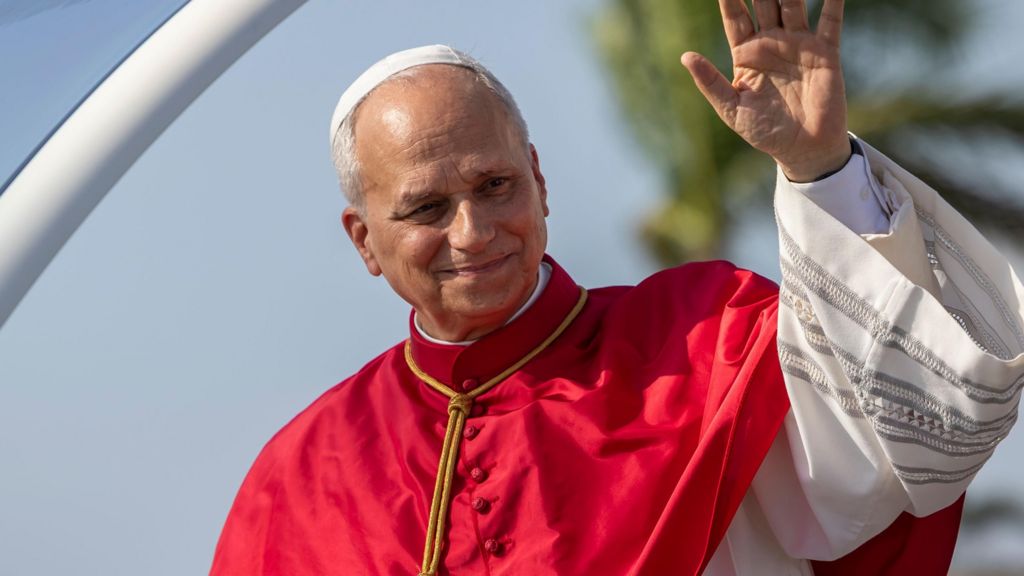
    Pope Leo XIV touched down in Angola on Saturday, the latest stop on his multi-nation tour of Africa, and used the opportunity to clear up widespread misinterpretation of recent comments he made about global authoritarianism and military spending. The pontiff told reporters traveling with him that his earlier remarks criticizing world leaders he labeled “tyrants” for pouring billions of dollars into conflict were drafted two weeks before former U.S. President Donald Trump launched a high-profile public attack on him. There was never any intention, he stressed, to enter into a public debate with the American leader.

    The back-and-forth between the two figures began earlier this month, after Pope Leo publicly voiced criticism of the U.S.-Israeli military campaign in Iran and pushed back against Trump’s warning that an entire civilization would be destroyed if Tehran did not accept Washington’s demands to end the conflict and reopen the Strait of Hormuz. That critique prompted Trump to unleash a scathing social media attack on the first American-born pope, calling him “terrible for foreign policy,” “WEAK on crime,” and saying he was “not a big fan” of the pontiff. Trump also briefly shared an AI-generated image that depicted him as a Jesus-like figure before removing it, and later told reporters that while he accepted the Pope’s right to his own views, he retained the right to disagree.

    Days after Trump’s initial attack, Pope Leo delivered a speech in Cameroon, another stop on his African tour, that drew immediate scrutiny. In that address, he condemned leaders who “turn a blind eye to the fact that billions of dollars are spent on killing and devastation, yet the resources needed for healing, education and restoration are nowhere to be found.” He added, “The masters of war pretend not to know that it takes only a moment to destroy, yet often a lifetime is not enough to rebuild.” The pontiff also used the speech to denounce the nearly decade-long insurgency that has left a bloodstained trail of destruction across parts of Cameroon, decrying what he called “an endless cycle of destabilisation and death.”

    Many political analysts and media outlets quickly framed that speech as a direct response to Trump, a narrative the Pope pushed back on firmly Saturday. “A certain narrative that has not been accurate” has taken root, he told reporters, fueled by the political tension that emerged after Trump’s original criticism. “Which is not in my interest at all,” he added, emphasizing that entering political sparring matches with the U.S. leader was never his goal.

    The four-country African tour, which includes stops in 11 cities, marks Pope Leo’s second major international visit since his election to the papacy in 2024. The trip underscores the outsized importance of the Catholic faith across the African continent: 2024 Vatican data shows that more than 20% of the world’s 1.3 billion Catholics – approximately 288 million people – currently reside in Africa, a share that is projected to grow steadily in coming decades.

  • Pope Leo XIV says ‘not in my interest at all’ to debate Trump but will keep preaching peace

    Pope Leo XIV says ‘not in my interest at all’ to debate Trump but will keep preaching peace

    While traveling aboard the papal plane between Cameroon and Angola, mid-way through his 11-day pastoral tour of Africa, Pope Leo XIV spoke publicly Saturday to push back against widespread media narratives framing his recent calls for peace as a direct attack on U.S. President Donald Trump. The first American pope told reporters traveling with him that entering a public debate with Trump over the ongoing Iran war holds no personal or institutional interest for him, but he made clear that his commitment to spreading the Gospel’s core message of peace will remain unshaken.

    The back-and-forth between the two leaders has dominated global headlines this week, after Trump launched a series of criticisms against the pope on his social media platform Truth Social on April 12. At the time, the Iran war — which erupted following joint U.S.-Israeli strikes on February 28 and subsequent Iranian retaliation — was already intensifying. Trump accused Pope Leo of being soft on conflict, aligned with left-wing political interests, and even claimed that the first American pontiff owed his election to Trump’s own influence.

    Pope Leo has been consistent in his public calls for diplomatic dialogue to end all armed conflict, and has repeatedly condemned efforts to frame war as a religiously justified cause. Most notably, he previously labeled Trump’s public threat to annihilate Iranian civilization as “truly unacceptable.” Vatican officials have already clarified that the pope’s peace advocacy applies to every ongoing war across the globe, not just the Iran conflict — pointing to examples like the Russian Orthodox Church’s framing of Moscow’s invasion of Ukraine as a “holy war” as another target of his criticism.

    Addressing the viral interpretation of his recent remarks at a peace gathering in Bamenda, Cameroon — a city that has sat at the center of a nearly decade-long separatist conflict in the country’s Anglophone western region — the pope pushed back on claims the speech was crafted to respond to Trump. He confirmed that the text of his address, which blasted a “handful of tyrants” that are devastating the planet through war and exploitation, was finalized two full weeks before Trump released his first criticism. “Much of what has been written since then has been more commentary on commentary, trying to interpret what has been said,” he told reporters, adding that widespread narratives framing his comments as a jab at the president are largely inaccurate. “And yet as it happens, it was looked at as if I was trying to debate again the president, which is not in my interest at all.”

    Looking ahead to the remainder of his African tour, Pope Leo emphasized that his primary mission is pastoral: as head of the Catholic Church, he has traveled to the continent to walk alongside, celebrate with, and encourage Catholic communities across the region. He added that his ongoing peace preaching is not rooted in political confrontation, but in the core tenets of his faith. “I primarily come to Africa as a pastor… but also looking for ways to promote justice in our world, promote peace in our world,” he said, reaffirming that he will continue lifting up these values as part of his ministry regardless of political pushback.

  • Millions listen to Ethiopian star’s song taking swipe at government

    Millions listen to Ethiopian star’s song taking swipe at government

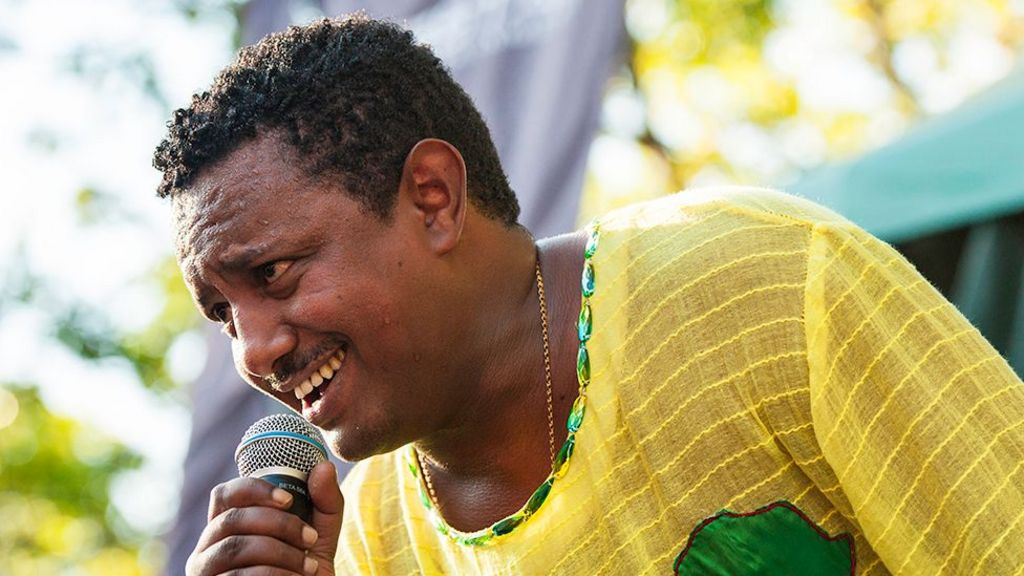
    As Ethiopia prepares for its upcoming June general election, a new music release from the nation’s most iconic musician has ignited widespread public conversation, delivering a seeming rebuke of the current government that resonates deeply with growing discontent across the country. Titled *Das Tal*, which translates to “Put Up the Tent” in English, the track was uploaded to YouTube last Thursday, and has already amassed more than seven million views from audiences at home and abroad.

    The song draws its symbolism from Ethiopia’s traditional mourning tents, spaces where communities gather to grieve shared loss. Throughout the track, 49-year-old Teddy Afro — born Tewodros Kassahun — crafts a raw, lyrical lament for what he frames as a lost nation. “The spirit of being Ethiopian is now pushed away,” he sings. “Now I understand the sorrow and pain. Where can someone go to mourn, where do you cry? In the place that raised me, in the village where I grew up, I have become a stranger, like someone with no country.”

    Controversy preceded the track’s official launch, when a planned preview event for journalists in the capital city of Addis Ababa was abruptly canceled, with no clear explanation given for the last-minute cancellation.

    This is far from the first time Teddy Afro has clashed with Ethiopian governments: for more than two decades, he has been one of the most prominent dissident voices in the country’s cultural landscape, where open criticism of ruling authorities has regularly resulted in legal and professional repercussions for critics. Twenty years ago, he was imprisoned for 16 months on charges related to a hit-and-run incident, charges he has long maintained were fabricated as political retribution for his criticism of the government.

    In 2017, his most recent full album *Ethiopia*, which centered on historical narratives and called for cross-ethnic unity across the country, became a commercial sensation. It topped Billboard’s World Albums chart for multiple consecutive weeks and recorded massive sales among Ethiopian audiences both domestically and internationally, but authorities blocked the album’s official release within Ethiopia’s borders.

    That same period saw massive nationwide anti-government protests sparked by longstanding grievances over the marginalization of the Oromo people, Ethiopia’s largest ethnic group. Those protests ultimately led to the resignation of the long-serving prime minister and paved the way for current Prime Minister Abiy Ahmed, an Oromo himself, to take power. Abiy campaigned on a promise of a new era of inclusive unity for Ethiopia’s multi-ethnic population, and Teddy Afro initially welcomed his agenda. In a 2017 interview with the BBC, the musician framed his work as rooted in a call for collective love, echoing civil rights leader Martin Luther King Jr.: “Hate cannot drive out hate: only love can do that. And for us to come out of the situation we are in, I believe the only choice we have is love.”

    In the years since Abiy took office, however, Teddy Afro has become increasingly disillusioned with the government’s leadership. Widespread interethnic violence across the country and the brutal two-year civil war in the Tigray region, which killed hundreds of thousands of people, have pushed the musician to sharpen his criticism. In 2022, he released a track calling out the growing danger of ethnic tribalism, a theme he expands on in his latest release.

    For his part, Prime Minister Abiy has repeatedly emphasized his commitment to national unity, framing collective solidarity as the only path to lasting security and economic prosperity for all Ethiopians. With the general election just weeks away, political messaging around national unity is set to intensify across the political spectrum — and Teddy Afro’s viral new track has already placed national discontent at the center of public discourse in the lead-up to the vote.

  • Pope wraps up Cameroon visit with Mass as he looks ahead to Angola

    Pope wraps up Cameroon visit with Mass as he looks ahead to Angola

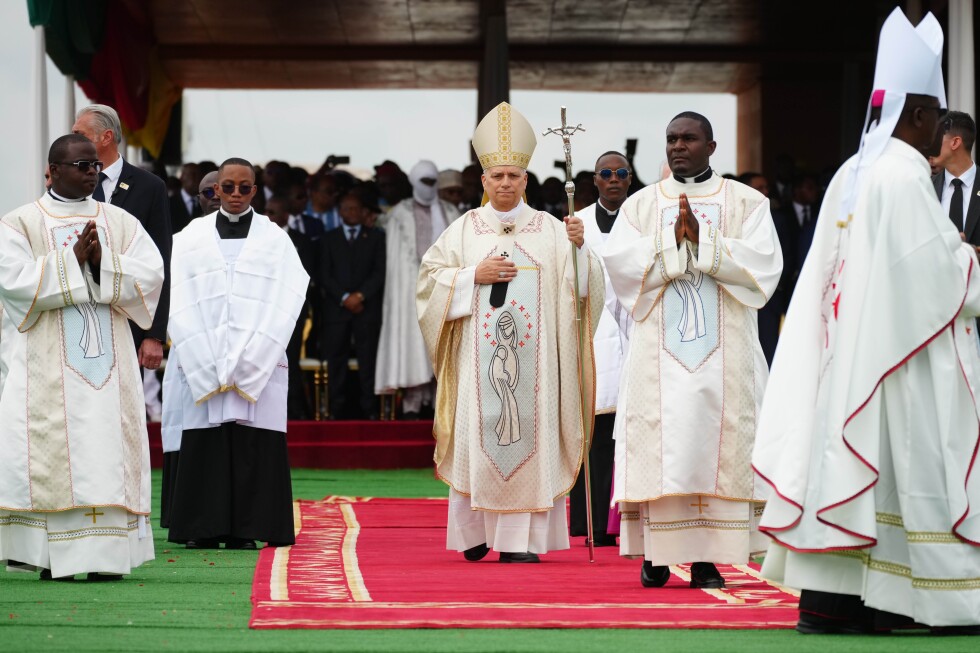
    As the third stop of his ambitious four-nation tour of Africa gets underway, Pope Leo XIV has wrapped up his visit to Cameroon, leaving behind a wave of joyful devotion and a clear call for collective action to lift marginalized communities across the continent. On Saturday, the pontiff celebrated an open-air Mass at Yaounde’s international airport, drawing tens of thousands of worshippers — including 93-year-old Cameroonian President Paul Biya, the world’s oldest sitting head of state. Accounts from the scene describe a vibrant, crowded gathering, where even worshippers with limited mobility were carried to the service in wheelbarrows by loving family members, a testament to the deep impact of the pontiff’s visit on the majority-Christian nation.

    Cameroon, a former French colony where Catholics make up roughly one-third of the population, is just the second stop on Leo’s African journey. Throughout his time in the country, the pope centered his message on two core themes: encouraging disillusioned young people to hold onto hope for the future, and calling out wealthy and powerful elites for exploiting the continent’s land and people for private gain. In his final homily in Yaounde, delivered in French, Leo framed respect for human dignity as the non-negotiable foundation of a functional society.

    “For this reason, every community has the obligation to create and sustain structures of solidarity and mutual aid in which, when faced with crises — be they social, political, medical or economic — everyone can give and receive assistance according to their own capacity and needs,” he told the gathered crowd. He doubled down on earlier criticisms of systemic graft, denouncing the “chains of corruption” that block inclusive development across the continent, and condemning the “handful of tyrants” who fuel conflict and exploitation that leaves millions of Africans trapped in poverty.

    After closing the Cameroon leg of his tour, the pontiff departed Saturday for Luanda, the capital of southwestern Angola, where his visit will confront the nation’s layered, often painful history on multiple fronts. Angola won its independence from Portugal in 1975, but almost immediately descended into a 27-year civil war that only ended in 2002. Fought as a Cold War proxy conflict — with the U.S. and apartheid South Africa backing one faction, and the Soviet Union and Cuba supporting the other — the war claimed an estimated 500,000 lives and left deep physical and social scars that persist today.

    Today, Angola is one of Africa’s most resource-rich nations: it ranks as the continent’s fourth-largest oil producer, among the top 20 global oil producers, the world’s third-biggest diamond exporter, and holds substantial reserves of gold and other in-demand critical minerals. Yet despite this abundant natural wealth, 2023 World Bank data shows more than 30% of Angola’s 38 million people survive on less than $2.15 per day. Much of this inequality is tied to decades of systemic corruption: former long-time president Jose Eduardo dos Santos, who ruled the nation for 38 years until 2017, was accused of siphoning an estimated $24 billion in public funds — most from oil revenues — to his family and inner circle, while ordinary Angolans faced widespread poverty. Current President Joao Lourenco, who took power after dos Santos stepped down, has made anti-corruption campaigns and recovery of stolen public funds a central policy pledge, but critics argue his actions have largely targeted political opponents to consolidate power, leaving deep-rooted systemic graft unaddressed.

    For many ordinary Angolans, the pope’s visit carries expectations of messages that speak directly to the nation’s ongoing struggles. “I would like to hear a message of peace, a message of reconciliation,” Luanda resident Sergio Jose told reporters. “I would also like to hear good political messages and I would also like to hear that the pope would also talk about the upcoming elections in Angola.”

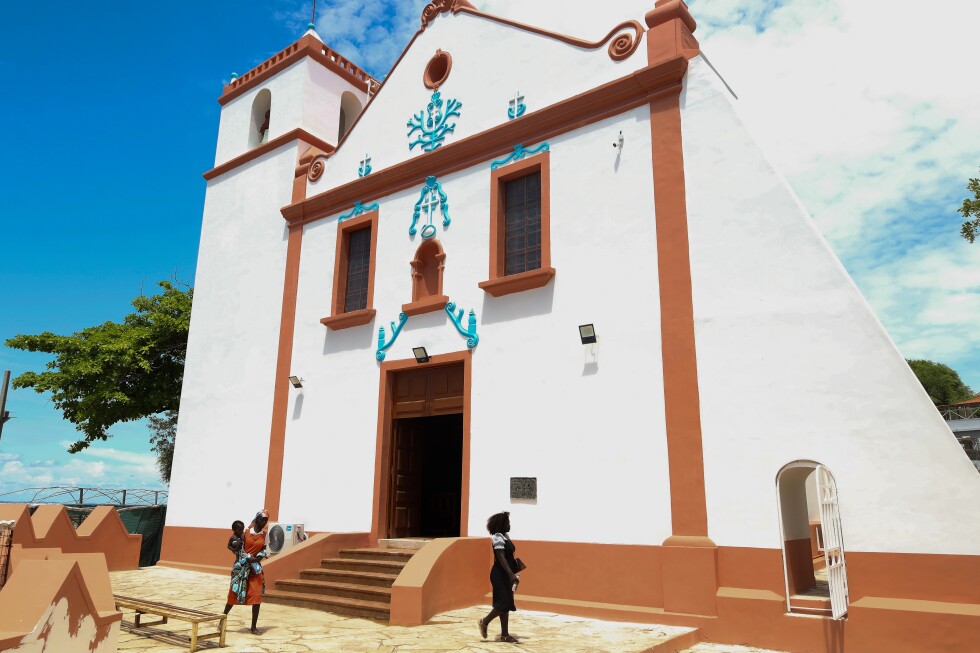
    Observers expect the pontiff to echo the themes of anti-corruption and equitable development he laid out in Cameroon during his time in Angola. The most anticipated event of his visit will be a trip Sunday to Muxima, a coastal town south of Luanda that is home to one of Angola’s most important Catholic shrines, the Church of Our Lady of Muxima. Built by Portuguese colonizers in the late 16th century as part of a fortress complex, the site was a central hub of the transatlantic slave trade, a tangible reminder of how the spread of Catholicism was intertwined with the colonization and exploitation of the African continent. As a former Portuguese colony, Angola was the epicenter of the transatlantic slave trade: more than 5 million enslaved Africans were shipped across the Atlantic from Angolan ports, more than from any other region on the continent.

    The visit to Muxima carries unique personal meaning for Pope Leo, the first U.S.-born pope in history. Genealogical research has confirmed the pontiff has both Black and white ancestors, including people who were held as enslaved people and people who owned enslaved people. He will pray the Rosary at the shrine, which has been a popular pilgrimage site since reports of an apparition of the Virgin Mary there in 1833.

    This report includes contributions from Imray, reporting from Cape Town, South Africa. The Associated Press’ religion coverage receives support through a collaboration with The Conversation US, with funding from Lilly Endowment Inc. The AP retains sole responsibility for all content.

  • DR Congo accepts first set of deportees from the US

    DR Congo accepts first set of deportees from the US

    In a major milestone for the Donald Trump administration’s hard-line campaign against unauthorized mass migration, the first group of 15 South American migrants expelled from the United States has touched down in the Democratic Republic of the Congo, marking the start of a controversial third-country deportation agreement between the two nations.

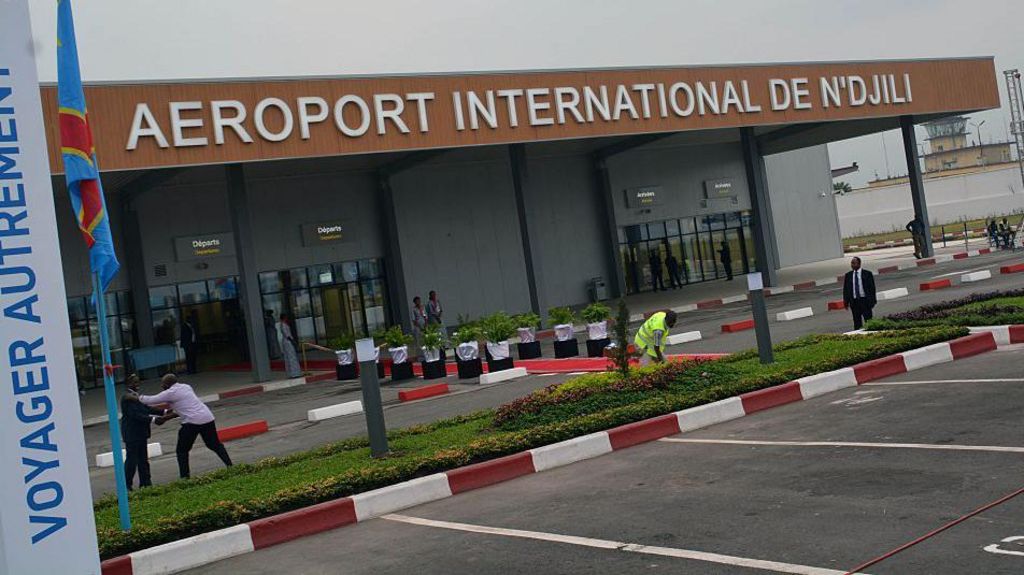
    The plane carrying the deportees landed at Kinshasa’s N’djili International Airport in the early hours of Friday. While the Congolese government released only limited details about the group in its official statement, an anonymous airport source speaking to the BBC confirmed most of the 15 are Colombian and Peruvian citizens — making them third-country nationals, meaning they hold no citizenship in either the United States or DR Congo.

    Kinshasa has moved quickly to clarify the terms of the arrangement, emphasizing that the migrants’ stay in the central African nation is strictly temporary. The Congolese government also explicitly stated Washington is covering all costs related to the migrants’ reception, support, and care during their stay, and that the deal does not represent a permanent relocation scheme or an outsourcing of U.S. migration policy. When the agreement first came to light earlier this month, Congolese officials framed the decision to accept the deportees as aligned with the country’s commitments to human dignity, migrant rights protection, and international solidarity. Migrants are being admitted under short-stay permits that comply with DR Congo’s existing foreign entry and residence laws, the government added.

    This deportation operation is part of a broader, long-running push by the Trump administration to expand third-country deportations as a core tool of its immigration crackdown. Prior to this arrangement with DR Congo, the U.S. has already sent expelled migrants to other African nations including Ghana, South Sudan, and Eswatini. Since Trump took office in January 2025, dozens of migrants have been relocated to third countries under this policy. A minority report from the U.S. Senate Foreign Relations Committee has raised new questions about the cost of the program, estimating that the Trump administration has likely spent more than $40 million (£30 million) on third-country deportations as of January 2026. The report notes the full total expenditure remains unknown, but confirms the U.S. has disbursed more than $32 million in direct funding to five partner countries: Equatorial Guinea, Rwanda, El Salvador, Eswatini, and Palau.

    When approached for comment, the U.S. State Department declined to discuss diplomatic communications with foreign governments, but reaffirmed the administration’s unwavering commitment to ending illegal mass migration and strengthening U.S. border security.

    Beyond the migration deal, the U.S. maintains multiple overlapping policy priorities with DR Congo. Washington is currently negotiating a critical minerals agreement with Kinshasa that would grant American companies greater access to DR Congo’s extensive reserves of strategically important metals, including cobalt, tantalum, lithium, and copper — all key inputs for electric vehicle batteries and renewable energy technology. The Trump administration also previously brokered a landmark peace deal between DR Congo and neighboring Rwanda to resolve years of conflict in eastern DR Congo, though full implementation of the agreement has remained an ongoing challenge.

    Most recently, following a new round of peace talks in Switzerland mediated by the U.S. and Qatar, both the Congolese government and the Rwanda-backed M23 rebel group have announced key confidence-building steps ahead of a permanent ceasefire. The two sides committed to allowing unimpeded access for humanitarian aid, protecting civilian populations and critical infrastructure, and launching formal monitoring of a permanent ceasefire. Negotiating delegates from both sides expressed cautious encouragement over the progress made toward ending the years-long conflict. Rwanda has consistently denied international evidence of its support for M23, claiming any military presence near the border is a defensive measure to counter threats from armed groups based in DR Congo.

    This report includes additional contributions from journalist Richard Kagoe.

  • Water crisis grips South Sudan refugees

    Water crisis grips South Sudan refugees

    As conflict continues to drive thousands of Sudanese civilians across the border into South Sudan, a rapidly escalating water crisis has pushed already vulnerable displaced populations to the brink of survival in the remote Upper Nile State settlement of Chemedi Payam.

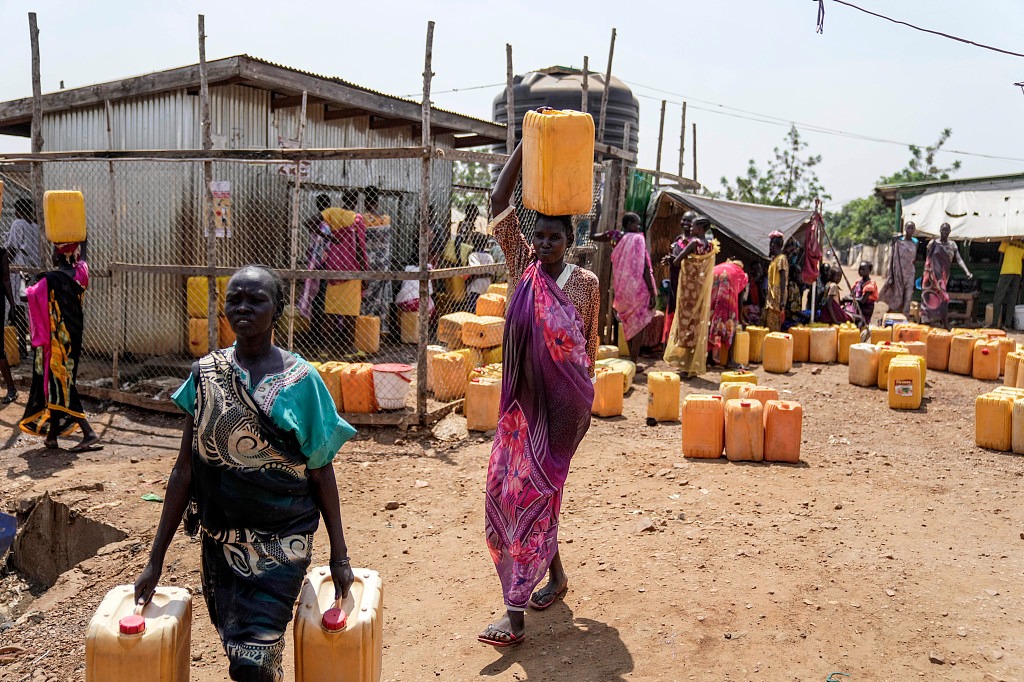
    Long before the first light of day touches the arid landscape of Chemedi Payam, women and children clutching empty plastic buckets gather in long lines, waiting for water deliveries that may never materialize. For many of these displaced people, the daily fight for clean water consumes every waking hour, pushing other basic needs like meals to the background. “We wake up at 3:00 am local time and come here to look for water,” explained Amna Ibrahim, one of thousands of Sudanese refugees who fled cross-border conflict to seek safety in South Sudan. “We haven’t even had breakfast because we came early to fetch water.”

    Today, Chemedi is home to roughly 58,000 people, the vast majority of whom are Sudanese refugees and South Sudanese returnees fleeing neighboring violence. What makes this crisis particularly stark is that the settlement sits in close proximity to the Nile, one of the continent’s largest and most reliable water sources. Aid workers and local administrators emphasize that the shortage does not stem from a lack of available water, but from a catastrophic gap in critical infrastructure needed to safely extract, purify and distribute water to the scattered communities that make up the settlement.

    Most functional boreholes in the area are out of service, water storage capacity is drastically limited, and no large-scale water treatment systems exist to serve the growing population. Seasonal water collection points dry up entirely during extended dry seasons, leaving residents with two bad options: rely on sporadic water trucking deliveries, or turn to unsafe, unregulated water sources. For most households, consistent access to clean water depends entirely on aid-funded tanker operations, but humanitarian groups warn these life-sustaining services are being choked off by crippling funding shortfalls. “If the tanker doesn’t come, we don’t know what we will do,” said Zainab Yasin, another Sudanese refugee living in the settlement.

    Local authorities note that the sudden, rapid influx of thousands of people fleeing Sudan’s ongoing violence has completely overwhelmed the region’s already overstretched water infrastructure, which was inadequate to serve local populations even before the refugee crisis began. Beyond the immediate threat of dehydration and hunger, the lack of reliable clean water is undermining life-saving critical services, particularly for malnourished children and new and expecting mothers.

    At a primary healthcare clinic supported by the United Nations Children’s Fund (UNICEF) and its implementing partners, medical teams treat dozens of children suffering from severe acute malnutrition every day, alongside hundreds of pregnant and breastfeeding women. “Water is a major gap in Chemedi. Without it, our nutrition services cannot function properly,” said Jansuk Alex Sworo, a nutrition specialist working in the settlement. Sworo explained that the ongoing funding crisis for water services has left both the clinic and surrounding communities in a constant state of crisis. Currently, aid groups haul water 80 kilometers from the town of Renk to Chemedi, but this stopgap measure is financially unsustainable under current funding levels.

    With no other options available, large numbers of residents have been forced to turn to unsafe water sources, including untreated water from shallow unregulated wells and seasonal holding ponds that dry up within weeks of the dry season starting. This puts the entire population at high risk of outbreaks of waterborne diseases like cholera and typhoid.

    The impact of the crisis extends far beyond health outcomes, tearing apart access to education for refugee children. At the local primary school, 650 children are enrolled, most of them refugees, but classes are routinely cut short as early as 11 a.m. because of the lack of water for students and staff. “We have an issue with water here, and that is why we release learners at 11:00 am,” said head teacher Awadia Paulo Adowk. Some families have pulled their children out of school entirely, as every able family member is needed to join the daily search for water. “Sometimes we get water, and after two days, we don’t have anything to drink,” said Rasham Mohamed Sheikh Al-Din, a mother of eight whose children no longer attend classes regularly.

    Local government leaders and international aid workers are now urgently calling for expanded global financial and logistical support to address the growing unmet water needs of Chemedi’s vulnerable population, warning that without immediate intervention the crisis could quickly turn deadly.

  • Pope Leo XIV’s visit to an African church linked to slavery reflects on his own complex heritage

    Pope Leo XIV’s visit to an African church linked to slavery reflects on his own complex heritage

    On the banks of Angola’s Kwanza River stands a 430-year-old white-washed church that holds a deeply layered, painful history: built by Portuguese colonizers as part of a 16th-century fortress complex, the Church of Our Lady of Muxima long served as a critical node in the trans-Atlantic slave trade. Today, as Pope Leo XIV prepares to visit the site during his first papal tour of Africa, the stop has emerged as a symbolic moment of reckoning, reconciliation, and reimagining for the global Catholic Church.

  • Zimbabwe’s iconic stone birds were taken by colonialists. Finally, they’re all back home

    Zimbabwe’s iconic stone birds were taken by colonialists. Finally, they’re all back home

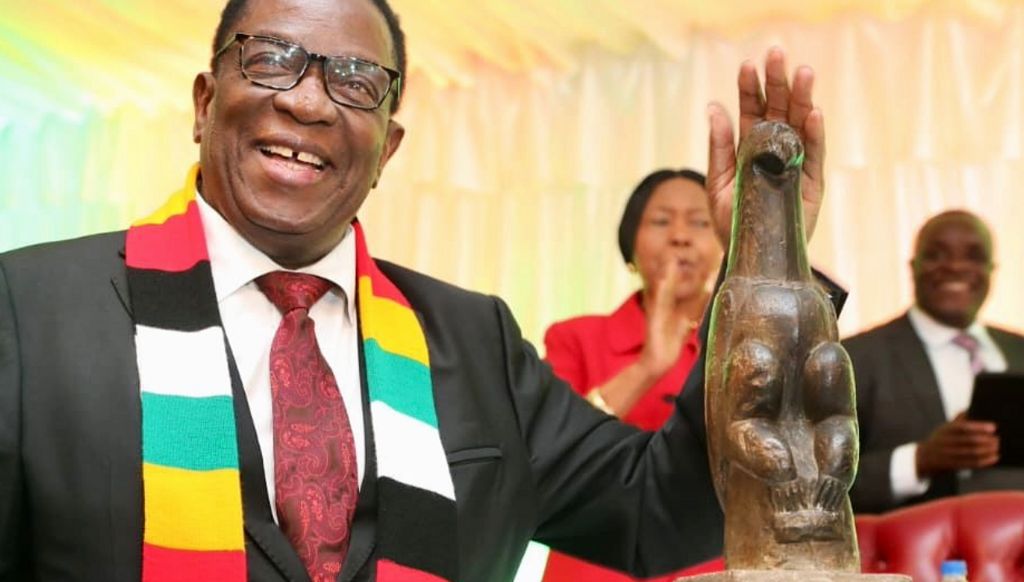
    For more than a century, a gap has sat in Zimbabwe’s national heritage: one of eight iconic ancient soapstone bird sculptures, looted by colonial invaders and scattered across the globe, remained outside the country’s borders. That changed this week, when the final missing Zimbabwe Bird touched down on home soil 137 years after it was ripped from its original place at the Great Zimbabwe ruins, in a landmark repatriation organized by neighboring South Africa.

    Known globally as the Zimbabwe Bird, this stately eagle carving has been embedded in the country’s national identity for generations, featured prominently on Zimbabwe’s flag, banknotes, and official coat of arms. But few symbols carry as layered a history as this carving, one that traces a long arc of colonial theft, decades of diplomatic negotiation, and a growing global movement to return looted African cultural heritage.

    The eight original bird sculptures were carved between the 11th and 15th centuries for Great Zimbabwe, a sprawling medieval stone city that gave the modern nation its name — Zimbabwe translates to “house of stone” in local languages, and the country remains celebrated worldwide for its contemporary stone carving tradition. The birds, ranging from 25 centimeters to 50 centimeters in height (and reaching more than a meter when mounted on their original columns), were placed on walls and stone monoliths to watch over the city.

    Scholars have not reached a consensus on which ethnic group originally created the carvings, though many believe they are the work of ancestors of the Shona people, who make up Zimbabwe’s current majority population. The birds carry deep cultural and spiritual meaning: most experts agree they depict either the bateleur eagle (called *chapungu* in Shona, a sacred species to both Shona and Venda communities) or the African fish eagle. Plan Shenjere-Nyabezi, an archaeology professor at the University of Zimbabwe, calls the Zimbabwe Birds “the most significant archaeological treasures ever discovered in the country, powerful and cherished symbols of our national heritage.”

    The theft of the final bird began in 1889, when European hunter Willi Posselt stumbled on the Great Zimbabwe ruins amid a wave of pre-colonial exploration. According to Posselt’s own writing, local people armed with spears and guns initially protested his removal of what he called the “best specimen” of the birds, but he ripped the carving from its column after exchanging blankets and other goods for access. He ultimately sold the sculpture to Cecil Rhodes, the infamous British imperialist who led the colonization of what is now Zimbabwe and Zambia. Rhodes displayed the bird as decorative art at his lavish Cape Town estate, where it remained for more than a century after his death in 1902.

    Over the decades, the other missing birds slowly made their way home. After Zimbabwe gained independence in 1980, the new government launched a formal campaign to recover all eight carvings, with only two remaining within the country’s borders at the time. In a striking 1981 trade, South Africa’s apartheid government returned four birds it held in a national museum in exchange for a collection of 1,000 insect specimens from Zimbabwe’s Natural History Museum. Germany followed suit in 2003, repatriating a soapstone pedestal fragment that had been held in Berlin’s Ethnological Museum since 1907.

    But the final bird held by South Africa was blocked for decades by a century-old legal barrier. When Rhodes died, his 1902 will vested his estate and all its contents to the South African government, and the 1910 Rhodes Will Act banned the sale or transfer of any of his possessions. Every request for repatriation from Zimbabwe was rejected on the basis of this law, according to South African Minister of Culture Gayton McKenzie.

    This week, South Africa overcame that legal obstacle to complete the handover, alongside the repatriation of eight sets of Zimbabwean human remains exhumed by colonial researchers and held in a South African museum. McKenzie called the removal of the remains a product of “misguided colonial pseudoscience,” noting “these are not abstractions, but people… removed from their graves, their communities, and their homeland under the logic that their bodies were data.”

    To get around the 1910 Act, South Africa initially arranged a two-year loan of the sculpture to Zimbabwe, but McKenzie has confirmed that the South African government is currently reviewing the century-old law to formalize permanent repatriation, and insists the bird will never be returned to South Africa. The handover was welcomed by Zimbabwean President Emmerson Mnangagwa, who called the moment “the return of a national icon.”

    The repatriation marks a rare milestone in the global movement for the return of looted African artefacts: while most repatriations to date have come from European colonial powers including France, the Netherlands, Germany, and the United Kingdom, this transfer sees an African nation returning stolen heritage to another African country. Zimbabwe continues to push for the repatriation of other cultural items, including the skulls of 19th-century anti-colonial heroes believed to be held in the UK.

    For Zimbabwean leaders and scholars, the return of the final bird is more than a cultural victory — it is a spiritual homecoming. The carving will be placed on permanent display at an on-site museum at the Great Zimbabwe UNESCO World Heritage Site, where it will join the seven other recovered birds for preservation. “The bird is Zimbabwe’s heritage… one should not have to travel to other countries to enjoy their own heritage,” said Shenjere-Nyabezi.

    Edward Matenga, one of Zimbabwe’s leading scholars of the Zimbabwe Bird sculptures, described the handover as a “win-win” for both nations, calling it a cathartic step for South Africa to confront its colonial legacy. The arrival of the bird also came just days ahead of Zimbabwe’s independence anniversary, with Mnangagwa noting the timely homecoming: “Let the people of Zimbabwe come and witness. Let the children of this great nation see with their own eyes the symbol of their identity and let the world know Zimbabwe is a nation that respects its past.”

  • What next for South African opposition firebrand Malema after his five-year prison sentence?

    What next for South African opposition firebrand Malema after his five-year prison sentence?

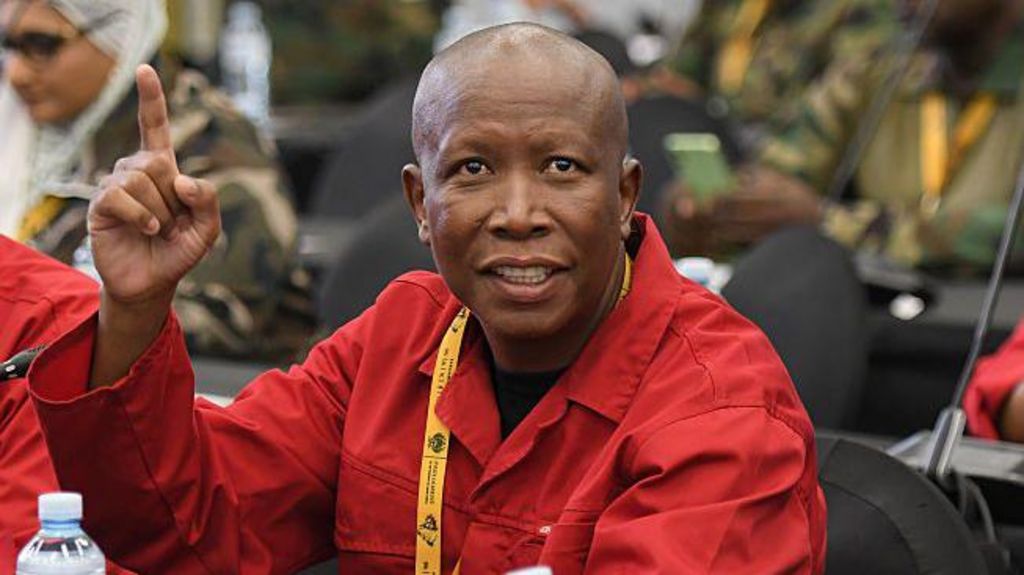
    South African opposition leader Julius Malema, the firebrand head of the Economic Freedom Fighters (EFF), is facing a five-year prison term after being convicted on weapons charges — but legal complexities and ongoing appeals mean he remains free to lead his party into the country’s upcoming local government elections this year. The 45-year-old politician was found guilty on five separate criminal offenses, including unlawful possession of a firearm, discharging the weapon in a public space, and reckless endangerment, following a trial held in KuGompo, the newly renamed former East London in Eastern Cape province. During court proceedings, Malema testified that he fired the weapon as part of a celebratory gathering.

    Malema, a polarizing figure in South African politics, has built his political brand around unapologetic criticism of what he frames as Western imperialism, and calls for the full nationalization of land currently owned by white South African descendants — a policy designed to redress decades of harm caused by colonial rule and the apartheid system. His anti-establishment rhetoric has earned him a fervent base of support, particularly among young South Africans frustrated by slow economic transformation and persistent inequality. But the EFF leader has also drawn widespread condemnation across the political spectrum, from women’s rights advocacy groups to white agricultural communities, and has faced repeated legal troubles: he has been convicted of hate speech on multiple occasions, and was denied entry to the United Kingdom twice in 2025. Known colloquially as the “Red Berets” for the red overalls party members wear in parliament — a symbolic gesture of solidarity with the country’s working class — the EFF has emerged as one of South Africa’s most high-profile opposition groups since its founding.

    Following his conviction and sentencing, the court granted Malema permission to appeal his sentence, though not the initial guilty verdict. The EFF has pushed back aggressively against the ruling, with Malema’s legal team confirming they will challenge both the conviction and the five-year term in higher courts. According to Ulrich Roux, a South African legal expert interviewed by the BBC, the appeal process will require Malema to first secure approval from the Eastern Cape High Court to challenge his conviction. Roux noted that state prosecutors are almost certain to oppose the appeal application. Malema has publicly vowed to escalate his challenge all the way to South Africa’s highest judicial body, the Constitutional Court, if needed. If the case follows that full legal path, Roux projects a final ruling could take four to five years to reach.

    Under South Africa’s constitution, any person sentenced to more than 12 months in prison without the option of a fine is disqualified from serving as a Member of Parliament. However, this disqualification does not take effect until all appeal processes have been exhausted and a sentence is considered final. Because Malema’s appeal is still pending, he retains his parliamentary seat and is eligible to lead his party’s campaign in the upcoming local elections. Political analysts say this timeline could even allow Malema to run for re-election to parliament in the 2029 national elections, even if his appeal ultimately fails. Even in the worst-case scenario for Malema — a failed appeal that results in prison time — the sentence would only bar him from office for five years after his release, leaving the door open for a future political return.

    This precedent already exists in recent South African political history: former President Jacob Zuma was sentenced to 15 months in prison in 2021, which barred him from serving as an MP. Despite that, Zuma launched a new political party, uMkhonto weSizwe, in 2024, and led the party to a third-place finish in that year’s national elections — outperforming Malema’s EFF, which lost significant vote share to Zuma’s new movement.

    Some political analysts argue that the conviction could actually benefit Malema’s campaign. Khanyi Magubane, a South Africa-based political analyst, told the BBC that the sentence may be the “trump card” Malema needs ahead of the local elections. “I believe this will position the EFF and Malema well. It’s actually going to have unintended consequences… because he will play on the public sympathy and use this opportunity to continue standing his ground,” Magubane explained. For Malema, the timing comes as he seeks to reverse the EFF’s recent electoral decline: the party lost significant support to Zuma’s uMkhonto weSizwe in 2024, and saw a number of high-profile departures after the election, including that of deputy leader and party co-founder Floyd Shivambu. In the wake of the sentencing, thousands of Malema’s supporters have already rallied behind their leader, signaling continued loyalty to the polarizing politician.