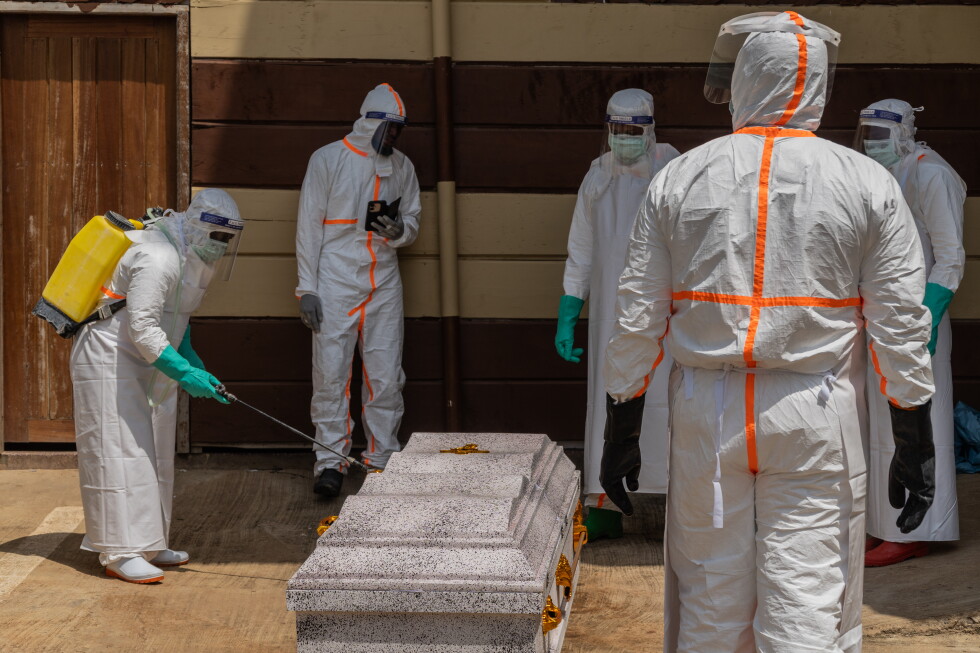
In a Sunday evening update posted to social platform X, the Democratic Republic of the Congo’s Ministry of Health has announced a sharp upward climb in confirmed cases of a rare Ebola outbreak, pushing the total to 782 documented infections and 181 confirmed deaths across the country. While these are the official numbers, public health officials warn the true scale of the epidemic is far larger than recorded. The outbreak was only formally detected on May 15, weeks after the first suspected infections emerged, and critical contact tracing efforts — a core strategy to halt Ebola spread — have dropped to just 56% coverage, a significant decline from rates reported the previous week.
This latest outbreak differs from most previous Ebola events in Congo in a key way: it is driven by the little-seen Bundibugyo virus, rather than the Zaire strain that caused the nation’s 16 prior outbreaks. Unlike Zaire, Bundibugyo has no globally approved vaccine or targeted treatment available to frontline health teams, limiting intervention options. As of the latest update, 56 infected patients have recovered, putting the current official fatality rate at 23% for the outbreak.
Nearly all confirmed cases — over 90% — are concentrated in eastern Congo’s volatile Ituri Province, with smaller clusters also detected in the neighboring North Kivu and South Kivu provinces. The virus has already crossed international boundaries, with cases confirmed in neighboring Uganda, raising regional public health alarm.
A web of long-standing crises has created major barriers to containing the spread, according to United Nations humanitarian officials. Ituri Province already hosts nearly one million people displaced by ongoing armed conflict, and constant population movement as communities flee violence makes tracking transmission chains nearly impossible. The province’s geography adds further obstacles: vast stretches of dense forest, poorly maintained road networks, and remote rural communities that can take multiple days to reach slow response teams.
Additional challenges come from the region’s large population of artisanal miners, thousands of whom move regularly between remote mineral extraction sites across the area, creating constant unmonitored movement that facilitates virus spread. Compounding these issues, attacks on frontline health workers by angry local residents, widespread misinformation and community skepticism about public health measures, and ongoing active armed conflict in transmission hotspots have all derailed containment efforts.
The outbreak has already sparked controversy beyond Congo’s borders. Last month, U.S. officials announced plans to construct a dedicated Ebola quarantine facility at Kenya’s Laikipia Air Base, with capacity for 50 beds, to treat Americans exposed to the virus in the region rather than repatriating them to the United States for care. The proposal sparked large public protests across Kenya, and the plan was ultimately halted by a court order.