标签: Africa

非洲

  • Midtjylland’s Djabi seriously injured in stabbing

    Midtjylland’s Djabi seriously injured in stabbing

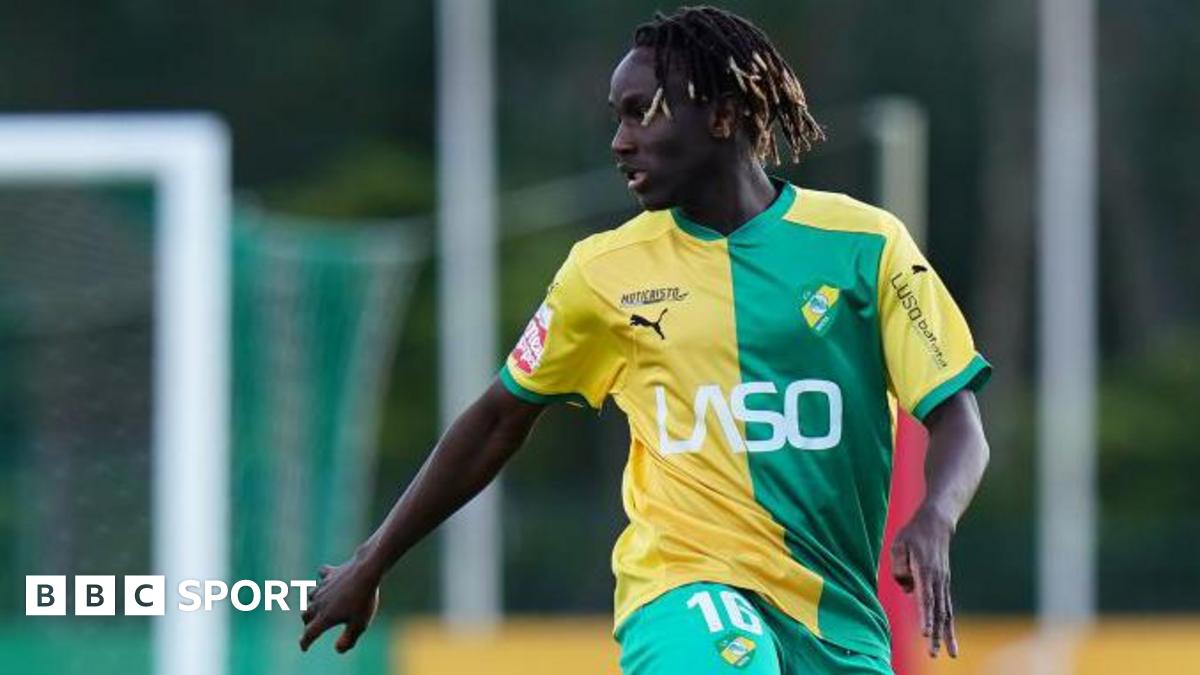
    A 19-year-old rising football talent, Alamara Djabi, who plies his trade as a midfielder for Danish top-flight side FC Midtjylland, is now in stable condition following a life-threatening stabbing attack in central Denmark, law enforcement and club officials have confirmed.

    The violent incident unfolded in the early hours of Sunday on the streets of Herning, the small central Danish city that serves as home base for Midtjylland, one of the most successful clubs in Danish domestic football in recent years. Local police have launched a full investigation into the attack, and have named a 20-year-old suspect who remains at large as of the latest updates.

    Djabi, a young prospect from Guinea-Bissau, joined Midtjylland in 2023 after rising through the youth ranks at Portuguese powerhouse Benfica. The teenager spent the 2024-2025 season on loan at Portuguese second division club CD Mafra, where he earned seven first-team appearances to build his professional experience. He returned to Midtjylland ahead of the current campaign, and has already featured once in Europa League qualifying for the side, adding to his two total senior appearances for the Danish club.

    Immediately after the attack, Djabi was rushed to hospital in critical condition and underwent urgent emergency surgery to treat his injuries. Club officials released an official statement updating the public on his status, revealing that the young midfielder has since undergone a second procedure. “Thanks to the incredible professional work of first responders and the hospital care team that has treated him, his condition is now classified as stable,” the statement read. “He has woken from an induced coma, and is progressing as well as can be expected given the circumstances.”

    Police investigators have yet to determine a clear motive for the attack, but preliminary assessments point to a personal dispute between Djabi and the suspect as the likely trigger. “It is still unclear what the motive for the stabbing is, but the police’s immediate assumption is that there was a disagreement between the 19-year-old and the perpetrator,” a police spokesperson said in an update to reporters.

    The attack comes as Midtjylland, a four-time winner of the Danish Superliga that most recently claimed the league title in 2024, competes for the top spot in this season’s championship. The club currently sits second in the table, just two points behind league leaders AGF with multiple matches still to play this campaign.
  • Libya fueled war in Sudan with Colombian mercenaries and equipment, UN report finds

    Libya fueled war in Sudan with Colombian mercenaries and equipment, UN report finds

    Three years after Sudan’s brutal civil conflict first erupted, a newly released United Nations investigation has uncovered a cross-border network that funnels foreign fighters, weaponry, and critical supplies to the Rapid Support Forces (RSF), the paramilitary group fighting Sudan’s official government military, with an armed faction in Libya acting as a key facilitator.

    The findings, published Sunday by the UN Panel of Experts on Libya, cover the monitoring period from October 2024 to February 2026, and detail how Libya’s Subul al-Salam Battalion has coordinated the movement of recruits—including a contingent of former Colombian military personnel turned mercenaries—along with weapons and fuel across the Libya-Sudan border to bolster RSF operations. The battalion is an integrated component of the self-declared Libyan National Army (LNA), led by influential commander Gen. Khalifa Hifter, who holds de facto control over eastern and southern territories of war-battered Libya.

    UN experts confirm the battalion’s operations are concentrated in the southern Libyan border town of Kufra, a strategic hub that shares boundaries with Sudan, Chad, and Egypt. Kufra’s key infrastructure, including a local airport that falls under the battalion’s full control, has allowed the group to smoothly transfer fighters and military cargo from Libya into RSF-held territory in Sudan. The investigation further mapped out the tangible benefits the RSF has gained from this Libyan support network: the paramilitary now operates a permanent rear base approximately 75 kilometers, or 46.6 miles, southwest of Kufra, and leverages the town’s existing airbase as a transit hub for incoming Colombian fighters and a modification site for military vehicles imported into Sudan via Libyan smuggling routes.

    According to the report’s documentation, the battalion’s direct operational support extended to RSF battlefield advances in June 2025. Facilitation included deploying local ground units, providing armed escorts for foreign fighters traversing Libyan territory, and securing steady supplies of fuel and vehicle spare parts. This backing directly enabled the RSF’s seizure of the Uwaynat border region, a strategically critical tri-point where the territories of Sudan, Egypt, and Libya converge. At the same time, the UN notes that the cross-border activity has severely eroded what remains of border security in southern Libya, creating new instability in an already fragile region.

    As of publication, neither the Subul al-Salam Battalion nor RSF spokespersons have responded to requests for comment on the report’s findings. The RSF previously announced it had taken full control of the Uwaynat triangle in June, shortly after Sudan’s national military confirmed it had evacuated the area as part of what it described as defensive restructuring to repel ongoing RSF offensives. Sudan’s military has long leveled accusations that Hifter’s LNA is directly complicit in aiding RSF attacks—a claim Hifter has repeatedly denied.

    International human rights organizations have previously documented that both Hifter’s Libyan forces and the RSF receive covert military and financial support from the United Arab Emirates, an allegation Abu Dhabi has continuously rejected. In recent months, Sudan’s national military has moved to disrupt the Libya-based RSF supply line, launching targeted airstrikes in November against convoys of vehicles and groups of foreign fighters assembled inside Libyan territory ahead of deployment to Sudan, the UN report confirms.

    The cross-border mercenary network is the latest development in a Sudanese conflict that has already spiraled into one of the world’s worst humanitarian catastrophes. The war erupted on April 15, 2023, when long-simmering power tensions between Sudan’s military leadership and the RSF boiled over into open combat, first breaking out in the capital Khartoum before spreading across the vast country. The conflict has pushed millions of Sudanese into famine, displaced millions more, and created the largest single humanitarian crisis on the globe. According to data from the Armed Conflict Location & Event Data Project, a U.S.-based independent conflict monitoring organization, the war has killed no fewer than 59,000 people to date. The organization stresses that this official toll is almost certainly a significant undercount, given widespread reporting restrictions and access constraints across war zones.

    Already, the United States has imposed targeted economic sanctions on Colombian companies and private individuals linked to the scheme of recruiting and deploying former Colombian military officers to fight alongside the RSF in Sudan.

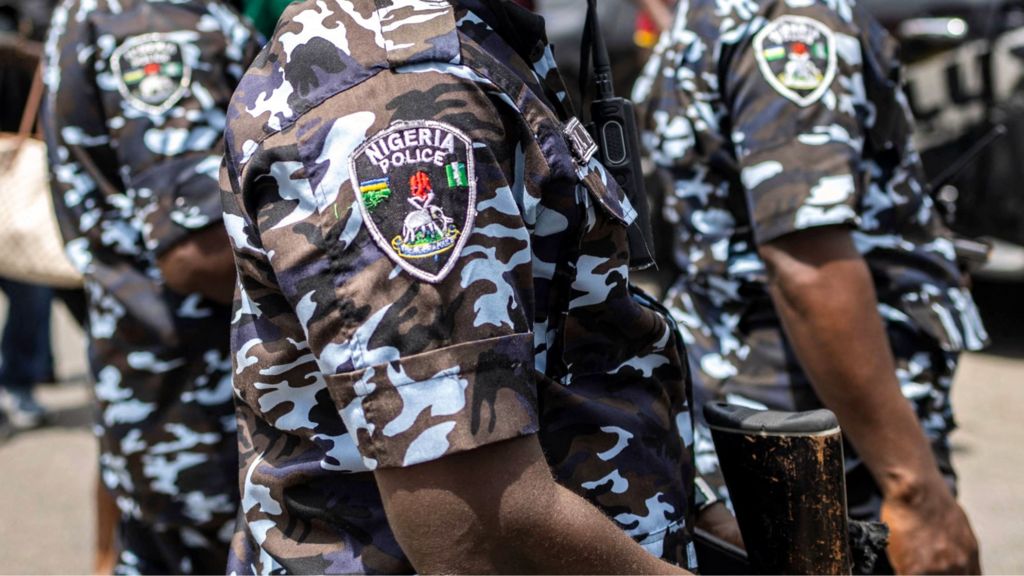
  • Nigeria charges six people with treason over Independence Day coup plot

    Nigeria charges six people with treason over Independence Day coup plot

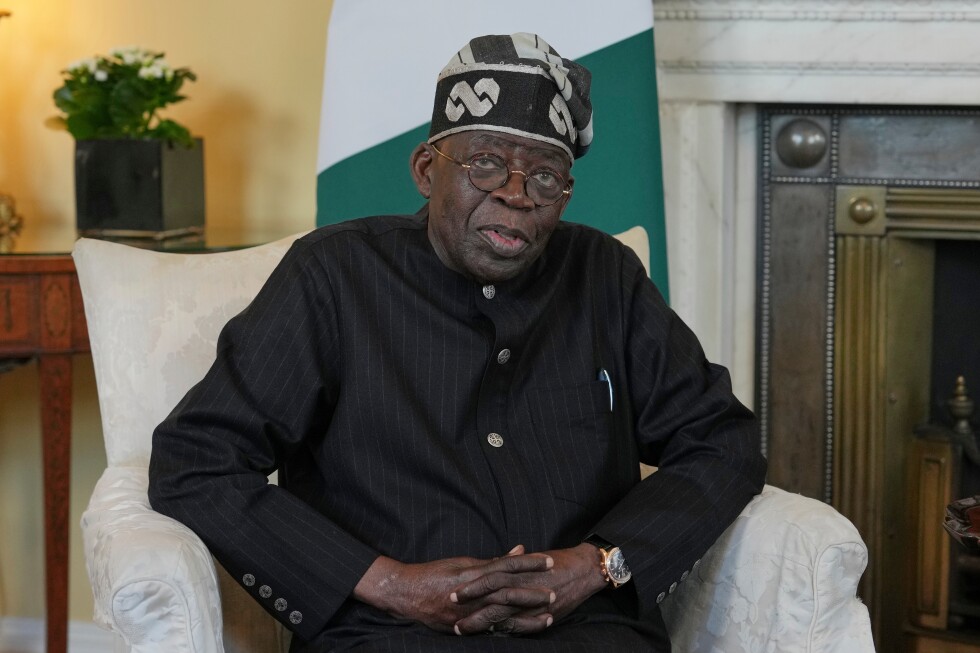
    A high-stakes treason case has taken shape in Nigeria, where six individuals—including a retired senior military officer and an active-duty law enforcement official—have been formally charged with plotting to overthrow democratically elected President Bola Tinubu in a 2025 attempted coup. The charges were brought by Nigeria’s Attorney General before the Federal High Court in Abuja, the nation’s capital, with all six defendants scheduled to make their first appearance before Justice Joyce Abdulmalik this Wednesday.

    A seventh prominent figure named in the court documents, Timipre Sylva—a former state governor and one-time Nigerian oil minister—remains at large and has not yet been taken into custody in connection with the plot.

    Rumors of an impending coup against Tinubu’s administration first emerged publicly in October 2025, when the Nigerian government unexpectedly called off a large-scale military parade planned to mark the country’s 65th Independence Anniversary. Officials initially cited unspecified security threats to justify the abrupt cancellation, but public speculation almost immediately connected the move to a brewing insurrection against the sitting government. At the time, Nigeria’s military leadership issued a public denial of any coup plot threat, but just three months later in January 2026, the armed forces announced that 16 officers would face trial before a military tribunal for their alleged roles in the attempt to oust the president. To date, it remains unclear whether the new charges filed in the Federal High Court— which include additional counts of terrorism and money laundering alongside the core treason charges—are supplementary to the ongoing military prosecutions or represent a separate legal proceeding.

    The full roster of defendants named in the Attorney General’s case is as follows: retired Major General Mohammed Ibrahim Gana; retired Navy Captain Erasmus Ochegobia Victor; Ahmed Ibrahim, a serving police inspector; Zekeri Umoru, an electrician employed at the Presidential Villa in Abuja; civilian Bukar Kashim Goni; and Abdulkadir Sani, an Islamic cleric. None of the six defendants have yet issued any public comment in response to the allegations against them.

    According to official court documents, the six accused “conspired with one another to levy war against the state to overawe” President Tinubu and his administration. Court papers identify the alleged overall leader of the coup plot as Colonel Mohammed Alhassan Ma’aji, who was already taken into custody along with other undisclosed accomplices earlier this year. Prosecutors further allege that all six defendants had advance knowledge of Colonel Ma’aji’s “treasonable act” but deliberately concealed this information from Nigerian law enforcement and security authorities. Additional charges include the deliberate suppression of critical intelligence, with prosecutors arguing the defendants acted with the explicit intent of destabilizing the Nigerian state by withholding information that could have prevented planned terrorist activity tied to the coup.

    Financial allegations also form a core pillar of the prosecution’s case: prosecutors claim that illicit funds were exchanged among the co-conspirators to finance terrorist operations connected to the overthrow attempt.

    Under Nigerian criminal law, treason is classified as one of the most severe criminal offenses, carrying harsh maximum penalties that include life imprisonment. This high-stakes case unfolds against a backdrop of Nigerian democratic stability: the country has maintained unbroken civilian rule since 1999, when military rule formally ended. In public statements repeatedly issued over the years, Nigeria’s armed forces have consistently emphasized their unwavering loyalty to civilian-led governance and reaffirmed their institutional commitment to upholding the country’s democratic framework.

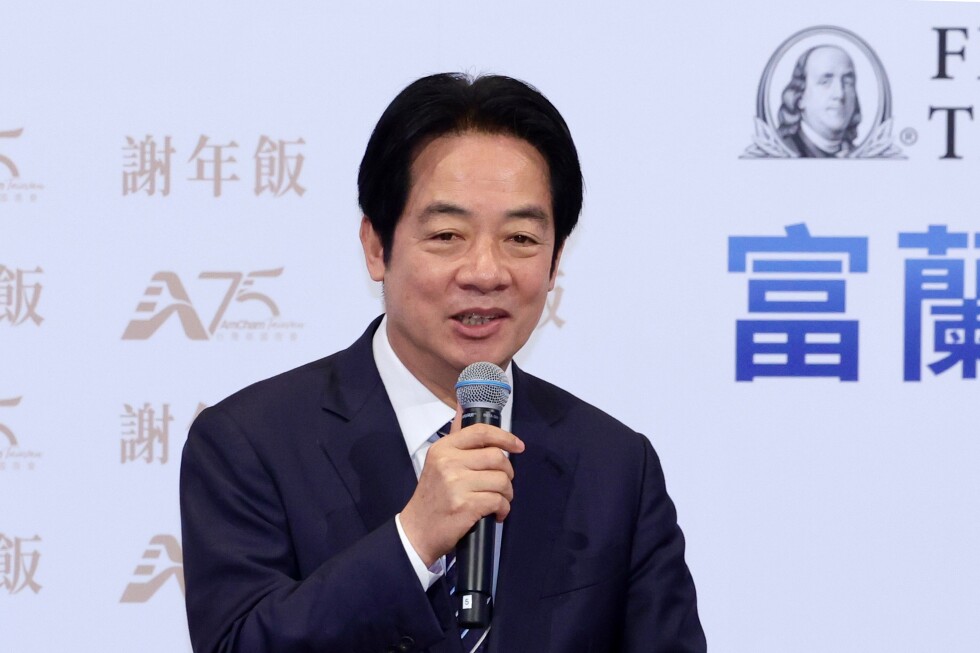
  • Taiwan president cancels trip to Eswatini and accuses China of pressuring African countries

    Taiwan president cancels trip to Eswatini and accuses China of pressuring African countries

    In a development that underscores ongoing cross-strait tensions, Taiwanese President Lai Ching-te has scrapped a scheduled visit to Africa this week, after three sovereign nations pulled their approval for his plane to cross their airspace amid mounting pressure from Beijing, the Taiwanese presidential office announced Tuesday.

    The presidential office released an official statement clarifying that the unanticipated withdrawal of overflight permissions from Seychelles, Mauritius, and Madagascar was directly driven by intense pressure from Chinese authorities, including explicit threats of economic coercion against the three nations. The move blocked the planned travel route for Lai’s trip, leaving no viable alternative path that would allow the visit to proceed as scheduled.

    Lai’s itinerary was centered on a official visit to Eswatini, the only African country that currently maintains formal diplomatic relations with Taipei. The trip was scheduled to run from April 22 to 26, with the goal of strengthening bilateral ties between Taiwan and its last remaining African diplomatic partner.

    The broader geopolitical context of this incident is rooted in China’s long-standing position on Taiwan: Beijing claims the self-governing island democracy as an integral part of its territory, asserting that it will eventually take back control, by military force if the situation requires it. As part of this policy, China requires all nations that maintain formal diplomatic relations with Beijing to cut off any official ties with Taipei, and refuses to recognize Taiwan’s sovereignty on the global stage.

    Over the course of the last several years, Beijing has ramped up a coordinated diplomatic campaign to win over Taiwan’s remaining diplomatic partners, persuading a string of countries to switch their formal recognition from Taipei to Beijing. Today, only 12 countries around the world maintain official diplomatic relations with Taiwan, the vast majority of which are small island and developing nations scattered across Latin America, the Caribbean, and the Pacific region. This incident marks the latest escalation in Beijing’s ongoing efforts to isolate Taiwan diplomatically on the global stage.

  • Arrests in Nigeria after abduction of local monarch ‘held for ransom’

    Arrests in Nigeria after abduction of local monarch ‘held for ransom’

    A high-stakes abduction of a Nigerian traditional ruler has triggered a major security operation in Kwara State, with law enforcement officers taking 42 suspected illegal miners into custody as part of the sprawling investigation. The incident unfolded on a Saturday evening in the Olayinka community, located in Ifelodun Local Government Area of the north-central Nigerian state, when a team of around 10 heavily armed assailants stormed the palace of Oba Salman Olatunji Aweda, the community’s reigning monarch.

    According to Kwara State Police Commissioner Adekimi Ojo, the attack came just moments after a group of miners operating in the local area had held a meeting with the traditional ruler and left a cash payment with him. Details of the business arrangement between the miners and the monarch remain unconfirmed by official sources, but Ojo confirmed that the gunmen broke into the palace, located the ruler in his private quarters, and demanded he hand over the cash the miners had delivered earlier that day. Though Oba Aweda complied with the demand, the attackers still abducted him alongside his brother. The brother was later abandoned when he grew too exhausted to keep up with the gunmen while traveling barefoot into the nearby forest, leaving him tied to a tree before he was eventually discovered. The assailants successfully fled into the dense woodland with the monarch still in their custody.

    Local residents have confirmed that the kidnappers have since reached out to the community to demand a $300,000 ransom for the ruler’s safe release, though state authorities have yet to officially confirm the exact ransom figure.

    This abduction has amplified already growing concerns over escalating insecurity across Kwara State, where attacks on rural communities have spiked in recent months. For years, violent criminal gangs known locally as bandits have carried out systematic kidnappings for ransom and indiscriminate killings across Nigeria’s northwestern region. In recent times, these gangs have expanded their operational footprint into other parts of the country, including Kwara, triggering the formation of informal vigilante groups tasked with protecting vulnerable rural communities that lack consistent state security presence.

    Beyond bandit activity, the jihadist insurgent faction Mahmuda has also stepped up operations in rural areas of the state. In a high-profile attack earlier this year, the group launched a bold assault on a local Muslim community, killing at least 75 people and targeting the family of a traditional ruler after he banned the group from preaching in the area.

    Currently, Nigerian security forces are conducting extensive search operations across the forested terrain surrounding the Olayinka community to locate the kidnapped monarch and apprehend his abductors. Local government officials are coordinating closely with both state security agencies and local vigilante groups to secure a safe release for Oba Aweda. In recent attacks across Kwara, armed groups have repeatedly exploited the state’s porous border forests to evade capture by security forces, posing a persistent challenge to counter-insurgency and anti-kidnapping operations. Attacks on key infrastructure including rural highways and farms, as well as targeted abductions of traditional leaders, have become increasingly common in the region as insecurity worsens.

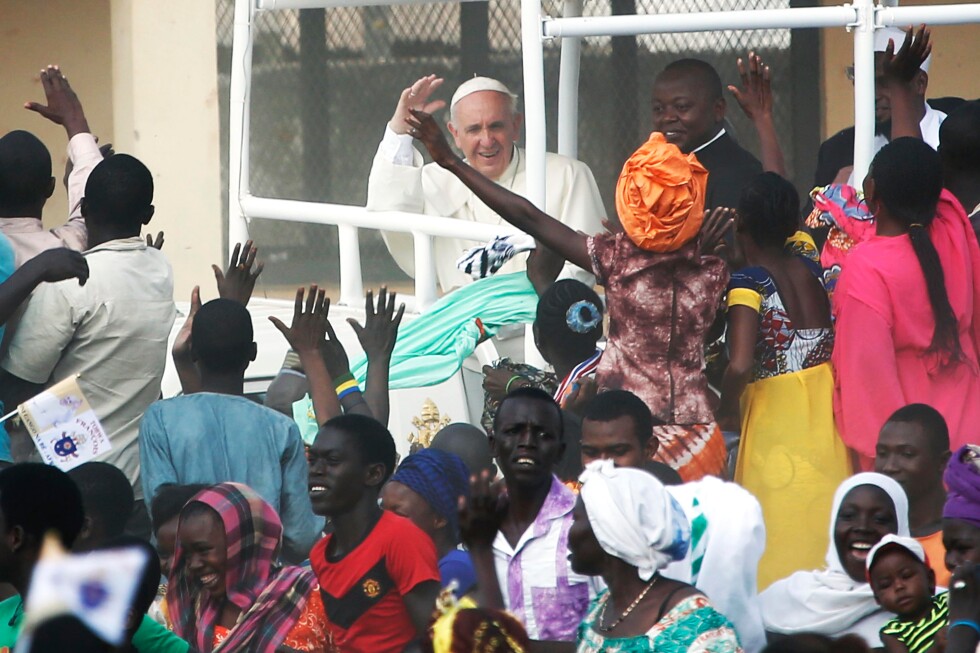
  • Pope Leo pays tribute to Pope Francis on the anniversary of his death

    Pope Leo pays tribute to Pope Francis on the anniversary of his death

    Flying from Angola to Equatorial Guinea on the final stop of his four-nation African pilgrimage, Pope Leo XIV paused mid-journey on Tuesday to pay heartfelt tribute to his predecessor Pope Francis, marking one year since Francis’ death last Easter Monday.

    Speaking to journalists aboard the papal plane in fluent Italian — as the aircraft passed over the Central African Republic, the same nation where Francis opened his landmark 2015 Holy Year of Mercy — Leo reflected on the core themes that defined Francis’ decade-long papacy. He highlighted Francis’ persistent calls for human fraternity, radical respect for all people, and unwavering commitment to walking alongside the marginalized.

    “We thank the Lord for the great gift of Francis’ life, given to the church and the entire world,” Leo told reporters, recalling specific memorable homilies that shaped Francis’ public witness. He specifically cited Francis’ first post-election Sunday noon prayer and a moving Mass held two days before his 2013 inauguration, where Francis preached a heartfelt sermon on God’s boundless mercy centered on the biblical story of an adulterous woman.

    “So many times what he did was live truly being close to the poorest, the smallest, the sick, children, the elderly,” Leo said. “He gave so much to the church with his life, with his witness, with his word and with his gestures.” He closed his tribute with a plea for prayer, saying “Let us pray that he is still enjoying the mercy of the Lord.”

    Francis died at 88 last year, just weeks after he made a final public appearance: riding through St. Peter’s Square in the popemobile to deliver an Easter blessing to gathered crowds, just days after completing a five-week hospital stay for double pneumonia. His passing triggered a conclave just a few weeks later, where Robert Prevost — now known as Pope Leo XIV — was elected to succeed him. As newly uncovered details from a recently released commemorative book confirm, Francis actively paved the way for that outcome.

    The first anniversary of Francis’ death is being marked with formal commemorations across Rome, including a special evening Mass scheduled at the St. Mary Major basilica, where Francis is buried, and the launch of multiple books collecting recollections of his papacy. One of the most revealing volumes, *Padre* (Father), written by Vatican Media reporter Salvatore Cernuzio — who developed close personal access to Francis during his papacy — offers direct confirmation of Francis’ high regard for Leo long before his election.

    In the book, Cernuzio recounts a 2023 conversation, after Francis announced he would name Prevost a cardinal that year. When asked about the then-Cardinal Prevost, Francis told the reporter simply: “Him? He’s a saint.” Cernuzio notes that when Francis used that term to describe someone, he typically meant the person possessed the rare ability to navigate conflict, tension and complex institutional challenges with calm, while building unity across communities.

    That comment adds substantial credibility to the long-held hypothesis that Francis identified Prevost as a potential successor years in advance and intentionally groomed him for the role. Their relationship stretches back decades, to when Prevost served as the global head of the Order of St. Augustine and the future Francis was still Archbishop Jorge Mario Bergoglio of Buenos Aires. Even a small early disagreement — when Prevost declined to assign an Augustinian priest to a role Bergoglio requested — did not dampen Francis’ esteem.

    After Prevost completed his second term leading the Augustinian order, Francis appointed him bishop of the challenging diocese of Chiclayo, Peru, where Prevost had already spent 20 years working as a missionary. Prevost quickly rose through the ranks of the Peruvian Bishops’ Conference, before Francis called him to Rome in 2023 to lead the Dicastery for Bishops, one of the Vatican’s most powerful departments. The role gave Prevost invaluable experience navigating Vatican bureaucracy and built critical relationships with the college of cardinals that would ultimately elect him pope.

    That backing and preparation allowed Prevost to overcome a longstanding unwritten taboo within the Catholic Church against electing an American pope, a restriction rooted in concerns over the United States’ global geopolitical power. Speaking to parishioners in his home state of Illinois earlier this year, Prevost recounted that after that early disagreement decades ago, he naively assumed Francis would forget him and never appoint him to a senior church role. Instead, Francis not only made him a bishop, but spent years laying the groundwork for Prevost to take his place as leader of the world’s 1.3 billion Catholics.

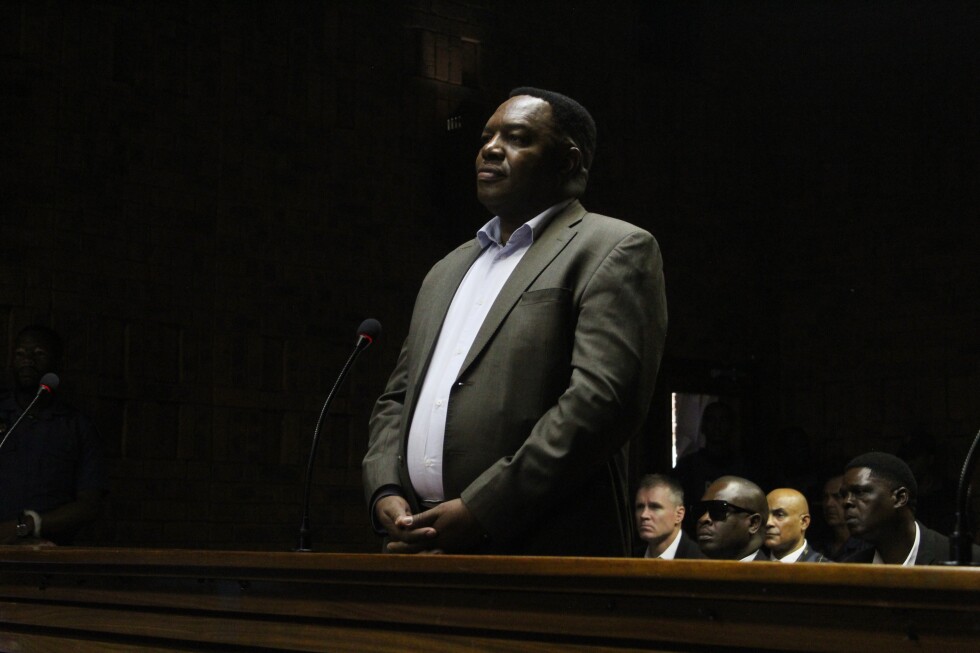
  • South Africa police chief Fannie Masemola in court over alleged $21 million unlawful contract

    South Africa police chief Fannie Masemola in court over alleged $21 million unlawful contract

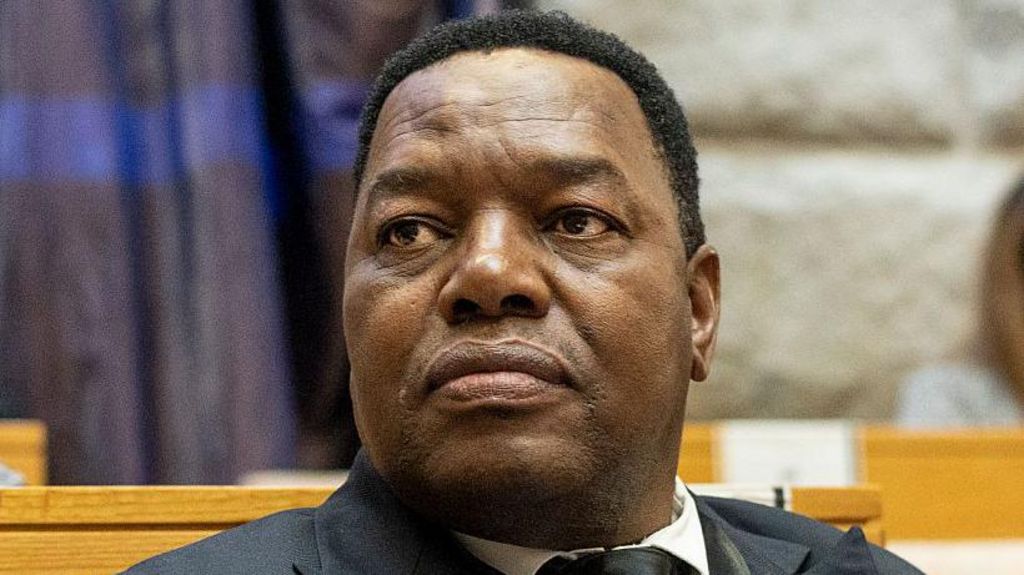
    PRETORIA – In a major development rocking South Africa’s national law enforcement apparatus, national police commissioner Fannie Masemola has made his first formal court appearance in connection to a sprawling corruption investigation that has already swept up more than a dozen other high-ranking police officials.

    Masemola, who has retained his post as the head of South Africa’s police service despite the charges, faces four separate violations of the country’s Public Finance Management Act. The legislation governs how government agencies award public contracts, and the charges stem from an allegedly tainted 360 million South African rand, equivalent to roughly $21 million, contract for health and wellness services for active police officers.

    The top law enforcement official was summoned to court earlier this month and made his initial arraignment on Tuesday. He has not yet entered a plea to the charges brought by national prosecutors. If convicted on all counts, Masemola could face a maximum sentence of five years in prison, in addition to substantial financial penalties.

    Prosecutors allege that the service contract was awarded through improper channels, and multiple senior officers are accused of accepting bribes from the bidding firm that ultimately secured the deal. Full details of Masemola’s specific role have not been publicly disclosed as the investigation remains ongoing, but the charges are tied to his formal duties as the police service’s top accounting officer, responsible for overseeing all public spending. The controversial contract has already been terminated by police leadership.

    The corrupt contract is one of the core cases being examined by a public commission of inquiry launched by South African President Cyril Ramaphosa last year. The inquiry was convened to investigate widespread accusations of systemic corruption across the national police service. A separate parallel investigation into the allegations has also been conducted by the country’s parliamentary body.

    Prosecutors announced in court Tuesday that Masemola’s case will be consolidated with the cases of 16 other co-accused individuals, which includes the 12 senior police officers already arrested and charged. Among those already in the case are one major-general and multiple brigadiers, some of the highest ranking positions in the South African Police Service. All of the previously charged defendants have been released on bail awaiting trial.

    Alongside the police officers, a prominent businessman with alleged ties to organized organized crime stands accused. His company was the successful bidder for the contract at the center of the scandal. The businessman, Vusi “Cat” Matlala, has already testified before the inquiry about purported connections between senior police leadership and criminal kingpins. He is currently being held in a maximum-security prison on separate charges including attempted murder that are unrelated to the corruption case.

    Speaking to journalists following his court appearance, Masemola pushed back against growing public and political calls for him to resign from his post. He emphasized that the decision to remove him rests solely with President Ramaphosa, and confirmed that he will continue carrying out his regular official duties. A spokesperson for the presidency stated Tuesday that Ramaphosa has been formally briefed on the charges against Masemola, and will handle the situation consistent with South Africa’s existing legal framework. The case has been adjourned and is scheduled to resume in court on May 13.

  • Nigeria charges 6 with treason over alleged coup plot

    Nigeria charges 6 with treason over alleged coup plot

    ABUJA, NIGERIA – In a major security development that has underscored rising political instability across West Africa, Nigerian federal authorities have filed terrorism and treason charges against six individuals, among them a retired army major general and an active-duty police inspector, over an alleged conspiracy to topple democratically elected President Bola Tinubu. Details of the charges are laid out in an official charge sheet reviewed by the Associated Press on Tuesday.

    All six accused individuals are currently in government custody, while a seventh suspect – Timpre Sylva, a former governor of Nigeria’s Bayelsa State – remains at large. Sylva is specifically accused of aiding the conspirators by concealing details of their planned coup from authorities. The 13-count formal charge alleges that the co-conspirators “conspired with one another to levy war against the state to overawe the president of the Federal Republic.”

    This case marks the formal prosecution of a plot authorities first said they foiled back in January, when the government initially announced that multiple military officers would face trial. The conspiracy traces back to late 2025, when security forces first took 16 military officers into custody over what military leadership at the time described only as “acts of indiscipline and breaches of service regulations.” That vague initial characterization fueled widespread public speculation of a secret coup plot, a rumor the Nigerian government initially denied before confirming the foiled attempt earlier this year.

    As Africa’s most populous country, Nigeria has a fraught political history of military takeovers, with five successful coups recorded across the 20th century. However, the nation has maintained uninterrupted civilian democratic rule since its transition to democracy in 1999, making an attempted coup against the sitting government a major break from decades of stability.

    The alleged plot against Tinubu’s administration fits into a growing regional trend: West and Central Africa have seen a sharp surge in both successful military takeovers and attempted coups in recent years, with the most recent disrupted plots uncovered in Benin and Guinea-Bissau just last year. Regional security and political analysts note that this wave of attempted putsches follows a consistent pattern: they emerge in nations grappling with disputed election outcomes, constitutional crises, widespread unaddressed security failures, and deep-seated youth discontent over economic stagnation and lack of opportunity.

  • Chad will deploy 1,500 troops to Haiti to help combat gang violence

    Chad will deploy 1,500 troops to Haiti to help combat gang violence

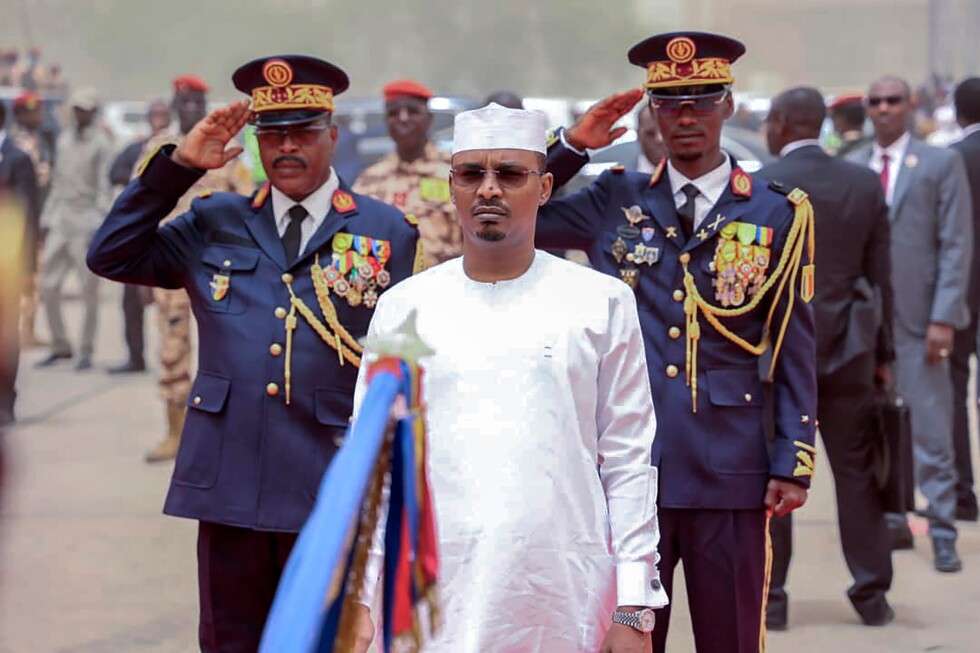
    N’DJAMENA, Chad – Amid spiraling gang-driven instability in Haiti, the Central African nation of Chad has formally announced plans to deploy 1,500 troops to the Caribbean country, joining the United Nations-endorsed multinational security mission tasked with quelling rampant organized violence, according to a formal correspondence from Chadian President Mahamat Déby Itno addressed to the national legislature.

    The president’s letter, delivered to sitting lawmakers on Monday, outlined that the deployment will be structured as two full battalions, each composed of 750 military personnel. The mission is scheduled to kick off this month and will run for an initial 12-month mandate, a response to an official request extended by the United Nations to boost the struggling anti-gang operation.

    Notably, a forward contingent of 400 Chadian soldiers has already been deployed to Haiti for the mission. President Déby emphasized that the deployment represents a point of national honor for Chad and its professional defense and security forces, who are stepping in to address a pressing global security crisis.

    This new contribution from Chad comes against a years-long backdrop of catastrophic insecurity that has crippled Haiti’s governing institutions. Last year, the UN Security Council greenlit an expansion of the Kenya-led multinational operation, officially dubbed the Gang Suppression Force, boosting its authorized troop strength from an initial 2,500 personnel to 5,500. The resolution also granted the expanded force new authority that its predecessor lacked: the power to arrest suspected gang members, a critical upgrade for targeting organized criminal groups.

    The original 2023 mission, led primarily by Kenyan police, was severely undermined from its launch by persistent shortfalls in both personnel and funding, leaving it unable to reverse the gang’s rapid territorial gains. Today, powerful and well-armed violent gangs control up to 90 percent of Port-au-Prince, Haiti’s capital, along with large swathes of the country’s central agricultural region.

    The crisis has already claimed countless lives and destabilized the country at the highest levels: in 2021, a team of armed assassins killed former Haitian President Jovenel Moïse in a brazen attack inside his private residence. Just last month, the security situation deteriorated further when one of Haiti’s most powerful criminal groups, the Gran Grif gang, launched a fresh large-scale assault on the central town of Petite-Rivière de l’Artibonite. Local human rights organizations confirm the attack left at least 30 people dead and dozens more unaccounted for, underscoring the urgent need for expanded international support to restore order.

  • South Africa’s police boss charged in connection with controversial health contract

    South Africa’s police boss charged in connection with controversial health contract

    South Africa’s top law enforcement leader is facing formal legal action over allegations of dereliction of duty connected to a tainted public health contract at the center of a sweeping national corruption probe. General Fannie Masemola, 62, the nation’s acting national police commissioner, appeared before Pretoria Magistrate’s Court this week to answer to four counts of violating South Africa’s Public Finance Management Act, regulations that set clear accountability standards for officials managing state funds.

    The charges stem from a controversial 21-million-U.S.-dollar tender awarded in 2024 to Medicare24 Tshwane District, a company owned by high-profile businessman Vusimuzi “Cat” Matlala. The contract was intended to deliver critical health services to South Africa’s police force, but it was scrapped just 12 months later in May 2025 after red flags emerged over improper awarding practices. To date, 16 other individuals, including multiple senior police officials and Matlala himself, have been linked to the scheme. All of the co-accused face corruption charges, with prosecutors alleging they colluded with Matlala to manipulate the tender process. Unlike his co-defendants, Masemola has not been charged with corruption – only with failing to fulfill his statutory duties as the police service’s designated accounting officer under Section 38 of the Public Finance Management Act.

    Following his brief preliminary court appearance, Masemola spoke publicly to reporters to reject all allegations against him. “I know that I’m not guilty, I’m not wrong, but the [law] must take its course,” he stated. None of the accused, including Masemola, have been required to enter formal pleas at this stage of the proceedings. The case has been adjourned until 13 May, when all 17 defendants will appear together in court to move the process forward.

    The scandal unfolded after evidence of bid rigging and improper influence was presented to the Madlanga Commission, a national public inquiry launched by President Cyril Ramaphosa in September 2024 specifically to investigate widespread allegations of systemic corruption within South Africa’s police service. Masemola’s inclusion in the criminal case marks a historic milestone: he is the third sitting national police chief to face a criminal investigation in South Africa since 2010.

    The first, Jackie Selebi, the country’s longest-serving police chief, was convicted in 2010 of accepting bribes from Italian drug trafficker Glen Agliotti in exchange for ignoring Agliotti’s illegal operations. Selebi was sentenced to 15 years in prison for his crimes. A second former chief, Khomotso Phahlane, was first charged with corruption in 2017. While those initial charges were dropped the following year, Phahlane was re-arrested on identical corruption charges in 2019, which he continues to deny. His case remains active in the court system.

    The charges against Masemola come as the Ramaphosa administration faces growing public pressure to root out systemic corruption across all levels of government, a persistent challenge that has eroded public trust in state institutions for decades. This latest development in the police corruption inquiry signals that the national push for accountability is extending to the very top of the country’s law enforcement hierarchy.