标签: Africa

非洲

  • We’ve got so many hidden gems – Semenyo

    We’ve got so many hidden gems – Semenyo

    Ahead of the upcoming 2026 FIFA World Cup, Ghanaian international forward Antoine Semenyo has shared bold confidence in the depth and potential of his national team’s squad, stating the group contains a number of little-known rising talents set to make their mark on the global stage.

    In comments made following the team’s recent late 1-0 friendly win over Panama – a result that saw Ghana snatch victory in the closing minutes to break Panama’s hopes of an upset – Semenyo emphasized that the current Ghana roster stands out as an exceptionally tight-knit and talented group. Beyond the established names that already draw global attention, the squad harbors what Semenyo calls “hidden gems” – underrated players whose skill and impact will become widely recognized by the time the 2026 World Cup kicks off.

    The pre-World Cup confidence from Semenyo comes as Ghana continues to build and test its squad in international friendly matches, using the warm-up fixtures to unearth new talent and gel as a unit ahead of the quadrennial tournament. The late winning goal against Panama already gave a preview of the team’s fighting spirit, and Semenyo’s comments hint that fans can expect more surprises from the African side when they compete in 2026.

  • DR Congo reports 956 confirmed Ebola cases, 247 deaths

    DR Congo reports 956 confirmed Ebola cases, 247 deaths

    KINSHASA – A public health emergency in the eastern Democratic Republic of the Congo (DRC) continues to escalate, with official data releasing Saturday showing confirmed Ebola infections have climbed to 956, and the cumulative death toll from the outbreak has reached 247. The update comes from the country’s national health authorities in their latest epidemiological situation report.

    On Friday alone, 23 new positive Ebola diagnoses and two additional fatalities were recorded across two high-risk eastern provinces: Ituri and North Kivu. Ituri, the current epicenter of the outbreak, bears the overwhelming majority of the national caseload, with 874 confirmed infections and 201 deaths accounting for over 91 percent of all confirmed cases nationwide.

    Per the report, 92 patients have successfully recovered from the virus and been discharged from care, while 361 confirmed patients are currently undergoing isolation or inpatient treatment at designated health facilities. An additional 162 people are under investigation as suspected cases as of Friday. One key gap in the national outbreak response has been identified: the contact-tracing rate, which currently sits at just 69.3 percent, far below the 95 percent target health officials set to effectively interrupt chains of virus transmission.

    During a press briefing held Friday evening, DRC Health Minister Roger Kamba confirmed that the outbreak is still in an expansionary phase. Kamba noted that as response teams scale up active case searching operations and extend their reach into more remote, heavily affected communities, further increases in confirmed case counts are expected in the coming weeks.

    The health minister added that public health officials will not be able to declare the outbreak has reached its peak, plateaued, or entered a decline until weekly case counts show consistent stabilization or a sustained downward trend. Until that point, Kamba emphasized, all core response efforts including aggressive case detection, immediate patient isolation and treatment, and deeper community engagement must be sustained and expanded.

    This current outbreak, caused by the rare Bundibugyo strain of the Ebola virus, was first officially declared by DRC public health authorities on May 15 this year.

  • A COVID lockdown led this woman to plant a vineyard at her parents’ home. Now a dream is realized

    A COVID lockdown led this woman to plant a vineyard at her parents’ home. Now a dream is realized

    When COVID-19 swept across the globe in 2020 and forced billions of people into unprecedented stay-at-home orders, many struggled to cope with the monotony and disruption of locked-down life. For Natasha Jacka, a 27-year-old who had just left a career in restaurants to pursue her passion for winemaking, the pandemic would become an unexpected catalyst to turn her long-held dream into reality years earlier than planned.

    Jacka had recently enrolled in viticulture studies at an agricultural college in Stellenbosch, South Africa’s iconic winemaking region just outside Cape Town, when lockdown closed campus and confined her to her parents’ sea-facing home in the Cape Town suburb of Noordhoek. Tired of the restlessness that came with being stuck at home, a moment of inspiration struck while she gazed out over her family’s sprawling yard: what if she turned that unused space into her own personal vineyard?

    What began as a passing “small spark” of an idea quickly turned into a full-scale labor of love. After winning buy-in from her family, Jacka set to work transforming the plot of land, which had once been part of a smallholding. She cleared the ground, sourced 1,400 grapevines split between two blocks (one for a white blend, one for a syrah red varietal), and planted each vine by hand alongside a supporting wooden stake. Even her parents joined the effort — though her mother Sonia was eventually sidelined from planting after accidentally putting one vine in upside down.

    The project came with unexpected hurdles beyond manual labor. Curious neighbors questioned the unusual backyard project, and Spirit, the family’s miniature horse, developed a taste for young vine shoots, costing Jacka one or two plants before she could secure the plot. For context, Jacka’s 1,400 vines are a tiny fraction of the more than 50,000 vines that cover the average commercial wine farm, making the endeavor a long shot from the start.

    Unlike many fast-paced modern industries, winemaking rewards patience. Four long years passed before Jacka was able to harvest her first vintage from the vines she had nurtured from tiny cuttings. She carried out every step of the process herself, from harvesting the grapes to crushing them by foot on her parents’ property. When the finished wines debuted, they earned glowing praise from leading South African wine critics — a relief far more meaningful than any potential profit for Jacka.

    “I wasn’t looking at it like, oh this is going to make a fortune or anything like that. This is a labor of love,” Jacka explained, adding that she could not imagine the disappointment if years of work had amounted to nothing.

    Christian Eedes, editor of South Africa’s leading online wine publication winemag.co.za, who gave Jacka her first positive review, called the project “a triumph of hope over good sense.” Eedes notes that producing high-quality wine and turning a profit from such a small operation is notoriously difficult, but Jacka’s handcrafted, small-batch wine fills a unique niche in a market dominated by mass-produced brands.

    “There’s plenty of space in the world for craft and handmade,” Eedes said. “It’s the opposite of mass produced. It’s made with thought and care and typically hard to come by.” He remains fascinated by the project that grew out of lockdown boredom, adding, “She managed to not be bored, like we all were. It’s really just an extraordinary undertaking.”

    Now 32, Jacka has turned her lockdown passion project into a full winemaking career. Her Alinea wine line now includes five additional vintages made from grapes sourced across the greater Cape Town region, which boasts centuries of rich winemaking heritage. Still, she remains deeply connected to her original Noordhoek micro-vineyard, where she continues to handle every role from harvest and stomping to labeling, sales, accounting and delivery. She says she is already eagerly looking forward to her next backyard harvest.

  • Morocco fans in Rabat celebrate win over Scotland

    Morocco fans in Rabat celebrate win over Scotland

    Thousands of elated Morocco supporters poured into the streets of the capital Rabat to celebrate their national team’s hard-fought 1-0 triumph over Scotland in a 2022 FIFA World Cup group stage matchup. The narrow, game-deciding win sent local fans into celebrations that lasted for hours after the final whistle, with crowds waving national flags, chanting team slogans, and sharing joyful moments across the city. This result marked another standout performance for Morocco in the tournament, leaving Scottish fans disappointed after their side fell just short of pulling out a positive result in the tightly contested fixture. The match, which ended with a single-goal margin of victory for the North African side, reinforced Morocco’s growing reputation as a competitive force in international football, while the street celebrations in Rabat captured the deep national pride and passion that the World Cup ignites among local supporters. The celebration footage originally captured from Rabat shortly after the final whistle has been widely shared among football fans across global social platforms, highlighting the widespread excitement surrounding Morocco’s tournament run.

  • ‘Everything I do is for you’ – how tragedy is driving Diomande

    ‘Everything I do is for you’ – how tragedy is driving Diomande

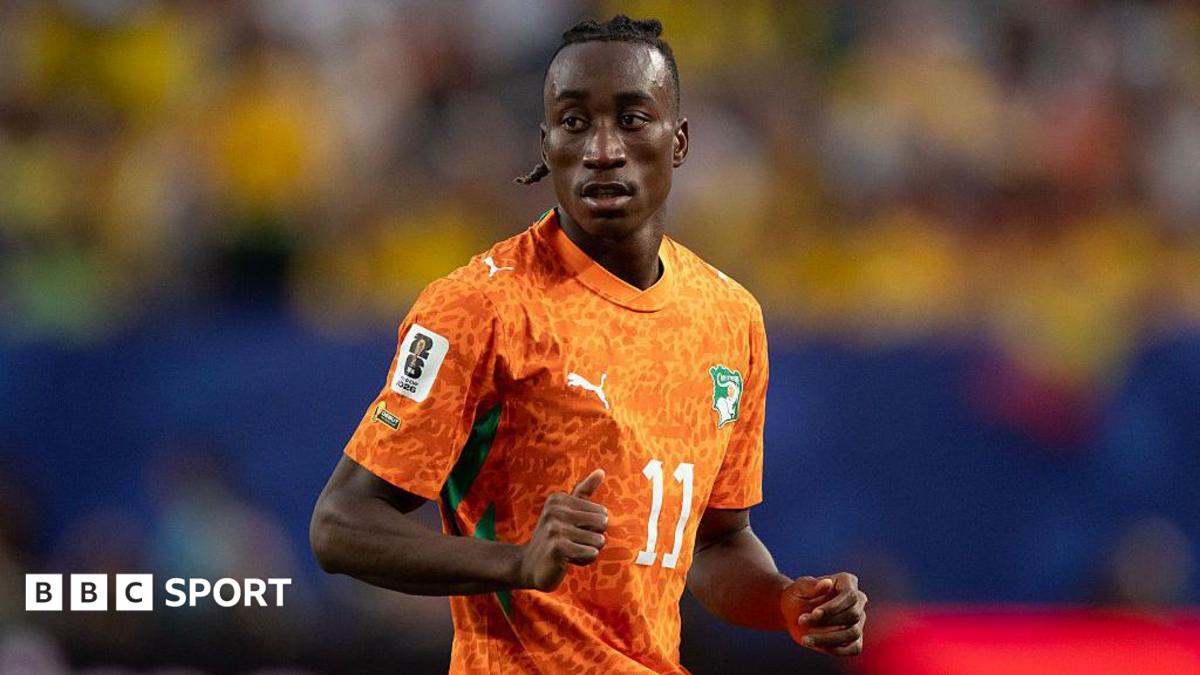
    As 19-year-old Ivorian winger Yan Diomande steps onto the pitch Saturday for Ivory Coast’s critical second Group Stage World Cup match against Germany, the teenage sensation carries far more than national hope on his shoulders. Beyond widespread transfer speculation linking him to a historic £86 million move to Premier League giant Liverpool, Diomande’s every touch, every dribble and every goal is driven by a promise to the person who first believed in him: his little sister Roxanne, who passed away one year ago at age 15 after her drink was spiked.

    In a raw, heartfelt open letter published this week by *The Players’ Tribune*, Diomande laid bare the grief and motivation that shape every moment of his career. “Everything I do on a football pitch, it’s for you,” the young attacker wrote. He explained that Roxanne’s unshakable belief in his talent has been the foundation of his rapid rise, framing every match not as just a game, but as a stage to honor the potential she always saw in him. “Every time I score, I’ll make sure everybody knows your name. I’ll make sure they don’t forget you,” he added.

    Diomande described the numbness that has followed his sister’s death, writing: “Now, I don’t feel anything. It’s like I’m not even human. Since you died, I’m just blank. I don’t try to forget, because I know I won’t forget. All I can do is use the pain to work harder, and to do everything we dreamed about.” The loss was made even harder by circumstance: Diomande was living abroad in Spain, playing for second-tier side Leganes, when the tragedy occurred, cutting him off from his family in his darkest moment.

    Today, after a breakout debut season in the Bundesliga with RB Leipzig that yielded 12 goals and put European giants on high alert, Diomande says his focus at the 2026 World Cup is not personal glory, but honoring Roxanne, his family and the millions of Ivorians who see him as their new golden boy. “We’re here to represent millions of people and play for our loved ones and our families,” he said. “It makes us want to go out there and make an impact.”

    Ivory Coast, making its fourth World Cup appearance after previous campaigns in 2006, 2010 and 2014, has never advanced past the group stage, even when fielding legendary talents like Didier Drogba and Yaya Touré. But an opening 1-0 win over Ecuador has put the side in a strong position to break that drought this year, and Diomande says the current squad carries a different energy than its predecessors. “I think we have more desire,” he explained. “There isn’t a lot of expectation on us, so we have nothing to lose and we’ll give it everything. That’s what our mentality needs to be.”

    If Ivory Coast is to make its first ever knockout stage run, Diomande will be central to that success, and his teammates are already convinced of his impact. Manchester United winger Amad Diallo, who scored the winning goal against Ecuador off the bench, calls Diomande the squad’s “golden boy.” “Penetration, dribbling – his speciality, he’s someone who is very strong one on one,” Diallo noted. That skill was on full display in the Ecuador match, where Diomande completed four successful dribbles, more than any other player in the tournament through the first round of group matches.

    For long-time observers of Ivorian football, Diomande’s rise has already cemented his status as the heir to Drogba, carrying the hopes of a nation. Mamadou Gaye, a veteran Ivorian journalist and broadcaster, recalled that Diomande first captured the Ivorian public’s heart during a 2025 World Cup qualifier against Kenya, where his talent was on full display. “At 19, he is the hope of a nation,” Gaye said.

    Gaye also highlighted Diomande’s humble roots in a working-class neighborhood of Abidjan, where he shared everything from meals to a single bedroom with Roxanne growing up. “The shocking circumstances of her death highlight the precarious conditions that a lot of young footballers like him dream to get away from,” Gaye explained. “His letter to her is a cry of love and message about nefarious intentions and criminality understood by the youth of the Ivory Coast and Africa.”

    On the pitch, Diomande’s statistical profile confirms his status as one of the most promising young wingers in European football. In his debut Bundesliga season, he led all league wingers in successful dribbles and duels won, while also ranking in the top five for shots on target, touches in the opposition penalty area, successful passes, chances created, assists and recoveries of possession. That all-around game, which combines dynamic attacking threat with relentless off-ball work, has drawn interest from top clubs across the continent, including Paris Saint-Germain and Liverpool, where BBC Sport understands the Premier League side has tabled an £86 million offer to RB Leipzig for his signature.

    Kevin Hatchard, an English-language Bundesliga commentator who watched Diomande’s first matches in Germany, said the young attacker’s mentality sets him apart from other young prospects. “What marks him out as special is he always wants to take responsibility, being on the ball and making things happen all the time,” Hatchard explained. “He isn’t selfish either and his work-rate without the ball is incredible – he is willing to press and track back. He dovetails with the full-backs well and has a good awareness of what’s around him. He is always just really up for it – even when teams put two men on him, he relishes taking them on.”

    Diomande’s path to the top has not been easy. After leaving Abidjan in 2015 for a youth academy spot in the United States, he went on trial with multiple Major League Soccer sides and English clubs including Bournemouth, Chelsea and Crystal Palace, before landing at Leganes, where he played only 10 La Liga matches and scored two goals before RB Leipzig purchased him for £17 million in 2024.

    Today, even amid massive transfer speculation, Diomande has remained grounded, repeatedly expressing gratitude to RB Leipzig for giving him his first big break in top-flight football. Hatchard says he has the temperament to thrive immediately at any of the world’s biggest clubs, including Liverpool or PSG, noting that Diomande can unlock even the most compact low blocks with his dribbling or clever passing. Most of all, Hatchard says, Diomande plays with a singular drive: to prove he belongs at the top, and to make good on the faith Roxanne always had in him.

  • Nigerian migrants returning from South Africa face the same economic issues they left behind

    Nigerian migrants returning from South Africa face the same economic issues they left behind

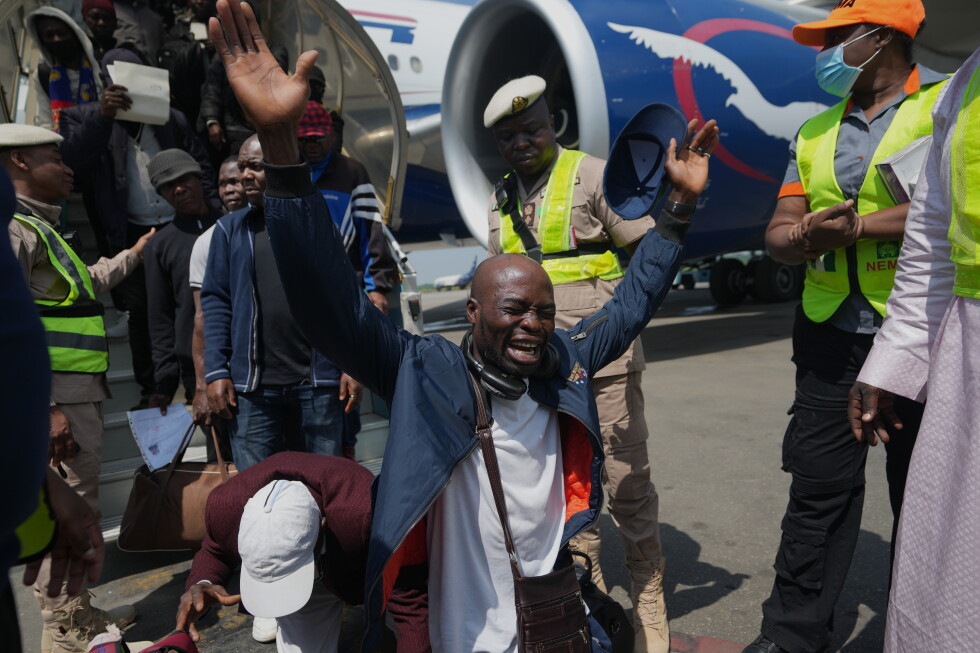
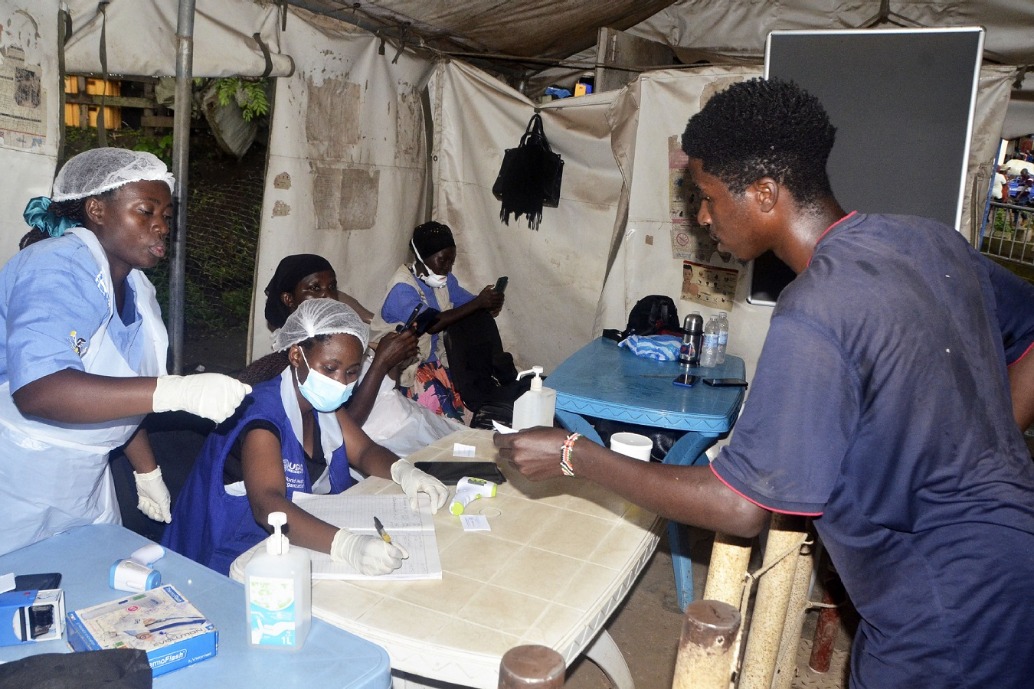
    LAGOS, Nigeria — For 52-year-old Iniebong James, the rush of relief after his repatriation flight touched down in Lagos last week quickly gave way to quiet anxiety. Nearly two weeks back on Nigerian soil, he is still struggling to rebuild a life he walked away from a decade earlier, when he first left for South Africa on a six-month visitor visa that he would ultimately overstay.

    After overstaying his visa, James carved out a living as a car mechanic in South Africa’s Eastern Cape Province, a quiet existence that unraveled in May when he was assaulted by anti-immigrant demonstrators, leaving him with a severe head injury, he told the Associated Press. His attack is far from an isolated incident: in recent months, South Africa has seen a sharp escalation of anti-migrant sentiment, with public marches demanding the expulsion of undocumented migrants and widespread reports of targeted violence against foreign nationals.

    In response to the rising threats and growing tension, several African governments have organized large-scale repatriation efforts to bring their citizens home from South Africa, with hundreds of Nigerians among the first groups evacuated. For decades, South Africa has drawn millions of migrants from across the continent, pulled by its relatively robust economy and greater access to economic opportunity compared to many neighboring nations. But this steady influx of migrants has been repeatedly punctuated by sporadic outbreaks of xenophobic violence, as many South Africans blame undocumented foreigners for the country’s persistently high unemployment rates, widespread poverty, strained public services and rising crime.

    For James, the decision to leave Nigeria back in 2014 was driven by economic collapse. Before his move, he worked as a truck driver for a Lagos-based haulage company, which shut down in 2016 when Nigeria entered its first economic recession in 20 years. Persistent job insecurity paired with crippling, days-long national power outages pushed him to seek opportunity abroad. During his years living in South Africa with an expired visa, James says he paid regular bribes to local police and immigration officials to keep operating his small mechanic shop, claims the AP has not been able to independently verify.

    James is among the first group of Nigerians repatriated on the government-organized flight that departed South Africa on June 11. While he says he values the freedom of being back in his home country, he faces a far grimmer economic reality than the one he left. Over the past decade, Nigeria’s economy has contracted significantly, prompting sweeping economic reforms from new President Bola Tinubu in 2023. Those reforms included eliminating long-standing national fuel subsidies that had kept fuel prices artificially low for decades, as well as allowing the Nigerian naira to float on the open market. These policy changes, compounded by global market volatility stemming from U.S.-Iran tensions, have sent inflation soaring across the country. When James left Nigeria in 2016, fuel cost roughly $0.10 per liter; on the day he returned, that same liter cost $1.03. “Everything is too expensive,” James noted. He says he is willing to take any available work, but is pinning his hopes on government support to secure stable employment.

    Nigerian authorities have stated that repatriated citizens will receive appropriate support before reuniting with their families, but the Ministry of Foreign Affairs has not responded to questions about long-term support plans for returning migrants. Migration expert Margaret Monyani, founder of the Johannesburg-based OLAM Africa Research Institute, emphasizes that restarting life after repatriation is far from simple. “Reparation is not transformation,” Monyani explained. “Returning is not always as straightforward as it sounds. People just think, go back home and start again. No, what is home?”

    Twenty-year-old Omotola Adeniyi echoes that sense of disorientation. She moved to South Africa to join her mother in 2015, when she was just 8 years old. After finishing high school, she found herself locked out of formal employment and higher education entirely. “After I finished high school, that’s when I saw real life because everywhere I looked for a job, all I could get was, ‘No, we don’t want to employ foreigners,’” Adeniyi said. She began saving for a return flight last year, but airfare was out of reach, so she accepted the Nigerian government’s offer of a free flight home. After 11 years away, she says Nigeria now feels like a foreign country.

    The recent wave of anti-immigrant violence and protests has sparked widespread diplomatic backlash across the African continent. In addition to Nigeria, governments including Ghana, Malawi and others have organized repatriations for their citizens, and both Nigeria and Ghana summoned South Africa’s top diplomatic representatives to issue formal protest over the violence. “The price of your peace, and the safety of your children, is worth any sacrifices you have to make, or any assets you have to leave behind when fleeing a conflict zone or hate-infested environment. Survival is the noblest form of vengeance,” Nigerian Foreign Minister Bianca Odumegwu-Ojukwu told returning migrants in a statement delivered by her representatives upon their arrival in Lagos.

    Even amid the ongoing outbreaks of xenophobic violence, migration experts note that South Africa remains a top destination for most African migrants due to its more advanced economy and developed infrastructure. “It doesn’t mean South Africa has the perfect institutions, but they’re working to a large extent,” Monyani added.

    This coverage is supported by the Gates Foundation as part of the AP’s global Africa development reporting, with the AP retaining full editorial control over all content.

  • African and Caribbean nations call for formal apology for transatlantic slavery

    African and Caribbean nations call for formal apology for transatlantic slavery

    Three days of intensive talks focused on addressing the lasting harm of the trans-Atlantic slave trade concluded in Ghana’s capital Accra this week, with delegates from across Africa and the Caribbean unanimously backing a bold 19-point roadmap to advance reparatory justice against nations that profited from centuries of human trafficking.

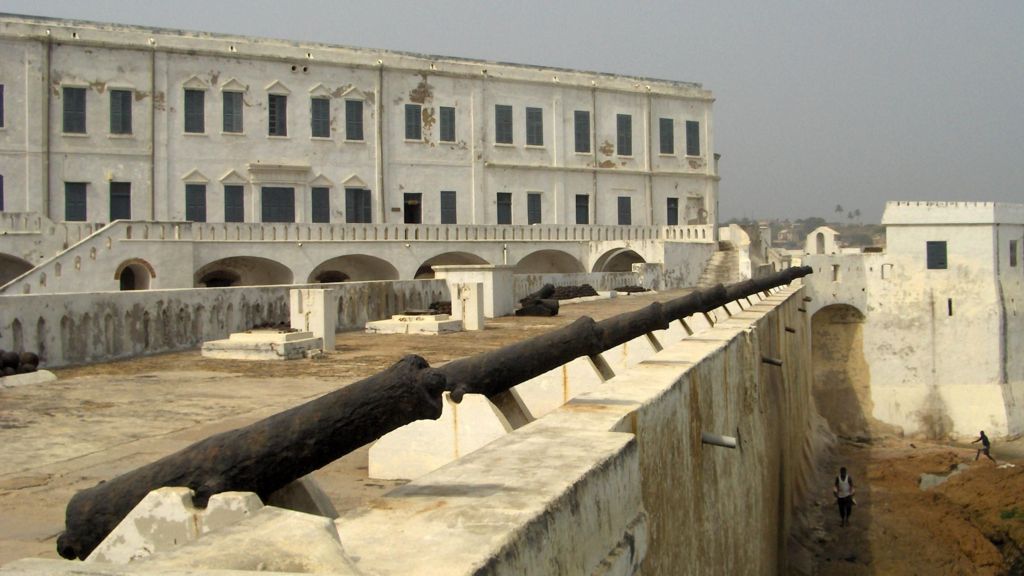
    Hosted near Cape Coast Castle, one of the most infamous remaining strongholds that facilitated the forced displacement of millions of African people, the “Next Steps” conference built on a historic United Nations General Assembly resolution passed in March that formally labeled the 400-year transatlantic slave trade “the gravest crime against humanity.” That vote, which garnered 123 votes in support, was opposed by just three nations — the United States, Israel, and Argentina — while 52 countries including the United Kingdom and most European Union member states chose to abstain. Unlike binding Security Council measures, General Assembly resolutions carry no legal weight, but they carry significant symbolic and political capital for the global reparations movement.

    Between the 15th and 19th centuries, an estimated 12 to 15 million African men, women and children were captured from their homelands, trafficked across the Atlantic Ocean, and forced into chattel slavery in the Americas. The legacy of that exploitation continues to shape systemic inequality and underdevelopment across African and Caribbean nations today, delegates emphasized.

    The newly endorsed 19-point plan outlines core demands: sweeping debt relief for affected nations, the repatriation of thousands of cultural artifacts looted by former colonial powers during and after the slave trade era, and the creation of a dedicated global reparations fund — though negotiators did not announce a specific funding target in the final statement. The framework also for the first time centers the unique, disproportionate harm of slavery and intergenerational trauma on African women and girls, a gap that has long been overlooked in global conversations about the crime.

    Beyond material redress, conference leaders issued a unified call for former slave-trading nations to issue a “full, formal and unconditional apology” for their role in perpetuating the trade. Opening the conference, Ghanaian President John Dramani Mahama framed the demand not as a push for collective modern guilt, but as a call to collective responsibility. “History does not ask us to inherit guilt, but it asks us to inherit responsibility,” Mahama told assembled delegates.

    French President Emmanuel Macron delivered a virtual address to the conference, acknowledging that enslaved people were systematically dehumanized and treated as disposable commercial goods rather than human beings. But he pushed back against framing reparations as a one-time financial settlement, arguing that the issue should not be reduced to “a cheque written to bring the story to a close.”

    To date, no sovereign nation has ever paid reparations to the descendants of enslaved Africans or to affected African, Caribbean and Latin American states. What little compensation has been distributed historically went exclusively to former slave owners, not to the people who were enslaved. Most notably, after abolishing slavery in the 1830s, the British government paid out compensation to enslavers equal to more than $21 billion in 2024 currency, a sum that was never redistributed to the families of the enslaved.

    The UK has maintained a long-standing refusal to entertain reparations claims, arguing that current generations and modern institutions cannot be held legally or morally responsible for atrocities committed centuries ago. During the March UN General Assembly debate, UK Ambassador to the UN James Kariuki argued that “No single set of atrocities should be regarded as more or less significant than another.” The US ambassador echoed that position, saying the United States does not recognize any legal basis for reparations for historical acts that were not classified as illegal under international law at the time they occurred, adding that the UN resolution failed to clarify who would qualify as recipients of reparatory justice.

  • Migrants deported by US to Sierra Leone risk return to countries where they fear persecution

    Migrants deported by US to Sierra Leone risk return to countries where they fear persecution

    A controversial U.S. immigration policy that sends asylum seekers to third-party African nations is facing fresh scrutiny after a new group of deportees arrived in Sierra Leone this week, with legal advocates warning the practice directly undermines existing court-ordered protections and puts vulnerable migrants at grave risk of persecution.

    Erica Reilly, an attorney representing one of the migrants who arrived Thursday, confirmed to the Associated Press that the flight marked the second such deportation to Sierra Leone in as many months. Last month, nine West African asylum seekers landed in the country under the same policy, and approximately 12 more joined them this week.

    Sierra Leone is just one of at least nine African nations that have struck formal third-country deportation agreements with the U.S., alongside a number of Latin American and Caribbean states that have reached similar arrangements. Under the terms of Sierra Leone’s agreement, which is backed by a $1.5 million U.S. government grant, the West African nation only accepts citizens of other West African countries, serving strictly as a temporary transit point rather than a place of permanent resettlement. A monthly cap of 25 deportees and an annual limit of 300 have been placed on the program, though Sierra Leonean authorities have not disclosed how long the agreement will remain in effect.

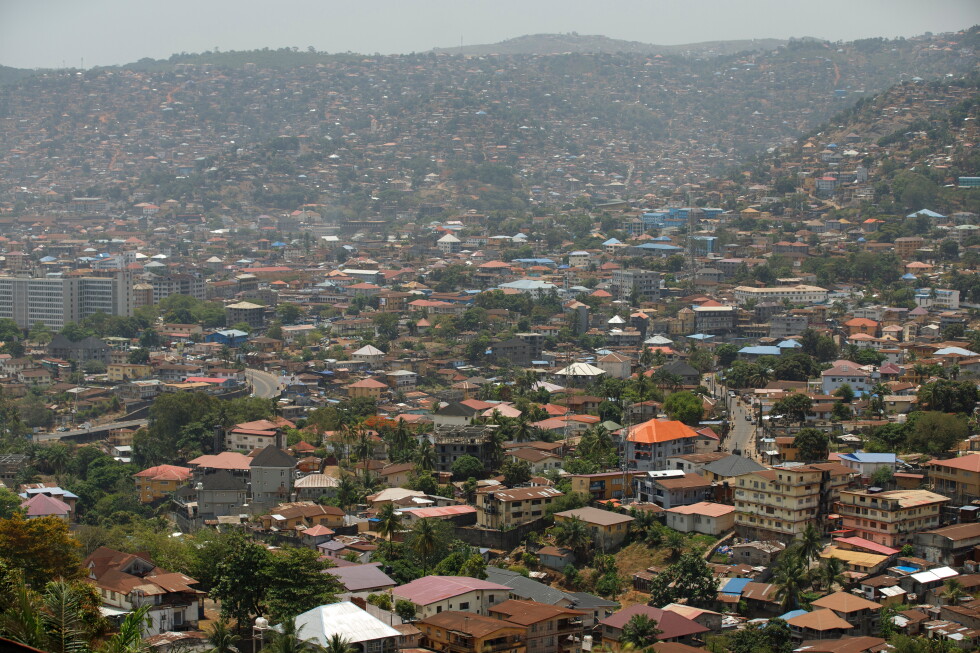
    Upon arrival in Freetown, Sierra Leone’s capital, deportees receive a briefing pamphlet from Kenvah Solutions, a private contractor hired by the Sierra Leonean government to manage deportees’ accommodations, food, healthcare, and transfers to their home countries. The document explicitly labels Sierra Leone a “temporary transit location” and confirms that “no long-term settlement is provided for or permitted,” adding that local authorities and contractors are working to “return you home as quickly and safely as possible.” Neither Kenvah Solutions nor Sierra Leonean government officials responded to requests for comment from the AP.

    Immigration advocates and legal representatives say the policy is a deliberate legacy of the Trump administration’s broad crackdown on irregular migration, which relies on often-unpublicized third-country deportation agreements to create a legal loophole. U.S. courts have issued formal orders barring the deportation of many of these asylum seekers directly back to their home countries, where judges have confirmed they face credible threats of persecution. By routing them through third-party nations like Sierra Leone, the U.S. effectively bypasses these protections.

    Reilly, who is representing a Nigerian asylum seeker among the most recent group of deportees, explained that once migrants arrive in Sierra Leone, they have almost no power to block their forced transfer to the countries where they face danger. “They’re put in a position where they just don’t have a say at all,” Reilly said. She added that U.S. authorities are fully aware of the risk facing most deportees sent through this program, choosing instead to disavow responsibility for their fates once they leave U.S. soil. “Our government is just saying, ‘What happens to them after they leave the United States is not our problem,’” she said.

    This is not the first challenge to the controversial policy. Earlier this month, human rights lawyers filed a legal case against Equatorial Guinea with the African Commission on Human and Peoples’ Rights, Africa’s top regional human rights body, accusing the central African nation of violating international human rights law by forcing U.S.-deported asylum seekers back to their unsafe home countries.

  • Five-try Leinster rout Bulls to retain URC title

    Five-try Leinster rout Bulls to retain URC title

    Dublin’s iconic Croke Park played host to a one-sided United Rugby Championship (URC) final on Saturday, where Irish side Leinster produced a masterclass of clinical rugby to claim back-to-back titles with a resounding 36-7 victory over South Africa’s Bulls.

    The dominant win marks a significant redemptive moment for Leinster, just one month after they fell to a heartbreaking defeat against Bordeaux-Begles in the European Champions Cup final, where they missed out on what would have been their fifth continental crown. For the Irish province, this title further cements their status as the most successful side in the history of the tournament, now holding 10 league titles across all iterations of the competition, and becoming the first team to defend the URC crown since the tournament’s 2021 rebrand. For the Bulls, the result extends a painful run of final heartbreak, marking their fourth URC final defeat in the last five editions of the championship.

    Leinster seized control of the match from the opening whistle, capitalizing on early disciplinary chaos from the South African side to build an unassailable 22-0 halftime lead. Within the first two minutes of kickoff, Bulls centre Canan Moodie was sin-binned for a deliberate knock-on that stopped a promising Leinster line break, forcing his side to play with 14 men. Just four minutes later, Leinster turned the error into points: winger Tommy O’Brien pounced on a sloppy loose pass from Bulls fly-half Handre Pollard inside the opposition half, kicked the ball 30 meters upfield, collected it and sprinted clear to score under the posts, opening the scoring for the home side.

    A second try followed quickly. Jamison Gibson-Park’s quick hands set up a surging run from fullback Hugo Keenan, who shrugged off two would-be tackles before shifting the ball left to centre Rieko Ioane. Ioane stepped inside Bulls defender Kurt-Lee Arendse and dived over in the corner to extend Leinster’s lead.

    The Bulls produced some staunch goal-line defense to hold back further waves of Leinster attack, but indiscipline struck again when fullback Willie le Roux was also yellow-carded for a deliberate knock-on as Leinster pressed hard on the South African side’s line. Leinster converted their sustained pressure into a third try just before halftime, when Jack Conan, an early substitution brought on to replace the injured starting captain Caelan Doris, picked up the ball from a close-range ruck and barged over the line. Fly-half Sam Prendergast knocked over a penalty shortly after, when the Bulls failed to release a tackled Leinster player, sending the sides into halftime with the home side holding a 22-point advantage.

    Leinster picked up exactly where they left off in the second half. Prendergast darted over from one meter out at the base of a ruck to score his own try, then converted the score to push Leinster’s lead out to 29-0. The Bulls thought they had their first try shortly after, when Harold Vorster appeared to ground the ball over the line, but referee Andrea Piardi disallowed the score following a Television Match Official (TMO) review, in a call that sparked controversy for the South African side.

    Leinster were reduced to 14 men for 10 minutes shortly after, when winger James Lowe received a yellow card for a deliberate knock-on in his final appearance for the Irish province. The Bulls finally broke through Leinster’s defense after the 60-minute mark: Moodie accepted a perfectly timed offload and stretched over the line to score, with Pollard adding the conversion to put the Bulls on the board at 29-7.

    Any hopes of a dramatic comeback were quickly snuffed out, however, when the Bulls had a second try disallowed for a forward pass from Moodie in the build-up, after another TMO review. Leinster replacement fly-half Harry Byrne put the final nail in the coffin in the closing minutes of the match, rumbling over between the posts and converting his own try to seal the 36-7 final score.

    Speaking after the match, the result was a testament to Leinster’s depth and consistency across the season, turning a near-miss in European competition into domestic glory, while the Bulls were left to reflect on a tournament that ended in familiar disappointment for the side.

  • Africa CDC chief says the continent needs to invest its own funds in Ebola response, vaccine

    Africa CDC chief says the continent needs to invest its own funds in Ebola response, vaccine

    ADDIS ABABA, Ethiopia – The African continent’s leading public health body has issued an urgent call for African governments to ramp up domestic financing to contain the ongoing Ebola outbreak spreading across the Democratic Republic of the Congo (DRC) and Uganda, while stressing the critical need to end the continent’s long-standing reliance on international partners for emergency health responses. Since the outbreak was first detected on May 15, the Africa Centers for Disease Control and Prevention (Africa CDC) confirms it has already killed more than 200 people among 894 confirmed cases, with more than 35,000 exposed contacts still to be fully traced. Public health experts warn the actual case count is likely higher, as the outbreak was only identified weeks after it first began spreading through local communities.