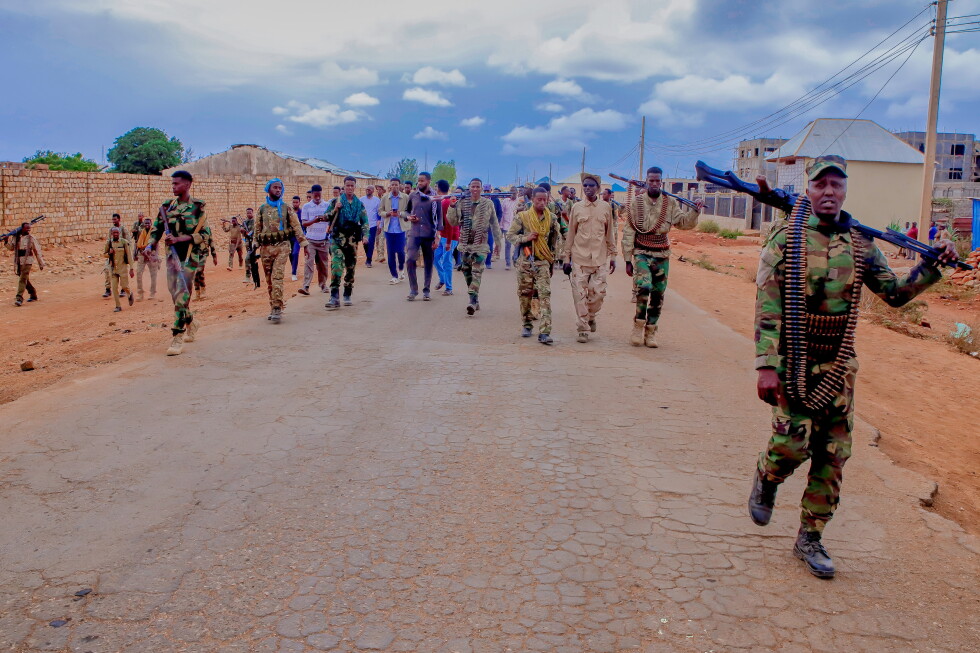
On Tuesday, a senior hospital official in Somalia confirmed that hours of intense combat between government forces and armed militias in the southwestern city of Baidoa has left a devastating trail of casualties, including at least four civilian deaths and 98 injured people.
The outbreak of violence began just after 5 a.m. local time on Monday, when coordinated attacks targeting government military outposts on Baidoa’s outskirts triggered full-scale fighting across the city. The urban area is currently a refuge for more than 500,000 people who have already been displaced by years of ongoing conflict and widespread drought across the Horn of Africa nation. Initial explosions rocked a military installation east of the city, followed immediately by heavy gun battles around a second base in the Bonkay neighborhood south of Baidoa. Armed fighters soon pushed into the city center, exchanging sustained fire with Somali government troops.
Regional security analyst Samira Gaid, who works with the Somali research firm Balqiis Insights, outlined the complicated dynamics of the assault. Fighters loyal to Abdiaziz Hassan Mohamed Laftagareen, the former president of Somalia’s South West state, managed to displace forces aligned with the new regional administration from parts of Baidoa for roughly six hours before being pushed out of the city. In a parallel set of attacks, fighters from al-Shabab, the al-Qaida-linked extremist organization that has waged an insurgency in Somalia for more than 15 years, assaulted two additional military positions on Baidoa’s outskirts. The coordinated timing of the two separate offensives has led Somali authorities to allege direct operational collaboration between Laftagareen’s militias and the extremist group, a claim that has not yet been independently verified.
Official casualty figures remain inconsistent, with no independent confirmation available to date. Somalia’s federal government says at least 30 attacking fighters were killed, while regional South West state authorities have reported a higher death toll of approximately 50 assailants killed. Neither side has released an official casualty count for government troops involved in the fighting. Dr. Abdikafi Omar Mohamud, head of the emergencies department at Baidoa’s Bay Regional Hospital, confirmed the civilian toll: four civilians killed, and 98 injured — among them 28 women and one elderly man who were struck by stray bullets during the urban combat.
The sudden influx of wounded patients has placed an overwhelming strain on Baidoa’s already fragile healthcare system, which was already struggling to serve both permanent residents and the massive population of displaced people encamped around the city. Baidoa sits roughly 245 kilometers (150 miles) northwest of Somalia’s capital, Mogadishu. Mohamud told reporters that his hospital only had 40 functional beds available when the fighting began, forcing staff to erect an emergency tent to accommodate the surge of wounded people. In addition to overcrowding, medical teams are also grappling with severe shortages of essential life-saving medicines, Mohamud added.
By Tuesday, calm had gradually returned to Baidoa. Security forces deployed to patrol major thoroughfares, conducting inspections of damaged buildings and vehicles that were caught in the crossfire. Local residents slowly began to emerge from their homes, where they had sheltered throughout the hours of fighting, though government troops maintained a heavy security presence across all key strategic areas of the city.
The latest eruption of violence is the direct result of months of simmering political tension over leadership of the South West state and its disputed electoral process. In March, Somalia’s federal government rejected Laftagareen’s contested indirect re-election to the regional presidency. Laftagareen, who had led South West state since 2018, announced his resignation after federal troops seized full control of Baidoa on March 30.
South West Internal Security Minister Isak Mohamed Korsaar reaffirmed the government’s claim of collaboration to reporters on Tuesday. “The militias that attacked us were not alone,” Korsaar said. “We have confirmed that they were accompanied by al-Shabab.” Korsaar added that government forces have recovered the bodies of slain al-Shabab fighters and taken multiple extremist fighters alive as captives.
Gaid, the regional security analyst, warned that the assault highlights a dangerous pattern that benefits extremist groups in Somalia: internal political disputes that devolve into armed conflict create open opportunities for al-Shabab to expand its influence and stage attacks. “When elite disputes are settled militarily, they create the conditions that the terrorist group exploits,” Gaid explained. “It is Somali civilians who pay for it.”