标签: Africa

非洲

  • Dozens killed in jihadist attacks on villages in central Mali

    Dozens killed in jihadist attacks on villages in central Mali

    More than a decade of rolling insurgency has reached a new brutal peak in central Mali, after coordinated simultaneous attacks on two rural villages left dozens of civilians and militiamen dead this week — marking the deadliest single assault since jihadist and separatist groups launched a nationwide coordinated offensive last month.

    The al-Qaeda-affiliated militant group Jama’at Nusrat al-Islam wal-Muslimin (JNIM) has officially claimed responsibility for the Wednesday night raids on the villages of Korikori and Gomossogou, located in Mali’s volatile central Mopti Region. Initial casualty counts from sources quoted by Agence France-Presse (AFP) put the death toll at 30, but separate accounts from diplomatic and humanitarian sources speaking to Reuters and regional security journalism collective West African Network for Peace and Security (WAMAPS) have revised the provisional number of fatalities to at least 50. Multiple residents and local sources confirm that while most victims were members of local self-defense militias, the death toll also includes teenage civilians and young children, with an unknown number of residents still unaccounted for in the wake of the assault.

    Local witnesses describe attackers entering the villages under cover of night, opening indiscriminate fire on residents, ransacking and looting residential and community structures, and setting multiple properties ablaze. A security source told AFP the attacks were carried out in retaliation for recent operations by Dan Na Ambassagou, a community-organized self-defense militia formed to counter years of persistent militant violence in central Mali.

    Mali’s military junta, led by General Assimi Goïta — who seized power in a 2020 coup — has responded to the assault with immediate counteroperations. Military officials confirmed that a “targeted strike” was launched in the attack area, with roughly a dozen jihadist fighters “neutralized” in the operation. Bandiagara Region Governor condemned the violence in an official Thursday statement, labeling the coordinated assaults “despicable and inhumane acts.” A subsequent military update clarified that nearly 10 additional “terrorist” fighters were killed and an insurgent logistical base was destroyed during further counteroffensive actions.

    The latest attack comes against a backdrop of rapidly escalating instability that has gripped Mali since April, when an alliance of jihadist militants and separatist rebels from the Azawad Liberation Front (FLA) launched a coordinated nationwide offensive aimed at ousting Goïta’s military regime. That opening wave of attacks included a suicide truck bombing targeting the residence of Malian Defense Minister Sadio Camara near the capital Bamako that killed the top security official. Just this week, Goïta announced he would fill the vacant defense minister post, with support from army chief of staff General Oumar Diarra.

    Speaking at a Wednesday press briefing in the capital, Malian army commander Djibrilla Maiga acknowledged that insurgent groups have been working to regroup and rearm in the weeks following the April offensive, warning that “the threat is still present” and confirming that military forces are working to disrupt further militant advances.

    Unlike previous deployments, when Mali relied on United Nations peacekeepers and French counterinsurgency forces, Goïta’s junta has partnered with the Russia-linked Africa Corps, a paramilitary force that grew out of the now-fractured Wagner Group, to combat the insurgency. Even with this support, the FLA-led offensive has forced Russian fighters to withdraw from the key northern city of Kidal, which is now fully under separatist control. The FLA has since announced plans to advance on other northern population centers and issued an explicit demand for the full withdrawal of Africa Corps forces from all Malian territory. Beyond territorial gains, insurgents have also tightened a blockade on Bamako, establishing a network of checkpoints on all major road arteries leading into the capital to cut off supply lines.

    Mali’s ongoing crisis traces its roots back to 2012, when a Tuareg separatist rebellion in northern Mali evolved into a full-scale Islamist insurgency that has since spread to central and eastern regions of the country. Today, large swathes of northern and eastern Mali remain completely outside of government control. When Goïta’s junta first seized power, it held broad popular support on a promise to end the decade-long security crisis. Following the coup, however, the new regime expelled UN peacekeeping forces and French counterinsurgency troops that had been deployed to stem the insurgency, clearing the way for the current surge in violence that has pushed the country to the brink of state collapse.

  • Ethiopian woman’s joy at rare quintuplets after 12 years trying for a baby

    Ethiopian woman’s joy at rare quintuplets after 12 years trying for a baby

    After 12 years of hoping and praying for a child, a 35-year-old Ethiopian woman has made medical history with an extremely rare birth: a set of naturally conceived quintuplets, all born healthy in the country’s Harari Regional State.

    Bedriya Adem, a subsistence farmer from the region, described herself and her husband as overjoyed by the unexpected gift of five babies four boys and one girl at once. For more than a decade, Bedriya navigated the social stigma of infertility in her community, enduring years of emotional and psychological pain even as her husband reassured her that his child from a previous marriage was enough to complete their family. “Deep inside I was suffering, as the entire village questioned my inability to give birth,” she shared in an interview with the BBC. “I spent 12 years in pain, hiding myself, and praying constantly for children at last, my prayers were answered.”

    The historic delivery took place via Caesarean section on a Tuesday evening at Harari’s Hiwot Fana Specialised Hospital, where both mother and the newborns remain under routine observation for continued good health. Dr Mohammed Nur Abdulahi, the hospital’s medical director, confirmed that all five infants are in full health, weighing between 1.3 and 1.4 kilograms each. Medical guidelines note that newborns weighing more than one kilogram have a very high probability of surviving and growing into healthy children, a benchmark all five of Bedriya’s babies meet.

    What makes the birth even more extraordinary is that Bedriya conceived without any reproductive assistance like in vitro fertilization, a procedure not available at Hiwot Fana Specialised Hospital. IVF is widely known to increase the risk of multiple births when multiple embryos are transferred to the uterus, but naturally conceived quintuplets are a one-in-55-million event, according to global fertility data.

    In a surprising twist, Bedriya was only expecting four babies throughout her prenatal care, which she received consistently from the hospital’s medical team. It was only at the time of delivery that the medical team discovered a fifth baby the healthy little girl the couple have named Nazira, alongside her four brothers Naif, Ammar, Munzir, and Ansar. The couple have dubbed their five new arrivals the “five blessings”, a nod to their long wait and joyful surprise.

    While Bedriya acknowledges that her new role as a mother of five will bring financial challenges as a low-income subsistence farmer, she says she remains optimistic about the future. “I believe Allah will provide, through the support of my community and the government,” she said. For the first-time mother, the years of pain and stigma she endured now feel like a distant, unwanted memory, replaced by the overwhelming joy of welcoming the family she spent 12 years dreaming of.

  • Sudan was already at war and hungry. Now its farmers are hit by another conflict

    Sudan was already at war and hungry. Now its farmers are hit by another conflict

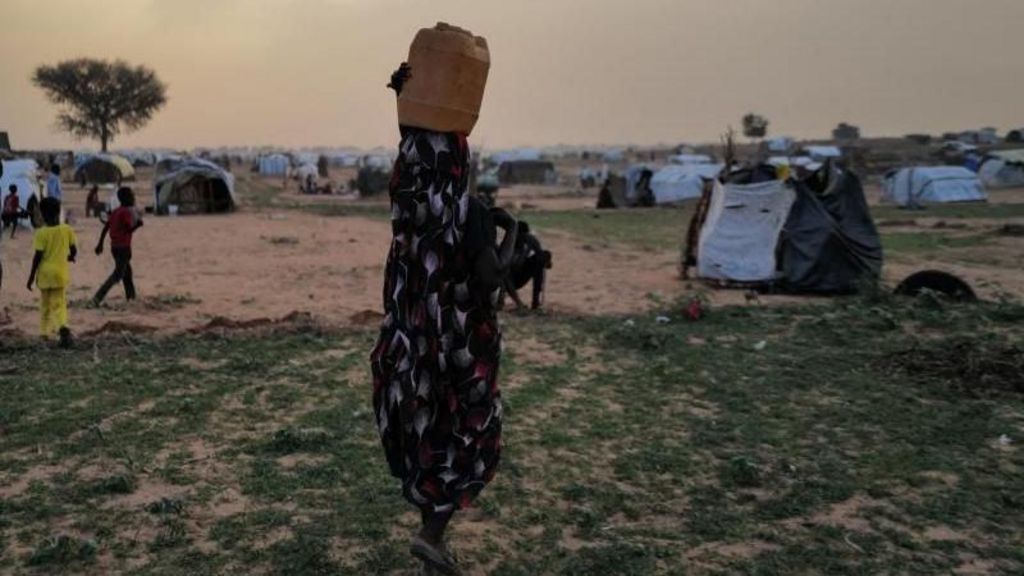
    Two years after Sudan’s brutal civil war drove him from his small family farm, Omer al-Hassan finally made the journey back to his land in Omdurman, clearing weeds, plowing dry soil, and preparing to plant for the first time since he fled. But a new wave of unrest sweeping the Middle East has now derailed his hopes, sending critical agricultural input prices soaring and pushing him and millions of other Sudanese farmers further into financial ruin and food insecurity.

    Al-Hassan and thousands of small-scale producers across Sudan are now bracing for one of the costliest planting seasons in recent memory. Many have already announced deep cuts to planned production, while some vulnerable smallholders have opted to skip planting entirely—a devastating development for a nation already grappling with three straight years of armed conflict that has left more than half its population facing acute hunger.

    “The conflict linked to Iran has upended every part of our agricultural work,” al-Hassan told the Associated Press during an interview as he and his crew harvested onions from his recently cleared plot. After two months of backbreaking work to restore the overgrown land, he said, “We put our faith in God, but even after all that struggle, we still go without meals some days. We simply can’t keep up with the costs.”

    Along with the 10 seasonal workers who help tend his farm, which also produces potatoes and tomatoes, al-Hassan says the group cannot cover operating costs without government financial support. That has already forced them to slash planted acreage and ration fertilizer use across the property. Another local farmer, Mohammed al-Badri, confirmed he can only afford to plant half of his arable land this season, leaving the rest uncultivated: “The other half is just wasted. We can’t do anything with it.”

    The root of this new crisis lies in disruptions to global trade chokepoints tied to Middle East tensions. More than half of Sudan’s imported fertilizer arrives by sea through the Gulf region, where hundreds of commercial vessels have been stranded for weeks amid heightened tensions around the Strait of Hormuz. The resulting supply crunch has pushed up domestic fuel prices by roughly 30% nationwide, with fertilizer costs skyrocketing even faster.

    Those increases have in turn driven sharp spikes in retail food prices across Sudan, hitting already cash-strapped households the hardest. The nation’s core staple crops—sorghum, millet, and sesame—are now at severe risk of production shortfalls this growing season. Farmers already reeling from the ongoing internal conflict between Sudan’s military and the paramilitary Rapid Support Forces now face cascading cost increases for fertilizer, gasoline for farm tractors, and diesel to power irrigation pumps.

    Abdoun Berqawi, a farmer in Gezira, Sudan’s most productive agricultural heartland, described the situation as a “dangerous reality” that will collapse small-scale farming without urgent government intervention. He shared data showing the cost of a 50-kilogram bag of urea fertilizer has jumped from $11 a year ago to roughly $50 today, while tractor fuel has surged from $2.50 to $8 per gallon over the same period. Officials from Sudan’s Ministry of Agriculture have not yet responded to requests for comment on what steps the government is taking to address the emergency.

    Melaku Yirga, regional vice president for the international aid organization Mercy Corps, who recently traveled to Sudan’s key agricultural states of Kassala and Gedaref, warned the timing of the crisis could not be worse. The Middle East tensions have triggered a “dangerous chain reaction” just as farmers begin preparing for planting, he explained. “People are already buying less food, cutting or skipping meals entirely, selling off critical household assets, and taking dangerous risks just to put food on the table,” Yirga said. “Mothers are forced to make impossible choices about which of their children get to eat the little food available, and some families are even eating wild leaves or animal feed to stay alive.”

    For farmers who borrowed money from banks to cover planting costs, poor harvests this year could lead not just to bankruptcy but jail time for unpaid debts, said Merghany Omar, a farmer based in al-Matammah, River Nile province. He added that even onion farming, a reliable cash staple for smallholders in the area, no longer generates enough revenue to cover basic input costs.

    Samy Guessabi, country director for Action Against Hunger in Sudan, noted this new crisis is layered on top of pre-existing systemic vulnerabilities, including dramatic currency depreciation that has already eroded purchasing power across the country. The hardest-hit communities are in remote agricultural regions including Kordofan, White Nile, Darfur, and Blue Nile, Guessabi said, where “farm zones are cut off from major markets and have very poor transport connections.”

    Even in Sudan’s urban centers, retail prices for fresh vegetables and dairy products have risen by roughly 40% in recent weeks, driven directly by fuel price increases. Before the latest crisis sparked by Middle East tensions, the ongoing civil war had already pushed millions of Sudanese into hunger. The United Nations World Food Program currently estimates 19 million Sudanese face acute food insecurity, with millions more on the edge of famine. Famine was officially declared in two major regions, Darfur and Kordofan, last year.

    The emergency has also severely disrupted international humanitarian aid efforts already stretched thin by the conflict. WFP says food assistance shipments bound for Sudan are now forced to travel more than 5,500 additional miles to reach their destinations, adding massive extra costs and weeks of delays. That diversion is largely a result of commercial vessels avoiding the Bab el-Mandeb Strait at the southern end of the Red Sea, another critical global shipping chokepoint, where Iranian-backed Houthi rebels in Yemen have threatened commercial traffic.

    Mubarak al-Nour, a veteran farmer and former parliamentarian in Gedaref, said even when farmers do manage to secure fertilizer, ongoing shipping delays mean many will miss the critical June-to-November planting window entirely. In response, some producers have already shifted away from high-value, fertilizer-intensive crops like corn and sesame, switching to lower-yield crops that require little to no chemical fertilizer.

    Even if agricultural supplies do reach Sudan in time for planting, the challenges do not end there. Mathilde Vu, advocacy manager with the Norwegian Refugee Council, explained that fuel shortages in many parts of the country are also worsened by warring factions blocking supply routes, while local fuel markets have been heavily damaged by bombing in recent months amid a sharp escalation of drone attacks across the nation.

    Reporting for this story was contributed by Khaled from Cairo. The Associated Press receives financial support for global health and development coverage in Africa from the Bill & Melinda Gates Foundation. The AP maintains full editorial independence over all content.

  • ‘I’d rather live in hiding in the US than return to Somalia’

    ‘I’d rather live in hiding in the US than return to Somalia’

    For more than 30 years, Minnesota has hosted the largest Somali diaspora community outside of the African continent, with thousands of migrants seeking safety from decades of civil conflict, Islamist insurgency, and catastrophic drought in their homeland. Today, that community remains trapped in a climate of pervasive dread, months after federal officials announced the end of a high-profile, large-scale immigration enforcement deployment that roiled the state and sparked nationwide protest.

    The deployment, dubbed Operation Metro Surge, at its peak brought thousands of Immigration and Customs Enforcement (ICE) agents to Minnesota, before the Trump administration’s border leadership announced a drawdown in mid-February, leaving only what was described as a “small contingent” of officers behind. But for many Somali residents, the official end of the surge has brought no end to the uncertainty and fear that has upended daily life across Minneapolis’s Somali neighborhoods.

    Abdi, a 23-year-old Somali migrant who requested anonymity for his protection, is one of hundreds of community members now living in the shadows. Fleeing forced recruitment by al-Shabab, the al-Qaeda-aligned insurgent group controlling large parts of Somalia, Abdi made the perilous journey to the U.S. in 2022, paying $15,000 to smugglers to cross the deadly Darién Gap jungle, where he encountered the corpse of another fallen migrant along the route. After successfully crossing the U.S.-Mexico border, he applied for asylum and received Temporary Protected Status (TPS), a federal designation that allows people from conflict-ravaged nations to live and work legally in the U.S. through 2029. Even with his legal status, Abdi never stays in one residence for more than five nights, sneaks to work under cover, and lives in constant dread that agents will knock on his door. “It hasn’t ended,” he told reporters. “I don’t know when they will show up at my house.”

    Abdi is far from alone. Local community members report that ICE agents continue to conduct unannounced home raids, and even people with valid TPS documentation have been detained. The Trump administration had moved to terminate TPS protections for roughly 2,500 Somali migrants by March 17, claiming security conditions in Somalia had improved enough for migrants to return. A federal judge has since temporarily blocked the order, but the damage to community trust has already been done. Compound this with disparaging public comments from former President Donald Trump, who has referred to Somali immigrants as “garbage” and openly stated “I don’t want them in our country,” and the community has been left with a clear sense that they are being intentionally targeted.

    U.S. Census Bureau data puts the total Somali-origin population in the U.S. at roughly 260,000, more than half of whom are U.S.-born citizens, with thousands more naturalized. Community leaders emphasize that the number of undocumented Somali residents in the state makes up only a tiny fraction of the overall community, yet the entire population has been swept up in the enforcement dragnet. Even dual U.S.-Somali citizens have been detained in raids, and families separated by deportations remain too fearful and traumatized to speak publicly. For anyone deported, a 10-year or longer bar on reentry applies even if they have children who are U.S. citizens.

    The Department of Homeland Security (DHS) has defended Operation Metro Surge as a public safety success, claiming the operation arrested more than 11,000 “criminal illegal aliens” that it says were endangering Minneapolis residents, blaming local sanctuary policies for creating a space for criminal activity. DHS maintains that any person present in the U.S. legally has nothing to fear from the operations, and defends the controversial tactic of masked, unidentifiable agents carrying military-grade weapons as a necessary safety measure to protect officers from doxxing and rising assaults on staff.

    Local political leaders have pointed out a glaring contradiction at the heart of the federal government’s policy. “The federal government is saying there’s no need for Temporary Protected Status in the United States, while at the same time warning people not to travel to Somalia because it’s dangerous,” Minneapolis Mayor Jacob Frey told reporters, questioning the logic of the administration’s position. Even as daily life slowly begins to resume in most parts of the city, the impact of the surge remains visible: dozens of local businesses and restaurants remain shuttered after their owners and staff were detained, and car owners have abandoned vehicles in public lots too afraid to return to claim them.

    Congresswoman Ilhan Omar, the first Somali-American elected to the U.S. House of Representatives and a frequent target of Trump’s criticism of the Somali community, says the fear has seeped into every corner of community life, affecting children, healthcare access, and basic daily activity. She argues that the tactics used in this surge marked a dangerous break from past immigration enforcement even under prior administries with high deportation rates. “The process… was done without creating chaos [and] fear,” Omar said. “What we saw here looked like a war zone.” Omar also pushed back on attempts to tie the immigration crackdown to a separate public fraud scandal involving a Somali community charity that fraudulently billed the state for child meal programs during the COVID-19 pandemic, noting that the vast majority of people indicted in that case are U.S. citizens. That scandal forced Democratic Governor Tim Walz to drop his re-election bid, and federal investigators expanded the probe with new raids on 12 local childcare centers just last week.

    Even Republican state Senator Jim Abeler has criticized ICE’s tactics, framing the ongoing crisis as a long-standing, bipartisan failure of national immigration policy. “Our national immigration policy is a mess – it’s been a bipartisan failure for a decade,” he said. Trump’s inflammatory remarks have already eroded what limited support he had among socially conservative Somali voters in Minnesota; one former Trump voter told reporters she now regrets her ballot, saying “If I hadn’t voted for him, he couldn’t have called us ‘garbage’.”

    Amid the ongoing fear, the crisis has fostered unusual cross-community solidarity. Faith leaders from Somali Muslim congregations and local Christian churches have partnered to build informal community alert systems, sending out real-time warnings when ICE agents are spotted in neighborhoods. Volunteer observers, including retired local residents, patrol the streets and use whistles to alert nearby residents of approaching agents, noting that after the drawdown, agents have operated more secretly, blending into civilian areas to avoid detection. The movement came at a deadly cost: two volunteer community organizers, Renee Good and Alex Pretti, both U.S. citizens, were killed by ICE agents during the peak of the surge in January.

    For migrants like Abdi, the community networks offer small measures of comfort, but cannot erase the shattered hope many brought with them to the U.S. “We hoped for a future in America. Our dream has been shattered,” he said. “I would rather live in hiding here for the rest of my life than go back to Somalia, because my life would be at risk.”

  • Shakira teases new song for the FIFA World Cup 2026 with Afrobeats star Burna Boy called ‘Dai Dai’

    Shakira teases new song for the FIFA World Cup 2026 with Afrobeats star Burna Boy called ‘Dai Dai’

    NEW YORK – As the global sports community counts down to the 2026 FIFA World Cup, global music icon Shakira has stepped back into the World Cup spotlight, dropping a highly anticipated teaser for the tournament’s official anthem from one of soccer’s most legendary venues.

    The Colombian hitmaker shared a 60-second preview of her new track “Dai Dai” across her social media channels Thursday, confirming the song as the 2026 FIFA World Cup Official Song and tagging Afrobeats superstar Burna Boy as a collaborator on the release. Filmed on the grass of Rio de Janeiro’s iconic Maracaná Stadium, the teaser shows Shakira front and center on the pitch, surrounded by a troupe of energetic dancers as she performs a snippet of the track. In the preview, the artist delivers uplifting lyrics in English: “Here in this place / You belong,” with a male vocal harmonizing underneath, followed by the line “What broke you once / Made you strong.” Fans do not have to wait long for the full release: the complete track is set to drop globally on May 14.

    For Shakira, penning and performing a World Cup anthem is far from uncharted territory. The singer cemented her place in both soccer and pop history with “Waka Waka (This Time For Africa)”, the official song of the 2010 FIFA World Cup held in South Africa, which remains one of the most streamed and recognizable World Cup tracks of all time.

    It is important to note that “Dai Dai” is a separate official release from Coca-Cola’s own 2026 World Cup anthem, a reimagined version of Van Halen’s classic rock hit “Jump”. That track features an eclectic lineup of artists: Colombian reggaeton star J Balvin, legendary Blink-182 drummer Travis Barker, acclaimed pop and R&B vocalist Amber Mark, and iconic rock guitarist Steve Vai.

    In that rework, Amber Mark opens the track with her signature clear, luminous vocals delivering the original song’s English lyrics, while Steve Vai puts a fresh spin on the track’s instantly recognizable guitar riff and Travis Barker amps up its percussion section. The biggest change to the original comes from J Balvin, who penned an entirely new verse in Spanish. Speaking to the Associated Press in March, Balvin explained that the production, from frequent collaborator L.E.X.V.Z, blends Brazilian funk rhythms with hard-hitting strings and hip-hop influences. “‘Jump’ is not a fútbol song,” he said, noting the original track’s lack of ties to the sport. “So that’s why I had to put the Latin love and passion for fútbol (in the lyrics).”

    This year’s FIFA World Cup is set to kick off on June 11, with an opening match between Mexico and South Africa at Mexico City’s historic Azteca Stadium. The tournament will conclude with the final match scheduled for July 19 at MetLife Stadium in East Rutherford, New Jersey, located just outside New York City.

  • A timeline of the cruise ship hantavirus outbreak and when passengers fell sick

    A timeline of the cruise ship hantavirus outbreak and when passengers fell sick

    A rare and deadly hantavirus outbreak that unfolded over several weeks aboard the Dutch-flagged cruise ship MV Hondius during a transatlantic voyage has left at least three passengers dead and multiple others infected, triggering a global contact tracing effort across more than half a dozen countries.

    Hantavirus is a rare infection most commonly spread by rodents, though one specific strain – the Andes virus identified in this outbreak – is the only variant believed capable of limited person-to-person transmission. The World Health Organization (WHO) has emphasized that the broader public risk remains low, as the virus does not spread easily between people.

    The timeline of the outbreak began on April 1, when the MV Hondius departed Ushuaia, Argentina, on a planned itinerary that included stops in Antarctica and remote South Atlantic island destinations. Five days into the voyage, a 70-year-old Dutch passenger developed initial symptoms of fever, headache, and mild diarrhea. According to WHO records, the man and his wife had completed sightseeing trips in Ushuaia and other regions of Argentina and Chile prior to boarding the ship.

    By April 11, the first patient developed acute respiratory distress and died while the ship was still at sea. The cruise line reported that no definitive cause of death could be confirmed at that time. The vessel continued its journey, stopping at the remote British territory of Tristan da Cunha on April 15 to pick up six additional passengers, with the first victim’s body remaining on board.

    It was not until April 24 that the body was offloaded at St. Helena, another British South Atlantic territory. The victim’s wife, who had also developed symptoms, and more than two dozen other passengers disembarked at the port. One day later, the symptomatic Dutch woman boarded a commercial flight with 88 passengers and crew from St. Helena to South Africa, though it remains unclear how many other former passengers of the MV Hondius were on the same flight.

    On April 26, the woman collapsed at a South African airport while waiting to board a connecting flight to her home, and later died. A day later, as the ship departed St. Helena, a third British passenger fell ill and was evacuated first to Ascension Island, then transferred to a hospital in South Africa for intensive care, where he presented with high fever, shortness of breath, and pneumonia – a known complication of hantavirus infection. On April 28, a fourth passenger, a German woman, developed symptoms as the ship sailed toward Cape Verde off West Africa’s coast.

    Nearly a month after the first case fell ill, on May 2, the German woman died on board, marking the outbreak’s third fatality. The same day, test results from the hospitalized British patient returned a positive confirmation for hantavirus, marking the first formal identification of the pathogen in the outbreak. On May 3, WHO announced it was supporting the response to the suspected outbreak as the ship arrived in Cape Verdean waters.

    Posthumous tests on the Dutch woman returned a positive hantavirus result on May 4, prompting WHO to formally classify the event as a full outbreak. The following day, the MV Hondius entered a 24-hour standoff with Cape Verdean authorities: the country dispatched medical workers to the vessel to assess the situation, but banned all passengers and crew from disembarking over transmission fears. At that time, two crew members – including the ship’s doctor – were seriously ill, with a third patient under active monitoring.

    On May 6, the three affected crew members were evacuated, with two testing positive for hantavirus, and flown to specialized medical facilities in Europe. Spain subsequently approved the vessel’s request to dock in the Canary Islands, and the ship set sail with more than 140 remaining passengers and crew on board. The same day, Swiss health authorities confirmed a fifth positive case in a passenger who had disembarked earlier at St. Helena, bringing the total confirmed case count to five. Testing confirmed the pathogen was the Andes virus, the hantavirus strain native to Argentina and Chile that is capable of limited person-to-person spread.

    As of May 7, health authorities across South Africa, Switzerland, the United Kingdom, the Netherlands, France, Singapore and multiple other countries have launched contact tracing operations, and are isolating all passengers who disembarked the MV Hondius at previous stops, along with any individuals who may have had close contact with them.

  • Rwandan singer dies as he was being released from prison

    Rwandan singer dies as he was being released from prison

    The sudden death of 48-year-old Rwandan singer, academic and government critic Aimable Karasira on the cusp of his prison release in Kigali has triggered deep controversy and demands for a transparent, independent investigation into the circumstances of his passing. According to official statements from the Rwanda Correctional Service (RCS), Karasira suffered a fatal overdose of his prescription medication while being escorted out of prison Wednesday afternoon, between 2 p.m. and 3 p.m. He was rushed to Nyarugenge Hospital, where he was pronounced dead. RCS spokesperson Hillary Sengabo confirmed that Karasira had been living with chronic conditions including diabetes, high blood pressure, and unaddressed mental health struggles, and announced that an official post-mortem examination would be conducted to determine the exact cause of death.

    Karasira was no stranger to public life in Rwanda before his arrest in 2021. A trained computer scientist, he worked for years as a lecturer at the University of Rwanda until his dismissal, a move the university framed as a response to “disciplinary faults” rather than retaliation for his outspoken anti-government views. He rose to wider prominence through his popular YouTube channel Ukuri Mbona, which translates to “The Truth As I See It,” where he regularly published criticism of President Paul Kagame and the long-ruling Rwandan Patriotic Front (RPF) party. He also appeared as a guest commentator on other independent platforms, drawing a large audience of Rwandans seeking alternative perspectives to the government’s official narrative.

    In 2025, Karasira was sentenced to five years in prison on charges of inciting ethnic division, after a Rwandan high court acquitted him of more serious counts including inciting public disorder, genocide justification and genocide denial. This release, planned for earlier this week, would have been the first step in his return to public life after five years behind bars.

    The official account of Karasira’s death has been immediately met with skepticism from opposition figures, human rights activists, and other critics of the Kagame government, who have pointed to a long pattern of suspicious deaths involving detained government opponents in Rwanda. Denise Zaneza, a Rwandan human rights activist based in Belgium, wrote in a public post on X that the timing of Karasira’s death — just as he was set to regain his freedom after years of detention — raised urgent, unaddressed questions. Citing Rwanda’s well-documented history of political repression, lack of judicial transparency, and a string of suspicious deaths of dissidents in custody, Zaneza called for an international independent investigation to uncover the truth of what happened.
    “After years of persecution and imprisonment, the authorities announce your death just as you were supposed to regain your freedom,” Zaneza wrote, praising Karasira for his courage to speak openly about experiences that many Rwandans are too afraid to share publicly. Karasira, an ethnic Tutsi who lost his parents in the 1994 Rwandan genocide, broke with the RPF’s official narrative of the genocide by publicly blaming RPF fighters for his family’s killings, claiming the rebel group suspected his family of sharing intelligence with the opposing Hutu regime. The RPF, which was founded by current President Paul Kagame and other Tutsi exiles to overthrow the Hutu government that orchestrated the 1994 genocide that killed an estimated 800,000 mostly Tutsi people, has dismissed these claims. The Rwandan government has pursued a policy of national reconciliation that discourages public discussion of ethnic identity, asking citizens to identify simply as Rwandan rather than along ethnic lines, and has a widely recognized reputation for cracking down on all forms of political dissent.

    This is not the first time a high-profile Rwandan dissident and genocide survivor has died in state custody under suspicious circumstances. In 2020, gospel singer and prominent government critic Kizito Mihigo was found dead in his prison cell; Rwandan authorities ruled his death a suicide, a conclusion that was also rejected by independent rights advocates. The international human rights organization Human Rights Watch has repeatedly called on Rwandan authorities to open independent investigations into the suspicious deaths, disappearances, and arbitrary detentions of opposition members, journalists, civil society leaders, and government critics, following the 2021 arrests of Karasira and other outspoken dissidents. To date, no high-level Rwandan official has been held accountable for the deaths of detained opponents, a reality that has fueled ongoing distrust of official government accounts.

  • South Africa condemns ‘fake videos’ of alleged xenophobic attacks

    South Africa condemns ‘fake videos’ of alleged xenophobic attacks

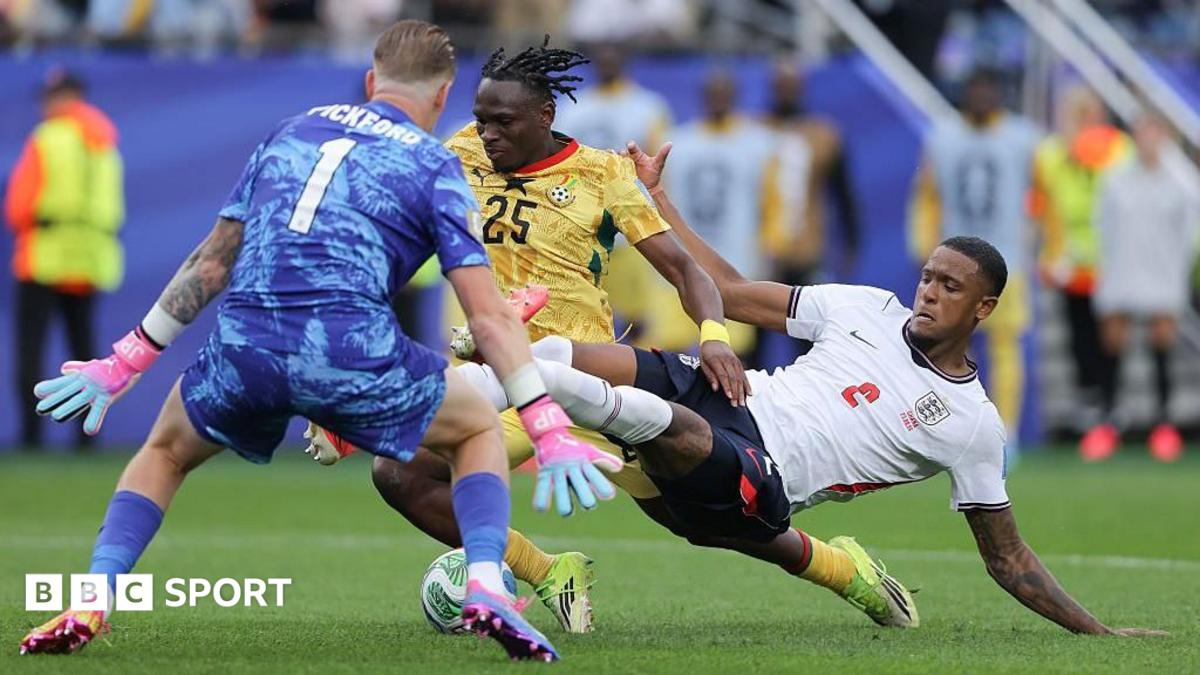
    Across major urban centers of South Africa, thousands of demonstrators have gathered in recent days to stage coordinated protests against undocumented immigration, a demonstration of public frustration that has ignited sharp diplomatic friction between Pretoria and several other African nations. The unrest stems from circulating online video footage, first shared roughly two weeks ago, that appears to capture vigilante groups targeting and harassing individuals they identify as undocumented migrants. One widely shared clip reportedly shows a Ghanaian national being confronted over his immigration status and ordered to return to “fix his own country.”

    In response to the outcry that followed the spread of the footage, South African officials have pushed back forcefully, condemning what they describe as manipulated and false visual content designed to damage the country’s global standing. During a press briefing Thursday following a weekly cabinet meeting, Minister in the Presidency Khumbudzo Ntshavheni told reporters that the discredited clips and images serve a deliberate purpose: to undermine South Africa’s international reputation and derail its regional agenda focused on advancing a more integrated, prosperous Africa. Ntshavheni clarified that while South Africans hold a constitutional right to protest the growing challenges of uncontrolled illegal immigration, the violence that marred past anti-immigration demonstrations will not be tolerated. She also stressed that there are no targeted xenophobic attacks currently occurring in the country, noting that any violence against foreign nationals can be attributed to general criminal activity that law enforcement is already addressing, not organized xenophobic aggression.

    Presidential spokesperson for Cyril Ramaphosa echoed this position earlier this week, emphasizing that South Africa remains a welcoming nation, and its people are open and warm, rejecting all attempts to label the country or its population as inherently xenophobic. Ntshavheni added that South Africa has “nothing to hide” regarding the current situation and is committed to transparency with regional partners.

    Unlike previous waves of anti-immigrant unrest that included deadly attacks and looting of foreign-owned businesses, the current wave of protests has remained largely peaceful, with no official reports of widespread violence against undocumented migrants or attacks on foreign-owned properties. South African protesters argue that high levels of undocumented immigration have placed unsustainable pressure on domestic access to jobs, affordable housing, and public safety, driving the recent demonstrations.

    Despite the South African government’s reassurances, multiple African nations have raised urgent alarms over the safety of their citizens residing in the country. Ghana became the first country to escalate the issue to the African Union, submitting an official letter requesting the pan-African body open formal discussions on the matter. Ghana’s government argues that the alleged rise in xenophobic violence poses a direct threat to the safety and well-being of all Ghanaian and African citizens in South Africa, and runs counter to core shared principles of African solidarity, fraternity, and continental unity. Ghana is pushing for the AU to deploy an independent fact-finding mission to South Africa to investigate the situation on the ground.

    Nigeria has echoed Ghana’s concerns, announcing it stands ready to facilitate the repatriation of any Nigerian nationals who wish to leave South Africa amid safety fears. Kenya, Malawi, Lesotho, and Zimbabwe have all issued official travel advisories to their citizens currently residing in South Africa, urging them to remain vigilant and avoid areas at high risk for potential attacks.

    As regional pressure builds, the South African government has ramped up targeted diplomatic outreach across the continent to ease growing anxiety over rising anti-immigration sentiment. The current dispute brings renewed attention to longstanding challenges around xenophobia in South Africa, where intermittent outbreaks of deadly anti-foreigner violence have occurred for decades, testing the commitment to regional integration enshrined in the African Union’s founding principles.

  • Race to trace passengers who left hantavirus cruise ship at island

    Race to trace passengers who left hantavirus cruise ship at island

    A hantavirus outbreak on board a Dutch-owned expedition cruise ship has triggered an international public health response, with multiple fatalities recorded and health authorities across half a dozen countries racing to trace potentially exposed passengers.

    The MV Hondius, operated by Netherlands-based cruise firm Oceanwide Expeditions, departed the Argentinian port of Ushuaia on 1 April for a South Atlantic voyage. What began as a routine expedition has since escalated into a global public health scare, with three deaths linked to the vessel and multiple confirmed or suspected infections recorded.

    Disembarkation at the remote British Overseas Territory of St Helena on 24 April has complicated contact tracing efforts. Discrepancies remain over the exact number of passengers who left the ship at that stop: the Dutch government puts the figure at 40, while operator Oceanwide Expeditions confirms 30 people (including the remains of one deceased passenger) disembarked, representing at least 12 nationalities. The group included seven British citizens, six Americans, and passengers from Canada, Germany, Singapore, Turkey and Switzerland, among other nations.

    As of the latest updates, three people connected to the outbreak have died. A 69-year-old Swiss woman (previously misreported in some early accounts as Dutch) disembarked at St Helena before traveling to South Africa, where she died two days after leaving the ship. She has been confirmed as a hantavirus case. Two other fatalities — the woman’s husband, who died on board on 11 April, and a female German passenger whose body remains on the ship — are still under investigation to confirm whether their deaths were caused by the virus.

    On 1 May, three additional symptomatic people were evacuated from the vessel: 56-year-old British passenger Martin Anstee, who remains in stable condition, a 41-year-old Dutch crew member, and a 65-year-old German passenger. The World Health Organization (WHO) currently reports eight total cases linked to the ship: three confirmed infections and five suspected cases.

    The first formal confirmation of a hantavirus case on board was not issued until 4 May, weeks after the initial disembarkation at St Helena. Oceanwide Expeditions has stated that all passengers who left the ship at St Helena have now been contacted by the company, and that it maintains constant communication with global health authorities to coordinate quarantine, testing and arrival protocols. The MV Hondius is currently scheduled to dock in the Spanish Canary Islands in the coming days to complete the remainder of its journey.

    International contact tracing efforts are now underway across multiple countries. In the Netherlands, public health officials are sending notification letters to all passengers who were on a KLM flight from Johannesburg to Amsterdam that the deceased 69-year-old woman was scheduled to board before falling ill at the gate. Dutch media has also reported that a KLM flight attendant has been hospitalized in Amsterdam after developing hantavirus symptoms following potential exposure.

    Singapore’s Communicable Diseases Agency has placed two men who disembarked at St Helena — a 67-year-old Singaporean citizen and a 65-year-old permanent resident — into isolation for testing. Both individuals traveled on the same Johannesburg-bound flight from St Helena as the deceased passenger, and their test results are still pending.

    In the United States, public health agencies in Arizona and Georgia are monitoring three passengers who returned home after disembarking the ship, none of whom have displayed symptoms to date. The U.S. Department of State confirmed it is in direct communication with all affected U.S. citizens connected to the outbreak. Two other British passengers who returned to the United Kingdom after disembarking are currently self-isolating at home.

    Argentinian health authorities have announced they will begin testing rodent populations in Ushuaia, the port where the MV Hondius began its voyage, to identify the potential source of the outbreak. Hantavirus is most commonly transmitted to humans through contact with infected rodent excreta, with person-to-person transmission rare.

    St Helena, where most of the exposed passengers disembarked, is one of the most remote inhabited islands on Earth, covering just 47 square miles with a population of roughly 4,400 residents and only one hospital, placing limited local public health infrastructure under strain as authorities coordinate the response.

  • Nigerian army rescues 7 children and 2 women abducted from an orphanage last month

    Nigerian army rescues 7 children and 2 women abducted from an orphanage last month

    ABUJA, NIGERIA – In a recent operational breakthrough announced Thursday, Nigeria’s military has recovered nine additional hostages kidnapped by armed gunmen during a raid on an unlicensed orphanage in the country’s north-central region last month. The rescue operation, carried out in a dense forest within Kogi State, brings the total number of freed captives to 22, with one child still unaccounted for following the April 26 attack.

    The assault targeted an Islamic orphanage operating without official authorization in a remote outskirts of Lokoja, Kogi’s state capital. When gunmen stormed the facility, they abducted 23 pupils in total. Local security forces managed to free 15 of the captured children immediately after the attack, leaving eight captives still held by the assailants.

    Army spokesperson Hassan Abdullahi detailed the outcome of the follow-up mission in a statement dated Wednesday, which was publicly released one day later. According to Abdullahhi, troops intercepted the hostage group in the forest and successfully rescued all nine people held there. “The rescued victims comprised five boys, two girls, and two adult females, believed to be the wives of the proprietor of the orphanage,” the statement read.

    The recovery of these nine hostages leaves one remaining pupil unaccounted for, though the official military statement did not explicitly address the outstanding missing person or provide updates on efforts to locate the child. It also did not release information on any casualties among the attacking gunmen or Nigerian security personnel during the rescue operation.

    To date, no armed organization has publicly claimed responsibility for the orphanage attack. Security analysts who track kidnapping trends in Nigeria note that targeted assaults on educational and childcare facilities have become a common tactic for criminal armed groups in the region. Schools and orphanages are seen as high-value targets because abductions of children generate widespread public and government attention, creating leverage for groups to demand and extract massive ransom payments. Over recent years, hundreds of students have been kidnapped in coordinated attacks across different regions of Nigeria, creating ongoing national security concerns.