标签: Africa

非洲

  • DR Congo president hints at extending his term and delaying polls

    DR Congo president hints at extending his term and delaying polls

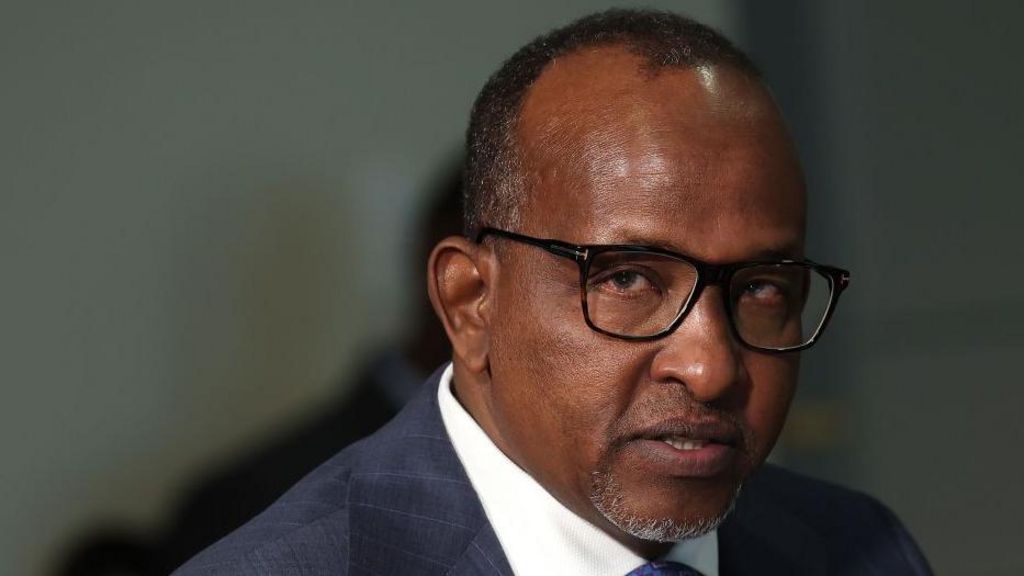
    In a rare, wide-ranging press conference in Kinshasa this week, Democratic Republic of Congo President Félix Tshisekedi has broken his public silence on two of the most contentious issues facing the Central African nation: his political future beyond 2028 and the years-long conflict destabilizing its eastern territories.

    Held at State House overlooking the Congo River and drawing more than 200 journalists and supporters, the three-hour briefing marked only Tshisekedi’s second press conference in the capital since he won re-election to a second five-year term in 2023. Addressing long-swirling opposition accusations that he has been plotting to extend his hold on power beyond the country’s constitutionally mandated two-term limit, the president confirmed he would be open to serving a third term – but only if the Congolese people express their support for the change through a national referendum.

    “I have not asked for a third term, but I’m telling you – if the people want me to have a third term, I will accept,” Tshisekedi told attendees on Wednesday.

    Current Congolese law caps presidential service at two consecutive terms, but a bill outlining procedures for a national referendum was tabled in parliament back in March. While supporters of the legislation frame it as a measure to strengthen democratic processes, critics argue it is a calculated step toward revising the constitutional term limit that would clear the way for Tshisekedi to run again. Opposition groups have already warned that any effort to amend the term limit provision would constitute a “constitutional coup.”

    Beyond his political future, Tshisekedi tied the timing of the 2028 presidential election directly to progress ending the ongoing M23 rebel conflict that has displaced millions and seized large swathes of the resource-rich North and South Kivu provinces in eastern DR Congo, including the major regional hubs of Goma and Bukavu. He stressed that free and fair voting cannot be conducted without full state control over the two Kivu regions, meaning the entire election schedule hinges on how quickly the conflict can be resolved.

    “If we cannot end this war, unfortunately, we will not be able to hold the elections in 2028,” he said.

    For nearly a decade, Congolese government forces have battled M23 and dozens of other armed factions in the eastern part of the country. Multiple independent investigations and international assessments have found overwhelming evidence that neighboring Rwanda provides military and logistical support to the M23 rebel group – a claim Rwanda has repeatedly denied, framing its cross-border military presence as a defensive measure to counter anti-Rwandan armed groups operating from Congolese territory.

    Tshisekedi used Wednesday’s briefing to double down on his accusations against Kigali, arguing that Rwanda has dragged its feet on implementing a U.S.-brokered peace deal signed in Washington last December because it profits from the illegal extraction of DR Congo’s rich mineral reserves. “It’s going to take time, because Rwanda has long profited by looting resources, and that’s why the negotiations are dragging on,” he said. Fighting has continued through 2025 despite the ceasefire agreement, and the U.S. imposed sanctions on multiple senior Rwandan military commanders in March this year for their role in fueling the ongoing conflict.

    The president also addressed a separate recent development: the U.S. decision to impose sanctions on his predecessor Joseph Kabila, over allegations that Kabila has backed anti-government rebel groups. Describing the situation as “a real mess,” Tshisekedi lamented that figures once celebrated as architects of democratic transition in DR Congo have now become “gravediggers” of that progress.

    Tshisekedi’s comments mark the first time he has publicly confirmed his willingness to pursue a third term, ending months of speculation and heightening political tensions across the country as the government continues its struggle to stabilize the volatile east.

  • About 40 passengers previously left ship hit by Hantavirus outbreak at island of St. Helena

    About 40 passengers previously left ship hit by Hantavirus outbreak at island of St. Helena

    THE HAGUE, Netherlands – Dutch government officials confirmed new details Thursday that add greater urgency to the global contact-tracing effort underway after a deadly hantavirus outbreak spread aboard an international cruise ship. Roughly 40 passengers left the vessel at the remote South Atlantic British territory of St. Helena following the death of the first recorded victim, a disclosure that the cruise operator had not made publicly until now.
    Among the passengers who disembarked at St. Helena was the wife of a Dutch man who lost his life to the virus. As previously confirmed by the cruise line, the woman accompanied her husband’s body off the ship before boarding a commercial flight to South Africa. Shortly after arriving in Johannesburg, she collapsed at the city’s airport and later died from the infection.
    This new confirmation that dozens of other passengers also left the ship at the South Atlantic stopover upends earlier incomplete information released by the cruise company, which had not acknowledged any additional disembarkations beyond the Dutch woman and her late husband. Contact-tracing teams across South Africa and multiple European nations have now launched urgent efforts to locate and monitor every passenger who got off the ship during the stop, to slow further spread of the virus.
    One case already linked to the outbreak has been confirmed outside of the vessel: on Wednesday, health authorities in Switzerland announced that a man who also disembarked at St. Helena and traveled back to Europe has tested positive for hantavirus. The full details of his travel route and interactions since leaving the ship have not yet been finalized by investigators.
    Dutch authorities have so far declined to share any information about the current locations of the other 39 passengers who got off at St. Helena, leaving public health teams scrambling to track down the potentially exposed group across the globe.
    Additional evacuation efforts have continued in recent days as the death toll from the outbreak has climbed. According to the cruise operator, a British passenger was medically evacuated from the ship to South Africa via Ascension Island just days after the first death was recorded. On Wednesday, three more people – including the cruise ship’s lead doctor – were pulled from the vessel off the coast of Cape Verde and airlifted to Europe for urgent medical care.
    As of the latest update, three passengers have died from the hantavirus infection, with multiple other people remaining sick with the disease aboard the ship and in medical facilities across multiple continents.

  • Kenyan politicians trade accusations of ‘goonism’ as political violence rises ahead of 2027 election

    Kenyan politicians trade accusations of ‘goonism’ as political violence rises ahead of 2027 election

    In the East African nation of Kenya, political tensions are hitting a fever pitch 12 months out from the 2025 general election, and a new term has come to dominate public discourse: ‘goonism.’ Coined by national leaders to criticize the growing trend of violent, intimidating gangs targeting opposing political groups, the phrase has revealed deep divides between President William Ruto’s administration and the country’s opposition, as the competition for power grows increasingly hostile and dangerous.

    Ruto, who first swept into office in a tight 2022 race after campaigning as a devout born-again Christian promising to build a pious, peaceful nation centered on working-class Kenyans, now faces widespread accusations of breaking the values he once championed. Once nicknamed ‘Nabii’ – the Swahili word for prophet – for his public piety, Ruto framed his 2022 campaign as a rebellion against long-standing political dynasties, arguing his rise to power came solely through God’s grace rather than elite privilege. But many of his one-time supporters say a dramatic shift occurred immediately after his inauguration.

    While Ruto still attends Sunday church services, critics note he no longer carries a Bible or quotes scripture regularly. Controversial decisions, from demolishing a small chapel on the Statehouse compound to build a newer facility to rolling out aggressive income tax hikes just months after taking office, have reinforced claims of betrayal. The tax proposals sparked mass protests by thousands of young Kenyans across the capital Nairobi that forced partial rollbacks, but failed to ease public anger. Later, additional unrest erupted after a popular blogger died in police custody, and a 2024 protest that saw demonstrators storm the parliamentary building left Ruto’s political standing damaged – and the president increasingly determined to project hardline strength. In a fiery response to anti-government protests where demonstrators carried signs demanding his resignation, Ruto infamously instructed police to ‘break’ protesters’ limbs, drawing widespread condemnation that framed the comment as a veiled threat against political dissent.

    Today, both ruling and opposition figures decry goonism, but each side blames the other for the surge in political violence. Opposition leaders claim the gangs that disrupt their rallies and intimidate their supporters are directly state-sponsored. ‘We must say no, collectively, to the new specter, the new norm, of goonism,’ prominent opposition leader Kalonzo Musyoka told local media, rejecting government claims that opposition groups are behind the violence. Even ruling party allies have acknowledged the threat the trend poses to Kenya’s democracy: National Assembly Speaker Moses Wetang’ula, a close Ruto ally, recently stated that ‘the culture of goonism has no place in a democratic society.’ Interior Secretary Kipchumba Murkomen has also pledged to crack down on unauthorized armed gang activity targeting political gatherings.

    The violence has already spilled into everyday public life: Last month, opposition Senator Godfrey Osotsi was violently assaulted by a group of men at a western Kenyan restaurant over his political views, leaving him with injuries serious enough to require hospitalization. The attack sparked local protests and drew widespread condemnation from religious leaders across the country.

    Religious leaders have emerged as some of the most vocal critics of Ruto’s shift away from his stated Christian values, with one prominent megachurch pastor delivering a viral sermon that implicitly condemned the president’s ties to political violence. ‘Everyone who wants to rule this country by that kind of thing, I speak as a prophet of God: You shall fall,’ megachurch pastor Wilfred Lai, based in the coastal city of Mombasa, told his congregation during a recent Sunday service. ‘You can’t use goons and you are telling us that you are taking us into a better place. You are a liar and the truth is not in you.’ Though Lai never mentioned Ruto by name, the widely shared clip of the sermon left little doubt among Kenyans who he was targeting. Lai was one of multiple evangelical leaders who publicly supported Ruto during his 2022 campaign, making his rebuke all the more significant.

    Public anger has been further stoked by a bitter, venomous public feud between Ruto and his former deputy Rigathi Gachagua, who was impeached earlier this year after falling out with the president. Gachagua now leads the ‘Wantam’ movement, which is pushing to limit Ruto to a single term. The pair have traded increasingly vulgar insults: In March, Gachagua called Ruto a thief who would ‘steal a funeral home,’ prompting Ruto to label Gachagua a ‘cold-blooded pig’ who stole from his own brother. The public spectacle drew a rare rebuke from Kenya’s top Catholic leadership. ‘Disagreement is OK, but insulting each other in public is a disgrace,’ said Archbishop Maurice Muhatia, head of the local Catholic bishops conference, at a recent gathering. ‘Give us a break.’

    Political scholars and analysts warn that if both sides do not de-escalate tensions immediately, the 2025 election could be one of the most violent in Kenya’s modern history. Kenya has a long history of fractious, election-related violence – most notably the deadly 2007 post-election unrest that saw the criminal gang Mungiki play a major role in targeted attacks. Analysts say the current context is far more volatile than past elections, with Ruto’s uncompromising leadership style stoking fears of a shift toward authoritarianism, a break from past Kenyan presidents who were more open to accommodating opposition. ‘Goonism’ is ‘a product of gangster theology’ of which Ruto is the high priest, said Nairobi-based independent writer Christine Mungai, arguing the president has mastered ‘how to perform public piety’ while working ‘to make life harder for everyone.’

    Karuti Kanyinga, a Kenyan development scholar and visiting professor at South Africa’s Stellenbosch Institute for Advanced Study, warned that if hostile rhetoric and gang activity continue, the 2025 election will devolve into widespread bloodshed. ‘If Ruto and opposition figures don’t tone down the rhetoric the election is going to be very bloody,’ Kanyinga said, adding that by next year, ‘everyone will have their own protection gangs.’

    As the election draws closer, Ruto continues to court influential church leaders, who hold massive social and political sway across Kenyan communities. But with growing numbers of religious leaders turning against him, and opposition groups gaining traction amid widespread public anger, Ruto’s path to a second term remains uncertain. Though his position is precarious, adversaries acknowledge the president remains a cunning, formidable opponent who will be difficult to unseat in next year’s vote.

  • Congo’s president warns next elections can’t take place unless the conflict in the east is resolved

    Congo’s president warns next elections can’t take place unless the conflict in the east is resolved

    KINSHASA, Democratic Republic of the Congo — In a nationally televised address that has sparked intense political debate across the country, Congolese President Félix Tshisekedi delivered a stark warning Wednesday: unless the long-running armed conflict rocking the nation’s eastern provinces is resolved and stability is restored, the country will not be able to hold constitutionally mandated general elections when his second and final term concludes in December 2028.

    Tshisekedi’s remarks came amid a devastating escalation of decades of unrest in eastern Congo that began earlier this year. In January 2025, Rwanda-backed M23 rebels launched a major offensive, capturing the strategic eastern city of Goma before seizing the key town of Bukavu the following month as the insurgency pushes to expand its territorial control. The renewed fighting has already claimed an estimated 3,000 lives and dramatically deepened one of the world’s worst humanitarian catastrophes, pushing the total number of displaced people across the country to roughly 7 million.

    Decades of instability in eastern Congo have long been fueled by competition over control of the region’s vast, lucrative mineral reserves, with more than 100 armed groups currently operating in the area, M23 among the most powerful and well-organized. U.S.-brokered peace negotiations and other diplomatic initiatives to halt the violence have so far failed to gain traction, leaving the conflict deadlocked.

    “If we cannot end this war, unfortunately we will not be able to organize elections in 2028,” Tshisekedi stated during the address. The president clarified that the inability to hold the vote would stem from the loss of state control over the two most conflict-affected eastern provinces, not a lack of willingness or resources to administer the poll. “It will not be because I refused to organize them, the resources are there we can do it, but we cannot organize them without North Kivu and South Kivu,” he added.

    In a surprise announcement that has reshaped the country’s political landscape ahead of 2028, Tshisekedi also signaled he would be open to seeking a controversial third term in office, a move that would require amending the nation’s constitution, which currently imposes a strict two-term limit on presidents. “I have not sought a third term, but I tell you: If the people want me to have a third term, I will accept,” he said, noting that any change to term limits would need to be approved by a national referendum first.

    Opposition figures and political critics immediately rejected the president’s comments, accusing Tshisekedi of using the ongoing eastern conflict as a pretext to extend his hold on power. Congolese opposition politician André Claudel Lubaya argued that Tshisekedi was invoking the will of the Congolese people “to justify a fraudulent intention.” Two-time former presidential candidate Seth Kikuni warned via social media platform X that if Tshisekedi follows through on plans to “threaten to seize power” in 2028, the opposition will have no choice but to take drastic action: “to cross the Rubicon and throw the dice.”

    The address also touched on other policy issues, including the ongoing deportation of Congolese migrants from the United States under a bilateral agreement reached with the Trump administration, though Tshisekedi’s comments on elections and the eastern conflict dominated public and political reaction to the speech.

  • Central African Republic opposition leader denounces seizure of his passport

    Central African Republic opposition leader denounces seizure of his passport

    On Wednesday, a high-profile political standoff unfolded in the Central African Republic (CAR) when major opposition figure and former prime minister Anicet Georges Dologuélé publicly condemned the seizure of his diplomatic passport, labeling the move a blatant abuse of executive power by the current administration.

    The incident unfolded at Bangui’s international airport, where Dologuélé — who held the prime minister’s office from 1999 to 2001 — was blocked from boarding a flight bound for an African Union (AU) summit in Addis Ababa, Ethiopia. Speaking to reporters shortly after the denial of departure at a press conference in the CAR capital, Dologuélé revealed that authorities had barred him from exiting the country after branding him stateless within his own homeland.

    Dologuélé has served on the board of directors of the African Union Peace Fund since 2018, a position that made his planned attendance at the Addis Ababa meeting a formal professional obligation. The political conflict between Dologuélé and current CAR President Faustin-Archange Touadéra stretches back to last year’s controversial presidential election, where Dologuélé ran against the incumbent.

    To meet CAR constitutional requirements for presidential candidates, which bar dual citizenship, Dologuélé formally renounced his French citizenship in 2023 ahead of the vote. Since the election, he has repeatedly denounced the poll results, claiming the outcome was deeply flawed and “very far from the truth” — a stance that has put him in persistent opposition to Touadéra’s government. Official results from CAR’s electoral commission recorded Dologuélé winning 13.1% of the national vote.

    Following the election, the former prime minister had been relying on his diplomatic passport, which he retained as a former head of government. He told reporters on Wednesday that the current administration has repeatedly rejected his requests to issue a new standard national passport, leaving his old diplomatic document as his only valid form of international travel documentation.

  • Foreign Office ‘working urgently’ to help Britons on virus-hit cruise get home

    Foreign Office ‘working urgently’ to help Britons on virus-hit cruise get home

    A deadly hantavirus outbreak has left more than 100 passengers and crew stranded aboard the expedition cruise vessel MV Hondius off the coast of Cape Verde, triggering an urgent multinational response to evacuate those infected and repatriate hundreds of stranded travelers, including 23 British nationals. Three passengers have died from the virus since the ship departed Argentina on a voyage one month ago, making this one of the most serious infectious disease outbreaks on a commercial passenger vessel in recent years.

    According to official data released Tuesday by cruise operator Oceanwide Expeditions, 19 passengers and four crew members on board are British citizens. Among those affected, a 56-year-old British doctor was among three symptomatic people evacuated from the vessel Wednesday for urgent medical care, and UK officials have confirmed the doctor is currently in stable condition. The other two evacuees include a 41-year-old Dutch crew member and a 65-year-old German passenger, who were also flown to receive treatment in the Netherlands, the World Health Organization (WHO) confirmed.

    UK Foreign Secretary Yvette Cooper issued an official statement Wednesday acknowledging the severity of the crisis, saying, “This situation is very serious and deeply stressful for those affected and their families.” She added that the UK Foreign Office is working around the clock to bring all stranded British citizens home safely, with consular teams maintaining direct, ongoing contact with all UK nationals on board the vessel.

    After days of diplomatic negotiation and public health coordination, Spanish authorities granted the vessel permission to dock at the Granadilla port on the island of Tenerife in the Canary Islands, despite initial public health concerns raised by local officials. Spain’s Health Minister Mónica García confirmed Wednesday that once the ship docks, all passengers will be disembarked for processing. Spanish citizens will be transferred to Madrid for mandatory quarantine, while asymptomatic passengers from other countries will be cleared for repatriation to their home nations.

    As of Thursday, approximately 150 people remain on the MV Hondius, held under strict precautionary isolation and infection control measures implemented by the cruise line. Investigators have not yet identified the origin of the outbreak, and it remains unclear whether any individuals outside the ship’s passenger and crew complement have contracted the virus.

    The UK’s response to the incident is being led by the UK Health Security Agency (UKHSA), which is working in close partnership with the WHO and health authorities across several Atlantic territories including St Helena, Tristan da Cunha and Ascension Island to implement isolation protocols, contact tracing and coordinated response planning. A UK Foreign Office spokesperson emphasized that the core priority of the operation is to ensure all British nationals can return home safely while maintaining full public health protections to prevent further spread of the virus.

    For the general public in the UK, the UKHSA has stressed that the overall risk of widespread hantavirus transmission remains very low, and there is no cause for undue public concern. Hantaviruses are a family of pathogens primarily carried by rodent populations including mice and rats, with human infection most commonly occurring through exposure to contaminated rodent excreta. Common symptoms of infection include high fever, extreme fatigue, widespread muscle pain, abdominal discomfort, nausea and vomiting, and in severe cases the virus can cause life-threatening respiratory or kidney complications.

    Multilateral coordination continues to advance the repatriation process, with UK officials working closely with Spanish, Dutch and other national governments to facilitate medical evacuations and speed the safe return of all stranded travelers.

  • Watch: Passengers told virus-hit ship ‘not infectious’ after first death

    Watch: Passengers told virus-hit ship ‘not infectious’ after first death

    A chilling moment from the early days of the global COVID-19 pandemic has been preserved on camera by a content creator who was trapped aboard a virus-plagued cruise ship when the first fatality was recorded. Turkish YouTuber Ruhi Çenet, who built his platform on sharing travel and exploration content with hundreds of thousands of subscribers, was among the passengers confined to the vessel when the fatal outbreak unfolded on April 12. That day, as the first death from the virus was announced to the people on board, ship officials made a controversial public statement that would later raise questions about crisis communication amid the spreading pandemic: they reassured passengers that the ship itself was still not an infectious environment.

  • Orphaned baby hippo to be hand-reared by keepers at Kenya sanctuary

    Orphaned baby hippo to be hand-reared by keepers at Kenya sanctuary

    Over the weekend, a moving and dramatic wildlife rescue operation unfolded on the shores of a Kenyan lake, where rescuers intervened to save a newborn hippo calf that had been left stranded next to its mother’s deceased body.

    The tiny calf, now named Bumpy, is estimated to be only a few days old, having lost his mother under circumstances that conservation teams are still clarifying. Initial investigations from the Kenya Wildlife Service (KWS) suggest the mother hippo may have died of natural causes. But experts from the Sheldrick Wildlife Trust (SWT), the conservation charity that now cares for Bumpy, have put forward another plausible explanation: hippo society regularly sees infanticide by competing males, and the mother may have lost her life in a territorial battle while defending her vulnerable calf.

    By the time conservation teams arrived at the scene, the mother hippo’s body had already been decomposing for more than 24 hours. Extracting the unweaned calf from the water presented unexpected logistical hurdles. The distressed newborn refused to leave his mother’s side, clinging tightly to her corpse even as rescuers approached. Faced with this difficult situation, the KWS team made the painful decision to use the decomposing body as an anchor to safely reach and retrieve Bumpy, a choice that prioritized saving the calf’s life despite the emotional weight of the decision.

    After the rescue was completed, Bumpy was first transported to a specialized wildlife nursery in Nairobi, Kenya’s capital. For his first night in human care, keepers wrapped him in a soft blanket and provided him with regular milk feedings, catering to the tiny calf’s every need. SWT teams noted that from the moment he arrived, Bumpy was clearly starved for comfort and social connection, and has stayed nearly glued to his assigned keepers ever since.

    Soon after his initial stabilization, Bumpy was airlifted via helicopter to SWT’s Kaluku Wildlife Sanctuary, located near Tsavo East National Park. This protected facility is designed to raise orphaned wildlife until they are old enough and strong enough to be released back into their natural wild habitat. At his new home, Bumpy spends most of his days submerged in a calm pool along the Athi River, but he is never left alone. A keeper stays with him around the clock, whether joining him in the cool water or staying beside him on the riverbank. According to sanctuary updates, Bumpy is an inherently affectionate young hippo, and he is most content when curled up on or pressed against his caretakers, a bond that has been captured in heartwarming shared photos.

    Bumpy is not the only young orphaned hippo at Kaluku Sanctuary; he joins another calf that is almost a year old, though the two are currently housed in separate enclosures as they acclimate to their surroundings. Both animals are on track to be released into the wild once they reach full maturity, where they will join existing wild hippo populations. Wildlife experts explain that in their natural habitat, hippo calves stay closely bonded to their mothers for multiple years, nursing for at least 12 months and remaining dependent until they reach sexual maturity, making Bumpy’s early orphanhood an especially challenging situation.

    The Sheldrick Wildlife Trust, the organization leading Bumpy’s care, was founded in 1977 and has earned global recognition for its work rescuing and rehabilitating orphaned elephants and rhinos, successfully reintegrating hundreds of animals back into wild African ecosystems. This rescue of Bumpy is part of the trust’s expanded work protecting vulnerable native wildlife across Kenya, giving newborn animals that would otherwise not survive a second chance at life in the wild.

  • WHO says 3 suspected hantavirus patients evacuated from cruise ship to the Netherlands

    WHO says 3 suspected hantavirus patients evacuated from cruise ship to the Netherlands

    In an ongoing developing public health emergency, the World Health Organization (WHO) announced Wednesday that three patients with suspected hantavirus infection have been evacuated from the Dutch-flagged cruise ship MV Hondius, which is currently stranded off the coast of Cape Verde, and are en route to the Netherlands for further medical care.

    WHO Director-General Tedros Adhanom Ghebreyesus confirmed Wednesday that the United Nations’ leading health body is collaborating closely with the cruise line’s operators to track the health status of all remaining 150 passengers and crew members currently onboard the vessel. In a public post to his X social media account, Tedros emphasized that “At this stage, the overall public health risk remains low.”

    The MV Hondius departed Argentina on April 1 for an Atlantic cruise that was originally scheduled to include stops in Antarctica, the Falkland Islands and other regional destinations. The trip quickly turned into a public health crisis when three passengers died from confirmed hantavirus infection, with at least five additional people reporting symptomatic infection to date. Three cases have received full laboratory confirmation so far.

    Genetic sequencing conducted by public health officials in South Africa and Switzerland has identified the pathogen as the Andes strain of hantavirus, a variant native to South America that is extremely rare for its limited ability to spread between humans. Unlike most hantavirus strains, which only spread to humans through contact with contaminated rodent droppings, experts note that Andes hantavirus can pass between people through prolonged close contact such as cohabitation or shared food, though such transmission events remain uncommon.

    Two of the confirmed cases were first identified by South African health authorities after the passengers were evacuated to the country for treatment. One of those patients, a British national, remains in intensive care at a South African hospital, while the other tested positive posthumously after dying shortly after arriving in the country. A third confirmed case was reported Wednesday by Swiss public health officials: a man who returned from the cruise to Switzerland at the end of April, who tested positive for Andes hantavirus after seeking care at the University Hospital Zurich upon learning of the outbreak from the cruise operator. He has been placed in isolation for treatment, and his wife, who has not developed symptoms, is self-isolating as a preventive measure. Swiss officials have stressed there is currently no broader risk to the general public in Switzerland.

    After the outbreak was declared, the MV Hondius anchored off the coast of Cape Verde, a small Atlantic island nation off the west coast of Africa, while global health authorities coordinated a response. On Tuesday, Spain’s Health Ministry announced it had approved a request from WHO and the European Center for Disease Prevention and Control to allow the vessel to dock in the Canary Islands for disembarkation and further care.

    However, local political leaders in the Canary Islands have pushed back against the plan. Regional president Fernando Clavijo told local radio station Onda Cero Wednesday that he shares significant concerns about the risk the vessel’s arrival could pose to local residents, and has requested an urgent meeting with Spanish Prime Minister Pedro Sánchez to address the situation. “Neither the populace nor the government of the Canary Islands can rest assured because it is clear that the danger to the population is real,” Clavijo said.

    All remaining passengers currently onboard the vessel are isolating in their individual cabins to reduce the risk of further transmission, per WHO guidance. Medical evacuation teams were on standby Wednesday in the Cape Verde capital of Praia, ready to conduct further evacuations if needed. On Tuesday night, Associated Press reporters on the scene observed a boat approach the stricken vessel before turning back shortly after, though it remains unclear what the mission was and whether the attempt to evacuate patients was aborted.

    As this is a breaking public health event, authorities continue to update response plans and case counts as more information becomes available.

  • Foreign visitors return to Jewish pilgrimage in Tunisia under tight security

    Foreign visitors return to Jewish pilgrimage in Tunisia under tight security

    Nestled on Tunisia’s Mediterranean island of Djerba, the 2,600-year-old El-Ghriba Synagogue has long hosted one of Africa’s most enduring Jewish pilgrimage traditions. This year, the annual Lag B’Omer gathering welcomed a small but meaningful comeback of international worshippers, held under robust security measures one year after a fatal attack shattered the 2023 event.

    In the 2023 attack, a Tunisian national guardsman opened fire near the synagogue shortly after that year’s festival, killing five people — two French pilgrims and three local security officers. The violence sowed deep anxiety among Tunisia’s small, centuries-old Jewish community and diaspora pilgrims who travel to the site annually. This year, attendees included visitors from France, China, Ivory Coast, and Italy, among them France’s ambassador to Tunisia, a symbolic show of solidarity following the 2023 deaths of two French citizens in the attack.

    Organizers reported roughly 500 attendees for this year’s pilgrimage, which ran from April 30 to May 6. Jewish communities have existed in Tunisia since the Roman era, and the Ghriba gathering remains the centerpiece of religious and cultural life for the country’s long-standing Jewish population. Unlike the sharp decline in international attendance seen in 2024, this year marked the first resumption of cross-border participation, with many diaspora Jews returning to honor their ancestral roots.

    Inside the ancient synagogue, the mood blended quiet devotion and quiet celebration. Worshippers followed long-held traditions: lighting candles, reading sacred Torah texts, and writing personal wishes on eggs that are placed in a holy cave on the site, a custom believed to bring divine blessing. Redj Cahen, a Tunisian-Italian pilgrim who skipped the 2024 gathering, called his return this year deeply meaningful. “We are back, and we are proud to be Tunisian Jews,” he said. “It is a feeling you cannot explain. Only those who come here understand.”

    For decades, the pilgrimage has stood as a powerful symbol of interfaith coexistence in Tunisia, drawing Muslim visitors alongside Jewish worshippers from across the globe. Historically, the event attracted thousands of attendees each year, but numbers plummeted after the 2023 attack — and the site was already targeted in a 2002 al-Qaida truck bombing that killed roughly 20 people.

    To ensure participant safety this year, Tunisian authorities deployed a layered security operation. A visible but unobtrusive security cordon surrounded the synagogue, while intensified checkpoints, barricades, and vehicle searches were set up at all entry points to Djerba island. Extra security personnel were assigned to Hara Seghira and Hara Kebira, the island’s two historic Jewish quarters.

    In a key sign of cautious recovery, the iconic traditional Minara procession was held this year for the first time since the 2023 attack. The Minara — a pyramid-shaped tower crafted from gold and silver — sits at the heart of the synagogue. As part of the tradition, women drape the structure in colorful scarves, a ritual linked to wishes for good fortune, fertility, and marriage. A symbolic auction of artwork and religious artifacts follows, raising funds for the synagogue’s ongoing maintenance. The scarf-decorated Minara is then placed on a cart and paraded through the surrounding streets, accompanied by the rhythm of traditional darbuka drums, communal singing, and the throwing of candy to onlookers before being returned to the synagogue to close the ceremony.

    Local leaders and community members framed the 2025 gathering as a deliberate, gradual step toward normalcy. “This year’s Ghriba pilgrimage marks a gradual return,” said former Tunisian Tourism Minister René Trabelsi. “We are returning little by little.” Trabelsi noted that Tunisian officials prioritized keeping the tradition alive despite ongoing security challenges, emphasizing that the annual event provides critical economic support to Djerba’s local tourism and hospitality sectors.

    Khedir Hnaia, who has worked at the El-Ghriba Synagogue for more than 30 years, expressed hope that the gathering will regain its former vibrancy. “We would like to reflect a good image to the world, to bring back the glory of Ghriba and make it even better than how it used to be,” he said. Haim Haddad, a member of the pilgrimage organizing committee from the Tunisian city of Zarzis, reaffirmed the community’s commitment to their home country. “We need to stand up for our country, we love Tunisia very much and in the same way our country stood up for us we will always stand up for it,” he said.