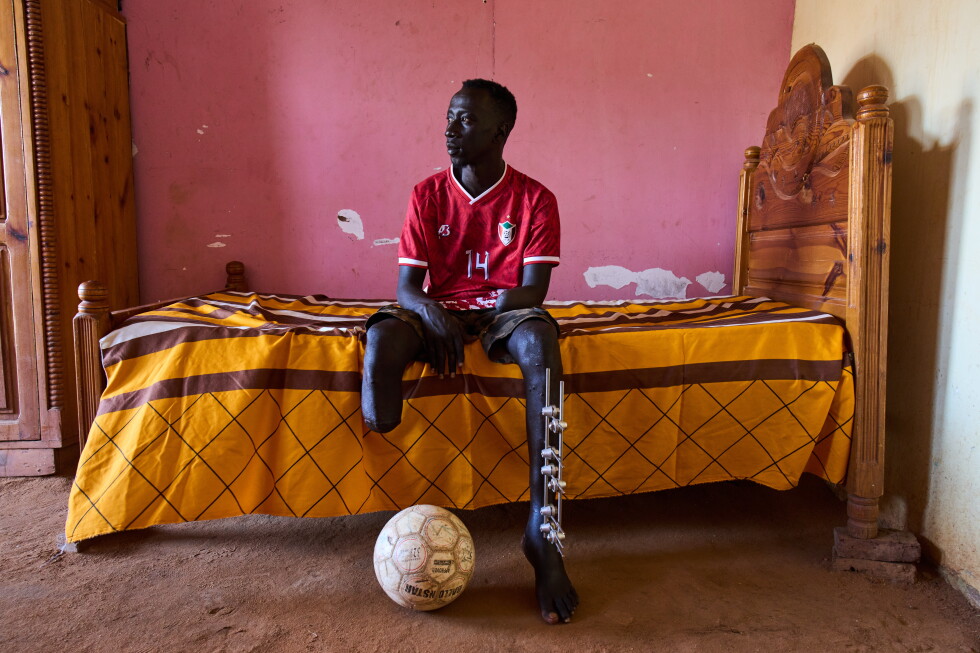
In a dramatic confrontation that underscores deep-seated tensions over Mediterranean migration routes, vessels affiliated with the Libyan coast guard opened live fire on a German humanitarian rescue ship just hours after the craft pulled 90 vulnerable migrants from a sinking overcrowded wooden vessel Monday, according to the non-profit operating the rescue ship.
标签: Africa
非洲
-

‘Total lack of respect’: Macron interrupts speaker to ask for silence
During an official conference held on Kenyan soil, French President Emmanuel Macron took an unexpected step to restore order, rising from his seat and interrupting the ongoing speaking program to demand that disruptive audience members stop talking.
The incident unfolded as persistent noise from parts of the audience made it difficult for the scheduled speaker to be heard by attendees. Frustrated by the continued commotion and what he framed as a failure to extend basic courtesy to the person at the podium, Macron publicly called out the disruption, stating that the lack of quiet amounted to a complete disregard for the speaker and the event itself. He emphasized that it was simply impossible for a speaker to deliver their remarks effectively when the audience was not willing to maintain a respectful level of silence.
The conference, which formed part of Macron’s official visit to Kenya, was focused on deepening bilateral cooperation between France and the East African nation, covering issues ranging from development partnership to climate action. The unexpected interruption drew immediate attention from other attendees and observers, highlighting the friction that can arise between diplomatic protocol and on-the-ground event dynamics during high-profile international visits.
-

South Africa to establish impeachment committee after president’s cash scandal is revived
Four years after a secret cash theft at President Cyril Ramaphosa’s private game ranch sparked allegations of serious presidential misconduct, South Africa’s national legislature has moved forward to launch a formal impeachment inquiry, complying with a landmark ruling from the country’s highest court that upends a 2021 attempt to shut down the investigation.
On Monday, parliament announced it would establish a multi-party committee to reexamine the long-running scandal, which centers on claims that Ramaphosa concealed the 2020 theft of more than $580,000 in undeclared cash stashed in a sofa at his farm, failed to report the incident to law enforcement properly, and orchestrated a secret off-the-books effort to recover the stolen funds.
The move comes in direct response to a Constitutional Court judgment issued last Friday, which struck down a 2022 parliamentary vote that blocked impeachment proceedings against the incumbent president as unconstitutional. At the time of that 2022 vote, Ramaphosa’s long-ruling African National Congress (ANC) held an outright majority in the 400-seat national legislature, allowing the party to quash the inquiry despite findings from an independent investigative panel that uncovered credible evidence of potential presidential wrongdoing. The top court ruled last week that procedural rules required the independent panel’s 2022 report to be referred to a dedicated impeachment committee for full review, rather than being dismissed outright by a plenary vote.
The scandal first erupted in 2022, when the former head of South Africa’s State Security Agency filed a formal police complaint accusing Ramaphosa of money laundering and multiple other offenses tied to the hidden cash. The theft itself had been kept secret for two years before the allegations became public. Ramaphosa has repeatedly denied any misconduct, asserting the cash was generated from the legitimate sale of buffalo to international buyers from his game ranch. But the independent 2022 report cast significant doubt on this explanation, noting evidence that the total amount of stolen cash may have been larger than the $580,000 Ramaphosa acknowledged, and documenting that the president used members of his official presidential protection unit to secretly track down the theft suspects without following official law enforcement protocols.
Under South Africa’s constitution, removing a sitting president via impeachment requires the support of at least two-thirds of the 400 sitting members of parliament. The political landscape has shifted dramatically since the 2022 vote: in the landmark 2024 general election, the ANC lost its decades-long parliamentary majority, and now governs as the largest partner in a 10-party national unity coalition. While Ramaphosa remains in a position to survive an impeachment vote if his ANC caucus unites behind him and secures backing from coalition partners, the new inquiry creates significant political uncertainty for his presidency.
In a statement issued shortly after last week’s Constitutional Court ruling, Ramaphosa’s office reaffirmed the president’s commitment to the rule of law, saying, “President Ramaphosa maintains that no person is above the law and that any allegations should be subjected to due process without fear, favor or prejudice.”
Parliament has not yet released a formal timeline for the impeachment committee’s investigation, which must complete its work before any full impeachment vote can be scheduled. For Ramaphosa, who campaigned for office in 2018 on a promise to root out widespread government corruption that flourished during the tenure of his predecessor Jacob Zuma, the renewed inquiry represents one of the most significant challenges to his political career, and has already badly dented the anti-corruption reputation he built upon entering office.
-

Warning that increase in shipping around South Africa to avoid Middle East could harm whales
Geopolitical instability unfolding across the Middle East has triggered an unexpected ecological crisis off South Africa’s south-western coast, where a sharp redirection of global shipping lanes has drastically raised the threat of fatal collisions between commercial vessels and endangered whale populations, leading marine scientists have warned.
The cascading security crisis in the Red Sea and Gulf of Aden, which began when Houthi rebels seized a British-flagged cargo ship off Yemen in 2023, has forced the majority of container and cargo vessels traveling between Asian and European markets to abandon the direct Suez Canal route and instead detour around the southern tip of Africa via the Cape of Good Hope. This shift has accelerated dramatically amid escalating regional tensions between the U.S.-Israel bloc and Iran, pushing shipping volumes far higher than pre-crisis levels.
New data from the International Monetary Fund’s PortWatch monitoring tool, cited by Agence France-Presse, shows that between March and April 2024, an average of 89 commercial vessels transited the Cape of Good Hope each week – nearly double the 44 vessels recorded in the same two-month period in 2023. This sudden doubling of maritime traffic has overlapped directly with critical feeding and migration habitats for multiple whale species native to the Western Cape region, creating a high-stakes risk scenario that scientists say is already unfolding.
Professor Els Vermeulen, chief scientist at the University of Pretoria’s renowned Whale Unit, recently presented her team’s groundbreaking research to the International Whaling Commission, outlining the growing danger. Vermeulen explained that her researchers mapped detailed distribution models for all major whale populations along the Western Cape coastline, then cross-referenced these habitats with the newly diverted shipping lanes to identify overlapping high-risk zones.
One of the biggest challenges to addressing the threat, Vermeulen noted, is the widespread phenomenon of “cryptic mortality” that hides the true scale of whale collisions. Most ship strikes occur far offshore in deep waters, and mortally wounded whales almost always sink to the ocean floor rather than washing ashore for recovery and documentation. This lack of onshore evidence makes it extremely difficult to collect accurate data on how many whales are killed each month by collisions, leaving scientists without a clear picture of just how severe the crisis has become.
Despite the data gap, Vermeulen has outlined actionable preliminary measures to reduce collision risk. She recommends minor adjustments to current shipping lanes to move traffic away from the densest whale habitats, as well as mandatory speed limits for vessels transiting the region during peak whale migration and feeding seasons. Still, Vermeulen emphasized that long-term, effective solutions will not be possible until more comprehensive population and collision data is collected.
To fill this critical knowledge gap, Vermeulen and her team are planning a systematic aerial and marine survey of offshore whale populations across the Western Cape. The ambitious project will require significant financial and logistical support, which the team is currently working to secure. Vermeulen told the BBC she has been encouraged by the widespread public and institutional interest in collaborating to address the crisis.
“It’s been nice to see how much people want to come together to solve this,” she said. “So now the onus is on the scientific community to come up with reliable data on the offshore whale population that can guide effective policy and industry action.”
-

Dozens of Nigerian fishermen feared dead after Chad air strikes on Boko Haram
A devastating incident in the volatile Lake Chad basin has left dozens of Nigerian fishermen feared killed after Chadian military forces launched retaliatory air raids targeting Boko Haram militants in the shared transboundary region, a top local fishing industry leader has confirmed to the BBC.
Abubakar Gamandi Usman, who heads the Lake Chad Basin Fisheries Association of Nigeria, confirmed that dozens of union members remain unaccounted for following the strikes, with his preliminary death estimate placing the toll at more than 40. While no casualties have been officially recovered or identified to date, Usman says two distinct fatal scenarios have emerged: some fishermen were directly hit by the air strikes, while others drowned when their overloaded vessels capsized as they fled the attack in panic.
Officials from both the Chadian and Nigerian governments have not yet released an official statement or responded to requests for comment on the civilian casualties. However, Chad’s presidency confirmed over the weekend that it had conducted intensive retaliatory air strikes against Boko Haram strongholds in the region. In a public announcement posted to its official Facebook page, the presidency explained the operation was launched in response to two unprovoked Boko Haram attacks targeting Chadian military outposts near Lake Chad on the previous Monday and Wednesday. Those militant assaults left at least 24 Chadian soldiers and two senior generals dead, according to local reports.
The Lake Chad basin is a vast ecologically and economically critical region of interconnected waterways and swampland, shared across the borders of Nigeria, Chad, Niger and Cameroon. For more than a decade, the area has served as a primary operational hub and stronghold for the Islamist extremist group Boko Haram, as well as its splinter rival faction, the Islamic State West Africa Province (ISWAP).
Usman explained to the BBC that after attacking Chadian security forces, Boko Haram fighters retreated to remote archipelago positions they use as bases — islands that are also permanently inhabited by artisanal fishing communities who depend on the lake for their livelihoods. When Chadian warplanes entered the airspace above the islands starting Friday, widespread chaos erupted, with both militants and local fishermen scrambling to evacuate the area at the same time.
Search and recovery operations for missing fishermen have proceeded at a frustratingly slow pace, Usman added, hampered by the lake’s extreme depth in the targeted area and critical logistical constraints. Most functioning canoes and watercraft in the region are controlled by Boko Haram, leaving local communities with limited resources to launch search missions. Even before the strike, Usman noted, Boko Haram effectively controls all access to the lake’s most productive fishing grounds, regulating transport of fishermen between their villages, fishing sites and regional fish markets, and collecting regular illegal taxes from working fishermen operating in the area.
Security analysts note that the Lake Chad region has seen a sharp escalation in militant activity in recent months, with a rising tide of attacks on regional security forces, mass kidnappings of local civilians, and cross-border raids on settled communities.
This is not the first time Chadian military counter-terrorism operations have been accused of causing mass civilian casualties among fishing communities. In October 2024, Chadian air strikes targeting Boko Haram positions on Lake Chad’s Tilma Island were also reported to have killed dozens of Nigerian fishermen who were working in the area. Nigerian federal authorities have so far not released any public comment on allegations that civilian fishermen were caught in the crossfire of this latest counter-terrorism operation.
-

France woos Anglophone Africa at a summit in Kenya
As France finalizes its full military withdrawal from West African nations, a move widely interpreted as a signal of its waning traditional influence across the African continent, Paris is launching a revised model of engagement with African nations at the two-day Africa Forward Summit kicking off Monday in Nairobi, Kenya. Co-hosted by France and Kenya, this gathering marks the first time France has held such a major Africa-focused summit in an English-speaking African nation, representing a deliberate strategic shift toward expanding ties with non-Francophone countries under a new framework billed as a ‘partnership of equals’.
For decades, France maintained a system of economic, political, and military dominance over its former African colonies, a network of influence widely known as Françafrique that included stationing thousands of French troops across the region. Growing criticism from African leaders and opposition movements, who decried the approach as condescending and overly interventionist, eventually forced Paris to pull back the bulk of its deployed forces from West Africa and the Sahel. Today, Paris is seeking to reframe its role on the continent through this new policy direction, with the recently ratified Kenya-France Defense Cooperation Agreement laying out the roadmap for its future engagement.
More than 30 heads of state and government from across Africa, including delegations from longstanding Francophone nations, are in attendance for the summit. Arriving in Kenya a day ahead of the summit’s official opening Sunday, French President Emmanuel Macron sought to soften tensions with West African leaders who pushed for France’s military exit, noting that while Paris may hold policy disagreements with some West African governments, ‘never disagrees with the people.’
The new bilateral defense pact with Kenya, signed in October 2024 by Kenyan Defense Minister Soipan Tuya and French Ambassador to Kenya Arnaud Suquet, was ratified by Kenya’s national parliament on April 8 this year. That same month, Kenya also moved to ratify similar defense cooperation agreements with the Czech Republic, China, and Italy, part of the East African nation’s broader strategy of expanding multilateral security ties at a moment when many Sahel nations are expelling foreign military presences to reclaim full national sovereignty.
The defense agreement has not been without controversy, however. Kenyan civil society organizations have raised sharp criticism of provisions that grant French troops broad immunity from domestic Kenyan law for on-duty offenses, a provision that echoes controversial terms in a decades-long defense pact with the United Kingdom that has left multiple serious crimes committed by British personnel against Kenyan civilians difficult to prosecute. Most notably, the 2012 murder of 21-year-old Kenyan woman Agnes Wanjiru, who was last seen in the company of a British soldier near a UK training base in central Kenya’s Nanyuki, and the 2021 deadly Lolldaiga ranch fire linked to British military training activities, have become high-profile examples of the harms caused by these broad immunity clauses. It took more than a decade for Kenyan courts to order the extradition of the British soldier charged in Wanjiru’s killing, a process delayed for years by the legal protections in the UK-Kenya defense pact.
Defending the new agreement and Kenya’s broader strategy of security partnerships, Nelson Koech, chair of Kenya’s parliamentary defense committee, emphasized that the pacts with advanced militaries deliver tangible benefits: access to specialized military training and critical intelligence-sharing opportunities that will strengthen Kenya’s own national defense capabilities. Koech rejected claims that the agreements amount to a ‘surrender of sovereignty’, noting that updated provisions in the new pacts require foreign personnel to face Kenyan prosecution for serious violent offenses including murder. Even so, the immunity provision for most on-duty offenses remains unchanged, mirroring the controversial structure of the UK agreement. Roughly 800 French military personnel arrived in Kenya aboard a French navy ship one month ahead of the summit, the first deployment under the new defense cooperation framework.
-

Changing geopolitics are in focus as France’s Macron kicks off Kenya visit for an Africa summit
On a Sunday morning in Nairobi, Kenya, French President Emmanuel Macron touched down to kick off a high-stakes diplomatic visit, setting the stage for the first-ever Africa Forward Summit — a landmark event designed to introduce France’s long-teased revised policy approach to the African continent. After decades of criticism over its colonial-era paternalistic influence across the region, Paris is positioning this summit as a formal break from the past, rebranding its relationship with African nations as one between equal partners rather than a dominant power and subordinate states.
The 2024 summit carries historic weight: it marks the first time this kind of major France-led African diplomatic gathering has been hosted in an Anglophone nation, a deliberate shift that comes on the heels of France’s full withdrawal of all military troops from West Africa completed in 2023, a move that followed years of steadily waning French political and military influence across the Sahel region. Analysts and African leaders alike are closely watching the summit to see how Macron will frame this exit and what commitments France will make to its revised vision for the continent.
For nearly 60 years after most former French African colonies gained independence, Paris maintained a system of economic, political, and military dominance across the region known colloquially as Françafrique. This system included the permanent stationing of thousands of French troops across multiple West and Central African states, a policy that drew repeated backlash from sitting African leaders and opposition figures alike. Critics across the continent have long decried Françafrique as demeaning and overly heavy-handed, arguing that it undermined African sovereignty and perpetuated neocolonial power structures.
Kenyan President William Ruto, Macron’s host for the summit, has framed the gathering as a potential turning point for Franco-African relations. Speaking ahead of the two-day event, which is scheduled to begin Monday and expects to welcome 30 sitting heads of state from across the continent, Ruto noted that both he and Macron share the goal of building a more equitable collaborative partnership.
Addressing shifting global geopolitical dynamics, Macron struck a conciliatory tone, acknowledging that while France may hold policy disagreements with some West African governments, it maintains unwavering respect for African populations. Ruto, for his part, pushed back against narratives that Kenya is aligning with either Western or Eastern power blocs, stating that Nairobi’s diplomatic priority is pursuing progressive, mutually beneficial relationships with all global partners, regardless of geographic or ideological orientation.
Not all reaction to the summit and its Kenyan host venue has been positive, however. Kalonzo Musyoka, leader of Kenya’s main opposition bloc, has publicly condemned the decision to host the gathering in Nairobi. He argued that the country currently faces a deepening democratic crisis ahead of the 2027 national general election, noting what he calls escalating attacks on opposition voices, widespread human rights violations, and deep political divisions that undermine any claim of national cohesion. “There will be an air of pretense that we are a cohesive nation,” Musyoka said, adding “We know that is far from the truth.”
On the first day of Macron’s visit, Kenya and France signed 11 new bilateral agreements covering cross-sector investment partnerships. Key projects include an ambitious new nuclear energy facility, upgrades to national transport infrastructure, and expanded investment in sustainable agricultural development. Macron emphasized that these investments are aligned with the summit’s core focus: supporting innovation across the continent and investing in Africa’s rapidly growing young population by strengthening human capital.
-

Bread dresses and gowns inspired by cathedrals at Nigeria fashion spectacle
Widely hailed as Africa’s most prestigious red-carpet gathering for film and fashion, the 12th edition of the Africa Magic Viewers’ Choice Awards (AMVCA) touched down in Lagos, Nigeria, last weekend, turning a traditional awards ceremony into a global showcase of African creative excellence. Hosted at the iconic Eko Hotel and Suites, the annual event balances two core missions: honoring standout achievements in African film, television, and digital storytelling, while giving creators and celebrities a high-profile platform to test boundary-pushing fashion designs that spark conversation across the continent. This year, the red carpet leaned into unapologetic, over-the-top creativity, with many stars bringing large entourages to help navigate crowds of photographers and screaming fans while maneuvering oversized, elaborate ensembles.
One of the most viral looks of the night came from reality TV personality Queen Mercy Atang, who turned heads in a custom gown crafted entirely from more than 500 loaves of bread. Flanked by two attendants carrying additional bread trays and a team of assistants to support the heavy outfit as she walked the carpet, Atang admitted the design left her barely able to move freely — but explained the look was a deliberate marketing move for her own bread-baking business, not just a stunt for attention. “What better stage to promote my brand than the AMVCA?” she told reporters. The design, created by renowned Nigerian designer Toyin Lawani of Tiannah’s Empire, launched a new trend Lawani termed “everyone wear your business,” and quickly dominated social media discussion around the event. While some fans praised the clever entrepreneurial branding, others criticized the design as a waste of food — a claim Atang quickly rejected.
Ghanaian fashion icon Nana Akua Addo, long known for her dramatic AMVCA appearances, delivered another showstopping moment with a structured silver gown inspired by Germany’s Cologne Cathedral. The architectural design featured hand-painted details mimicking cathedral windows, sweeping cathedral-shaped extensions, and coordinated silver accessories, with Addo’s team on hand to help carry the largest sections of the piece. Designer Abasswoman revealed the creative process began back in November 2025, with final touches completed just 48 hours before the ceremony, built to mirror the centuries-old landmark’s grandeur and meticulous craftsmanship.
Nigerian actress Uche Montana, who also took home the night’s Trailblazer Award — an honor recognizing rising talents making unique contributions to African entertainment — arrived in a fiery red-and-gold feathered ensemble designed to symbolize “fire and the rebirth of the phoenix.” Montana shared that the look had been in development since the start of 2026, and that she invested a significant personal sum to bring the vision to life, pushing back against the common misconception that all celebrity red-carpet looks are provided for free by brands. “So much financial and emotional work goes into creating these looks,” she explained.
Beyond the red carpet spectacle, the night delivered emotional and historic moments that celebrated the very best of African storytelling. Bucci Franklin earned the award for Best Supporting Actor for his turn as Oboz, a brash, unapologetically loyal cybercrime boss in the feature *To Kill a Monkey*, a role deeply rooted in the street culture of Nigeria’s Benin region. To prepare for the part, Franklin immersed himself in local influencers, music, and dialect, a commitment that earned widespread praise from audiences for its raw realism. In a moving acceptance speech, Franklin dedicated the win to his mother, who passed away just one week before the film’s premiere. *To Kill a Monkey* also took home the award for Best Cinematography.
Linda Ejiofor made AMVCA history as the first performer ever to win two of the ceremony’s biggest acting awards in a single night: Best Lead Actress for *The Serpent’s Gift* and Best Supporting Actress for *The Herd*. The star told reporters she had only dared to hope for one win, but her husband had predicted the double victory ahead of the ceremony. She also thanked her mother, who worked with her to refine her Igbo language delivery for her roles until she felt fully confident in the performances.
The critically acclaimed drama *My Father’s Shadow* capped its historic awards run by taking home three of the night’s top honors: Best Movie, Best Director, and Best Writing, for filmmaker Akinola Davies Jr. The project, which explores themes of paternal love, estrangement, and grief, made history earlier this year as the first Nigerian film ever selected for the official lineup at the Cannes Film Festival, and has already screened in theaters across Nigeria and the United Kingdom. It beat out fan favorites including *The Herd*, *The Serpent’s Gift*, and *Gingerrr* to claim the top prize.
Additional acting honors went to Uzor Arukwe, who took home Best Lead Actor for *Colours of Fire*, while industry veterans Sola Sobowale and Kanayo O. Kanayo received Lifetime Achievement Awards for their decades-long contributions to Nollywood. Kanayo O. Kanayo leaned into his iconic on-screen persona as a stylish, powerful godfather for his red-carpet look, describing the tailored ensemble as a celebration of “old money godfatherism and tailored mafia” style, styled by Prinz Innovation.
Many stars used the red carpet to celebrate African cultural heritage, with Nollywood favorite Stan Nze — known for his work centering Igbo culture — stepping out in a sleek black ensemble paired with his signature traditional engraved horse-hide hand fan. Reality star and actor Tobi Bakre channeled Yoruba royalty in a handcrafted agbada by designers Deji and Kola, paired with a custom brass ceremonial staff. Actress and producer Monica Friday used her look to make a political statement, wearing a purple ball gown embroidered with the flags of seven nations including Iran, which she described as a tribute to conflict zones around the world and a call for global peace.
Even without an official best-dressed category this year, fan favorite Osas Ighodaro — a multiple-time winner of the award — delivered one of the most anticipated looks of the night, stepping out in a flowing silver corset gown by Veekee James encrusted with hundreds of crystals and gemstones. Emerging creators from across the continent also brought bold creativity to the red carpet: Angolan actress Lesliana Pereira wowed in a floor-length black gown featuring a half-butterfly wing embellished with shimmering gold and silver stones, while reality star OJ Posharella showcased her own design work in a multi-layered colorful look paired with an oversized statement bow perched on her head.
As the 12th AMVCA draws to a close, the event once again solidified its reputation as Africa’s leading cultural gathering, highlighting both the growing global influence of Nollywood and the unmatched creativity of African fashion designers.
-

Hantavirus-stricken cruise ship arrives at Tenerife in Spain’s Canary Islands
TENERIFE, Spain — A cruise ship impacted by a hantavirus outbreak, carrying over 140 passengers and crew members, has safely reached the port of Tenerife, the largest island in Spain’s Canary Islands archipelago located off the western coast of Africa. Preparations are now underway for a controlled disembarkation process for passengers and a portion of the vessel’s crew.
According to joint statements from the World Health Organization (WHO), Spanish national and local health authorities, and the ship’s operator Oceanwide Expeditions, none of the people currently remaining on board the MV Hondius are exhibiting any clinical signs of hantavirus infection at this time. The outbreak has already claimed three lives, and five former passengers who departed the vessel at an earlier stage of the journey have tested positive for the pathogen, which is known to cause severe, potentially fatal respiratory or renal illness in humans.
High-level officials including WHO Director-General Tedros Adhanom Ghebreyesus, alongside Spain’s Minister of Health and Minister of the Interior, were on site to oversee the coordinated evacuation operation. Spanish authorities have emphasized strict biosecurity protocols to prevent community spread: all disembarking passengers and crew will remain completely isolated from the local Tenerife population at all times. No one will be allowed to leave the ship until chartered evacuation flights are fully prepared to transport each individual directly back to their home countries.
-

Rwanda-backed rebels accuse the US of falling short as a peace mediator in Congo’s conflict
In a scathing rebuke of Washington’s role as a peace broker in the Democratic Republic of the Congo, a coalition of Congolese rebels led by the Congo River Alliance has accused the Trump administration of failing to uphold impartial mediation amid ongoing bloodshed in the country’s mineral-rich eastern region. The open criticism, delivered via a formal letter addressed to U.S. Secretary of State Marco Rubio and obtained by the Associated Press on Saturday, comes months after a high-profile U.S.-brokered peace agreement between the DRC and neighboring Rwanda, a deal the Trump administration has repeatedly touted as a landmark diplomatic success.
The 2024 accord, hailed by then-U.S. President Donald Trump after negotiations with Congolese President Felix Tshisekedi and Rwandan President Paul Kagame, was designed not only to end decades of cyclic conflict in eastern Congo but also to lay the groundwork for a trilateral economic partnership that would open the region’s untapped rare earth mineral reserves to American government access and private sector investment. Despite Trump’s repeated claims of a diplomatic win, active hostilities have continued unabated across eastern Congo, with armed factions and government forces trading blame for repeated violations of the ceasefire terms.
The rebel coalition, which includes the Rwanda-backed M23 movement — the most powerful armed group operating in eastern Congo — argues that Washington has consistently turned a blind eye to alleged peace commitment violations by the Tshisekedi administration in Kinshasa, while disproportionately targeting opponents of the Congolese government and Rwandan entities with punitive sanctions. Last week, the U.S. imposed new sanctions on former Congolese President Joseph Kabila, accusing him of funding and supporting rebel activities; earlier this year, Washington also blacklisted Rwanda’s military and four senior Rwandan officials over their documented support for M23. The letter charges that no comparable punitive measures or even public warnings have been issued against Tshisekedi’s government for its own breaches of the peace deal.
“Your administration has neither imposed any sanctions nor issued even a simple warning to the leaders in Kinshasa, whose intransigent and arrogant attitude calls into question the impartiality and neutrality of the American Facilitator/Mediator,” the letter reads. It adds that the lack of consistent corrective action undermines confidence in U.S. mediation, noting that “the absence of clearly identifiable corrective measures fuels questions regarding the facilitation’s ability to preserve, over time, the requirements of impartiality and neutrality that are essential to its credibility.”
Long-standing instability has plagued eastern Congo for generations, driven in large part by competition over control of the region’s vast deposits of critical minerals that underpin global technology and clean energy supply chains. More than 100 armed factions operate in the area, with M23 emerging as the most militarily capable. U.N. estimates show the group has grown from just a few hundred fighters in 2021 to roughly 6,500 today, a rapid expansion that the DRC government, U.S., and United Nations experts attribute to ongoing military support from Rwanda — a claim Rwanda has repeatedly denied. M23 launched a major offensive across eastern Congo in early 2024, seizing the regional capital Goma and other key population centers before the U.S.-brokered deal was reached.
Independent regional conflict experts agree that while U.S. mediation reduced cross-border tensions between the DRC and Rwanda, it has failed to curb the escalating ground conflict. “While U.S. mediation has helped cool regional tension it has not stopped the escalating fighting on the ground,” Kristof Titeca, a University of Antwerp professor specializing in Central African governance and conflict, told the AP. The rebel letter’s public criticism adds new pressure on the Trump administration’s diplomatic efforts in the Great Lakes region, at a time when Washington is pushing to advance American economic interests in the region’s critical mineral sector. The Associated Press contributed reporting from Bonn, Germany, for this story.