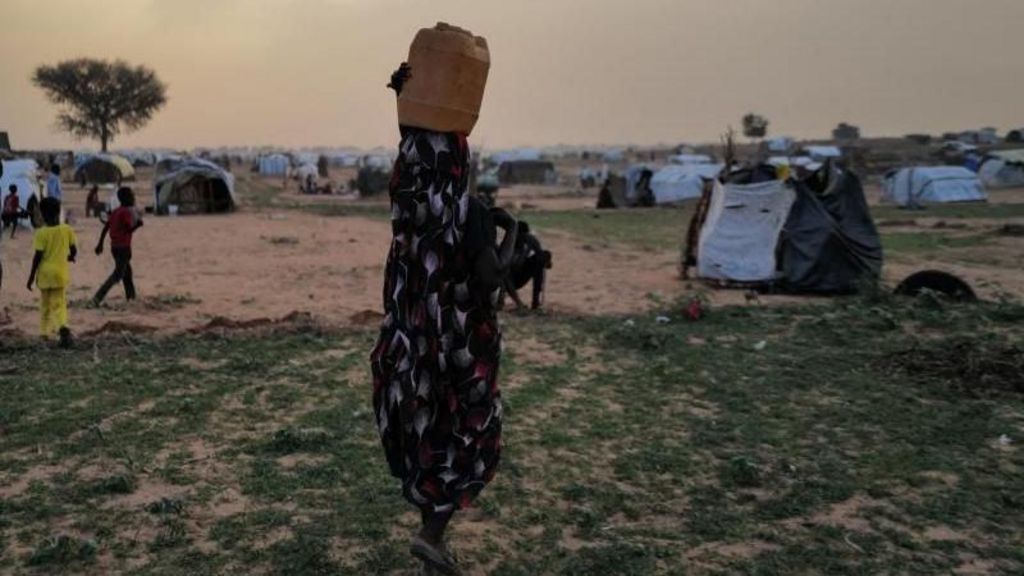
Three years into Sudan’s brutal civil conflict between the national army and the paramilitary Rapid Support Forces (RSF), the world is confronting staggering new evidence of human suffering and strategic escalation that has pushed the country into the worst humanitarian crisis on the globe today. A newly released report from the United Nations Human Rights Office has laid bare an alarming, widespread pattern of violence: sexual assault is being systematically deployed as a weapon of war to terrorize civilian populations, at a scale never before documented in the country’s recent history. The UN’s verified data records 546 confirmed incidents of conflict-related sexual violence, including gang rape and sexual slavery, affecting at least 838 people across Sudan – 539 women, 284 girls, 8 men and 7 boys. Senior UN officials emphasize these numbers represent only a fraction of the true harm, noting pervasive under-reporting driven by fear and restricted access to unsafe areas has obscured the full scope of the crisis. The report attributes the vast majority of verified cases to RSF fighters and their allied militias, though it also documents allegations of sexual violence committed by army personnel and their allies. “This is a war crime and, if committed as part of a widespread or systematic attack, a crime against humanity,” UN High Commissioner for Human Rights Volker Türk said of the systemic use of sexual violence. Neither the RSF nor the Sudanese army has issued a public response to the latest report, but both groups have consistently denied similar allegations of human rights abuses since the conflict began. Beyond the revelations of sexual violence, the international community is sounding urgent alarms over an imminent threat to the strategic city of el-Obeid, where intelligence indicates the RSF is preparing a full-scale ground offensive to seize control of the key hub. Seven Western nations – the United Kingdom, France, Germany, Ireland, Italy, the Netherlands and Norway – have issued a joint statement calling for an immediate end to hostilities in el-Obeid, warning the city of more than half a million residents (including 200,000 internally displaced people who fled violence elsewhere) is on the “precipice of atrocity”. UK Foreign Secretary Yvette Cooper outlined the escalating threats facing the city: the RSF has already launched drone strikes targeting civilian infrastructure, blocked critical supply routes, and cut off access to basic necessities including clean water, food and healthcare for hundreds of thousands of trapped civilians. “There are now credible signs of an imminent offensive. This is a critical moment, and the international community must act,” the joint statement read. The Western powers explicitly urged the global community to act to avoid a repeat of the mass atrocities committed last year when RSF forces captured the city of el-Fasher in northern Darfur. A February UN report documented that more than 6,000 people were killed in just three days of fighting after RSF seized control of el-Fasher, and international assessors have concluded the killings bear the “hallmarks of genocide”. For displaced residents trapped in el-Obeid, the impending threat has created a state of perpetual terror. “As displaced people we feel we have come here only to die. We are afraid,” one displaced woman told BBC Arabic’s Sudan Lifeline programme. “We arrived here and this has become our fate. We cannot eat. We cannot drink. Where can we go? Where do we go from here?” Another resident described constant fear of drone attacks, adding, “We are terrified and feel psychologically and physically insecure.” Geopolitically, el-Obeid holds enormous strategic importance for both warring parties: it sits at the boundary between RSF-held territories in western Sudan and army-held regions in the east, and lies within Sudan’s major oil-producing Kordofan region. Analysts widely agree that whichever faction controls el-Obeid and the broader Kordofan region will effectively control Sudan’s national oil supply and a large swathe of the country’s territory. The ongoing civil conflict, which erupted in 2023 after a bitter power-sharing collapse between the army and RSF, has already triggered a humanitarian catastrophe unmatched globally. International aid agencies confirm that more than 11 million Sudanese people have been forced to flee their homes, and 28 million – more than half the country’s population – face acute food insecurity and hunger.