标签: Africa

非洲

  • Mali accuses military officers of working with jihadis to carry out attacks against government

    Mali accuses military officers of working with jihadis to carry out attacks against government

    In a stunning development that has deepened the security crisis across conflict-wracked Mali, Malian authorities confirmed late Friday that active and recently dismissed military officers colluded with jihadi and separatist insurgents to carry out the largest coordinated offensive the country has seen in more than 10 years. This wave of attacks has already forced government and allied Russian forces to retreat from strategic territory and claimed the life of the nation’s defense minister.

    The string of unprecedented assaults, which opened with near-simultaneous strikes targeting multiple population centers including Bamako’s main international airport, was launched earlier this month through a rare partnership between Jama’at Nusrat al-Islam wal-Muslimin (JNIM), an al-Qaida-affiliated jihadi group, and the Azawad Liberation Front (FLA), a separatist movement fighting for northern Mali’s independence. Fighters carried out the raids using motorcycles and heavy trucks, striking at least 10 separate locations across the country in coordinated action.

    By the start of this week, the offensive delivered a major blow to Mali’s ruling military junta, which seized power in a 2020 coup: insurgents seized control of Kidal, a major northern city, in the retreat that followed the attacks. The violence also killed Malian Defense Minister Sadio Camara, marking one of the highest-profile casualties of the Sahel’s long-running extremist conflict.

    On Friday, separatist commander Achafghi Ag Bouhanda announced in a verified online video that FLA fighters had captured another critical strategic site: the military camp in Tessalit, a northern town located near the Algerian border and adjacent to a key regional airport. The announcement came after Malian army troops and fighters from Russia’s Africa Corps withdrew from the camp ahead of the separatist advance. The Associated Press has not been able to independently verify conditions on the ground at the camp, and Malian officials have not yet issued an official response to requests for comment on the fall of Tessalit.

    The most shocking revelation of the unfolding crisis came via an official statement read on Malian state television from the public prosecutor of Bamako’s Military Court. Investigations into the coordinated attacks have uncovered “solid evidence regarding the complicity of certain military personnel” – including both currently serving and recently discharged officers – in the assault, the prosecutor confirmed. The statement added that these officers directly participated in “the planning, coordination, and execution” of the attacks, and also named exiled prominent opposition politician Oumar Mariko as a co-conspirator in the plot.

    The collapse of government control across swathes of northern Mali comes as the capital Bamako faces mounting pressure from insurgent blockades. JNIM this week announced a full blockade of all four major road arteries leading into Bamako, expanding on a partial fuel and supply blockade that militants imposed on the city late last year. Traffic into the capital was severely disrupted on Friday, with multiple confirmed militant roadblocks along major routes. The persistent instability and blockades have already forced multiple travel agencies to suspend operations, leaving residents facing dangerous and restricted travel across the country. “These days, traveling by road is a dangerous undertaking,” said Aminata Traoré, a frequent traveler between Bamako and the southern Sikasso region.

    Mali’s junta leader Assimi Goita has pledged to press forward with counteroffensives to retake lost territory. “Military operations will continue until the armed groups involved have been completely neutralized and security has been sustainably restored throughout the country,” Goita said earlier this week. The Sahel region, a vast expanse of land south of the Sahara Desert spanning multiple West African nations, has become the global epicenter of violent extremist activity in recent years, with jihadi groups expanding their control across remote border areas as national governments struggle to contain the insurgency.

  • Athletics won’t strangle super-shoe innovation – Coe

    Athletics won’t strangle super-shoe innovation – Coe

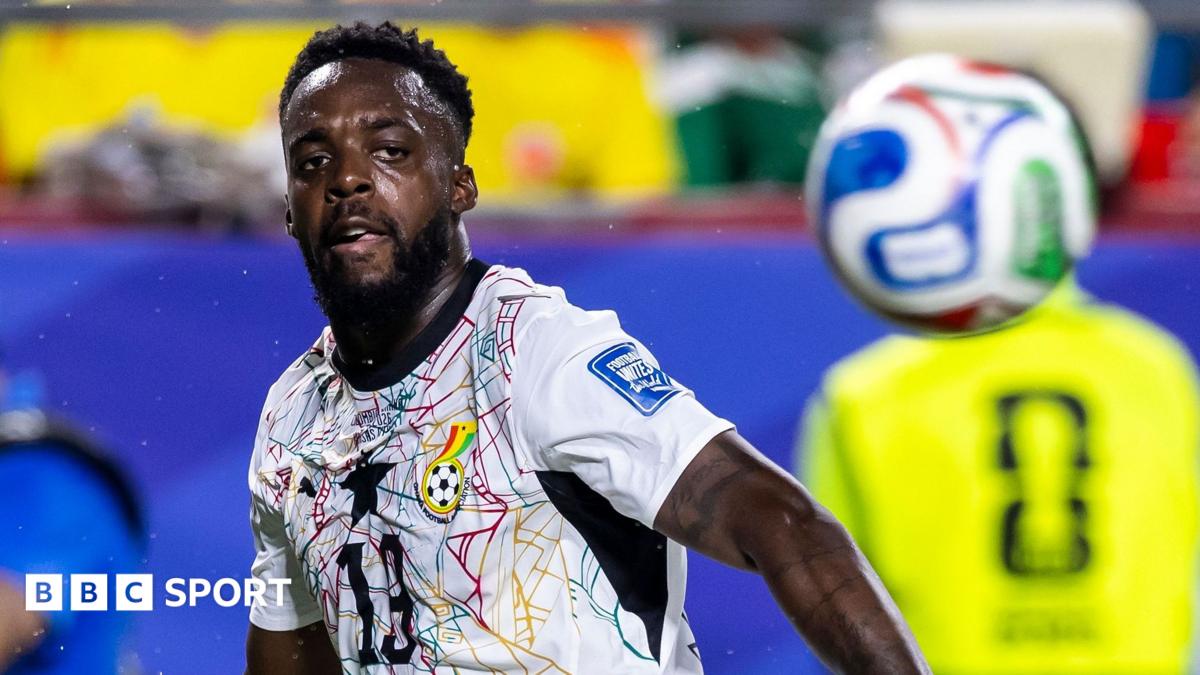
    The world of long-distance running has been sent into a frenzy of debate following one of the most groundbreaking achievements in the sport’s modern history: 31-year-old Kenyan runner Sabastian Sawe becoming the first competitive athlete to complete a marathon in under two hours at the 2025 London Marathon. Sawe crossed the finish line with a time of 1 hour 59 minutes 30 seconds, breaking a barrier that experts and athletes alike once viewed as an unbreakable limit of human physical endurance. Not far behind him, Ethiopian runner Yomif Kejelcha also finished under the two-hour mark, just 10 seconds adrift of Sawe, while women’s winner Tigst Assefa set a new women’s marathon world record on the same day. All three athletes shared one common detail that has sparked global conversation: they all wore the new Adidas Adizero Adios Pro Evo 3, the latest iteration of the controversial “super shoe” technology that has redefined elite marathoning over the past decade.

    Speaking to BBC Sport Africa on the sidelines of the upcoming World Relays event in Gaborone, Botswana, World Athletics President Sebastian Coe pushed back against calls to restrict or ban advanced shoe technology, arguing that stifling innovation has never benefited any industry or society. “I don’t think any society, any civilisation, any sector of the economy has been served well if you try to strangle innovation,” Coe stated. He clarified that World Athletics’ role sits at the intersection of enabling technological progress and upholding fair competition, noting that the governing body carries a clear responsibility to regulate the space to prevent unfair advantages.

    The Adidas super shoe worn by the London podium finishers marks a new milestone in footwear innovation: it is the first elite racing shoe to weigh less than 100 grams, lighter than a standard bar of soap. Adidas claims the proprietary technology built into the shoe improves running efficiency by 1.6%, a small but potentially decisive margin in a race decided by seconds. Sawe himself has praised the design, calling it the best shoe he has ever raced in, highlighting its exceptional lightness and stability. However, cutting-edge technology comes at a steep price: consumers looking to purchase the shoe will pay roughly $500 for a pair, putting it out of reach for many recreational runners.

    Coe pushed back against the narrative that super shoes are the primary driver of recent record-breaking performances, arguing that athlete mentality, physical conditioning, high-level coaching and federation support programs remain the most critical factors behind improved results. Sawe’s own preparation backs this framing: he cut more than two minutes off his personal best at the London race, a gain he attributes largely to his rigorous training routine of 200 kilometers per week at altitude, as well as improved race fuelling strategies that saw him consume 115 grams of carbohydrates per hour during the event, after a pre-race breakfast of just two slices of bread with honey and tea. After returning to his home country of Kenya following his historic win, Sawe gifted one of his record-setting shoes to Kenyan President William Ruto during jubilant homecoming celebrations in Nairobi.

    The growing prevalence of super shoes has forced World Athletics to evolve its regulatory framework over the past decade. The first wave of widespread debate around the technology emerged at the 2016 Rio Olympics, where all three men’s marathon medallists wore prototype versions of the Nike Vaporfly 4%, which claimed a 4% improvement in running performance. By 2020, World Athletics introduced formal rules limiting sole thickness, carbon-fibre plate design, and requiring all shoe technology to be commercially available, in an effort to prevent sportswear brands from gaining an unfair edge through unapproved custom designs.

    As major brands continue to push the boundaries of current regulations, Coe confirmed that the rulebook will continue to evolve alongside technology. He described the regulatory process as an inherently evolutionary journey, noting that World Athletics only recently established a formal evaluation system for new footwear designs. “We work closely with the athletes, the coaches, the shoe companies. We don’t want them to go off and spend hundreds of millions of dollars on shoes that we’re going to find illegal. So there is a balance,” Coe explained. He also highlighted an often-overlooked benefit of advanced footwear design: much of the research that improves performance also leads to innovations in injury prevention, allowing athletes to train longer, compete longer, and sustain longer careers in the sport — an outcome Coe described as an unambiguous positive.

    Reflecting on his own legendary career as a two-time Olympic 1500-meter champion, Coe joked that even with modern super shoes, he would not have been capable of running a sub-two-hour marathon, though he acknowledged the technology would have helped him clock a faster time in his signature 800-meter event.

    Critics of super shoe technology argue that the issue goes beyond simple regulation, warning that excessive reliance on engineering could erode the core identity of distance running, turning record performances into a victory for lab technology rather than human grit and endurance. Coe acknowledged these concerns but said he believes World Athletics has struck the right balance so far. “Life is always about balances,” he said. “I think at World Athletics we have technical teams that are always going to be conscious of where that balance is. At the moment, I think we’re the right side of it.”

  • China has now dropped tariffs on imports from every African country except 1

    China has now dropped tariffs on imports from every African country except 1

    CAPE TOWN, SOUTH AFRICA – A landmark Chinese trade policy that grants duty-free market access to Africa’s largest economies for a two-year period officially entered into force on Friday, launching at a moment of stark contrast with the United States’ ongoing push for protectionist trade measures under former President Donald Trump.

    The new tariff exemption framework covers the 20 biggest economies across the African continent, including regional powerhouses South Africa, Egypt, Nigeria, Algeria and Kenya. Prior to this update, China had already eliminated import tariffs for 33 low-income African nations, bringing the total number of African countries eligible for full tariff-free treatment for their exports to 53 out of the continent’s 54 sovereign states. The sole exception is the small southern African kingdom of Eswatini, which remains the only African country to maintain official diplomatic relations with Taiwan, a self-governing island that China claims as part of its own territory.

    Chinese authorities frame the policy as a concrete step toward shared bilateral growth. The Customs Tariff Commission of China’s State Council emphasized that the initiative will advance mutually beneficial development between China and African trading partners. According to China’s state-run Xinhua News Agency, the first shipment to benefit from the new rules cleared customs in the southern Chinese tech hub of Shenzhen in the early hours of Friday: a 24-metric-ton consignment of fresh apples sourced from South African orchards.

    China’s Ministry of Commerce noted that the policy will deliver particular gains for high-demand African agricultural exports that previously faced import duties ranging from 8% to 30%. These include cocoa from top global producers Ivory Coast and Ghana, coffee and avocados from Kenya, and citrus fruits and wine from South Africa. Combined, Ivory Coast and Ghana control more than half of the world’s total cocoa supply, while South Africa ranks as one of the world’s top exporters of citrus produce.

    The policy rollout comes as many leading African economies have been actively diversifying their export markets away from the U.S., after the Trump administration implemented steep reciprocal tariffs on African goods roughly a year ago. At the height of those measures, South Africa, Africa’s most industrialized economy, faced tariffs as high as 30%, while some other African nations saw rates exceed 40%.

    “South Africa looks forward to working with China in a friendly, pragmatic and flexible manner,” South African Trade Minister Parks Tau stated during bilateral trade talks held in Beijing this past February. Though the U.S. Supreme Court ruled Trump’s broad global tariffs unconstitutional and struck them down in the same month, the former president quickly announced that his administration held “very powerful alternatives” and immediately enacted new temporary import taxes to replace the invalidated measures.

    Today, China already holds the position of Africa’s largest single trade partner, at a time when the continent’s demographic footprint is expanding rapidly: the United Nations projects Africa’s current population of 1.5 billion will nearly double to 2.5 billion by 2050, accounting for more than a quarter of the global population at that time.

    Despite Beijing’s framing of the deal as a win-win for development, analysts point to persistent structural imbalances in the China-Africa trade relationship, alongside billions of dollars in outstanding African sovereign debt owed to Beijing. In 2025, total bilateral trade hit a record high of $348 billion. However, Chinese exports to Africa grew roughly 25% to reach $225 billion over the period, while African exports to China rose only around 5% to $123 billion, widening the existing trade deficit for African nations.

    For decades, the core of the trade relationship has centered on China importing raw materials from Africa and exporting finished manufactured goods back to the continent. Thierry Pairault, a leading China-Africa researcher at France’s National Center for Scientific Research, points out that most African raw material exports – including crude oil and industrial minerals – already enjoyed tariff-free access to Chinese markets before the new policy. While Pairault acknowledges the policy will deliver modest benefits for African agricultural exporters, he argues its broader geopolitical purpose is deliberate.

    “Xi Jinping is positioning China as the antithesis of Western protectionism. This gesture is intended to appeal to both African public opinion and global markets,” Pairault explained in an analysis published by the China Global South Project, a research initiative focused on China’s engagement with low and middle-income nations. Even so, he added, the policy “only applies where it costs China almost nothing.”

  • US imposes sanctions on DR Congo ex-President Kabila alleging rebel support

    US imposes sanctions on DR Congo ex-President Kabila alleging rebel support

    The United States has announced wide-ranging sanctions against former Democratic Republic of Congo (DRC) President Joseph Kabila, leveling serious accusations that the long-time former leader has provided direct support to the M23 rebel group active in eastern DRC.

    According to U.S. officials, Kabila has delivered critical financial backing to the insurgent group, encouraged defections from the official Congolese national army, and even plotted to launch coordinated attacks against Congolese military forces from his base outside the country. The 54-year-old ex-president, who held the DRC’s highest office for 18 years starting in 2001, has not issued any public response after the BBC reached out for comment on the new sanctions. Kabila’s current location remains unconfirmed publicly, though he entered self-imposed exile in South Africa in 2023; he was last spotted publicly one year ago in Goma, a major eastern DRC city that is currently controlled by M23 forces.

    This latest punitive action by Washington is framed as a key component of its broader efforts to uphold the 2024 peace deal between DRC and neighboring Rwanda that the U.S. helped broker. The U.S. has long alleged that Rwanda provides military and logistical support to M23, a claim that Kigali has repeatedly denied despite overwhelming independent evidence to the contrary. Rwandan officials maintain that any military presence they have in the border region is strictly a defensive measure to counter cross-border security threats from armed groups based in eastern DRC. Washington previously sanctioned top Rwandan army commanders over their ties to M23 back in March 2025.

    In its official statement announcing the sanctions, the U.S. Treasury Department claims Kabila’s ultimate goal is to destabilize the current DRC government based in Kinshasa, clearing the way for an allied opposition candidate to seize power and restore his political control over the country. Under the newly imposed measures, all assets owned by Kabila that fall under U.S. jurisdiction are immediately frozen, and any U.S. citizen or registered company is prohibited from conducting financial or commercial activity with the former president. Global financial institutions and foreign business partners have also received formal warnings against engaging in even indirect transactions with Kabila, with violations carrying severe civil and criminal penalties. U.S. officials note the sanctions serve both as a punitive measure and a tool to force a change in Kabila’s behavior, sending a clear signal that Washington is prepared to target even former heads of state accused of fueling deadly conflict in central Africa.

    Eastern DRC has been plagued by persistent armed conflict for decades, with dozens of competing armed groups vying for control of the region’s resource-rich territory. M23 launched major offensive operations in early 2025, seizing large swathes of land and multiple major population centers in the area. Beyond advancing regional peace and security goals, the U.S. says the new sanctions against Kabila will also strengthen a recent regional economic agreement focused on improving transparency in global critical mineral supply chains. Last December, the U.S. and DRC formalized a bilateral partnership to expand U.S. access to DRC’s massive reserves of strategically critical minerals, including cobalt, coltan, and copper, all of which are core inputs for global clean energy and electronics manufacturing.

    The punitive actions against Kabila are not limited to international sanctions: last September, a Congolese military court sentenced the former leader to death in absentia after convicting him of war crimes and treason tied to his alleged support for M23. Kabila rejected the charges as politically motivated and arbitrary, and refused to appear in court to mount a defense against the accusations.

  • Judge sentences Ugandan man to death following speedy trial for killing 4 children

    Judge sentences Ugandan man to death following speedy trial for killing 4 children

    WAKISO, Uganda — A high-stakes criminal case in Uganda concluded Thursday with a judge handing down a death sentence to 38-year-old Christopher Okello, turning down the defendant’s argument that he was legally insane when he carried out a brutal machete attack that left four nursery school children dead earlier this month. The ruling triggered immediate cheers from a crowd of hundreds of local residents who gathered to watch the open-air proceedings, a case that has shaken the East African nation since the killings unfolded on April 2.

    The attack targeted the Gaba Early Childhood Development Program, a nursery school located in a Kampala capital suburb. Witness accounts confirm Okello gained entry to the facility by disguising himself as a parent, engaged in a short conversation with school administrators, then locked the campus gate before launching his violent assault on the young children.

    In his ruling, the judge emphasized that Okello’s insanity claim failed on the basis of evidence: the defendant had not presented any verifiable proof to back up his assertion that he was not mentally competent at the time of the crimes, justifying the death sentence the court handed down.

    The fast-track, public proceedings were the result of a direct order from Ugandan President Yoweri Museveni, who instructed the judicial system to process the case through the country’s “mobile courts” mechanism. Unlike traditional closed courtroom trials, mobile courts hold sessions in open, outdoor spaces to allow members of the public to observe the justice process directly. In this case, hundreds of grieving local residents and other onlookers were able to watch the trial from start to finish.

    Even as the case moved quickly to a verdict, questions and controversy have persisted over Okello’s mental state and the fairness of the expedited public trial. Throughout proceedings, Okello displayed erratic behavior: he appeared visibly nervous and had unprovoked outbursts of laughter. The Uganda Law Society has publicly criticized the process, labeling it nothing more than “a judicial lynching rally.”

    Defending the approach, the Ugandan judiciary has stood by its decision to hold a quick, public trial, noting that the open-air mobile court model aligns with the institution’s commitment to bringing accessible justice directly to communities through innovative procedural approaches.

    It is important to note that while Uganda still allows the death penalty in law, actual executions are extremely rare in the country. Most individuals sentenced to death remain incarcerated for decades rather than being put to death, a common practice across much of modern East Africa.

    The Associated Press contributes international coverage of African current events, with additional reporting available via its dedicated Africa news hub.

  • Boat with Sudanese migrants capsizes off Libya, leaving at least 17 dead, UN says

    Boat with Sudanese migrants capsizes off Libya, leaving at least 17 dead, UN says

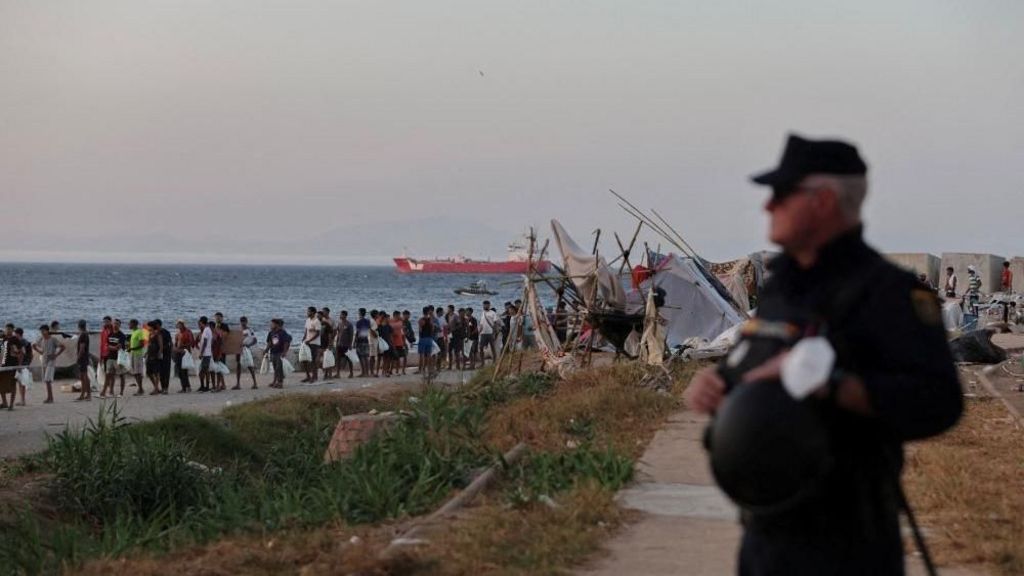
    A crowded vessel carrying 33 Sudanese migrants has capsized in the Mediterranean Sea off the coast of Tobruk, a coastal town in eastern Libya, leaving at least 17 passengers dead and nine others unaccounted for, United Nations officials confirmed in a statement released Thursday. Just seven people on board the ill-fated craft survived the disaster, the U.N. Refugee Agency shared via its social media platform X. Authorities have not yet released a definitive timeline for when the overturning occurred.

    According to the U.N. International Organization for Migration (IOM), the survivors had been stranded adrift in open waters for multiple days before they were pulled from the sea, and a number of the fatalities were caused by starvation and dehydration in the days before the rescue. The boat departed Tobruk and was bound for Greece when it overturned roughly 100 kilometers (62 miles) northwest of the Libyan city, the organization confirmed. Local rescue efforts were led by Libya’s national navy, the country’s coast guard, and the Libyan Red Crescent.

    On Thursday, the Libyan Red Crescent published on-site photos from the rescue operation that showed emergency personnel moving multiple deceased victims sealed in black body bags. Medical details on the condition of the seven survivors have not been released to the public as of Thursday’s update.

    For more than a decade, Libya has served as a primary departure and transit hub for thousands of migrants fleeing conflict, political instability, and extreme poverty across Africa and the Middle East. The nation descended into ongoing factional chaos following the 2011 NATO-backed uprising that removed and killed long-time authoritarian ruler Moammar Gadhafi, leaving central government weak and unable to regulate unregulated migrant smuggling operations along its long Mediterranean coastline.

    This latest tragedy comes less than two weeks after another deadly shipwreck off Libya’s coast: earlier this month, more than 80 migrants were reported missing after their vessel capsized in the central Mediterranean. Data from IOM shows that 2026 is on track to be the deadliest year for Mediterranean migrant crossings since record-keeping began in 2014. In the first four months of the year, 765 people were confirmed dead along the dangerous Central Mediterranean route alone — a 150% jump in fatalities compared to the same period in 2025. IOM Director General Amy Pope told the Associated Press earlier this month that the agency has recorded a sharp rise in migrants from South Asia and the Horn of Africa — including Bangladesh, Pakistan, Afghanistan, and Sudan — attempting the dangerous crossing to European shores in recent months.

  • Mali holds funeral for key junta figure killed in militant assaults

    Mali holds funeral for key junta figure killed in militant assaults

    DAKAR, Senegal — On Thursday, thousands gathered to honor the life of former Malian Defense Minister General Sadio Camara, the central architect of Mali’s ruling military junta’s controversial security partnership with Russia, just one week after he was killed in the largest coordinated militant assault the West African nation has seen in more than 10 years. Camara’s unexpected death, which comes on the heels of a string of major military setbacks for Malian government forces and their Russian mercenary allies, has sparked new analysis of potential internal rifts within the junta and raised widespread questions about the future of the country’s close alignment with Moscow.

    Following two days of official national mourning declared by the junta, the funeral ceremony was led by junta leader General Assimi Goita and aired live across Malian national television to allow citizens across the country to pay their respects. Camara’s casket was wrapped in the national flag of Mali — its iconic green, yellow, and red stripes on full display — while large, formal portraits of the late general lined the walls of the ceremony venue for attendees to view.

    Born in 1979 in Kati, a garrison town located just outside Mali’s capital Bamako, Camara died in the same community Saturday when a militant car bomb detonated outside his personal residence. His military career began decades earlier: in the late 2000s, he served as a field officer deployed to northern Mali, where rising insurgent activity led by armed factions with ties to Al-Qaeda had plunged the region into instability. After graduating from Mali’s national military academy, Camara traveled abroad for advanced military training, including a posting at a prestigious Russian military academy — a formative experience that would shape the trajectory of his later political career.

    Mali’s general public first gained widespread recognition of Camara in August 2020, when he appeared as a colonel on national television alongside four other senior military officers who had just successfully overthrown democratically elected President Ibrahim Boubacar Keita. The group of coup leaders accused Keita of being overly reliant on French political backing and failing to address the growing wave of militant attacks that had devastated large swathes of the country. They campaigned on a promise to restore national security and stability, a pledge that resonated with many Malians frustrated by years of unaddressed insurgency.

    In the wake of the 2020 coup, the new military government quickly pivoted away from Mali’s long-standing Western security partnerships, turning toward Russia as its primary alternative security ally, and moving to expel French counterterrorism troops and United Nations peacekeeping forces from the country. Camara emerged almost immediately as the most central figure in forging this new relationship, serving as defense minister in both of Mali’s successive military governments — first after the 2020 coup, and then being reappointed to the role following a second coup in May 2021 that brought Goita to full executive power.

    Ulf Laessing, head of the Sahel program at the Germany-based Konrad Adenauer Foundation, described Camara as the undisputed “architect of cooperation with Russia.” According to Laessing, it was Camara who first proposed the 2021 deployment of Russian mercenary forces to Mali and pushed for the expulsion of the U.N. peacekeeping mission MINUSMA, a long-standing international presence in the country. Frequent trips to Moscow to meet with Russian defense officials solidified his role as the main bridge between the Malian junta and the Kremlin, and even as the country’s security situation deteriorated steadily under his tenure, Camara remained an irreplaceable leader for the ruling military faction, Laessing noted.

    Recent weeks have brought major new setbacks for the Russian-Malian alliance. Just days before Camara’s assassination, the newly formed Russian Africa Corps — a regular Russian military unit that answers directly to Moscow’s defense ministry, estimated to have roughly 2,000 troops deployed across Mali — announced it had withdrawn its forces from the key northern city of Kidal. The withdrawal came just two days after separatist insurgent groups declared they had seized full control of the strategic city.

    Rida Lyammouri, a senior fellow at the Morocco-based Policy Center for the New South, argues that Camara’s death, combined with growing frustration among both ordinary Malians and senior military leaders over the failure of Russian forces to curb the ongoing insurgency, could push the junta to open a formal review of its partnership with Moscow. Even before Camara’s killing, discontent over Russian strategy had been quietly building within military circles, Lyammouri said.

    Adding to speculation about a potential policy shift, Laessing noted that Goita met with Russia’s ambassador to Mali on Tuesday this week, but has also signaled he is “open to collaboration with some Western countries, such as the United States” going forward. For now, the future of Mali’s security alliances remains uncertain, as the junta navigates the loss of its most prominent pro-Russia leader and growing pressure to reverse years of deteriorating security.

  • Man sentenced to death for murder of toddlers at Ugandan nursery

    Man sentenced to death for murder of toddlers at Ugandan nursery

    In a landmark ruling that drew public cheers, a Ugandan High Court judge has sentenced 38-year-old dual Ugandan-American citizen Christopher Okello Onyum to death by hanging for the brutal slaying of four one- to two-year-old toddlers at a Kampala nursery school earlier this year.

    The horrific attack unfolded on April 2, when Onyum gained entry to the Ggaba Early Childhood Development Program and fatally stabbed all four young children: Eteku Gideon, Keisha Agenorwoth, Sseruyange Ignatius and Odeke Ryan. The crime shocked communities across the East African nation, prompting authorities to hold the trial in a makeshift community courtroom located near the site of the killings to allow local residents to follow proceedings.

    During the trial, prosecutors laid out a overwhelming multi-source case against Onyum, built from 18 witness testimonies, forensic DNA evidence linking the defendant to the handle of the murder weapon (a kitchen knife), closed-circuit television footage that tracked his movements in the hours leading up to the attack, and telecommunications data that placed him at the nursery during the time of the killings. Two daycare workers also told the court they directly observed Onyum assaulting the defenseless children.

    Case records show Onyum initially confessed to the killings to investigators, claiming the attack was a deliberate human sacrifice he carried out in the belief it would bring him wealth. However, he later reversed that plea, entered a not guilty plea, and claimed he was suffering from a severe mental health crisis at the time of the attack that stripped him of the ability to form intent to kill. He urged the court to acquit him on the grounds of legal insanity.

    Delivering the final judgment, Justice Alice Komuhangi Khauka rejected the insanity defense, concluding that Onyum was fully legally sane when he carried out the attacks. In her ruling, she condemned the brutality of the crime, noting that Onyum deliberately targeted children in their most vulnerable state, slaughtered them in a cruel manner without any regard for human life, and had never shown any remorse for his actions. “I have also considered that the convict has not shown any remorse at all, because I would have at least expected an apology from him to the families of the babies,” Justice Khauka stated in her ruling, according to Agence France-Presse.

    Following the judge’s announcement of the death sentence, the crowd of local residents gathered in the courtroom erupted in cheers.

    Uganda has not abolished capital punishment, though the practice has been extremely rare in recent decades: the last officially recorded execution in the country took place more than 20 years ago, in 2005. Onyum now has a 14-day window to file an appeal against his conviction and sentence with a higher court.

  • ‘How are we going to get back home?’ Islamist group tightens blockade on Mali capital

    ‘How are we going to get back home?’ Islamist group tightens blockade on Mali capital

    For over a decade, Mali’s national military has waged a persistent, bloody conflict against Islamist insurgent groups across the West African nation. Now, that conflict has tightened its grip on the heart of the country: Bamako, the bustling capital and key regional hub home to more than 3 million residents, is currently under a rolling partial blockade by Jama’at Nusrat al-Islam wal-Muslimin (JNIM), one of the country’s most active Islamist militant factions. The blockade comes just days after a high-profile assassination of Mali’s defense minister within the city’s borders, deepening the sense of crisis gripping the nation.

    Stranded motorists and travelers on the Bamako-Kéniéba highway, one of the capital’s primary arterial routes, have described days of uncertainty and fear. One mother of two, who traveled outside the city to visit aging parents, told the BBC she has been barred from re-entering Bamako for nearly 24 hours. “Our army isn’t capable of protecting us, how are we going to get back home?” she asked, echoing the anxiety shared by hundreds of other stranded people along major inbound routes. JNIM fighters issued an explicit public warning Wednesday that “no-one will be allowed in any more” to the capital, a sharp escalation of tactics the group has used to pressure the ruling military junta.

    This tightening blockade marks a significant escalation from the group’s 2025 fuel blockade, which crippled supply chains, caused widespread fuel shortages, and sent prices for essential goods soaring across Bamako. Today, eyewitnesses confirm that at least three of the six main access roads leading into the capital are closed for hours at a time, as militants rotate positions across different routes to avoid counterattacks. During gaps between militant presence, small numbers of civilian vehicles are able to sneak through, but movement remains severely restricted and unpredictable.

    The current crisis follows a coordinated nationwide offensive launched last weekend by a newly formed alliance of jihadist fighters and separatist rebels from the Azawad Liberation Front (FLA), whose stated goal is to overthrow the military regime led by General Assimi Goïta. Goïta seized control of Mali in a 2020 coup and has since shifted the country’s foreign security alliances dramatically, expelling French counterterrorism forces that had supported the government for nearly a decade and turning instead to the Russia-aligned Africa Corps, a paramilitary force that emerged from the remnants of the Wagner Group following the death of its founder Yevgeny Prigozhin.

    Despite this new partnership, the insurgent offensive has already scored major gains. The FLA alliance forced African Corps and Malian government troops to withdraw from the key northern city of Kidal, which is now fully under separatist control. Following the capture of Kidal, FLA leaders have announced plans to advance on other northern population centers and issued an ultimatum demanding the full withdrawal of all Africa Corps forces from Malian territory.

    The Kremlin has repeatedly reaffirmed its commitment to maintaining a presence in the country. “Russian forces will remain in Mali to combat extremism, terrorism and other harmful phenomena and will continue to provide assistance to the current government,” a Kremlin spokesperson stated Thursday, pushing back against claims that the withdrawal from Kidal signals weakening Russian commitment to the junta.

    For ordinary civilians caught in the crossfire, the situation has grown increasingly desperate. A long-haul lorry driver who has worked Malian trade routes for decades told the BBC he had never experienced a crisis of this scale. “I’m stuck here and it sounds dangerous. I would rather run away to save my life than fight for the goods I have to deliver. I’ve never thought like this before,” he said. Just 50 miles from Bamako, the regional town of Ségou is already under a full insurgent blockade, where hundreds of commercial trucks, passenger buses, and private cars have been trapped for days. A local reporter confirmed that stranded passengers, including whole families and small-scale traders, are already facing critical shortages of clean drinking water and food.

    Mali’s junta leadership has responded with vows of harsh retribution. Following an emergency meeting of the country’s security council Wednesday, state media quoted Goïta saying that Malian armed and security forces have already inflicted “heavy losses” on insurgent forces and would continue to ramp up counteroffensives to restore order.

    Independent security analysts warn that the current offensive exposes deep vulnerabilities in the junta’s grip on power. “Those moves show that the regime is weak and can’t restore security,” explained Alain Antil, director of the Sub-Saharan Africa Centre at Ifri, a leading French foreign affairs think tank. Antil noted that the current trajectory echoes 2013, when a similar alliance of jihadists and Tuareg separatists advanced on Bamako, prompting a large-scale French military intervention that pushed insurgents back but failed to fully resolve the country’s instability. Despite Goïta’s decision to oust French forces and align with Russia, the security situation has continued to deteriorate, culminating in last weekend’s coordinated offensive.

    International governments have already begun issuing warnings to their citizens. France, Canada, and the United Kingdom have all issued formal advisories urging their nationals to leave Mali immediately, while the United States recommends that all U.S. citizens in the country stay in secure locations and avoid non-essential travel. Even amid the warnings, some long-term foreign residents have refused to flee, pointing to deep personal ties to the country. “I won’t leave,” one Frenchwoman who has lived in Mali since 2002 told the BBC. “I love Mali. It has become a part of me since I came here in 2002. We’ll stay with my family. We know things will be OK.”

  • Meta in row after workers who say they saw smart glasses users having sex lose jobs

    Meta in row after workers who say they saw smart glasses users having sex lose jobs

    A growing controversy surrounding Meta’s artificial intelligence training practices for its Ray-Ban and Oakley branded smart glasses has triggered regulatory investigations and competing claims over why the tech giant abruptly cut ties with its outsourced contractor Sama, leaving more than 1,100 Kenyan workers unemployed.

    In February, anonymous data annotators employed by Sama gave explosive interviews to two Swedish publications, Svenska Dagbladet and Goteborgs-Posten, revealing that they were forced to review deeply private and graphic footage captured by Meta’s consumer smart glasses. The workers described reviewing everything from users going to the bathroom to sexual encounters, and one account detailed footage of a woman undressing in a private bedroom, captured without her knowledge by her partner’s recording glasses. “We see everything – from living rooms to naked bodies,” one worker told the outlets.

    Less than two months after these allegations came to light, Meta announced it was ending its contracted work with Sama, a US-headquartered B Corp that brands itself as an ethical tech outsourcing provider. The termination left 1,108 Kenyan workers out of a job. The two sides have offered starkly conflicting explanations for the decision.

    Meta has publicly maintained that it cut ties because Sama failed to meet its internal operational standards. “We take [the worker allegations] seriously. Photos and videos are private to users. Humans review AI content to improve product performance, for which we get clear user consent,” a Meta spokesperson told the BBC, adding that the company had paused work with Sama while it investigated the claims.

    Sama has forcefully rejected Meta’s claims, noting that it never received any prior notification of performance issues. “Sama has consistently met the operational, security and quality standards required across all our client engagements, including with Meta,” the company said in an official statement. “At no point were we notified of any failure to meet those standards, and we stand firmly behind the quality and integrity of our work.”

    Kenyan worker advocacy groups have put forward a third, far more critical explanation: that Meta terminated the contract to punish workers for speaking out about the privacy violations and harmful working conditions. Naftali Wambalo of the Africa Tech Workers Movement, who is already involved in ongoing legal action against Sama and Meta over a past toxic content moderation contract, says workers on the smart glasses project confirmed the same pattern of exploitation. “What I think are the standards they are talking about here are standards of secrecy,” Wambalo told the BBC.

    This is not the first time Meta’s partnership with Sama has resulted in public scandal. A previous contract for Sama to moderate Facebook content drew widespread condemnation after former workers described chronic trauma from constant exposure to graphic, violent and extreme content, leading to legal action. Sama later stated it regretted taking on that work.

    Following the February revelations, regulators on two continents have opened investigations into Meta’s practices. The UK’s Information Commissioner’s Office (ICO) wrote to Meta shortly after the Swedish investigation was published, raising concerns over the reported privacy breaches. Kenya’s Office of the Data Protection Commissioner has also launched a formal probe into the privacy risks posed by the smart glasses content review process. Non-consensual recording of women using the devices has already been linked to incidents in Kenya, amplifying local privacy concerns.

    Meta first unveiled its line of AI-powered smart glasses in partnership with luxury eyewear brands Ray-Ban and Oakley in September 2023. The devices offer AI-powered features including real-time text translation and visual question answering, a tool that is particularly helpful for users who are blind or partially sighted. As the devices have grown in popularity with consumers, concerns over misuse and privacy violations have grown in lockstep.

    The Kenyan workers who spoke to the Swedish outlets were employed as data annotators, a role that involves manually labeling content captured by smart glasses to help train Meta’s AI systems to correctly interpret images. They also reviewed transcripts of user interactions with the glasses’ built-in AI to check that responses were accurate. Meta has stated that human review of content is an industry standard practice intended to improve user experience, and that the practice is disclosed in the company’s terms of service.

    Mercy Mutemi, a lawyer representing the Kenyan worker petitioners and executive director of advocacy group the Oversight Lab, said the controversy should serve as a warning to the Kenyan government, which has positioned outsourced AI work as a pathway into the global tech economy. “We’ve been told that this is our entry route into the AI ecosystem,” she said. “This is a very flimsy foundation to build your entire industry on.”

    The BBC has requested additional comment from Meta on the secrecy allegation, and has not yet received a response.