标签: Africa

非洲

  • Activist Kemi Seba arrested in South Africa, faces extradition to Benin

    Activist Kemi Seba arrested in South Africa, faces extradition to Benin

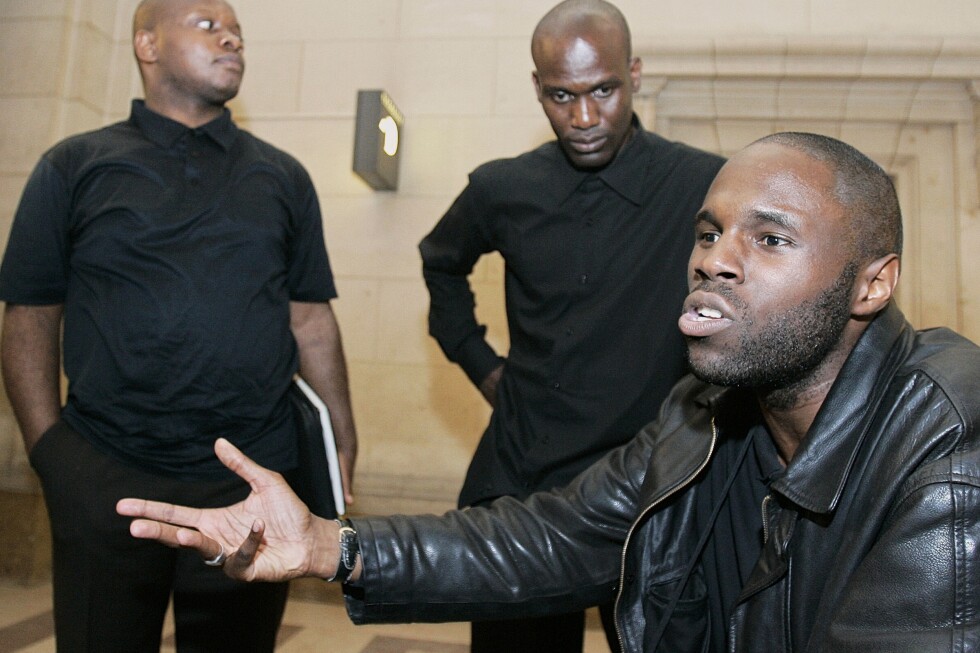
    PRETORIA, South Africa — Law enforcement authorities in South Africa announced Thursday the arrest of high-profile Beninese dissident Kemi Seba, who is facing extradition to his home country on charges tied to last year’s unsuccessful coup attempt against Benin’s sitting government.

    Seba, 45, whose legal birth name is Stellio Gilles Robert Capo Chichi, was taken into custody during a coordinated police sting operation in Pretoria, South Africa’s administrative capital. He was arrested alongside his son, with both men facing two counts: conspiracy to commit a crime and violations of South African immigration law. The charges stem from allegations the pair plotted an irregular migration journey to Europe via neighboring Zimbabwe, authorities confirmed. A third individual accused of facilitating the plot by paying roughly 250,000 South African rand, equal to $15,000, to enable unauthorized cross-border movement is also in police custody.

    South African police confirmed the operation was carried out with direct support from Interpol, which had flagged Seba as an international fugitive wanted by Benin for crimes against the state. All three suspects made their first court appearance at Brooklyn Magistrates’ Court on Wednesday, where the judge scheduled the next hearing for April 20. Seba remains in pre-trial detention as South African authorities move forward with formal extradition proceedings.

    The legal pursuit of Seba traces back to December 2023, when Benin issued an international arrest warrant for the activist on charges of “incitement to rebellion.” The charge followed a viral social media video in which Seba publicly expressed support for the failed coup attempt against President Patrice Talon. In the clip, Seba incorrectly announced the coup had succeeded, hailed the attempt as “the day of liberation,” and labeled the soldiers who launched the putsch as “patriots.”

    Beyond his connection to last year’s coup attempt in Benin, Seba has built a regional profile as a vocal critic of French influence across West Africa, openly supporting a string of successful military coups in neighboring countries that brought pro-Russian military leaders to power. His long-standing anti-French rhetoric and advocacy for Russian-aligned governance in the region led to France revoking his French citizenship earlier this year in 2024.

  • A look at the South African politician sentenced to jail on gun charge who described Trump as Hitler

    A look at the South African politician sentenced to jail on gun charge who described Trump as Hitler

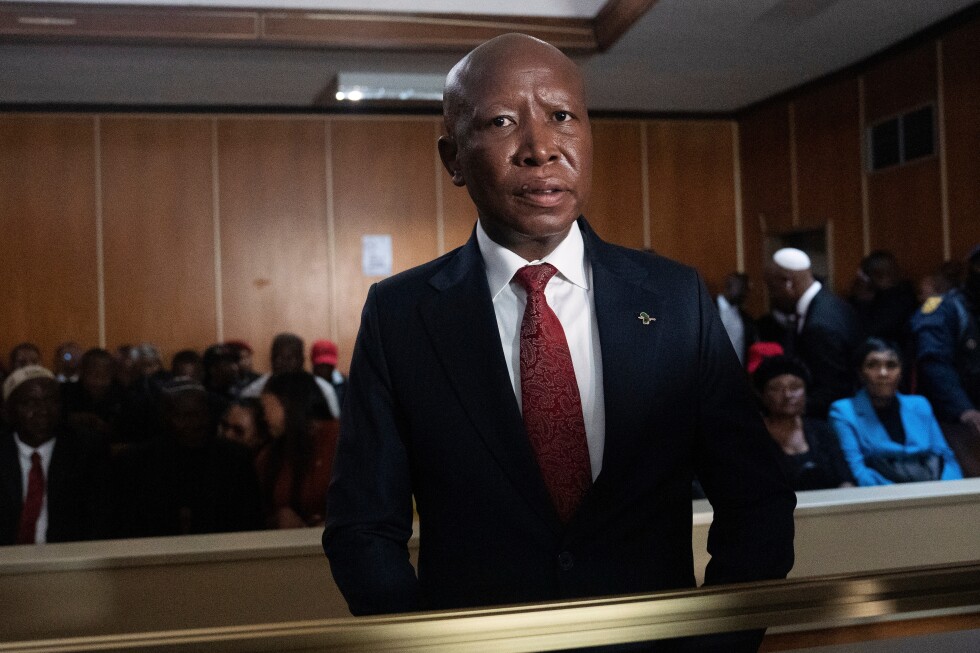
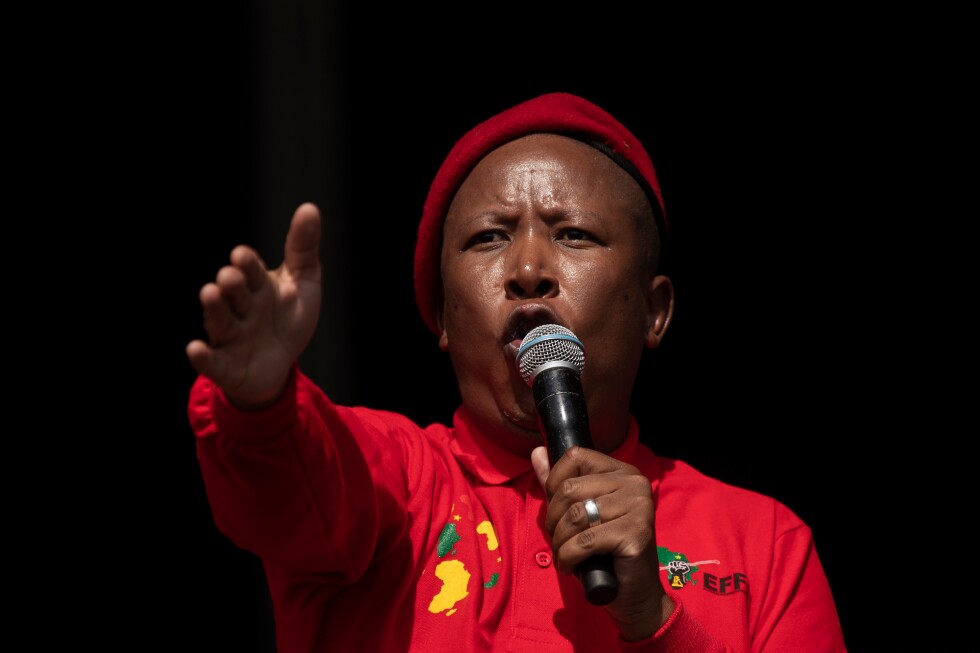
    CAPE TOWN, South Africa — Julius Malema, the firebrand leftist leader of South Africa’s populist opposition Economic Freedom Fighters (EFF), has been handed a five-year prison sentence Thursday for unlawful firearm use stemming from an incident at a 2018 political rally, where he fired a rifle into the air. The sentence comes amid decades of polarizing politics that have made Malema one of the most divisive figures on the African continent, and one that has even drawn high-profile international attention from former U.S. President Donald Trump.

    Malema’s career has been defined by unapologetic radicalism that has earned him fierce loyalty from his base and equally fierce condemnation from his critics. To his supporters, mostly among South Africa’s poor Black majority who still face systemic inequality decades after the end of apartheid, Malema is a champion of the marginalized, a rare politician willing to confront the lingering inequities of white minority rule and the slow pace of transformative change from the long-governing African National Congress (ANC). To his detractors, he is a provocateur whose inflammatory rhetoric stokes racial division and undermines the post-apartheid reconciliation that has held South Africa’s fragile multiracial democracy together.

    Malema first rose to national prominence as the head of the African National Congress Youth League between 2008 and 2012, when his outspoken views quickly put him at odds with the ANC’s senior leadership. Once a staunch ally of former South African President Jacob Zuma — even infamously declaring “we are prepared to take up arms and kill for Zuma” — Malema eventually turned on Zuma, launching public criticisms that tested the ANC’s patience past its breaking point. A series of controversial incidents culminated in his 2012 expulsion from the party, after he labeled the government of neighboring Botswana a Western puppet regime, drawing condemnation from ANC leadership.

    Throughout his early career, Malema established his signature anti-Western stance, repeatedly accusing the United States and United Kingdom of maintaining imperialist, racist attitudes toward South Africa. A 2010 incident exemplified this confrontational style: he expelled a BBC journalist from a press conference, calling the reporter a British “agent” and using abusive language, a move that drew widespread rebuke from the ANC and international press freedom groups.

    After his expulsion from the ANC, Malema founded the EFF in 2013, positioning the party as a far-left, anti-capitalist alternative to the long-governing ANC. The EFF’s core policy platform calls for radical economic restructuring, most notably the expropriation of white-owned land for redistribution to Black South Africans, who were systematically dispossessed under apartheid. Though the party has never won enough national support to enter government, taking just 10% of the vote in the 2024 national election and remaining outside the current ruling coalition, it holds parliamentary seats and has become a major disruptive force in South African politics.

    Malema, who styles himself the EFF’s “Commander in Chief,” has repeatedly drawn criticism for racially charged rhetoric. In one widely condemned speech targeting South Africa’s white minority, he remarked, “We are not calling for the slaughter of white people — at least for now,” and has also made derogatory comments about South Africans of Indian descent. He has also revived the apartheid-era chant “Kill the Boer” — a phrase targeting white South African farmers — which opponents have decried as overt hate speech.

    Malema’s inflammatory rhetoric has not just stirred domestic controversy; it has spilled over into international diplomacy, creating a rift between South Africa and the United States during the Trump administration. Trump and his allies, including South African-born billionaire Elon Musk, have seized on Malema’s rhetoric to push the unsubstantiated claim that South Africa’s Black-led government is overseeing a widespread campaign of violence against white farmers. During a high-stakes 2023 Oval Office meeting between Trump and South African President Cyril Ramaphosa, a video reel featuring Malema and the EFF was played, with Trump confronting Ramaphosa over the alleged anti-white agenda. The exchange marked a major low point in diplomatic relations between the two countries.

    Domestically, Malema and the EFF have become a consistent thorn in the side of Ramaphosa and the ANC, repeatedly disrupting parliamentary proceedings over the past decade. Multiple times, EFF lawmakers have been ejected from the national legislature for interrupting speeches and government business. The most high-profile incident came in 2023, when Malema and a group of EFF members, clad in the party’s signature red worker overalls, stormed the stage during Ramaphosa’s annual address, leading to physical scuffles with parliamentary security.

    Thursday’s sentencing stems from a 2018 incident, when Malema fired a rifle into the air at a political rally. He was formally convicted of unlawful firearm offenses in October, after a legal push from an Afrikaner minority rights group pressured prosecutors to bring the case to trial. Immediately after the sentencing, Malema’s legal team filed an appeal, and he has been released on bail while the appeal process proceeds. If his conviction is upheld on appeal, Malema will be forced to serve his five-year sentence, and will be barred from serving as a member of parliament for five years after the completion of his sentence — a outcome that would reshape South Africa’s opposition political landscape ahead of the next national election cycle.
  • BP sued in Kenya over alleged toxic waste from 1980s oil exploration

    BP sued in Kenya over alleged toxic waste from 1980s oil exploration

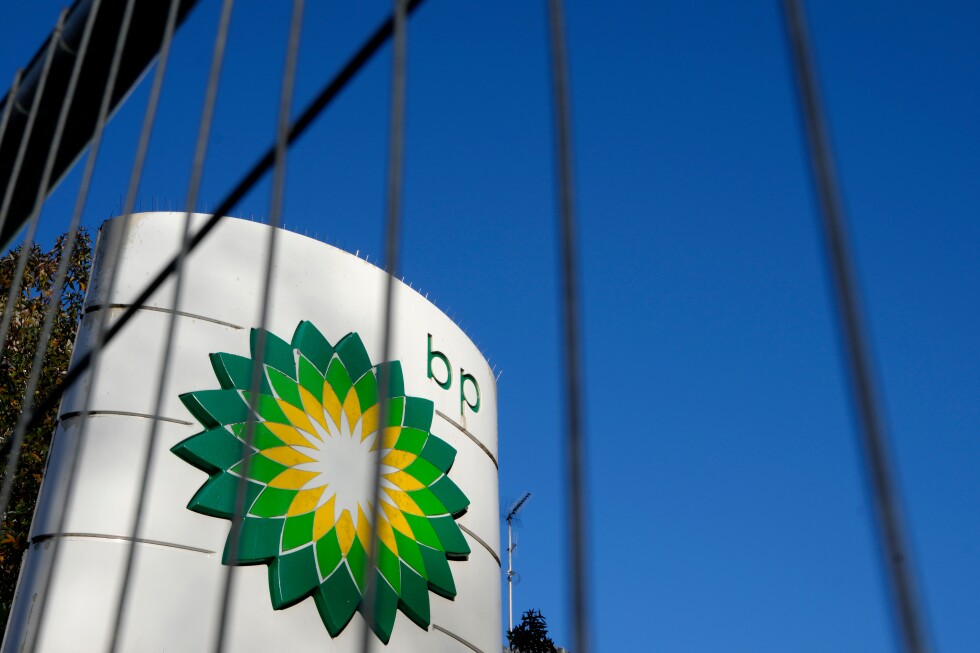
    NAIROBI, Kenya — In a landmark decision that opens the door for affected communities to seek accountability for decades of alleged environmental harm, Kenya’s High Court ruled Thursday that a high-stakes class action lawsuit against global energy giant BP can proceed to trial. The legal challenge centers on claims of widespread toxic contamination of northern Kenya’s drinking water from negligent waste disposal practices during 1980s oil exploration activities.

    The suit was first brought in February by 299 local petitioners to the Land and Environment Court in Isiolo, the regional administrative hub for the affected area in northern Kenya. At the heart of the allegations is the claim that waste generated during oil exploration operations, including hazardous radioactive materials, was improperly handled, resulting in severe and long-lasting damage to local ecosystems and public health.

    The exploration work at the center of the dispute was originally conducted by U.S.-based Amoco Corporation, which drilled multiple dry wells in the Chalbi Desert near the remote communities of Kargi and Kalachi in the 1980s. BP acquired all of Amoco’s global assets and operations, including its Kenyan exploration holdings, in a 1998 merger, leaving BP as the primary corporate defendant in the current case.

    Court documents detail damning allegations: contaminants including radioactive radium isotopes, arsenic, lead, and nitrates were allegedly dumped in unlined, uncovered pits rather than being disposed of according to regulated safety standards. Over decades, these toxins have leached into the region’s groundwater, the primary source of drinking water for local residents and their livestock. The petition claims this contamination has directly caused the death or illness of hundreds of local people and thousands of area animals. More than 500 resident deaths are linked to cancers and other chronic conditions tied to exposure to heavy metals and carcinogens in the contaminated water supply.

    Beyond the corporate defendant, the lawsuit also names multiple Kenyan national government agencies — including the ministries and regulatory bodies overseeing environment, water resources, mining, and public health — accusing them of negligence for failing to intervene and address the contamination even after receiving clear evidence of the public health risk.

    BP has not issued any public statement addressing the allegations, and did not respond to requests for comment from media ahead of the court’s ruling. The case is scheduled to resume for further proceedings in May.

    This reporting, part of the Associated Press’ global climate and environmental coverage, receives financial support from multiple private philanthropic foundations. The AP maintains full editorial independence over all its reporting, and public details of its partnership standards, funding sources, and covered areas are available on AP.org.

  • World Athletics rejects 11 athlete transfers to Turkey

    World Athletics rejects 11 athlete transfers to Turkey

    Global track and field’s governing body, World Athletics, has formally rejected nationality transfer applications from 11 top-tier athletes seeking to compete for Turkey, in a high-profile decision that exposes controversy over state-sponsored athlete recruitment in international sport.

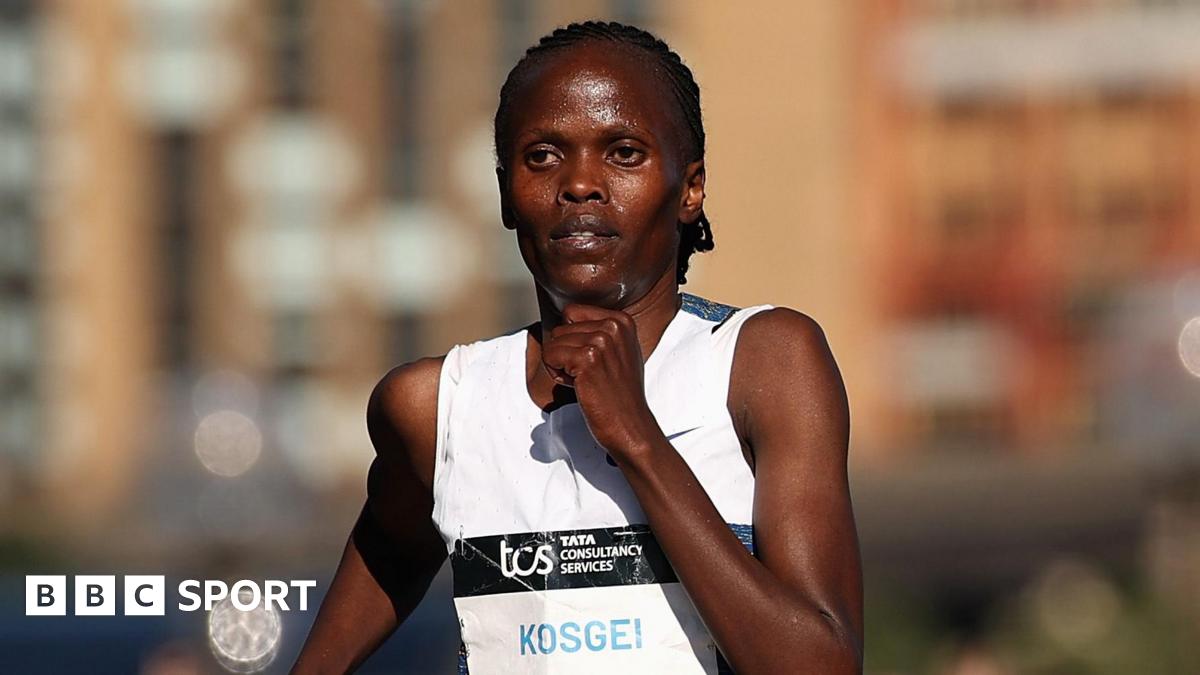
    Among the high-profile names turned away are Brigid Kosgei, the former women’s marathon world record holder who claimed Olympic silver for Kenya at the 2020 Tokyo Games, and Roje Stona, the Jamaican athlete who shocked the field to win men’s discus gold at the 2024 Paris Olympics. The cohort of applicants also includes four other Kenyan athletes: Catherine Relin Amanang’ole, Brian Kibor, Ronald Kwemoi and Nelvin Jepkemboi; three additional Jamaican competitors: Rajindra Campbell, Jaydon Hibbert and Wayne Pinnock; Nigerian sprinter Favour Ofili; and Russian athlete Sophia Yakushina.

    In its official statement on the ruling, World Athletics argued that all 11 applications formed part of a coordinated, government-backed recruitment strategy designed by Turkey to attract elite foreign athletes to the country with highly lucrative financial contracts. The transfers were organized through a club fully owned and funded by the Turkish government, with the explicit goal of having these athletes represent Turkey at major international competitions, most notably the 2028 Los Angeles Olympic Games.

    The decision follows a lackluster performance for Turkey at the 2024 Paris Olympics, where the country secured eight total medals but failed to claim a single gold medal, a outcome widely interpreted as pushing Turkish authorities to accelerate efforts to recruit established foreign talent. World Athletics’ review panel, which assessed all 11 applications together due to their shared structural characteristics, ruled that approving the transfers would directly undermine the core principles and regulatory objectives of the organization’s rules on athlete eligibility and nationality transfers.

    “Such an approach is inconsistent with the core principles of the regulations,” the panel concluded in its final ruling. As a result of the decision, none of the 11 athletes are currently eligible to represent Turkey in national team competitions or any other relevant international track and field events, leaving their future competitive careers in limbo as they weigh potential next steps.

  • Pope criticises ‘tyrants’ who spend billions on wars, days after Trump spat

    Pope criticises ‘tyrants’ who spend billions on wars, days after Trump spat

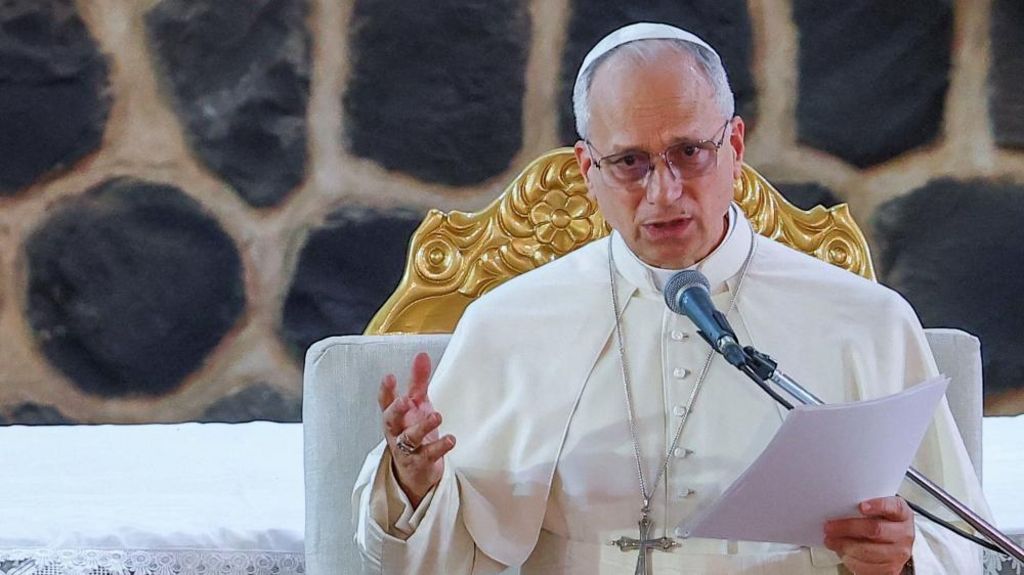
    In an extraordinary departure from typical diplomatic Vatican rhetoric, Pope Leo has issued a blistering rebuke of global leaders who pour billions of dollars into military conflicts, arguing that the entire global order is currently being exploited and destabilized by a small group of authoritarian rulers. The unusually harsh comments came during the pontiff’s tour of Cameroon’s Northwest region, an area that has been torn apart by a nearly 10-year-long separatist insurgency that has claimed thousands of lives and displaced hundreds of thousands of residents.

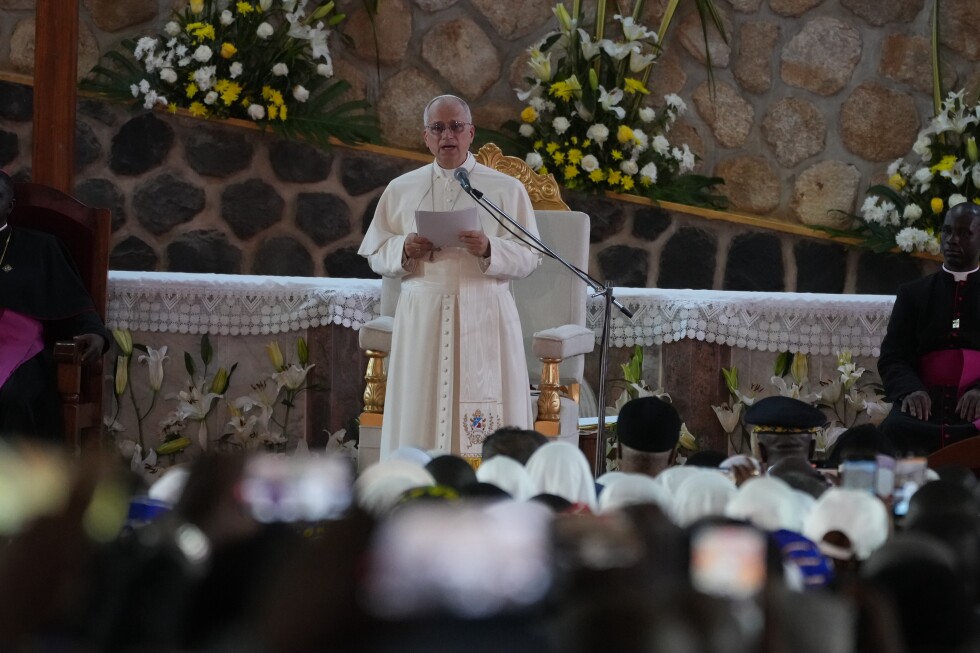
    Standing before crowds gathered at a cathedral in Bamenda, the heart of Cameroon’s conflict zone, Pope Leo called out actors who fuel the region’s ongoing violence, noting that external and local groups that extract natural resources from the affected land often funnel a large share of their profits into weapons, prolonging a never-ending cycle of violence and collapse. “Those who rob your land of its resources generally invest much of the profit in weapons, thus perpetuating an endless cycle of destabilisation and death,” he told the assembled audience of community members, clergy and displaced residents.

    The pontiff expanded his critique beyond Cameroon’s local conflict to the global stage, condemning the misplaced global priorities that prioritize destruction over human development. “The masters of war pretend not to know that it takes only a moment to destroy, yet often a lifetime is not enough to rebuild,” he said. He added that it is a moral travesty that leaders “turn a blind eye to the fact that billions of dollars are spent on killing and devastation, yet the resources needed for healing, education and restoration are nowhere to be found.” He also called out actors who “manipulate the very name of God” to justify their violent, self-serving actions.

    Pope Leo’s comments come just days after a high-profile public conflict with former U.S. President Donald Trump, sparked by the pontiff’s vocal opposition to the joint U.S.-Israeli military operation in Iran. Pope Leo had previously raised alarm over Trump’s stark threat that “a whole civilisation will die” if Iran refused to meet U.S. demands to end the war and reopen the strategically critical Strait of Hormuz. This is not the first public disagreement between the two men: since his election as the first U.S.-born pope in history last year, Pope Leo has repeatedly criticized the Trump administration’s hardline approach to immigration policy, prompting a sharp rebuke from Trump on his TruthSocial platform, where the former president wrote “Leo should get his act together as Pope.”

    The Cameroon visit is a key stop on Pope Leo’s multi-country African tour, which will include 11 stops across four nations. This marks only his second major international visit since taking office last year, a schedule that underscores the growing strategic and demographic importance of the Catholic Church in Africa. Recent 2024 demographic data shows that Africa is home to roughly 288 million Catholics, accounting for more than one-fifth of the entire global Catholic population – a share that continues to grow steadily year over year.

  • What to know about Cameroon’s separatist violence that the pope seeks to end

    What to know about Cameroon’s separatist violence that the pope seeks to end

    BAMENDA, CAMEROON – On Thursday, Pope Leo XIV touched down in Bamenda, the northwestern hub of Cameroon, to convene a landmark peace gathering in a region scarred by nearly 10 years of separatist violence that has left thousands dead and hundreds of thousands displaced. The summit forms a core part of the pontiff’s four-nation African tour, designed to center grassroots interfaith efforts that have long worked to de-escalate tensions and support conflict survivors navigating deep psychological trauma.

  • Gabon’s former prime minister, a critic of the junta, has been arrested

    Gabon’s former prime minister, a critic of the junta, has been arrested

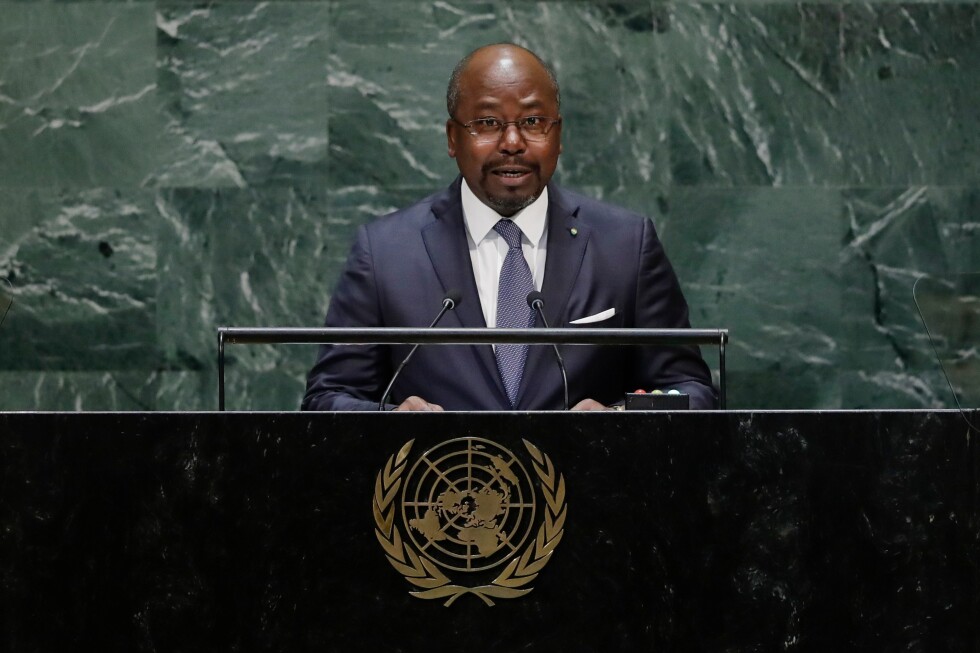
    LIBREVILLE, Gabon — A major political development has shaken Gabon’s post-coup democratic landscape, as the country’s top opposition leader and former prime minister Alain-Claude Bilie-By-Nze has been taken into custody by state security forces. The opposition grouping Ensemble pour le Gabon (EPG), which Bilie-By-Nze leads, confirmed the arrest in an official public statement released to media outlets on Thursday.

    Per details shared by EPG, the arrest operation was carried out at the 58-year-old politician’s private residence on Wednesday by officers from the General Directorate of Investigations (DGR), Gabon’s national intelligence agency. The party has issued harsh condemnation of the detention, characterizing it as arbitrary, unnecessarily violent, and a clear violation of the core legal principles that underpin a functional rule of law.

    The official justification cited for the arrest ties to an unresolved 5 million Central African franc debt, equivalent to roughly $8,999, that dates back to 2008. At that time, Bilie-By-Nze served as one of the lead organizers of the National Cultural Festival, a state-run event created to highlight and celebrate Gabon’s rich cultural heritage. The outstanding sum stems from an unpaid bill to a private service provider that has continued to pursue the debt for more than 15 years.

    This arrest carries added political weight given Bilie-By-Nze’s prominent career in Gabonese politics. He most recently held the position of prime minister under former president Ali Bongo Ondimba, who was removed from power in a military coup that took place in August 2023. Following the coup, the transitional junta oversaw new presidential elections in 2024, the first national election since the overthrow of the Bongo administration. In that vote, Bilie-By-Nze emerged as the top challenger to junta leader Brice Oligui Nguema, ultimately finishing second in the final results.

    In its statement, EPG has called on Gabon’s current transitional authorities to uphold their responsibilities. The party is pushing state leaders to respect the commitments to democratic governance that Gabon has made both domestically and on the international stage, and to guarantee a peaceful, inclusive framework for political dialogue and democratic process moving forward.

  • Blunt-speaking Pope tells Cameroon to root out corruption to find peace

    Blunt-speaking Pope tells Cameroon to root out corruption to find peace

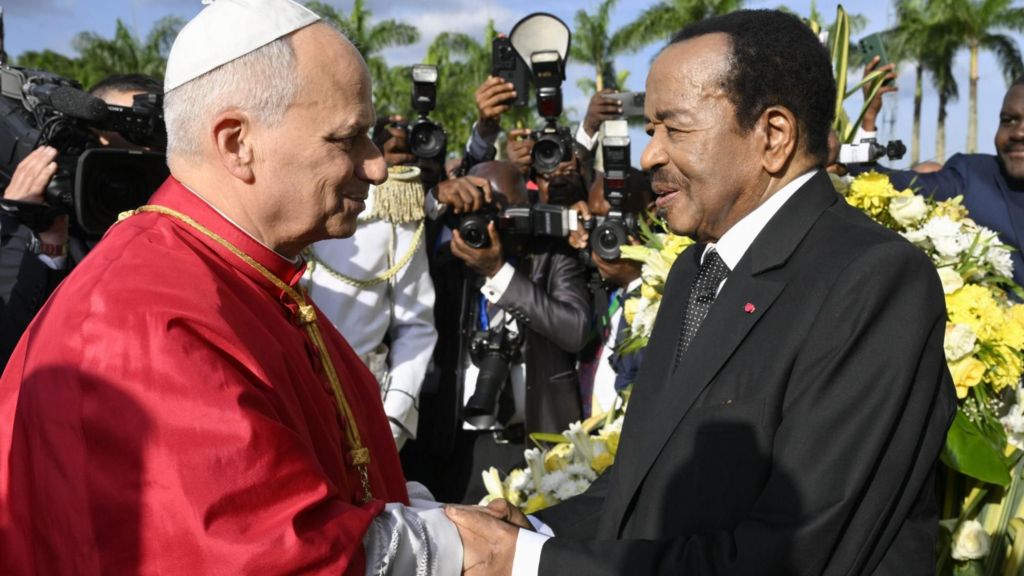
    On the second stop of his landmark 11-day tour across Africa, Pope Leo XIV delivered a blunt, unflinching address to Cameroon’s leadership at Yaoundé’s presidential palace, calling on the government to dismantle systemic corruption as a foundational step toward lasting peace and justice. His remarks, delivered in the presence of 93-year-old President Paul Biya — the world’s oldest sitting head of state, who secured a contested eighth term in office last year — marked a rare public rebuke of an administration long dogged by allegations of graft, poor governance, and ineffective security management.

    “In order for peace and justice to prevail, the chains of corruption – which disfigure authority and strip it of its credibility – must be broken,” the 70-year-old pontiff told the assembled crowd. He expanded on the theme, adding, “Hearts must be set free from an idolatrous thirst for profit.” According to reporting from the Associated Press, Cameroon’s state television cut its live broadcast of portions of the Pope’s speech, with no clarity on whether the interruption stemmed from technical issues or intentional editing. Biya sat through the entire address without visible reaction, multiple observers confirmed.

    Following his meeting with Cameroon’s government, Pope Leo traveled north to Bamenda, the epicenter of a nearly decade-long separatist insurgency in Cameroon’s English-speaking North-West and South-West regions. The conflict, which erupted in 2017 when Anglophone separatists launched their push for an independent state, has killed at least 6,000 people and displaced hundreds of thousands more. Separatist leaders had pre-emptively declared a temporary “safe travel passage” to allow the papal visit to proceed, and throngs of excited local residents lined city streets to greet the pontiff upon his arrival.

    During his remarks ahead of a planned peace Mass at Bamenda’s airport, Pope Leo waded into the long-running conflict, noting that while security must remain a priority for the state, it must always be exercised in full respect for fundamental human rights. The separatist movement grew out of decades of grievances over what the Anglophone minority describes as systemic marginalization by Cameroon’s French-speaking majority government.

    Beyond his calls for anti-corruption action and peace, Pope Leo used his address to center marginalized groups in Cameroon’s future. He emphasized that young people represent the country’s greatest hope, arguing that investment in their education, professional training, and entrepreneurial ventures is critical to curbing brain drain and addressing deep-rooted social inequality. He also highlighted the underrecognized role of women, who are often disproportionately harmed by conflict and injustice but serve as persistent, unsung architects of peace, calling for their full inclusion in all national decision-making processes. Biya, who was re-elected in October, has made public promises to prioritize young people and women, and expectations remain high for a looming cabinet reshuffle to deliver on those pledges.

    Local church leaders have framed the papal visit as a rare moment of hope for a region shattered by years of violence. “I can confidently say now is the time for peace,” Archbishop Andrew Nkea of Bamenda told worshippers ahead of the Mass, adding that the visit would bring comfort to thousands whose lives have been upended by the conflict.

    This tour is the first papal visit to Africa under Pope Leo XIV, with peace as its overarching central theme. The pontiff launched his trip in Algeria, marking the first ever papal visit to the majority-Muslim North African nation — which is also the birthplace of St. Augustine, the theological figure whose teachings shape Pope Leo’s own spiritual background as the first pope from his religious order. During his two days in Algeria, the Pope visited Algiers’ Great Mosque, a moment he called a powerful demonstration that people of differing faiths and backgrounds can coexist peacefully. After wrapping up his time in Cameroon, Pope Leo will travel on to visit Angola and Equatorial Guinea to conclude the 11-day tour.

  • Chinese man jailed for one year by Kenyan court over ant trafficking

    Chinese man jailed for one year by Kenyan court over ant trafficking

    In a high-profile wildlife trafficking case that highlights Kenya’s ongoing crackdown on unregulated insect trade, a Kenyan court has handed down a one-year prison sentence to a Chinese national convicted of unlawfully holding hundreds of live native ants, the latest conviction in the east African nation’s campaign against underreported trafficking of lesser-known wildlife species.

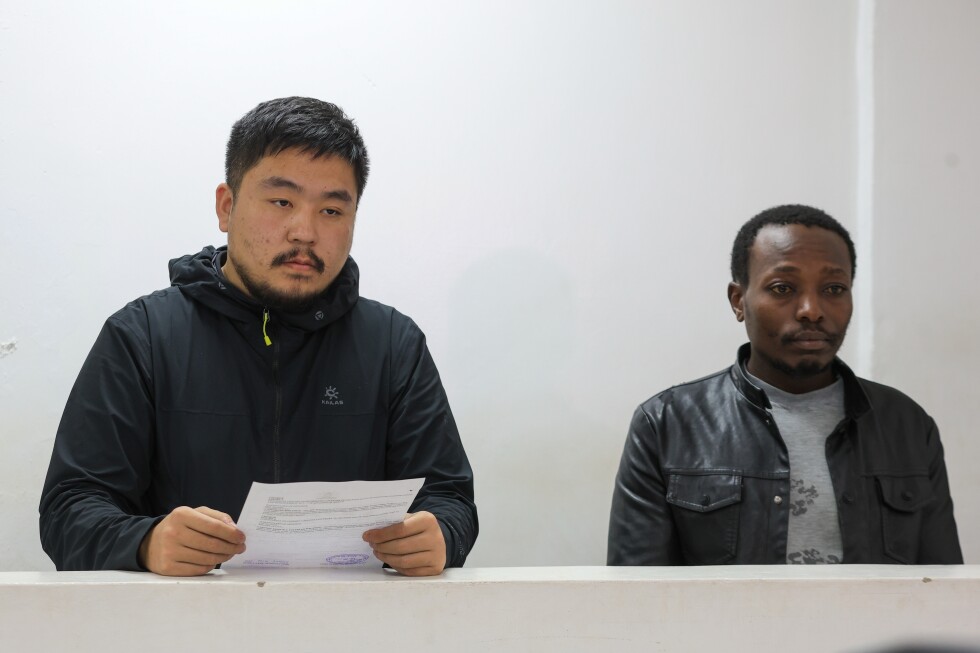
    Zhang Kequn, who entered a guilty plea to the charge of holding protected wildlife without a valid government license, was also ordered to pay a fine of 1 million Kenyan shillings, equal to roughly $7,700, according to court documents released Wednesday. His co-accused, Kenyan national Charles Mwangi, has maintained a not guilty plea to the same charge and was released on cash bail as the case against him proceeds.

    Prosecutors laid out the details of the trafficking operation during court proceedings, confirming that Zhang sourced the live ants directly from Mwangi. The pair completed two separate transactions: the first batch of 600 ants cost Zhang 60,000 Kenyan shillings ($463), while a second shipment of 700 ants came at a price of 70,000 Kenyan shillings ($540). Authorities first took the two suspects into custody on March 10, when a search turned out a total of 2,248 live ants. Most of the insects – 1,948 garden ants – were stored in custom-made transportation tubes, while an additional 300 ants were hidden in tissue rolls. Investigators confirmed that neither suspect held the mandatory permits required under Kenya’s strict wildlife conservation legislation to collect, hold, or trade native wildlife species, including native ant populations.

    This conviction is not an isolated incident. Just last year, Kenyan authorities charged two Belgian teenagers with similar wildlife trafficking offenses after seizing 5,000 ants stored in test tubes from their possession. That case drew international attention to a growing, underreported trend: traffickers target smaller, lesser-known Kenyan wildlife species for international markets, where the ants are valued both as exotic pets and unusual delicacies among collectors and consumers in Europe and Asia. At the time of that seizure, Kenyan officials estimated the value of the trafficked ant shipment at 1 million Kenyan shillings ($7,700), matching the fine issued to Zhang in this week’s ruling. Kenya has a long-standing reputation for aggressive enforcement of wildlife protection laws, targeting poaching and trafficking of all protected species – from iconic large mammals to overlooked native insects that make up a critical part of the country’s unique biodiversity.

  • South African politician Julius Malema jailed for 5 years for firing rifle shots at rally

    South African politician Julius Malema jailed for 5 years for firing rifle shots at rally

    JOHANNESBURG – In a landmark ruling that has sent shockwaves through South Africa’s political landscape, prominent opposition leader Julius Malema has been sentenced to five years in prison following his conviction on firearms-related charges stemming from a 2018 political rally incident. The conviction, handed down in October, found the leader of the left-wing Economic Freedom Fighters (EFF) guilty on five separate counts, ranging from unlawful possession of a firearm and ammunition to discharging a weapon in a densely populated area and reckless endangerment of public safety. The incident, captured on camera and widely shared across social media platforms, also saw Malema’s personal bodyguard Anton Snyman standing trial alongside him – though Snyman was ultimately acquitted of all charges. When delivering the sentence, Magistrate Twanet Olivier emphasized that the severity of the sentence reflected the gravity of Malema’s actions, in the context of a nation grappling with persistent gun violence. In her remarks from the bench, Olivier noted that communities across South Africa face regular losses of innocent life from stray gunfire, with children often falling victim to random shots while playing in residential streets and yards. This incident was no different, she argued, even though the shots had been characterized by the defense as celebratory fire. Throughout the legal process, Malema has repeatedly maintained that the charges against him were politically motivated. The case was brought by Afriforum, a lobby group representing the white Afrikaner minority that has had a long-running, bitter conflict with the firebrand opposition leader. Malema has claimed the group orchestrated the prosecution to target him for his political stances. However, Olivier rejected any implication of bias in the ruling, stressing that both the guilty verdict and the sentence were based exclusively on Malema’s conduct on the day of the rally, not any political considerations. Malema, whose EFF holds the position of South Africa’s fourth-largest political party, is one of the country’s most polarizing public figures. His political platform is defined by radical policy proposals, including calls for the expropriation of white-owned land without compensation and the full nationalization of South Africa’s mining and banking sectors. His controversial public profile extends beyond South Africa’s borders: last year, a video of Malema singing a contentious anti-apartheid song, which some have interpreted as inciting violence against Afrikaners, was featured by former U.S. President Donald Trump during a high-stakes meeting with South African President Cyril Ramaphosa, drawing international attention to the figure. As news of the sentence breaks, South Africans now face questions over the future of the EFF and the impact of the ruling on national political dynamics ahead of upcoming electoral cycles.