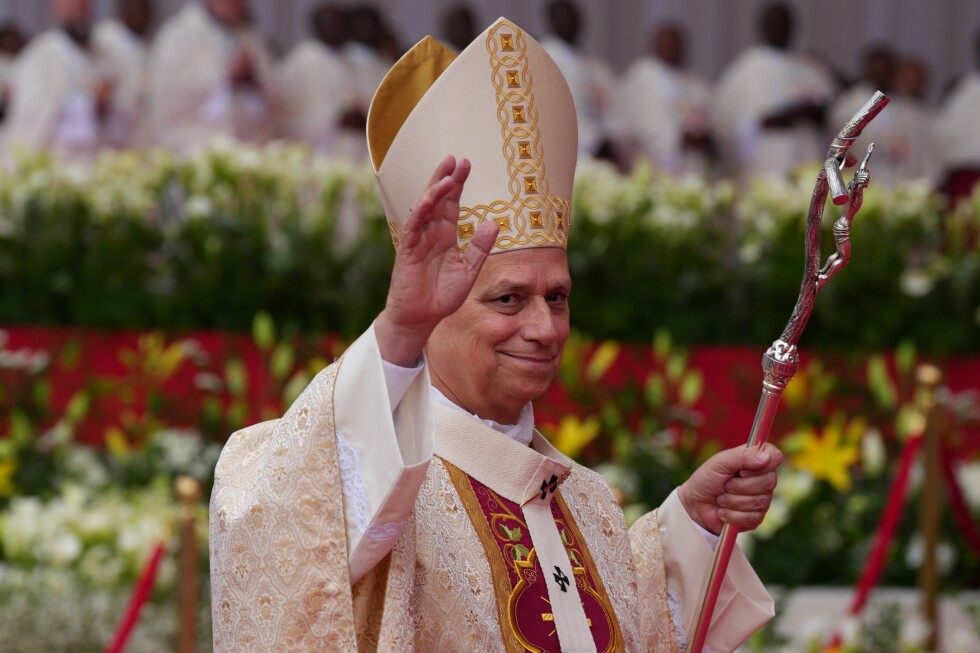
MALABO, Equatorial Guinea – Pope Leo XIV closed out a landmark 11-day, four-nation tour of Africa on Thursday, wrapping up one of the most closely watched papal journeys in modern history, overshadowed by a highly public back-and-forth with former U.S. President Donald Trump. The final stop of the trip, a farewell Mass held at Malabo’s main sports stadium, was greeted by an intense early-morning rainstorm that soaked the 30,000 devotees who had gathered before dawn to see the pontiff. The downpour paused just as Pope Leo arrived in his covered popemobile, weaving through a crowd of cheering worshippers greeting him with thunderous applause. This voyage spanned more than 17,700 kilometers (11,000 miles) across Algeria, Cameroon, Angola, and Equatorial Guinea, with 18 separate flights – including three in a single day Wednesday that crisscrossed Equatorial Guinea from its western coast to its eastern border with Gabon and back.
As the first American pope in Church history, Leo drew raucous, enthusiastic welcome nearly everywhere he traveled, particularly in remote regions that had never hosted a papal visit before. Papal foreign travel dates back to 1964, when Pope Paul VI made the first modern international trip to Jordan and Israel. It was St. John Paul II who transformed the role of the globetrotting pontiff, completing 104 foreign trips over 27 years and popularizing multi-nation itineraries like the one Leo followed on this African journey.
Many local worshippers went to extraordinary lengths to attend the final Mass. Michaela Mecha, a nurse who brought her two young daughters and her sister Encarnacion to the stadium, arrived at 4 a.m. in the pouring rain, decked out head-to-toe in pope-themed gear, including yellow umbrellas printed with Leo’s portrait. “We feel very special and blessed that the pope has chosen our country,” Mecha said. “This visit is bringing young people closer to God.” In his homily, Leo honored Fortunato Nsue Esono Ayíambeng, the vicar general of Malabo and a member of the tour’s organizing committee, who died on April 17. “May full light be shed on the circumstances of his death,” the pontiff said, an apparent nod to widespread rumors of foul play surrounding the death.
What was expected to be a focused pastoral trip quickly became entangled in geopolitical tension, when Trump launched a series of unprecedented public attacks against the pope over his stance on the ongoing Iran conflict. On the first day of the tour, Leo pushed back, noting he was simply preaching the Gospel of peace and maintained he had no fear of the Trump administration, after Trump accused the pope of being soft on crime and aligned with left-wing politics. As attacks continued, Vice President JD Vance joined the criticism, warning Leo to “be careful” when discussing theological issues. Leo attempted to de-escalate the conflict, blaming media for taking his words out of context. The effort ultimately succeeded: both sides moved on from the dispute, allowing the pope to refocus on his African agenda, which centered on encouraging local Catholics with a message of hope while calling out what he described as the continued “colonization” of the continent’s natural resources by foreign actors. Later, after headlines misconstrued a criticism of “a handful of tyrants” as an attack on Trump, the pope clarified the remark was not aimed at the U.S. president.
The 11-day trip was filled with emotional and personal moments that highlighted Leo’s pastoral approach. In Sampaka, Equatorial Guinea, he deviated from a planned visit to a psychiatric hospital to greet every patient individually and pose for selfies. In Muxima, Angola – a historic hub of the transatlantic slave trade and now one of the country’s most popular Catholic pilgrimage sites – Leo prayed the rosary, a deeply personal act given that his own ancestry includes both enslaved people and slave owners. In Algeria’s Bab El Oued, he stopped to visit nuns from his own Augustinian religious order, and purchased a tree-of-life necklace from a display of crafts made by local women, noting it was a gift for his niece. In Cameroon’s Bamenda, located at the center of a nearly 10-year separatist conflict, he pleaded for an end to violence and condemned war-mongering leaders.
One of the most striking moments of the entire tour came during a visit to a prison in Bata, Equatorial Guinea. In the lead-up to the pope’s visit, inmates were given new neon orange or beige uniforms and new rubber shoes, the facility was repainted salmon pink, and new saplings were planted along its perimeter. When Leo arrived, inmates stood in pre-arranged positions in the open courtyard and sang a hymn about sin. After the pope spoke to them of God’s love and inherent human dignity, they danced and waved Vatican flags in unison as another rainstorm poured over the complex. Immediately after Leo and Equatorial Guinea’s justice minister exited the courtyard, the inmates broke from their choreographed formation and began chanting “Libertad! Libertad! Libertad!” – Freedom! Freedom! Freedom! – as they danced.
The lengthy tour also brought quiet milestones. On the papal plane, Leo marked the one-year anniversary of Pope Francis’ death with an off-the-cuff tribute that remembered Francis’ commitment to mercy and small, kind gestures. He also celebrated the birthdays of several reporters traveling with the Vatican press pool, with the ITA Airways flight crew passing out birthday cake to mark each occasion. When answering questions from journalists mid-tour, Leo dropped a piece of news that delighted local Catholics: the southern African nation of Angola will likely receive its first cardinal in the coming years, though not in the immediate future.
Associated Press writer Monika Pronczuk contributed to this report. AP religion coverage is supported through a collaboration with The Conversation US, with funding from Lilly Endowment Inc. The AP retains sole responsibility for all content.