分类: religion

  • 1 million turn out for pope’s Mass in Spain and iconic procession along flower-carpeted route

    1 million turn out for pope’s Mass in Spain and iconic procession along flower-carpeted route

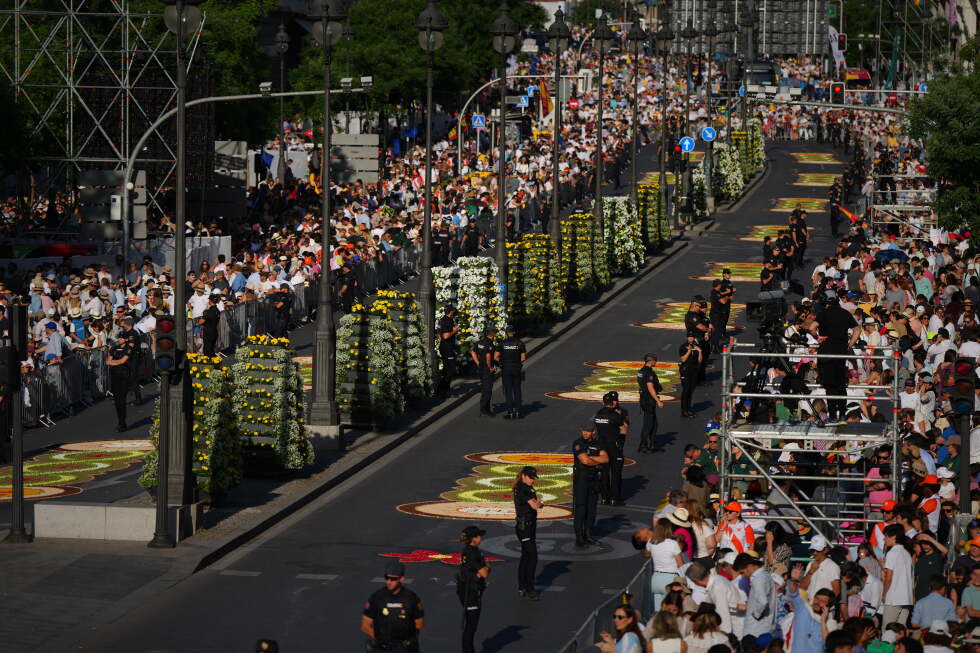
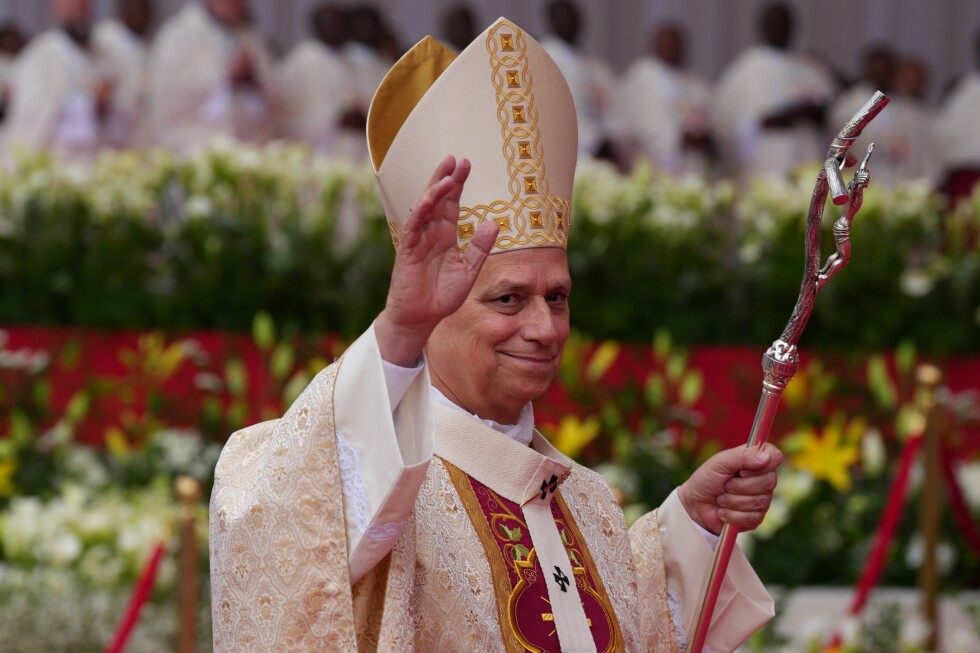
    On a bright spring Sunday in central Madrid, more than 1.2 million worshippers and onlookers flooded Plaza Cibeles and the surrounding city streets to join Pope Leo XIV for a celebratory Mass marking the Catholic feast of Corpus Domini, the centerpiece of his week-long pastoral visit to Spain. The gathering highlighted one of the country’s most beloved expressions of popular Catholic devotion: the elaborate, hand-laid flower carpets that line the route of traditional Corpus Domini processions.

    When Pope Leo arrived at the plaza, navigating the perimeter in his popemobile past crowds stacked several rows deep behind security barricades, the throng erupted in cheers, shouting out “This is the pope’s youth!” in a warm display of support. The pope, who touched down in Madrid Saturday to kick off his first visit to the country in 15 years, has centered his trip on reviving Spain’s deep-rooted Catholic heritage and drawing younger generations back to faith, at a time when the country is increasingly marked by secularization.

    A day before the public Mass, an estimated 600,000 young Catholics gathered for a vigil with the pontiff, where attendees knelt in shared silent prayer for several minutes. The turnout served as a striking counterpoint to narratives of declining religious engagement among Spanish youth. During the event, Irati Valda and Javier Hormazal, a young couple who shared that they would marry on June 13, were escorted close to the pope to receive a personal blessing. “To see so many young people together, it’s incredible. Half a million people in silence, this is something you will only live once,” Valda shared with reporters after the encounter. In an address to the gathered crowd, Pope Leo encouraged young attendees to explore religious callings: “Let me take the opportunity to tell all of you: Don’t ever be afraid of thinking about a vocation to the priesthood or religious life, or other services in the church!”

    Sunday’s procession route, stretching half a kilometer through central Madrid, was lined with 16 handcrafted flower carpets prepared by a team of florists from Spain’s Galicia region. Organizers confirmed the displays used more than 30,000 blooms, most in the yellow and white of the Holy See flag, and featured iconic symbols including the keys of the Holy See.

    The tradition of laying flower carpets for Corpus Domini processions — which are intentionally trampled by the procession as an act of offering to the Eucharist — dates back more than 200 years in Spain, and similar practices have spread to Latin America, where artisans often pair floral designs with intricate sand artwork. Poland’s Corpus Domini flower carpet tradition already holds UNESCO intangible cultural heritage status, and Galicia is currently working to secure the same designation for Spain’s variation as part of a multinational nomination.

    Public religious celebrations remain a deeply embedded part of cultural life across most of Spain, drawing practicing Catholics, non-believers, and international tourists alike. Beyond Corpus Domini, the country’s most famous religious events include the dramatic Holy Week processions held in the final week of Lent, where robed penitents and brotherhoods parade ornate sacred statues through city streets accompanied by marching bands. Many regions also host annual fiestas honoring local patron saints, and popular pilgrimages like the Pentecost El Rocío pilgrimage in Andalusia draw more than a million attendees each year, who travel on horseback and in decorated wagons to venerate a revered icon of the Virgin Mary.

    Shortly after his arrival Saturday, Pope Leo opened his visit by urging the Spanish people to bridge growing political and social divides and work toward national unity. Following Sunday’s Mass and procession, the pontiff is scheduled to hold a private meeting with members of his Augustinian religious order and deliver an address to leading Spanish cultural figures.

    This coverage from the Associated Press was contributed to by visual journalist Helena Alves, with support for AP’s religion reporting provided through a collaboration with The Conversation US, funded by Lilly Endowment Inc. The AP retains full editorial responsibility for all content.
  • Pope celebrates first anniversary of election with visit to Pompeii to pray at shrine

    Pope celebrates first anniversary of election with visit to Pompeii to pray at shrine

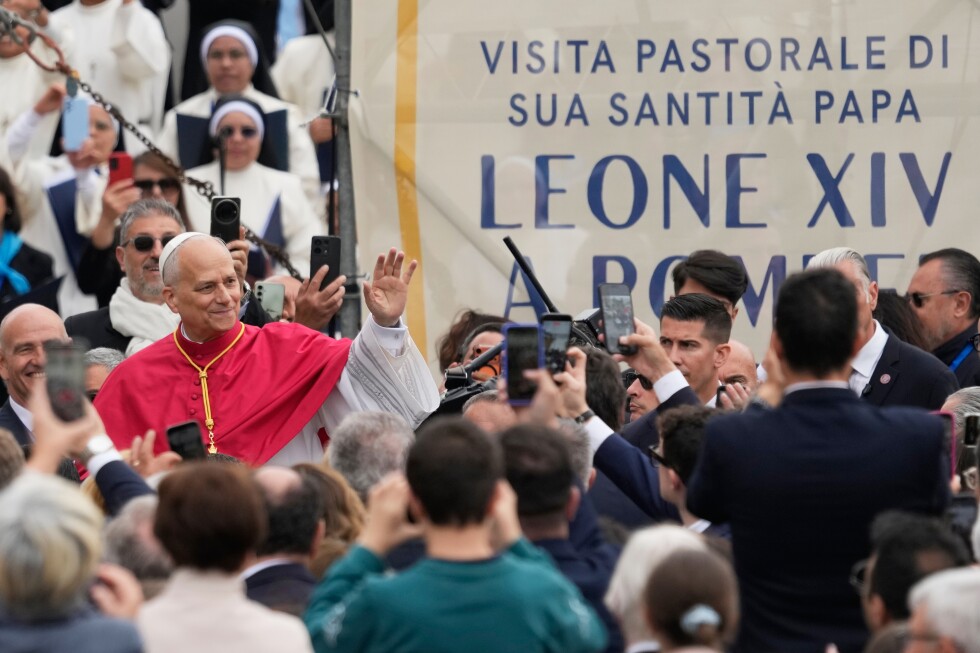
    POMPEII, Italy – On the first anniversary of his historic election as the first American-born pope, Pope Leo XIV traveled to the ancient Roman city of Pompeii on Friday to mark the occasion with quiet prayer and commemoration of a beloved Marian feast day that aligned perfectly with the start of his pontificate.

    Flying by helicopter to the archaeological hub near Naples, the pontificate dedicated his full day visit to honoring the Feast of Our Lady of Pompeii, a date that also carries historic meaning for the global Catholic Church: it was on this same day in 1876 that the cornerstone was laid for the city’s iconic sanctuary dedicated to the Virgin Mary.

    Nestled steps away from the ongoing excavations of Pompeii, the Roman town that was entirely buried under volcanic ash and gas when Mount Vesuvius erupted in 79 AD, the sanctuary draws a different crowd than the ancient ruins that welcome millions of tourists annually. For decades, it has been a major pilgrimage site for Catholics, particularly those devoted to the rosary prayer tradition.

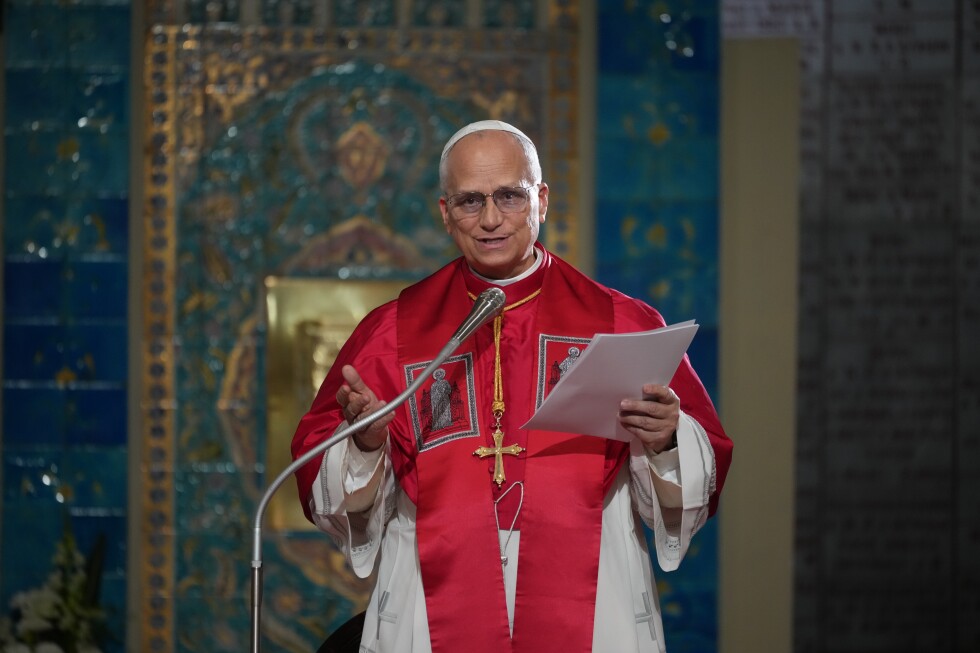
    Standing before crowds of gathered faithful ahead of celebrating Mass inside the sanctuary, Pope Leo shared his reflections on the meaningful occasion, saying, “What a beautiful day, how many blessings the Lord wanted to give to all of us. I feel I am the first blessed to be able to come here to the sanctuary of the Madonna on the day of her feast and on this anniversary.”

    This Pompeii pilgrimage marks the opening of a months-long series of day trips Pope Leo will take across the Italian peninsula over the coming weeks. The journey comes as the Bishop of Rome, who hails from the United States as former Cardinal Robert Prevost, deepens his connection to the Italian national church he serves as its symbolic head.

    The pope’s pontificate was literally launched with a prayer centered on this very feast day. On the night of his election, when he first stepped out onto the loggia of St. Peter’s Basilica to be introduced to the world, Pope Leo immediately referenced the Feast of Our Lady of Pompeii before leading crowds gathered in St. Peter’s Square in a public prayer for his new papacy. That night, he emphasized Mary’s constant presence for believers, saying, “Mary, the mother of Christ, always wants to walk at our side, to remain close to us, to help us with her intercession and her love.” He asked the crowd to join him in praying for grace for his new mission, for the global church, and for peace across the world.

    The Pompeii sanctuary is forever tied to St. Bartolo Longo, the founder who built the basilica and is widely venerated across Italy for his lifelong charitable outreach to orphans, prisoners, and other marginalized communities. In a full-circle moment for the site, the late Pope Francis approved the miracle required for Longo’s canonization from his hospital room just weeks before Francis’s death, and Pope Leo formally canonized Longo as a saint last October.

    Pope Leo opened his visit on Friday by meeting with sick and disabled people supported by a charitable center affiliated with the sanctuary, a site that was named a pontifical basilica in 1901 by Pope Leo XIII, the current pope’s namesake. In his opening remarks, he retraced Longo’s work in the region, recalling that when Longo first arrived in the Pompeii valley, “he found a land plagued by great poverty, inhabited by a few very poor farmers, and ravaged by malaria and bandits.”

    Yet despite the harsh conditions, Longo “was able to see, however, the face of Christ in everyone: in the great and the small, and especially in the orphans and the children of prisoners, to whom he made the beating of God’s heart felt through his tenderness,” the pope added.

    Thousands of cheering Italian faithful lined the pope’s route, with many reporting they had waited since the middle of the night to catch a glimpse of the new pontiff. Many attendees made clear they were paying close attention to the recent public disagreement between Pope Leo and U.S. President Donald Trump over the escalating conflict in Iran, and they expressed strong approval of the pope’s response.

    “He doesn’t let anyone intimidate him. Look at the recent issues with Trump,” said Rita Borriello, a resident of nearby Torre del Greco. After Trump publicly criticized the pope, Leo “simply answered, ‘I preach the Gospel’. I see him as a very humble pope, very close to us, a pope who entered in our hearts.”

    Reporter Nicole Winfield contributed reporting from Rome. This coverage of religion comes via the Associated Press’s collaboration with The Conversation US, with funding provided by Lilly Endowment Inc. The AP retains full editorial responsibility for all content.
  • Pope wraps up an Africa visit for the history books with a Mass in Equatorial Guinea

    Pope wraps up an Africa visit for the history books with a Mass in Equatorial Guinea

    MALABO, Equatorial Guinea – Pope Leo XIV closed out a landmark 11-day, four-nation tour of Africa on Thursday, wrapping up one of the most closely watched papal journeys in modern history, overshadowed by a highly public back-and-forth with former U.S. President Donald Trump. The final stop of the trip, a farewell Mass held at Malabo’s main sports stadium, was greeted by an intense early-morning rainstorm that soaked the 30,000 devotees who had gathered before dawn to see the pontiff. The downpour paused just as Pope Leo arrived in his covered popemobile, weaving through a crowd of cheering worshippers greeting him with thunderous applause. This voyage spanned more than 17,700 kilometers (11,000 miles) across Algeria, Cameroon, Angola, and Equatorial Guinea, with 18 separate flights – including three in a single day Wednesday that crisscrossed Equatorial Guinea from its western coast to its eastern border with Gabon and back.

    As the first American pope in Church history, Leo drew raucous, enthusiastic welcome nearly everywhere he traveled, particularly in remote regions that had never hosted a papal visit before. Papal foreign travel dates back to 1964, when Pope Paul VI made the first modern international trip to Jordan and Israel. It was St. John Paul II who transformed the role of the globetrotting pontiff, completing 104 foreign trips over 27 years and popularizing multi-nation itineraries like the one Leo followed on this African journey.

    Many local worshippers went to extraordinary lengths to attend the final Mass. Michaela Mecha, a nurse who brought her two young daughters and her sister Encarnacion to the stadium, arrived at 4 a.m. in the pouring rain, decked out head-to-toe in pope-themed gear, including yellow umbrellas printed with Leo’s portrait. “We feel very special and blessed that the pope has chosen our country,” Mecha said. “This visit is bringing young people closer to God.” In his homily, Leo honored Fortunato Nsue Esono Ayíambeng, the vicar general of Malabo and a member of the tour’s organizing committee, who died on April 17. “May full light be shed on the circumstances of his death,” the pontiff said, an apparent nod to widespread rumors of foul play surrounding the death.

    What was expected to be a focused pastoral trip quickly became entangled in geopolitical tension, when Trump launched a series of unprecedented public attacks against the pope over his stance on the ongoing Iran conflict. On the first day of the tour, Leo pushed back, noting he was simply preaching the Gospel of peace and maintained he had no fear of the Trump administration, after Trump accused the pope of being soft on crime and aligned with left-wing politics. As attacks continued, Vice President JD Vance joined the criticism, warning Leo to “be careful” when discussing theological issues. Leo attempted to de-escalate the conflict, blaming media for taking his words out of context. The effort ultimately succeeded: both sides moved on from the dispute, allowing the pope to refocus on his African agenda, which centered on encouraging local Catholics with a message of hope while calling out what he described as the continued “colonization” of the continent’s natural resources by foreign actors. Later, after headlines misconstrued a criticism of “a handful of tyrants” as an attack on Trump, the pope clarified the remark was not aimed at the U.S. president.

    The 11-day trip was filled with emotional and personal moments that highlighted Leo’s pastoral approach. In Sampaka, Equatorial Guinea, he deviated from a planned visit to a psychiatric hospital to greet every patient individually and pose for selfies. In Muxima, Angola – a historic hub of the transatlantic slave trade and now one of the country’s most popular Catholic pilgrimage sites – Leo prayed the rosary, a deeply personal act given that his own ancestry includes both enslaved people and slave owners. In Algeria’s Bab El Oued, he stopped to visit nuns from his own Augustinian religious order, and purchased a tree-of-life necklace from a display of crafts made by local women, noting it was a gift for his niece. In Cameroon’s Bamenda, located at the center of a nearly 10-year separatist conflict, he pleaded for an end to violence and condemned war-mongering leaders.

    One of the most striking moments of the entire tour came during a visit to a prison in Bata, Equatorial Guinea. In the lead-up to the pope’s visit, inmates were given new neon orange or beige uniforms and new rubber shoes, the facility was repainted salmon pink, and new saplings were planted along its perimeter. When Leo arrived, inmates stood in pre-arranged positions in the open courtyard and sang a hymn about sin. After the pope spoke to them of God’s love and inherent human dignity, they danced and waved Vatican flags in unison as another rainstorm poured over the complex. Immediately after Leo and Equatorial Guinea’s justice minister exited the courtyard, the inmates broke from their choreographed formation and began chanting “Libertad! Libertad! Libertad!” – Freedom! Freedom! Freedom! – as they danced.

    The lengthy tour also brought quiet milestones. On the papal plane, Leo marked the one-year anniversary of Pope Francis’ death with an off-the-cuff tribute that remembered Francis’ commitment to mercy and small, kind gestures. He also celebrated the birthdays of several reporters traveling with the Vatican press pool, with the ITA Airways flight crew passing out birthday cake to mark each occasion. When answering questions from journalists mid-tour, Leo dropped a piece of news that delighted local Catholics: the southern African nation of Angola will likely receive its first cardinal in the coming years, though not in the immediate future.

    Associated Press writer Monika Pronczuk contributed to this report. AP religion coverage is supported through a collaboration with The Conversation US, with funding from Lilly Endowment Inc. The AP retains sole responsibility for all content.

  • Pope Leo XIV in Algeria to walk in footsteps of his spiritual father, St. Augustine

    Pope Leo XIV in Algeria to walk in footsteps of his spiritual father, St. Augustine

    On just his second full day in Algeria, marking the first ever papal visit to the North African nation, Pope Leo XIV traveled to Annaba — modern-day Hippo — to walk in the footsteps of his greatest spiritual inspiration, St. Augustine. This pilgrimage is far more than a diplomatic stop: it is a deeply personal homecoming for the first American pope, who has anchored his pontificate to the legacy of the fifth-century Christian theologian, and comes against the backdrop of a growing public feud with U.S. President Donald Trump over Leo’s calls for peace amid the U.S.-Israel conflict with Iran.

    Leo has long tied his papacy to Augustine, identifying himself as a “son of St. Augustine” the night of his election and repeatedly citing the theologian’s teachings in his first year in office. For this trip, which is centered on advancing a message of interfaith harmony between Christians and Muslims, Leo is framing Augustine as a timeless model of bridge-building across ideological and religious divides.

    The visit also reframes a key figure in Western thought, drawing long-overdue attention to Augustine’s North African origins. Though Augustine is widely framed through a Eurocentric lens as one of the most influential European Christian thinkers, he spent nearly his entire life in what is now Algeria. Born in 354 CE to a Berber mother and Roman father in Thagaste — modern-day Souk Ahras, near Algeria’s border with Tunisia — Augustine was educated in Carthage (part of modern-day Tunisia) and taught rhetoric there before leaving for Italy in 383 CE. After his conversion to Christianity in Milan, he returned to North Africa just a few years later, founded a monastery in Hippo, served as a bishop, and wrote his most iconic works — including *Confessions* and *The City of God*, cornerstones of the Western intellectual canon — before his death in Hippo. Only five years of his life were spent on Italian soil.

    Scholar Catherine Conybeare, an Augustine expert at Bryn Mawr College in Pennsylvania, explores this underemphasized African identity in her new book *Augustine the African*, which examines how Augustine viewed himself as a North African looking toward Rome as the center of his faith, yet grappled with insecurity over his Punic-accented Latin. Conybeare notes that the narrative of Augustine’s legacy was shaped for centuries by European successors who relocated his remains to Pavia, Italy, after his death — leaving only one forearm relic in Annaba’s St. Augustine Basilica. “One of the most important thinkers in the Western intellectual tradition actually came from Africa, spent almost his whole life in Africa,” Conybeare told the Associated Press. “How does that change things?”

    Algerian President Abdelmadjid Tebboune welcomed the pope, expressing the nation’s “immense pride” in Augustine, calling him “a cherished son of this land, which having been his first cradle, proudly became his initial resting place.”

    For Leo, the pilgrimage is the fulfillment of a long-held promise. He told reporters on the papal plane that he had planned this stop as the first trip of his pontificate, having announced as early as the previous May that he wanted his first international journey as pope to be to Africa. Multiple advisors immediately pointed him toward Algeria, given his deep ties to Augustine. Though other travel priorities intervened, Leo ultimately kept the commitment. This is not his first visit to the region: he traveled to Annaba twice before while serving as superior of the Augustinian religious order, which was founded in 13th-century Italy in Augustine’s honor.

    Leo emphasized that Augustine’s legacy offers a critical model for a divided world today. The saint, he said, represents “a very important bridge in interreligious dialogue” that global communities urgently need. “We must always seek bridges to build peace and reconciliation,” he said. “This journey, then, truly represents a valuable opportunity to continue with the same voice, with the same message, that we wish to convey: to promote peace, reconciliation, respect and consideration for all peoples.”

    During his time in Annaba, the pope toured the archaeological ruins of ancient Roman Hippo, including the theater, market, thermal baths, and the foundations of the original basilica where Augustine preached and the adjoining baptistry. He also met with a local order of nuns and the small Augustinian community based in the city, before closing the day with a Mass at the 19th-century Basilica of St. Augustine, which houses Augustine’s remaining forearm relic. The site draws thousands of pilgrims annually, including Muslim visitors, a testament to the shared cultural heritage Leo seeks to highlight.

    This coverage of religion by the Associated Press is supported through a collaboration with The Conversation US, with funding from Lilly Endowment Inc. The AP retains sole responsibility for all content.

  • Pope Leo calls for global leaders to choose peace in his first Easter Mass

    Pope Leo calls for global leaders to choose peace in his first Easter Mass

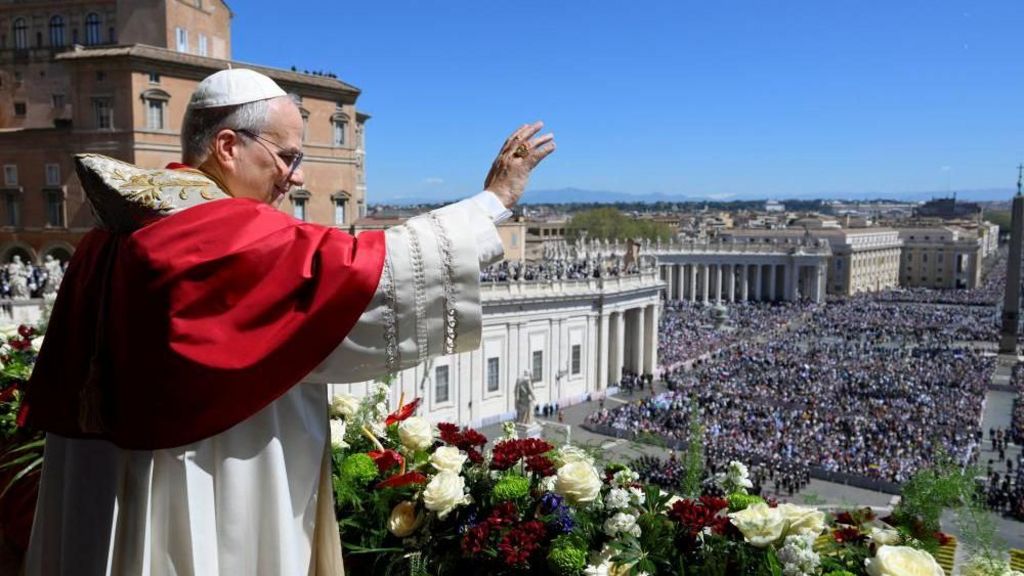
    On Easter Sunday, thousands of devout worshippers packed Vatican City’s St. Peter’s Square to witness a historic moment: the first ever Easter Mass and address delivered by Pope Leo XIV, the first pontiff born in the United States.

    Framed by elegant arrangements of white roses on the central balcony of St. Peter’s Basilica, the new pontiff opened his message with a urgent plea directed at global power holders. Standing against a backdrop of vibrant spring decor—rows of sunny daffodils interspersed with thousands of purple, red, and white blooms arranged for the holiest day on the Christian liturgical calendar—Leo called for an end to the violence tearing through communities across the globe.

    “On this day of celebration, let us abandon every desire for conflict, domination and power, and implore the Lord to grant his peace to a world ravaged by wars,” he told the gathered crowd. Expanding on his critique of global inaction in the face of bloodshed, the pontiff highlighted a dangerous cultural shift taking root across the world: “We are growing accustomed to violence, resigning ourselves to it, and becoming indifferent, indifferent to the deaths of thousands of people.”

    He doubled down on his core appeal, stating clearly: “Let those who have weapons lay them down. Let those who have the power to unleash wars choose peace.” In a departure from recent papal tradition, Leo chose not to name specific nations or ongoing conflicts in his main Easter address, though his track record of public criticism makes his priorities clear: he has emerged as a prominent vocal opponent of the ongoing war between the United States and Iran, and has used every recent public platform to denounce global armed conflict and push for immediate de-escalation. Earlier this week, he made an uncommon direct appeal to U.S. President Donald Trump, urging him to pursue a diplomatic “off-ramp” to end the Iran conflict.

    Before closing his address, Leo paid respectful tribute to his predecessor, Pope Francis, who delivered his final Easter address exactly one year prior, only hours before his death. Drawing a connection between the core Easter narrative of Jesus Christ’s resurrection after crucifixion and modern calls for peace, Leo emphasized that Christ remained entirely nonviolent even in the face of unjust suffering.

    Following his address, the pontiff delivered the traditional “Urbi et Orbi” blessing—Latin for “to the city [of Rome] and the world”—to the crowd below, waving to thousands of gathered faithful before concluding the service. As Vatican bells rang out across the city-state and the assembled worshippers erupted in applause, Leo closed the event by offering Easter greetings in multiple languages, including Latin, Arabic, and Chinese.

    Consistent with his sustained push for peace advocacy, the pope also announced he would return to St. Peter’s Basilica on April 11 to lead a special prayer vigil dedicated to global peace. This public event marks the next step in a weeks-long campaign by Pope Leo to draw attention to the human cost of war: during Holy Week leading up to Easter, he delivered a series of addresses warning against growing public apathy toward suffering caused by armed conflict. During his sermon at the Easter Vigil held Saturday night, he urged Christian believers across the world not to grow numb to the scale of global violence, but to actively work toward reconciliation between divided groups.

  • Pope Leo XIV revives the Holy Thursday foot-washing of priests after Francis’s inclusive tradition

    Pope Leo XIV revives the Holy Thursday foot-washing of priests after Francis’s inclusive tradition

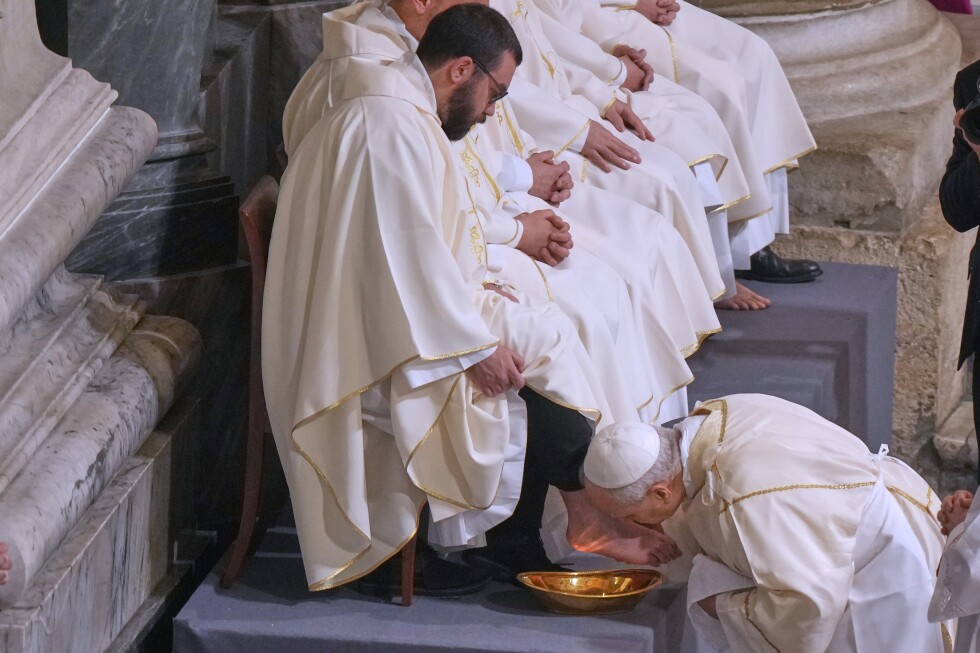
    VATICAN CITY, ROME — In a deliberate departure from the progressive reforms of his predecessor Pope Francis, Pope Leo XIV has revived a centuries-old tradition for the Holy Thursday foot-washing ritual, washing the feet of 12 priests this year in a ceremony held at Rome’s Archbasilica of St. John Lateran, the official episcopal seat of the Bishop of Rome.

    Among the 12 participants, 11 were ordained by Leo himself just last year, and the group was rounded out by Rev. Renzo Chiesa, head of the Rome Diocese’s main seminary. Following the long-standing script for the ritual, Leo poured water over each priest’s feet from a ornate golden pitcher, dried them with a plain white linen cloth, and finished with a ceremonial kiss. In his homily delivered during the service, the pontiff framed the humble act as a reflection of divine power, calling it a “gratuitous and humble gesture” that reveals “the true omnipotence of God.”

    “Through this act, Jesus purifies not only our image of God – from the idolatry and blasphemy that have distorted it – but also our image of humanity,” Leo told attendees. The pope, who has already established a pattern of outspoken public opposition to global armed conflict, added that modern conceptions of power stand in stark contrast to Christ’s example: “For we tend to consider ourselves powerful when we dominate, victorious when we destroy our equals, great when we are feared. In contrast, as true God and true man, Christ offers us the example of self-giving, service and love.”

    The foot-washing rite is a central tradition of Christian Holy Week, commemorating the act of Jesus washing the feet of his 12 apostles during the Last Supper, ahead of his crucifixion. For decades before Francis’ papacy, popes exclusively performed the ritual on Catholic men within the walls of a Rome basilica. But when Francis took office in 2013, he revolutionized the ceremony, expanding it to include laypeople, women, and even non-Christians, often holding services in unconventional settings including prisons, youth detention facilities, and refugee asylum centers. Francis framed this shift as a rejection of the “clerical culture” that elevates priests above lay followers, an attitude he blamed for enabling the systemic clergy sexual abuse crisis that has shaken the global Catholic Church for decades.

    Leo’s decision to roll back this reform and restore the ritual’s exclusive focus on priests is not an arbitrary change, but a deliberate step aligned with his broader papal priorities. The new pontiff has made supporting and protecting clergy a core focus of his early tenure, highlighting the struggles many priests face in modern ministry. Just this week, the Vatican released Leo’s monthly prayer intentions for April, which are dedicated to priests experiencing crisis, burnout, loneliness, and spiritual doubt. In that message, Leo pushed back against the idea that priests are mere ecclesiastical functionaries, asking: “Let them feel they are not mere functionaries or lonely heroes, but beloved sons, humble and cherished disciples, and pastors sustained by the prayer of their people.” He called on lay Catholic faithful to support their clergy, urging them “to listen without judging, to give thanks without demanding perfection,” and walk alongside priests through persistent prayer.

    This shift in the Holy Thursday ritual is the latest in a series of early moves by Pope Leo that signal a return to more traditional Vatican practices, paired with a renewed focus on lifting up the Catholic clergy. It comes alongside other recent high-profile actions from the new pontiff, including carrying the cross during the entire Good Friday procession (the first pope to do so in decades) and delivering repeated calls for global peace in his first Easter celebrations as head of the Catholic Church.