PARIS — In a landmark step to address the long-standing challenge of irregular migration across the English Channel, the United Kingdom and France are scheduled to formalize a new multi-million pound agreement on Thursday, which ramps up joint enforcement and surveillance measures along France’s northern coastline to cut down on small boat crossings.
The three-year accord will be signed during a joint site visit by UK Home Secretary Shabana Mahmood and French Interior Minister Laurent Nunez, marking a deepening of bilateral cooperation on one of the most contentious migration issues in Western Europe. The framework of the deal sets out a clear funding structure and measurable performance benchmarks that tie additional financing to tangible progress in stopping crossing attempts.
Under the terms of the agreement, the UK will commit an initial 500 million pounds (equivalent to $675 million) to bolster counter-migration operations in northern France. A further 160 million pounds ($216 million) in additional funding will be disbursed only if the new tactics deliver successful results, the UK Home Office confirmed. If intervention efforts fail to meet agreed targets, this supplementary funding will be terminated after the first year of implementation.
France’s Interior Ministry outlined sweeping planned increases to on-the-ground enforcement capacity: the total number of deployed security officers will rise from the current 907 to 1,392 by the 2026-2029 period. France will also fund the creation of a dedicated new police unit focused explicitly on dismantling irregular smuggling networks that facilitate Channel crossings.
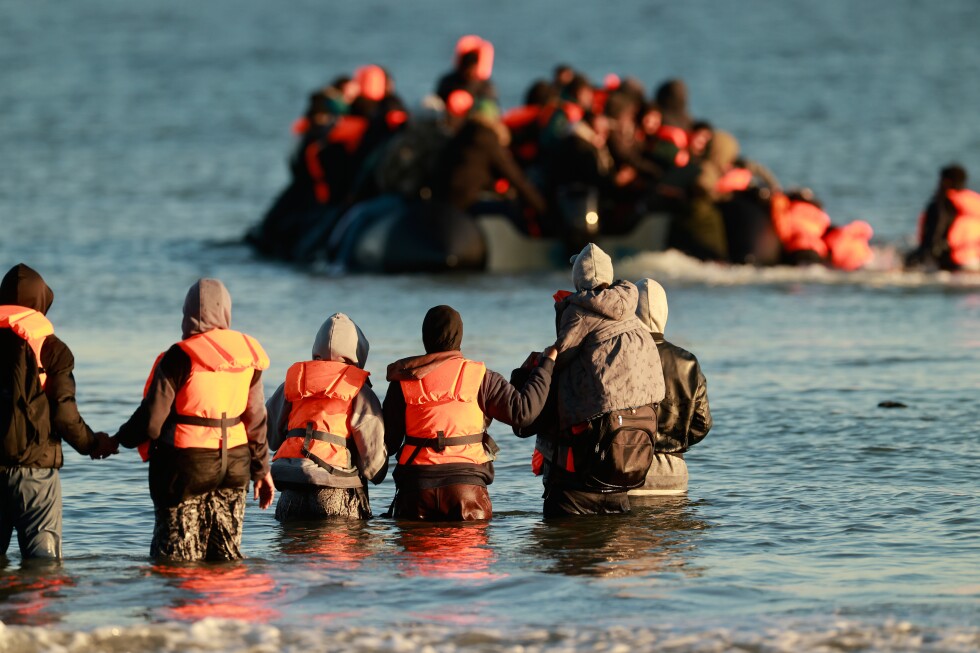
A core component of the new deal is targeting the increasingly common smuggling practice of so-called “taxi boats” — small, usually inflatable motorized vessels operated by smuggling rings. Unlike craft carried into the water by migrants themselves, these “taxi boats” depart empty from hidden, isolated coastal spots before picking up groups of migrants at pre-arranged beach meeting points along France’s long northern shoreline. New surveillance technology will be deployed specifically to disrupt these coordinated departures.
Surveillance capabilities will be significantly expanded across the region, with the deployment of more drones, helicopter patrols and electronic monitoring systems to detect and intercept crossing attempts before they can depart French territory. UK Prime Minister Keir Starmer emphasized that existing bilateral cooperation has already delivered meaningful results. “Cooperation between our two countries has already stopped tens of thousands of crossings,” Starmer said, adding that “this historic agreement means we can go further — ramping up intelligence, surveillance and boots on the ground to protect Britain’s borders.”
Early data from the French Interior Ministry shows that intervention efforts are already moving in the right direction: total migrant arrivals in the UK so far this year have dropped by more than 50% compared to the same period in 2025. Last year alone, joint police operations led to the arrest of 480 people suspected of involvement in people-smuggling networks.
Most of the new resources allocated under the agreement will be deployed ahead of early summer, the annual peak period for crossing attempts when milder weather makes the dangerous journey more likely to be attempted by smugglers and migrants.
The announcement of the new deal comes in the wake of a recent fatal incident that underscored the deadly risks of irregular Channel crossings. Earlier this month, four migrants — two men and two women — died while attempting to board an inflatable boat off northern France’s coast. British law enforcement arrested a Sudanese national on Friday on suspicion of endangering life in connection with the tragedy.
This new agreement is the latest update to bilateral migration cooperation, building on the 2018 Sandhurst Treaty that was most recently renewed in 2023. Both governments have framed the accord as a pragmatic, results-focused approach to tackling a shared challenge that has strained bilateral relations and posed major humanitarian and security risks for years.