博客

  • Iranian woman among migrants deported from the US to the Central African Republic

    Iranian woman among migrants deported from the US to the Central African Republic

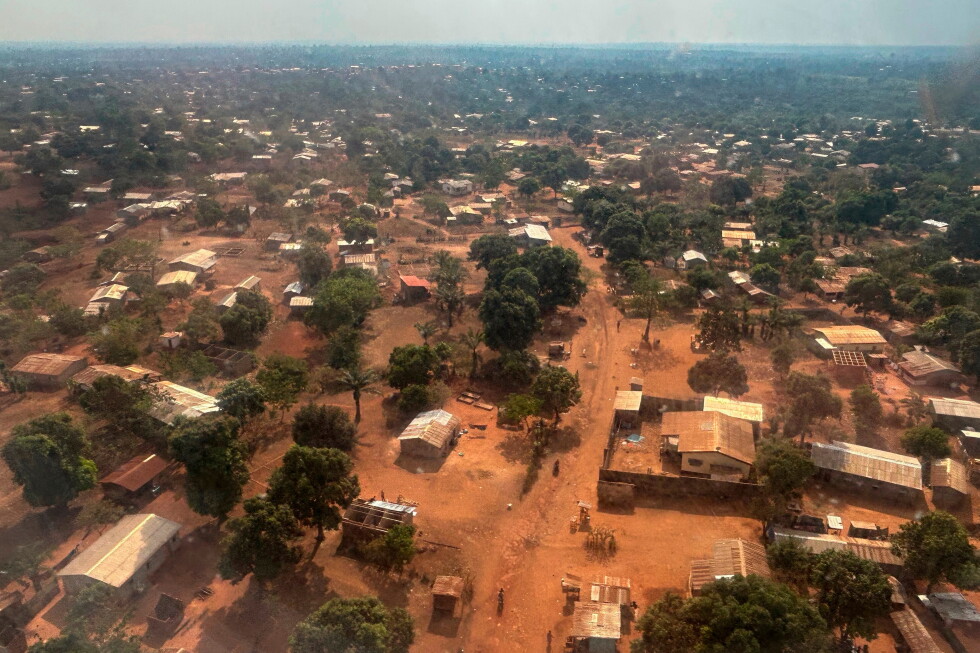
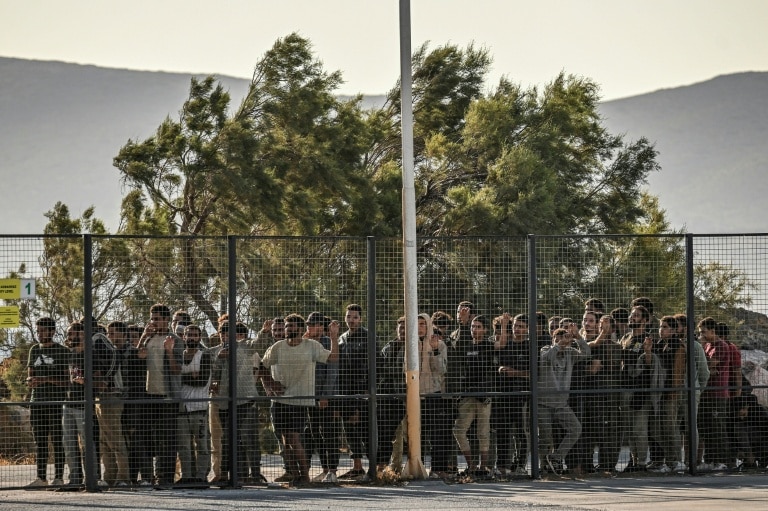
    A deportation flight organized by the former Trump administration is set to land in the Central African Republic’s capital Bangui on Friday, carrying roughly two dozen migrants from third countries, including one Iranian woman who had previously been granted protection from deportation to her home nation, legal representatives confirmed.

    This transfer marks the latest high-profile example of the controversial, largely secretive agreements Washington struck with multiple African and Latin American nations to accept deportees who are not citizens of their receiving countries, a policy that has drawn widespread condemnation from immigration advocates and legal experts.

    According to immigration rights advocates, the Central African Republic — a chronically impoverished, conflict-battered nation — is one of at least 10 African countries that have signed onto these third-country deportation arrangements. As part of a broader hardline U.S. immigration crackdown during the Trump administration, officials struck these often-unpublic deals to expel thousands of non-citizen migrants to countries that are not their country of origin, across roughly 24 nations total.

    Immigration lawyers argue the policy is a deliberate legal loophole, designed to indirectly force asylum seekers who would otherwise be protected from return to their home countries into dangerous third-party states, effectively circumventing court-ordered deportation protections.

    The flight departed Louisiana late Thursday bound for Bangui, though exact passenger numbers have not been officially confirmed. Ali Rahnama, president of the Iranian American Legal Defense Fund, who has been in direct contact with several of the detained migrants, confirmed the group includes nationals from Iran, Jordan, Armenia, Turkey, Georgia and Afghanistan.

    Sahar Jalili Pawelski, an immigration lawyer representing three Iranian women initially slated for deportation on this flight, explained that two of her three clients secured emergency court orders that temporarily paused their removal, while judges review whether the U.S. government’s deportation action is legally valid. All three Iranian women had previously received court-ordered protection from deportation to Iran, after judges ruled they faced credible threats of persecution based on their political beliefs or religious identity, both Pawelski and Rahnama confirmed. Only one Iranian woman remains on the flight scheduled to land Friday.

    An elderly Syrian migrant also scheduled for deportation to the Central African Republic similarly obtained an emergency temporary order halting his removal, according to his attorney Margaret Stock.

    U.S. Department of Homeland Security officials declined to comment on the specific case Thursday, citing security policies that prevent confirmation of upcoming removal operations. U.S. Immigration and Customs Enforcement also did not immediately respond to requests for comment on the deportation flight.

    The receiving country, the Central African Republic, has been ravaged by years of armed conflict between government forces and rebel factions, and ranks among the poorest countries on Earth. Despite holding extensive gold reserves, one in three Central African citizens survives on less than $2 USD per day. The nation is also a historic hub of activity for the Russian private mercenary group Wagner, which for years provided security to President Faustin-Archange Touadéra and led combat operations against rebel groups.

    While the Central African Republic remains one of Russia’s closest African allies, recent tensions have emerged between Touadéra and Moscow, after Russia demanded Wagner be replaced by the state-run Africa Corps. Rahnama has raised particular alarm over the deportation of the Iranian asylum seeker to the Central African Republic, pointing to Russia’s widespread influence in the country and the close security partnership between Moscow and Tehran, which puts the migrant at heightened risk of harm.

    This report was compiled by correspondent Banchereau in Dakar, Senegal, with additional contribution from Associated Press writer Rebecca Santana based in Washington.

  • ‘I will come home safely’: Indian sailor’s last words to wife before a US strike killed him

    ‘I will come home safely’: Indian sailor’s last words to wife before a US strike killed him

    # Three Indian Sailors Killed In U.S. Gulf Of Oman Strike Leave Grieving Families Waiting For Answers

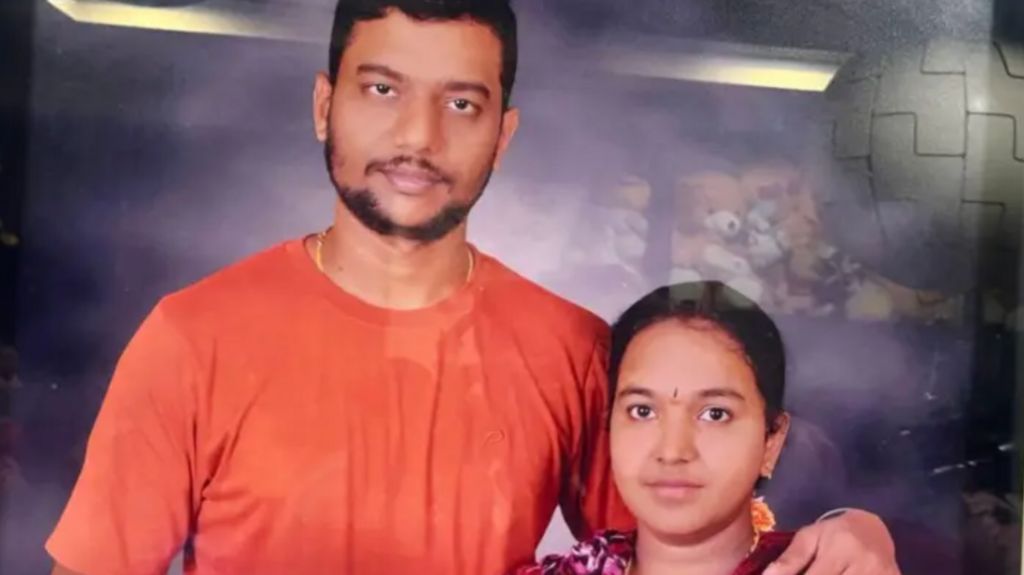
    For Patnala Bhargavi, what should have been a month of quiet celebration to mark 15 years of marriage has instead become a period of overwhelming grief. Her husband, 15-year veteran marine engineer Patnala Suresh, was one of three Indian crew members killed this week when the United States military struck the oil tanker MT Settebello in waters near the Gulf of Oman.

    The U.S. operation was framed as part of Washington’s ongoing enforcement of a blockade against Iran-linked maritime activity. U.S. Central Command confirmed the strike, stating that the tanker ignored multiple official warnings and was found to be carrying Iranian oil. This narrative has been forcefully rejected by the MT Settebello’s management, which says the vessel had no ties to Iran and received no advance warning before the attack. Twenty-one of the 24 crew members on board were rescued alive after the strike.

    Across India, the deaths of the three sailors have sent shockwaves through coastal and inland communities alike, where seafarers often take on dangerous overseas jobs to support their extended families back home. Beyond private grief, loved ones are united in their demands: a full accounting of the strike that killed their family members, and the swift repatriation of the sailors’ remains for funeral rites.

    India’s federal government has already moved to respond to the incident. Shipping Minister Sarbananda Sonowal confirmed in a post on the social platform X that work is underway to coordinate the return of the sailors’ bodies, calling the deaths a “profound loss” for India’s large maritime workforce. New Delhi has also taken formal diplomatic action: it summoned a senior U.S. diplomatic official to lodge a strong official protest, and called for an immediate end to strikes targeting commercial shipping vessels in the already tense Gulf region.

    But for the families grappling with sudden loss, the details of geopolitical maneuvering feel distant and abstract. Their pain is rooted in broken promises and unfulfilled plans.

    Bhargavi still holds onto the last words her husband shared with her before contact was lost. “There have been attacks in this area and some people have been killed,” Suresh told her, “But don’t worry about me. I’ll come home safely, and we’ll celebrate our anniversary properly.”

    Now, surrounded by photos of Suresh, the couple’s two young sons, and the two nieces Suresh helped raise after Bhargavi’s older sister and brother-in-law passed away, the 39-year-old widow struggles to reconcile that promise with the new reality of life without her husband, who was the family’s only source of income.

    Suresh had built a 15-year career at sea, working his way up to chief engineer, a role that entitled him to six months of paid leave annually. His father Ramakrishna says Suresh rarely took the full time off, drawn to his work and committed to providing for his family. For years, the family adapted to his long absences: Bhargavi and Suresh spoke every few days over video call, often with other crew members popping in to say hello. But starting June 5, calls became patchy, and stopped entirely by June 9.

    Bhargavi initially assumed the issue was just spotty maritime connectivity. But after two days of silence, news of the strike reached her family. At first, they clung to hope that there had been a mistake, and that Suresh would turn up alive among the rescued crew. That hope faded quickly; on Thursday, the tanker’s management confirmed Suresh was killed instantly when the strike hit, as he was conducting a routine inspection of a faulty generator in the engine room. Centcom, the U.S. military command for the region, has released footage it claims shows the damage to the tanker’s engine room from the strike.

    The family is now calling on the Indian government to provide urgent financial support to help them raise and educate the four children who depended entirely on Suresh’s income. “The entire family depended on his income. Now I don’t know how I’ll educate or raise the children,” Bhargavi says.

    The same unanswered questions and raw grief hang over the families of the other two killed sailors, hundreds of kilometers from Visakhapatnam. In India’s northern Himachal Pradesh state, Hamirpur district, the family of 23-year-old Aditya Sharma, an only son, is demanding answers of their own.

    “I want my son’s body to be returned to us. We should also be told what happened in his final moments,” Aditya’s father Rajesh Sharma told BBC Hindi. Rajesh Sharma also questioned the outcome of the rescue operation: “The others were rescued, so why couldn’t these three be saved?”

    More than 1,000 kilometers away, in Deoria district of the northern state of Uttar Pradesh, 35-year-old Shivanand Chaurasia’s family is dealing with the same sudden loss. A skilled fitter, Chaurasia had left home eight months earlier to take up a contract with a foreign shipping firm. “We spoke to him the night before last. He told us everything was fine,” his father Ramji Chaurasia told Indian news agency ANI. “Now we have been told that he is no more.”

    Like Bhargavi, both families say their only priority right now is bringing their loved ones home for a proper burial. The geopolitical tensions that led to the strike are irrelevant to them; what matters is getting to see their sons, husbands and providers one last time, and getting clarity on how they died.

  • Watch: Three things to know about SpaceX’s stock market debut

    Watch: Three things to know about SpaceX’s stock market debut

    SpaceX, the Elon Musk-founded aerospace and space exploration giant, is on the cusp of one of the most anticipated initial public offerings in recent market history. The BBC’s global business correspondent Samira Hussain has broken down the most critical details that investors and industry observers need to understand ahead of this landmark market entry. This IPO is far more than just another corporate listing: it represents a coming-of-age moment for the commercial space industry, which has evolved from a niche government-dependent sector to a multi-billion dollar private market attracting widespread investor interest. Hussain’s breakdown clarifies three core areas that shape expectations for the offering: the company’s unique market position, the risks and opportunities facing potential shareholders, and what the debut signals for the future of private space innovation. As one of the most valuable private startups in the world, SpaceX’s transition to a publicly traded company has been years in the making, with its existing portfolio of revolutionary projects — from satellite internet through Starlink to NASA crewed missions to the International Space Station — already redefining what private companies can achieve in low Earth orbit and beyond. Hussain’s explanatory analysis cuts through the hype surrounding the IPO, giving audiences a clear, accessible breakdown of the factors that will define the success of this historic stock market debut.

  • Sardinian beach bans umbrellas for 10 to 65-year-olds

    Sardinian beach bans umbrellas for 10 to 65-year-olds

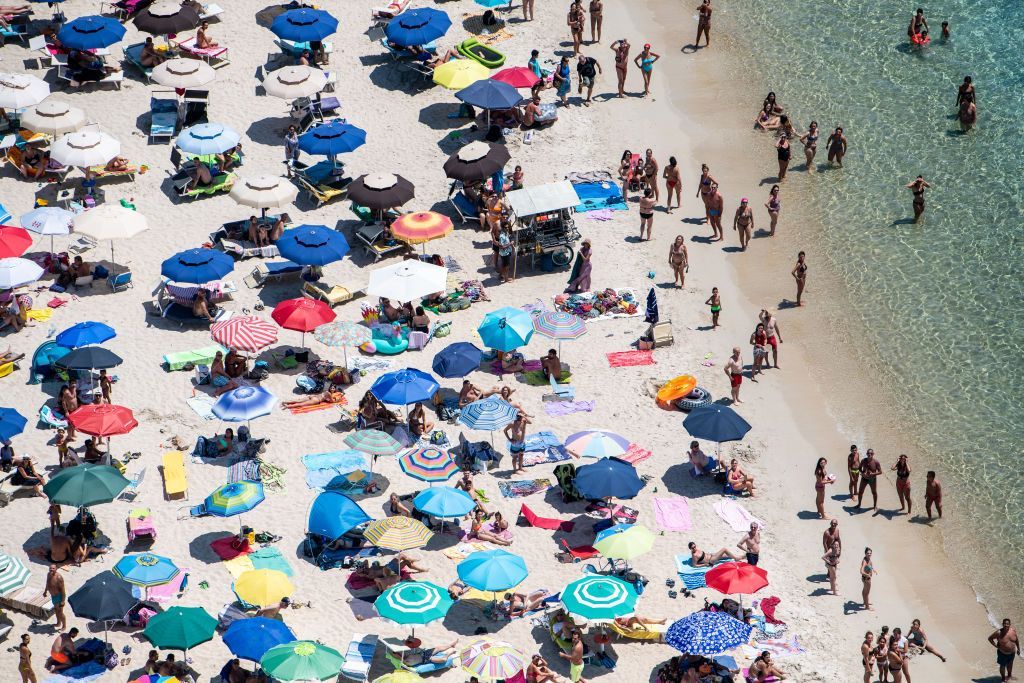
    Nestled along the sun-drenched southeastern coast of Sardinia, one of Italy’s most beloved Mediterranean islands, Punta Molentis Beach has long been celebrated as a hidden gem — a quiet, ecologically rich stretch of sand framed by delicate coastal dunes and crystalline Tyrrhenian Sea waters. But just under a year after a devastating wildfire tore through the area, incinerating the beach car park, damaging fragile dune ecosystems and forcing hundreds of sun-seekers to escape by boat, local authorities have implemented sweeping new access restrictions designed to prevent further environmental harm and support the area’s recovery.

    The disaster, which unfolded in late July 2025, saw flames advance all the way to the shoreline, with thick black smoke pouring out over the open sea. Dozens of vehicles parked in the beach’s main car park were completely destroyed by the blaze, leaving local officials scrambling to address the severe damage done to Punta Molentis’ already fragile ecosystem.

    In the wake of the fire, the municipal government of Villasimius, the local town that administers the beach, approved the new set of regulations that will remain in force through October 31. The most notable change is a hard cap on daily visitor numbers: no more than 150 people will be allowed on the beach at any one time, and vehicle access is limited to just 70 cars per day. All visitors must make advance reservations to enter, and entry fees have also been introduced: travelers arriving by land will pay €10 (approximately £8.60) per person, while those coming by private watercraft will be charged €5 per person.

    Arguably the most controversial new rule is a near-total ban on personal parasols and beach umbrellas. The restriction carves out exceptions for only two groups: visitors aged 65 and older, and families traveling with children under the age of 10.

    Local officials have defended the measures, framing them as a necessary step to protect the irreplaceable coastal environment. “The ecosystem of Punta Molentis is one of the most valuable in our territory but also one of the most fragile,” the official municipal notice reads. The policy statement adds that limiting human activity is critical to safeguarding the natural heritage site for future generations to enjoy. This crackdown on overcrowding is not an isolated move for Sardinia, whose iconic postcard-perfect beaches have struggled with unsustainable tourism volumes for years; a growing number of popular coastal spots across the island have introduced similar access limits this summer.

    Despite the official justification, the new rules have sparked pushback from both locals and frequent visitors. Critics have taken to social media to question the fairness and practicality of the umbrella restriction, with one local resident commenting on the Villasimius municipal government’s official social media page that visitors may soon have to “rent” a child or senior citizen to gain access to basic sun protection. Other critics argue that the restrictions do not go far enough, claiming that the only way to allow the fire-damaged ecosystem to fully recover is to close the beach to all visitors for multiple years, rather than just implementing incremental limits.

    As one of Sardinia’s most sought-after summer travel destinations, Punta Molentis’ new rules highlight a growing tension across popular European coastal destinations: balancing the economic benefits of mass tourism with the urgent need to protect vulnerable natural environments that draw visitors in the first place.

  • Dzeko’s last dance could be Bosnia’s new beginning

    Dzeko’s last dance could be Bosnia’s new beginning

    For 40-year-old football legend Edin Dzeko, a career brimming with silverware—including two Premier League titles won with Manchester City, plus honours earned across stints with Inter Milan and Wolfsburg—may end up being remembered most for a quiet, iconic moment of grit: immediately after Bosnia-Herzegovina knocked Italy out on penalties to secure only the second World Cup qualification in the nation’s history, Dzeko celebrated gently, his arm strapped in a sling from injury.

    That image, observers say, encapsulates everything Dzeko has stood for across nearly two decades carrying the hopes of a nation still healing from the devastating scars of the 1990s Bosnian War. “His career is connected to the country’s own image—resilience, persistence and proving people wrong,” explains Bosnian journalist Sasa Ibrulj. Drawn into an even 2026 World Cup group alongside Canada, Switzerland and Qatar, Dzeko’s final tournament as a player is poised to open an exciting new chapter for Bosnian football.

    Dzeko’s own story of survival begins amid the chaos of war. When the Bosnian War broke out in 1992, he was just six years old. Around 80,000 Bosnian Muslims lost their lives in the conflict, and the Srebrenica Genocide—perpetrated by Bosnian Serb forces—stands as the worst mass killing in Europe since the Holocaust. Dzeko’s family stayed in Sarajevo through the nearly four-year siege, where Serbian snipers targeted civilian residents including children. After their family home was destroyed, Dzeko moved in with his grandparents, cramming 15 family members into a 35-square-meter apartment. “It was very hard. We were stressed every day in case somebody we knew died,” Dzeko recalled in a past interview with The Guardian. As a young boy, he often played football on a local pitch—one day his mother forced him to stay home, a decision that saved his life: a shell struck the pitch that same day, killing several children playing there.

    After the war ended, Dzeko launched his professional career at local Sarajevo club Zeljeznicar, where he was underestimated early on. His lanky frame earned him the local nickname “Kloc”, meaning “lamp-post”, and club executives jumped at the chance to sell him to Czech side Teplice for just €25,000. What followed was a historic top-flight career: Dzeko became the first player in history to score at least 50 goals in the Premier League, Bundesliga, and Serie A. Even as he rose to global superstardom, he never turned his back on his roots. He has donated repeatedly to fund renovations at Zeljeznicar, and became Bosnia’s first UNICEF ambassador in 2009. “People remember that he did not come from privilege or from a powerful football system,” Ibrulj says. “What makes him different is that people in Bosnia have never experienced him as distant or untouchable.” Mirza Trbonja, a close friend of Dzeko’s, told AFP that the star never turns down autographs or photos: “When he comes, you need a lasso to catch 10 minutes with him. When someone asks him for a photo or autograph, he never refuses.”

    Dzeko made his senior international debut in 2007, and today holds Bosnia’s all-time records for caps (148) and goals (73). After devastating play-off defeats to Portugal for the 2010 World Cup and Euro 2012, Dzeko led Bosnia to qualification for their first major international tournament as an independent nation, the 2014 World Cup in Brazil. That tournament marked the high point for Bosnia’s “golden generation”, with more play-off heartbreak following for Euro 2016, 2020, and 2024. Twelve years after that first historic qualification, Bosnia finally exorcised their play-off demons: after overturning deficits against both Wales and Italy to win both knockout ties on penalties, the nation secured its return to the world’s biggest football stage.

    Ibrulj notes that the 2026 qualification carries even more emotional weight than the 2014 breakthrough. “2014 felt historic because it was the first generation that truly gave Bosnia international sporting legitimacy after independence,” he says. “This second qualification feels even heavier emotionally. Bosnia spent more than a decade failing to return, and over those years there was disappointment, pessimism, and a growing feeling that the country had missed its moment. For many younger supporters, this is the first team that feels like their team in the same way older generations emotionally belonged to the side of Dzeko, Miralem Pjanic and Emir Spahic.”

    For Bosnian musician Alen Dokic, who released an official 2026 World Cup song under his alias Doppelganger, the qualification is a perfect example of “Bosanski Inat” — a deeply rooted cultural spirit of defiance and overcoming hardship. “Never forget, never forgive – this is one of the mottos that reminds us who we are, what we have been through, and how resilient we Bosnians are,” Dokic says. Dokic, born in Rome to Bosnian parents, is part of a global Bosnian diaspora that numbers as many as two million people, a connection that is reflected in head coach Sergej Barbarez’s 2026 World Cup squad: 17 of the 26 squad members were born outside of Bosnia-Herzegovina, raised across the globe but united by their choice to represent their ancestral nation.

    “It’s a unique dynamic of players growing up all over the world but coming back to represent Bosnia,” says former Bosnia goalkeeper Asmir Begovic. One shining example is 21-year-old Esmir Bajraktarevic, who scored the decisive penalty against Italy that booked Bosnia’s spot at the tournament. Bajraktarevic was born and raised in Wisconsin, after his parents fled the Srebrenica genocide. “That common interest, common goal, the passion of representing Bosnia plays a big role. What the country has been through, there’s still lingering effects from the conflict and the past. When everyone comes together in Bosnia, it’s a pretty unique feeling and really special. For a country so small to compete at this stage is a really big thing,” he says.

    In the hours after the play-off win over Italy, thousands of Bosnian fans flooded the streets of Sarajevo, celebrating long into dawn. Ibrulj explains that these moments of shared national joy carry unique weight for a country still fractured by political division, economic instability, and the unhealed shadow of war. Even with limited investment in sporting infrastructure for a population of just three million, the future of Bosnia’s national team looks bright — and it feels only fitting that Dzeko, the man who has been a constant through decades of change, will captain the side as they enter this new era.

    “In a country where people often struggle to trust institutions, figures like that become larger than sport itself. For younger players he became a constant. Coaches changed, federations changed, generations came and went, but Dzeko remained there,” Ibrulj says. When a video of Italian players reportedly celebrating getting to face Bosnia instead of Wales in the play-off final went viral before the decider, Dzeko once again showed the quiet leadership that has defined his career: he urged Bosnian fans to respect the Italian national anthem ahead of kickoff, reminding supporters that Italy was the first national team to visit Bosnia after the war.

    “He is someone who has big pressure and expectation on him. He galvanises everybody. When I played with him he certainly wasn’t the most vocal of leaders but he definitely led by example and I think a lot of people fed off that,” Begovic says. Far from being at the tournament to simply make up the numbers, Dzeko has already proven he still has a critical role to play: he scored a late equaliser against Wales to force the penalty shootout, then set up Bosnia’s equaliser against Italy to send that tie to penalties as well. The 40-year-old says even he never expected to still be playing at the top level at his age: “I didn’t think I would be playing at 40 – 10 years ago I would’ve said ‘no’, but I’m listening to my body and doing a lot of work before and after training to help my body. I am so happy I can do it [go to the World Cup]. It is so amazing for the young players. They don’t know it yet, but it will change their lives for sure.”

    Bosnia’s 2026 World Cup campaign kicks off this Friday against co-hosts Canada, kicking off what is already the most emotional chapter in the nation’s modern football history.

  • From terror suspects to clothing designers: Aussies listed on Interpol’s red list revealed as James Dalamangas arrested

    From terror suspects to clothing designers: Aussies listed on Interpol’s red list revealed as James Dalamangas arrested

    For nearly three decades, James Dalamangas avoided the long arm of international law, until Greek law enforcement officers detained the 55-year-old Australian earlier this week at a property in Aigialeia, central Greece. His arrest closes one of the longest-running fugitive cases in recent Australian history, tying back to the 1999 fatal stabbing of Sydney man George Giannopoulous at a nightclub in Belmore.

    Dalamangas’ 27-year evasion raises two pressing questions: who are the other Australian-linked fugitives still at large overseas, and what strategies allow suspects to remain undetected for decades? Criminology associate professor Xanthe Weston from Central Queensland University told reporters that low-profile behavior and identity fraud were the core pillars of Dalamangas’ long run from authorities. “Over 27 years, he must have secured a new identity and deliberately avoided drawing any attention to himself,” Weston explained. Successful long-term hiding relies on blending into local communities, establishing a quiet routine, and never standing out enough to trigger suspicion from residents or officials, she added.

    What may surprise many is that out of more than 3,000 suspects listed on Interpol’s global Red Notice – the organization’s official wanted person alert – only five have Australian citizenship or direct links to Australia. Weston says this tiny proportion is entirely expected, given Australia’s unique geographic and demographic profile. The country’s large landmass and sparse population, particularly in remote inland regions, make it an attractive hiding spot for fugitives fleeing other countries, rather than a place that produces large numbers of people fleeing overseas. “If you want to vanish, settling in a small outback village in Australia makes it surprisingly easy,” Weston noted. She added that while modern technological advances and the rise of social media have made long-term hiding far harder than it was in the 1990s, it remains possible for disciplined, low-profile suspects to stay off law enforcement radars indefinitely.

    The five Australian-linked fugitives currently on Interpol’s Red Notice list cover a wide range of serious charges, from terrorism to drug smuggling and fraud:

    The first is 45-year-old Meliad Farah, a Kogarah-born Australian who has been wanted for over 12 years for his alleged role in a 2012 suicide bombing in Burgas, Bulgaria. The attack targeted a bus carrying Israeli tourists departing Burgas Airport, killing five Israeli travelers and a Bulgarian bus driver, while injuring 32 more civilians. Farah, who also uses the alias Hussein Hussein, is accused of participating in planning the atrocity. Bulgarian authorities released his photograph in 2013 alongside co-accused Canadian Hassan al-Haj, and he is widely believed to be a Hezbollah operative.

    Next is 44-year-old Melbourne-based fashion designer Qui Shan Lian, who counts some of the world’s most high-profile celebrities among her past professional connections. She has been wanted since 2017 on drug smuggling charges, after Chinese authorities requested Interpol issue a Red Notice for her arrest.

    Third is 56-year-old Thi Hoa Trung Trinh, a Vietnamese national with confirmed ties to Australia who was added to the list four years ago. Limited public details are available about her case, but she is suspected of property misappropriation through breach of trust, and is wanted by Vietnamese law enforcement. She is described as 155cm tall, with black hair and dark brown eyes.

    Fourth is 55-year-old Abdulzagir Medjidov, a dual Australian-Russian citizen born in Russia’s Dagestan republic. He has been wanted for 13 years, with an initial arrest warrant issued in 2013 on charges of attempted murder and criminal preparation. He is fluent in both English and Russian, and is wanted by Russian authorities.

    The final fugitive is 65-year-old Australian national Thi Minh Phung Duong, who was born in Vietnam and has evaded capture for more than 12 years. Added to Interpol’s Red Notice list in 2011, she is wanted for fraud and property misappropriation through swindling, alleged to have committed her offenses in Vietnam. Few additional details about her case have been released publicly.

    Dalamangas’ recent arrest after 27 years on the run underscores what Weston emphasized: even for the most careful fugitives, it is impossible to hide forever.

  • Disaster drills helped prevent more deaths when powerful quake hit the southern Philippines

    Disaster drills helped prevent more deaths when powerful quake hit the southern Philippines

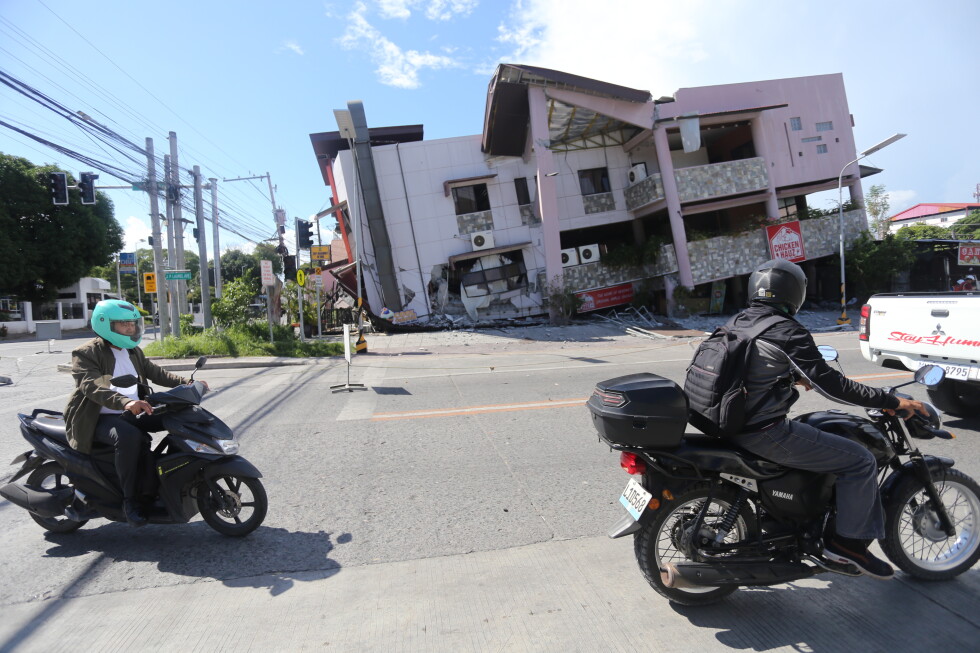
    Five days after a 7.8 magnitude offshore earthquake — one of the most powerful seismic events to hit the Philippines in 50 years — struck the country’s southern region, local officials are crediting regular, long-running disaster preparedness drills with preventing a far worse human toll. As of Friday, official counts put the death toll at 55, with 31 people still unaccounted for, nearly 1,120 injured, and more than 45,000 residents displaced from their homes. Half of those displaced remain in temporary emergency shelters, after the quake damaged over 12,600 residential structures across rural farming communities and urban centers alike.

    Weeks of ongoing strong aftershocks have left many survivors too traumatized to return to their damaged properties, even after initial safety inspections. In the days following the quake, user-generated footage posted to social media has captured the chaos of the shaking, showing horrified crowds watching small structures crumble, and public flag-raising ceremonies thrown into disarray as the ground shifted. The quake struck on the first school day after the summer holiday break, putting student responses to the emergency in the spotlight.

    Multiple videos show students screaming in panic as the ground shook, but many remained orderly outside school buildings, following long-practiced emergency protocols: some stood still, others crouched and covered their heads with their hands, as teachers worked to calm panicked groups and guide responses. One video posted to Facebook has gone viral, racking up millions of views; it shows dozens of elementary students crying and screaming while seated in an open, tree-lined school yard, where the visible swaying of the ground threw the children off balance. A nearby tin storage shed collapsed moments after the shaking started with a loud crash, sending a handful of students running, though teachers quickly guided them back to their assigned safe positions. Remarkably, the Malita-based grade school in Davao Occidental province where the footage was recorded reported zero injuries from the quake.

    “This incident serves as a reminder of the importance of earthquake preparedness and the value of regular disaster response drills,” the Mahayahay Elementary School said in an official statement following the event.

    Teresito Bacolcol, director of the Philippine Institute of Volcanology and Seismology (PHIVOLCS), confirmed Friday that consistent public education and regular emergency drills over many years helped communities across the affected region anticipate and respond correctly to the extreme seismic event, a rare powerful quake for the archipelago in modern history. He added that additional good fortune played a role: the quake struck at 7:37 a.m. local time, just minutes before most workers and students were set to enter indoor offices and classrooms, when people would have been at higher risk of injury from falling debris or structural collapse.

    “It’s good that our efforts to educate people on what to do when earthquakes hit somehow paid off,” Bacolcol told the Associated Press. However, he also raised urgent concerns about the structural failures of several buildings that he said should have withstood the quake’s force if national building code construction standards had been properly followed during construction.

    Ednar Dayanghirang, regional director of the Philippines’ Office of Civil Defense for the 5 million-person affected region, noted that preparedness measures reduced fatalities in multiple critical ways, most notably by preventing deadly crowd stampedes that often occur during mass public emergencies. “We required all school principals to take one-day courses on incident management, then they appointed disaster-response teams among teachers to deal with earthquakes, tsunamis,” Dayanghircsang said. “They listened and they learned.”

    Located along the Pacific Ring of Fire, a horseshoe-shaped arc of active seismic faults that circles the Pacific Ocean basin, the Philippines ranks among the most disaster-prone nations on Earth, regularly facing major earthquakes, volcanic eruptions and tropical storms. Years of repeated disaster events have pushed the national government to invest heavily in public disaster preparedness training, a choice that officials now confirm saved hundreds if not thousands of lives during this month’s powerful quake.

  • The migration pact: What’s in the EU’s landmark asylum reform?

    The migration pact: What’s in the EU’s landmark asylum reform?

    On June 12, a sweeping overhaul of European Union migration and asylum rules formally comes into force, marking the first time the bloc has established a unified, bloc-wide framework for managing irregular migration and border processes. According to EU Migration Commissioner Magnus Brunner, the reform is designed to give individual member states greater control over cross-border population movements, ending years of fragmented national policies that have strained regional cooperation.

    The new system introduces sweeping changes to how the EU processes people crossing its external borders illegally. Under the updated rules, all irregular arrivals will undergo mandatory identity and security screenings completed within a seven-day window. Biometric data, including facial scans and fingerprints, alongside basic identity documentation, will be stored in a centralized EU database. The primary goal of this screening is to triage applicants: sorting those eligible for standard or accelerated asylum processing from those who will be ordered deported to their country of origin or a prior transit country. Human rights organizations have already raised red flags, warning that the process will effectively result in widespread detention for most migrants, including unaccompanied minors, for the full duration of screening.

    A core component of the reform is a new fast-track rejection pathway for applicants deemed to have low protection prospects or pose potential security risks. This includes nationals from countries such as Morocco and Bangladesh, where at least 80 percent of asylum applications are typically rejected by EU member states. These cases will be processed entirely in dedicated facilities located near the EU’s external borders—encompassing land frontiers, maritime ports and international airports—with a maximum processing timeline of 12 weeks. Rights advocates argue this compressed timeline will lead to rushed, flawed asylum decisions and extend detention periods for vulnerable people, while applicants from regions with higher approval rates will still follow the bloc’s existing standard asylum procedures.

    For years, the EU’s original migration rules placed full responsibility for processing asylum claims on the member state where an irregular migrant first arrived. This system placed disproportionate burden on southern EU states including Italy, Greece and Malta, which have received the vast majority of sea and land arrivals over the past decade. To address this imbalance, the reform introduces a mandatory solidarity mechanism that requires all member states to contribute to sharing the burden. States can either agree to relocate a set number of asylum seekers from frontline border states, or opt to pay a contribution of 20,000 euros (equivalent to roughly $23,000) per asylum seeker to the receiving frontline country. The mechanism is designed to relocate at least 30,000 asylum seekers annually, though early negotiations have already hit major stumbling blocks: a first round of talks held last year saw multiple member states refuse to accept any relocation assignments.

    The overhaul also includes a dedicated emergency response framework to address sudden, large-scale migration surges, similar to the 2015-2016 crisis that saw more than two million asylum seekers, most fleeing conflict in Syria and Afghanistan, enter the bloc. Under surge conditions, member states will be permitted to roll back standard asylum protections and hold migrants in external border detention centers for longer periods than the rules normally allow. The framework also applies to what the EU calls “instrumentalization of migration,” a practice the bloc has repeatedly accused Belarus and Russia of engaging in, claiming the two countries push irregular migrants across EU borders to destabilize the 27-nation bloc.

    Despite the formal entry into force, major implementation challenges remain. A dozen member states have not yet completed necessary preparations, including building the border infrastructure required to carry out the new mandatory screenings. Other countries have already reported technical issues with integrating national systems into the new centralized biometric database. Public opinion across much of the bloc has hardened further on migration since the pact was agreed, pushing national governments to demand even stricter measures. Currently, an additional legislative package focused on expanding deportations of asylum seekers whose claims have been rejected is moving rapidly through the EU’s lawmaking process.

    These developments have amplified concerns from human rights groups that European policymakers are prioritizing political expediency over basic humanitarian protections. Judith Sunderland, associate Europe and Central Asia director at Human Rights Watch, criticized the incoming rules, saying “The Pact takes a sledgehammer to the right to asylum at a time when the world needs Europe more than ever to champion human rights.”

  • ‘I was employee number one’: SpaceX co-founder reacts to firm’s market debut

    ‘I was employee number one’: SpaceX co-founder reacts to firm’s market debut

    Twenty-two years after stepping away from a legacy aerospace career to help launch a radical new space venture, Tom Mueller, SpaceX’s very first hire and co-founder alongside tech entrepreneur Elon Musk, has opened up about his experiences as the company prepares for a high-stakes public market debut. In an exclusive interview with BBC correspondent Michelle Fleury, Mueller, who built the company’s first rocket engines from scratch in a cramped Los Angeles warehouse, recalled the early days of the startup when few industry insiders believed a private company could challenge established government-led space programs.

    As the driving force behind SpaceX’s groundbreaking Merlin and Raptor rocket engine designs, Mueller witnessed every milestone of the company’s transformation: from the early failed launch attempts that nearly sank the venture to the historic first reusable rocket landings that revolutionized space access. Now, as the company moves toward its public listing that is projected to value SpaceX at well over $100 billion, Mueller shared his perspective on how the small team of passionate engineers grew into the world’s leading commercial space enterprise. The long-awaited market debut is expected to reshape the private space industry, unlocking billions in new capital for SpaceX’s ambitious projects including the Starlink satellite internet constellation and the NASA-led Artemis program’s lunar landing mission. Mueller’s reflections offer a rare insider look at the origins of a company that has redefined what private enterprise can achieve in space exploration.

  • ‘Best Canada team ever’ bid to shine at home World Cup

    ‘Best Canada team ever’ bid to shine at home World Cup

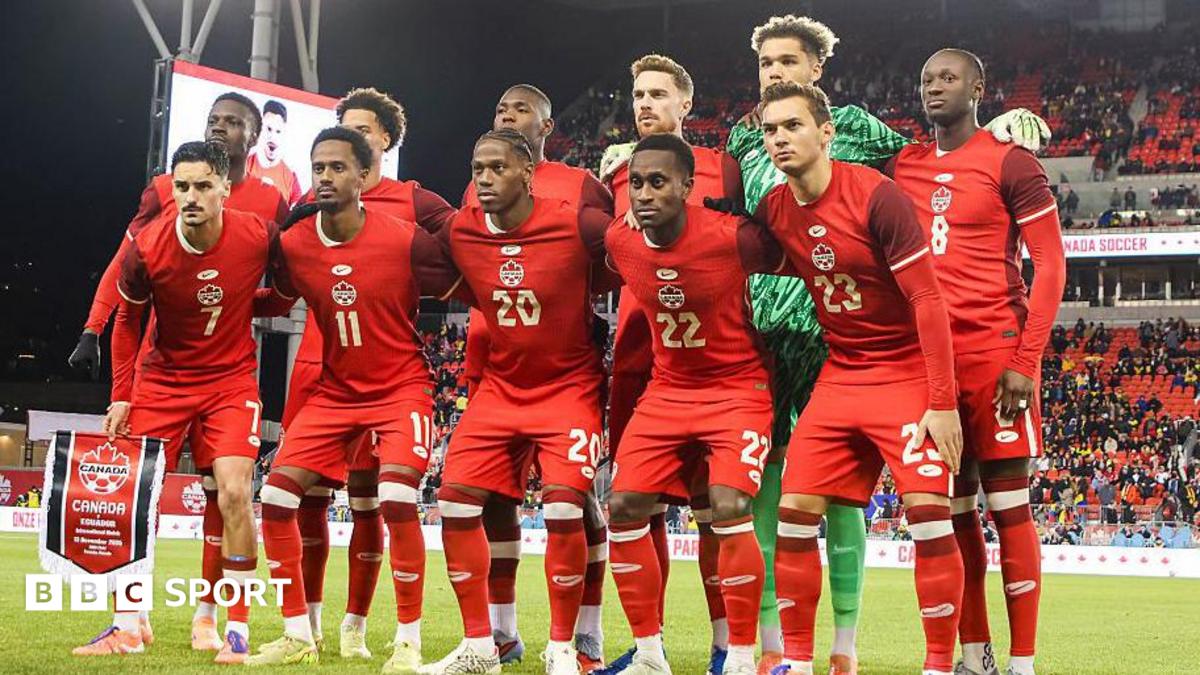
    As the 2026 FIFA World Cup kicks off, much of the global spotlight has fallen on political shifts in the United States and ongoing infrastructure and scheduling controversies in co-host Mexico. But few have turned their attention to the tournament’s third, often underrepresented host nation: Canada. For Canadian football observers, this quiet invisibility is nothing new. “Canada is often overlooked, and we are comfortable with that,” veteran Canadian football journalist Har Johal told BBC Sport in an exclusive interview. “We will smile, be polite, and let our co-hosts to the south dominate the headlines. But that does not mean we do not have big ambitions of our own.”

    Beneath the widely held stereotype of Canadian politeness lies a steely, growing confidence: this iteration of the men’s national team is widely considered the most talented in the country’s history, and they are poised to deliver a breakout performance on home soil this summer, starting with their tournament opener against Bosnia-Herzegovina in Toronto on Friday at 20:00 BST.

    ### Off the Pitch: Hosting Success, With Some Growing Pains
    Unlike several proposed U.S. host venues that have drawn criticism for exorbitant travel costs and remote locations, Canada has avoided major off-pitch controversy. Both of its host cities – Vancouver and Toronto – boast centrally located, accessible stadiums that eliminate the need for long-distance commutes for fans. That said, the nation is not immune to the cost-of-living strains hitting the 2026 tournament overall.

    FIFA’s standardized ticketing pricing structure has left many local fans facing similarly expensive seat costs to their counterparts in the U.S. and Mexico, and hotel prices have skyrocketed to unprecedented levels. Downtown Vancouver hotels currently charge more than $1,000 per night during the tournament, with some peak match-night rates exceeding $2,000. When Vancouver hosted the 2010 Winter Olympics, the average downtown hotel rate sat at just $359 per night. Compared to standard 2025 off-tournament rates, prices have surged by more than 300% in some blocks.

    ### A History of Waiting, and Growing Talent on the Pitch
    This 2026 tournament marks just Canada’s third appearance at the men’s World Cup finals, following debut runs in 1986 and 2022. The nation’s World Cup record is far from intimidating: across six total matches, Canada has yet to earn a win, scoring only two goals while conceding 12. At the 2022 Qatar World Cup, Canada entered the tournament labeled a potential dark horse after a stunning qualification campaign, but was outclassed in a brutal group that featured eventual semi-finalists Croatia and Morocco, alongside Belgium.

    Four years later, with four additional years of top-flight international experience and the undeniable energy boost of a home crowd, expectations around the team have shifted dramatically. Johal notes that momentum for Canadian football has been building for decades, as more young Canadian talent earn spots at top European clubs. “The timing is fantastic, but it has been building for Canada – we have seen more players in top European leagues, the talent is there,” she explained. “At Qatar, expectations were already high, and they are just as high again this year. People are getting excited, momentum is slowly building. The whole country is really behind Team Canada, and excitement ramps up every single day. This is a great generation, the best Canadian team we have ever had.”

    On paper, Canada’s 2026 group is far more manageable than their 2022 draw. They will face Switzerland, Qatar, and Bosnia-Herzegovina – the latter of which upset powerhouse Italy on penalties to qualify for the tournament. “People are saying there is no reason Canada cannot top this group, especially after Italy choked,” Johal said. “Now maybe the Swiss are our biggest rivals.”

    That confidence has yet to fully translate to recent match results. Canada were eliminated from the 2025 Concacaf Gold Cup quarter-finals by underdog Guatemala on penalties, and their recent friendly form has been inconsistent. The March 2026 international break brought two consecutive draws against Iceland and Tunisia on home soil in Toronto, and goals have been hard to come by: the team has failed to score in four of their last nine outings, leaving manager Jesse Marsch with work to do to meet lofty home expectations.

    ### The Golden Generation Led By a Talisman Returning From Injury
    While Marsch works to solidify his starting eleven, the entire nation is holding its breath for star talisman Alphonso Davies, who is set to miss the opening Bosnia-Herzegovina match through injury but hopes to return later in the tournament. The 25-year-old Bayern Munich winger, now Canada’s captain, made history at the 2022 World Cup as the first Canadian man to score a World Cup goal, even as the team bowed out in the group stage. Now the undisputed face of Canadian football, Davies has missed 15 club matches this season through a series of injury setbacks, including a hamstring strain that kept him out of the March 2026 international window. If the winger can return to full fitness, it would be a transformational boost for the host side.

    “We saw Davies come back and score for Bayern recently, he is an integral part,” Johal said. “Davies is 100% the face of the team, it’s just we have not seen that face so often with the injuries.”

    Davies anchors what is widely called Canada’s golden generation, alongside Juventus striker Jonathan David and Villarreal midfielder Tajon Buchanan. If all three can reach peak form for the tournament, analysts agree Canada has the quality to compete with any side in their group.

    Toronto-based national team midfielder Jonathan Osorio credits the rising quality of Canadian football to decades of growing popularity and investment in the sport at all levels. “The exposure to other leagues around the world being shown on TV here was also a factor,” Osorio told BBC World Service. “I think Canadian club teams in MLS being successful helped, and all those things helped that next generation really believe and dream big, and believe that it is possible to one day help Canada reach a high level. Our grassroots began to improve. Everything began to improve as far as the sport in our country and that’s what led us to finally getting over that hump and qualifying for multiple World Cups. I think this team represents Canada more than any other national team in any sport. We really show how diverse Canada is.”

    ### Ambition Meets Expectation: A First Win Awaits
    For a nation that has never won a World Cup match, the bar for success is clear. “Success has to be getting out of the group, or even topping the group,” Johal said. “There is no reason why they can’t, they are strong all over the field. Yes, we have never won a game, but as hosts it is a good time to do that now. If they don’t get out the group, heads will roll.”

    The first head expected to be on the chopping block if Canada underperforms is manager Marsch, a former Leeds United boss appointed in May 2024 specifically to lead the host side into the home tournament. While Marsch’s time in England ended in sacking and Leeds relegation in the 2022-23 season, he has built strong support in Canada for his straightforward style and experience coaching at the top club level. Osorio argues Marsch’s tactical approach is a perfect fit for this Canadian side.

    “His football is very intense and physical, which suits our strengths as a team,” Osorio said. “But at the same time, it doesn’t take away from playing attractive, confident football. It’s been a perfect match honestly, and his experience coaching at the highest level has already had a huge impact on a lot of players in terms of their development and growth. It’s probably the best squad we’ve ever had in our history, and the player pool is deeper than it’s ever been.”

    Marsch, an American, has already dismissed off-field speculation about him leaving the Canadian job to take the vacant U.S. national team role in 2024, and has publicly pushed back on U.S. President Donald Trump’s controversial comments calling for the annexation of Canada, calling the remarks “ridiculous”. Johal says Canadian fans appreciate Marsch’s no-nonsense, transparent approach, and do not take issue with an American leading their national side.

    “People like Marsch, they like his no-nonsense approach,” Johal said. “He is an open book and gives long answers at media conferences – what you see is what you get. People just want the best results.”

    As for the style of play fans can expect from the 2026 hosts, Johal says it matches the country’s beloved national sport of ice hockey: high-tempo, physical, and aggressive, with no willingness to back down from opposition. “Canada are aggressive, they get on the ball and want to take the game to the opposition. It is similar to hockey – physical play and high pace. Players are not afraid to get stuck in. I would not be surprised to see a few cards – they do not want to be pushed around.”

    So for fans expecting the stereotypical quiet Canadian politeness on the pitch this World Cup: think again.

    Fans across the UK can watch Canada’s opening match against Bosnia-Herzegovina on BBC One, BBC iPlayer, and the BBC Sport website and app from 19:00 BST on Friday, with full live commentary on BBC Radio 5 Live and BBC Sounds.