# Three Indian Sailors Killed In U.S. Gulf Of Oman Strike Leave Grieving Families Waiting For Answers
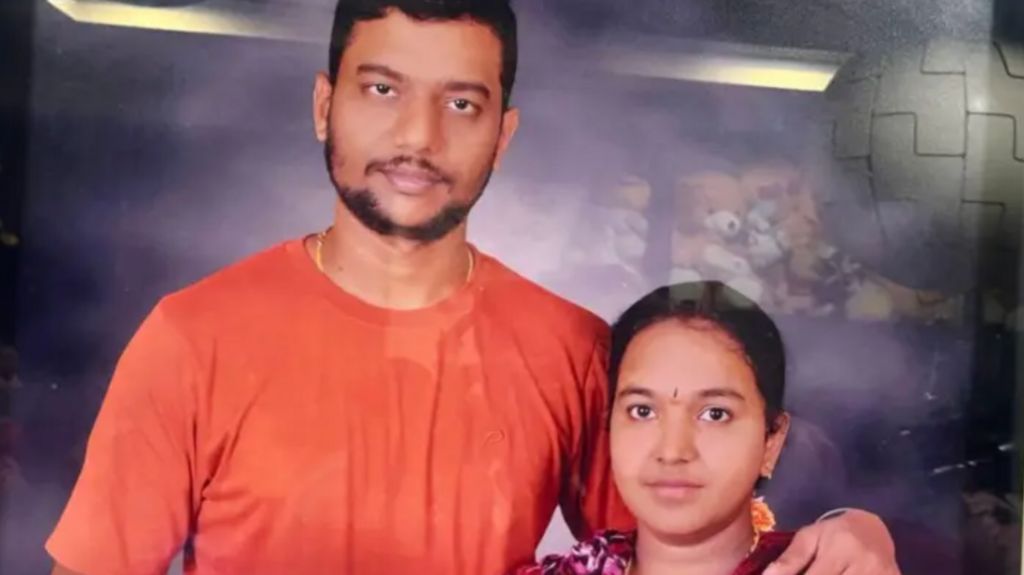
For Patnala Bhargavi, what should have been a month of quiet celebration to mark 15 years of marriage has instead become a period of overwhelming grief. Her husband, 15-year veteran marine engineer Patnala Suresh, was one of three Indian crew members killed this week when the United States military struck the oil tanker MT Settebello in waters near the Gulf of Oman.
The U.S. operation was framed as part of Washington’s ongoing enforcement of a blockade against Iran-linked maritime activity. U.S. Central Command confirmed the strike, stating that the tanker ignored multiple official warnings and was found to be carrying Iranian oil. This narrative has been forcefully rejected by the MT Settebello’s management, which says the vessel had no ties to Iran and received no advance warning before the attack. Twenty-one of the 24 crew members on board were rescued alive after the strike.
Across India, the deaths of the three sailors have sent shockwaves through coastal and inland communities alike, where seafarers often take on dangerous overseas jobs to support their extended families back home. Beyond private grief, loved ones are united in their demands: a full accounting of the strike that killed their family members, and the swift repatriation of the sailors’ remains for funeral rites.
India’s federal government has already moved to respond to the incident. Shipping Minister Sarbananda Sonowal confirmed in a post on the social platform X that work is underway to coordinate the return of the sailors’ bodies, calling the deaths a “profound loss” for India’s large maritime workforce. New Delhi has also taken formal diplomatic action: it summoned a senior U.S. diplomatic official to lodge a strong official protest, and called for an immediate end to strikes targeting commercial shipping vessels in the already tense Gulf region.
But for the families grappling with sudden loss, the details of geopolitical maneuvering feel distant and abstract. Their pain is rooted in broken promises and unfulfilled plans.
Bhargavi still holds onto the last words her husband shared with her before contact was lost. “There have been attacks in this area and some people have been killed,” Suresh told her, “But don’t worry about me. I’ll come home safely, and we’ll celebrate our anniversary properly.”
Now, surrounded by photos of Suresh, the couple’s two young sons, and the two nieces Suresh helped raise after Bhargavi’s older sister and brother-in-law passed away, the 39-year-old widow struggles to reconcile that promise with the new reality of life without her husband, who was the family’s only source of income.
Suresh had built a 15-year career at sea, working his way up to chief engineer, a role that entitled him to six months of paid leave annually. His father Ramakrishna says Suresh rarely took the full time off, drawn to his work and committed to providing for his family. For years, the family adapted to his long absences: Bhargavi and Suresh spoke every few days over video call, often with other crew members popping in to say hello. But starting June 5, calls became patchy, and stopped entirely by June 9.
Bhargavi initially assumed the issue was just spotty maritime connectivity. But after two days of silence, news of the strike reached her family. At first, they clung to hope that there had been a mistake, and that Suresh would turn up alive among the rescued crew. That hope faded quickly; on Thursday, the tanker’s management confirmed Suresh was killed instantly when the strike hit, as he was conducting a routine inspection of a faulty generator in the engine room. Centcom, the U.S. military command for the region, has released footage it claims shows the damage to the tanker’s engine room from the strike.
The family is now calling on the Indian government to provide urgent financial support to help them raise and educate the four children who depended entirely on Suresh’s income. “The entire family depended on his income. Now I don’t know how I’ll educate or raise the children,” Bhargavi says.
The same unanswered questions and raw grief hang over the families of the other two killed sailors, hundreds of kilometers from Visakhapatnam. In India’s northern Himachal Pradesh state, Hamirpur district, the family of 23-year-old Aditya Sharma, an only son, is demanding answers of their own.
“I want my son’s body to be returned to us. We should also be told what happened in his final moments,” Aditya’s father Rajesh Sharma told BBC Hindi. Rajesh Sharma also questioned the outcome of the rescue operation: “The others were rescued, so why couldn’t these three be saved?”
More than 1,000 kilometers away, in Deoria district of the northern state of Uttar Pradesh, 35-year-old Shivanand Chaurasia’s family is dealing with the same sudden loss. A skilled fitter, Chaurasia had left home eight months earlier to take up a contract with a foreign shipping firm. “We spoke to him the night before last. He told us everything was fine,” his father Ramji Chaurasia told Indian news agency ANI. “Now we have been told that he is no more.”
Like Bhargavi, both families say their only priority right now is bringing their loved ones home for a proper burial. The geopolitical tensions that led to the strike are irrelevant to them; what matters is getting to see their sons, husbands and providers one last time, and getting clarity on how they died.