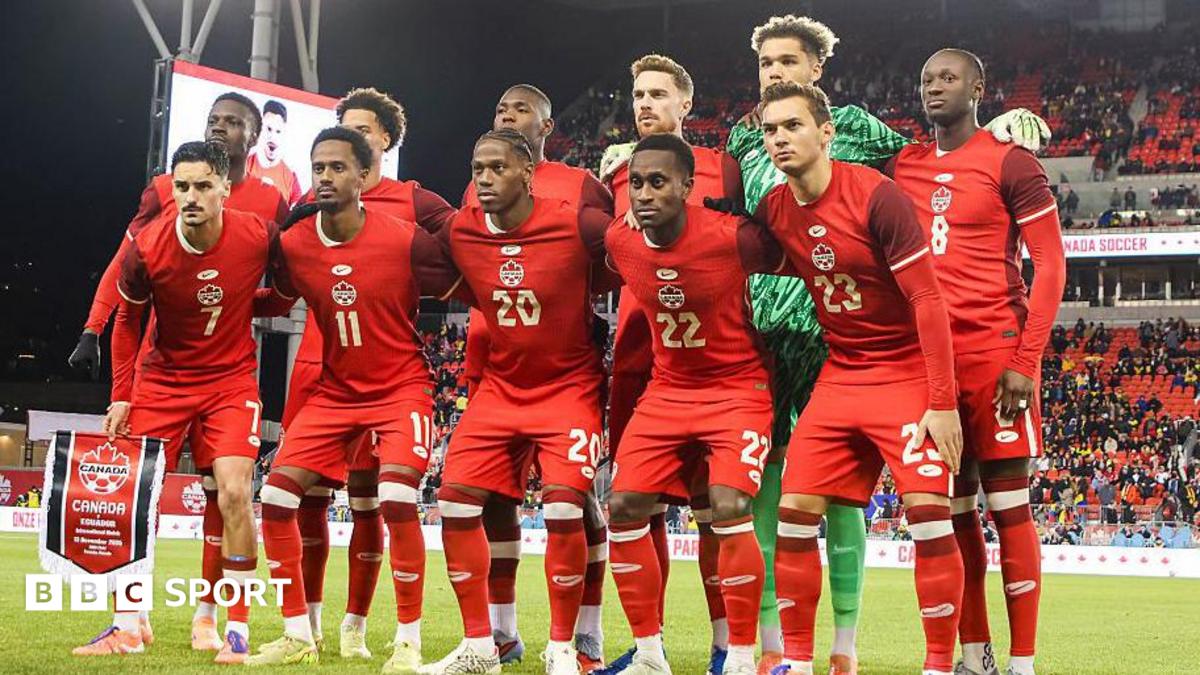
As the 2026 FIFA World Cup kicks off, much of the global spotlight has fallen on political shifts in the United States and ongoing infrastructure and scheduling controversies in co-host Mexico. But few have turned their attention to the tournament’s third, often underrepresented host nation: Canada. For Canadian football observers, this quiet invisibility is nothing new. “Canada is often overlooked, and we are comfortable with that,” veteran Canadian football journalist Har Johal told BBC Sport in an exclusive interview. “We will smile, be polite, and let our co-hosts to the south dominate the headlines. But that does not mean we do not have big ambitions of our own.”
Beneath the widely held stereotype of Canadian politeness lies a steely, growing confidence: this iteration of the men’s national team is widely considered the most talented in the country’s history, and they are poised to deliver a breakout performance on home soil this summer, starting with their tournament opener against Bosnia-Herzegovina in Toronto on Friday at 20:00 BST.
### Off the Pitch: Hosting Success, With Some Growing Pains
Unlike several proposed U.S. host venues that have drawn criticism for exorbitant travel costs and remote locations, Canada has avoided major off-pitch controversy. Both of its host cities – Vancouver and Toronto – boast centrally located, accessible stadiums that eliminate the need for long-distance commutes for fans. That said, the nation is not immune to the cost-of-living strains hitting the 2026 tournament overall.
FIFA’s standardized ticketing pricing structure has left many local fans facing similarly expensive seat costs to their counterparts in the U.S. and Mexico, and hotel prices have skyrocketed to unprecedented levels. Downtown Vancouver hotels currently charge more than $1,000 per night during the tournament, with some peak match-night rates exceeding $2,000. When Vancouver hosted the 2010 Winter Olympics, the average downtown hotel rate sat at just $359 per night. Compared to standard 2025 off-tournament rates, prices have surged by more than 300% in some blocks.
### A History of Waiting, and Growing Talent on the Pitch
This 2026 tournament marks just Canada’s third appearance at the men’s World Cup finals, following debut runs in 1986 and 2022. The nation’s World Cup record is far from intimidating: across six total matches, Canada has yet to earn a win, scoring only two goals while conceding 12. At the 2022 Qatar World Cup, Canada entered the tournament labeled a potential dark horse after a stunning qualification campaign, but was outclassed in a brutal group that featured eventual semi-finalists Croatia and Morocco, alongside Belgium.
Four years later, with four additional years of top-flight international experience and the undeniable energy boost of a home crowd, expectations around the team have shifted dramatically. Johal notes that momentum for Canadian football has been building for decades, as more young Canadian talent earn spots at top European clubs. “The timing is fantastic, but it has been building for Canada – we have seen more players in top European leagues, the talent is there,” she explained. “At Qatar, expectations were already high, and they are just as high again this year. People are getting excited, momentum is slowly building. The whole country is really behind Team Canada, and excitement ramps up every single day. This is a great generation, the best Canadian team we have ever had.”
On paper, Canada’s 2026 group is far more manageable than their 2022 draw. They will face Switzerland, Qatar, and Bosnia-Herzegovina – the latter of which upset powerhouse Italy on penalties to qualify for the tournament. “People are saying there is no reason Canada cannot top this group, especially after Italy choked,” Johal said. “Now maybe the Swiss are our biggest rivals.”
That confidence has yet to fully translate to recent match results. Canada were eliminated from the 2025 Concacaf Gold Cup quarter-finals by underdog Guatemala on penalties, and their recent friendly form has been inconsistent. The March 2026 international break brought two consecutive draws against Iceland and Tunisia on home soil in Toronto, and goals have been hard to come by: the team has failed to score in four of their last nine outings, leaving manager Jesse Marsch with work to do to meet lofty home expectations.
### The Golden Generation Led By a Talisman Returning From Injury
While Marsch works to solidify his starting eleven, the entire nation is holding its breath for star talisman Alphonso Davies, who is set to miss the opening Bosnia-Herzegovina match through injury but hopes to return later in the tournament. The 25-year-old Bayern Munich winger, now Canada’s captain, made history at the 2022 World Cup as the first Canadian man to score a World Cup goal, even as the team bowed out in the group stage. Now the undisputed face of Canadian football, Davies has missed 15 club matches this season through a series of injury setbacks, including a hamstring strain that kept him out of the March 2026 international window. If the winger can return to full fitness, it would be a transformational boost for the host side.
“We saw Davies come back and score for Bayern recently, he is an integral part,” Johal said. “Davies is 100% the face of the team, it’s just we have not seen that face so often with the injuries.”
Davies anchors what is widely called Canada’s golden generation, alongside Juventus striker Jonathan David and Villarreal midfielder Tajon Buchanan. If all three can reach peak form for the tournament, analysts agree Canada has the quality to compete with any side in their group.
Toronto-based national team midfielder Jonathan Osorio credits the rising quality of Canadian football to decades of growing popularity and investment in the sport at all levels. “The exposure to other leagues around the world being shown on TV here was also a factor,” Osorio told BBC World Service. “I think Canadian club teams in MLS being successful helped, and all those things helped that next generation really believe and dream big, and believe that it is possible to one day help Canada reach a high level. Our grassroots began to improve. Everything began to improve as far as the sport in our country and that’s what led us to finally getting over that hump and qualifying for multiple World Cups. I think this team represents Canada more than any other national team in any sport. We really show how diverse Canada is.”
### Ambition Meets Expectation: A First Win Awaits
For a nation that has never won a World Cup match, the bar for success is clear. “Success has to be getting out of the group, or even topping the group,” Johal said. “There is no reason why they can’t, they are strong all over the field. Yes, we have never won a game, but as hosts it is a good time to do that now. If they don’t get out the group, heads will roll.”
The first head expected to be on the chopping block if Canada underperforms is manager Marsch, a former Leeds United boss appointed in May 2024 specifically to lead the host side into the home tournament. While Marsch’s time in England ended in sacking and Leeds relegation in the 2022-23 season, he has built strong support in Canada for his straightforward style and experience coaching at the top club level. Osorio argues Marsch’s tactical approach is a perfect fit for this Canadian side.
“His football is very intense and physical, which suits our strengths as a team,” Osorio said. “But at the same time, it doesn’t take away from playing attractive, confident football. It’s been a perfect match honestly, and his experience coaching at the highest level has already had a huge impact on a lot of players in terms of their development and growth. It’s probably the best squad we’ve ever had in our history, and the player pool is deeper than it’s ever been.”
Marsch, an American, has already dismissed off-field speculation about him leaving the Canadian job to take the vacant U.S. national team role in 2024, and has publicly pushed back on U.S. President Donald Trump’s controversial comments calling for the annexation of Canada, calling the remarks “ridiculous”. Johal says Canadian fans appreciate Marsch’s no-nonsense, transparent approach, and do not take issue with an American leading their national side.
“People like Marsch, they like his no-nonsense approach,” Johal said. “He is an open book and gives long answers at media conferences – what you see is what you get. People just want the best results.”
As for the style of play fans can expect from the 2026 hosts, Johal says it matches the country’s beloved national sport of ice hockey: high-tempo, physical, and aggressive, with no willingness to back down from opposition. “Canada are aggressive, they get on the ball and want to take the game to the opposition. It is similar to hockey – physical play and high pace. Players are not afraid to get stuck in. I would not be surprised to see a few cards – they do not want to be pushed around.”
So for fans expecting the stereotypical quiet Canadian politeness on the pitch this World Cup: think again.
Fans across the UK can watch Canada’s opening match against Bosnia-Herzegovina on BBC One, BBC iPlayer, and the BBC Sport website and app from 19:00 BST on Friday, with full live commentary on BBC Radio 5 Live and BBC Sounds.