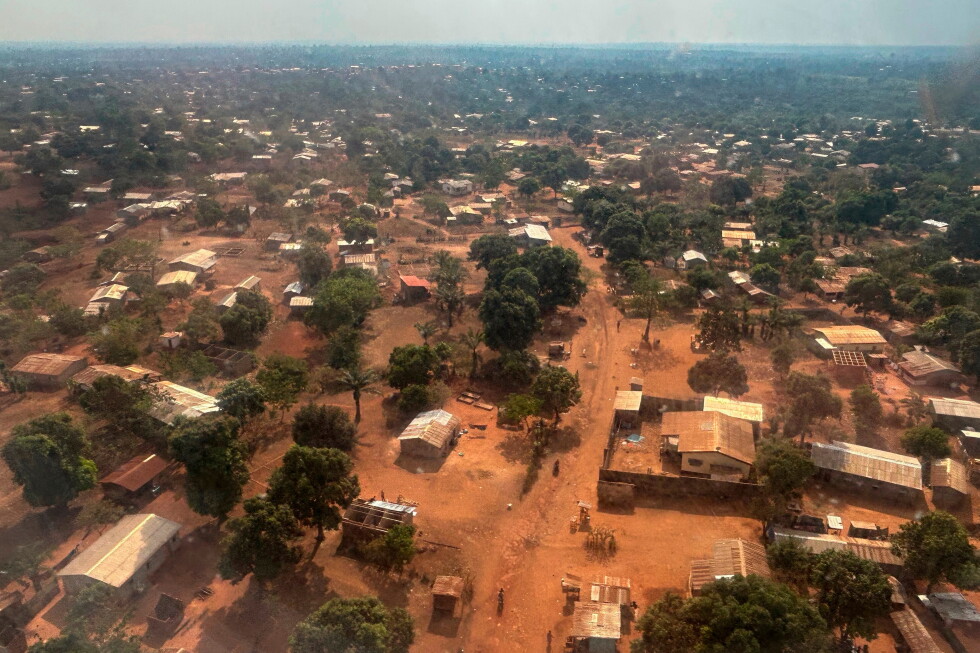
A deportation flight organized by the former Trump administration is set to land in the Central African Republic’s capital Bangui on Friday, carrying roughly two dozen migrants from third countries, including one Iranian woman who had previously been granted protection from deportation to her home nation, legal representatives confirmed.
This transfer marks the latest high-profile example of the controversial, largely secretive agreements Washington struck with multiple African and Latin American nations to accept deportees who are not citizens of their receiving countries, a policy that has drawn widespread condemnation from immigration advocates and legal experts.
According to immigration rights advocates, the Central African Republic — a chronically impoverished, conflict-battered nation — is one of at least 10 African countries that have signed onto these third-country deportation arrangements. As part of a broader hardline U.S. immigration crackdown during the Trump administration, officials struck these often-unpublic deals to expel thousands of non-citizen migrants to countries that are not their country of origin, across roughly 24 nations total.
Immigration lawyers argue the policy is a deliberate legal loophole, designed to indirectly force asylum seekers who would otherwise be protected from return to their home countries into dangerous third-party states, effectively circumventing court-ordered deportation protections.
The flight departed Louisiana late Thursday bound for Bangui, though exact passenger numbers have not been officially confirmed. Ali Rahnama, president of the Iranian American Legal Defense Fund, who has been in direct contact with several of the detained migrants, confirmed the group includes nationals from Iran, Jordan, Armenia, Turkey, Georgia and Afghanistan.
Sahar Jalili Pawelski, an immigration lawyer representing three Iranian women initially slated for deportation on this flight, explained that two of her three clients secured emergency court orders that temporarily paused their removal, while judges review whether the U.S. government’s deportation action is legally valid. All three Iranian women had previously received court-ordered protection from deportation to Iran, after judges ruled they faced credible threats of persecution based on their political beliefs or religious identity, both Pawelski and Rahnama confirmed. Only one Iranian woman remains on the flight scheduled to land Friday.
An elderly Syrian migrant also scheduled for deportation to the Central African Republic similarly obtained an emergency temporary order halting his removal, according to his attorney Margaret Stock.
U.S. Department of Homeland Security officials declined to comment on the specific case Thursday, citing security policies that prevent confirmation of upcoming removal operations. U.S. Immigration and Customs Enforcement also did not immediately respond to requests for comment on the deportation flight.
The receiving country, the Central African Republic, has been ravaged by years of armed conflict between government forces and rebel factions, and ranks among the poorest countries on Earth. Despite holding extensive gold reserves, one in three Central African citizens survives on less than $2 USD per day. The nation is also a historic hub of activity for the Russian private mercenary group Wagner, which for years provided security to President Faustin-Archange Touadéra and led combat operations against rebel groups.
While the Central African Republic remains one of Russia’s closest African allies, recent tensions have emerged between Touadéra and Moscow, after Russia demanded Wagner be replaced by the state-run Africa Corps. Rahnama has raised particular alarm over the deportation of the Iranian asylum seeker to the Central African Republic, pointing to Russia’s widespread influence in the country and the close security partnership between Moscow and Tehran, which puts the migrant at heightened risk of harm.
This report was compiled by correspondent Banchereau in Dakar, Senegal, with additional contribution from Associated Press writer Rebecca Santana based in Washington.