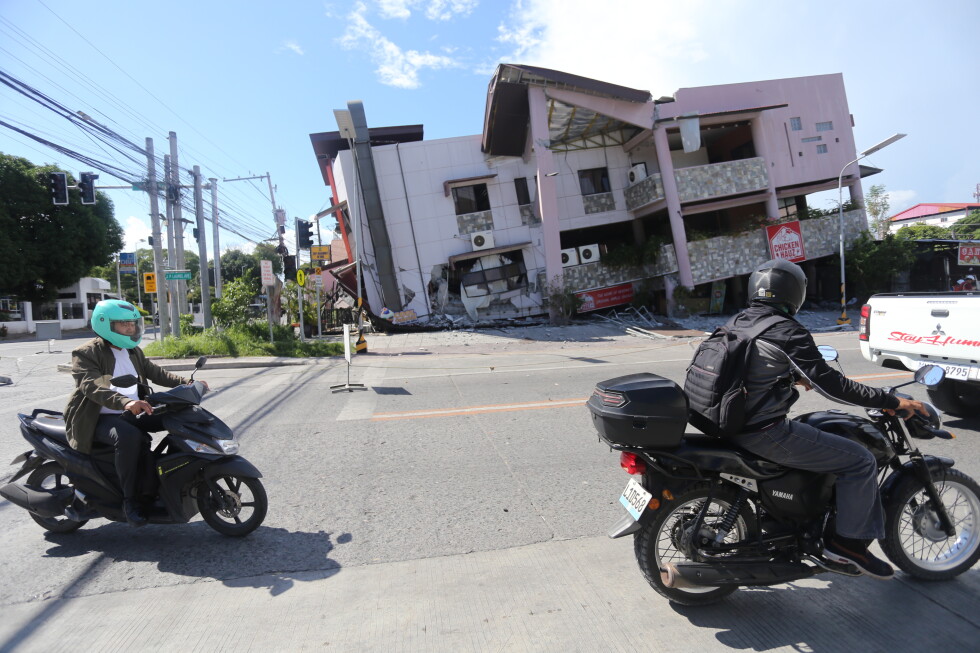
Five days after a 7.8 magnitude offshore earthquake — one of the most powerful seismic events to hit the Philippines in 50 years — struck the country’s southern region, local officials are crediting regular, long-running disaster preparedness drills with preventing a far worse human toll. As of Friday, official counts put the death toll at 55, with 31 people still unaccounted for, nearly 1,120 injured, and more than 45,000 residents displaced from their homes. Half of those displaced remain in temporary emergency shelters, after the quake damaged over 12,600 residential structures across rural farming communities and urban centers alike.
Weeks of ongoing strong aftershocks have left many survivors too traumatized to return to their damaged properties, even after initial safety inspections. In the days following the quake, user-generated footage posted to social media has captured the chaos of the shaking, showing horrified crowds watching small structures crumble, and public flag-raising ceremonies thrown into disarray as the ground shifted. The quake struck on the first school day after the summer holiday break, putting student responses to the emergency in the spotlight.
Multiple videos show students screaming in panic as the ground shook, but many remained orderly outside school buildings, following long-practiced emergency protocols: some stood still, others crouched and covered their heads with their hands, as teachers worked to calm panicked groups and guide responses. One video posted to Facebook has gone viral, racking up millions of views; it shows dozens of elementary students crying and screaming while seated in an open, tree-lined school yard, where the visible swaying of the ground threw the children off balance. A nearby tin storage shed collapsed moments after the shaking started with a loud crash, sending a handful of students running, though teachers quickly guided them back to their assigned safe positions. Remarkably, the Malita-based grade school in Davao Occidental province where the footage was recorded reported zero injuries from the quake.
“This incident serves as a reminder of the importance of earthquake preparedness and the value of regular disaster response drills,” the Mahayahay Elementary School said in an official statement following the event.
Teresito Bacolcol, director of the Philippine Institute of Volcanology and Seismology (PHIVOLCS), confirmed Friday that consistent public education and regular emergency drills over many years helped communities across the affected region anticipate and respond correctly to the extreme seismic event, a rare powerful quake for the archipelago in modern history. He added that additional good fortune played a role: the quake struck at 7:37 a.m. local time, just minutes before most workers and students were set to enter indoor offices and classrooms, when people would have been at higher risk of injury from falling debris or structural collapse.
“It’s good that our efforts to educate people on what to do when earthquakes hit somehow paid off,” Bacolcol told the Associated Press. However, he also raised urgent concerns about the structural failures of several buildings that he said should have withstood the quake’s force if national building code construction standards had been properly followed during construction.
Ednar Dayanghirang, regional director of the Philippines’ Office of Civil Defense for the 5 million-person affected region, noted that preparedness measures reduced fatalities in multiple critical ways, most notably by preventing deadly crowd stampedes that often occur during mass public emergencies. “We required all school principals to take one-day courses on incident management, then they appointed disaster-response teams among teachers to deal with earthquakes, tsunamis,” Dayanghircsang said. “They listened and they learned.”
Located along the Pacific Ring of Fire, a horseshoe-shaped arc of active seismic faults that circles the Pacific Ocean basin, the Philippines ranks among the most disaster-prone nations on Earth, regularly facing major earthquakes, volcanic eruptions and tropical storms. Years of repeated disaster events have pushed the national government to invest heavily in public disaster preparedness training, a choice that officials now confirm saved hundreds if not thousands of lives during this month’s powerful quake.