博客

  • Around 2,000 fall ill in Indonesia after eating free school meals

    Around 2,000 fall ill in Indonesia after eating free school meals

    Indonesia is grappling with a wave of mass food poisoning outbreaks that have sickened roughly 2,000 students and teaching staff across the archipelago over three days, all tied to the national government’s flagship free school nutrition initiative. The most severe incident unfolded at a public high school in Rembang Regency, Central Java, where 777 people developed acute food poisoning symptoms after eating lunch served through the Makan Bergizi Gratis (MBG, or Free Nutritious Meals) program last Wednesday.

    Among those affected at the Lasem district high school were 752 students and 25 teachers, many of whom developed severe diarrhea that quickly overwhelmed campus facilities. “They had diarrhoea and took turns using the toilet,” Juhartutik, the school’s principal, told BBC News Indonesia in an interview. “There are 40 toilets in total, so they can’t accommodate everyone.” In response to the outbreak, the school dismissed nearly 1,200 enrolled students and all 95 non-teaching staff members, and a small number of the most severely affected patients were transported to local hospitals for emergency treatment. Juhartutik added that national government authorities have committed to covering all associated medical costs, and the local private distributor contracted to supply the program’s meals has already visited the campus to accept accountability for the incident.

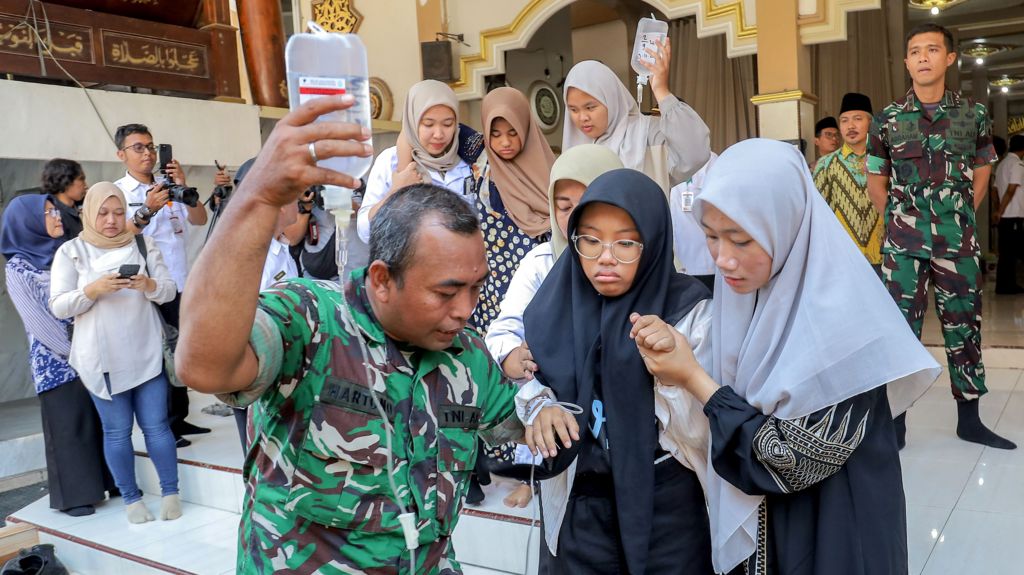
    This Rembang outbreak followed closely on the heels of a separate mass incident the prior day at an Islamic boarding school in Sidoarjo, East Java, that left 730 people ill after consuming MBG-provided meals, according to local public health officials. One parent, Reni, described her child’s rapid onset of symptoms: dizziness and nausea that quickly progressed to severe abdominal cramping and gastrointestinal distress. Multiple patients in that outbreak required inpatient hospital care, and several affected students were so weak they had to be transported to care in wheelchairs.

    Additional cases have been confirmed across other regions of Indonesia this week, including hundreds of affected people at multiple schools in Tana Toraja, a highland regency in South Sulawesi. Parents and school staff have already reported troubling observations about the quality of meals served through the program, including slimy chicken portions, undercooked staple items, and unusual off odors that indicate improper handling. Health experts note that common culprits for mass food poisoning outbreaks like these include improper cold storage of perishable ingredients, inadequate food preparation practices, and microbial contamination of finished meals.

    Local public health and law enforcement authorities have launched formal investigations into the string of outbreaks, and laboratory testing of collected food samples is currently underway to pinpoint the exact source of contamination. Achmad Sholeh Syarifudin, the head of the local MBG food distribution unit in Lasem, has issued a public apology and accepted full responsibility for supporting the recovery of affected students and staff. He added that the unit will launch a full organizational review of its operational protocols to prevent similar incidents in the future.

    The MBG program is a multibillion-dollar flagship policy of newly inaugurated President Prabowo Subianto, designed to address widespread childhood malnutrition by providing free daily nutritious meals to students across the country. However, the initiative has already faced significant controversy beyond the current food safety crisis: it has been dogged by persistent allegations of graft in procurement and distribution contracts, as well as widespread public criticism over its massive projected cost to the national budget. When addressing the outbreaks this week, the head of Indonesia’s National Nutrition Agency acknowledged that accountability would be strictly enforced. “If it is identified that there was negligence and there are criminal elements, I apologise, we cannot help,” the official said, signaling that legal action would follow if wrongdoing is confirmed.

  • Judge blocks another effort by Trump to limit birthright citizenship

    Judge blocks another effort by Trump to limit birthright citizenship

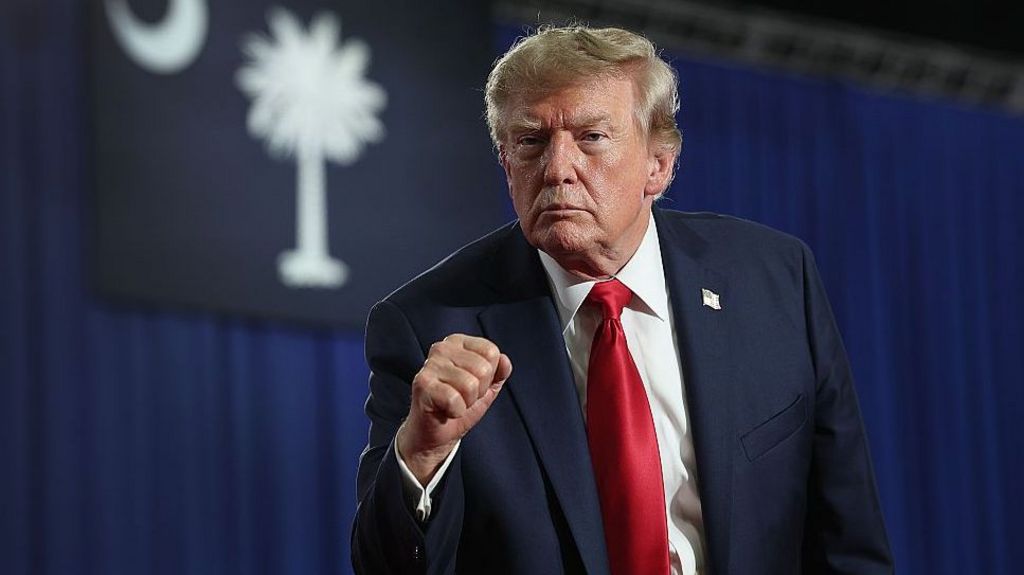
    In a fresh legal blow to the second Trump administration’s sweeping immigration restriction agenda, a federal judge has temporarily halted President Donald Trump’s latest bid to curtail birthright citizenship in the United States, marking the second time this year courts have blocked the president’s efforts after the U.S. Supreme Court struck down his initial proposal.

    Following the Supreme Court’s June ruling that rejected his first broad executive order seeking to end automatic birthright citizenship for children of undocumented immigrants, Trump signed a scaled-back version in August that targeted two specific groups: people participating in so-called “birth tourism” and individuals labeled “alien enemies” by his administration. Birth tourism refers to the practice of foreign pregnant people traveling to the U.S. specifically to give birth, so their children receive automatic citizenship under longstanding U.S. law. While the practice is already illegal under existing federal rules, the August order sought to tighten enforcement and expand penalties for facilitators. The order also designated “alien enemies” to include members of designated terrorist organizations and transnational drug cartels, and extended citizenship denials to children of foreign government officials working in the U.S.

    On Wednesday, Judge Deborah Boardman of the U.S. District Court for the District of Maryland issued a preliminary injunction that immediately blocks enforcement of the order, ruling that the proposal is still almost certainly a violation of the 14th Amendment’s guarantee of automatic birthright citizenship for nearly all people born on U.S. soil. “The 2026 Executive Order is almost certainly unconstitutional,” Boardman wrote in her decision, referencing the high court’s rejection of Trump’s earlier policy. “This Court must, once again, preliminarily enjoin enforcement of the President’s most recent attempt to strip the right to citizenship from them.”

    The injunction will remain in place until a full legal resolution of the lawsuit brought by a coalition of leading immigrant advocacy organizations, including CASA and the Asylum Seeker Advocacy Project. The same coalition successfully challenged Trump’s first executive order earlier this year. Legal analysts widely expect the Trump administration to appeal Boardman’s ruling, a step the White House has all but confirmed through its public pushback.

    Department of Justice lawyers defending the order argued that the Supreme Court’s June ruling upholding the core right to birthright citizenship did not rule out narrow, targeted exceptions to the 14th Amendment’s guarantee. They noted that historical exceptions already exist for children of foreign diplomats and certain enemy combatants, claiming the new order fell within these allowed boundaries.

    But the White House struck a sharper tone in its response to the ruling Thursday, per CBS News, a BBC media partner. “This is just another ruling from an activist judge appointed by Biden attempting to thwart President Trump’s commonsense agenda,” a White House spokesperson said, adding that “the birthright citizenship executive order is consistent with the holdings and analysis set forth by the Supreme Court.”

    Trump’s repeated attempts to roll back birthright citizenship are a core plank of the administration’s broader, aggressive strategy to cut overall immigration to the U.S. Since returning to office, the administration has ended Temporary Protected Status for multiple countries, ramped up interior deportations, and set new records for immigration arrests along the southern border. In August alone, U.S. Immigration and Customs Enforcement and Customs and Border Protection recorded nearly 51,000 arrests, the highest monthly total in modern U.S. history.

  • A pregnant soldier mourns her 21-year-old husband at his funeral in Ukraine

    A pregnant soldier mourns her 21-year-old husband at his funeral in Ukraine

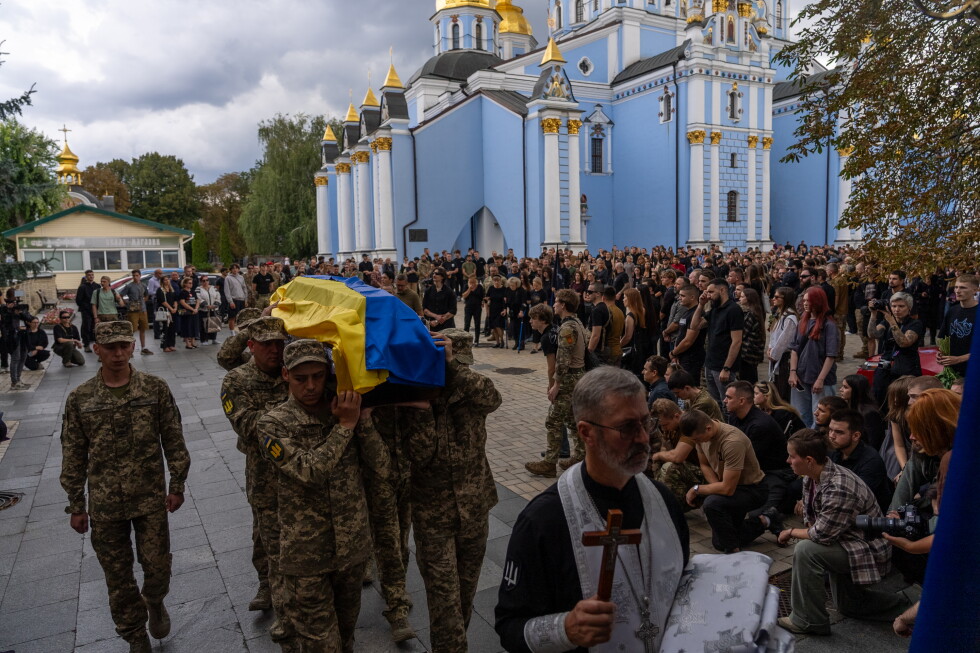
    KYIV, Ukraine — On a crisp Tuesday in Kyiv, a 21-year-old pregnant widow in a simple black dress stood at the head of her fallen husband’s casket, grieving a love story cut short by Russia’s ongoing full-scale invasion of Ukraine. Yeva and Danyil Smyrnov, both 18 when they enlisted in Ukraine’s armed forces in 2023, tied the knot just two years later in July 2025. Eager to build a life together amid the chaos of war, the young couple rushed to start their family before Danyil’s deployment to the front lines.

  • It’s time to really start judging Maresca and new-look Man City after $600M refresh

    It’s time to really start judging Maresca and new-look Man City after $600M refresh

    Early doubts over Manchester City’s ability to chase the Premier League crown in its first era without Pep Guardiola have rapidly faded, following two opening-match wins and a historic $400 million spending spree compressed into just two weeks of the summer transfer window. By the close of the window, City ended up as Europe’s biggest single summer spender, with total outlay across the entire transfer period surging past $600 million. The club wrapped up its buying blitz with deadline-day additions of Enzo Fernandez and Iliman Ndiaye, and added two more high-profile young talents just days earlier: Morocco international midfielder Ayyoub Bouaddi and Brazilian winger Allan, who cost a combined $160 million, primarily brought in as depth for the first-team squad. This unprecedented spending has transformed first-year manager Enzo Maresca’s situation entirely; just a few weeks ago, he was forced to improvise by fielding center back Marc Guehi in central midfield, after City sold or released a core group of midfield stars including Rodri, Bernardo Silva and Tijjani Reijnders without immediate replacements. Now, Maresca faces the far more welcome problem of selection depth as City prepares to host newly promoted Coventry this Saturday. He will have to choose two from Elliot Anderson, Fernandez and Bouaddi to slot behind in-form attacking playmaker Rayan Cherki, while Ndiaye and Allan will push established first-team wingers Phil Foden, Antoine Semenyo and Jeremy Doku for starting spots. The challenge could not be starker for Coventry: the promoted side already traveled to the Emirates to face Arsenal earlier this season, and escaped with only a 3-0 defeat, a result many considered a favorable outcome for the newly promoted side. City has enjoyed a strong start to the campaign regardless, opening with a 2-1 victory over Bournemouth before securing a 4-1 away win against Crystal Palace. While pundits once argued the first two weeks of the season represented the best window to take points off a rebuild City with an incomplete squad, a new manager still settling into the role and players undercooked after post-World Cup rest, the club has still posted maximum points — even after a tepid 3-0 Community Shield loss to Arsenal that left many fans and analysts questioning City’s title credentials. From this weekend onward, analysts and fans will get their first real look at how Maresca’s fully refurbished side can compete over the long haul of the season. This weekend’s fixture list brings a number of mouthwatering matchups beyond City’s game with Coventry. The standout tie of the round sees defending Premier League champions Arsenal host Chelsea on Sunday, with both sides entering the game on maximum six points from their first two matches. Arsenal has started the season with a typically solid defensive foundation, holding opponents scoreless through two games, while Chelsea has jumped out to an early lead as the league’s joint-top scoring side with seven goals, setting up a compelling clash of contrasting early-season form. Outside of Manchester City, newly promoted Hull City is the only other side in the division to win both of its opening two matches, and it will host a point-less Aston Villa side looking for its first win of the campaign. Liverpool, meanwhile, will look to snap a run of two opening draws when it travels to face newly promoted Ipswich Town on Friday evening. The weekend will also offer supporters the first chance to see some of the window’s most high-profile signings make their debuts for new clubs. Most notable among these is Bradley Barcola, the French winger who joined Liverpool from Paris Saint-Germain for $166 million. Barcola did not make a single appearance for PSG at the start of this season amid prolonged transfer speculation, and he could make his first Liverpool appearance off the bench this weekend. Jack Grealish, who has returned to Everton on loan after several seasons at City, could also be thrown straight into action for his new side when Everton hosts Manchester United, with Ndiaye having departed the Merseyside club in this window. Off the pitch, this weekend will also bring expected protests from Everton fans, who are furious with the American ownership’s transfer window strategy. The club allowed its top attacker Ndiaye to depart for Manchester City, and also sold backup striker Beto, and failed to sign any replacements to fill the gaps left by those departures. Deadline-day moves for Folarin Balogun and Joshua Zirkzee fell through, leaving Everton with just one senior striker on the books: Thierno Barry. Everton’s independent fan advisory board released a public statement highlighting the “serious concerns” held by supporters over the club’s transfer management, arguing the current squad is weaker than it was at the start of the previous season. “The gap between ambition and execution is now impossible to ignore, and it has damaged confidence in the planning, leadership and alignment of football operations,” the fan group said. “Supporters deserve clarity, accountability and evidence that lessons have been learned before further trust can be rebuilt.” The Texas-based Friedkin Group is currently heading into its second full season as the club’s majority owner.

  • Sharpeville massacre survivors file class action lawsuit in South Africa

    Sharpeville massacre survivors file class action lawsuit in South Africa

    More than 60 years after one of the bloodiest atrocities of South Africa’s apartheid era, survivors and bereaved relatives of the Sharpeville Massacre have taken a historic step to pursue long-denied justice, announcing a class-action lawsuit against the national government this Thursday.

    The announcement came during a press briefing held in the Sharpeville township itself, located just south of Johannesburg. Before the formal reveal, family members of those killed in the 1960 violence completed a quiet, solemn procession along the same path that the original 1960 protesters took, acting as living witnesses to the tragedy that still shapes the community today.

    On March 21, 1960, apartheid police opened fire on a crowd of unarmed demonstrators gathered to oppose the racist pass laws that tightly restricted Black South Africans’ movement and rights under the segregationist regime. The deadly crackdown immediately drew global condemnation, and the event became a defining turning point in the international movement to end apartheid. Today, the date is commemorated across South Africa as Human Rights Day, a national public holiday.

    Official apartheid-era police records list the official death toll as 69, with 180 people injured. But new research cited by the lawsuit plaintiffs puts the actual casualties much higher: at least 91 killed and more than 230 wounded. Many families still carry intergenerational trauma from the attack.

    Eighty-seven-year-old Abram Mofokeng is one of three lead representative plaintiffs for the class, which counts more than 70 survivors and relatives who have already committed to joining the litigation. Mofokeng was just 20 years old when he was shot in the foot and back while fleeing the gunfire, and a bullet remains lodged in his back to this day. “It is not possible to forget what happened in 1960,” he said. “I cannot go a day without thinking about how we have been affected.”

    The other lead plaintiffs, Paulina Mathinye and Ishmael Poho, both lost their fathers in the massacre when they were small children. Poho emphasized that the lawsuit extends far beyond individual financial compensation, noting that the harm of the massacre has rippled across the entire Sharpeville community for generations. “This is not a case for an individual as such,” he said. “It is a case for every other person who suffers an injustice.”

    Central to the legal fight is a demand to strike down the 1961 Indemnity Act, a law enacted by the apartheid government immediately after the massacre that has remained on South Africa’s books ever since. The legislation shields apartheid-era officials from all legal liability for the massacre and wiped all existing victim compensation claims off the books. After the massacre, 250 claims were originally filed, but only around a third received any discretionary payments, with the total amount coming to less than 4% of what victims had originally requested.

    If the court strikes down the 1961 law, the plaintiffs will be able to move forward with formal damages claims. Lawyers from Lawyers for Human Rights, which is bringing the case alongside international human rights law firm Leigh Day, note that the legislation violates the current South African constitution’s guarantee of access to the courts. Compensation amounts will be individualized for each claimant, set with input from independent experts, and no total collective value has been announced yet.

    The legal action also addresses gaps in the post-apartheid Truth and Reconciliation Commission process, which only granted formal reparations to 51 Sharpeville Massacre survivors, leaving hundreds of affected people without recognition or support. As of press time, the current South African government has not issued any public response to requests for comment on the new lawsuit.

    This legal push is part of a growing nationwide movement to confront unresolved apartheid-era injustices. In recent years, South African courts have reopened inquests into the suspicious deaths of dozens of prominent anti-apartheid activists, including Steve Biko, the Cradock Four, and Chief Albert Luthuli. Dan Leader, a partner at Leigh Day supporting the South African legal team, described the Sharpeville case as core to the country’s unfinished democratic project. “This is a time of reckoning for modern South Africa,” Leader said.

    Charne Tracey of Lawyers for Human Rights added that the lawsuit is intended to pressure the government to enter good-faith negotiations with survivors and families over reparations, noting that “they are under no illusions that they must carry a legal stick if their voices are going to be listened to.”

  • Venezuelans’ pride is bruised by deal to give US one-fifth of their oil reserves

    Venezuelans’ pride is bruised by deal to give US one-fifth of their oil reserves

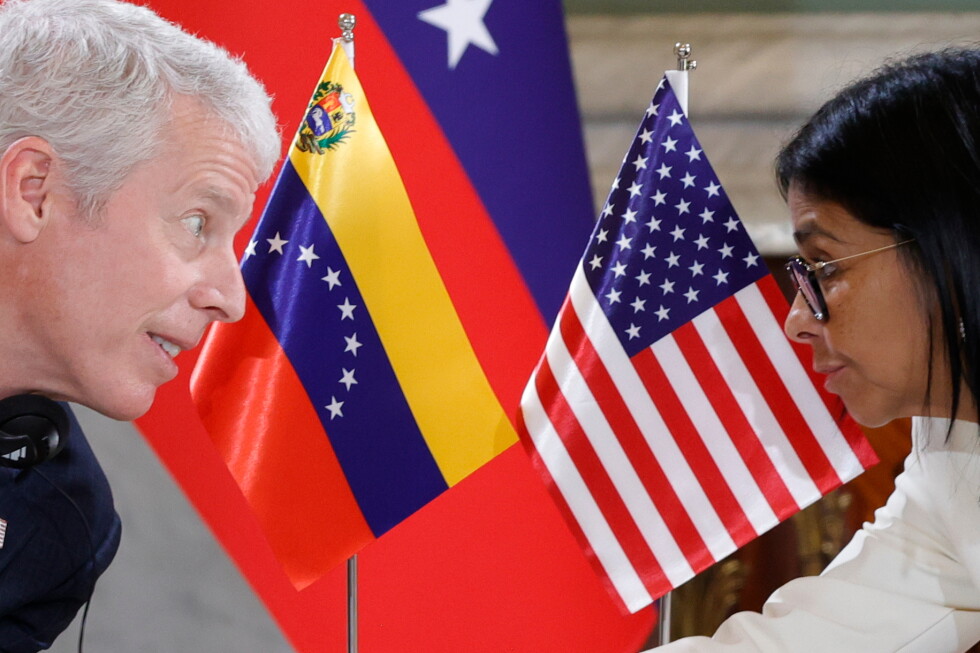
    For more than a century, oil has been the foundational thread weaving together every aspect of modern Venezuelan identity. Rooted in the national consciousness is the deeply held belief that the country’s unmatched reserves of crude – the largest on the planet – belong not to political leaders or private corporations, but to every Venezuelan citizen. That long-held conviction, and the collective pride of a nation that has weathered decades of turmoil, suffered a major blow last week when acting Venezuelan President Delcy Rodríguez signed an agreement granting U.S.-backed entities control over roughly one-fifth of the country’s total proven oil reserves.

    While the deal holds the long-term potential to unlock billions of dollars in investment for an oil sector and broader national economy crippled by decades of mismanagement and international sanctions, it has been widely decried by ordinary Venezuelans as an unprecedented surrender of national sovereignty. Many have linked the agreement to the January U.S. military operation that targeted former President Nicolás Maduro, arguing that seizing control of Venezuela’s vast energy wealth was the unstated core goal of the intervention that left Rodríguez in power.

    “For ordinary citizens like us, there is nothing we can do to stop this – it is not just worrying, it is outrageous,” said Lisandro Castro, an architect based in the capital Caracas. “Across the country right now, there is real, widespread anxiety about what is unfolding before our eyes.”

    Oil has shaped every corner of Venezuelan life since commercial deposits were first discovered in the country’s northwest in the 1920s. What began as a new energy sector transformed a poor, largely agrarian nation into an urbanized regional economic power almost overnight. American energy workers who relocated to Venezuela introduced and popularized baseball, constructing fields across oil-producing regions that turned the sport into a national pastime for working-class communities before it spread across the entire country.

    The boom created unprecedented economic opportunity that drew waves of European migrants fleeing post-World War II hardship. Portuguese immigrants opened neighborhood bakeries that remain community staples today, while Italian architects designed iconic buildings that still define Venezuelan cityscapes. As a young democracy, Venezuela came to rely almost entirely on oil export revenues rather than domestic taxes on citizens and businesses, creating a dynamic where politicians used oil wealth to secure public support, explained Ronal Rodríguez, a researcher at the Venezuela Observatory at Colombia’s Universidad del Rosario.

    Venezuela went on to become a founding member of OPEC, and by the 1970s, when the country boasted the highest per capita income in Latin America, the government nationalized the entire oil sector with the creation of the state-owned Petróleos de Venezuela S.A., known universally as PDVSA. Under the nationalized model, foreign firms were only permitted to operate as minority partners in joint ventures, and PDVSA’s revenues funded an extensive network of public benefits: heavily subsidized gasoline for all citizens, scholarships for international study, free healthcare and countless other social programs.

    “Every single Venezuelan grows up understanding that oil is a collective right that every one of us can claim,” researcher Ronal Rodríguez noted.

    Over the decades, Venezuela’s history has been defined by the repeated cycle of oil booms and crippling busts. When global crude prices plummeted in the 1980s, the economy collapsed, forcing the government to secure a bailout from the International Monetary Fund and eliminate core public subsidies. The resulting social unrest paved the way for the rise of Hugo Chávez, a young military officer who first gained national attention for a failed coup attempt.

    After being elected president in 1998, Chávez expanded the country’s social safety net dramatically – including expanded access to public health, affordable housing and free education – fueled by a resurgence in global oil prices that generated an estimated $981 billion in revenue for PDVSA between 1999 and 2011. The government distributed everything from new homes to household appliances to free medication, and millions of families secured stable, well-paid jobs across public and private sectors. Emboldened by widespread popular support, Chávez tightened state control over PDVSA, sidelining major U.S. oil firms including ExxonMobil and ConocoPhillips in the process.

    But PDVSA’s fortunes declined sharply as oil prices fell again in the 2010s. Systemic corruption and decades of mismanagement eroded production capacity and profits, first under Chávez and then under his hand-picked successor, Nicolás Maduro, who took office following Chávez’s death in 2013. By that time, the country was already sliding into a catastrophic economic crisis, worsened by sweeping U.S. sanctions imposed over concerns about democratic backsliding and human rights abuses that gutted the oil sector and the broader economy.

    What was once a magnet for global migrants became a source of mass emigration: severe food shortages and widespread deprivation linked to economic collapse pushed more than 7 million Venezuelans to leave the country. Even today, while grocery store shelves are fully stocked, soaring hyperinflation has left basic goods out of reach for most working people. Public sector employees now earn an average of roughly $160 per month, while private sector workers averaged around $237 per month in 2024.

    “Something is better than nothing,” said Romel Abreu, a former PDVSA worker who now works as a security guard in Cabimas, the heart of Venezuela’s historic oil region in the country’s northwest. Referring to Venezuela’s current crude production of roughly 1 million barrels per day, he added: “If we had no oil production at all, we would be completely lost.” Like many residents of the oil belt, Abreu holds out hope for another boom that would bring back well-paying jobs for the next generation.

    The new oil deal has deepened widespread skepticism among Venezuelans of all political stripes. After Maduro’s capture in January, many Venezuelans hoped that would end the ruling party’s 27-year hold on power. When that did not materialize – with the Trump administration backing Rodríguez over opposition leaders – many held out optimism that the easing of crippling U.S. sanctions would deliver long-overdue economic improvement. A February regulatory overhaul that opened the door to expanded private investment in the oil sector was widely seen as a sign of coming progress.

    But for critics like Castro, the January intervention was always just a stepping stone to this moment. “Everything that happened on January 3 was just a strategy to get us to where we are today: full U.S. control over our energy sector for their own gain, not to benefit ordinary Venezuelans,” he said.

    Under the terms of the agreement, the U.S. is entering a joint venture with North American Blue Energy Partners, Venezuela’s second-largest private oil operating company, trailing only industry giant Chevron. Rodríguez has granted the joint venture 100-year exploitation rights to 17 oil fields holding 65 billion barrels of proven reserves – roughly one-fifth of Venezuela’s total 300 billion barrel reserve base.

    Industry experts warn that because Venezuela’s energy infrastructure has fallen into severe disrepair after decades of underinvestment, it will take years of large-scale capital investment before production increases significantly.

    Speaking in Caracas this week, U.S. Energy Secretary Chris Wright said the Trump administration’s mission in Venezuela “is to bring peace, freedom, opportunity and prosperity to the people.” In a national address Saturday, Rodríguez defended the agreement, saying she aims to restore Venezuela’s status as a global “energy powerhouse.”

    For residents of Cabimas, the deal leaves them torn between conflicting fears and hopes. “On one hand, you have to acknowledge that we are handing over control of one of our largest reserve holdings,” said Erwin Ayala, a current oil sector worker, outside his home in Cabimas. “But if this is for the good of the country and for future generations, then we can support it. What good does it do us to hold all this oil in the ground if we have no machinery, no technology, to get it out and use it to improve our lives?”
  • A pair of spacecraft draw closer to Mercury after nearly decade-long voyage

    A pair of spacecraft draw closer to Mercury after nearly decade-long voyage

    CAPE CANAVERAL, Florida — After nearly 10 years traversing more than 6 billion miles of interplanetary space, a joint European-Japanese mission to Mercury hit a major milestone Thursday: two integrated science probes separated from their shared cruise carrier, moving into the final phase of their journey to the solar system’s smallest and innermost planet.

    The separation procedure, executed according to pre-planned timelines, left flight controllers at the European Space Agency’s (ESA) German operations center waiting two tense hours for radio confirmation of the successful maneuver, given the 124-million-mile (200-million-kilometer) communication delay between Earth and the spacecraft. The entire critical operation was streamed live to the public from the control room, drawing viewers across the globe eager to follow the historic planetary mission.

    “This is a brilliant moment,” said Geraint Jones, the mission’s lead project scientist, following confirmation of the separation.

    Known collectively as BepiColombo, the conjoined probe stack is on track to enter gravitational orbit around Mercury in December 2025, with the two individual craft set to split apart shortly after orbit insertion to begin their coordinated science campaign. As of Thursday’s separation, the mission still had 2 million miles (3.3 million kilometers) remaining before it reaches its target destination, with one final planetary flyby of Mercury scheduled for January 2025 — a maneuver that already delivered unprecedented, high-resolution images of the planet’s cratered surface and ancient volcanic plains during earlier passes.

    First launched in 2018 from Earth, the BepiColombo mission honors Giuseppe “Bepi” Colombo, the Italian mathematician who made key contributions to NASA’s 1970s Mariner 10 mission, humanity’s first flyby mission to Mercury. To date, only one other spacecraft has ever orbited Mercury: NASA’s Messenger probe, which ended its mission in 2015 after four years of study. Even so, the small planet — barely larger than Earth’s Moon — remains one of the most poorly understood bodies in the inner solar system.

    “How tiny Mercury is and still it holds some of the biggest mysteries of our solar system,” mission manager Santa Martinez noted earlier this week, ahead of the separation maneuver. Jones echoed that sentiment, adding, “There’s a huge amount still left to be learned.”

    BepiColombo’s winding 6-billion-mile journey was designed to gradually slow the craft enough to be captured by Mercury’s gravity, requiring nine gravitational flybys of inner solar system planets to shed velocity. Once science operations begin next spring, the ESA-led Mercury Orbiter and the Japanese Aerospace Exploration Agency’s (JAXA) Mercury Magnetospheric Orbiter will operate from separate, distinct altitudes to map the planet’s surface, probe its unusually dense iron core, map its global magnetic field, and investigate unusual geologic features including shallow depressions researchers suspect form when solar radiation vaporizes volatile minerals directly from surface rocks.

    Mercury is a world of extraordinary extremes: surface temperatures at the equator can climb above 800 degrees Fahrenheit (427 degrees Celsius), while permanently shadowed craters at the poles remain perpetually frigid and hold deposits of water ice. The harsh, radiation-heavy environment required specialized engineering to protect the craft’s sensitive instruments. Ignacio Tanco, ESA’s chief of mission operations, compared the thermal conditions the probes will endure to working with a searing hot pizza oven constantly positioned directly behind the spacecraft.

    The $2 billion mission is primarily funded and led by ESA, with JAXA contributing the magnetospheric orbiter and supporting operations. Science data collection and analysis is set to begin in full by spring 2026, with researchers expecting to resolve long-standing questions about Mercury’s formation, internal structure, and unusual surface features.

    This reporting, from The Associated Press, is supported by the AP Fund for Journalism and private philanthropic foundations, with AP retaining full editorial control over all content.

  • Sri Lankan opposition rallies against government’s proposed judicial reform

    Sri Lankan opposition rallies against government’s proposed judicial reform

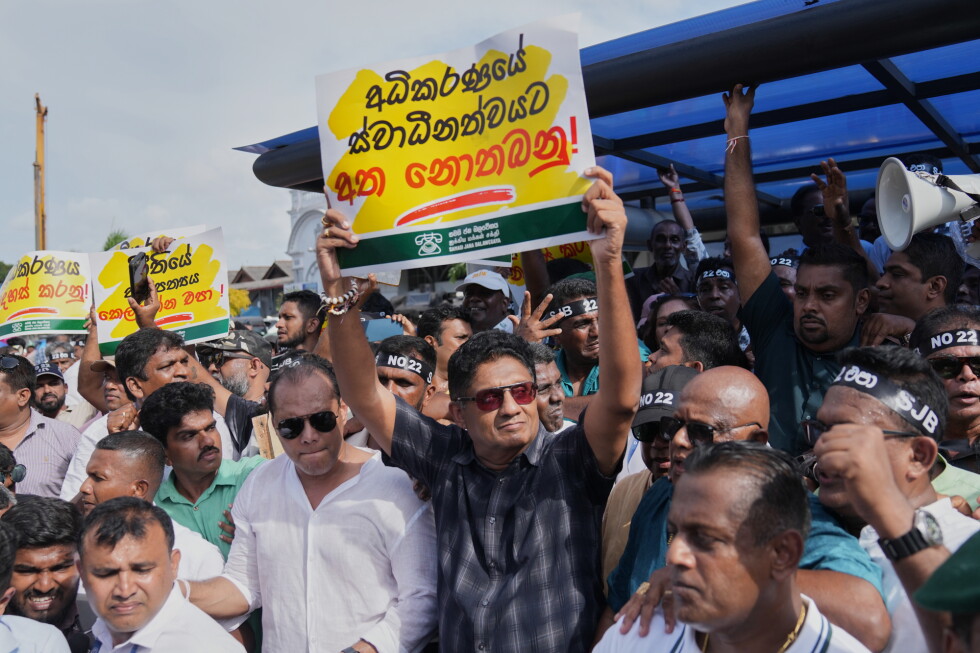
    Hundreds of opposition politicians, legal professionals, labor organizers and human rights advocates marched through the streets of Sri Lanka’s capital Colombo on Thursday, rallying against a contentious constitutional amendment that would expand the nation’s highest courts and extend the mandatory retirement age for top judges. Protesters gathered at the city’s central railway station to voice their demands, waving placards and banners emblazoned with slogans including “Don’t touch the judiciary” and “Halt reforms that erode judicial independence.”

    The demonstration comes 12 days after President Anura Kumara Dissanayake’s administration tabled the proposed judicial reform legislation in Sri Lanka’s Parliament, where the ruling National People’s Power (NPP) party has held an overwhelming two-thirds majority since national elections in 2024. Under the terms of the amendment, the retirement age for senior supreme and appellate court judges would be raised by two years, and additional judicial seats would be created on the country’s top courts.

    Critics across the political and civil society spectrum argue the reforms are a deliberate power grab designed to stack the judiciary with government-aligned justices and undermine judicial autonomy. Opposition lawmaker Ajith Perera condemned the proposed amendment as a “draconian” overreach that ignores the will of the Sri Lankan people. Perera claimed the government drafted the legislation without any consultation with legal professionals, sitting judges or other key stakeholders, framing it as an attempt to manipulate the judicial branch for partisan political gain.

    The NPP government has pushed back against these claims, arguing the changes are a core part of a broader effort to address chronic backlogs that have left millions of Sri Lankans waiting years for court rulings. Administration officials emphasize the reforms will not weaken judicial independence, and are targeted exclusively at improving access to justice for ordinary citizens.

    No date has yet been scheduled for parliamentary debate on the bill, which requires a two-thirds majority vote to pass. With the ruling party already controlling more than that threshold, the amendment is widely expected to advance if put to a vote.

    The current political standoff comes in the wake of a dramatic political shift in Sri Lanka. Dissanayake won a presidential election in September 2024, followed by a landslide parliamentary victory for his NPP that ousted the country’s long-dominant traditional political establishments. The 2024 election results were widely interpreted as a voter rejection of the old political order, after decades of mismanagement and corruption left Sri Lanka facing a catastrophic economic crisis in 2022 that left millions unable to access food, fuel and medicine.

    Since taking office, Dissanayake’s administration has launched a sweeping anti-corruption campaign, opening new investigations into alleged graft and mismanagement by previous governments. Dozens of former senior political and government officials are currently the subject of these probes.

  • Latest school shooting in Thailand may spur calls in Asia for more active safety drills

    Latest school shooting in Thailand may spur calls in Asia for more active safety drills

    In the wake of a fresh school shooting incident in Thailand this week, policymakers and education authorities across Southeast Asia are ramping up discussions around expanding active shooter preparedness drills at educational institutions, a response to a growing regional trend of gun-related violence on campus.

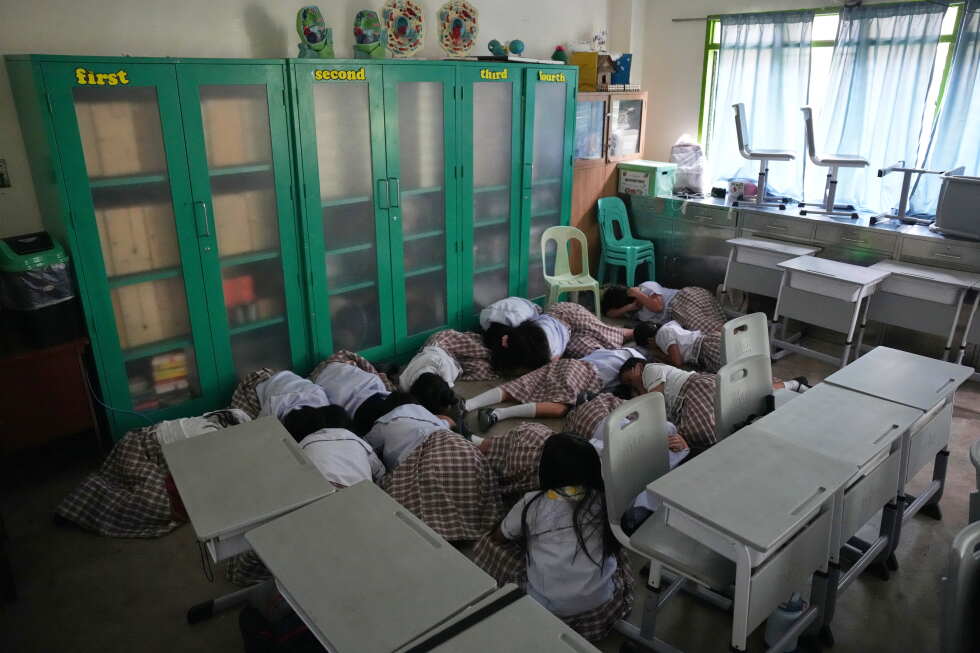
    On Thursday, just one day after the Thai shooting, students in San Rafael, Philippines, joined thousands of schools across the country in participating in the annual Nationwide Simultaneous School Safety Drill. The exercise, organized by the Philippine Department of Education alongside multiple national public safety agencies, is designed to test emergency response protocols and strengthen overall school security against a wide range of threats.

    “It’s a new reality in the country,” stated Jonvic Remulla, Secretary of the Philippine Department of the Interior and Local Government, on the sidelines of the San Rafael drill. “We are preparing for all kinds of emergencies, from human-induced to weather-induced events. All of us should be ready.”

    The renewed push for preparedness follows a close call on Wednesday in Thailand’s Kamphaeng Phet province, roughly 120 miles north of Bangkok. According to local Thai media reports, a 14-year-old student opened fire multiple times on his school campus before being subdued by staff and authorities. No bystanders or students were injured in the incident, but it has reignited urgent conversations about school safety across the region that has already seen multiple deadly student-led school attacks in recent months.

    Just four months prior, in August 2024, both Thailand and the Philippines recorded fatal school shootings perpetrated by teen students. On August 7, a 14-year-old gunman carried out an attack at his high school and family home in Nonthaburi province, just outside Bangkok, that left eight people dead and more than 20 others wounded before the shooter died by suicide. Eleven days later, on August 18 in the southern Philippines, a 14-year-old student armed with two pistols killed a classmate on a high school campus before taking his own life. Two months before that, in June, two teenage students aged 14 and 15 opened fire at a high school in the central Philippines, leaving three students dead and at least 20 more injured. Both suspects were taken into custody following the attack.

    Regional gun violence data underscores the severity of the threat facing both nations. Multiple independent firearms surveys rank Thailand first in Southeast Asia for per capita gun ownership, while the Philippines holds the unenviable top position for per capita gun-related deaths in non-conflict settings across the region.

    The San Rafael drill brought together education officials, local government leaders, and representatives from disaster response and law enforcement agencies to simulate real-world emergency scenarios and evaluate response coordination. The core of the exercise was a 30-minute full-scale lockdown drill, followed by a structured debrief and evaluation with stakeholders from the Office of Civil Defense, Bureau of Fire Protection, Local Disaster Risk Reduction and Management Office, and Philippine National Police.

    “Through this exercise, we want our schools to be number one in awareness — to be able to recognize these kinds of threats and respond through drills and exercises: what to do, where to go, and how responders would be able to perform their roles and do their part,” explained Malcolm Garma, Undersecretary of the Philippine Department of Education.

    Thailand has already moved forward with similar preparedness initiatives following its August deadly attack. Just last month, schools across Thailand held active shooter response drills, with footage released by Thai public broadcaster Thai PBS showing first responders guiding students at Bangkok’s Sarawittaya School through life-saving protocols, including how to barricade classroom doors with stacked desks and chairs to block an active shooter from entering.

    Regional security analysts note that the recent string of incidents is expected to push more Southeast Asian governments to mandate regular active shooter drills across all primary and secondary education institutions, as part of broader efforts to curb gun violence and protect student populations.

  • UN report details foreign networks fueling war in Sudan

    UN report details foreign networks fueling war in Sudan

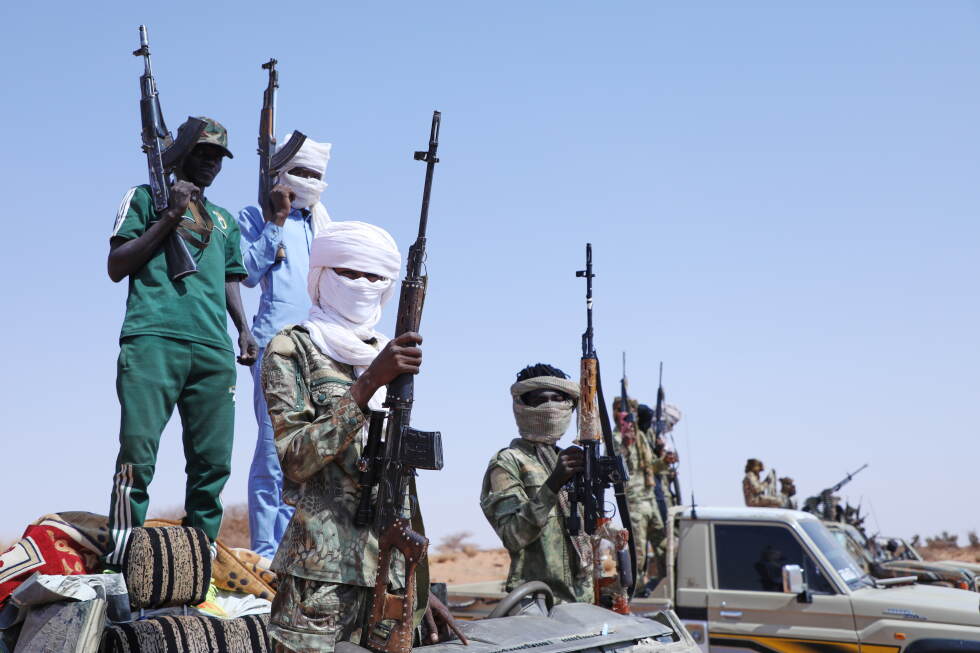
    BRUSSELS – Nearly two years into the brutal civil war pitting Sudan’s regular army against the paramilitary Rapid Support Forces (RSF), a new United Nations investigation confirms that transnational foreign networks have dramatically escalated the violence, turning what began as a power struggle into a humanitarian catastrophe that has killed tens of thousands and pushed millions to the brink of starvation. The conflict, which erupted in April 2023, has already left at least 59,000 people dead according to the latest UN accounting, forced roughly 13 million to flee their homes, and pushed entire regions of the northeast African nation into catastrophic food insecurity approaching full-scale famine. In a public summary of the investigation released Thursday, UN High Commissioner for Human Rights Volker Türk outlined clear evidence that cross-border networks anchored in companies based in the United Arab Emirates, Colombia, and Chad have funneled critical resources to the RSF, including weapons, military training, and foreign contractor personnel. “The mission finds reasonable grounds to believe that a transnational network supplied the Rapid Support Forces with weapons, logistics, training and foreign personnel, including Colombian contractors involved in advanced weapons and drone systems,” the summary reads. The investigation specifically highlights that individuals and corporate entities connected to, operating from, or formally registered in the United Arab Emirates hold a central role in these networks, overseeing recruitment, financing, transportation, and deployment of foreign military contractors to provide direct military support that benefits the RSF. Abu Dhabi has repeatedly and publicly denied all accusations that it provides military backing to the paramilitary group, a position it has maintained even amid growing international scrutiny. While the report’s most concrete findings focus on support to the RSF, investigators also note that externally supplied drones have expanded the Sudanese army’s aerial strike capabilities, adding that additional research into external support for the military remains ongoing and preliminary. Beyond mapping external support, the UN probe documents widespread attacks on civilian targets that may qualify as war crimes committed by both warring parties. Investigators specifically tied foreign-trained fighters to two brutal massacres carried out in 2025 at the Zamzam internally displaced persons camp and the city of El Fasher. More than 100,000 residents have fled El Fasher since the violence erupted there, and surviving witnesses describe RSF fighters systematically gunning down unarmed civilians in their homes and on city streets, leaving corpses scattered across urban areas. Subsequent analysis of commercial satellite imagery has provided visual evidence suggesting RSF units have attempted to conceal the killings by disposing of remains in unmarked mass graves or through open burning. When it comes to cooperation with the UN investigation, the report notes that authorities in Chad, Colombia, and the United Arab Emirates engaged with investigators, but no substantive response has been received from governments in Ethiopia, Libya, South Sudan, and Somalia. Panama, whose offshore finance sector has long faced global accusations of large-scale industrial money laundering, requested additional time to provide a formal response. Notably, neither Sudan’s official military leadership nor the RSF have agreed to cooperate with the UN probe. The UN findings align with an earlier Associated Press investigation published in July that uncovered evidence Colombian mercenaries had been recruited to train child soldiers to fight for the RSF. Human rights organizations have further alleged that these Colombian fighters were recruited by a state-linked firm based in the UAE, a claim the UAE continues to reject alongside broader accusations of military support to either Sudanese warring party. In line with its findings, the investigative panel has called on the UN Security Council to expand and extend the existing arms embargo imposed on Sudan, stressing that all cross-border flows of weapons, financing, personnel, and advanced military technology that sustain the conflict must be cut off to create space for peace talks. The United States has already thrown its support behind new multilateral action, circulating a draft Security Council resolution in August that was reviewed by the Associated Press. The draft resolution condemns the steady influx of external military aid, weapons, and ammunition to both warring parties, noting that outside support prolongs the conflict and undermines international mediation efforts. It specifically calls out the operation of drone and unmanned aerial system programs launched from third-party countries to support the Sudanese war effort, and demands that all nations immediately end any direct or indirect support – whether logistical, financial, or military – that allows the conflict to continue.