博客

  • Artist bids goodbye to Danish postal system

    Artist bids goodbye to Danish postal system

    In a thoughtful creative project that bridges art, nostalgia, and shifting communication norms, UK-based paper artist Gillian Taylor has crafted a unique hanging daisy art installation using letters collected during the final days of public letter delivery from Denmark’s national postal operator PostNord. The exhibition, titled *Med Venlig Hilsen* — Danish for “With Kind Regards” — is currently hosted at the Thelma Hulbert Gallery in Honiton, southwest England, bringing together contributions from friends, strangers, and letter lovers across two countries.

    Taylor, who hails from Cockwood, Devon, has longstanding connections to Denmark, where she spent a significant portion of her career. Her project drew submissions from dozens of participants: Danish close friends who shared her fondness for handwritten correspondence, as well as complete strangers who jumped at the chance to contribute personal memories of receiving and opening handwritten letters. Many contributors took the opportunity to send their letters as a deliberate act of preserving the dying tradition, even adding their own small artworks to the envelopes and using up old collections of postage stamps that would otherwise go unused.

    The end of letter delivery in Denmark marks a major milestone in global digital adoption. In 2025, PostNord announced it would cease all residential and commercial letter delivery services starting that December, shifting its entire operational focus to parcel delivery. The company justified the change by noting Denmark has ranked among the world’s most digitally advanced nations for years, with email and instant messaging apps now dominating personal and professional communication far more than traditional posted letters. The transition was so abrupt that one of Taylor’s friends attempting to mail her a letter on the official final day discovered the local public post box had already been removed. They ultimately had to route the letter via a courier through Austria, a journey that took two full months to reach Taylor.

    When assembling the installation, Taylor transformed the submitted correspondence into delicate hanging daisies: the postage stamps from each letter form the bright central core of each flower, while cut-up pieces of the letters and their envelopes make up the soft petals. Taylor explained her choice of the daisy was twofold: not only is it the official national flower of Denmark, but it also carries a universal symbolism of hope that fits the project’s tone.

    Reflecting on the exhibition’s broader message, Taylor noted that the project has already sparked renewed interest in handwritten correspondence among attendees and contributors. “Lots of people have gone away and written letters as a result of this because they realised that if we don’t use our own postal service then we might lose it as well,” she said. Taylor added that while the end of Denmark’s national letter service feels like a mournful turning point, she wanted the installation to carry an optimistic message. “This project has made me think about the way I communicate with old friends,” she said. “Although this is a really sad moment, I’m an optimistic person and I like to offer that hope for the future — that we will return to those more personal ways of communicating.”

  • Aerial footage reveals destruction in coastal Venezuela

    Aerial footage reveals destruction in coastal Venezuela

    Fresh aerial imagery captured this week has laid bare the full scale of destruction along Venezuela’s northern coastline, where two powerful back-to-back earthquakes triggered catastrophic structural failure on Wednesday.

    The port city of La Guaira, which sits just north of the Venezuelan capital Caracas along the rugged Caribbean shore, has borne the brunt of the seismic activity. Multiple multi-story residential and commercial buildings across the city have crumpled, leaving piles of concrete and twisted steel where intact structures stood just days prior. Surveys conducted by aerial drones and aircraft have allowed emergency response teams to map the full scope of the damage, much of which was difficult to access from the ground in the immediate aftermath of the quakes.

    The two major tremors, which struck within hours of one another, sent panicked residents running into open spaces across the coastal region. Local authorities have not yet released full casualty figures or details of the full impact to infrastructure, but the aerial footage makes clear that the damage is widespread. The disaster comes as Venezuela already grapples with long-running economic challenges that have stretched emergency response and public works capabilities thin, raising concerns about the speed and scope of recovery efforts in the coming weeks.

  • Would farmers and fishermen back Brexit today?

    Would farmers and fishermen back Brexit today?

    Ten years have passed since the 2016 United Kingdom European Union membership referendum, a vote that reshaped the nation’s political and economic trajectory forever. Ahead of that historic ballot, polling data already revealed deep divisions over Brexit among England’s rural and coastal industries: while a thin majority of farmers leaned toward leaving the bloc, the fishing industry was far more unified, with a pre-referendum survey recording that 92% of fishermen planned to back an exit. A decade on, the BBC set out to revisit communities in South East England, asking producers whether, equipped with the hindsight of 10 years of post-Brexit reality, they would cast the same vote today.

    For Simon Maiklem, a Surrey-based beef producer who backed remaining in the EU in 2016, the outcome of Brexit has only confirmed his original opposition. In an interview with the BBC, Maiklem explained that he has yet to see any tangible benefit from the UK’s exit from the bloc, and in many ways, conditions have turned out worse than even remain campaigners predicted. His entire business model was built around exporting high-health, premium pedigree cattle to customers across the European single market – a market that vanished overnight once the UK completed its withdrawal. That valuable export space has now been fully captured by farmers in Southern Ireland, Maiklem noted, who retain full EU membership and face none of the post-Brexit trade frictions that have locked him out of the continent. On top of lost export access, he added, successive changes to government policy have eroded the farm subsidies he once relied on. While he acknowledged that the EU had become bloated with excessive bureaucratic regulation, Maiklem argued that reforming the bloc from within would have been a far better path for British agriculture. Promises of reduced red tape after Brexit, he said, have failed to materialize. Echoing a famous quip from decades ago, he noted: “A very old friend of my father’s said that farmers voting for Brexit was turkeys voting for Christmas. I think he might have been proved right.”

    For fishermen who overwhelmingly backed leave in 2016, the story has been one of unmet promises and lingering frustration. Mark Ball, a Sussex fisherman who supported an exit, said his core motivation for voting leave was ending the unfair one-sided arrangements that defined UK membership of the EU’s Common Fisheries Policy. “I felt that if we could leave, we could get control back of our waters and hopefully make fishing a bit better,” he explained. At the time, he pushed for a full ban on European fishing vessels operating within 12 miles of the UK coast. A full decade later, however, Ball says nothing has changed. EU vessels still operate as close as six miles to UK shores, while British fishermen now face overwhelming new red tape when exporting their catch to the continent. “It’s so unfair. They’ve got everything they wanted and more on top. And all we’ve got is a load of regulation,” he said. Even so, Ball says he would still vote to leave today, arguing that the failure is not with Brexit itself, but with the flawed withdrawal agreement the UK negotiated with the bloc. He called for the current deal to be scrapped and replaced with a far better arrangement for British fishing, warning that without meaningful change, inshore UK fishing has no long-term future. “I just think they’re bullies,” he said of EU negotiators.

    Jim Partridge, a veteran fish seller with 69 years of industry experience who runs Shoreham-based Monteum Ltd, echoed Ball’s frustration. He also voted leave in 2016, and says he has yet to see any of the promised freedom from EU rules that leave campaigners promised. French vessels are still allowed to operate in the Channel as close as six miles to the Sussex coast, he pointed out, under outdated “historical rights” provisions that UK negotiators failed to renegotiate. UK fishing crews have long demanded a new boundary drawn down the middle of the Channel, a change that would give British fleets full access to valuable local stocks. Instead, Partridge said, French boats are harvesting most of the prime fish off the Sussex coast – including Dover sole, plaice, cod, brill and turbot – leaving almost nothing for local crews. Comparing current fish stock levels to when he started working in the industry at age 8, Partridge said the difference was like “chalk and cheese”, adding that British fishing has suffered continuously since former Prime Minister Ted Heath took the UK into the bloc decades ago. When asked about growing calls for the UK to rejoin the EU, Partridge said there was “no question” he would vote leave again today, and would make the same choice a second time.

    Not all leave-voting farmers have uniformly negative views of the post-Brexit landscape, however. Robert Pascall, a fruit grower based in Kent who backed leave in 2016, acknowledged that from a purely economic perspective, remaining in the EU would likely have been the right choice for his business. He said that national pride was a major factor in his 2016 vote, explaining that at the time of the referendum, he felt the UK was overly dominated by EU institutions. Today, his business no longer qualifies for the same level of subsidies that EU-based fruit producers receive, putting him at a major competitive disadvantage in the European market. Even so, Pascall pointed to some unexpected benefits of Brexit. Tighter post-Brexit plant health checks, introduced to block the spread of harmful pests and diseases into the UK, have made importing stock plants far more difficult. But this trade friction has also pushed his farm to expand its own domestic production of stock plants, ending its historical reliance on imports shipped through the Channel Tunnel.

    In response to questions from the BBC, a spokesperson for the UK’s Department for Environment, Food and Rural Affairs said the government is “determined” to deliver the support that farmers, fishermen and food exporters need to thrive post-Brexit. The government has renewed its Sustainable Farming Incentives scheme, invested roughly £800 million in supporting British farmers and food producers, and allocated an additional £360 million through the Fishing and Coastal Growth Fund. The spokesperson added that the government’s reformed Sanitary and Phytosanitary (SPS) scheme will also make trade with the EU – the UK’s largest single export market – cheaper and easier for British producers in the coming years.

  • St. Bernard dogs honored in a museum that bridges the breed’s history with its future

    St. Bernard dogs honored in a museum that bridges the breed’s history with its future

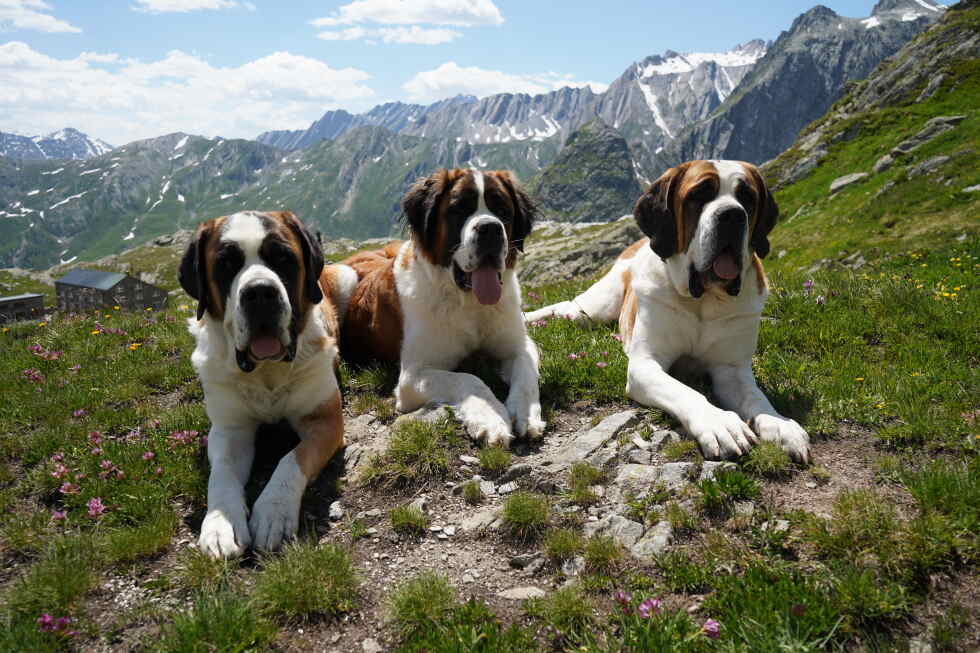
    High in the snow-capped Swiss Alps, along the ancient Great St. Bernard Pass that straddles the border between Switzerland and Italy, the iconic St. Bernard dogs still tread the same mountain trails their ancestors have patrolled for centuries. These paths once carried them to find travelers trapped and buried under avalanche snow, a legacy that now lives on in a brand-new interactive museum dedicated entirely to the breed. This summer marks the first anniversary of Barryland, the world’s only museum and breeding center focused exclusively on St. Bernards, located in the Swiss valley town of Martigny.

    The new facility opened last year after the breed’s historic collection outgrew its cramped original location, and it has already drawn far more visitors than organizers anticipated. Over 130,000 people have walked through Barryland’s doors in its first 12 months of operation, drawn by the enduring global fascination with Switzerland’s most famous national dog. Unlike traditional static museums, Barryland offers immersive, hands-on experiences: guests can observe live grooming sessions and canine physiotherapy sessions, hike the treacherous Great St. Bernard Pass via cutting-edge augmented reality simulations, and dive into centuries of the breed’s intertwined history with Alpine travel and rescue.

    Mélanie Glassey-Roth, director of Barryland, explained that growing public demand for deeper insight into the breed’s history and cultural heritage drove the creation of the expanded, purpose-built center. “We have a lot of demand and interest for this breed and this whole history and patrimony,” she said. “So we decided to create a new park, a big one.”

    The story of St. Bernards is deeply tied to the perils of the Great St. Bernard Pass, which sits 2,469 meters (8,100 feet) above sea level, making it one of Switzerland’s highest and most dangerous alpine crossing routes. The pass has welcomed travelers for more than a thousand years, ever since Saint Bernard de Montjoux, an archdeacon from Aosta, founded the Great St. Bernard Hospice there in 1050 to offer shelter to pilgrims and merchants braving the harsh, unpredictable mountain conditions.

    Large working dogs were first brought to the pass in the mid-17th century, initially serving as guard dogs for the hospice before gradually becoming beloved companions. It did not take long for the breed’s unique skills to emerge: St. Bernards developed an extraordinary natural instinct to locate hikers who had become lost in blinding snow and thick alpine fog, turning them into legendary lifesavers that were uniquely suited to the harsh mountain environment. The breed took its name from the pass and the historic hospice, and its reputation spread across the whole of Europe in the early 19th century, carried by soldiers of Napoleon Bonaparte after his army crossed the pass on their military campaign.

    The most famous of all St. Bernard rescue dogs was Barry the First, who served at the hospice between 1800 and 1812 and is widely credited with saving more than 40 lives over his career. Today, the Barry Foundation, which manages the breed’s conservation and breeding program, honors his legacy by always keeping a male dog named Barry as part of their pack.

    Currently, 21 dedicated keepers care for 32 St. Bernards at the foundation’s facilities, with roughly 20 pedigree St. Bernard puppies born each year to preserve the pure line. While the breed’s legacy of mountain rescue remains central to its identity, modern rescue practices have phased St. Bernards out of active frontline rescue work: their large size makes them impossible to transport via the rescue helicopters that now respond to alpine emergencies, and smaller agile breeds such as Australian shepherds have taken over the role. To preserve the centuries-old tradition, however, a small group of St. Bernards still resides at the pass year-round, keeping the connection between the breed and its historic home alive.

    Each year, the foundation’s St. Bernards consume roughly 10 metric tons (22,046 pounds) of dry dog food to sustain their large frames. In the summer months, the dogs roam and play in the lingering snowfields of the high alpine pass, before traveling 40 kilometers (25 miles) down the winding mountain roads back to their climate-controlled kennel at Barryland in Martigny for the winter.

    Alexandra Piatti, one of the foundation’s full-time keepers, explained that her team accompanies every St. Bernard through every stage of their lives. “We get to see them born, and we get to see them grow up, and then become mothers, and we get to accompany them through all those different challenges in life,” she said. “We are their guide, so we can help them with socialization and educate them, and really be by their side for their whole lives.”

    Beyond conservation and heritage work, the foundation’s St. Bernards also serve an important modern role as therapy and community outreach animals. In 2025 alone, the dogs completed 609 community visits to hospitals, senior care homes, schools, and prisons across Switzerland, bringing comfort and joy to thousands of people.

    For keeper Déborah Dini, the work balances a deep respect for the breed’s centuries-old legacy with genuine affection for the dogs in her care. “We perpetuate the tradition,” she said. “We take care of them. We love them.”

  • NATO summit should display unity and pledges to defense, deputy NATO chief tells AP

    NATO summit should display unity and pledges to defense, deputy NATO chief tells AP

    As NATO prepares for its critical July 7-8 summit in Ankara, Turkey, the alliance’s second-highest military leader is framing the gathering as a make-or-break moment to lock in increased defense investment from member states, reaffirm unwavering backing for Ukraine, and demonstrate that the 77-year-old security bloc remains cohesive despite mounting internal and external pressures.

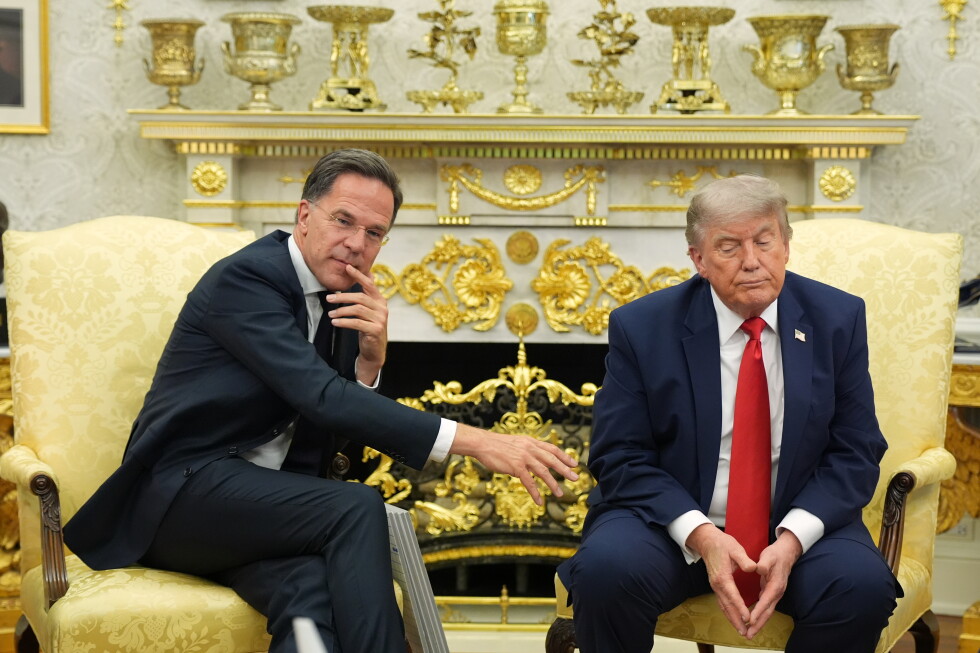
    Air Chief Marshal Sir John Stringer, NATO’s Deputy Supreme Allied Commander Europe, shared his assessment in an exclusive interview with the Associated Press in London, just 10 days ahead of the summit that will put alliance unity to the test. The gathering comes at a period of unprecedented uncertainty for the transatlantic alliance, driven by conflicting signals from U.S. President Donald Trump, who has alternately threatened to withdraw from NATO, unnerved European leaders with proposals to annex Greenland, and extended public praise to Russian President Vladimir Putin, NATO’s primary strategic adversary.

    Recent tensions have deepened after U.S. Defense Secretary Pete Hegseth last month criticized NATO allies for refusing access to their military bases to conduct strikes against Iran, while announcing a surprise six-month review of all American force deployments across Europe. Internal friction has also emerged within key NATO member the United Kingdom, where two senior government ministers — including former Defense Secretary John Healey — resigned in protest over what they call inadequate military spending plans that leave the nation vulnerable to rising global threats.

    Stringer, a senior British Royal Air Force officer, framed current turbulence as an inevitable part of the alliance’s decades-long expansion. “Summits are inherently highly political events, and they serve as a public demonstration of any organization’s unity,” Stringer explained during the London military conference, where AP spoke with multiple senior European military leaders about both their hopes and anxieties heading into the Ankara gathering. “Over seven decades of growth and expansion, it would be odd if we never faced periods of uncertainty. Are we in one of those moments right now? The answer is yes.”

    Trump has for years pressured European NATO members to take greater responsibility for their own collective defense, and with few exceptions including Spain, allies have responded with an unprecedented push to ramp up military spending amid growing Russian aggression along the alliance’s eastern flank.

    Maj. Gen. Indrek Sirel, a senior commander with the Estonian Armed Forces, argued that allies must both strengthen their own domestic military capabilities and continue providing support to Ukraine to degrade Russia’s ability to project offensive power. “Europe as a whole still has significant work to do to build a credible deterrent against Russian aggression,” added Brig. Gen. Jyri Raitasalo of Finland, the NATO member that shares the alliance’s longest continuous border with Russia.

    Stringer highlighted that European nations are already ramping up defense investment to build what he called a “truly credible deterrent force,” pointing to the quadrupling of 155mm artillery shell production across multiple countries as a key example. He confirmed that the summit will include discussions about expanding defense industrial production at a scale NATO has not required in decades.

    A core point of uncertainty hanging over the summit is the outcome of Hegseth’s six-month force posture review, which will shape how quickly European allies must fill potential capability gaps left by shifting U.S. deployments. Earlier this year, U.S. European Command announced that Washington would withdraw some military capabilities from the continent and expect allies to cover the resulting gaps. While the Trump administration maintains that any planned troop reductions have been coordinated with allies in advance, Sirel noted that details of U.S. force positioning in the Baltic states — a core part of NATO’s eastern flank deterrence against Russia — remain unclear. He said he remains confident in continued U.S. security guarantees, but Estonia is already preparing contingency plans to adapt to sudden changes in alliance posture.

    Stringer acknowledged that U.S. long-range strike and intelligence, surveillance and reconnaissance capabilities would be difficult to replace, but he expressed confidence that European allies can close any emerging gaps through a mixed “cocktail of capabilities” rather than replicating exact U.S. systems. For example, while only the U.S. operates B-1 and B-52 long-range bombers, any loss of that capability could be offset by missile deployments from ground, sea, and smaller aircraft platforms, he explained.

    Allies have already expressed frustration with frequent, sudden shifts in U.S. force policy. In May, Trump confused NATO partners when he announced plans to deploy 5,000 additional U.S. troops to Poland, just weeks after ordering the withdrawal of the same number of troops from Europe. Raitasalo, who serves as Finland’s military logistics chief, noted that effective military planning depends on long-term, consistent strategy. “If you change your mind or your plans every week, every month, or even every year, you will not deliver strong, reliable results,” he said, adding that allies need firm capability pledges rather than vague spending promises.

    Maj. Gen. Jonny Lindfors, Sweden’s army chief, said a successful summit outcome would produce a shared, aligned vision for adjusting NATO’s deterrence and defense postures. He called for at least an outline — if not a fully detailed strategy — for shifting defense burden sharing across the alliance to lay the groundwork for what he called “NATO 3.0.”

    The United Kingdom, a longstanding leader within NATO, is already facing pressure to honor its defense spending commitments. Last year’s NATO summit saw all 32 member states agree to work toward a target of spending 3.5% of gross domestic product on core defense, with the U.K. committing to hit that marker by 2035. But Healey and another minister resigned earlier this month, arguing that the government’s proposed plan would only reach 2.68% of GDP by 2030, falling far short of what is needed to keep Britain safe amid rising threats. New British Defense Secretary Dan Jarvis has since said the nation will uphold its existing commitments, and the government has pledged to publish its full spending plan publicly.

    Stringer confirmed that by the start of the Ankara summit, NATO expects all member states to outline a “credible path” to reach the 3.5% GDP target, and the U.K. is bound by that requirement just like every other ally. “The U.K. cannot assume that its historical thought leadership within NATO is enough,” Stringer said. “It has to match that leadership with matching forces and resources.”

    Alliance credibility is on the line in Ankara, leaders say. Last year, NATO Secretary General Mark Rutte retained U.S. commitment to the bloc by convincing Trump that allies would deliver “BIG” progress on increasing defense spending. Stringer said this year’s summit must not only display cohesion across all 32 members, but also deliver honest conversations and concrete, credible defense plans. Raitasalo added that the meeting cannot stop at traditional communiques, roadmaps, and action plans — it must demonstrate deterrence through tangible action. If member states fail to turn promises into actual increased investment and capability, he said, NATO’s global credibility will be put at serious risk.


  • A historic heat wave catches Europe’s fashion industry unprepared

    A historic heat wave catches Europe’s fashion industry unprepared

    When a record-breaking heat wave settled over Paris this week, one of the fashion industry’s most high-profile annual events became an unexpected public test of how luxury brands are responding to the warming planet they regularly claim to address. This year’s Paris Fashion Week Men’s, which showcases upcoming spring-summer collections, played out against a backdrop of soaring temperatures that exposed a glaring contradiction: while organizers scrambled to keep guests comfortable with emergency cooling measures, models still took the runways in heavy, heat-trapping fabrics like leather, neoprene, and wool.

    For attendees and industry insiders, the discomfort was unavoidable. “I honestly thought I was going to pass out,” recalled Ben Freeman, an Australia-born, London-based fashion critic covering the event. Even with emergency interventions including complimentary ice packs, misting stations, cold towels, and iced Evian water served on silver platters, many venues stayed sweltering. Supplies of cold water ran low, and air conditioning was either entirely absent or woefully inadequate in the city’s historic buildings. Outside one show, 24-year-old fashion student Thomas Levy summed up the widespread disconnect: “I don’t know how the models did it this week in some of the leather and knit coats. The heat rarely seems to make it into the clothes. It shows up in the sets like at waterfalls and mist machines and ice packs.” Some front-row attendees have already raised a long-term proposal: if climate change continues to deliver more frequent and intense extreme heat events, Paris may need to permanently move its fashion week away from the annual peak of summer.

    Throughout the week, most brands framed the heat as a logistical and hospitality challenge rather than a design issue. Organizers adjusted schedules to avoid the hottest parts of the day, pushing start times earlier to beat the midday sun. Dior relocated its Wednesday show from 2:30 p.m. to 9 a.m. to escape the worst heat, but even that shift couldn’t escape the soaring temperatures: water remained limited, the venue had no air conditioning, and multiple guests reported feeling unwell.

    A handful of designers did offer targeted solutions that integrated heat adaptation into their work. Loewe creative director Jonathan Anderson showcased lightweight sheer silk-chiffon tailoring, but still noted that the global fashion industry calendar is fundamentally out of step with actual seasonal weather. “The calendar does not make any sense,” Anderson told reporters, pointing to broken delivery cycles and a shifting retail landscape that have left the traditional schedule misaligned both with weather patterns and how luxury clothing is actually sold. Issey Miyake’s IM Men line delivered one of the week’s most coherent practical responses: for its “In Praise of Bamboo Shadows” collection, the brand passed out ice packs to guests at entry and showcased garments woven from bamboo thread blended with organic cotton and lightweight nylon, with loose silhouettes designed to let air circulate rather than trapping heat against the body. At Ami, designer Alexandre Mattiussi leaned into the moment, dressing models in loose shorts, washed trenches and casual “I Love Paris” T-shirts, while remarking from beside a roaring industrial fan that “Paris is burning.” Rick Owens went a step further, making heat the central theme of his presentation: he moved his Thursday show earlier to beat the heat, then sent models walking through a mist installation at the Palais de Tokyo in garments with built-in whirring fans. One leading fashion critic called the presentation “a metaphor for climate catastrophe.”

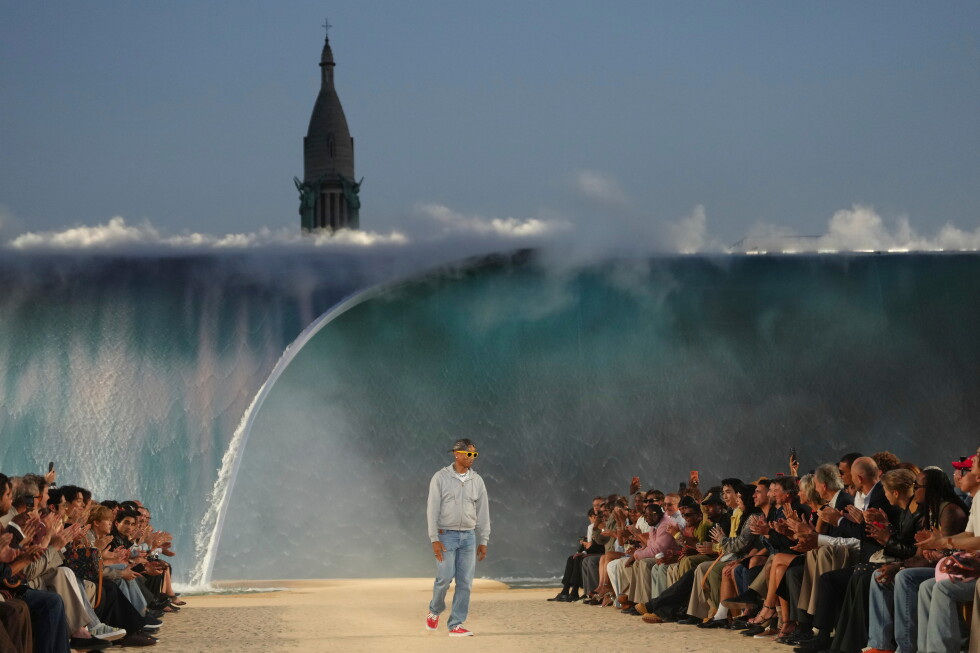
    Even luxury houses that leaned into lighter construction didn’t fully escape the contradiction. At Saint Laurent, designer Anthony Vaccarello created unlined jackets and soft, pale silhouettes explicitly designed for heat, but paired the lightweight pieces with leather briefs, choker scarves and transparent shoes that quickly fogged with perspiration. At Louis Vuitton, Pharrell Williams staged his show around a giant artificial wave installation, but still sent models out in neoprene wetsuits, cashmere coats, and fur pieces.

    Pascal Morand, head of France’s Haute Couture and Fashion Federation, said organizers had followed the French government’s official heat wave response plan. “We are conscious of the challenges and very attentive to preserving the Fashion Week experience in this context of structural change,” he told the Associated Press. But fashion week is far from the only Parisian institution being strained by rising temperatures: the Louvre recently shortened visiting hours during the heat wave, noting that its historic building structure is “remains vulnerable and is not sufficiently adapted to climate change.”

    The event also laid bare a broader cultural debate playing out across France and much of Europe: how to adapt to rising extreme heat without widespread adoption of air conditioning, which many Europeans still view as wasteful and ecologically harmful. Unlike many other regions, most of Europe’s historic city buildings were constructed without built-in cooling, and the continent is warming faster than any other on Earth. The Macron administration has prioritized low-tech cooling solutions like adding shade, improving building insulation, and planting more urban trees rather than encouraging widespread AC installation.

    For many observers, Paris Fashion Week’s struggle with heat serves as a warning for every global industry tied to fixed schedules and public gatherings. From professional sports to tourism to construction, sectors built around long-standing seasonal timelines and outdoor crowds are already being forced to adapt to heat waves that arrive earlier, last longer, and reach higher temperatures than the built environment was designed for. As Freeman put it: “Paris Fashion Week is the canary in the mine.”

  • Serena Williams to face 20-year-old Maya Joint of Australia in Wimbledon opening round

    Serena Williams to face 20-year-old Maya Joint of Australia in Wimbledon opening round

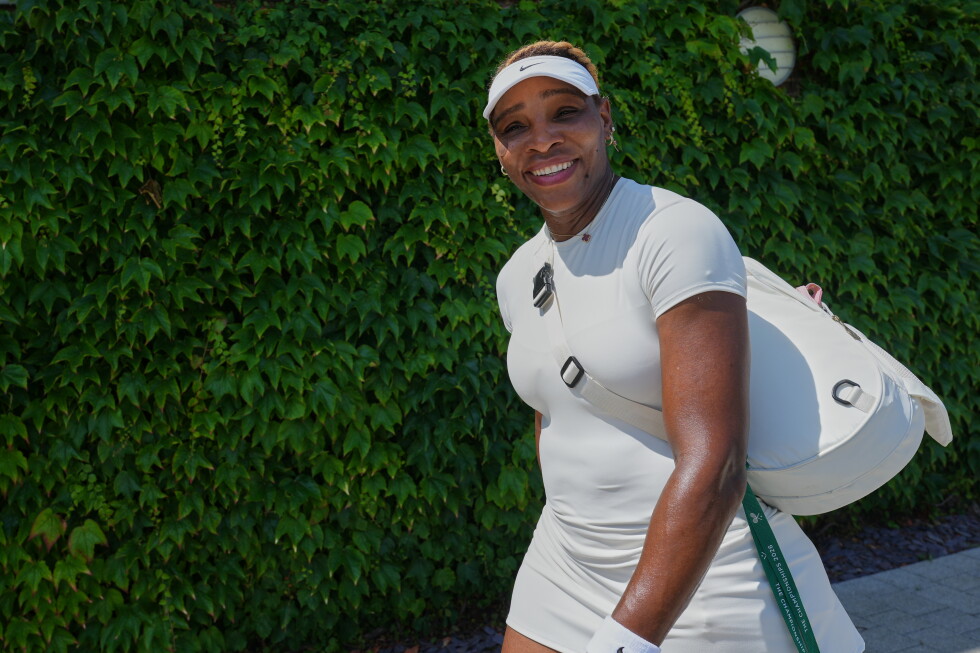
    As the 2025 Wimbledon Championships prepare to kick off Monday, one of the greatest tennis players in history is preparing to step back onto the iconic grass courts of the All England Club for her first singles match in nearly four years. Serena Williams, the 42-year-old seven-time Wimbledon singles champion, secured a wild-card entry to the prestigious Grand Slam, drawing an opponent less than half her age for the opening round: 20-year-old Australian rising star Maya Joint. The comeback will not stop at singles for Williams, either; she will also pair with her older sister Venus, who celebrated her 46th birthday just last week, for the doubles draw.

    Williams’ gradual return to competitive tennis began with two low-stakes doubles warmup matches, but the comeback gained mainstream attention Sunday when the All England Club formally confirmed her wildcard singles entry. Joint, currently ranked 53rd in the WTA singles rankings, is no stranger to the Wimbledon big stage: she made her debut at the tournament last year, though she fell in the opening round to Russia’s Liudmila Samsonova in straight sets, 6-3, 6-2.

    Williams has not competed in a top-level singles match since a third-round exit against Australia’s Ajla Tomljanovic at the 2022 U.S. Open. In the emotional post-match press conference following that defeat, Williams declined to frame the moment as a retirement, instead saying she was “evolving” away from professional tennis to focus on other parts of her life. She welcomed her second daughter in 2023, and has made only limited appearances on tour in the years since.

    Williams’ last trip to Wimbledon came in 2022, when she suffered a surprise opening-round loss to then-world No. 115 Harmony Tan. Beyond Williams’ historic comeback, this year’s tournament carries other notable storylines: Italian star Jannik Sinner, the defending men’s singles champion, enters the draw as the world No. 1 and top men’s seed, while Belarus’ Aryna Sabalenka claims the top seed in the women’s draw. Wimbledon follows standard ATP and WTA ranking protocols to determine its seedings.

    One of the tournament’s most decorated active players, seven-time champion Novak Djokovic, is seeded seventh this year after a season of mixed results. Fans will be missing one of the top contenders, however: two-time former champion Carlos Alcaraz, who fell to Sinner in last year’s 2024 Wimbledon final, has been forced to withdraw from the 2025 tournament due to a lingering wrist injury.

  • With US, Canada and Mexico through, the World Cup knockout round hinges on who finishes third

    With US, Canada and Mexico through, the World Cup knockout round hinges on who finishes third

    As the group stage of the 2023 FIFA Women’s World Cup draws to a close, the most gripping narrative unfolding across the tournament is not the race for top spot in each four-team pool, but the scramble to secure one of the coveted knockout round berths reserved for the best third-place finishers.

    Under this World Cup’s format, group winners and runners-up earn automatic progression to the Round of 32. Co-hosts United States, Canada and Mexico have all locked in their spots in the knockout stage, joining global powerhouses including France, Germany, Brazil and Norway, among other qualified sides. Several high-profile knockout matchups are already finalized: the U.S. will take on Bosnia-Herzegovina on July 1 in Santa Clara, California, while Canada travels to Los Angeles to face South Africa on June 28. Other marquee fixtures on the already-set schedule include Netherlands against Morocco and Japan clashing with five-time world champion Brazil.

    Unlike automatic qualification for top two sides, a third-place finish does not guarantee a knockout spot. Only the eight highest-ranked third-place teams across all groups advance, with tiebreakers decided by total goals scored and overall goal differential when teams finish level on points. This uncertain waiting game has left multiple sides in limbo, including South Korea, whose star forward Son Heung-min opened up about the frustration of watching his team’s fate hang in the balance.

    “I personally didn’t want to end up in this kind of situation, where we have to wait and see if we will reach the knockouts,” Son said. “It’s disappointing that we didn’t get the outcome we deserved, considering the amount of hard work we’ve done, but it’s out of our hands now and we will have to accept our fate, whatever it will be.”

    Across the standings, teams that have accumulated four points from one win, one draw and one loss have almost always punched their ticket to the Round of 32. Bosnia-Herzegovina, Sweden and Ecuador have already advanced through this pathway, with Paraguay on track to join them, leaving just four remaining third-place berths up for grabs among eight other third-place contenders.

    As final group stage matches kick off Friday, multiple fixtures will directly shape which sides claim those last spots. In Group G, Egypt takes on Iran: Egypt is nearly guaranteed a third-place qualification even with a loss, so long as the defeat is not by a wide goal margin. Iran would secure its own third-place spot with just a draw, while Belgium and New Zealand hold only mathematical outside chances to finish third in the group.

    In Group H, Cape Verde faces Saudi Arabia, with both sides needing a win to advance; a victory would lift Cape Verde into the knockout stage as either a first or second-place finisher, while Saudi Arabia requires all three points to keep its tournament alive. Later in the group, Uruguay meets Spain: a draw would be enough for Uruguay to claim a third-place spot, but a loss eliminates the side entirely.

    Group G’s final fixture between winless Senegal and Iraq also carries high stakes for third-place qualification: a draw would see both teams eliminated immediately. A win for either side would give it three points and a narrow shot at advancing, with its fate dependent on goal differential, while the loser would exit the tournament. Scotland’s slim qualification hopes rely entirely on an Iraqi win or a draw in this matchup.

    Looking ahead to the already confirmed Round of 32 fixtures, the U.S. enters its matchup against Bosnia-Herzegovina after seeing its two-game winning momentum halted by a loss to Turkey. Star American winger Christian Pulisic made his return to the pitch against Turkey as a second-half substitute, after missing over a week of action with a calf injury sustained in the opening win over Paraguay. Bosnia-Herzegovina, which claimed third place in Group B with four points, enters the matchup as the lowest-ranked European qualifier at 62nd in the FIFA rankings. U.S. midfielder Sebastian Berhalter, who scored against Turkey, emphasized the team’s knockout-ready intensity.

    “We play every game like a knockout game,” Berhalter said. “You saw that in our intensity and the way we worked. For us, it’s keep doing what we’ve been doing.”

    For Canada and South Africa, their Round of 32 clash already marks a historic milestone: it is the first time both nations have reached the World Cup knockout stage. Canada advanced as Group B runner-up with four points from one win, one draw and one loss, while South Africa claimed second place in Group A with the same points total, highlighted by a shocking upset win over South Korea.

    Japan earned its spot as Group F runner-up after a hard-fought 1-1 draw with Sweden, setting up a dream matchup against five-time champion Brazil. The fixture carries special symbolic weight for Japanese soccer: in 1991, Brazilian legend Zico joined Japan’s newly formed professional league to help professionalize the domestic game and support Japan’s successful bid to co-host the 2002 World Cup. The matchup against Brazil will be a chance for Japan to showcase how far its program has come since that era.

    The Netherlands top Group F after a draw with Japan and a dominant 8-2 combined goal difference against Sweden and Tunisia, and will face Morocco, which finished unbeaten in Group C to take second place. Morocco, which reached the World Cup semifinals in 2022 in Qatar, is still chasing history as it aims to become the first African nation to win the tournament.

  • Suitcase-sized satellites are scanning for Greek wildfires in a global first

    Suitcase-sized satellites are scanning for Greek wildfires in a global first

    As climate change drives longer, hotter summers and increasingly catastrophic wildfire seasons across the Mediterranean, Greece is turning to cutting-edge space technology to turn the tide on wildfire risk — and in doing so, it has become a global trailblazer. After decades of experiencing devastating blazes that have claimed hundreds of lives and destroyed vast swathes of natural habitat, the country launched a historic initiative in May 2024: the world’s first fully integrated satellite constellation purpose-built for wildfire detection and response, a development that sets a new benchmark for emergency management across the continent.

    The project’s origins trace back to the 2018 wildfire disaster east of Athens, when a fast-moving blaze killed more than 100 people, exposing critical gaps in Greece’s wildfire monitoring infrastructure. More recently, in 2023, the European Union’s largest ever recorded wildfire tore through a remote Greek nature reserve, underscoring just how much the threat of wildfire has grown amid rising global temperatures. Greece recorded its hottest summer on record in 2024, and climate scientists project that extreme heat and more intense wildfires will only become more common in the coming years, creating an urgent need for innovative, adaptive monitoring tools.

    Unlike traditional large-scale satellites, which can only detect fires as large as a cruise ship, Greece’s new system relies on four compact satellites, each smaller than a standard piece of airline carry-on luggage, placed in low Earth orbit. Built by German aerospace firm OroraTech, each satellite carries advanced thermal sensors capable of identifying new blazes as small as 4 meters (13 feet) wide — a detection capability that far outperforms existing conventional satellite technology.

    Once a potential ignition is detected, AI-powered processing analyzes the data before sending an alert to firefighting commanders, complete with pre-calculated details on the fire’s exact location, size, and intensity. This real-time data is especially critical when multiple blazes break out across Greece’s mountainous mainland and more than 100 inhabited islands, allowing emergency managers to prioritize response resources based on fire intensity and risk. To reduce unnecessary alerts, the AI system is specifically trained to filter out false positives caused by naturally or artificially hot surfaces, including sunbaked rock faces, solar panel arrays, and heated factory roofs.

    This satellite constellation is not designed to replace existing ground sensors and drone monitoring systems; instead, it adds a critical new layer of coverage that fills gaps left by international satellite networks, especially in remote, hard-to-reach terrain where wildfires often ignite undetected. The initiative forms the core of a broader 200 million euro ($227 million) observation network funded by the European Union, which will eventually combine thermal imaging satellites with radar satellites capable of seeing through thick smoke and cloud cover, plus high-resolution optical satellites that capture detailed ground imagery. More satellite deployments are scheduled before the end of 2024, made possible by plummeting costs for satellite manufacturing and launch services in recent years.

    Greece’s breakthrough comes as Europe pursues a broader strategic push for greater technological and space sovereignty, spurred by geopolitical shifts including Russia’s war in Ukraine and strained trans-Atlantic relations that have pushed European governments to reduce reliance on non-European technology and infrastructure. Greece’s wildfire monitoring system serves as an early test case for this vision, demonstrating how purpose-built small satellite networks can deliver actionable, near-real-time data to support crisis response.

    Looking ahead, planners envision expanding the network’s capabilities far beyond wildfire detection. Future uses include border security surveillance, agricultural crop management, broader natural disaster response, and heatwave adaptation planning. One key priority already under discussion is mapping urban heat islands, which would allow city authorities to position cooling centers and emergency response assets more effectively to protect vulnerable populations during extreme heat events.

    The ultimate goal of the European space initiative is to move beyond passive satellite imagery collection and develop integrated, near-real-time decision support systems that allow governments to respond to unfolding crises as they happen. For Greece, the 2024 Mediterranean wildfire season will serve as the first real-world test of this groundbreaking new technology, with implications for wildfire management across fire-prone regions around the globe.

  • Asian shares plunge as traders sell to lock in profits after recent rallies driven by AI

    Asian shares plunge as traders sell to lock in profits after recent rallies driven by AI

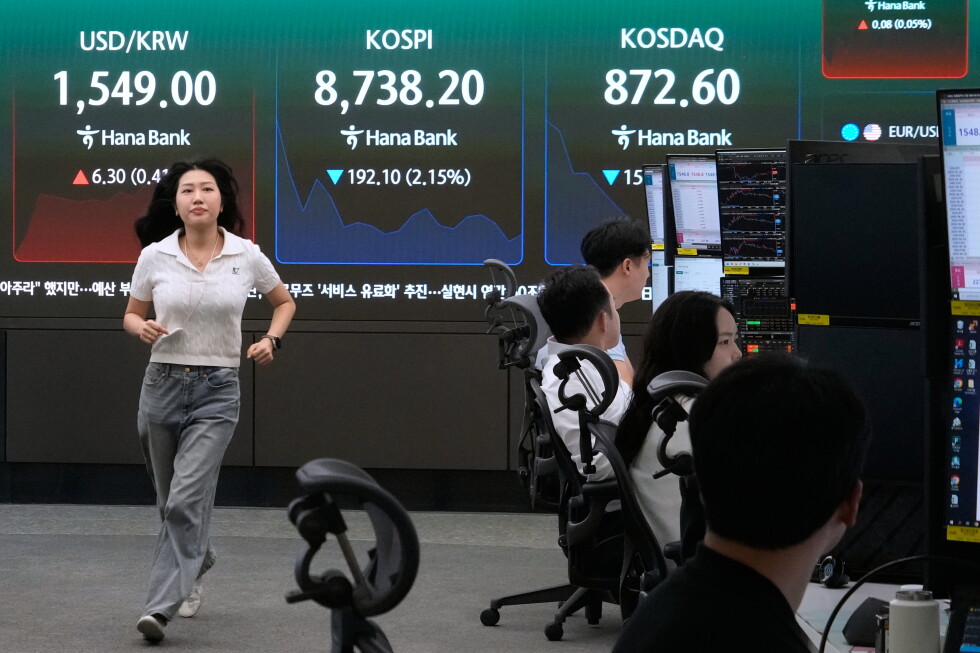
    BANGKOK – A broad sell-off swept across Asian equity markets on Friday, as traders moved aggressively to lock in profits following weeks of explosive gains in artificial intelligence-linked stocks that had pushed several major regional indexes to all-time records. The sharpest declines were concentrated in Japan and South Korea, where AI and semiconductor-linked holdings had led weeks of rapid upward momentum.

    U.S. equity futures also retreated to start the trading day, alongside a notable drop in global crude oil prices. By the closing bell in Tokyo, the Nikkei 225 had erased 4.5% of its value to settle at 69,127.10, while South Korea’s Kospi plummeted 6.8% to 8,323.52. Both indexes recovered a small portion of their early session losses by the end of trading, softening the day’s overall pullback slightly.

    Other major regional indexes also posted declines: Hong Kong’s Hang Seng Index fell 1.7% to close at 22,684.76, mainland China’s Shanghai Composite slipped 1.4% to 4,062.28, and Taiwan’s Taiex retreated 3.6%. Australia bucked the downward trend, with the S&P/ASX 200 notching a modest 0.2% gain to end at 8,765.90.

    Market analysts noted that the extreme volatility seen on Friday is a predictable outcome of the massive capital inflows that have flooded into AI-related investments, from data center infrastructure to semiconductor manufacturing, in recent months. Just one day earlier, Japanese and South Korean stocks hit record closing highs, fueled by surprisingly strong quarterly earnings from top U.S. chip manufacturers Qualcomm and Micron Technology.

    In South Korea, the market’s steep pullback was led by the country’s two largest tech and chip players, both of which are key partners to U.S. AI chip giant Nvidia: Samsung Electronics shed 7% on Friday, while SK Hynix fell 6.6%. The drop comes just days after Samsung’s labor union reached a last-minute wage deal with management that avoided a planned strike. In Japan, Tokyo-based SoftBank Group, a major technology investor with large AI holdings, dropped 13.4%, and chip testing equipment manufacturer Advantest sank 10.8%.

    The volatility in AI stocks is not limited to Asian markets. On Thursday, U.S. equities ended the session mixed, caught in the same ongoing rollercoaster for AI-linked holdings. Apple shares slid 6.1% after the company announced price hikes for multiple core products, while the S&P 500 closed virtually unchanged, dipping less than 0.1% after swinging between gains and losses throughout the day. The Dow Jones Industrial Average gained 0.1% (71 points), while the Nasdaq composite, which is heavily weighted toward technology stocks, fell 0.5%.

    Micron Technology was a standout gainer on Thursday, jumping 15.7% after reporting quarterly profit and revenue that far outpaced analyst expectations, alongside a stronger-than-forecast growth outlook for the current quarter. The results helped ease some concerns that the stock had become overvalued after surging 267% year-to-date through Thursday’s open. Even so, Stephen Innes, a market analyst at SPI Asset Management, warned that AI and semiconductor stocks remain extremely sensitive to shifting investor sentiment. “A strong Micron print can produce a powerful upside chase one day; a new concern around memory costs, capex, or the durability of AI demand can reverse it violently the next,” Innes wrote in a client note Friday.

    Broadly, AI stocks have faced intermittent selling pressure in recent weeks, as investors grow increasingly nervous that the explosive stock price rallies seen over the past year are not supported by corresponding growth in corporate profits. Beyond Micron, Qualcomm raised its long-term growth forecast late Wednesday, noting that the accelerating expansion of the AI sector is driving higher demand for its products. Elsewhere in U.S. trading, SpaceX shares dipped 1% to close below $153, marking the stock’s lowest finish since its high-profile Nasdaq debut earlier this month.

    Thomas Mathews, a markets analyst at Capital Economics, observed that while the AI boom has driven extreme swings in technology sectors, other parts of the global stock market have remained relatively stable. “Even if the AI boom turned into a bust the ‘non-tech’ parts of the stock market could conceivably shrug it off for a while, as they have this week,” Mathews noted in a research report.

    Outside of equities, global commodity and currency markets showed muted movement on Friday. A latest U.S. inflation report came in largely in line with economist expectations, showing annual consumer price inflation climbing to 4.1% in May, up from 3.8% in April. Economists widely expect inflation to ease in coming months, supported by a recent decline in global crude oil prices. Brent crude, the global benchmark for oil, fell 1.8% to $74.13 per barrel on Friday, down sharply from the highs above $100 seen after geopolitical tensions related to the Iran conflict disrupted shipping through the Strait of Hormuz, a critical global oil chokepoint. U.S. benchmark West Texas Intermediate crude dropped 2% to $70.46 per barrel.

    In foreign exchange trading, the U.S. dollar edged slightly lower against the Japanese yen, falling to 161.64 yen from 161.80 yen. The euro also posted a tiny gain against the dollar, rising to $1.1376 from $1.1371.