博客

  • Neighbors dig through Venezuela rubble to search for loved ones after 2 deadly earthquakes

    Neighbors dig through Venezuela rubble to search for loved ones after 2 deadly earthquakes

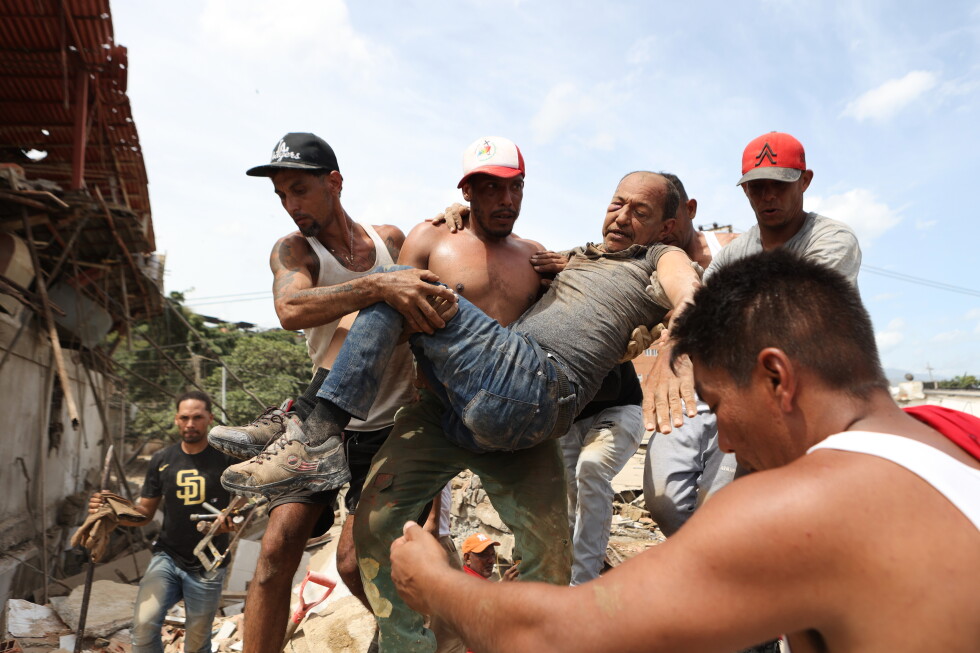
    In the wake of two powerful consecutive earthquakes that struck northern Venezuela on Wednesday evening, local communities launched urgent, grassroots search efforts Thursday, digging through collapsed rubble by hand to locate missing loved ones as officials confirmed a rising death toll and thousands of injuries across the affected region.

    By late Thursday, Venezuela’s Health Minister Carlos Alvarado confirmed to state media that the official casualty count had climbed to 235 fatalities, with at least 4,300 people injured. With thousands still reported unaccounted for and search operations continuing around the clock, authorities warn the final death toll is likely to rise further.

    Measuring 7.2 and 7.5 magnitude respectively, the back-to-back quakes rank among the strongest seismic events to hit Venezuela in more than a century, with shaking felt across the entire Caribbean region. The coastal state of La Guaira, located just north of the capital Caracas, bore the brunt of the destruction, bearing the highest concentration of damage and casualties. As the site of Venezuela’s main international airport, facility closures from structural damage have created major logistical barriers for incoming aid and rescue teams.

    Survivors described scenes of utter devastation Thursday morning: entire buildings reduced to skeletal frames, multi-story structures flattened, cracked roads split open, and debris scattered across residential neighborhoods. State television broadcast dramatic rescue footage, including the extraction of a woman who survived being trapped under a concrete slab, with only her foot visible to rescuers before she was pulled free alive. But many residents reported a noticeable lack of official government search teams outside the capital in the critical early hours after the disaster.

    Dayana Delgado, a mother of three whose 8-year-old son remains missing, publicly questioned where the heavy rescue machinery promised by government officials had gone, noting that local residents were leading the search through crumpled building remains on their own. “I want to know where my child is, if he’s trapped or in a shelter,” Delgado said. In one harrowing scene, a mother collapsed in uncontrollable grief after the bodies of her 3-year-old and 10-year-old children were recovered from the rubble, while other survivors screamed names of missing loved ones or stood in stunned silence.

    Hundreds of Caracas residents spent Wednesday night huddled together in open public spaces including parks and parking lots, too afraid to return to damaged or structurally unstable buildings. Families posted handwritten missing person flyers with photos of lost relatives, while Venezuelans living abroad struggled to contact family back home after widespread damage disrupted cellular and phone service across the hardest-hit areas.

    La Guaira has a long history of catastrophic natural disasters: in 1999, devastating mudslides killed thousands of people in the region, in one of Venezuela’s deadliest natural events on record. Venezuelan authorities have confirmed they are reallocating rescue teams from across the country to reinforce search efforts in La Guaira. Cristian Carreño, a La Guaira resident, surveyed his damaged apartment building, which now leans dangerously to one side after the quakes. “I lost everything,” Carreño said. “There are people still inside, I imagine, that couldn’t get out. It’s incredibly devastating.”

    Retired schoolteacher Juan Alberto Mendaño, who was navigating through wreckage in search of survivors, encountered a dead body on his path before spotting a trapped woman signaling for help with her hand. “May God rescue her as quickly as possible,” Mendaño said. “When we heard the scream, there was nothing we could do without proper equipment.”

    The disaster comes as Venezuela already grapples with more than a decade of severe economic instability and deep political division, adding an enormous new challenge to acting President Delcy Rodríguez, who took office in January following the detention of former President Nicolás Maduro. Rodríguez, whose governing movement faces widespread questioning of its legitimacy from much of the Venezuelan public, declared a national state of emergency in a national address Wednesday night, announcing the creation of a $200 million reconstruction fund earmarked for damaged hospitals and residential buildings. On Thursday, she made a public appeal to private businesses to donate heavy construction equipment to support rescue operations. “We hope to rescue as many living people as possible,” Rodríguez said.

    Geoscientists explain that while Venezuela sits adjacent to multiple tectonic fault lines, its location straddling the South American and Caribbean plates means major earthquakes are far less common here than in other high-risk parts of Latin America. The U.S. Geological Survey confirmed both quakes were centered near Morón, a coastal Caribbean city roughly 170 kilometers west of Caracas. Marcos Ferreira, a geophysicist and researcher at the Geological Survey of Brazil, noted that the consecutive timing and shallow depth of the quakes amplified their destructive force dramatically. “It is as if I am screaming and then someone starts screaming, too. That amplifies the vibration and adds to the potential hazard,” Ferreira explained.

    Shortly after United Nations officials called on the Venezuelan government to lift social media restrictions to allow citizens to access life-saving emergency information, platform X (formerly Twitter) was restored for users across the country. The site had been blocked by Maduro’s administration since August 2024, implemented to suppress information sharing among opponents of his contested claim of victory in July’s presidential election.

    Multiple foreign governments have already pledged emergency assistance to Venezuela, with leaders from Mexico, Qatar, Brazil, Spain, Portugal and Canada confirming aid shipments are en route. U.S. Secretary of State Marco Rubio, who spoke with Rodríguez shortly after the disaster, said the U.S. was immediately deploying emergency support, while acknowledging that the closure of the main international airport creates significant logistical hurdles. “We have a whole-of-government response. It’ll be big; it’ll be fast; and it’ll be effective,” Rubio said.

    By Thursday, rescue teams from Mexico, El Salvador and the Dominican Republic had already arrived in the country, alongside an aid flight carrying emergency supplies from Mexico. “No country is prepared to provide the full response that’s needed. That’s what neighboring countries are there for,” said Dominican Air Force Major Carlos Olivares.

    Venezuela’s large global diaspora has also mobilized to support relief efforts. In Ecuador, Venezuelan expat Félix Rodríguez has turned his retail store into a local donation collection point, receiving contributions from fellow Venezuelans and local Ecuadorians alike. “My business is always ready for whatever Venezuela needs,” Rodríguez said, adding he wished all affected Venezuelans “faith and fortitude.”

    Reporting was contributed by AP journalists across multiple international locations including Mexico City, Quito, Bogota, Sao Paulo, San Juan, Buenos Aires, San Diego and New York.

  • Australia clinches knockout round spot with 0-0 draw; Paraguay also likely to advance

    Australia clinches knockout round spot with 0-0 draw; Paraguay also likely to advance

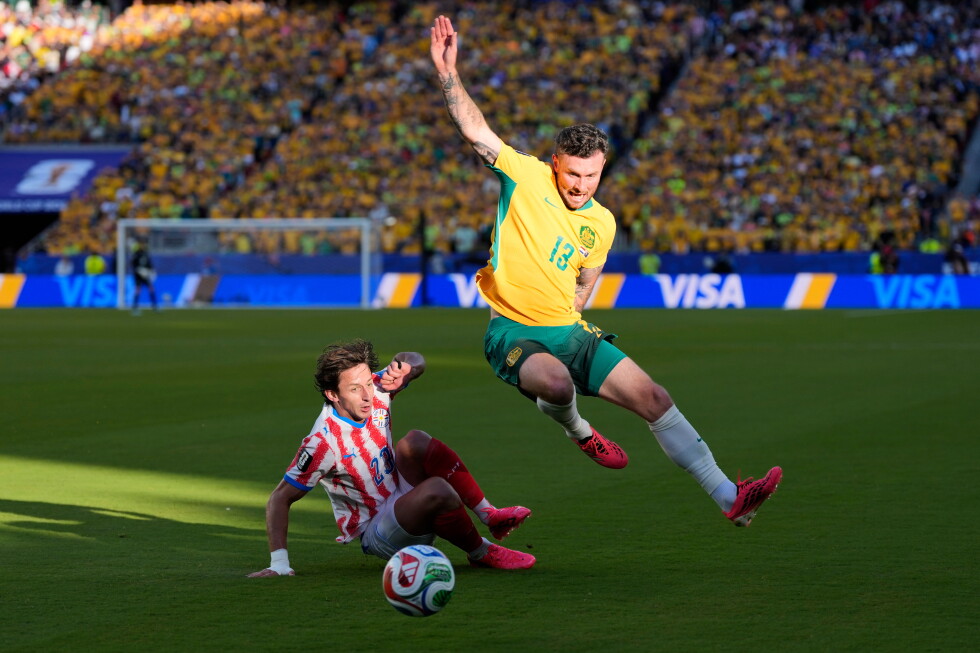
    SANTA CLARA, Calif. — In a strategically cautious final Group D World Cup clash played Thursday night, Australia and Paraguay battled to a scoreless draw that locked in Australia’s spot in the expanded tournament’s knockout round and left Paraguay overwhelmingly likely to join them.

    The 2026 World Cup’s new 48-team format created the low-tempo dynamic that defined the match: under revised rules, eight out of 12 third-place group finishers now advance to the round of 32, opening a path to progression for both sides even without a full three points. Entering the fixture, both nations held three points apiece from opening wins over Turkey, with the United States already guaranteed the Group D top spot. While a victory would have secured an automatic second-place finish for either side, Australia’s superior goal differential meant a draw was enough to push the Socceroos into the next stage regardless of Paraguay’s result. For the South American side, the draw pushed their total to four points, a tally that will almost certainly earn them a knockout spot unless a cascade of unexpected results over the final two days of group play eliminates their chances.

    This progression marks the third time Australia has advanced past the group stage in World Cup history, with their previous two knockout berths in 2006 and 2022 both ending in round of 16 exits. The Socceroos will kick off their knockout round campaign on July 3 in Arlington, Texas, where they will face the Group B runner-up, a position that will be finalized when Group G plays its final matches on Friday night.

    While Paraguay must wait to confirm its progression, the result puts the side in strong position to reach the knockout round for the fifth time in its World Cup history. On the pitch, Australia carved out the clearest scoring chances of the first half, but Paraguayan goalkeeper Orlando Gill delivered two key stops: an early save on a Jackson Irvine attempt, followed by a stoppage-time block to deny Cristian Volpato.

    Cautious, defensive play dominated the second half as both sides prioritized avoiding defeat over chasing a winning goal. Paraguay controlled more of the possession in the final 45 minutes than it had in the first half, but neither side managed a clear, high-quality look at goal. Australia’s Jordan Bos came closest to breaking the deadlock in the 90th minute, but his effort from the right side of the 18-yard box drifted wide of the target. Deep into second-half stoppage time, Australian goalkeeper Patrick Beach turned away a low, weakly struck effort from Paraguayan striker Mauricio to preserve the clean sheet.

    Australia head coach Tony Popovic made six alterations to his starting lineup for the decisive fixture, handing 18-year-old Colorado Rapids defender Lucas Herrington his first-ever World Cup appearance. With the cap, Herrington became the youngest Australian player to feature in a World Cup match.

    For Paraguay, the result came with one significant downside: midfielder Diego Gomez picked up his second yellow card of the group stage, meaning he will be forced to sit out the round of 32 if the side confirms its advancement.

  • Hollywood gets into the microdrama race as mobile-first storytelling draws stars and major studios

    Hollywood gets into the microdrama race as mobile-first storytelling draws stars and major studios

    While the bulk of Hollywood’s attention in recent years has been absorbed by the cutthroat battle for streaming market share, Emmy-nominated creator and producer Issa Rae turned her focus to a fast-emerging entertainment format half a world away: mobile-first microdramas.

    Rae, who already built her early career on the success of the viral web series *The Misadventures of Awkward Black Girl*, spotted untapped potential in China’s exploding microdrama market — a sector that grew exponentially during the global pandemic — for both cultivating new audiences and developing original intellectual property. In May this year, her production banner Hoorae Media launched *Screen Time*, a twisty thriller that ranks among the first major studio-quality microdrama projects from an established Hollywood player. Backed by TikTok, the vertical series racked up nearly 75 million global views in its first week alone, marking a strong debut for the format in mainstream U.S. entertainment.

    For Rae, microdramas unlock unique benefits that traditional long-form film and television simply cannot match. “Because the production budget is far lower than TV or feature films, it creates space to take creative risks that would never get greenlit in traditional systems,” she explained in an interview with the Associated Press. “Production turnaround is also drastically faster, which lets us craft stories that respond to current cultural conversations and stay relevant to audiences in real time.”

    Defined by vertically oriented episodes that run just 1 to 3 minutes each, optimized for binge-watching on smartphones, microdramas have quickly become one of the fastest-growing sectors of the global entertainment industry. That growth has sparked widespread interest from A-list celebrities, independent creators and major media conglomerates scrambling to connect with audiences that increasingly consume narrative content on mobile devices.

    At its core, the microdrama formula is straightforward: episodes center on addictive, plot-driven stories ranging from steamy romance to corporate betrayal to dramatic redemption, with clickable titles like *The Double Life of My Billionaire Husband*. Most platforms release the first few episodes for free, then charge users to unlock subsequent chapters of the serialized story. What started as a pandemic-era trend in China has ballooned into a global industry: technology research firm Omdia projects total global microdrama revenue will hit $14 billion by 2026, a figure that has forced the U.S. entertainment establishment to sit up and take notice.

    Major media players have already raced to stake their claim in the space. NBCUniversal’s streaming platform Peacock recently launched a dedicated hub for microdrama content. Fox Entertainment has invested in microdrama production company Holywater and pledged to produce hundreds of original vertical titles. Mexican media giant TelevisaUnivision is developing serialized short-form dramas for its ViX streaming service. A-list names are also getting in on the action: Kevin Hart’s HartBeat production banner has expanded into vertical comedy content, Kim Kardashian has backed scripted mobile-first storytelling through her investment in leading microdrama platform ReelShort, Taye Diggs has starred in original vertical series for smartphone audiences, and filmmaker Deon Taylor is developing a sports-focused microdrama titled *I Am Hoop*. At the 2024 MIP London television market, industry executives noted that top microdrama platforms are now allocating up to 90% of their total budgets to consumer marketing, a sign of how fierce audience competition has become in the nascent sector.

    Before Hoorae launched *Screen Time*, the company spent more than two years researching the microdrama format and studying global audience behavior. That deep dive convinced the team that microdramas are far more than a passing fad, rooted in the simple reality that audiences now spend the majority of their media time on mobile devices. “The phone is the connective tissue that brings content straight to audiences where they already are every day,” explained Dzifa Yador, Hooraa Media’s head of digital. “We don’t have to force audiences to come to a new platform to find our content — we meet them where they already are.”

    For emerging creators, Yador added, the format removes one of the biggest barriers to breaking into Hollywood: the notoriously slow studio greenlighting process that can leave projects in limbo for years. Instead, creators can test story ideas directly with audiences, build a loyal following, and retain full ownership of their work. “It completely cuts out the traditional gatekeepers of the industry,” Yador said. “You don’t need a studio executive’s approval to greenlight your own show.”

    Long before major Hollywood corporations began investing in the format, independent creators had already proven that millions of viewers would spend hours following serialized microdrama content on social platforms. One of the most successful independent pioneers is Kountry Wayne, a comedian who first rose to fame with viral sketch comedy before shifting his focus to a sprawling interconnected universe of relationship microdramas after noticing the format had a much longer audience engagement lifespan than standalone sketches.

    The Georgia-based creator, who released his stand-up special *Kountry Wayne: Nostalgia* on Amazon Prime Video earlier this year, now releases 50 new microdrama episodes per week to his growing global audience. Wayne recently reported his content generated roughly 1.4 billion views on Facebook and an additional 100 million views on YouTube in a single month, figures that Meta and YouTube declined to independently verify. As Hollywood’s interest in vertical storytelling has exploded, Wayne says he has turned down multiple eight-figure offers to license or sell his content library, choosing to retain full ownership as his audience continues to grow. “If big studios take control of this space, they’ll try to water it down and dictate what gets made,” he explained. “I knew this format was only going to keep growing, so I wanted to hold onto it.”

    The format is also opening new doors for emerging underrepresented creators, with industry institutions stepping in to nurture new talent. The American Black Film Festival (ABFF), one of the nation’s leading platforms for showcasing Black film and television, launched its first ever microdrama showcase this year, selecting eight finalists from hundreds of submissions from emerging creators across the country. Festival programmer Bobbi Broome said the overwhelming response to the showcase confirms how quickly creators are embracing the format as a viable entry point into the industry. “At least two or three of the finalists told us they only decided to try making a microdrama because the ABFF competition launched,” Broome said in an interview.

    For many emerging filmmakers, the showcase is more than just a short-form opportunity: it acts as a low-risk test bed for ideas that can eventually grow into larger budget projects. “I spoke with a couple of filmmakers who told us this was their proof of concept for a full-length feature film,” Broome said. “The entertainment industry changes every single day, and creators are adapting right along with it.”

    As for what comes next for microdramas, Issa Rae says the format has barely scratched the surface of its potential. “We knew audiences would respond to premium content that’s free and easy to access wherever they are,” she said. “If the story is engaging, the performances are strong, and the content is made with the audience in mind, they will show up and engage.”

    For Kountry Wayne, the future of microdramas is inherently tied to the device that made the format possible. He shoots all of his episodes on cellphones with minimal traditional editing, a workflow that lets his team move quickly to release new content while still delivering high-quality visuals for mobile viewers. “The eyeballs are already on the phone,” Wayne said. “People still go to the movie theater and still watch linear TV, but our phones are with us everywhere, all the time. That’s where the audience is.”

  • Europe’s extreme heat would be impossible without climate change, scientists say

    Europe’s extreme heat would be impossible without climate change, scientists say

    This June, a historic, day-and-night heatwave has seared across Western and Southern Europe, bringing dangerous triple-digit temperatures and oppressive humidity to millions of people. A groundbreaking rapid attribution study released Friday by the international climate research collective World Weather Attribution (WWA) has delivered a definitive conclusion: this record-breaking extreme heat event could not have occurred without the influence of human-caused climate change.

    The research, which analyzes the current heat dome-fueled heatwave that began spreading across the continent on June 18, draws stark comparisons between modern climate conditions and historical heat patterns. Scientists found that an identical heat event would have been virtually impossible to occur in the climate conditions that existed 50 years ago, in 1976. Compared to the baseline of just 20 years ago, this type of extreme heat is now 200 times more likely to occur.

    To put these temperature shifts in context, the study team compared current temperatures to two major historic European heat events, 1976 and 2003, which were previously regarded as extreme benchmarks. Researchers estimate that a comparable heatwave in 1976’s cooler climate would have registered 3.5°C (6.3°F) lower during daytime hours and 2.4°C (4.3°F) lower at night. Even as recently as 2003, the same event would have been 2°C (3.6°F) cooler during the day and 1.3°C (2.3°F) cooler after sunset.

    “The increase in temperatures was so dramatic that we would have expected to have never seen this event in the 1976 climate,” explained lead author Theodore Keeping, a climate scientist at Imperial College London’s Centre for Environmental Policy. “And it would also still have been very, very rare, even 23 years ago in 2003.”

    WWA, a European-based collaborative network of climate scientists focused on linking extreme weather to climate change, has pioneered rapid event attribution studies since 2015. Their work examines how much of the increased risk of extreme events can be traced back to climate change driven by fossil fuel emissions. While the organization’s rapid studies have not completed full peer review, they rely exclusively on methodology that has already passed peer review, giving their findings broad scientific credibility. For this analysis, the team combined observed on-the-ground temperature data with weather forecast modeling to assess the full scope of the heatwave.

    Beyond just air temperature, the study measured combined heat stress, a metric that accounts for both temperature and humidity and directly reflects dangerous strain on the human body. The analysis found that 45 percent of the 850 cities across 30 European countries included in the study have already broken, or are on track to break, all-time records for heat stress. Keeping noted that this combination of extreme heat and high moisture makes the current event far more dangerous than a dry heatwave, as it impairs the body’s ability to cool itself through sweating.

    In the researchers’ assessment, this marks the most severe heatwave ever recorded in Northwestern Europe, and the most intense humid heat event ever documented in the region.

    Europe is uniquely vulnerable to this type of extreme heat, due to its faster rate of warming compared to the global average. Data from the EU’s Copernicus Climate Change Service confirms that Europe has warmed at twice the global average rate since the 1980s, making it the fastest-warming continent on Earth. A 2023 WWA study found that roughly 1,500 excess deaths were tied to a climate change-fueled European heatwave last summer alone.

    Much of the continent also lacks critical infrastructure to handle sustained extreme heat. Most residential and public buildings across Western Europe do not have widespread air conditioning, leaving millions without a reliable way to cool down after the sun sets. Unusually high overnight temperatures during this heatwave have prevented people from recovering from daytime heat exposure, amplifying health risks.

    In response to the crisis, national weather agencies across France, Italy, Spain, the United Kingdom and other impacted countries have issued the highest-level red heat alerts. Major sporting events, school sessions, public transit operations and tourist attractions have been restricted or canceled to reduce heat-related risks. France, which has born the brunt of the current heatwave, recorded its hottest all-time national temperature this week, and has already reported 40 drowning deaths as people flocked to bodies of water to find relief from the heat.

    Remarkably, researchers found that the current El Niño ocean warming cycle in the Pacific has had no measurable impact on this specific heat event. This June’s heat also follows on the heels of an unprecedented record-breaking heatwave that hit Europe in May 2024, marking an early start to the extreme heat season that typically does not arrive until July and August.

    Some outside climate experts say the WWA study may actually understate the role of climate change in driving the extreme heat. Michael Mann, a prominent climate scientist at the University of Pennsylvania who was not involved in the research, noted that the study’s findings are reasonable, but similar attribution analyses have consistently underestimated how much climate change amplifies extreme heat events.
    “If anything, this latest assessment — and all similar assessments — are actually underestimating the role that climate change is playing here,” Mann said, pointing to his own separate research on climate change-driven heat stress amplification in North America.

    For Keeping and the WWA team, the findings of the study send a clear message to policymakers and communities: extreme heat events like this are no longer rare anomalies, and urgent action is needed both to adapt to unavoidable warming and cut the carbon emissions that are driving climate change.
    “We need to expect them to happen. They’re only going to become more frequent in the near term,” Keeping said. “We also need to address the source of climate change as well. And that is very simply carbon emissions from burning fossil fuels.”

  • Watch: Elephant smashes through bus windscreen during attack

    Watch: Elephant smashes through bus windscreen during attack

    Dramatic new footage has emerged capturing a terrifying encounter between a wild elephant and a passenger bus in Sri Lanka, leaving onlookers stunned and highlighting the growing tensions between expanding human communities and native wildlife populations.

    The video, recorded by a passenger on board the vehicle, documents the exact moment the massive pachyderm launched its assault against the bus, which was transporting a group of air force service members at the time of the incident. In the clip, the elephant can be seen charging directly at the front of the bus before delivering a powerful blow that completely shattered the vehicle’s front windscreen. The force of the impact sent glass fragments flying across the passenger cabin, sending the air force personnel on board scrambling for safety.

    While official reports have not yet released details on any serious injuries stemming from the attack, the incident has reignited conversations across Sri Lanka about human-elephant conflict, a longstanding issue that has grown more frequent in recent years. As agricultural development and residential expansion continue to encroach on the natural habitats of Sri Lanka’s wild elephant populations, more of the animals are wandering into populated areas and along major transportation routes, leading to more frequent dangerous encounters.

    Conservation experts note that Sri Lanka is home to roughly 7,000 wild elephants, and an average of more than 200 people and 400 elephants die each year as a result of human-elephant conflict across the island nation. This latest high-profile incident, captured on camera for the world to see, is expected to push policymakers to revisit existing strategies for mitigating conflict and protecting both human and elephant lives.

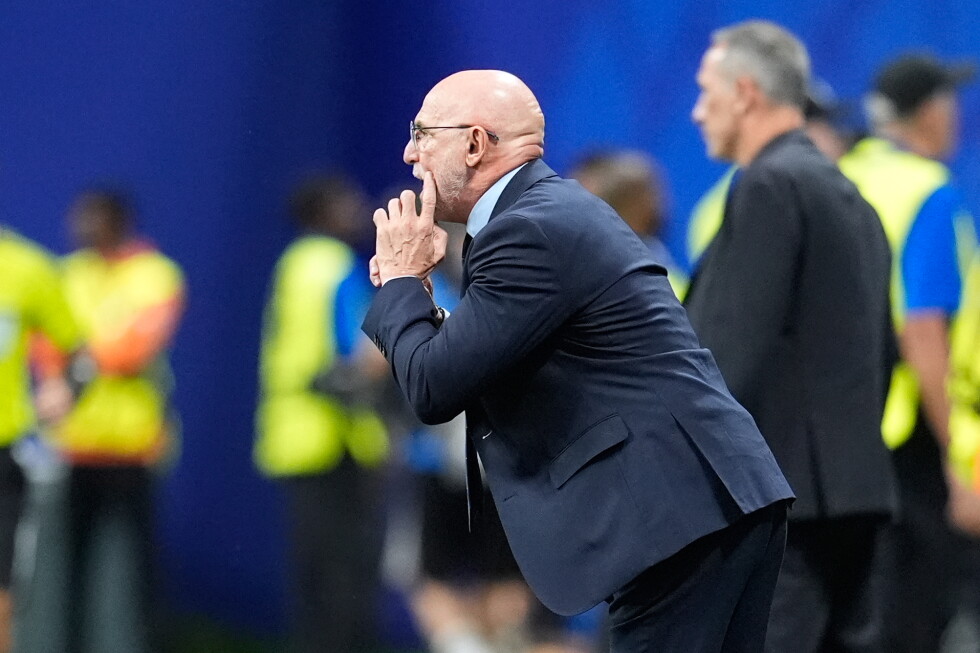
  • Spain’s Luis de la Fuente reconnects with Uruguay coach Marcelo Bielsa at the World Cup

    Spain’s Luis de la Fuente reconnects with Uruguay coach Marcelo Bielsa at the World Cup

    GUADALAJARA, Mexico — Ahead of a do-or-die Group H World Cup clash on Friday, two of soccer’s most respected coaching minds have opened up about their decades-long connection, as European champion Spain and South American powerhouse Uruguay prepare to battle for the top spot in their group at Guadalajara Stadium.

    For Uruguay, the stakes could not be higher: a defeat would almost certainly send the South American side packing from the tournament, while a win would secure their place in the knockout stage. Only three points will be enough for Marcelo Bielsa’s side to avoid an early exit, with a draw leaving their fate hanging on other group results.

    Spanish manager Luis de la Fuente, 65, has made no secret of his long-standing admiration for his 70-year-old Argentine counterpart, tracing his respect back to a formative period in his coaching career more than a decade ago. In the early 2010s, when de la Fuente was just starting to build his profile in top coaching circles ahead of taking charge of Spain’s youth national teams, he spent five months studying Bielsa’s methods daily when the latter was manager of Spain’s Athletic Bilbao.

    “I’m an admirer,” de la Fuente told reporters on Thursday. “I’ve followed his entire career closely. During his time at Athletic, I went to watch every single training session for five or six months, and I learned more from him than I can say. I have recordings of every one of those sessions. He’s been a true innovator for the modern game in so many ways. I’ve been fortunate enough to stay in touch with him over the years, and we’ve had private conversations about the sport we both love. This is the first time we’ve ever faced each other as opposing managers, and for me that’s an honor and a real pleasure.”

    Bielsa, however, downplayed his influence on de la Fuente’s work, praising the distinct, highly successful style de la Fuente has crafted with the Spanish national side. “It seems to me that the unique brand of soccer he has developed with Spain, and the important work he has done there, doesn’t really reflect my own coaching style,” Bielsa said. “The style of play Spain produces is far more beautiful than anything I have achieved with my own teams. The truth is, what he has accomplished with Spain is genuinely admirable.”

    De la Fuente for his part acknowledged that both coaches have evolved their approaches over the past decade, adapting to the shifting demands of modern men’s soccer. “Marcelo has grown and changed, just like every coach has,” he explained. “Back when I watched him at Athletic, he had the team playing spectacular soccer, but he was very strict about man-to-man marking across the entire pitch. I don’t think he holds to that as strictly today. His greatest strength has always been building his system around the players he has available. You can’t implement a tactical idea if you don’t have the right players to execute it, and he has always understood that better than anyone.”

    Heading into Friday’s match, de la Fuente’s Spain is already well positioned to advance to the knockout round, but only a win will lock in first place in Group H. The Spanish manager confirmed he has already settled on his starting lineup, hinting that the dominant 4-0 win over Saudi Arabia in his side’s second group match meant there was “no invitation to make changes” to the starting eleven. Spain opened their tournament with a 0-0 draw against Cape Verde.

    Young forwards Lamine Yamal and Nico Williams are still expected to see limited minutes, however, after missing extended time with the squad due to injury earlier in the competition.

    Bielsa framed the upcoming match as a do-or-die final for his Uruguayan side, where every small detail will decide the outcome. “This game will be like a cup final,” he said. “You have to take every single detail into account, and the fight for every meter of pitch, every loose ball, will be at maximum intensity.”

  • Rescues and prayers a day after Venezuelan earthquakes

    Rescues and prayers a day after Venezuelan earthquakes

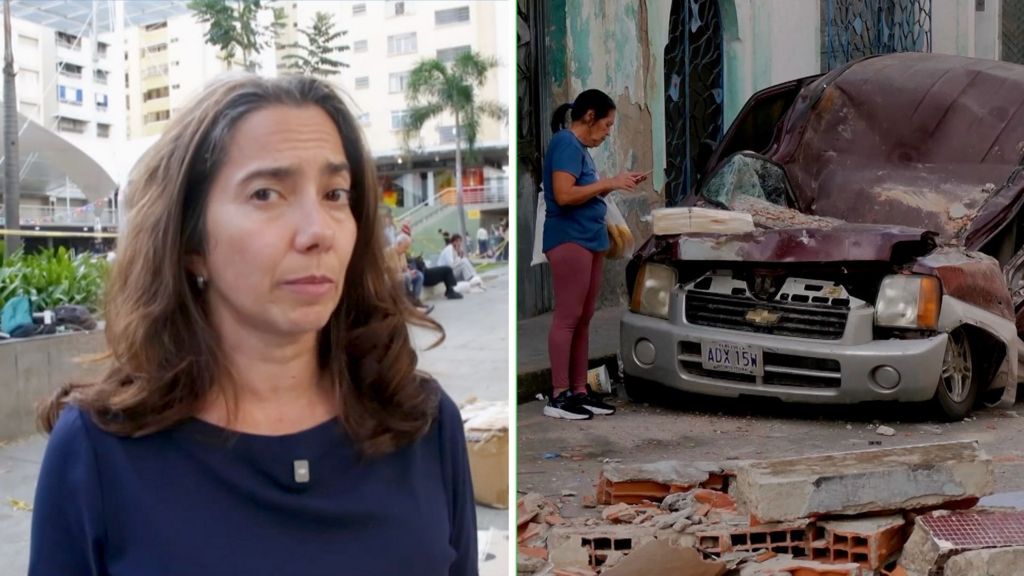
    One day after a pair of powerful back-to-back earthquakes rocked Venezuela, rescue teams are working tirelessly across affected regions to search for survivors even as communities across the country come together to grieve and offer prayers for those impacted by the disaster. Reporting from the capital city of Caracas, BBC correspondent Vanessa Silva has documented the immediate aftermath of the tremors, which have left communities reeling from structural damage, disrupted basic services, and widespread uncertainty.

    Emergency response crews have fanned out across hardest-hit neighborhoods, clearing rubble from collapsed buildings and checking damaged infrastructure to locate any people trapped following the quakes. Local volunteers have joined official rescue efforts, bringing supplies, medical support, and comfort to displaced residents who have been forced to leave their damaged homes. Across Caracas and surrounding areas, residents have gathered in small groups to share information about missing loved ones and offer prayers for the recovery effort, creating a wave of collective solidarity amid the chaos.

    The successive tremors caught many residents off guard, with aftershocks continuing to keep communities on edge in the hours following the initial quakes. Authorities have urged residents to remain cautious as assessment teams work to map the full scale of damage to homes, roads, and public facilities. As the rescue operation moves into its second day, the focus remains on pulling survivors from damaged structures and providing critical aid to thousands of people affected by the seismic event.

  • Against the odds at the World Cup, New Zealand is a win away from its first knockout berth

    Against the odds at the World Cup, New Zealand is a win away from its first knockout berth

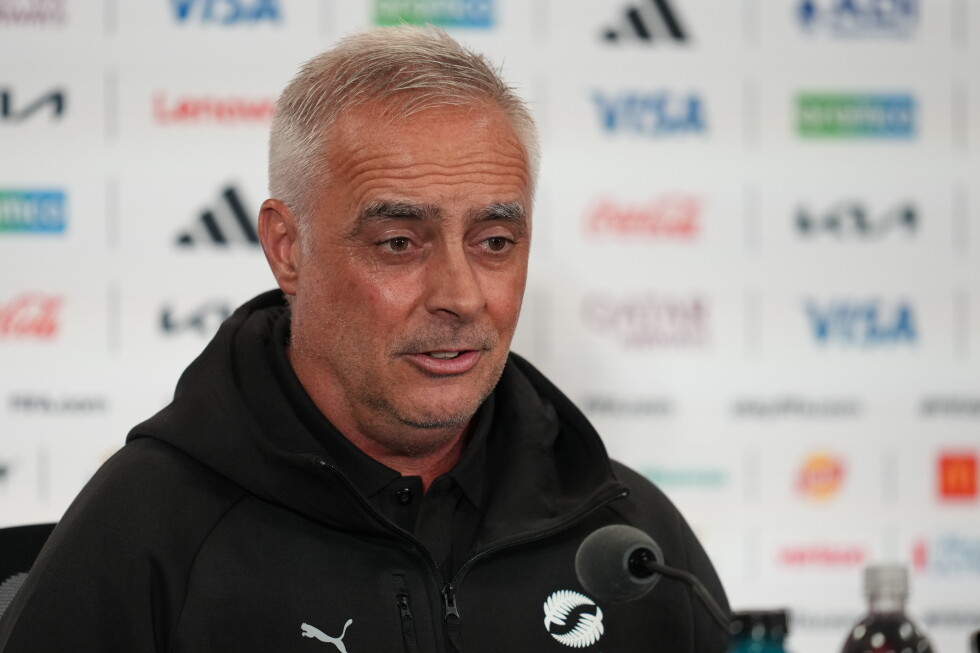
    VANCOUVER, British Columbia – As the final round of group-stage matches at this year’s expanded 48-team FIFA World Cup kicks off, most lower-seeded squads that entered the tournament with high hopes have already seen their knockout-round dreams dashed. But for New Zealand’s All Whites, a shocking twist in Group G has left the underdog side one full 90 minutes away from making history.

  • Majority of US voters think Iran war ‘not worth it’, new poll finds

    Majority of US voters think Iran war ‘not worth it’, new poll finds

    Two major new public opinion polls from the United States and Israel have revealed widespread dissatisfaction with the outcome of the 2025 US-Israeli military campaign against Iran, just months after the signing of a 60-day cessation of hostilities agreement between Washington and Tehran. The findings paint a stark picture of shifting geopolitical attitudes among voters in both countries, underscoring deep divisions along partisan lines in the US and broad consensus against the war in Israel.

    The conflict began on February 28, when former US President Donald Trump launched joint military operations with Israeli Prime Minister Benjamin Netanyahu, framed as a mission to eliminate what the leaders called an imminent threat from the Iranian regime. Stated core objectives included the total destruction of Iran’s nuclear program and key military infrastructure, with Trump also positioning the campaign as a path to regime change, telling the Iranian people they would have a generational opportunity to take control of their government. Despite the assassination of long-time Supreme Leader Ayatollah Ali Khamenei and dozens of other top Iranian officials, the regime change effort collapsed: Khamenei was succeeded by his son Mojtaba, who reportedly survived the strike that killed his father despite severe injury. In the end, the US publicly conceded it had failed to eliminate Iran’s ballistic missile program — another core war aim — and even formally acknowledged Iran’s right to maintain the program.

    The resulting Islamabad Memorandum of Understanding (MoU), which paused active hostilities for 60 days to allow negotiations on a permanent end to the war, has triggered a sharp reversal in US public opinion toward the conflict, according to a new national survey from Quinnipiac University. Overall, 60 percent of registered American voters say the US military campaign against Iran was “not worth it”, with dramatic partisan splits shaping the results: 93 percent of Democratic voters and 66 percent of independent voters view the war as unjustified, while 75 percent of Republican voters still say the conflict was worth waging. Scepticism extends to the diplomatic truce itself: 59 percent of all US voters report they are either “not so confident” or “not confident at all” that the MoU will lead to a lasting peaceful resolution. Once again, partisan views diverge sharply, with 76 percent of Republicans saying they hold at least some confidence in the deal’s success.

    Across key security outcomes, even partisan gaps shrink: 61 percent of all US voters believe Iran remains likely to develop nuclear weapons, a view held by a majority of voters in both major US political parties. The war has also shifted public views of US global standing, with 45 percent of voters concluding the conflict has left the United States weaker on the world stage.

    Public anger has been fueled by tangible economic harm resulting from the war: after Iran closed the Strait of Hormuz at the outbreak of hostilities, the three-month campaign cost the US an estimated $60 billion in direct military spending, according to reporting from Middle East Eye, and pushed average US household fuel costs up by more than $447 annually. The poll also captured a steady shift in US public attitudes toward Israel, America’s key partner in the conflict: 48 percent of US voters now say the US is too supportive of Israel, the highest share recorded since Quinnipiac began tracking the question in 2017. That view is held by just 20 percent of Republicans, compared to 66 percent of Democrats and 55 percent of independents.

    The Quinnipiac poll surveyed 1,165 registered US voters between June 18 and 22, carrying a margin of error of plus or minus 3.4 percentage points.

    In Israel itself, public sentiment toward the war outcome is even more overwhelmingly negative, according to a joint survey conducted by the Agam Institute and Hebrew University of Jerusalem. Fully 92 percent of Israeli respondents believe Iran emerged as the winner of the conflict, and 86 percent hold a negative view of the final truce agreement. Eighty-three percent say the campaign has weakened Israel’s long-term national security, a view echoed by many current and former Israeli political and military leaders who warn the outcome represents a pivotal blow to Israel’s regional influence.

    Seventy-two and a half percent of Israelis reject Netanyahu’s public claims that the war delivered significant gains and eliminated an existential threat to the country, a sentiment that has fueled growing uncertainty over the Prime Minister’s political future. Only 12 percent of respondents say Israel achieved all of its stated war objectives: 56 percent rate Netanyahu’s management of the campaign as poor or an outright failure.

    Notably, broad discontent with the war outcome has not translated to support for withdrawing Israeli forces from southern Lebanon, a key sticking point in ongoing US-Iran negotiations. Tehran has insisted the ceasefire cannot become permanent until Israel ends airstrikes in Lebanon and withdraws all troops from positions inside southern Lebanese territory, where Israel says its campaign targets Iran-aligned militant group Hezbollah. Even so, 48 percent of Israeli respondents support continuing the military campaign in Lebanon, with most of that group saying they back the operation even if it sparks a confrontation with the Trump White House.

    The Israeli poll surveyed 3,644 Israelis aged 17 and older between June 17 and 20, with a weighted sample designed to reflect the full Israeli population and a maximum sampling error of 2.2 percent at a 99 percent confidence level.

  • Delayed rains bring water shortages to cities and uncertainty to farms across India

    Delayed rains bring water shortages to cities and uncertainty to farms across India

    India is grappling with a cascading national crisis driven by a delayed, underperforming southwest monsoon, bringing acute water shortages to its largest commercial hub Mumbai and threatening the livelihoods of millions of small-scale farmers across rural regions, according to leading climate scientists and meteorologists.

    The annual monsoon, which typically arrives across South Asia in early June to nourish crops and replenish water supplies, has grown increasingly erratic in recent decades as global temperatures rise. This year, the weather system reached Mumbai roughly two weeks behind schedule, and experts warn that the combination of El Niño — the Pacific Ocean warming pattern that disrupts global weather systems — and long-term planetary heating has set the stage for scattered, insufficient rainfall across most of the country.

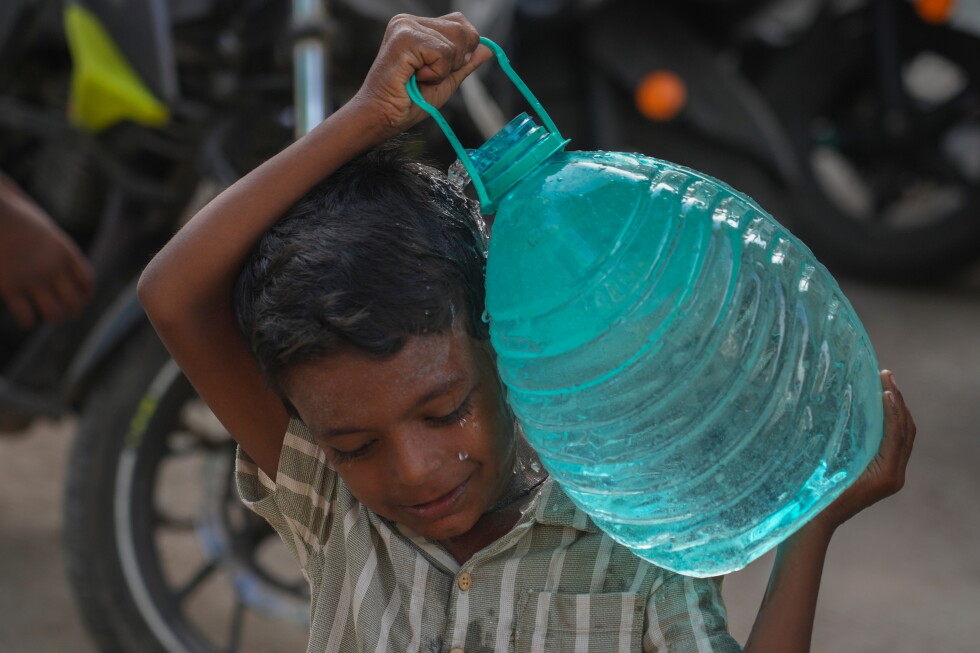
    Even after this week’s early downpours in Mumbai, the city’s critical reservoirs remain at dangerously low levels, prompting local authorities to implement strict water rationing to preserve supplies for essential use. Municipal water access has been cut off to commercial construction sites, private swimming pools, and other non-essential operations, forcing construction projects to scale back work amid the shortage. Long queues now stretch for hours at public water distribution points, where residents wait to collect just enough water for their daily needs.

    “To collect just 10 liters (2.6 gallons) of water, I have to wait for two hours. I have to go to work, take care of my children and make sure there is water at home,” said Aishah Khan, a 33-year-old Mumbai domestic worker, echoing the frustration of millions of city residents. Local government data shows Mumbai currently holds only a 40-day reserve of stored water, and forecasters say even significant rainfall over the coming week will not be enough to fully replenish depleted reserves.

    The crisis extends far beyond urban centers, hitting India’s agricultural sector — which supports more than 90 million smallholder farmers, most working plots of less than 2.5 acres — particularly hard. In northern rural states including Uttar Pradesh and Madhya Pradesh, key growing regions for millet, soybeans, and wheat, farmers have been forced to delay critical sowing operations that typically wrap up by mid-July. Many already face mounting debt from rising input costs and disrupted supply chains, and fear a poor monsoon will push them into financial ruin.

    “We are unable to plant our seeds without the rains coming. Already, we’re suffering losses. I think it’s worse this year than previous years,” said Suresh Kumar, a millet farmer in Uttar Pradesh. His neighbor Kedar Sirohi, a soybean and wheat grower in Madhya Pradesh, added, “I’m very worried but we have no choice but to wait and see now.” Farmers add that poor rainfall compounds existing pressures, including fertilizer supply disruptions linked to global conflict and trade policies they say offer little financial protection for small producers.

    Climate experts say this year’s erratic monsoon aligns with long-term trends driven by human-caused climate change. For centuries, the South Asian monsoon followed a predictable pattern: a southwest monsoon from June to September that delivered steady, sustained rainfall, followed by a smaller northeast monsoon in late autumn. But rising concentrations of greenhouse gases from fossil fuel combustion have warmed the atmosphere, allowing it to hold more moisture pulled from the Indian Ocean. This shift has broken the historic pattern, replacing steady rainfall with a cycle of intense, destructive flooding followed by long, parched dry spells.

    “The Indian monsoon is becoming more variable as a result of global warming,” said Akshay Deoras, a meteorologist at the University of Reading in the U.K. who has studied Indian weather systems for more than 10 years. “We are seeing wet spells becoming more extreme and dry spells are more prolonged.” Deoras noted that the current national rainfall deficit, which stands at 42% according to the India Meteorological Department, is too large to be reversed even by weeks of average rainfall in already affected regions. He added that it is unlikely Mumbai’s reservoir levels will see a substantial improvement even with expected rain over the next 10 days.

    The India Meteorological Department confirms that El Niño and unseasonably dry winds from northwest India have stalled the monsoon’s northward advance, and forecasts that total rainfall between June and September will remain well below the long-term average. India ranks among the 10 countries most vulnerable to climate change impacts, according to 2023 data from European climate nonprofit Germanwatch.

    As the crisis deepens, experts argue that long-term resilience depends on urgent investment in water infrastructure and conservation. India is already the world’s largest extractor of groundwater, pumping more of the underground resource than the United States and China combined, per a 2022 United Nations report. Around 70% of the country’s total water use comes from groundwater sources, and years of over-extraction paired with more frequent dry spells have caused water tables to drop dramatically across the nation.

    “Poor rainfall does not have to translate into water stress if planning and governance systems are strengthened,” said Abhiyant Tiwari, a climate and health expert at the New Delhi office of the Natural Resources Defense Council (NRDC) India. “Investing in water conservation, restoring urban water bodies and protecting smaller village ponds should be high priorities at both national and local levels.”

    Vivek Grewal, a hydrogeologist at Bengaluru-based WELL Labs, noted that the gap in resilience between farmers with access to groundwater reserves and smallholder farmers entirely dependent on monsoon rainfall widens with every dry year. “Every year there are bad rains, it exhausts the groundwater buffer,” Grewal explained. “In the cities, authorities expect reservoirs to get filled with a good monsoon but when that doesn’t happen there is an immediate impact.”

    The Associated Press contributions from Rafiq Maqbool in Mumbai and Rajesh Kumar Singh in Lucknow supported this reporting.